
درباره سایت
آخرین مطالب
- بررسی تاثیر اکسید لیمونیت (گل ماش) بر پایداری رنگ
- استخدام أكسيد الليمونيت (الماغش) في صناعات الزجاج
- کاربرد اکسید لیمونیت (گل ماش) در صنایع شیشهسازی
- A Review of Daily Prices for Limonite Oxide (Ocher) in the Market
- چگونه خالص بودن اکسید لیمونیت (گل ماش) را تشخیص دهیم؟
- بررسی قیمت روز اکسید لیمونیت (گل ماش) در بازار
- Application of Limonite Oxide (Gole Mash) in Glassmaking Industries
- كيف تتعرف على نقاء أكسيد الليمونيت (جول ماش)؟
- How to Determine the Purity of Limonite Oxide (Gol Mash)?
- بررسی استانداردهای ایمنی کار با اکسید لیمونیت (گل ماش)
امکانات وب
Introduction to the Importance of Silica in Manufacturing Industries
Silica, with the chemical formula SiO₂, is the most abundant natural oxide in the Earth's crust, making up more than a quarter of the crust's weight. This compound is found in nature in various forms such as quartz, silica sand, quartzite, tripoli, and amorphous silica, and has been one of humanity's most important raw materials since ancient times. In industrial terminology, the word “silica” usually refers to silica sand and processed silica powder that are offered for various applications after extraction from mines, washing, milling, and grading.
The importance of silica in mode industries stems from its inherent properties: high hardness on the Mohs scale, excellent thermal resistance, chemical stability against most acids, and the ability to form a glassy structure upon melting. These very properties mean that glass, ceramics, casting processes, and many building materials caot be produced without silica. In fact, it can be said that silica plays the same role in the mineral and chemical industries as steel does in the metal industries; that is, a foundational and indispensable material.
The purpose of this article is a comprehensive review of the applications of silica in the production of glass and ceramics and related industries, so that purchasing experts, technical managers of materials and mining engineering, and students in these fields have a clear vision regarding the selection of this mineral. Along with familiarization with the applications, qualitative factors affecting it, such as chemical purity and grading, are also discussed, because these two factors determine the final efficiency of silica in any industry.
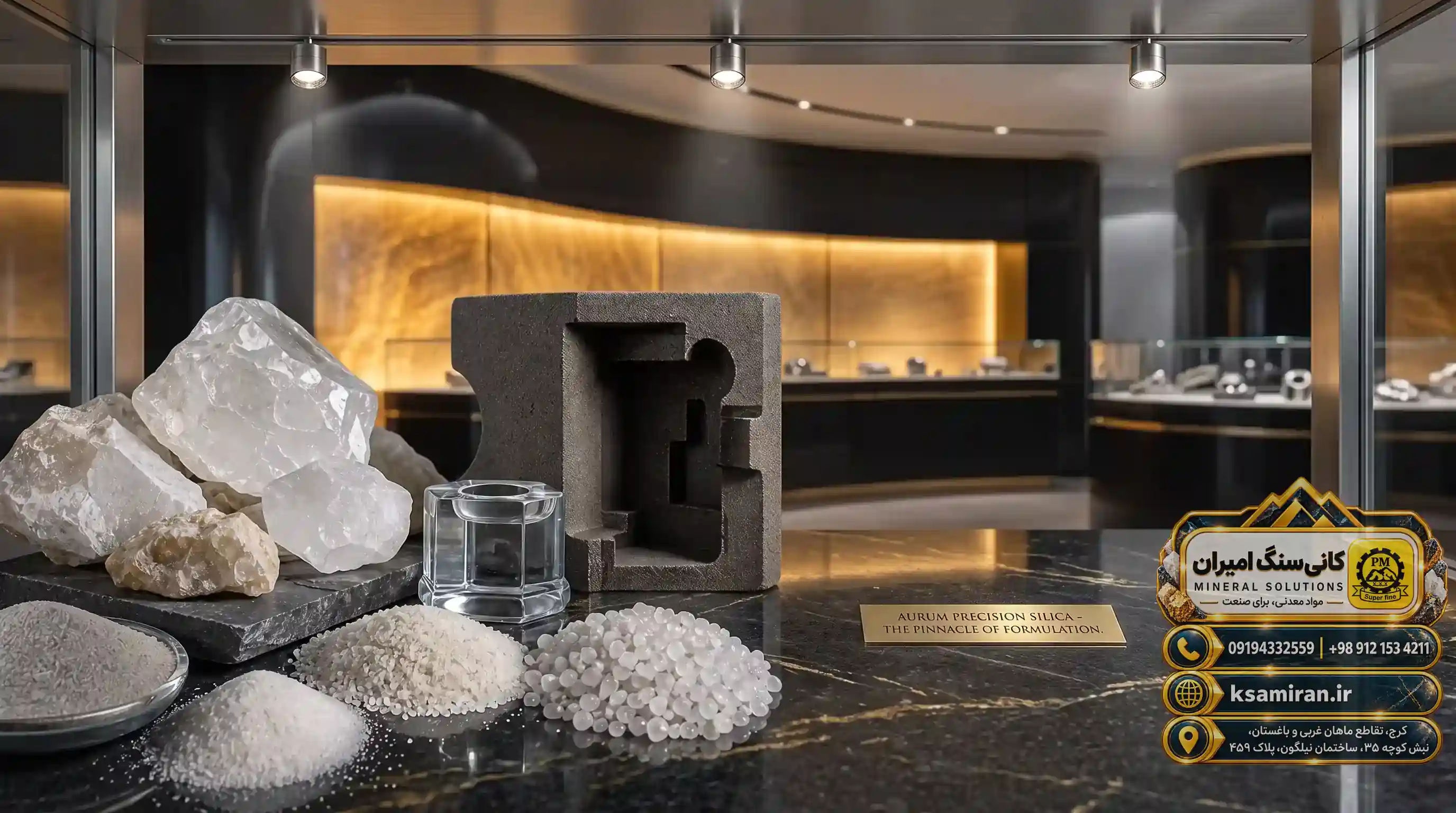
The silica product offered by the Amir Stone Mineral Project is introduced for glass, casting, ceramics, and building materials, and is produced in the grading range of 10 to 450 mesh. The breadth of this range allows the selection of grading precisely tailored to the needs of each process; from coarse particles for building materials to very fine powders for delicate ceramics and high-quality glass. In the following sections, we will examine in detail which part of this range each industry utilizes.
Alongside silica, other industrial minerals also play vital roles in production lines. For example, if you deal with the paint and coating industries, reading the article Why is the use of white barite essential in paint production? can complement your view of the set of industrial mineral materials and help you better understand the effect of minerals' properties on final product quality.
At the end of this article, the reader will be familiar with the chemical structure of silica, its role in each of the glass, ceramics, casting, and building materials industries, the importance of grading, and quality control criteria, and will be able to make a more informed decision regarding the supply of this raw material.
What is Silica? Structure, Properties, and Types
In the simplest definition, silica is silicon oxide with the formula SiO₂, in which each silicon atom is surrounded by four oxygen atoms, forming a continuous tetrahedral network. This very three-dimensional structure is the main reason for silica's hardness, thermal stability, and chemical resistance. In nature, silica is mostly found in crystalline form, of which quartz is the most famous, but amorphous and shapeless forms such as silica fume and silica gel also have their own specialized applications.
In terms of physical properties, quartz has a hardness of 7 on the Mohs scale, a relative density of about 2.65 g/cm³, and melts at a temperature near 1710 °C. This high melting point makes silica a natural refractory material. Another important point is the transformation of the crystalline form of quartz at 573 °C, which is accompanied by an increase in volume and must be managed in casting and ceramic-making processes.
In terms of chemical stability, silica is resistant to most acids except hydrofluoric acid, and does not react with water and oxygen at room temperature. However, in the presence of alkalis and at high temperatures, its reactivity increases and forms silicates; this very property is the basis of glass and ceramic production, which is explained in the following sections.
Industrial silicas are usually categorized based on purity. Glassmaking silica typically has over 98 to 99% SiO₂, and the sum of iron, alumina, titania, and calcium oxide impurities in it reaches less than one percent, because these very impurities affect the transparency of glass, the color of ceramics, and the surface quality of cast parts. For lower-quality applications such as some building materials, lower purity is also acceptable.
Types of processed silica in the market include: coarse-grain silica sand for casting and filtration, fine silica sand for glassmaking and ceramics, micronized silica powder for adhesives, sealants, and technical ceramics, and microsilica (very fine silica from the ferrosilicon industry) which is used in high-performance concrete. Each of these types has a specific application depending on its particle size and grading distribution.
Knowing these properties before purchasing is essential; because silica suitable for casting is not necessarily suitable for glassmaking and vice versa. Choosing the right type and grading of silica not only guarantees the quality of the final product, but also prevents material waste and increased production costs.
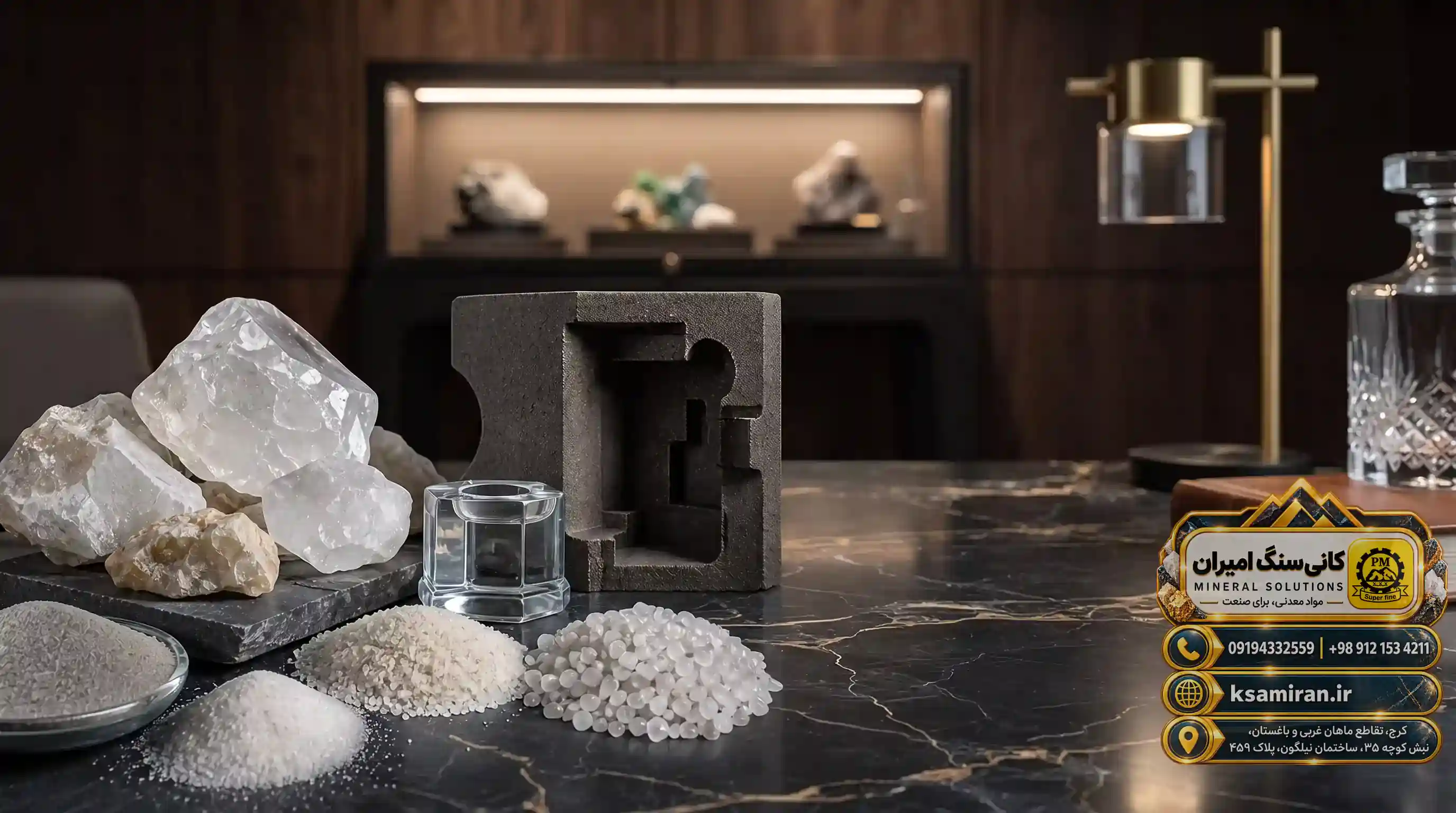
Application of Silica in Glass Production
Glass is undoubtedly the most well-known product of silica. In ordinary soda-lime glasses, which make up more than ninety percent of global glass production, silica sand plays the role of the main network former and accounts for a major share of the final glass composition. Sodium carbonate (soda) is added to reduce the melting point, and calcium carbonate (lime) is added for chemical stabilization, but the backbone of the glass is made of those very SiO₂ atoms.
In the glass production process, silica sand is first mixed with other raw materials, then melted in fuaces at temperatures near 1500 °C. The small size of silica particles at this stage is very important, because fine particles have more contact area with other components and melt faster and more uniformly; this helps reduce energy consumption and reduce glass defects such as unmelted grains.
The glass applications of silica are very broad: flat glass for buildings and vehicles, container and packaging glass, optical glasses and lenses, fiberglass and glass insulations, borosilicate glass resistant to thermal shock, colored and decorative glass, and even ultra-clear glass for display panels. Each of these products requires a specific degree of silica purity and grading.
One of the most sensitive parameters in glassmaking is the amount of iron oxide (Fe₂O₃) in silica. The iron present in silica sand causes a green or blue color in glass; for clear and colorless glass, silica must be the lowest-iron type possible, while for colored glass or light-protective glass, the presence of iron can be desirable. Alumina and calcium impurities also change the toughness and chemistry of the glass and must be precisely controlled.
In addition to glassmaking, silica is also used in glass-supporting industries; for example, in the production of sodium silicate (water glass) from which adhesives, detergents, and refractory materials are derived. Also, silica sand is used in glass surface spraying and finishing (sandblasting) and in the casting molds of decorative glass parts.
In summary, the quality of the final glass is directly related to the quality of the silica entering the fuace. That is why glass manufacturers always choose silica with uniform grading, high purity, and controlled particle size distribution, because any fluctuation in the specifications of the incoming sand quickly appears in the transparency, uniformity, and strength of the final glass.
Application of Silica in the Ceramic Industry
Ceramics are materials obtained from the combination of clay, silica, and feldspar at high temperatures, and silica plays the role of the “backbone” or main structure in them. In a typical ceramic body, silica makes up a large part of the composition and is the main agent in forming the glassy phase during firing. In fact, without silica, clay becomes brittle and unstable after firing.
Silica enters into complex reactions with clay and feldspar during the ceramic firing process, and a molten phase is formed that binds other particles together (vitrification process). This glassy phase reduces the porosity of the body, increases density and mechanical resistance, and prepares the ceramic surface to receive glaze. For this reason, the particle size of silica directly affects the vitrification rate, shrinkage in the kiln, and ultimately the product quality.
Ceramic applications of silica include floor tiles and ceramics, wall ceramics, porcelain and earthenware vessels, sanitary ware such as sinks and toilets, electrical insulators, and technical and refractory ceramics. In traditional ceramics, medium-grained silica sand is used, but in advanced and refractory ceramics, very fine and high-purity silica powder is needed so that unwanted phases do not form in the kiln.
Silica also plays an essential role in the production of glaze and frit. The glaze coating fired on the ceramic surface is itself a glass of which silica is the main network former. The fineness of silica particles in the glaze causes coating uniformity, surface brilliance, and a reduction in defects such as pinholing or gas trapping. Also in slips and ceramic adhesives, silica acts as a filler and viscosity regulator.
Another important application of silica in ceramics is the production of silica refractories, from which kiln bricks, melting vessels, and casting nozzles are made. These parts must resist high temperatures and thermal shock, and silica, due to its high melting point and chemical stability, is a natural choice for this application.
In general, the ceramic industry needs silica with diverse grading; from coarse meshes for building bodies to micronized powders for technical ceramics. Choosing the right grading creates the balance between shrinkage, porosity, and final strength of the ceramic, which is why suppliers like the Amir Stone Mineral Project offer their product in the wide range of 10 to 450 mesh.
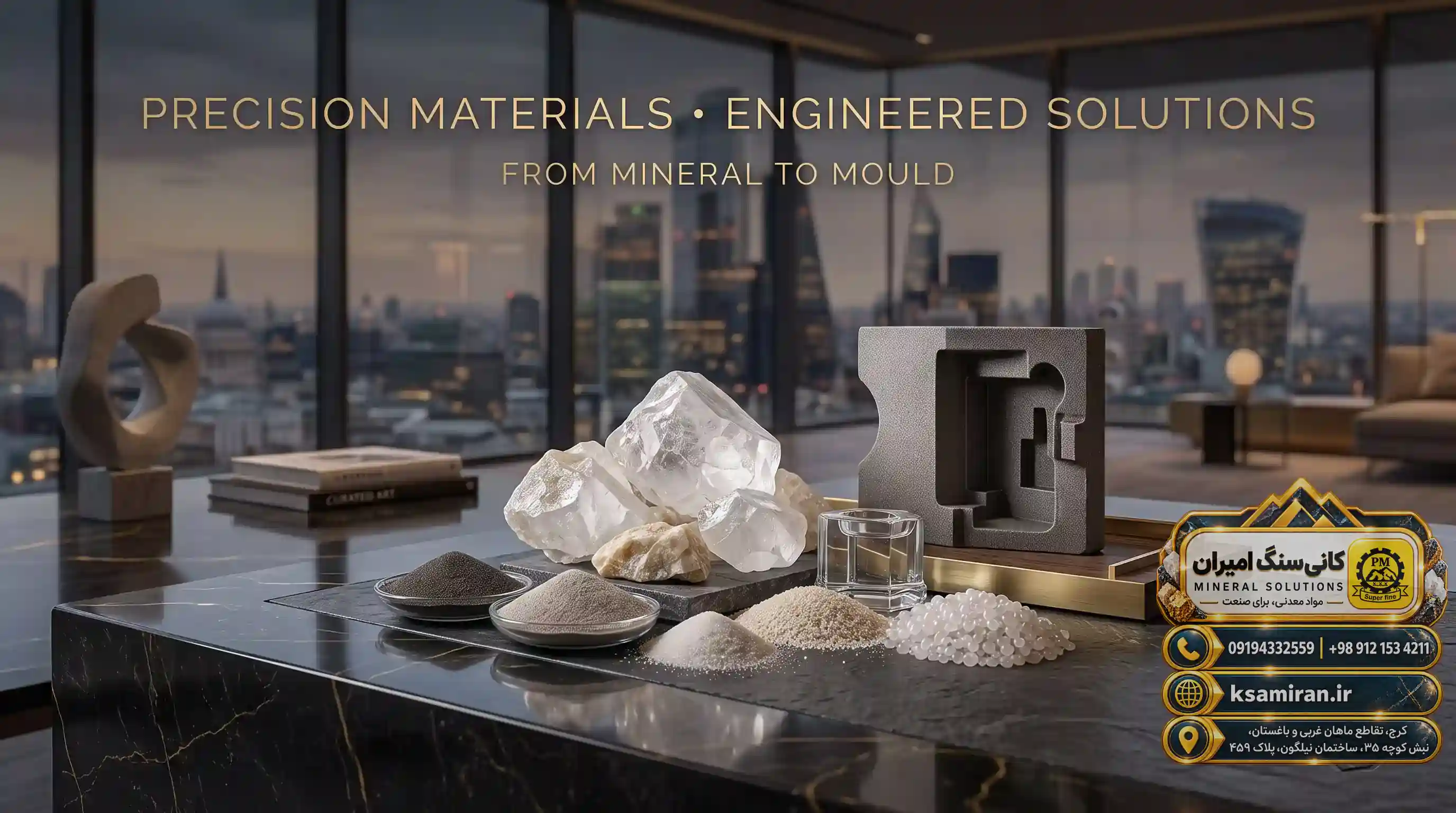
Application of Silica in Casting and Molding
In the casting industry, molten metals must be poured into a mold that resists high temperatures, maintains the exact shape of the part, and allows gases to escape. Silica sand, due to its abundance, suitable price, and refractory properties, is the main molding material in sand casting methods and has been used in this role for centuries.
Foundry silica sand is usually mixed with binders such as phenolic resin, clay, cement, or seed oil to form the mold. Silica particles must be angular to semi-angular so that they lock together well, and at the same time the particle size distribution must be such that it creates sufficient strength while leaving void spaces between particles for molten gases to escape (permeability).
The grading of silica sand in casting also affects the final surface of the part; finer sand creates a smoother surface on the part and reduces the need for subsequent machining, while coarser sand has better permeability and is more suitable for larger parts. This is exactly the reason for the wide 10 to 450 mesh range in the silica product of the Amir Stone Mineral Project, so that every foundry can find the grading suitable for its part.
An important technical point in casting with silica sand is the crystalline transformation of quartz at 573 °C, which is accompanied by rapid expansion. This expansion can cause mold cracking, shelling, or even explosion of the mold surface upon contact with molten metal. To control this phenomenon, silica with controlled grading distribution, expansion-absorbing additives, and sometimes other mineral powders are used.
Silica sand is used in various casting methods: green sand casting (with moisture), dry and coated sand casting, investment casting (ceramic shell) in which very fine silica powder is mixed with ethyl silicate or sodium silicate, and even lost foam casting in which polymeric pattes are placed in silica sand.
In addition to the mold itself, silica is used in kiln surface coatings and melting crucibles, in casting nozzles, and in the composition of backup ceramics. The quality of the silica consumed directly affects the scrap rate, dimensional accuracy, and surface quality of the cast parts, which is why controlling its grading and purity is one of the most important tasks of foundries.
Application of Silica in Building Materials
A large part of global silica consumption occurs in the construction and building materials industries. From concrete and mortar sand to tile adhesive, sealants, artificial stones, and insulations, silica is present in its various forms. The reason for this widespread presence is silica's abundance, suitable price, abrasion resistance, and controlled reactivity with binders.
In concrete and cement mortars, silica sand acts as a fine aggregate that fills the space between coarse particles, improves the workability of the mortar, and contributes to the final compressive strength. The grading of the sand in this application is very important; proper particle size distribution leads to better compaction, reduced water requirement, and increased strength and durability of the concrete.
Microsilica (very fine silica) is one of the important additives in high-performance concrete. This fine powder participates in the pozzolanic reaction with the calcium hydroxide released from cement hydration and produces additional calcium silicate hydrate. The result is a significant increase in compressive strength, reduced permeability against water and chloride ions, and improved resistance to corrosive environments.
In the production of artificial stones and Corian, silica powder makes up a significant portion of the composition and, along with resin, pigments, and other fillers, creates a product with a natural appearance and high strength. In construction adhesives and sealants, micronized silica acts as a filler and increases the adhesion, abrasion resistance, and dimensional stability of the product.
Other building materials in which silica is used include silica bricks, lime-silica (calcium silicate products such as bricks and lintels), calcium silicate thermal insulation boards, plaster and surface soil, facing sand and decorative coatings, and industrial flooring systems. In all these cases, the grading and purity of silica determine the performance of the final product.
The construction industry usually needs coarser gradings from 10 to about 100 mesh, while adhesives and microsilica utilize the finer range of the 450 mesh span. This diversity of need has prompted producers to offer their product in a wide range so that every construction project can supply the silica suited to its needs.
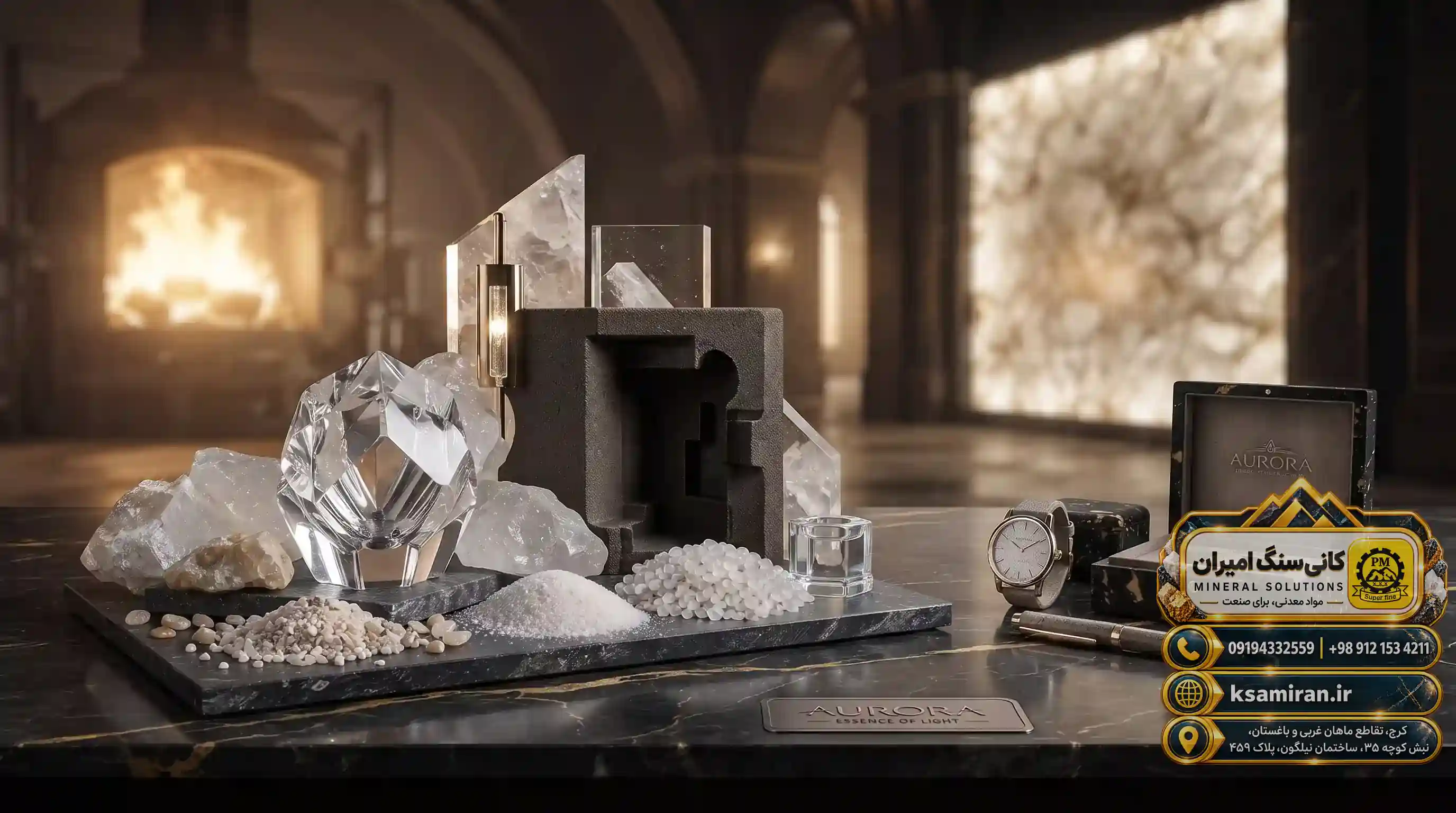
The Importance of Silica Grading (10 to 450 Mesh) in Final Applications
The word “mesh” is a unit for expressing particle size, referring to the number of holes per inch of screen; the higher the mesh number, the finer the particles. The 10 to 450 mesh range means a product that includes particles from relatively coarse (about two millimeters) to ultra-fine powders (about a few microns). This variety enables a single product to meet the needs of very different industries.
In glassmaking, finer particles melt faster due to their larger surface area and produce a more uniform glass. But overly fine particles can cause dust generation, moisture absorption, and mixing problems; therefore, the grading must be carefully selected and controlled. Fluctuation in particle size is one of the main causes of glass quality fluctuations in factories.
In ceramics, silica grading affects the vitrification rate, kiln shrinkage, and final porosity. Very coarse particles do not melt well and leave a rough surface, while very fine particles can cause excessive shrinkage and cracking. The optimal combination of coarse and fine particles guarantees high density and suitable surface quality.
In casting, grading determines the surface quality of the part and the permeability of the mold. For precise and small parts, finer sand (higher mesh) is suitable, and for large parts where more gases are produced, coarser sand with higher permeability is used. Incorrect selection here directly leads to increased scrap and machining costs.
In building materials, grading also plays a key role. Mortar workability, concrete strength, water absorption rate, and even the final surface appearance all depend on the particle size distribution. For this reason, national and inteational standards for building materials carefully determine the permissible grading range. For a deeper understanding of this topic, we recommend reading the article The Importance of Silica Grading in Glassmaking and Foundry Industries.
Grading quality control is usually done with laboratory sieve analysis and, in advanced cases, with laser particle size analysis. The report of these tests should be provided with every shipment so the buyer can be assured of the silica's uniformity. Also, alongside grading, chemical purity and moisture control are part of the quality assurance process.
Regarding the importance of quality parameters in mode industries, the article Silica Quality Standards in Mode Manufacturing Industries is a useful reference and helps production workshops define clear acceptance criteria for their raw materials.
Tips for Choosing High-Quality Silica and Conclusion
Choosing the right silica is a decision that affects the quality of the final product, production costs, and even the durability of machinery. The first option in this choice is determining the target industry: glassmaking, ceramics, casting, or building materials. Each of these industries demands a specific level of purity and grading, and purchasing silica outside that range can lead to quality loss or increased costs.
After determining the industry, emphasis must be placed on the chemical analysis of silica. The analysis report should show the percentage of SiO₂ and main impurities including Fe₂O₃, Al₂O₃, TiO₂, CaO, and MgO. For clear glass, iron should be at the lowest possible level, while for building materials, this parameter is less important. Requesting a Certificate of Analysis (COA) from the supplier is the buyer's right.
The next step is controlling the grading and its uniformity across different shipments. Good silica is silica that has consistent specifications in every delivery, so that process parameters (temperature, water, binder, and kiln duration) do not need constant adjustment. Uniformity has value beyond price and is one of the signs of a professional supplier.
Packaging and transportation also gain importance; silica must be transported in a way that is protected from contamination by other particles, moisture, and leakage. Also, receiving silica from a mine and factory with a specified processing process increases assurance of supply continuity and is vital for factories with continuous production.
The silica product of the Amir Stone Mineral Project is offered for glass, casting, ceramics, and building materials applications and is available in the grading range of 10 to 450 mesh. To view full specifications and get more information, you can visit the Silica Product Page. The technical team of this group can guide you in choosing the right grading for your process.
In conclusion, it must be said that silica is one of the most fundamental mineral materials in manufacturing industries. In glass, it is the main network former; in ceramics, it builds the backbone of the body; in casting, it provides a mold resistant to molten metal; and in building materials, it acts as an aggregate and reinforcing additive. In all these applications, two factors—chemical purity and grading—determine the final quality.
We hope this article has given you a clear vision regarding the applications of silica and how to choose it. By understanding your process's needs, carefully reviewing the analysis and grading, and collaborating with a reliable supplier, you can significantly improve the quality of your products and gain a competitive advantage in the market.
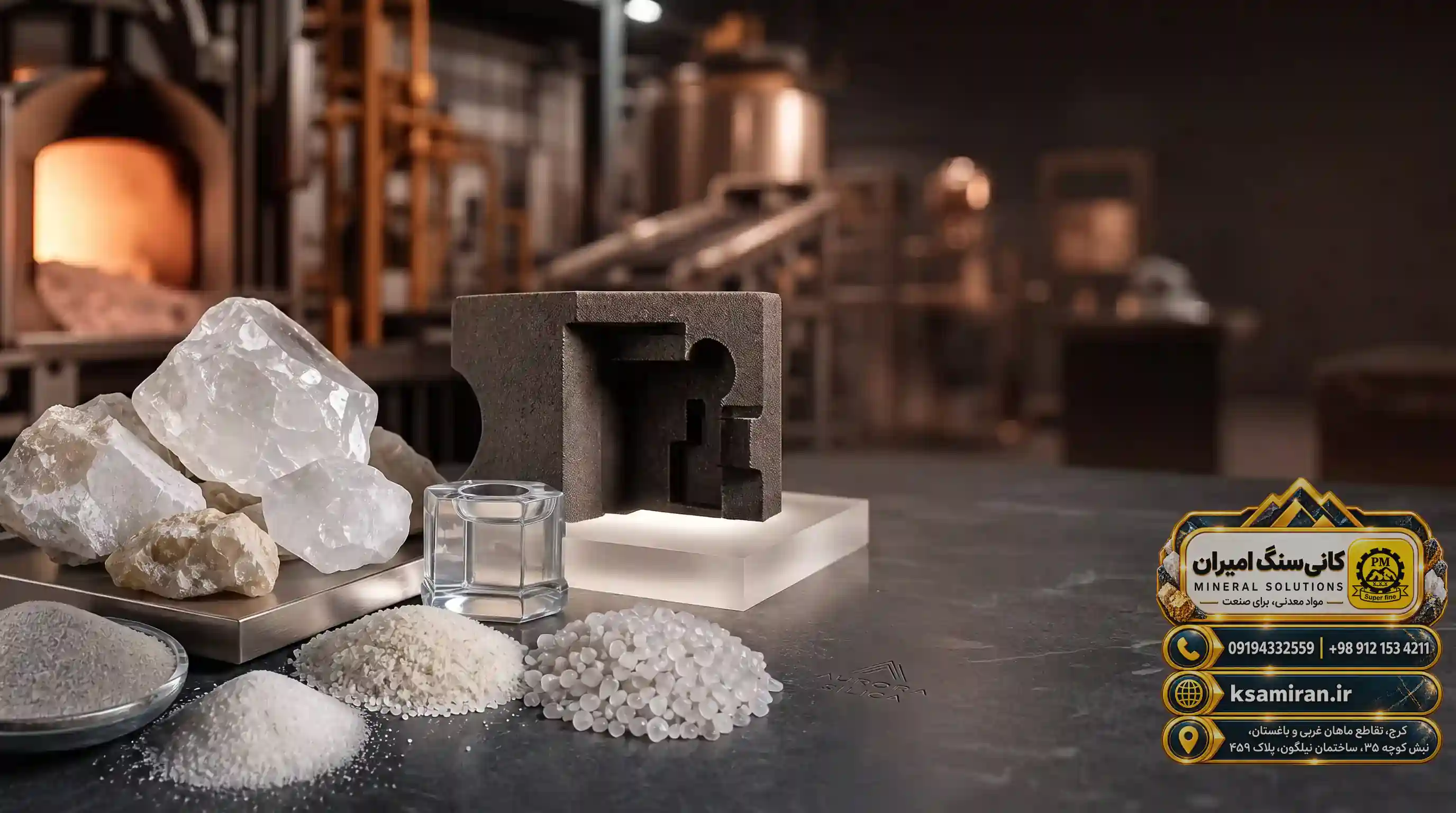
| Question | Answer |
|---|---|
| What is silica and what element is it made of? | Silica is silicon oxide with the chemical formula SiO₂, found in nature in the form of quartz, silica sand, and quartzite. |
| How much of ordinary glass does silica make up? | In soda-lime glasses, silica sand is the main network former and accounts for a major share of the glass composition. |
| What role does silica play in ceramics? | Silica builds the backbone of the ceramic body, creates a glassy phase during firing, and helps reduce porosity and increase strength. |
| Why is silica sand used in casting? | Due to its high thermal resistance, suitable formability, and permeability to molten gases, silica sand is the best molding material. |
| What does the 10 to 450 mesh grading range mean? | This range shows that the product is produced from coarse particles (low mesh) to ultra-fine powder (high mesh), so that every industry can find the grading it needs. |
| What effect does iron impurity have in silica? | Iron causes a green-blue color in glass; for clear glass, low-iron silica must be chosen, but it is desirable for colored glasses. |
| How does microsilica help concrete? | Through the pozzolanic reaction, it increases the compressive strength of concrete, reduces water and chloride permeability, and improves durability in corrosive environments. |
| In which building materials is silica used? | It is used in concrete and mortar sand, tile adhesive, sealants, artificial stone, silica brick, thermal insulations, and facing sand. |
| How do we recognize high-quality silica? | The quality of silica can be evaluated by checking the chemical analysis (percentage of SiO₂ and impurities), grading report, uniformity of shipments, and proper packaging. |
| Is silica dust dangerous to humans? | Very fine crystalline silica particles (under a few microns) can enter the lungs; therefore, a respiratory mask and proper ventilation must be used during milling and handling. |
Reference: Amir Stone Mineral Project (ksamiran.ir) — Production and supply of industrial minerals, silica product page.
برچسب: Silica,Applications of Silica in Glass and Ceramic Production, List of Uses,
نویسنده: رساوب آفرین