
درباره سایت
آخرین مطالب
- Review of the Application of Limonite Oxide (Gol Mash) in Various Industries
- دراسة تطبيق أكسيد الليمونيت (غول ماش) في مختلف الصناعات
- بررسی کاربرد اکسید لیمونیت (گل ماش) در صنایع مختلف
- کائولن باکیفیت کانی سنگ امیران برای کاغذ و رنگ مش 450 تا 1500
- استعلام قیمت فلدسپات صنایع لعابسازی از وبسایت کانی سنگ
- تالک صنعتی و کاتالوگ فنی برای صنایع رنگ و لاستیک
- کربنات کلسیم ۲۰۰۰ مش با ذرات کنترلشده برای پروفیل UPVC
- فلدسپات مناسب کانی سنگ با دانهبندی یکنواخت کاشی درجه
- کربنات کلسیم ۱۲۵۰ مش با ترکیب شفاف برای کابل صنعتی
- تالک صنعتی مناسب صنایع پلیمر با دانه بندی دقیق و کنترل شده
امکانات وب
What is White Talc and Why is it Important in Paint and Resin Formulations?
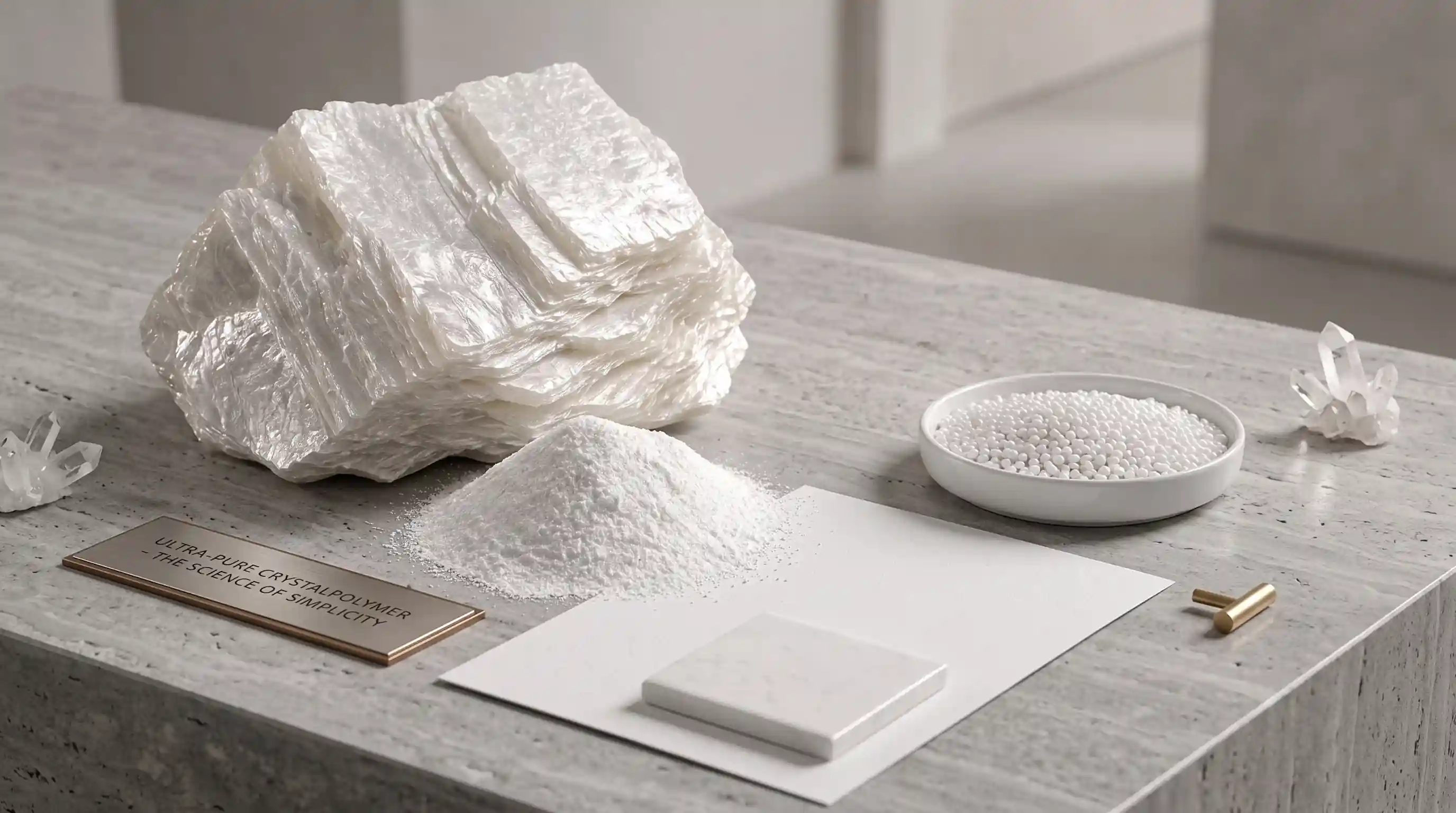
White talc is one of the most well-known industrial minerals in the world, which, due to its layered structure and unique physical and chemical properties, has found a key position in the formulation of paints, resins, masterbatches, compounds, paper, and ceramic products. This substance belongs to the family of hydrated magnesium silicates with the chemical formula Mg3Si4O10(OH)2 and is formed in nature through metamorphic and hydrothermal processes. After extraction, the mineral ore goes through crushing, flotation, drying, and micronization stages to become a soft, white, and greasy powder supplied to various industries.
In paint and resin formulation, white talc is not a simple filler, but a functional additive that simultaneously affects several important characteristics of the final product: rheology and consistency, covering power, degree of mattness, adhesion to surfaces, abrasion resistance, and durability against atmospheric conditions. This is why manufacturers of architectural paints, industrial paints, powder coatings, and engineering resins all incorporate it into part of their formulations. Choosing the right particle size and their size distribution plays a decisive role in the final result.
The white talc product offered by the Kani Sang Amiran Project is introduced for a wide range of applications including masterbatch, compound, paint, paper, and ceramics, and is available to consumers in a wide range of particle sizes, from 450 to 2500 mesh. This range allows formulators to choose a product tailored to their needs: from coarser grades for economic filling applications to very fine micronized grades for coatings requiring gloss, surface uniformity, and controlled matting.
This article as a whole examines the technical and economic benefits of using white talc in paint and resin formulations. In the following, the mineral structure, surface properties, its mechanism in the paint film, its role in resins and polymeric compounds, its application in masterbatches, as well as its position in the paper and ceramic industries are discussed. At the end, a brief comparison with other common mineral fillers is provided so formulators can make a more precise choice.
What is important is that the advantage of white talc is not limited to the finished cost or the volume occupied in the formulation; rather, the combination of properties such as softness, surface greasiness, chemical inertness, and layered structure makes it one of the few minerals that can successfully perform several different functions simultaneously in one formulation. Understanding these functions is the first step toward designing high-yield and economical formulations in the paint and resin industry.
Structure, Physical and Chemical Properties of White Talc
The crystal structure of talc consists of alteating layers, in which each layer comprises two silica sheets with a brucitic magnesium hydroxide sheet sandwiched between them. These layers are coected only through weak van der Waals forces, which is the main reason for the extreme softness and slippery or greasy surface of white talc. Sliding the layers over each other creates a smooth, low-friction surface that improves flow behavior and dispersion in the paint and resin manufacturing process.
One of the most important properties of white talc is its high degree of whiteness and brightness, which in high-quality grades makes it an ideal extender pigment for light and white paints. The level of whiteness and brightness is a function of mineral purity, the amount of impurities such as iron and manganese oxides, as well as particle size distribution. High whiteness means a lower need for expensive pigments like titanium dioxide; an issue that directly affects reducing formulation costs and increasing product competitiveness.
Other physical properties of white talc include very high softness on the Mohs scale, relatively low density compared to many other fillers, good thermal stability, chemical neutrality and acid/base resistance, as well as the ability to form proper bonding with binders. This set of properties makes talc a material compatible with aqueous, solvent-based, and melt-polymeric systems. As a result, it can be used in acrylic, alkyd, epoxy paints, powder coatings, and polyester, vinyl ester, and polyolefin resins.
In the realm of particle size, white talc is produced in various grades, and the 450 to 2500 mesh range covers a wide window of applications. Coarser particles have a lower specific surface area and are more suitable for high-volume filling applications; while micronized and very fine particles, due to their high specific surface area and layered structure, play a more effective role in controlling gloss, improving mattness, and creating a uniform film. Choosing the appropriate size depends entirely on the desired film thickness, application method (spraying, roller, brush, or extrusion), and the final product characteristics.
Another property of white talc is its natural tendency to be compatible with organic and polymeric matrices. The surface of talc particles is well wetted by resins, polymers, and organic adhesives, leading to stable dispersion, reduced phase separation, and improved color uniformity and surface finish. Combined with the layered structure, this is the reason talc performs better in masterbatches and colored compounds than many fillers with polar surfaces. Precise knowledge of these properties is a prerequisite for designing formulations that achieve maximum efficiency at minimum cost.
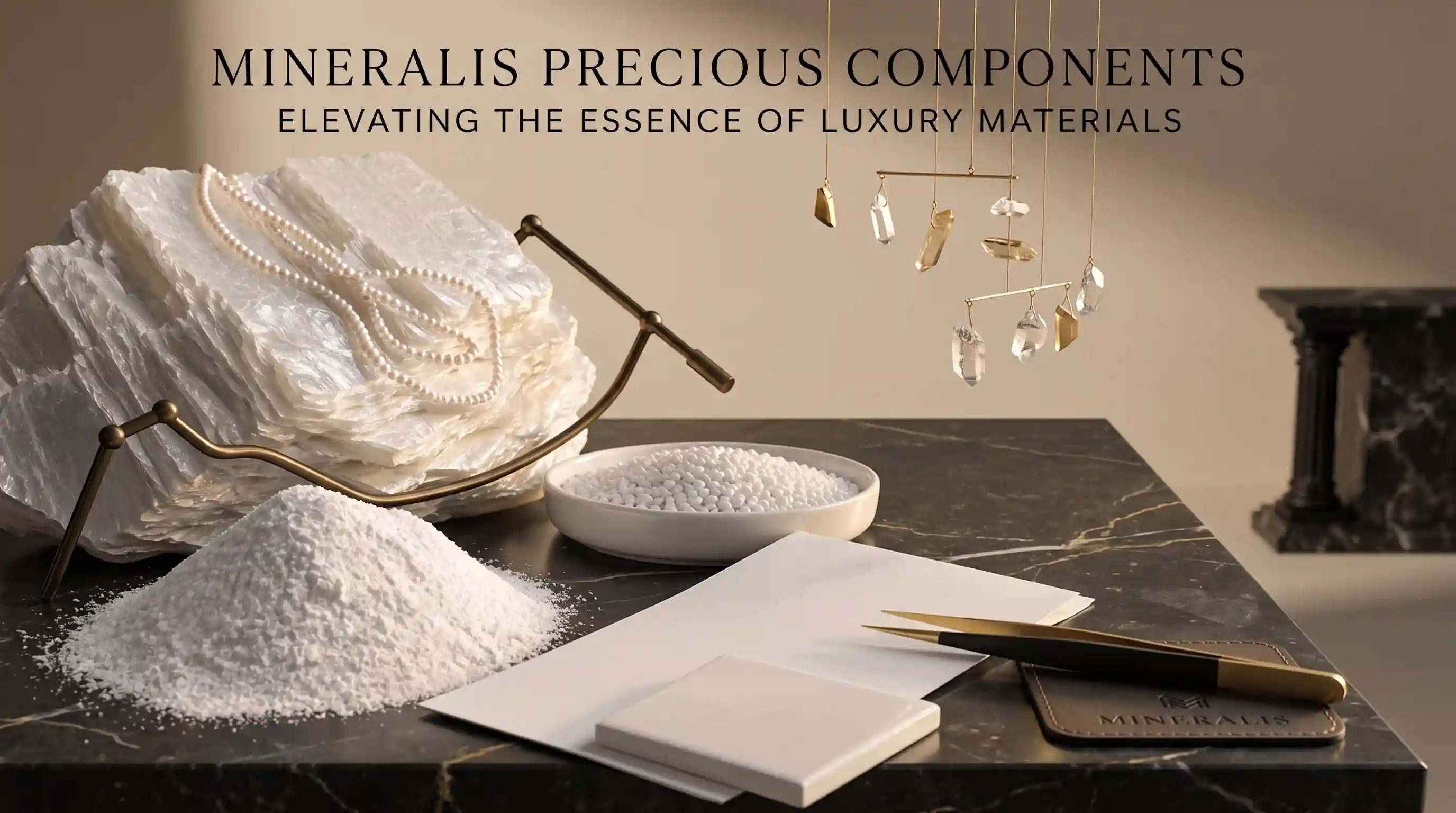
Benefits of Using White Talc in Paint Formulations
One of the most important reasons for using white talc in paints is its ability to increase covering power and opacity. Talc particles with appropriate dimensions create fine voids in the paint film structure, which increases light scattering, thus achieving better surface coverage. This mechanism allows the formulator to replace a portion of expensive titanium dioxide with a mineral filler, without any significant drop in covering power or whiteness quality.
In the realm of matte and semi-matte paints, white talc is a highly efficient matting agent. The layered surface of the particles causes reflected light scattering and reduces angular gloss, resulting in a silky, uniform finish without visual defects. This capability is highly valuable in architectural paints, wood paints, floor coatings, and industrial coatings where a matte appearance and non-reflection of light are important. The degree of mattness can also be controlled by selecting particle size and loading percentage.
Due to its layered structure and the formation of networks within the paint film, white talc plays an important role in improving rheology and consistency. This material facilitates flow, reduces sagging in paints applied by brush and roller, and improves suspension stability during storage. In appliance and spray paints, the presence of talc helps reduce drips and creates a thin, uniform layer; while by adjusting the release rate of solvent or water, it controls the film's open time for better finishing.
In terms of durability, white talc increases abrasion and wash resistance. Talc particles are not merely hard; by dispersing in the binder, they increase the inteal strength of the film and its adhesion to various surfaces such as wood, metal, plaster, and concrete. In wash- and abrasion-resistant architectural coatings, this means a longer service life for the paint and preservation of surface quality against frequent contact. Also, talc's neutral chemical structure keeps it stable against secondary reactions with binders and additives.
White talc also holds a special place in industrial paints and powder coatings. In powder coatings, this material helps disperse particles during the extrusion process and improves flow in electrostatic spraying, and in liquid industrial paints, it raises stability against moisture and temperature changes. In water-based paints, talc improves industrial production quality and formulation repeatability by reducing the range of viscosity fluctuations at different temperatures. All these benefits are achieved with proper loading and correct grade selection.
Application of White Talc in Resins and Polymeric Compounds
In the polymer industry, white talc is known as one of the widely used mineral fillers, employed in various resins and compounds, from polypropylene and polyethylene to PVC and engineering resins. The layered structure of this mineral acts as a lightweight mineral reinforcement that improves mechanical strength, hardness, and creep resistance without significantly increasing density. In injection-molded compounds, the presence of talc helps increase the elastic modulus and control shrinkage during cooling, which is very important for precision parts.
One of the most important applications of white talc is in polypropylene compounds; where this material, as a lightweight reinforcing filler, increases strength, stiffness, and thermal resistance at high temperatures. By distributing in the polymer matrix, talc particles raise resistance to deformation under thermal stress and also act as a crystal nucleating agent, accelerating the freezing rate and production cycle. These features are particularly important in the production of automotive parts, home appliances, and packaging.
In polyester, vinyl ester, and epoxy resins, white talc is used as a cost-effective filler to achieve controlled viscosity, reduced exothermic heat during curing, reduced shrinkage, and improved crack resistance. In the production of sheets, pipes, tanks, and composite parts, these properties contribute to better surface quality and reduced bubbles and porosity. In resin-based anti-corrosion coatings, talc, as a chemically inert filler, is compatible with a wide range of curing systems.
Another advantage of white talc in compounds is improved processability. The natural greasiness of this mineral reduces inteal friction in the extruder and die, and brings better thermal stability, resistance to shear degradation, and prevention of sticking to metal surfaces. This helps reduce lubricant consumption and improve production rates. In the production of rigid and flexible PVC compounds, talc can form part of the formulation as a non-toxic and environmentally friendly filler.
In all these applications, the quality of talc dispersion in the polymer matrix is vital. Micronized talc with uniform particle distribution spreads better in the resin during extrusion, achieves maximum reinforcing function, and prevents the creation of weak points or loss of mechanical properties. The correct choice of grade and loading level is determined based on the polymer type, conversion method, and desired properties of the final part, and the most professional aspect of designing a successful compound lies in this very adjustment and balance.
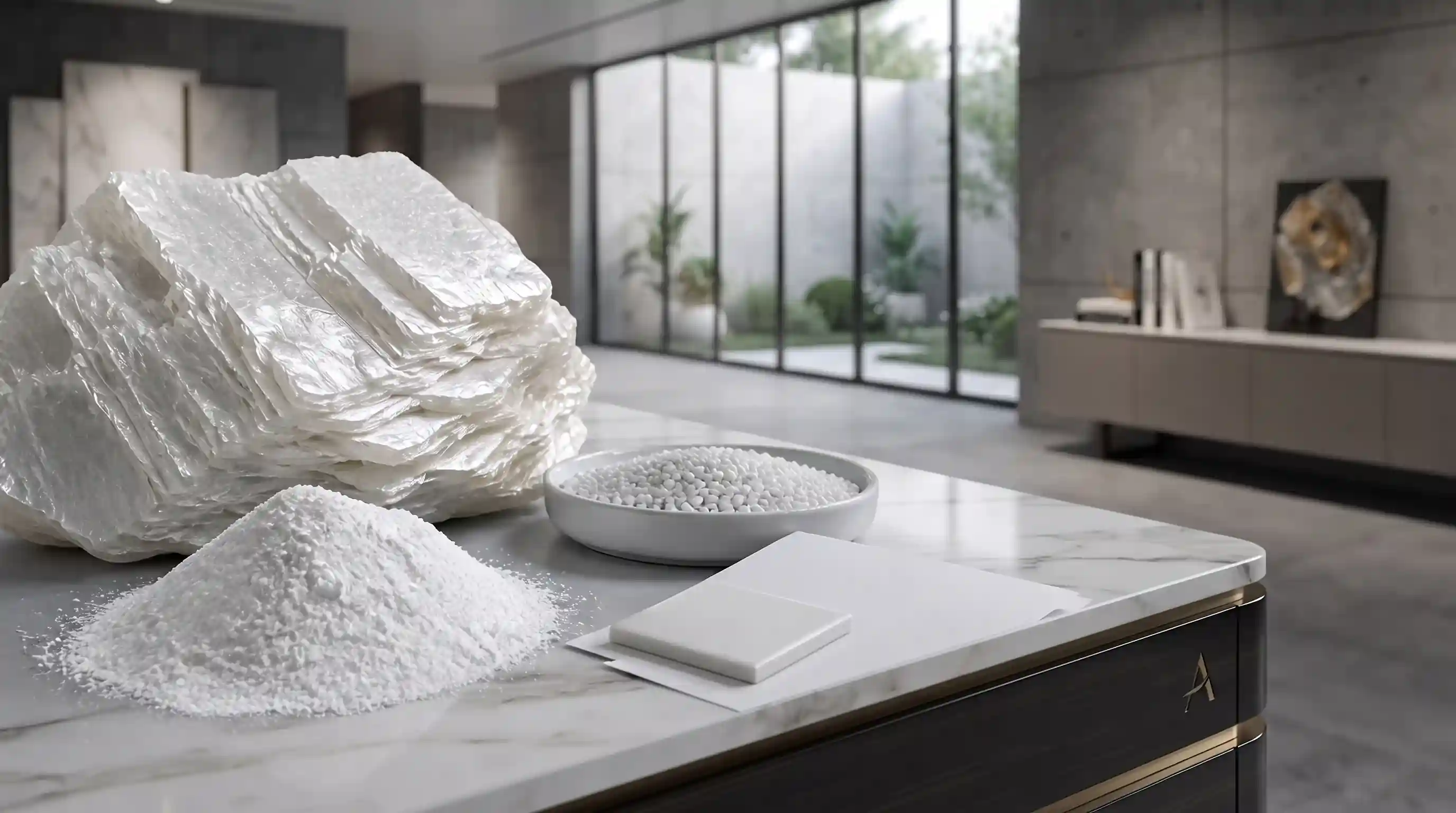
The Role of White Talc in Masterbatch Production
Masterbatches are concentrates of pigments and additives in a polymeric carrier used for coloring and modifying plastic properties. In this process, white talc plays a very important role as a functional filler and sometimes as part of the carrier system. During the extrusion process, micronized talc particles disperse well in the carrier resin and, due to their organophilic surface, form good bonds with pigments and resins, which helps color stability and repeatability in mass production.
One of the main challenges in masterbatch production is preventing pigment agglomeration and ensuring its complete dispersion in the polymer. White talc, as an inert mineral filler, acts as a spacing material and dispersion facilitator, preventing pigment particles from reattaching. This property is especially valuable in organic pigments, which have a high tendency to agglomerate. The result is a masterbatch that, when diluted in the base polymer, produces more uniform color, higher color strength, and fewer color specks.
In white and light-colored masterbatches, white talc acts as an extender pigment and, by utilizing its natural whiteness, reduces the consumption of titanium dioxide. This means a reduction in finished cost while maintaining whiteness and covering power in the final product. In filled masterbatches aimed at cost reduction or property improvement, talc reinforces the performance of the final compound by increasing stiffness, reducing shrinkage, and improving thermal resistance.
During processing, white talc reduces machinery wear due to its softness and surface greasiness, and increases the life of wear parts such as screws and the extruder barrel. This advantage has significant economic importance in large-scale production. In addition, talc's high thermal stability allows it to maintain its performance without degradation or color change at polymer processing temperatures. This property is vital for masterbatches used in polymers with high processing temperatures.
Finally, white talc is also used in functional masterbatches, such as anti-static, UV-resistant, and anti-slip varieties. In these products, talc acts as a stable carrier for active additives, ensuring their controlled release and uniform dispersion during manufacturing. Given that talc is a chemically inert substance, it is compatible with a wide range of additives, and this flexibility has made it a popular choice in masterbatch production plants.
Applications of White Talc in the Paper and Ceramic Industries
In addition to paints and polymers, white talc is considered one of the key minerals in the papermaking industry. This mineral is used both as a filler and in coating, playing an important role in improving paper quality and reducing production costs. Talc particles of appropriate size fill the spaces between cellulose fibers, thus producing paper with a smoother surface, better printability, and higher whiteness. Also, in recycled papers, talc plays an effective role in controlling stickies and secondary resins from recycled pulp.
In the ceramic industry, white talc also has broad applications. In the ceramic body, this material is used as a firing temperature reducer and an improver of thermal and thermal shock resistance. The layered structure of talc helps control expansion and shrinkage during firing, preventing cracking and deformation. In the production of tiles, fine ceramics, and electrical insulators, the presence of talc leads to improved mechanical properties, reduced porosity, and increased durability against thermal changes.
In the papermaking industry, one of the important advantages of white talc is its softness and positive effect on paper machine performance. Compared to some other fillers, talc is soft and does not increase wire and equipment wear. Also, its natural greasiness helps reduce stickiness and deposition on rollers, resulting in increased production efficiency. These properties make talc a suitable choice for high-quality papers and high-volume printing.
In the ceramic industry, the advantage white talc offers is a combination of thermal and mechanical properties. Due to its stability at high temperatures and layered structure, this material acts as a reinforcing agent in the ceramic body, increasing resistance to thermal stress. In the production of floor and wall tiles and technical ceramics, talc helps improve strength, reduce the coefficient of thermal expansion, and increase thermal shock resistance. These properties are important in applications where ceramics are exposed to frequent temperature changes.
The variety of applications of white talc, from paper and ceramics to paint, resin, masterbatch, and compound, shows that this mineral is versatile and has a different yet effective function in each of these industries. Choosing the right grade, according to each industry's needs, is the key to achieving the best results. The Kani Sang Amiran Project, by offering white talc in the 450 to 2500 mesh range, provides the possibility of correct selection for each of these applications.
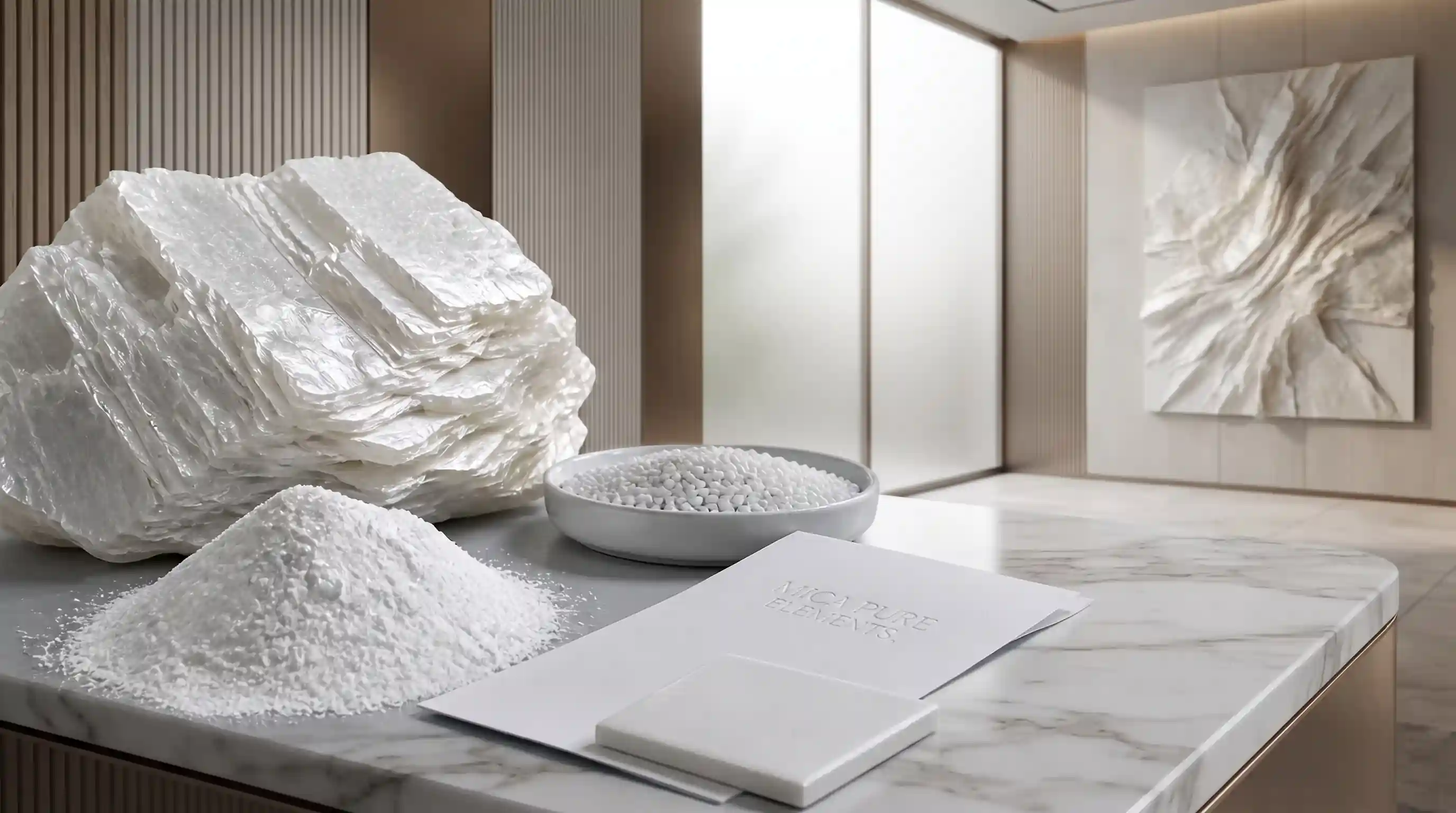
Comparison of White Talc with Other Mineral Fillers in Formulation
In designing paint and resin formulations, choosing the right filler is always one of the important decisions. White talc, kaolin, and white barite are among the most widely used mineral fillers, each with its own advantages. Kaolin, due to its platy structure and high whiteness, is a well-known option for architectural paints; as described in the article Examining the Benefits of Using Kaolin in Architectural Paints. Kaolin brings improved adhesion and paint durability, but talc, due to its natural greasiness, offers significant advantages in surface uniformity and mattness.
White barite is also used in industrial paints and heavy coatings due to its high density, chemical resistance, and ability to increase coverage; as examined in the article Why is Using White Barite Essential in Paint Production?. Barite is a suitable option, especially in coatings requiring weight, abrasion resistance, and high matting. In contrast, white talc has a lower density and performs better in formulations requiring a lighter film, delicate finish, and easier application.
In terms of properties, talc, with its layered structure, offers a combination of mattness, good rheology, and abrasion resistance that distinguishes it from many fillers. Kaolin also has a platy structure, but its more polar surface may require more dispersing additives. Barite has a granular structure, and as a result, mattness and adhesion act differently in the film. In many formulations, combining these fillers yields a better result.
Economically, white talc is usually a cost-effective replacement for a portion of expensive pigments and, due to its effect on covering power, mattness, and rheology, is usable in high-quality formulations. The overall cost of the formulation as well as the required technical characteristics determine which filler or combination is the best option. In many cases, combining talc with kaolin or barite creates a better balance of price and performance.
Ultimately, the choice between talc, kaolin, and barite depends on factors such as the application type, final product properties, processing method, and cost. Understanding the differences between these fillers helps formulators select the best combination for their product. To become acquainted with more technical details regarding micronized talc, you can read the article Examining the Technical Benefits of Using Micronized White Talc.
Key Points in Choosing White Talc and Conclusion
Choosing the right grade of white talc is the first step in leveraging the benefits of this mineral. The 450 to 2500 mesh range encompasses a wide spectrum: coarser particles for general, economical, high-volume filling applications, and micronized and fine particles for applications requiring high-quality surface finish, controlled mattness, excellent dispersion, and film uniformity. In high-quality paints and coatings, finer grades usually yield the best results, whereas in compounds and masterbatches, the choice is made based on the balance between dispersion, mechanical properties, and cost.
In addition to particle size, characteristics such as whiteness level, particle size distribution, purity, and loading uniformity are also important in the final product quality. High whiteness reduces the need for expensive pigments, and uniform particle distribution prevents the loss of mechanical properties and color instability. In manufacturing plants, receiving a product with consistent and uniform quality is vital for maintaining formulation repeatability. Therefore, sourcing from a reliable supplier is of great importance.
The storage and warehousing of white talc also have their own considerations. This product must be stored in a dry environment, away from moisture, and in appropriate packaging to prevent moisture absorption and caking. High moisture in talc can cause bubbles, thermal degradation, and quality loss in polymeric processes and powder coatings. Also, when loading into the formulation, attention must be paid to the permissible moisture level and compatibility with other components to achieve stable dispersion and a uniform film.
In this article, we discussed the numerous benefits of white talc in paint and resin formulations: from increasing covering power and mattness to improving rheology, adhesion, abrasion resistance, cost reduction, and improving mechanical properties in compounds and masterbatches. We also examined the applications of this mineral in the paper and ceramic industries and compared it with other mineral fillers. The sum of these points shows that white talc is a versatile and valuable material in industrial formulation.
To achieve the best results, it is recommended to choose the product according to your needs and conduct initial tests before full loading into the formulation. Consulting with the supplier regarding the appropriate grade, loading level, and storage conditions can help optimize the formulation and reduce costs. The Kani Sang Amiran Project offers white talc for masterbatch, compound, paint, paper, and ceramic applications in the 450 to 2500 mesh range.
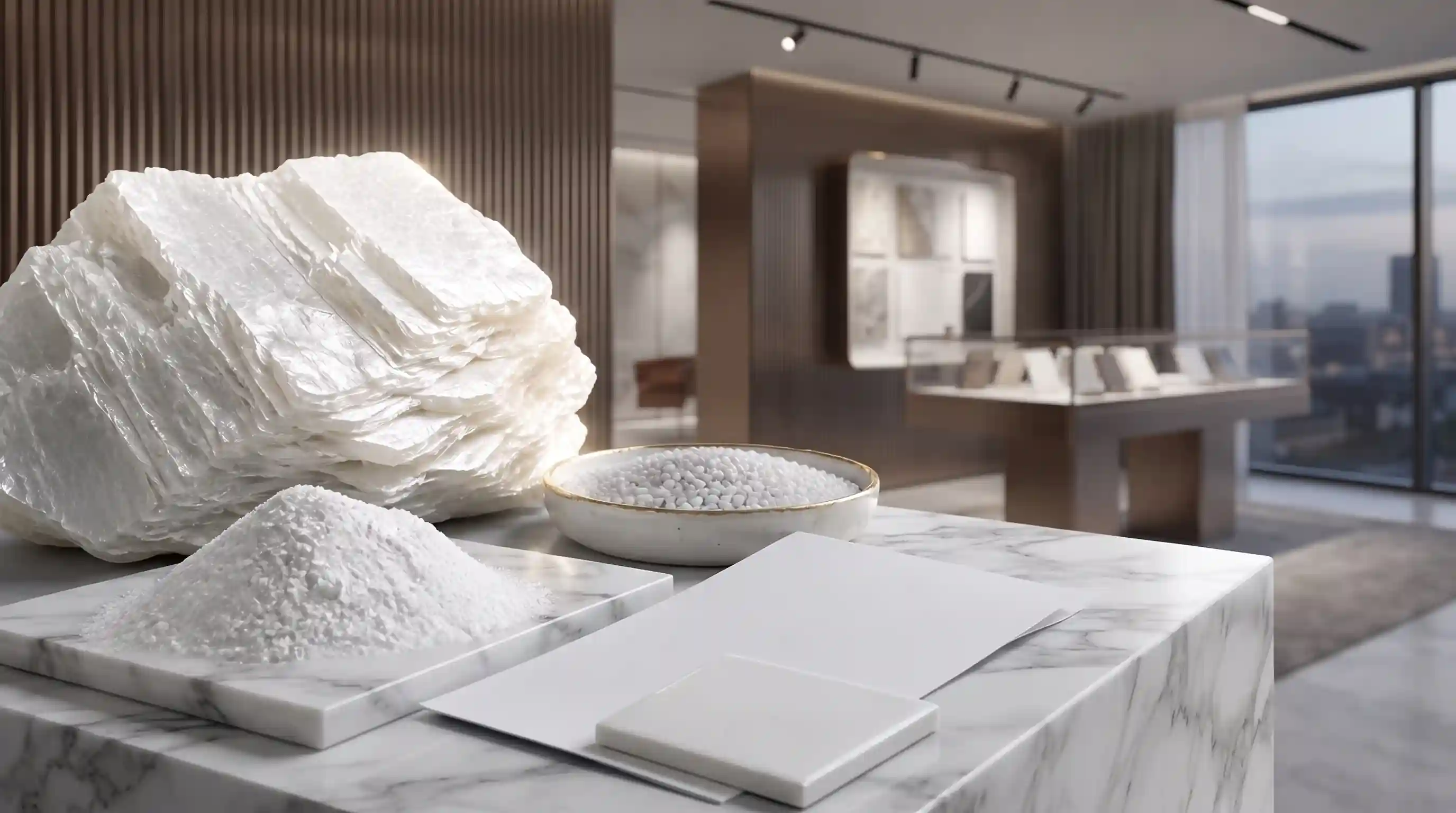
| Question | Answer |
|---|---|
| What is white talc? | It is a hydrated magnesium silicate mineral with a layered structure, used in paints, resins, masterbatches, compounds, paper, and ceramics due to its softness, whiteness, and surface greasiness. |
| What are the main benefits of white talc in paint? | Increased covering power, controlled matting, improved rheology and consistency, reduced sagging, increased adhesion, and abrasion and wash resistance. |
| What role does white talc play in resins and compounds? | As a lightweight reinforcing filler, it increases stiffness and thermal resistance, reduces shrinkage, and improves processability in extrusion. |
| What is the mesh range of white talc from the Kani Sang Amiran Project? | This product is offered in the 450 to 2500 mesh range so the appropriate grade can be selected for each application. |
| What are the main applications of white talc? | Masterbatch, compound, paint, paper, and ceramic products. |
| How is white talc used in masterbatches? | As a functional filler and sometimes part of the carrier system, it improves pigment dispersion and prevents agglomeration. |
| Is white talc used in the paper and ceramic industries? | Yes; in paper it is used as a filler and coating for smoothness, whiteness, and printability, and in ceramics to reduce firing temperature and improve thermal resistance. |
| What is the difference between white talc, kaolin, and barite? | Talc has higher surface greasiness and mattness, kaolin offers good adhesion and durability in architectural paints, and barite, due to its high density, is suitable for heavy coatings. |
| How do we choose the right grade of white talc? | Based on the application method, film thickness, final product properties, and the balance between dispersion, performance, and cost; finer grades are suitable for high-quality finishes and coarser grades for economical filling. |
| How should white talc be stored? | It should be stored in a dry environment, away from moisture, and in appropriate packaging to prevent caking and the effect of moisture on the polymeric process or powder coating. |
This article is prepared based on technical data from the Kani Sang Amiran Project regarding white talc (450 2500 mesh range) and its applications in masterbatches, compounds, paints, paper, and ceramics.
برچسب: White Talc,Benefits of Using White Talc in Paint and Resin Formulations,
نویسنده: رساوب آفرین