
درباره سایت
آخرین مطالب
- انتخاب اکسید آهن قرمز (اخرا) برای بهبود کیفیت پیگمنت و پوششهای رنگی
- تامین کربنات کلسیم با دانهبندی دقیق جهت استفاده در مستربچ
- تأمین تخصصی سیلیس برای مصالح ساختمانی، شیشه و صنایع سرامیک
- ویژگیهای فنی بنتونیت کانی سنگ امیران برای کاربردهای خاص
- فلدسپات کانی سنگ امیران برای شیشه کاشی و سرامیک
- کاربرد تالک سفید درجه یک در فرمولاسیون پیشرفته رنگ و محصولات کاغذی
- اکسید آهن قرمز (اخرا) کاربردی جهت تولید محصولات سرامیکی و پوشش
- مشخصات فنی اکسید آهن قرمز (اخرا) مناسب برای پوشش و تولید پیگمنت
- مشاوره تخصصی خرید کربنات کلسیم بر اساس نیاز دقیق صنعت شما
- انتخاب تالک سفید صنعتی مناسب برای تولیدات کاغذ و مستربچ
امکانات وب
Introduction to Kaolin and the Importance of Quality Control
Kaolin, also known as china clay, is one of the most widely used industrial minerals in the world. It is mainly composed of the mineral kaolinite with the chemical formula Al2Si2O5(OH)4, and is formed over millions of years from the decomposition of feldspar-containing rocks under specific weather conditions. With properties such as high whiteness, very fine particle size, suitable plasticity, good delamination, and low chemical reactivity, kaolin has become a vital material for various industries.
In the tile and ceramic industry, kaolin is used as one of the main raw materials in the body and glaze. In the paper industry, it is used as a filler and coating pigment, and in the paint industry, it acts as an extender. The widespread use of kaolin in these industries demonstrates the importance of its quality control; because any change in the quality of this mineral can directly affect the quality of final products.
Kaolin quality control involves a set of tests and measurements performed to ensure the product complies with specified standards. This control is of special importance in the Kani Sang Amiran project, which operates in the field of mineral production. Producing standard-quality kaolin requires careful monitoring at all stages: from raw material extraction to processing, grinding, classification, and packaging.
The importance of kaolin quality control can be summarized in several key aspects:
- Guaranteeing final product quality: Kaolin used in tiles and ceramics directly affects the mechanical strength, color, appearance, and durability of the final product. Impurities or particle size changes can cause defects in the product.
- Reducing production costs: Using standard and uniform quality kaolin reduces waste, rework, and optimizes energy consumption in kilns.
- Increasing competitiveness: Products manufactured with high-quality kaolin can be offered in domestic and inteational markets with higher quality.
- Compliance with standards: Many industries have specific standards for their consumed kaolin, and complying with these standards is essential to maintain cooperation with customers.
In the rest of this article, kaolin quality standards, testing and measurement methods, and the applications of this mineral in various industries are examined in detail. The aim is to provide a comprehensive guide for buyers, factory owners, and quality controllers.
Chemical Composition and Mineral Properties of Kaolin
The quality of kaolin primarily depends on its chemical composition and mineral properties. Pure kaolin consists of kaolinite, which is a hydrous aluminum silicate with the chemical formula Al2Si2O5(OH)4. This mineral has a layered structure in which silica (SiO4) and alumina (Al(OH)6) layers are coected to each other. The layered structure of kaolinite gives this material the property of delamination, which is useful in various applications.
The chemical composition of pure kaolin includes about 46.5% SiO2 (silica), 39.5% Al2O3 (alumina), and 14% H2O (structural water). However, in practice, commercial kaolins usually contain various impurities that can affect its quality. The most important impurities are:
- Iron oxide (Fe2O3): causes kaolin to change color and reduces its whiteness. Iron is one of the most important impurities in kaolin, because even small amounts can cause yellow, red, or brown color in the product. For industries that require high whiteness (such as paper and paint), iron control is vital. Understanding the importance of mineral purity is very important in this context; therefore, the Red Iron Oxide (Hematite) Buying Guide with High Quality and Purity can be helpful in better understanding the role of chemical purity.
- Titanium oxide (TiO2): like iron, can affect the color of kaolin, but in some applications its bleaching property is useful.
- Calcium oxide (CaO) and magnesium oxide (MgO): can affect the thermal behavior of kaolin in tiles and ceramics.
- Sodium oxide (Na2O) and potassium oxide (K2O): as alkali elements, can change the melting point and behavior of kaolin in the kiln.
- Free silica: the presence of free silica (quartz) in kaolin can affect thermal resistance and other properties.
One of the most important properties of kaolin measured in quality control is whiteness and brightness. Kaolin whiteness depends on the amount of colored impurities (especially iron and titanium) and also particle size. Kaolins used in the paper and paint industries usually must have a whiteness of above 85-90%.
To accurately evaluate the appearance and color quality of kaolin powder, the Kaolin Powder Appearance and Color Quality Guide is a useful resource that details whiteness measurement criteria and control methods.
In addition to chemical composition, physical properties of kaolin such as specific surface area, particle size distribution, particle morphology, and plasticity also play a role in determining its quality. These properties are examined in detail in later chapters.
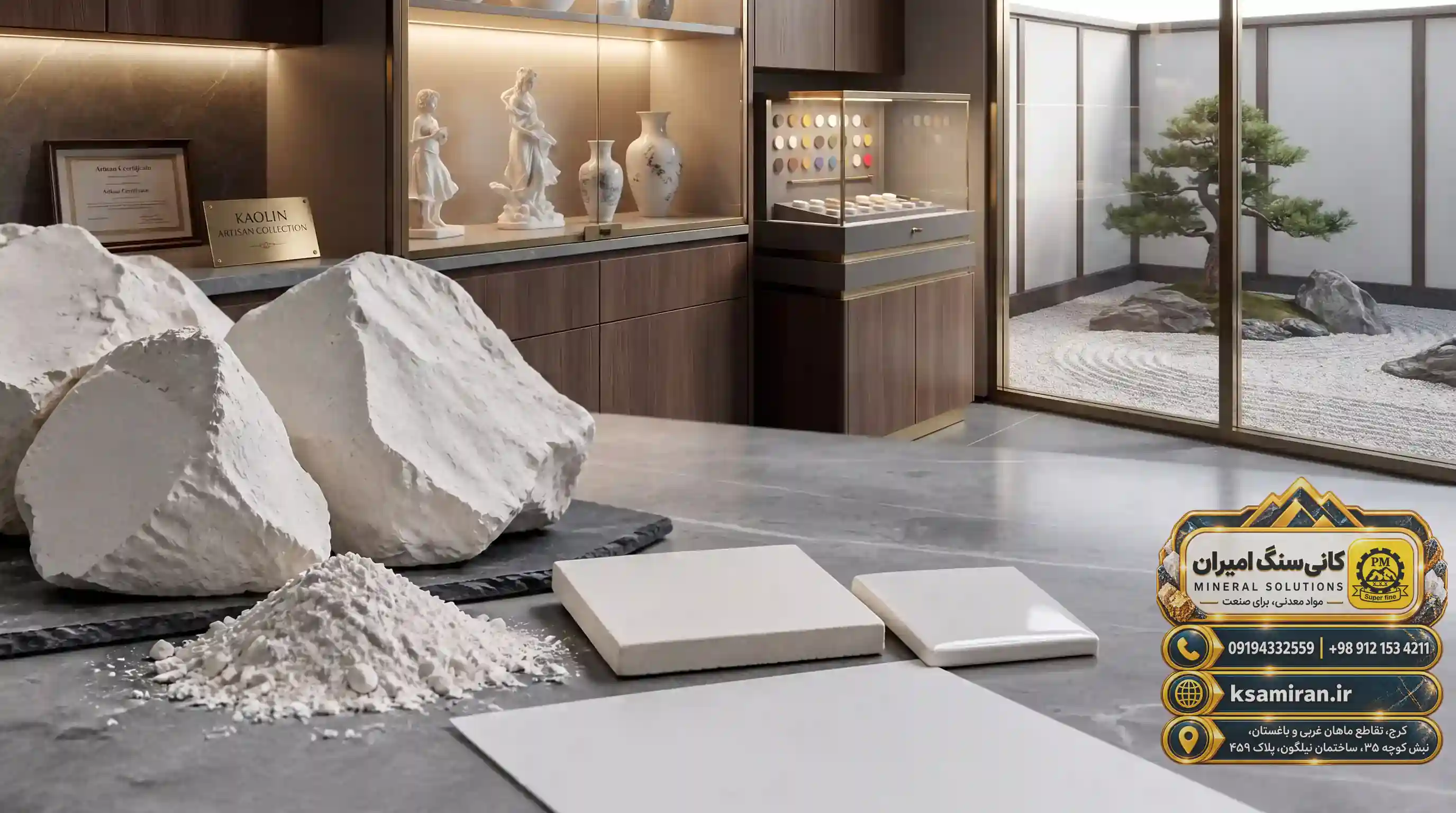
Particle Size Standards and Mesh System
Particle size is one of the most important quality parameters of kaolin, which directly affects its performance in various industries. In the mineral market, particle size is usually expressed with the mesh system. The mesh number indicates the number of holes per square inch of the sieve; therefore, the higher the mesh number, the smaller the particle size.
Kaolin produced in the Kani Sang Amiran project is offered in the range of 450 to 1500 mesh, which indicates the very soft and extremely fine grinding of this mineral. For a better understanding, a 450 mesh is equivalent to particles with a diameter of about 32 micrometers, and a 1500 mesh is equivalent to particles with a diameter of about 10 microns. This extreme fineness is vital for applications that require high specific surface area, uniformity, and reactivity.
The importance of particle size in various applications:
- In the tile and ceramic industry: finer kaolin particles make the tile body more uniform, increase density after pressing, and improve the mechanical strength of the final product. Also, finer particles during glazing create a smooth and more brilliant surface.
- In the paper industry: kaolin particle size directly affects the coating property, opacity, and printability of paper. Very fine particles (high mesh) are required for high-quality printing papers.
- In the paint industry: finer particles make the paint create a more uniform coating, and matting and paint durability improve.
Particle size quality control methods:
- Standard sieves (Sieve Analysis): to determine the percentage of particles passing through a sieve with a specific mesh. This method is suitable for low meshes (up to about 400 mesh).
- Laser Diffraction method: to accurately determine particle size distribution in the micron and sub-micron range. This method is essential for high-mesh kaolins.
- Sedigraph method: based on the sedimentation of particles in a liquid, which is a standard method for kaolin in the industry.
In addition to particle size, particle size distribution is also important. A high-quality kaolin must have a uniform distribution within the standard range. Large variations in particle size distribution can cause quality fluctuations in the final product.
In quality control, values such as d50 (average particle diameter), d90 (diameter of 90% of particles), and d10 (diameter of 10% of particles) are used as key indicators. These values must be within a specific range for the kaolin to be suitable for the intended application.
Testing and Quality Measurement Methods for Kaolin
Kaolin quality control requires the use of standard and precise laboratory methods. These methods are divided into different categories: chemical tests, physical tests, and mineralogical tests.
Chemical tests:
- X-ray fluorescence (XRF): this method is used to determine the chemical composition of kaolin, and the percentage of SiO2, Al2O3, Fe2O3, TiO2, CaO, MgO, Na2O, and K2O can be determined with high accuracy. XRF is the main and standard method for controlling the chemical composition of kaolin in the industry.
- Iron content determination: iron is one of the most important impurities in kaolin, and accurately determining its amount is vital. Various methods such as ICP-OES and atomic absorption are used for this purpose.
- Moisture content determination: the moisture level of kaolin must be controlled, because high moisture can cause powder caking and create problems in transport and use. This test is usually performed by drying the sample at 105-110 degrees Celsius.
- Loss on Ignition (LOI) determination: this test is used to determine the amount of volatile materials (mainly structural water) in kaolin. The sample is heated to about 1000-1100 degrees Celsius, and the weight loss is measured.
Physical tests:
- Whiteness and brightness determination: using optical spectrometers, the whiteness and brightness (ISO brightness) of kaolin are measured. This parameter is of special importance for paper, paint, and filler applications.
- Particle size distribution determination: as mentioned in the previous chapter, this test is performed by laser, sedigraph, or sieve methods.
- Specific Surface Area determination: this parameter is measured using the BET method and affects the reactivity and performance of kaolin.
- Viscosity and rheological behavior determination: for applications where kaolin is used in the liquid phase (such as glaze and paint), the rheological behavior of the kaolin suspension is important.
Mineralogical tests:
- X-ray diffraction (XRD): this method is used to identify the mineral phases present in the sample, and the amount of kaolinite, quartz, mica, and other minerals can be determined.
- Electron microscopy (SEM/TEM): used to examine the morphology and shape of kaolin particles. Pure kaolinite particles usually have a hexagonal shape.
- Thermal analysis (DTA/TGA): used to examine the thermal behavior of kaolin at high temperatures and is important in ceramic applications.
All these tests must be performed according to inteational standards such as ASTM, ISO, or national standards. In the Kani Sang Amiran project, quality control includes regularly performing these tests on production samples to ensure the product matches the aounced technical specifications.

Application of Kaolin in Tile and Ceramic Industries
Kaolin is one of the essential raw materials in the tile and ceramic industry and is used in the production of tile bodies, ceramic dishes, and glazes. In these industries, kaolin plays multiple roles, and its quality directly affects the properties of the final product.
The role of kaolin in tile body:
Kaolin acts as a plastic material in the tile body and gives the body formability. In the tile production process, raw materials including kaolin, feldspar, silica, and other materials are crushed and mixed. Due to its plasticity property, kaolin allows the mixture to be well pressed and shaped.
In addition, kaolin reacts during firing in the kiln and forms new ceramic phases. At high temperatures (around 1200 degrees Celsius), kaolin reacts with silica and feldspar to form mullite phases, which increases the mechanical and thermal strength of the tile.
The quality of kaolin used in the tile body affects the following:
- Mechanical strength: high-quality and uniform kaolin creates a body with higher strength.
- Water absorption: particle size distribution and chemical composition of kaolin affect the water absorption rate of the tile.
- Whiteness and color: impurities present in kaolin can change the color of the tile.
- Uniformity: quality changes in kaolin between different batches can cause fluctuations in the quality of produced tiles.
The role of kaolin in glaze:
In the production of ceramic glaze, kaolin is used as a suspending and plasticizing agent. Kaolin allows the glaze to settle well on the tile surface before firing, and during firing, it forms a glassy phase. Very fine kaolin particles (high mesh) are more suitable for this application, because they create a smooth and brilliant glaze.
Along with kaolin, silica is also one of the main raw materials in the tile and ceramic industries. To select high-quality silica, the Comprehensive Guide to Buying Quality Silica for Factories is a useful resource for factory owners.
Quality control for ceramic application:
To be used in the tile and ceramic industries, kaolin must have the following quality specifications:
- Uniform chemical composition: changes in chemical composition can cause fluctuations in the firing process.
- Standard particle size distribution: must be in accordance with the aounced technical specifications.
- Low iron content: to prevent tile color change.
- Predictable thermal behavior: kaolin must have predictable behavior at specific temperatures.
- Standard Loss on Ignition (LOI): this parameter must be controlled so that shrinkage during firing can be calculated.
Shrinkage during firing is one of the important issues in tile production. Kaolin loses its structural water during firing and causes body shrinkage. The amount of this shrinkage must be precisely controlled and calculated so that the final tile dimensions are standard.
Application of Kaolin in Paper, Paint, and Other Industries
In addition to the tile and ceramic industries, kaolin is also widely used in the paper and paint industries. In these industries, the quality requirements of kaolin are different, and quality control must be performed based on the needs of each application.
Application in the paper industry:
Kaolin is one of the most widely used minerals in the paper industry and is used in two ways: as a filler and as a coating.
- Filler kaolin: in this application, kaolin is placed between cellulose fibers and improves printability, increases opacity, and reduces production costs (replacing expensive fibers). Filler kaolin must have high whiteness, suitable particle size, and low iron content.
- Coating clay: in this application, kaolin is coated on the paper surface to create a smooth and uniform surface for printing. Coating kaolin must have much higher quality: finer particles (higher mesh), very high whiteness, very uniform particle size distribution, and low viscosity at high concentrations.
Important quality parameters for paper kaolin include ISO brightness, whiteness, particle size distribution, viscosity, pH, and impurity levels.
Application in the paint industry:
In the paint industry, kaolin is used as an extender pigment. This material makes the paint have a more uniform coating, reduces the amount of expensive pigment (such as TiO2), and increases paint durability. In matte paints, kaolin creates surface matting.
For application in paint, the following parameters are important:
- Particle size: finer particles create a smoother coating.
- Whiteness: must be above a certain level so as not to change the original color of the pigments.
- Dispersibility: kaolin must disperse well in the paint environment and not cake.
- Rheological behavior: it must create appropriate viscosity so the paint is usable.
- Abrasion resistance: kaolin particles should not be too hard so as not to cause wear on equipment.
Other applications:
In addition to the main applications mentioned, kaolin is also used in other industries:
- Plastics industry: as a filler to improve mechanical properties
- Rubber industry: to improve strength and durability
- Carbon and copy paper
- Dental and medical materials
- Production of refractory alumina
- Fertilizer and agricultural pesticide industry (as a carrier)
In each of these applications, different quality standards are considered. For example, for medical and dental applications, kaolin must have very high purity and be free of any harmful impurities.
Kaolin produced by the Kani Sang Amiran project, with a mesh range of 450 to 1500, is suitable for various industrial applications, including tiles, ceramics, glaze, paper, and paint. Choosing the right mesh depends on your production process needs, and our experts can help you with this choice.
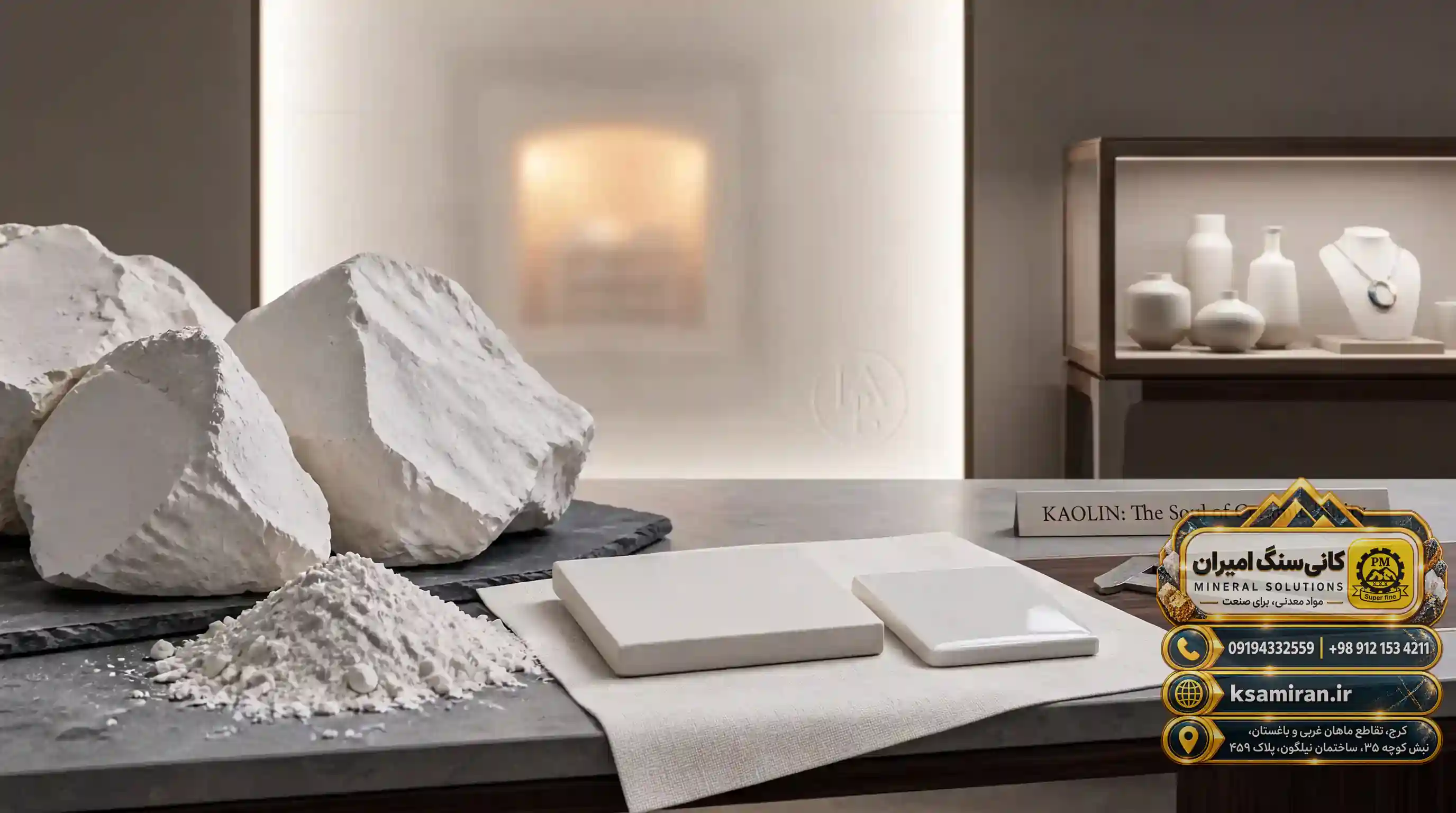
Guide to Buying and Selecting a Kaolin Supplier
Choosing the right kaolin supplier is one of the important decisions for various industries. The quality of kaolin directly affects the quality of final products and production costs, so great care must be taken in selecting a supplier.
Kaolin selection criteria:
When buying kaolin, the following should be considered:
- Technical specifications and quality: the first and most important criterion is the compliance of the product's technical specifications with your needs. This includes chemical composition, particle size distribution, whiteness, moisture percentage, and other quality parameters. Be sure to ask the supplier to provide the product data sheet.
- Quality uniformity: in addition to quality, uniformity of quality between different production batches is also vital. Quality fluctuations can cause problems in your production process. Ask the supplier to explain quality control methods and test frequencies.
- Quality control reference: does the supplier have a well-equipped and independent laboratory? Are the tests verified by reputable authorities? These issues increase confidence in product quality.
- Supply capacity and stability: can the supplier meet your needs continuously and without interruption? Production capacity and mineral reserves should be examined.
- Packaging and transportation: proper packaging preserves the quality of kaolin during transport and storage. The type of packaging (bag, jumbo, bulk) and transportation facilities should be examined.
- Price and payment terms: although price is important, it should not be the only decision criterion. Cheaper kaolin with lower quality can impose much higher costs on you in the long run.
Points when evaluating a supplier:
- Requesting a sample for testing in your own laboratory
- Careful review of the analysis sheet and comparison with required standards
- Asking about quality control methods and test frequencies
- Visiting the production site and laboratory (if possible)
- Requesting a list of previous customers and checking their satisfaction
- Examining production capacity and the possibility of continuous supply
- Asking about packaging and storage methods
To buy standard-quality kaolin, you can visit the kaolin product page on the Kani Sang Amiran project website. This company operates in the field of mineral production and offers kaolin in the 450 to 1500 mesh range for various applications.
Also, if you are active in the tile and ceramic industries and need silica as well, the comprehensive guide to buying quality silica for factories can help you choose the right raw materials. To control the appearance quality of the powder, the kaolin powder appearance and color quality guide is also available.
Storage, Packaging, and Conclusion
Kaolin storage and warehousing:
After buying kaolin, proper storage and warehousing is very important to maintain quality. If kaolin is not stored properly, it may absorb moisture, cake, or become contaminated, and its quality for sensitive applications will decrease.
Important points in kaolin storage:
- Protection against moisture: kaolin should be stored in a dry, moisture-free environment. If stored outdoors, it should be placed on pallets and covered with nylon.
- Prevention of contamination: kaolin should not be stored near other minerals (especially colored materials such as iron oxide), because cross-contamination can destroy its quality.
- Proper handling: bags should be moved in a way that does not cause tearing or leakage. If a bag tears, it should be repaired or replaced immediately.
- Temperature control: extreme temperature changes can cause moisture condensation and kaolin caking. The warehouse should have proper ventilation.
- Inventory management: long-term storage of kaolin should be avoided. It is better to use the FIFO (First In First Out) method so that older kaolin is consumed first.
Kaolin packaging:
Kaolin packaging should be done according to customer needs and the transportation method. Types of packaging include 25-kilogram bags, jumbo bags (500 to 1000 kilograms), and bulk transport. The packaging must have appropriate physical strength, be moisture-proof, and have a complete specification label.
Conclusion:
Kaolin quality control is a comprehensive and multifaceted process that continues from mineral extraction to product delivery to the customer. In this article, kaolin quality standards, testing methods, and the applications of this mineral in various industries were examined.
Key points to remember:
- The chemical composition of kaolin must be precisely controlled, especially the iron content, which affects whiteness.
- Particle size (mesh) should be selected according to the application's needs. Kaolin with 450 to 1500 mesh is suitable for various applications.
- Whiteness and brightness are vital for paper and paint applications.
- Quality uniformity between production batches is as important as quality itself.
- Standard tests such as XRF, XRD, particle size measurement, and whiteness should be performed regularly.
- Choosing the right supplier directly affects the quality of your products.
- Proper storage and warehousing preserves the quality of kaolin.
The Kani Sang Amiran project covers a wide range of industrial needs by offering kaolin in the 450 to 1500 mesh range. For more information or to place an order, you can contact our experts.

| Question | Answer |
|---|---|
| What is kaolin and what materials is it composed of? | Kaolin is an industrial mineral mainly composed of the mineral kaolinite with the chemical formula Al2Si2O5(OH)4, and includes silica, alumina, and structural water. |
| What is the mesh range of kaolin produced by the Kani Sang Amiran project? | Kaolin produced by this project is offered in the 450 to 1500 mesh range, which indicates the very fine grinding of this mineral. |
| In which industries is kaolin used? | Kaolin is widely used in the tile, ceramic products, glaze, paper, and paint industries. |
| Why is kaolin quality control important? | Kaolin quality directly affects the quality of final products, production costs, and competitiveness, and reduces waste and improves the production process. |
| How does kaolin whiteness affect its quality? | Kaolin whiteness, which depends on the amount of iron and titanium impurities and particle size, is very vital for paper and paint applications and usually should be above 85-90 percent. |
| What are the methods for measuring kaolin particle size? | Main methods include standard sieve analysis, laser diffraction, and sedigraph, with the laser method used for high meshes. |
| Why is the amount of iron present in kaolin important? | Iron causes kaolin to change color and reduces its whiteness, and even small amounts can create yellow, red, or brown color in the product. |
| How should kaolin be stored? | Kaolin should be stored in a dry, moisture-free environment, away from colored minerals, on pallets with proper covering, and following FIFO principles. |
| What should be considered when buying kaolin? | Technical specifications, quality uniformity, analysis sheet, supplier capacity, packaging, quality control laboratory, and price should be considered. |
| What is the application of kaolin in the paper industry? | In the paper industry, kaolin is used as a filler to improve printability and opacity, and as a coating to create a smooth and uniform surface. |
Kani Sang Amiran Project — Mineral Production | https://ksamiran.ir/products/kaolin/
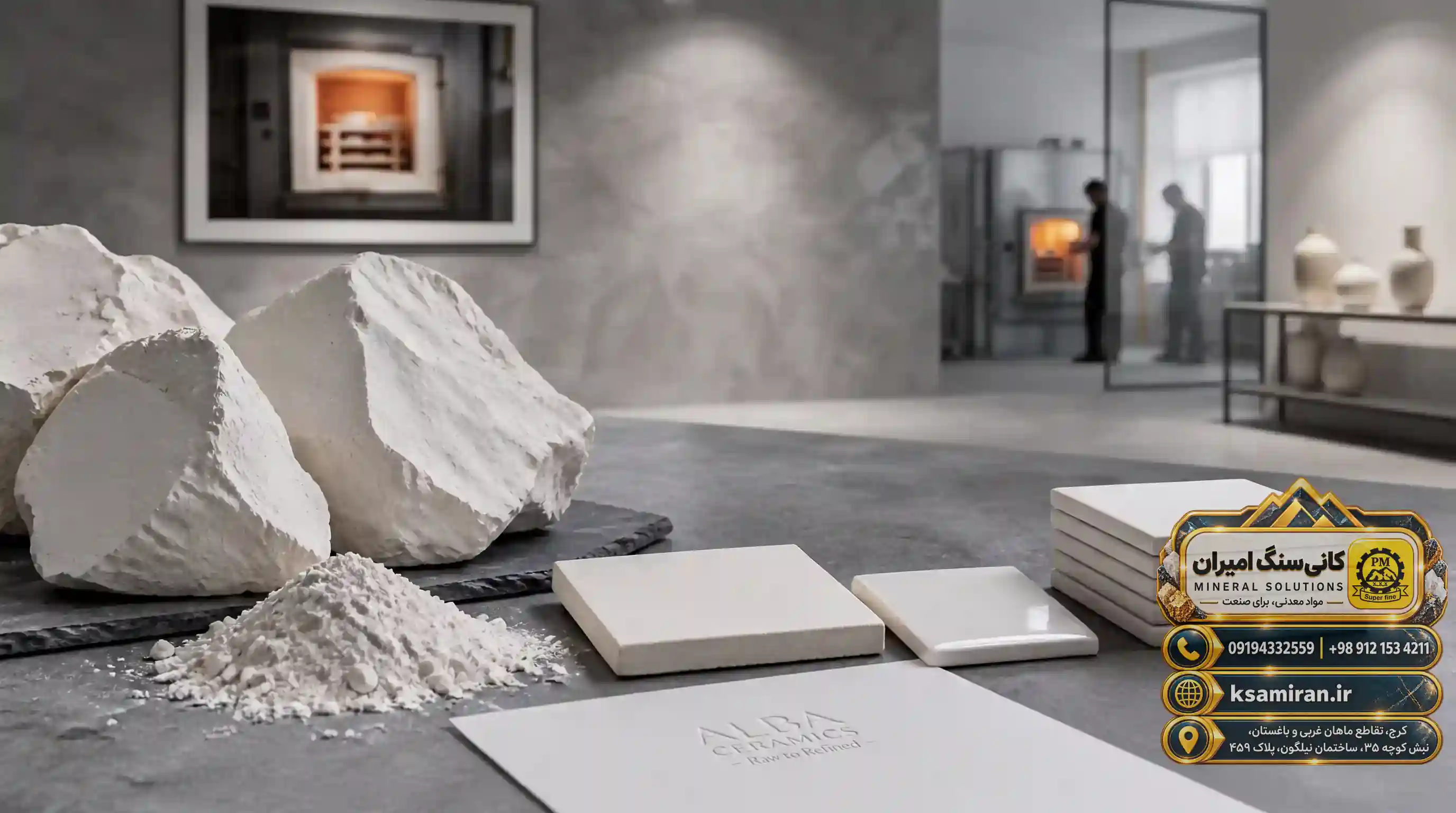
برچسب: Kaolin,Quality Standards of Kaolin, A Guide to Mineral Powder Quality Control,
نویسنده: رساوب آفرین