
درباره سایت
آخرین مطالب
- اکسید لیمونیت (گل ماش) استاندارد جدید در صنایع پوشش صنعتی
- کائولن باکیفیت کانی سنگ برای کاغذسازی مش 450 تا 1500
- سیلیس باکیفیت کانی سنگ امیران برای صنایع سرامیک با مش ۱۰ تا ۴۵۰
- تالک صنعتی با دانه بندی استاندارد برای کاربردهای صنعتی
- کائولن مرغوب کانی سنگ امیران برای رنگ و لعاب با مش 450 تا 1500
- کائولن درجه یک کانی سنگ امیران برای کاشی و لعاب مش 450 تا 1500
- خرید کائولن اصیل کانی سنگ برای کاشی و کاغذ دانه بندی 450 تا 1500
- دریافت کاتالوگ و آنالیز فنی کربنات کلسیم ۸۰۰ مش
- سیلیس صنعتی کانی سنگ امیران برای صنایع شیشه در مش ۱۰ تا ۴۵۰
- خرید فلدسپات به عنوان مواد اولیه صنایع شیشه و سرامیک
امکانات وب
Introduction to the Importance of Silica in Mode Construction Industries
The mode construction industry requires high-quality, sustainable, and durable raw materials that can withstand environmental and mechanical stresses. Among all mineral materials, silica is recognized as one of the most fundamental and versatile compounds, playing a key role in enhancing the engineering properties of structures. With its stable chemical structure, this mineral has a significant impact on improving the physical and mechanical characteristics of mode materials. At the Kani Sang Amiran project, special focus has been placed on the supply and processing of this vital material so that various industries can benefit from it in the best possible way.
Examining the geological structure and intrinsic properties of silica shows that due to its high hardness and resistance to heat and chemicals, this material has found a special place in the formulation of mode building materials. Engineers and structural designers are always looking for raw materials that increase the useful life of structures, and the use of standard powders and gradations of this material is considered a reliable solution in this regard.
In addition to the construction industry, examining the role of other mineral materials such as the role of white talc in improving the appearance quality of polymeric products clearly shows the extent to which materials engineering depends on the precise and optimal selection of mineral additives. Further in this article, various dimensions of silica application in different industries, especially building materials, will be discussed and examined in detail to gain a more comprehensive understanding of this hidden gem within nature.
Choosing the appropriate gradation and a precise understanding of the mesh range of this material have a direct impact on the quality of the final product. With the advancement of construction technologies, the standards for mineral consumption have also been upgraded, and silica has come into the spotlight for specialists as a shaping and reinforcing element.
A Comprehensive Understanding of the Physical and Chemical Characteristics of Silica
To better understand why silica is widely used in various industries, we need to take a close look at its physical and chemical specifications. Chemically, this material is silicon dioxide and is recognized as one of the most abundant compounds in the Earth's crust. Adequate hardness, a high melting point, and exceptional resistance to corrosive chemical agents are among the most prominent features that distinguish it from other minerals.
One of the most important parameters in the processing and supply of this material is its mesh range, covering a variety of products from 10 mesh to 450 mesh. This breadth in gradation and meshing allows industrialists to choose a homogeneous and high-quality product based on the exact requirements of their production process. For example, coarser meshes are used in the production of concrete and bulky building materials, while finer meshes are utilized for more precise applications such as the glass, ceramics, and foundry industries.
A precise understanding of these technical specifications helps engineers make fewer errors in designing their industrial formulations. As seen in the role of calcium carbonate in plastic pipe manufacturing, selecting particle size and their size distribution plays a decisive role in the final product quality. Regarding silica as well, compliance with these gradation standards guarantees its optimal performance in building and industrial materials.
The production of standard mineral products requires advanced crushing and gradation equipment. Utilizing up-to-date technical knowledge, the Kani Sang Amiran collection produces and supplies silica in a specified and standard mesh range (10 to 450 mesh) so that various industries can experience the highest productivity in their production lines by purchasing premium silica.
Main Applications of Silica in the Glass and Ceramics Industry
The glassmaking and ceramics industries are considered the largest consumers of silica worldwide. This material acts as the primary component forming the glass network and significantly affects the melting point and viscosity of the molten glass. Without the presence of this high-quality mineral, the production of transparent, resistant, and high-quality industrial glass would be practically impossible.
In ceramic products, the presence of this compound plays a key role in reducing thermal shrinkage, increasing the mechanical strength of the ceramic body, and improving the dimensional stability of fired parts. The precise gradation and chemical purity of the raw materials used in these industries are of vital importance because impurities can cause stains, bubbles, or structural weak points in the final glass or ceramic product.
In addition to glass and ceramics, understanding other applicable minerals in the construction and manufacturing industry such as what is the important application of dolomite in construction and manufacturing industries provides industrialists with a comprehensive perspective on the synergy between various minerals. The combined or intelligent use of these materials creates a remarkable optimization in final quality.
The silica supplied by Kani Sang Amiran, due to strict quality control and compliance with the standards required by the glass industry and ceramic products, meets the stringent needs of producers in this field and is recognized as a strategic raw material.
The Vital Role of Silica in Foundry and Molding Products
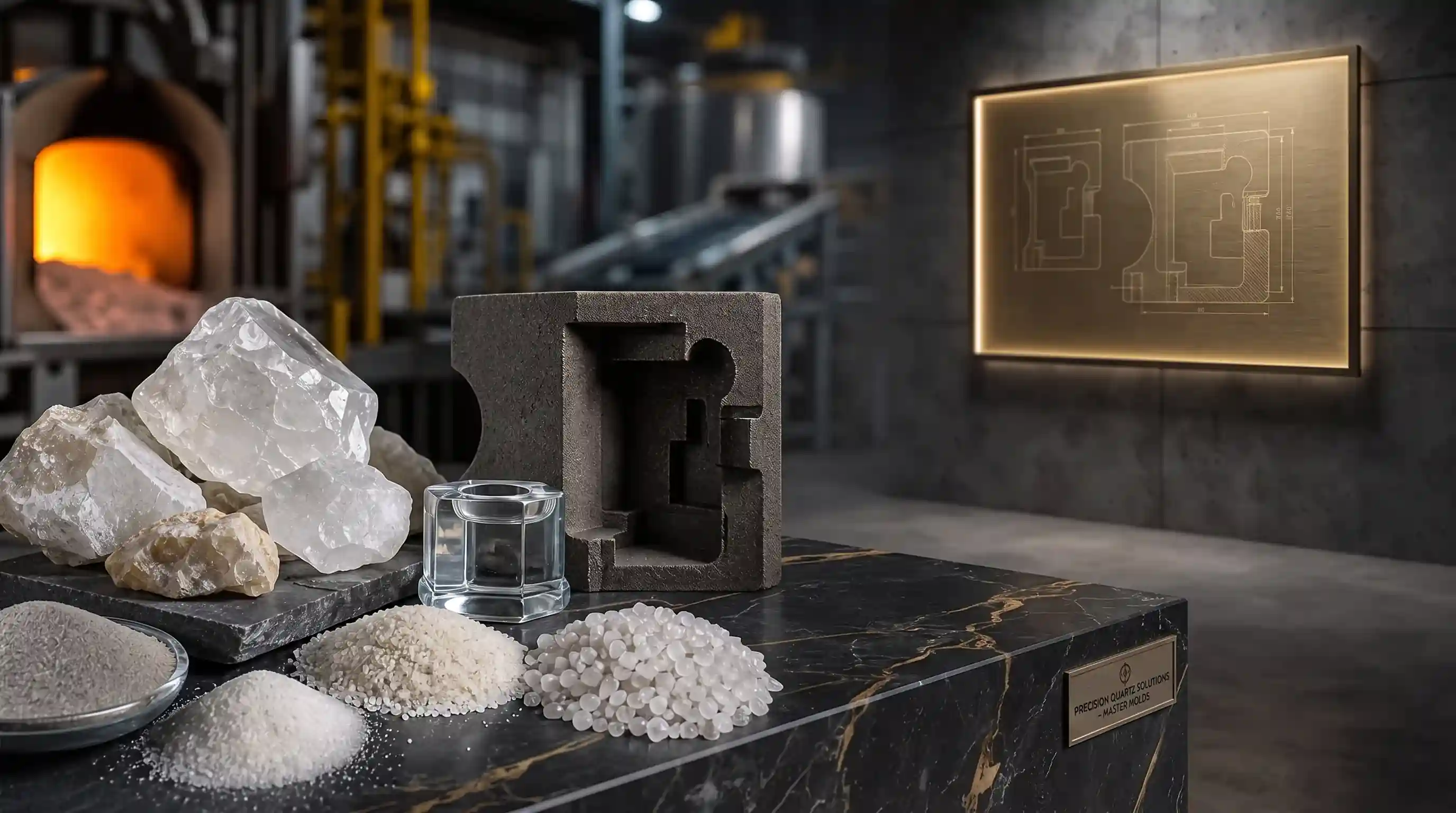
The foundry industry is another traditional yet mode domain that heavily depends on silica. Sand molds used in ferrous and non-ferrous metal casting owe a major part of their structure to the resistant grains of this material. The ability to withstand extremely high temperatures without melting or unwanted deformation has made this material an unrivaled choice in making foundry molds.
The appropriate gradation of silica in casting ensures that gases resulting from the casting process easily escape from the mold, preventing defects such as gas cavities or blowholes in metal parts. The proper adhesion of foundry sand with industrial binders also has a direct relationship with the geometric shape and particle size distribution of this mineral.
Strict compliance with technical parameters in preparing foundry sand increases productivity and reduces waste in industrial workshops. A deep understanding of the thermal and mechanical properties of this material helps operators maintain mold stability under harsh working conditions and produce cast parts with the highest dimensional accuracy and surface quality.
The use of processed mineral products in the Kani Sang Amiran collection gives foundry industries the necessary peace of mind that their consumed raw materials possess purity and standard particle distribution within a specified mesh range, greatly helping to improve the production process.

Silica in Mode Building Materials and Concrete Engineering
In the mode construction industry, achieving high compressive strength, long-term durability, and impermeability against environmental factors are the main goals of engineers. Adding silica with appropriate meshing to the formulation of concrete and engineering mortars improves the microstructural layout and fills the empty space between grains, which leads to the enhancement of the mechanical properties of the structure.
Due to its pozzolanic property in some formulations, this material reacts with the free calcium hydroxide released during cement hydration to produce dense calcium silicate, resulting in a dramatic increase in resistance against water penetration, sulfates, and chloride ions. This feature is of double importance in the construction of marine structures, bridges, and high-rise buildings.
In addition to concrete, in the production of tile adhesives, grouting powders, self-leveling mortars, and dry renders, the presence of this mineral as a filler and improver of flow and adhesion properties is completely evident. The proportion between the consumed mesh and the type of construction application is the key to success in the formulation of these mode materials.
By supplying high-quality and standard silica, the Kani Sang Amiran project covers the needs of construction industry activists for a high-quality and reliable raw material, playing an effective role in the development of sustainable infrastructure.
Examining the Mesh Range and Its Impact on the Industrial Efficiency of Silica
One of the most important factors determining the industrial efficiency of silica is its mesh range, or particle size. The variety of products from 10 mesh to 450 mesh makes it possible for each industry to choose the most precise gradation based on its technological needs. Coarser meshes are usually used in the construction industry, water treatment sand filters, and concrete production.
In contrast, medium and finer meshes are applied in the ceramics industry, glass production, paint manufacturing, industrial coatings, and composite industries. The specific surface area of particles increases as the mesh size decreases, which has a direct effect on chemical reactivity and the rate of resin or binder absorption in various formulations.
Strict control of particle size during the production and gradation process requires mode screening and milling equipment. Leading collections utilizing world-class up-to-date technologies have been able to supply their products to the market with the lowest dimensional tolerance.
A precise understanding of these technical specifications helps factory engineers reduce their production costs and dramatically enhance the quality of final products by intelligently selecting the appropriate mesh from Kani Sang Amiran products.
Economic and Environmental Benefits of Using Silica in Production
In addition to technical and engineering benefits, using silica in manufacturing and construction industries also brings significant economic and environmental achievements. As an abundant and accessible mineral, this substance significantly optimizes raw material supply costs for various industries and brings price stability in the long run.
From the perspective of sustainability and the environment, the use of this natural mineral and the disposal or recycling of products containing it causes minimal damage to the ecosystem. The high durability of building materials made with this material reduces the need for reconstruction, frequent repairs, and new resource extraction, helping to preserve natural resources for future generations.
Additionally, standard processing of this material in advanced industrial units leads to reduced material waste and optimized energy consumption on production lines. This in tu improves the productivity of the entire supply chain.
By adhering to environmental and quality standards in the extraction and gradation process, the Kani Sang Amiran collection strives to offer a clean, economical, and efficient product to consumer industries.
Conclusion and Future Outlook of the Silica Market in Industries
Overall, a comprehensive review of the role of silica in the glass, foundry, ceramics, and building materials industries shows that this irreplaceable mineral is the backbone of many mode industrial processes. The unique physical, chemical, and thermal characteristics of this mineral have made it an unrivaled option in enhancing product quality and durability.
With the advancement of construction technologies and processing industries, the demand for higher-quality raw materials with more precise gradation (in the 10 to 450 mesh range) is increasing day by day. The future of the market belongs to collections that can offer the highest purity and the most precise gradation standards to their customers.
Relying on experience, technical knowledge, and commitment to quality, the Kani Sang Amiran project always strives to supply the best mineral products and make them available to various industries, taking a firm step toward the industrial and civil development of the country.
A deep understanding by various industries of the characteristics of this valuable material and its intelligent selection will guarantee the success of major construction and industrial projects in the future.
| Question | Answer |
|---|---|
| What is silica and what are its applications? | Silica is a mineral with the formula silicon dioxide, which is widely used in the glass, foundry, ceramics, and building materials industries. |
| What is the mesh range of the supplied silicas? | Silica products are supplied and offered in a mesh range of 10 to 450 mesh. |
| What is the role of silica in the glassmaking industry? | This material is the main component forming the glass network and regulates its melting point and stability. |
| Why is silica used in foundries? | Due to its very high thermal resistance and suitability for making temperature-resistant sand molds. |
| What is the impact of silica on mode building materials? | It leads to increased compressive strength, concrete durability, and improved properties of engineering mortars. |
| Does the mesh range affect the final product quality? | Yes, choosing the appropriate mesh has a direct impact on the reactivity, flowability, and mechanical properties of the final product. |
| What are the characteristics of Kani Sang Amiran silica products? | They have controlled quality, standard gradation in a specified range, and desirable industrial purity. |
| How can one procure the silica required by an industry? | You can review and order through the dedicated product page on the Kani Sang Amiran website. |
| Is this material also used in the ceramics industry? | Yes, it plays a key role in reducing thermal shrinkage and increasing the strength of the ceramic body. |
| What are the economic benefits of using silica? | Abundance, reasonable price, long-term durability of materials, and reduced repair and maintenance costs. |
Mineral resources and industrial standards of materials engineering and building materials.
برچسب: Silica,The Role of White Silica in Modern Building Materials Production,
نویسنده: رساوب آفرین