
درباره سایت
آخرین مطالب
- تاثیر اندازه ذرات کربنات کلسیم در صنایع
- ما هو الفرق بين الفلسبار والكوارتز؟ مقارنة شاملة بين أكثر مادتيْن معدنيتيْن استخدماً
- دليل شراء أكسيد الليمونيت عالي الجودة (الجول ماش)
- What is the Difference Between Kaolin, Bentonite, and Talc in Industry? A Complete Application Comparison
- کربنات کلسیم یا دولومیت؟ بررسی تفاوتها و کاربردهای کلیدی
- مراجعة معايير التصدير لأكسيد الليمونيت (جول ماش)
- راهنمای نگهداری و انبارداری اکسید لیمونیت (گل ماش)
- National Quality Standards of Limonite Oxide (Gol Mash)
- Guide to Receiving the Catalog and Specifications of Limonite Oxide (Gol Mash)
- کاربرد اکسید لیمونیت (گل ماش) در صنایع چرم و پارچه
امکانات وب
Introduction to Limonite Oxide (Gol Mash) and Its Industrial Importance
Limonite oxide (Gol Mash) is one of the most important and widely used mineral pigments in various industries, holding a special place due to its unique physical and chemical characteristics. Featuring a yellowish-brown color, this mineral has been used for years as a natural and sustainable pigment in paint manufacturing, coatings, and building materials production. Understanding the physical properties of limonite oxide (Gol Mash) helps engineers and industrialists utilize this material with maximum efficiency in their formulations. For more information about the characteristics of this product, you can visit the Limonite Oxide (Gol Mash) introduction page.
The Kani Sang Amiran project has raised industrial standards in the supply of mineral pigments by producing and processing this high-quality mineral. This material not only acts as a pigment, but due to its mineral structure, it also improves the mechanical and coating properties of final products. The inherent characteristics of this material make it highly stable against environmental factors, establishing it as a reliable choice in large industrial and construction projects.
Examining the physical structure of this material requires a precise understanding of parameters such as mesh range, particle fineness, hiding power, and its dispersion rate in various matrices. In the following sections of this article, we will examine the various dimensions of this mineral in detail to highlight its key role in mode industries.
Understanding the 450 to 1500 Mesh Range and Its Impact on Quality
One of the most important physical specifications of limonite oxide (Gol Mash) is its mesh range, which falls between 450 and 1500 mesh. This wide granulation range allows industrialists to choose the appropriate sample according to their exact needs. Finer particles with a high mesh count (up to 1500 mesh) have a larger surface area, resulting in better hiding power and uniformity in final products. On the other hand, a detailed examination of this parameter is thoroughly explored in the specialized article The Impact of Granulation on Limonite Oxide (Gol Mash) Quality.
Producing powder with this degree of fineness requires advanced milling and particle classification equipment, which is carried out with high precision at the Kani Sang Amiran facility. Strict control over particle size distribution ensures that the final powder is free of large agglomerates and easily disperses in solvents, resins, and construction matrices.
Choosing the appropriate mesh has a direct impact on the viscosity, gloss, and ultimate durability of coatings and building products. For this reason, a precise understanding of this technical specification is an undeniable necessity for all industrial formulation designers.
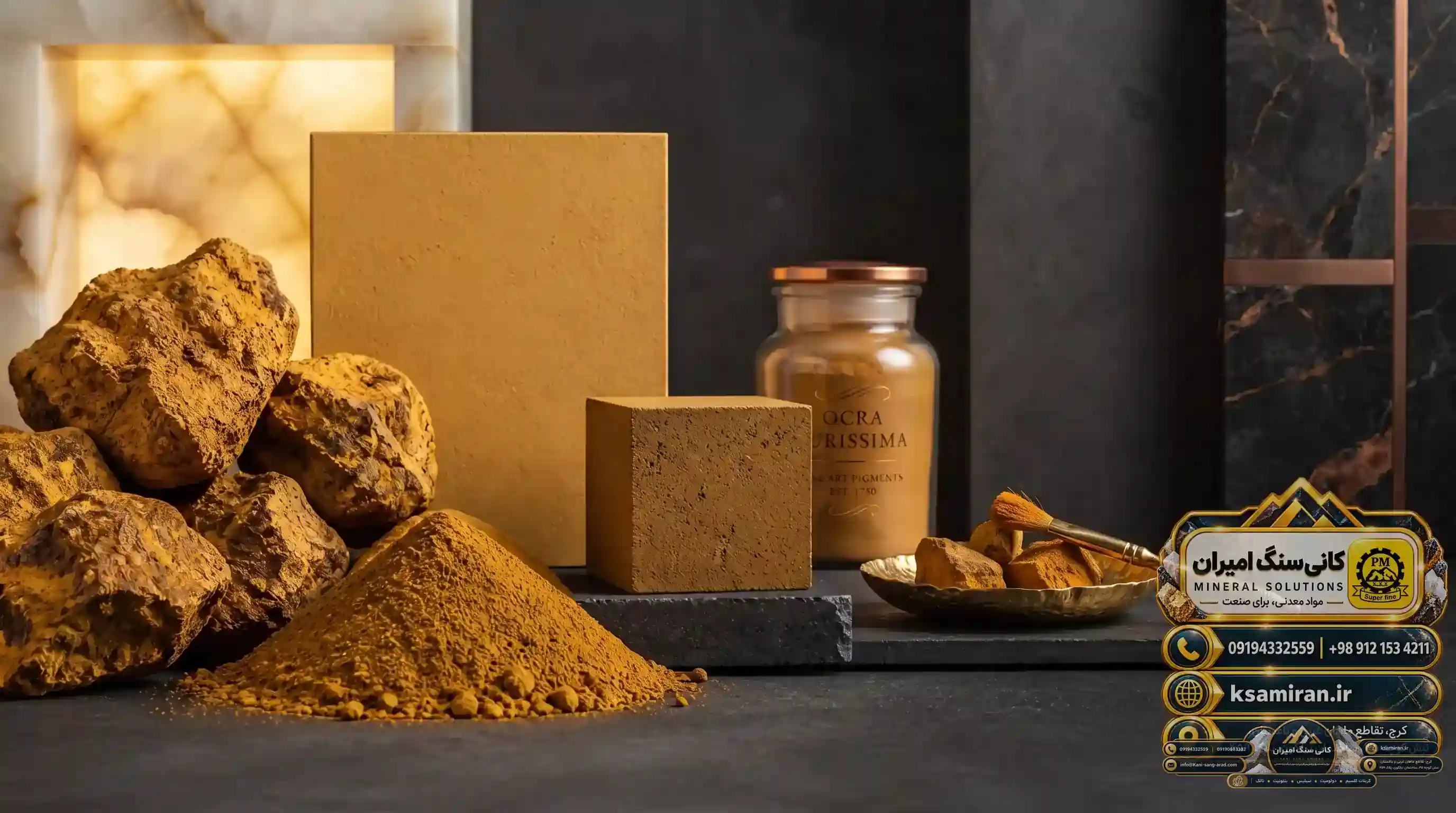
Main Application in the Production of Mineral Pigments and Colorants
Mineral pigments have always been known for their lightfastness and resistance to harsh weather conditions, and among them, limonite oxide (Gol Mash) holds a special place. As a natural pigment, this material creates a wide range of warm yellow, ochre, and brown colors, which find extensive application in paint manufacturing, wood coatings, and architectural paints. The chemical stability of this pigment against solar ultraviolet radiation ensures that the final color does not undergo drastic changes or fading over time.
In addition to the paint industry, this material is also used in the manufacturing of inks, metal protective coatings, and the art industry. The mineral structure of this pigment is compatible with most water-based and solvent-based resins and binders. This high compatibility greatly helps improve the rheological properties of the paint and prevents premature particle settling.
The high processing quality of this pigment by the Kani Sang Amiran project guarantees color purity and uniformity throughout all production stages, which has led to maximum satisfaction among industrial consumers.
The Role of Limonite Oxide in Construction Industries and Mode Materials
The construction industry is one of the largest consumers of limonite oxide (Gol Mash). This mineral is used as a color additive in the production of colored concrete, facade bricks, tiles and ceramics, artificial stones, and dry mortars. The presence of this oxide in building material formulations not only creates visual beauty and color diversity, but due to its mineral structure, it does not exert a negative effect on the compressive and structural strength of concrete and mortar.
Color stability against cement alkalinity is one of the major challenges in construction pigments, which limonite oxide handles exceptionally well, remaining completely stable in alkaline environments. This feature ensures that the facades of buildings and colored concrete structures do not degrade under the influence of weather factors, acid rain, and continuous sunlight.
Adhering to production standards in the Kani Sang Amiran project has ensured that the produced powder has a uniform dispersion throughout the concrete volume, preventing the formation of color spots or particle aggregation within the structure.
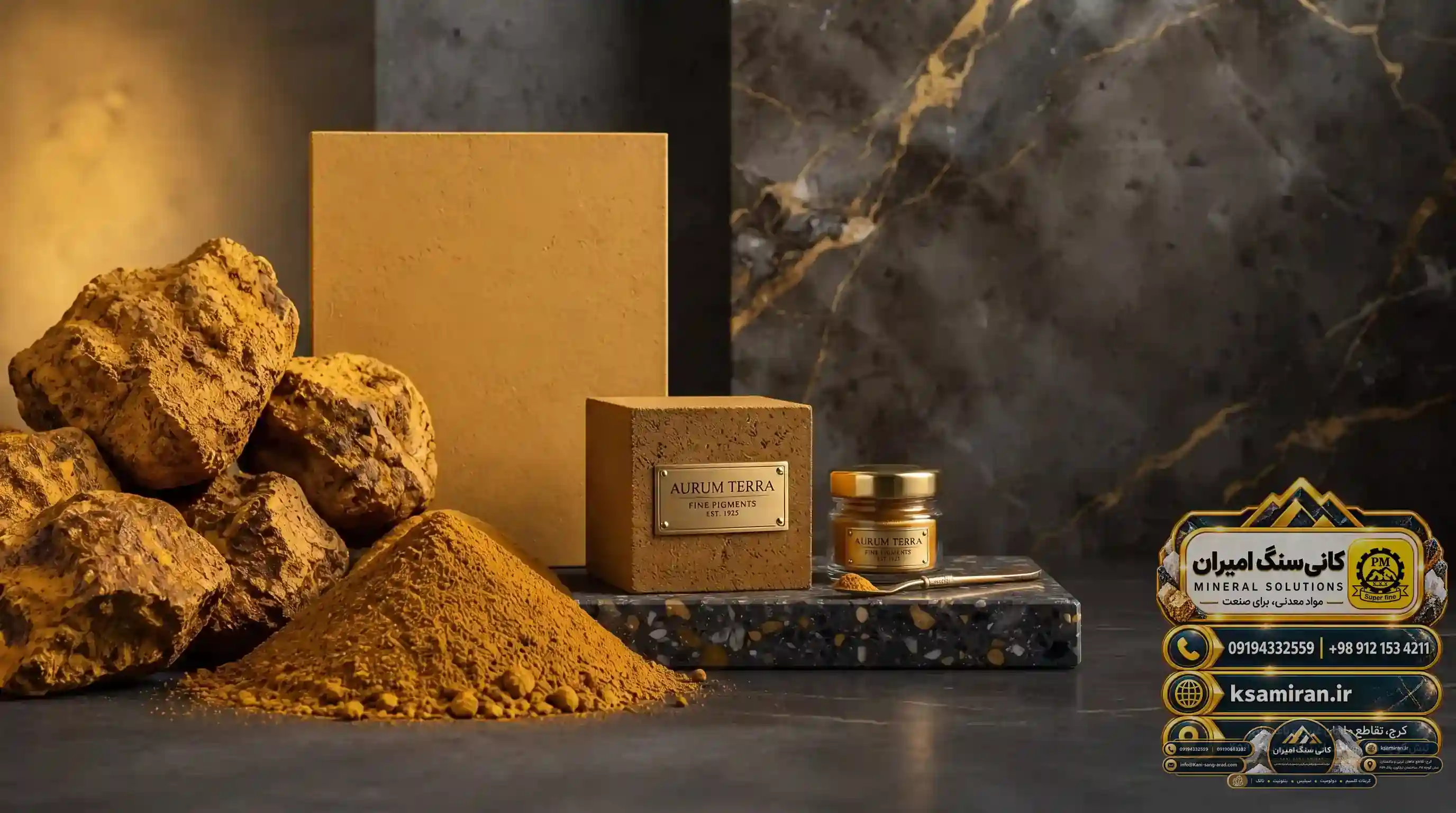
Optimizing Applications and Improving Industrial Efficiency
To achieve the highest efficiency in production lines, it is necessary to precisely adjust the consumption parameters of limonite oxide (Gol Mash). Dosage amounts, mixing methods, and dispersion times all impact the quality of the final product. To study more precise solutions in this regard, reading the article How to Optimize Limonite Oxide (Gol Mash) Application? is strongly recommended.
Using suitable mixer equipment for the homogeneous distribution of powder particles within the main matrix is the key to preventing localized particle agglomeration. Additionally, controlling ambient humidity and properly storing raw materials plays an important role in preserving the physical properties of the powder before entering the production process.
Optimizing these processes not only reduces production costs and material waste but also maintains the final product quality at the highest possible level, which is considered a major competitive advantage for industrial units.
Examining Physical and Chemical Properties Related to the Coating Industry
Industrial and protective coatings require raw materials that, in addition to aesthetics, also increase surface durability. Limonite oxide (Gol Mash), with its appropriate density and optimal particle size distribution within a specific mesh range, acts as an active filler and pigment in various anti-corrosion coatings, primers, epoxy paints, and polyurethanes.
This material helps improve the anti-corrosion properties of coatings and prevents the penetration of moisture and corrosive agents to the underlying metal surface. Excellent adhesion of the paint layer to various surfaces is another advantage of using this mineral pigment. Furthermore, the precise formulation of coatings containing this oxide requires an understanding of its behavior when exposed to various solvents.
By offering this high-quality product, the Kani Sang Amiran collection has met the needs of advanced coating industries in the best possible way and paved the way for the production of durable and standard coatings.
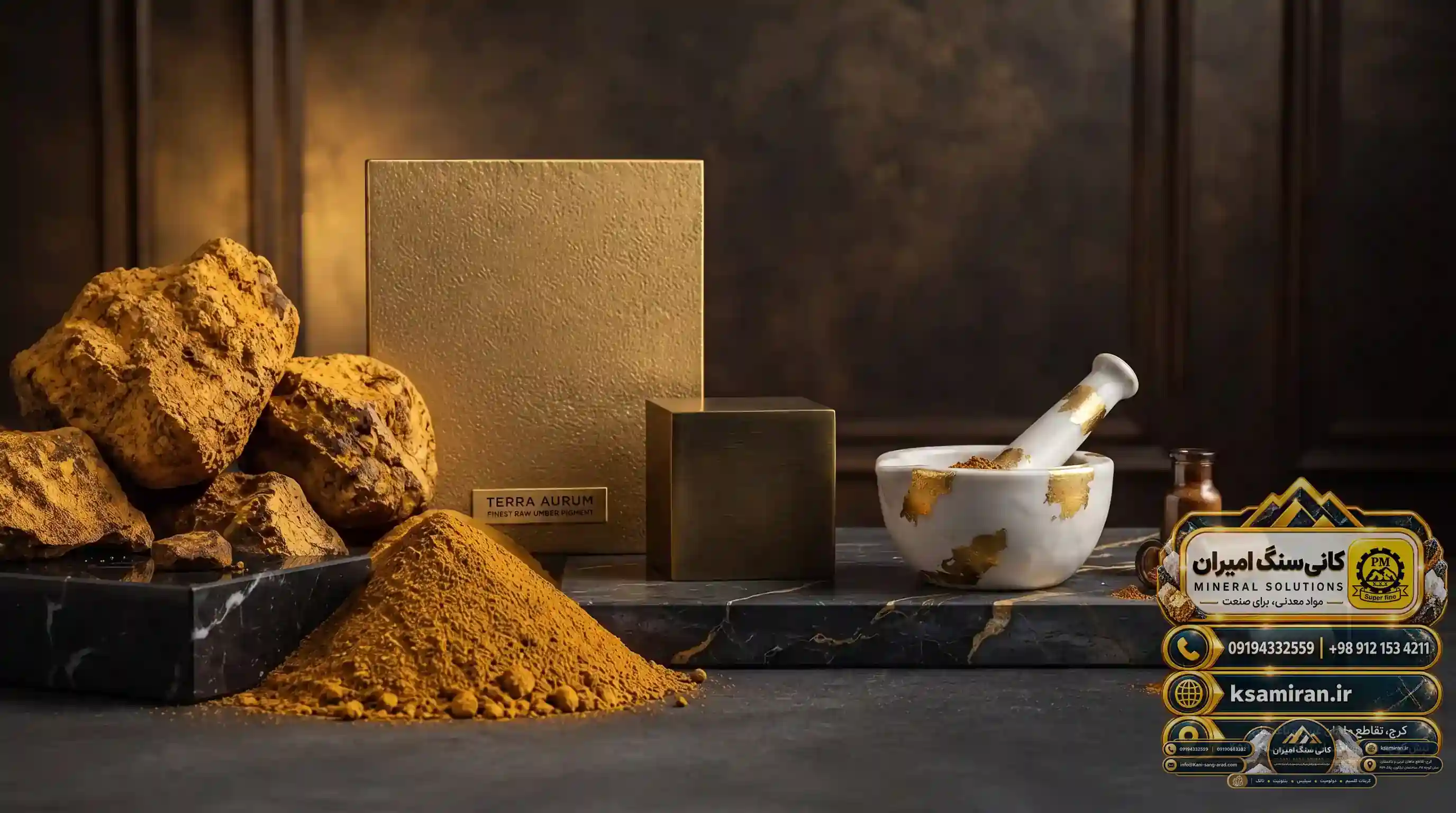
Expanding Applications in Rubber and Plastic Industries
Although construction and paint applications are the main consumers of this material, the rubber and polymer industries also benefit from it due to their need for resistant and stable pigments. The physical properties of this mineral powder allow it to be used as a color filler in various polymer products. For more specialized information in this field, you can visit the article Application of Limonite Oxide (Gol Mash) in the Rubber Industry.
The presence of this material in rubber compounds helps improve the thermal properties and light stability of rubber parts without compromising their flexibility or tensile strength. Uniform particle dispersion in the plastic and rubber matrix prevents the creation of structural weak points.
The production of powder with precise grading at Kani Sang Amiran guarantees that no coarse-grained impurities enter sensitive polymer compounds, and the final quality is fully preserved.
Conclusion and Future Outlook of the Mineral Pigments Market
In this article, we comprehensively examined the physical properties, mesh range, industrial and construction applications of limonite oxide (Gol Mash). Featuring unique characteristics such as high lightfastness, chemical resistance to alkaline environments, and a standard mesh range of 450 to 1500, this mineral has always remained one of the main pillars in the pigment, coating, and building materials industries.
The growth of mineral processing technologies and the continuous efforts of production units such as the Kani Sang Amiran project in supplying high-quality and homogeneous products have played a very effective role in upgrading the quality of final products in consumer industries. A precise understanding of the physical properties of this material serves as a reliable guide for engineers and industrial designers in selecting the best raw materials.
Market prospects indicate that with the increasing demand for eco-friendly materials and natural mineral pigments, the importance of using high-quality limonite oxide will increase more than ever, and the development of its applications in various industries will accelerate further.
| Question | Answer |
|---|---|
| What is limonite oxide (Gol Mash)? | It is a natural mineral pigment with a yellowish-brown color used in the paint, coating, and construction industries. |
| What is the mesh range of this product? | This product is produced and supplied in the 450 to 1500 mesh range. |
| What are the main applications of limonite oxide? | Production of mineral pigments, various coatings, and construction products are its main applications. |
| Is this material resistant to sunlight? | Yes, due to its mineral nature, it has very high stability against UV rays and color changes. |
| Which company is the manufacturer of this product? | The Kani Sang Amiran project is the producer and supplier of this mineral. |
| What impact does it have on the construction industry? | It is used as a resistant pigment in colored concrete, facade bricks, tiles, and dry mortars. |
| Is it compatible with resins? | Yes, it has favorable compatibility with most water-based and solvent-based resins. |
| What is the role of the mesh range in quality? | Higher mesh means finer particles and consequently better hiding power and uniformity. |
| How can its application be optimized? | Efficiency can be increased by precisely controlling the consumption dosage, homogeneous mixing, and proper storage. |
| Is it also used in the rubber industry? | Yes, it is used as a filler and resistant pigment in rubber and polymer compounds. |
Kani Sang Amiran Project — Specialized reference for the production and processing of minerals and industrial pigments.

برچسب: Limonite Oxide (Gol Mash),Familiarity with the Physical Properties of Original Limonite Oxide (Gol Mash),
نویسنده: رساوب آفرین