
درباره سایت
آخرین مطالب
- تاثیر اندازه ذرات کربنات کلسیم در صنایع
- ما هو الفرق بين الفلسبار والكوارتز؟ مقارنة شاملة بين أكثر مادتيْن معدنيتيْن استخدماً
- دليل شراء أكسيد الليمونيت عالي الجودة (الجول ماش)
- What is the Difference Between Kaolin, Bentonite, and Talc in Industry? A Complete Application Comparison
- کربنات کلسیم یا دولومیت؟ بررسی تفاوتها و کاربردهای کلیدی
- مراجعة معايير التصدير لأكسيد الليمونيت (جول ماش)
- راهنمای نگهداری و انبارداری اکسید لیمونیت (گل ماش)
- National Quality Standards of Limonite Oxide (Gol Mash)
- Guide to Receiving the Catalog and Specifications of Limonite Oxide (Gol Mash)
- کاربرد اکسید لیمونیت (گل ماش) در صنایع چرم و پارچه
امکانات وب
Introduction to Limonite Oxide (Gol Mash) and the Importance of Its Warehousing
The mineral limonite oxide (gol mash) is one of the widely used and valuable pigments in various industries, holding a special position due to its brownish-yellow color. Kani Sang Amiran Stone Project supplies this mineral with standard technical specifications for various industries. Understanding the principles of warehousing and storing this material is essential for preserving its physical and chemical quality. In this article, we will examine in detail the storage standards, warehousing, and safety principles for this mineral.
Due to their natural structure, mineral pigments may undergo changes in moisture or caking when exposed to adverse environmental conditions. Therefore, observing safety tips and logistical warehousing principles is of high importance. For more information regarding specialized applications, you can refer to the comprehensive guide to using limonite oxide (gol mash), which provides you with useful practical details.
Strict adherence to warehousing principles not only prevents material waste but also guarantees the final quality of products that use this pigment. In the following chapters, we will examine the technical and operational dimensions of warehousing this valuable mineral so that warehouse managers and production units can achieve maximum efficiency.
Technical Specifications and Granulation Features of Limonite Oxide (Gol Mash)
One of the most important factors in mineral storage is an accurate understanding of their technical specifications. Limonite oxide (gol mash) has a mesh range of 450 to 1500 mesh. This fine granulation means the particles are very soft and susceptible to absorbing atmospheric moisture and the caking phenomenon. Therefore, warehouse environmental conditions must be adjusted to minimize moisture penetration into the packages.
The products of the Kani Sang Amiran Stone Project are processed and granulated with high precision. For a more detailed review of the purchasing value and differences of this material, studying the company limonite oxide (gol mash) price comparison guide can provide appropriate economic perspectives for esteemed buyers.
The granulation specifications of this material require that during handling and storage, tearing of bags or damage to pallets is prevented. The fine particles of this pigment can create safety challenges if dispersed in the air, which we will address in subsequent sections.
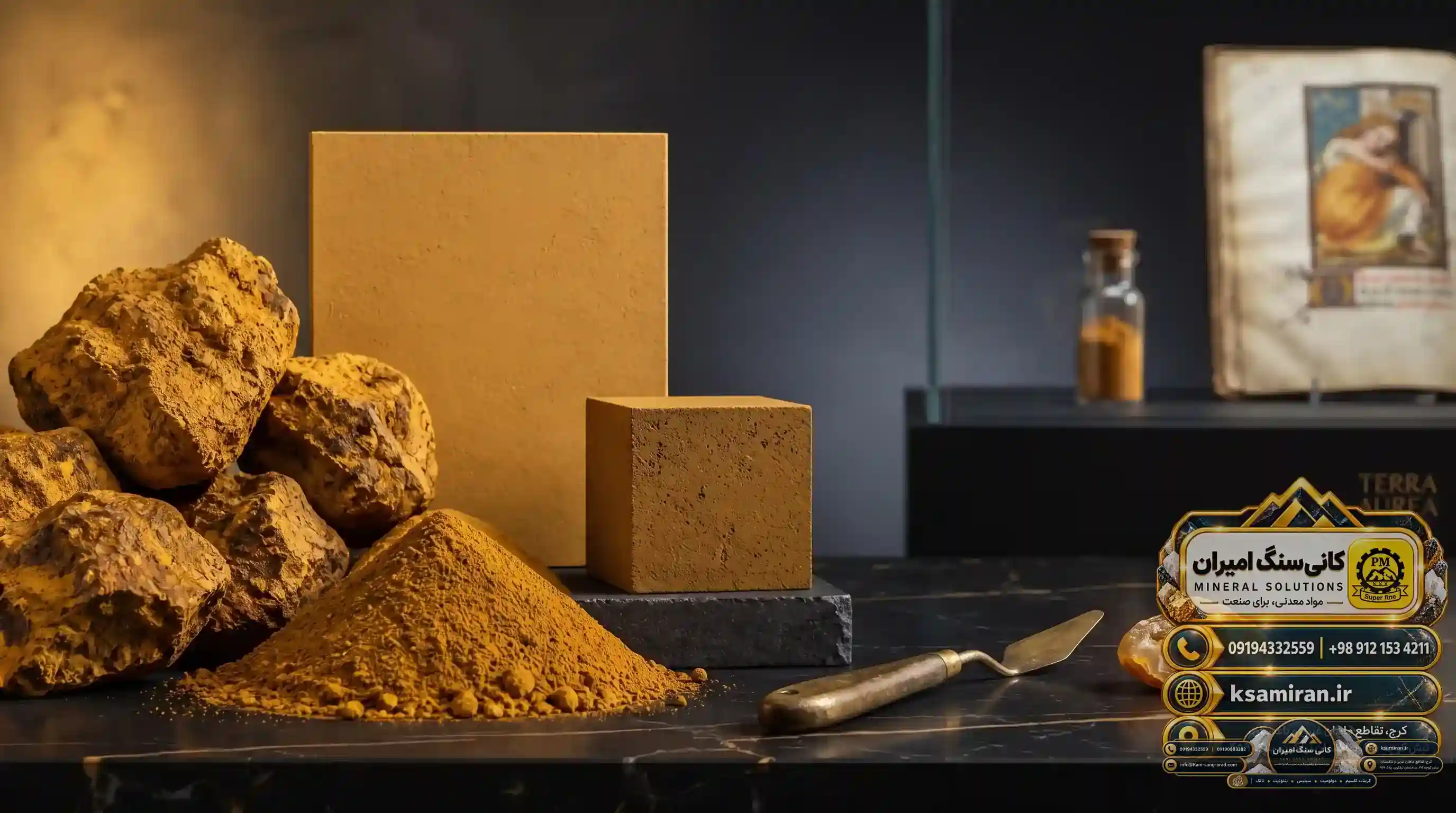
Optimal Warehouse Environmental Conditions for Limonite Oxide (Gol Mash)
Controlling the warehouse environment is one of the main pillars of storing limonite oxide (gol mash). Warehouses storing minerals must be dry, well-ventilated, and away from direct sunlight. Although this mineral is stable under normal heat, severe temperature fluctuations and high relative humidity can affect particle quality.
The relative humidity of the warehouse must be maintained at a standard level to prevent moisture absorption by high-mesh powdery particles (450 to 1500). Proper palletization and keeping bags away from warehouse walls and floors are primary requirements. Airflow under and around the pallets significantly helps keep the product dry.
In addition, periodic careful inspection of warehouse environmental conditions by quality control officers is recommended. To purchase directly and view the complete specifications of this product, you can visit the dedicated page for limonite oxide (gol mash) on the Kani Sang Amiran website.
Principles of Arrangement, Palletization, and Safe Storage
The proper arrangement of limonite oxide (gol mash) packages plays an important role in preventing mechanical damage to the product. Bags or sacks containing mineral powder must be regularly stacked on standard pallets. The stacking height must not exceed the permitted limit to prevent crushing lower bags and cargo collapse.
Appropriate clearance between pallet rows is essential for the passage of material handling equipment such as forklifts or pallet jacks. This minimizes the risk of equipment collisions with stored loads. Furthermore, accurate labeling on pallets including the product name, warehouse entry date, and production batch number of the Kani Sang Amiran Stone Project assists in inventory management.
Following FIFO (First In, First Out) principles in warehousing this mineral guarantees that products do not remain in the warehouse for long periods and fully retain their initial quality. Regular cleaning of the warehouse floor and preventing the accumulation of powdery dust are also health and safety requirements of the work environment.

Industrial Applications of Limonite Oxide (Gol Mash) and the Impact of Warehousing on Its Performance
Limonite oxide (gol mash) has wide applications in various industries. The main applications of this material include mineral pigments, coatings, and construction products. Warehousing quality directly affects the performance of this material in the mentioned industries. For example, if the pigment cakes due to improper warehousing, it will not disperse well when mixed with resins, paints, or construction materials.
In addition to construction and coating industries, this material is used in other specialized fields as well. For instance, reviewing the application of limonite oxide (gol mash) in rubber industries shows how vital the uniformity and purity of this material are for polymer industries.
Therefore, maintaining the initial quality of the product from the time of production at the Kani Sang Amiran Stone Project until the moment of final consumption depends on strict adherence to the storage and warehousing guidelines mentioned in this article.
Safety, Health, and Personal Protection Tips in the Warehouse
Working with finely granulated mineral powders such as limonite oxide (gol mash) requires strict adherence to safety and occupational health tips. Inhaling dust resulting from unloading or handling these materials can irritate the respiratory system of employees. For this reason, using appropriate personal protective equipment including anti-dust filter masks, safety glasses, and gloves in the warehouse environment is mandatory.
Local ventilation systems in the loading and unloading sections of the warehouse must be installed to quickly extract airboe particles and prevent their accumulation. Additionally, installing safety waing signs in the warehouse helps increase employee awareness.
In the event of any accidental powder dispersion in the environment, the area must be cleaned immediately using appropriate equipment and industrial vacuum cleaners, and direct washing with large amounts of water without containment equipment should be avoided to prevent environmental pollution.
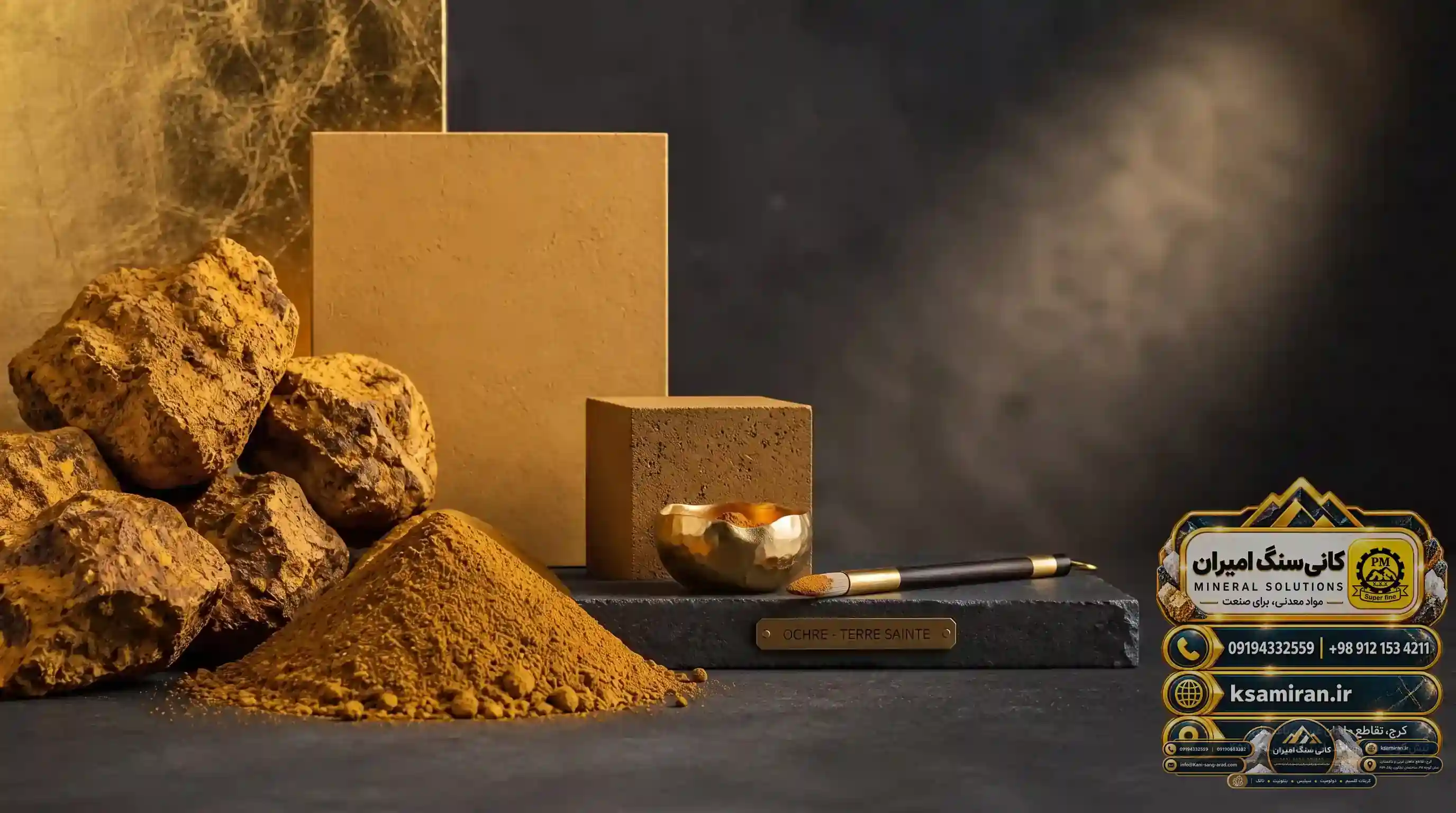
Inventory Management and Periodic Quality Control in the Warehouse
Optimal inventory management of limonite oxide (gol mash) in the warehouse requires accurate recording of incoming and outgoing information. Periodic inspections of packaging conditions, checking for moisture non-penetration, and evaluating pallet health must be performed weekly or monthly. Any minor damage in packaging must be quickly identified and repaired or separated.
The Kani Sang Amiran Stone Project always emphasizes delivering high-quality products, but maintaining this quality after delivery rests with the customer's warehousing unit or consumer factory. Conducting random sampling and initial tests before materials enter the production line prevents potential damages.
Recording information in warehouse software systems and regular inventory counts minimize potential discrepancies and facilitate production plaing. This structured approach guarantees maximum efficiency of mineral materials.
Conclusion and Final Warehousing Checklist for Limonite Oxide (Gol Mash)
In this article, we comprehensively reviewed the principles of storing and warehousing limonite oxide (gol mash). It became clear that given the fine granulation of this material in the 450 to 1500 mesh range, moisture control, proper warehouse ventilation, principled palletization, and adherence to safety tips are among the most important success factors in its storage.
As a final checklist for warehouse managers, the following items should always be considered: 1. Ensuring the warehouse is dry and roofed, 2. Maintaining standard distances of pallets from the floor and walls, 3. Strict implementation of the FIFO system, 4. Employees using personal protective equipment, and 5. Periodic inspections of packaging integrity.
Observing these standards helps ensure that mineral pigments, coatings, and construction products produced with this material have the highest quality and efficiency, bringing optimal added value to consuming industries.

| Question | Answer |
|---|---|
| What are the applications of limonite oxide (gol mash)? | This material is widely used in the production of mineral pigments, various coatings, and construction products. |
| What is the mesh range of limonite oxide (gol mash)? | This product is processed and supplied in the 450 to 1500 mesh range. |
| What are the best storage conditions for this mineral? | A dry, cool, well-ventilated warehouse away from direct moisture and sunlight. |
| How can powder caking be prevented? | Through proper palletization, keeping away from moisture, and maintaining inventory rotation (FIFO). |
| Does improper warehousing affect color quality? | Yes, moisture absorption causes caking and reduces the dispersion quality of particles in paint and coatings. |
| What safety equipment is required to work with this powder? | Using an anti-dust mask, safety glasses, and work gloves is mandatory. |
| Is direct purchase of this product possible? | Yes, it can be ordered through the dedicated product page on the Kani Sang Amiran website. |
| What factors damage powder packaging? | Improper handling with a forklift and excessive stacking height of pallets. |
| Is this material suitable for the rubber industry as well? | Yes, it also has specialized applications in polymer and rubber industries. |
| How can prices and purchase terms be compared? | By referring to the company price comparison guide on the Kani Sang Amiran website. |
Kani Sang Amiran Project — Production of industrial minerals and specialized pigments.

برچسب: Limonite Oxide (Gol Mash),Storage and Warehousing Guide for Limonite Oxide (Gol Mash),
نویسنده: رساوب آفرین