
درباره سایت
آخرین مطالب
- تاثیر اندازه ذرات کربنات کلسیم در صنایع
- ما هو الفرق بين الفلسبار والكوارتز؟ مقارنة شاملة بين أكثر مادتيْن معدنيتيْن استخدماً
- دليل شراء أكسيد الليمونيت عالي الجودة (الجول ماش)
- What is the Difference Between Kaolin, Bentonite, and Talc in Industry? A Complete Application Comparison
- کربنات کلسیم یا دولومیت؟ بررسی تفاوتها و کاربردهای کلیدی
- مراجعة معايير التصدير لأكسيد الليمونيت (جول ماش)
- راهنمای نگهداری و انبارداری اکسید لیمونیت (گل ماش)
- National Quality Standards of Limonite Oxide (Gol Mash)
- Guide to Receiving the Catalog and Specifications of Limonite Oxide (Gol Mash)
- کاربرد اکسید لیمونیت (گل ماش) در صنایع چرم و پارچه
امکانات وب
What is Kaolin? Definition, Structure, and Basic Characteristics
Kaolin, also known in Persian as China clay, is one of the most important and widely used industrial minerals worldwide. It is primarily composed of the mineral kaolinite and is classified as an industrial clay. The name kaolin comes from the “Kauling” region in China, where this mineral was first extracted and processed, quickly becoming a strategic material in manufacturing industries.
In terms of chemical structure, kaolinite is an aluminum hydroxide silicate that has a tetrahedral silica layer and an octahedral alumina layer together in its crystal structure. This layered structure is the main reason for many of kaolin's unique properties, such as adhesion, plasticity, and thermal reactivity. The finer the particles of this material, the higher its specific surface area and efficiency in industrial processes; this is why the 450 to 1500 mesh range is extremely important for sensitive applications.
Some of the most important characteristics of kaolin include:
- Light color and high whiteness: High-quality kaolin has a white to light yellowish-white color, making it an ideal material for products requiring whiteness.
- Chemical neutrality: Kaolin has good resistance to most chemicals and exhibits low reactivity.
- Good thermal resistance: This material behaves stably against thermal shocks and ceramic firing temperatures.
- Low hardness and abrasiveness: Due to its low hardness, it causes little wear on machinery and molds in production lines.
- Suspension and adhesion capability: When combined with water and other materials, it exhibits acceptable rheological behavior and helps stabilize formulations.
Kaolin processing involves extraction, washing, classification, drying, and grinding. The final quality of this material depends on purity, kaolinite percentage, whiteness level, particle size distribution, and impurity content. The more precise the processing, the more uniform the product obtained, and its performance in production lines will be more predictable. These characteristics have made kaolin known as a base material in the tile and ceramic, glaze, paper, and paint industries; applications that are examined in detail in the following chapters.
Application of Kaolin in Tile and Ceramic Product Manufacturing
One of the main and most well-known applications of kaolin is its use in tile bodies and ceramic products. In fact, it can be said that without kaolin, producing many high-quality ceramic products used today in buildings, sanitary ware, and tableware would be almost impossible. This is due to the multiple roles kaolin plays in various stages of ceramic production.
The first role of kaolin in a ceramic body is creating plasticity and adhesion. Fine kaolin particles, when combined with water, create plastic behavior that allows the ceramic paste to be easily molded, pressed, or extruded. This property reduces cracking and breakage of the body during drying and handling, and increases production line efficiency.
The second role of kaolin is providing the necessary alumina and silica for the final strength of the body. During the firing process in the kiln, kaolin undergoes thermal reactions with other materials and forms resistant ceramic phases that guarantee the mechanical strength, wear resistance, and dimensional stability of the final product. For this reason, tiles and ceramics resistant to traffic and wear are usually produced from bodies with an appropriate kaolin composition.
The third role is whiteness and glaze-ability. Light kaolin gives the tile body a natural whiteness, which directly affects the transparency and beauty of the product under light glazes and digital printed designs. The higher the whiteness of the body, the brighter and higher-quality the final glaze and design appear on the tile.
Other applications of kaolin in this industry include:
- Reducing shrinkage and dimensional changes during drying and firing
- Improving body-to-glaze adhesion and reducing defects such as glaze shrinkage
- Use in the production of porcelain tableware, sanitary ware, and technical ceramics
- Controlling the porosity and density of the final body
Given these factors, the tile and ceramic industries are always looking for kaolin with high whiteness, uniform particle size distribution, and sufficient purity; specifications directly related to the product's mesh range and processing quality.
Application of Kaolin in Glazes and Ceramic Coatings
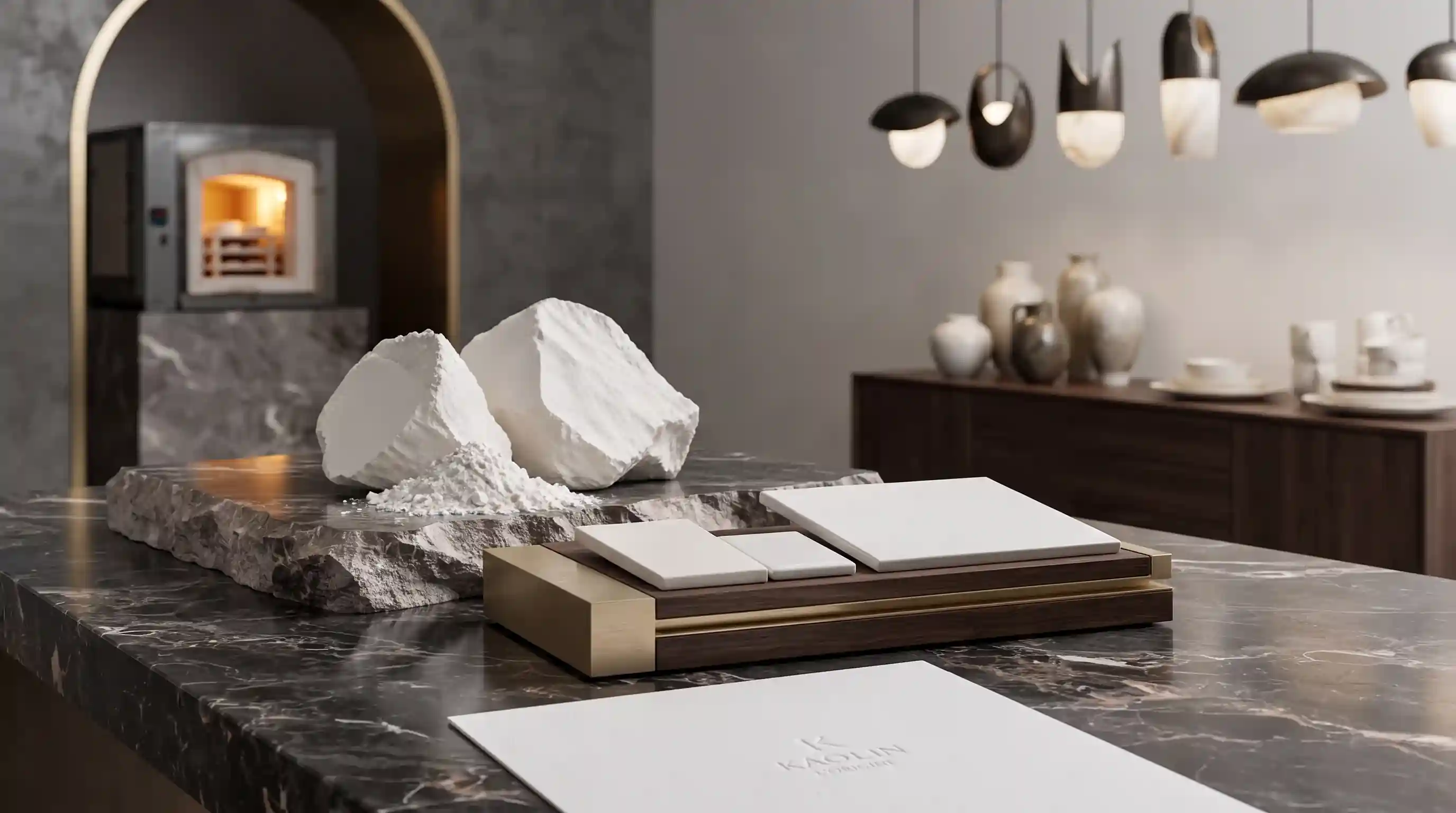
In addition to the body, kaolin is a key component in ceramic glaze formulations. Glaze is a thin glassy layer applied to the surface of tiles, porcelain tableware, and ceramic products; its task is to create a smooth, hygienic, beautiful surface resistant to moisture and chemicals. Kaolin has several specialized roles in this formulation that make it difficult to replace.
The first role of kaolin in glaze is providing alumina and silica. These two elements form the main skeleton of the glassy structure of the glaze and increase its resistance to scratching, wear, and chemical attack. Because kaolin contains both elements in its single composition, it is a highly efficient raw material for glaze formulation.
The second very important role of kaolin is the suspension and stabilization of the glaze mixture. Glaze is usually applied to the product surface as an aqueous slip, and its particles must remain suspended in water until use. By creating colloidal properties and adhesion, kaolin prevents rapid settling of particles and maintains the uniformity of the mixture. This property is especially important in spray and dipping glazes.
The third role of kaolin is controlling the viscosity and thickness of the glaze layer. Kaolin allows the glaze to have stable rheological behavior at different temperatures and speeds of the production line, and to settle as a layer with uniform thickness on the product. This directly affects the visual quality, transparency, and uniformity of the final surface.
Other applications of kaolin in this section include:
- Increasing whiteness and opacity in matte and white glazes
- Improving glaze adhesion to the body before firing and reducing surface defects
- Use in engobe, granite, and decorative coatings
- Reducing formulation costs compared to synthetic raw materials
An important point is that glaze usually requires very fine kaolin particles; because coarse particles can cause roughness, impurity spots, or reduced layer uniformity. This is why high-mesh products are of special importance in this application.
Application of Kaolin in the Papermaking Industry
The papermaking industry is one of the largest consumers of kaolin worldwide. In this industry, kaolin is used in two main stages: as a filler in the paper structure and as a coating material on its surface. Both applications play a decisive role in the quality, appearance, and final cost of the paper.
In its role as a filler, kaolin sits among the cellulose fibers and fills the voids between them. This has several major advantages: first, the amount of wood fibers consumed decreases, which is very important economically and environmentally. Second, paper made with an appropriate filler will have a smoother, more uniform, and more printable surface.
In its role as a coating, kaolin is applied to the paper surface to form a thin and smooth layer. This layer significantly improves brightness, whiteness, opacity, and surface smoothness. The result is paper with high print quality that absorbs ink well and prevents the fading or spreading of text and image edges. For this reason, kaolin is considered a base material in the production of printing paper, magazines, catalogs, and packaging.
The advantages of using kaolin in papermaking can be summarized as follows:
- Increasing whiteness and surface brightness of paper
- Improving opacity and preventing the transmission of light and underlying lines
- Creating a smooth and soft surface for high-quality printing
- Reducing the consumption of expensive fibers and lowering the final cost
- Increasing the speed of printing machines due to better ink-absorption behavior
In this industry, the particle size of kaolin is of vital importance; coarser particles are used for filler papers, and very fine particles are used for coated and luxury papers. For this reason, paper manufacturers usually choose different mesh ranges for different applications.
Application of Kaolin in the Paint and Industrial Coatings Industry
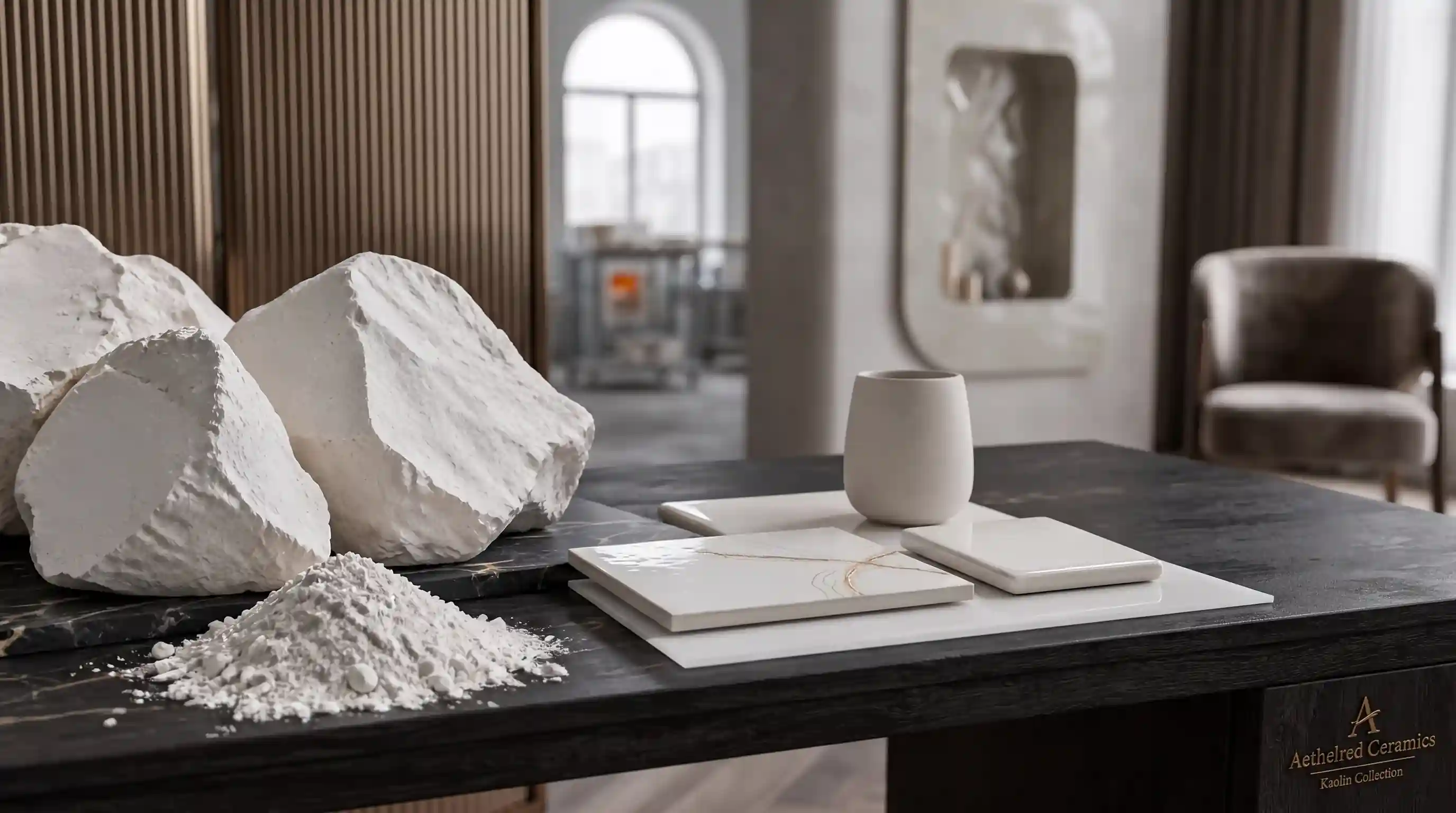
In the paint industry, kaolin is one of the most important extender pigments. This material is used alongside primary pigments such as titanium dioxide, and its role is to fill the paint volume, improve performance, and reduce the final cost of the formulation. Due to its light color, low abrasiveness, and chemical neutrality, kaolin is widely used in many building, industrial, and decorative paints.
One of the most important effects of kaolin in paint is helping to increase opacity and covering power. Kaolin particles spread in the paint layer, and by creating an inteal structure, they prevent light penetration and the visibility of the underlying surface. This feature allows the paint to provide better coverage with less thickness and reduces the number of painting coats.
Kaolin also improves the strength and durability of the paint layer. As a mineral filler, it raises the resistance of the paint layer to wear, moisture, and environmental conditions, preventing cracking and peeling. In addition, the rheological behavior of kaolin helps control paint viscosity, prevent dripping in wall paints, and stabilize particles in paint packages.
Applications of kaolin in paintmaking include:
- Plastic and acrylic building paints
- Industrial paints and metal protective coatings
- Primers, base paints, and topcoats
- Anti-rust coatings along with related minerals
For a more specialized study, you can read the article Application of Kaolin in the Paint and Industrial Coatings Industry. Also, in the formulation of anti-rust coatings, other minerals are used; to get acquainted with these materials, read the article Application of Limonite Oxide (Gol Mash) in Anti-Rust Industries.
The 450 to 1500 Mesh Range in Kaolin and the Importance of Particle Size
One of the most important technical specifications of kaolin that directly affects its quality and type of application is the particle size or mesh of the product. In the mineral market, kaolin is offered in the 450 to 1500 mesh range; a wide range where each number creates different properties in the product and is suitable for a specific application.
The term “mesh” refers to the size of the holes in the sieve through which particles pass; the higher the mesh number, the finer and smaller the particles. In other words, 1500-mesh kaolin is much finer than 450-mesh kaolin and has a much larger specific surface area. This simple difference creates a huge impact on the final performance of the product.
The importance of kaolin particle size can be summarized in a few points:
- Whiteness and brightness: Finer particles reflect light better and create higher whiteness.
- Suspension capability: Fine particles remain suspended better in water and solvents and do not settle.
- Surface uniformity: In glaze, paint, and paper coating, finer particles create a smoother surface without roughness.
- Strength and adhesion: In the ceramic body, appropriate particles improve adhesion and firing strength.
In applications such as glaze, paper coating, and paintmaking, higher meshes and finer particles are usually required, because these products depend on a smooth and uniform surface. In contrast, in ceramic and tile productions where body adhesion and stabilization are needed, intermediate and lower meshes are also applicable. For this reason, the correct choice of mesh range must be made based on the precise needs of each industry and production process.
An important point is that the mesh range is not limited to particle size alone; uniformity of particle distribution is also very important. A product with a uniform particle distribution shows more predictable behavior on the production line and guarantees the final quality of the factory's product.

Advantages of Kaolin in Construction and Manufacturing Industries
So far, we have become familiar with the main applications of kaolin in tiles, ceramics, glaze, paper, and paint. But why are manufacturing industries so dependent on this mineral? The answer lies in the set of advantages kaolin offers compared to alteative materials. These advantages have made kaolin a strategic raw material in many production chains.
The first advantage is availability and reasonable price. Kaolin is a natural and abundant mineral whose processing is relatively simple. For this reason, its final cost is lower compared to synthetic materials and expensive pigments, and its use in high volumes makes good economic sense.
The second advantage is the versatility of kaolin. A single material can simultaneously act as a filler, whitening pigment, suspending agent, binding agent, and supplier of alumina and silica. This feature allows manufacturers to simplify their formulations and reduce inventory.
The third advantage is improving the quality of the final product. Kaolin enhances the whiteness, strength, surface smoothness, and chemical stability of products; characteristics that play a direct role in market competition and customer satisfaction.
Other advantages of kaolin include:
- Low hardness and abrasiveness, which reduces machinery wear
- Good chemical and thermal stability
- Natural whiteness and reduced need for expensive pigments
- Possibility of combining with other minerals such as dolomite in building and ceramic formulations
In many building and ceramic formulations, kaolin is used alongside other minerals. To get acquainted with the role of these materials, read the article What is the Important Application of Dolomite in Construction and Manufacturing Industries.
Guide to Choosing and Buying Kaolin + Summary
After getting familiar with the applications of kaolin, the question arises: how do we choose the right product for our needs? Choosing the correct kaolin directly affects the final product quality and production line efficiency, so it must be done carefully and based on the needs of the process.
The first criterion is matching the mesh range to the application. If you work in the glaze, paper coating, or paint industry, you need higher meshes and finer particles. If you are in the ceramic and tile industries, intermediate meshes are usually the best choice. Consulting with the supplier's technical team can be very helpful at this stage.
The second criterion is the whiteness and purity of the product. For products that require a light color, kaolin with high whiteness and low impurities should be selected. The third criterion is uniformity of quality over different time periods, which guarantees the stability of your production line.
The fourth criterion is the expertise and reputation of the supplier. Choosing a specialized manufacturer in the field of minerals assures you of receiving a high-quality and uniform product, and you will benefit from technical consulting if needed. To view the specifications and buy kaolin in the 450 to 1500 mesh range—suitable for tiles, ceramics, glaze, paper, and paint—you can visit the Kaolin product page on the Kani Sang Amaran project.
Finally, the 7 important applications of kaolin in the construction and manufacturing industries can be summarized as follows:
- Production of tile and ceramic bodies
- Formulation of glazes and ceramic coatings
- Filler and coating in the papermaking industry
- Extender pigment in paint and industrial coatings
- Improving strength and adhesion in building products
- Increasing whiteness and the visual quality of products
- Reducing the final cost of industrial formulations
Given this wide range of applications, there is no doubt that kaolin will continue to remain one of the key minerals in manufacturing industries.

| Question | Answer |
|---|---|
| What is kaolin? | Kaolin, or china clay, is an industrial mineral mainly composed of the mineral kaolinite, used in various industries due to its whiteness, adhesion, and thermal stability. |
| What are the most important applications of kaolin? | Tiles and ceramic products, glaze, papermaking, and the paint industry are the main applications of kaolin. |
| What role does kaolin play in tiles and ceramics? | Kaolin gives plasticity and adhesion to the body, provides the necessary alumina and silica for post-firing strength, and increases the whiteness of the body. |
| What does the 450 to 1500 mesh range mean in kaolin? | This range indicates the particle size of the product; the higher the mesh number, the finer the particles and the more suitable they are for sensitive applications such as glaze, paint, and paper coating. |
| What is the application of kaolin in the paint industry? | Kaolin, as an extender pigment, increases the opacity and covering power of paint, enhances the strength of the paint layer, and reduces formulation costs. |
| Why is kaolin used in papermaking? | Kaolin, as a filler and coating agent, increases the whiteness, surface smoothness, and print quality of paper, and reduces the consumption of expensive fibers. |
| Is kaolin suitable for ceramic glaze? | Yes; kaolin provides alumina and silica in the glaze, keeps particles suspended, and controls the viscosity and thickness of the glaze layer. |
| Where can we buy kaolin? | To view the specifications and buy kaolin in the 450 to 1500 mesh range, you can visit the kaolin product page on the Kani Sang Amaran project website. |
| What are the advantages of kaolin in manufacturing industries? | Reasonable price, versatility, improving the quality of the final product, low abrasiveness, and chemical and thermal stability are the main advantages of kaolin. |
| How is kaolin processed? | Kaolin processing involves extraction, washing, classification, drying, and grinding, and the final quality depends on purity, whiteness, and particle size distribution. |
Specifications and applications of kaolin, Kani Sang Amaran project (mineral production): https://ksamiran.ir/products/kaolin/
برچسب: Kaolin,7 Important Applications of Kaolin in Construction and Manufacturing Industries You Should Know,
نویسنده: رساوب آفرین