
درباره سایت
آخرین مطالب
- Why is choosing Limonite Oxide (Gole Mash) important for industries?
- چگونه بهترین فرمولاسیون با اکسید لیمونیت (گل ماش) بسازیم؟
- لماذا يعد اختيار أكسيد الليمونيت (أوكر أصفر/كلماش) مهماً للصناعات؟
- دور أكسيد الليمونيت (الجول ماش) في إنتاج الطوب والفخار
- Examining the Effect of Limonite Oxide (Gol Mash) on Color Stability
- مراجعة مزايا الشراء بالجملة لأكسيد الليمونيت (غل ماش)
- دور أكسيد الليمونيت (الغل ماش) في الصناعات الدوائية ومستحضرات التجميل
- بررسی میزان سختی و سایش اکسید لیمونیت (گل ماش)
- Application of Limonite Oxide (Gole Mash) in Anti-Rust Industries
- نقش اکسید لیمونیت (گل ماش) در تولید پوششهای محافظ
امکانات وب
Introduction to Limonite Oxide (Ochre) and the Importance of Humidity in Its Quality
Minerals and colored pigments play a key role in various industries, including the production of paints, coatings, and building materials. Among these materials, limonite oxide (ochre) is known as one of the most important mineral pigments, which has numerous applications due to its brownish-yellow color and unique physical and chemical properties. The quality of this mineral is influenced by various factors, including granulation, purity, and moisture content. In this article, we intend to examine in detail the effect of humidity on the quality of limonite oxide (ochre) and analyze its various aspects.
Kani Sang Amiran project, as one of the active producers in the field of minerals, supplies this product to the market with standard technical specifications. Understanding the physical behavior of micronized powders when exposed to environmental humidity is of vital importance for engineers and specialists in consumer industries. The amount of moisture in the powder can affect various parameters, including flowability, clumping rate, and homogenization. In the following sections, we will discuss these topics in detail to clarify why humidity control during the storage and use of this material is so important.
To better understand the processes performed on this material, we suggest taking a look at investigating the production and processing methods of limonite oxide (ochre) to become more familiar with its preparation steps. The precise production process plays a significant role in determining the final quality and the material's moisture absorption rate.
Technical Features and Main Applications of Limonite Oxide (Ochre)
Limonite oxide (ochre) is produced and supplied in the range of 450 to 1500 mesh, and this wide range of mesh sizes allows it to be used in a vast spectrum of industries. As a natural mineral pigment, this material shows excellent stability against sunlight and atmospheric factors. Among the most important primary applications of this product, we can mention its use in mineral pigment industries, various coatings, and construction products.
Micronized powders with high mesh (such as 1500 mesh) have a very high surface area, a feature that makes them more susceptible to surrounding environmental conditions, especially air humidity. In the construction industry, the presence of this pigment helps in uniform coloring of concrete, mortars, and colored blocks. For more information on the features of the products page, you can refer to the official limonite oxide (ochre) page and see more details.
The structural characteristics of this pigment are such that if not stored correctly, its functional properties may be affected by humidity. Therefore, knowledge of the technical specifications and the mesh range of this product is essential for its precise selection in industrial formulations.
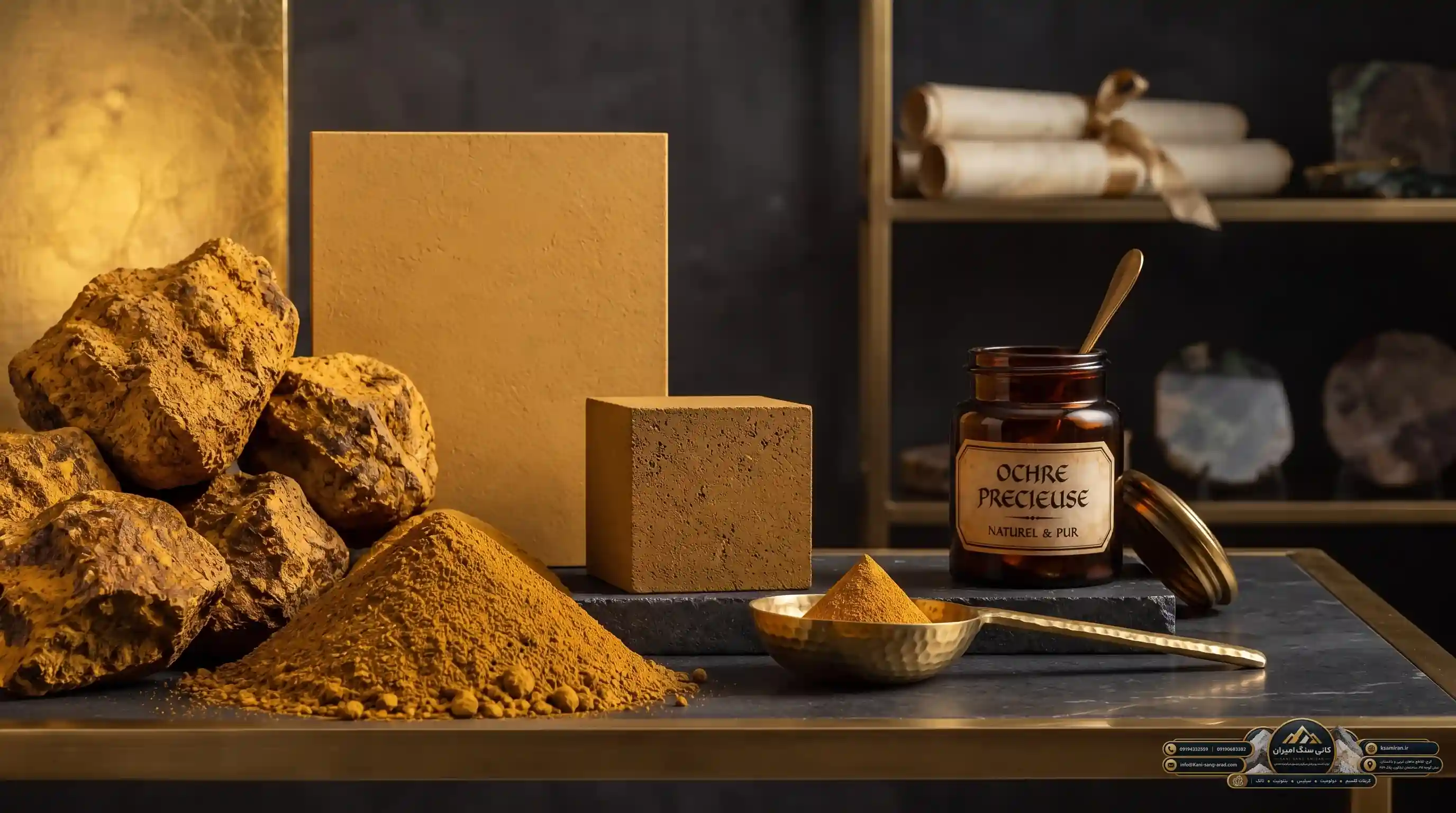
Mechanism of Environmental Humidity Effect on Micronized Limonite Oxide (Ochre) Particles
Humidity is considered one of the most destructive physical factors for many micronized mineral powders. When limonite oxide (ochre) is exposed to humid air, water molecules can be physically or chemically adsorbed onto the active surfaces of the particles. Given that the mesh range of this product is between 450 and 1500, the finer particles have a very large specific surface area, which facilitates moisture absorption.
This moisture absorption can lead to changes in bulk density, powder flowability, and the creation of weak bonds between particles. As a result, the powder loses its perfectly fluid state and may tend to aggregate and clump. This phenomenon creates problems during discharge, weighing, and mixing of materials in consumer factories and requires taking preventive measures.
Engineering investigations show that precise control of the initial moisture of the product after production and maintaining it during storage guarantees the quality and maintenance of the efficiency of limonite oxide (ochre) in industrial production lines.
The Role of Humidity in Clumping and Storage Problems of Limonite Oxide (Ochre)
Storing minerals has its own subtleties. Due to its mineral structure, limonite oxide (ochre) is prone to absorbing moisture from humid or poorly ventilated environments. Moisture accumulation in the bags or big bags used for product storage causes the formation of hard masses or clumps. Clumping not only disrupts the dosing and automatic feeding process of machinery but also causes the powder to not distribute uniformly in the base matrix (such as coating resins or building materials).
To prevent this phenomenon, the use of suitable pallets, keeping bags away from walls and the floor, and using moisture-resistant covers in packaging are important. Construction projects and coating factories should be aware that storing this product in optimal conditions will prevent the loss of its quality.
Continuous control of warehouse humidity and following storage principles increases the useful life of the pigment and prevents material waste. This also has a positive direct impact on the final cost of producing products.
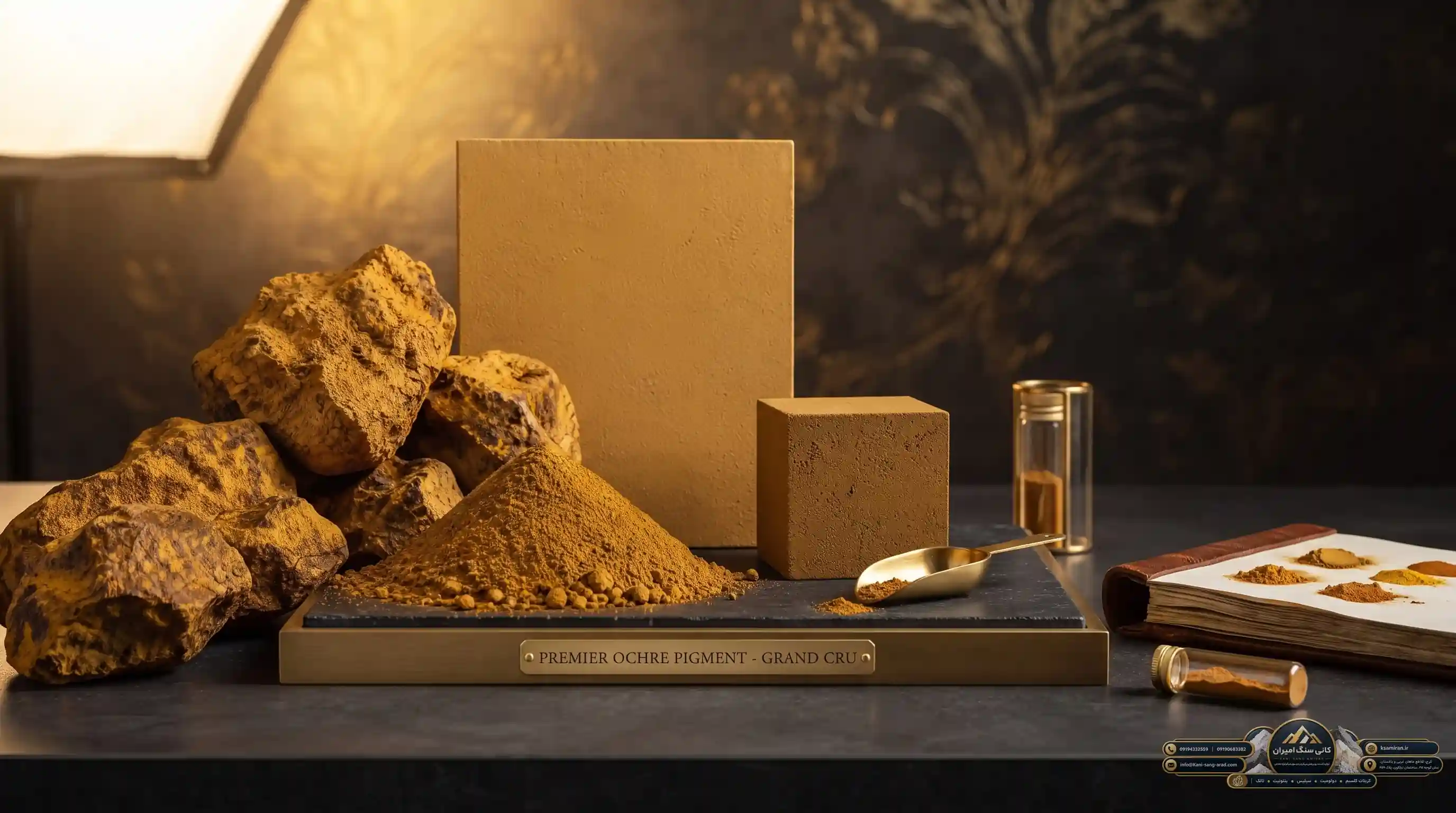
Effect of Humidity on Color Quality, Coating, and Light Stability of Limonite Oxide (Ochre)
One of the most important parameters in the use of mineral pigments is maintaining their coloring strength and light stability. The presence of excessive moisture in limonite oxide (ochre) when entering the formulation of paints and coatings can cause problems such as paint film blistering, reduced adhesion, and interference in resin curing reactions. On the other hand, the uneven dispersibility of moist particles creates unwanted colored spots in the final product.
To investigate this issue more deeply and its relationship with color durability, reading the article on investigating the effect of limonite oxide (ochre) on color stability provides very valuable information that significantly helps in optimizing color formulations.
The final quality of building and industrial coatings is highly dependent on the pigment being added to the mixture in the driest and purest possible state to exhibit the highest optical and mechanical efficiency.
Application of Limonite Oxide (Ochre) in Construction Products and Humidity Challenges
In the construction industry, limonite oxide (ochre) is used as a pigment in colored concrete, facing bricks, mosaics, and decorative mortars. Since construction products deal with water, one might assume that humidity does not have a negative effect on the pigment; however, the reality is that the moisture present in the powder before mixing can disrupt the water-to-cement ratio and affect the compressive strength of the concrete or mortar.
Furthermore, the presence of moisture in the raw material warehouse leads to unwanted reactions and the loss of the pigment's uniform coloring property. Therefore, civil engineers and producers of prefabricated materials always emphasize the use of dry powders with standard moisture percentages.
The 450 to 1500 mesh range of this product allows it to penetrate well between cement particles and aggregates and create a uniform color, provided it is stored and used in conditions free from excess moisture.
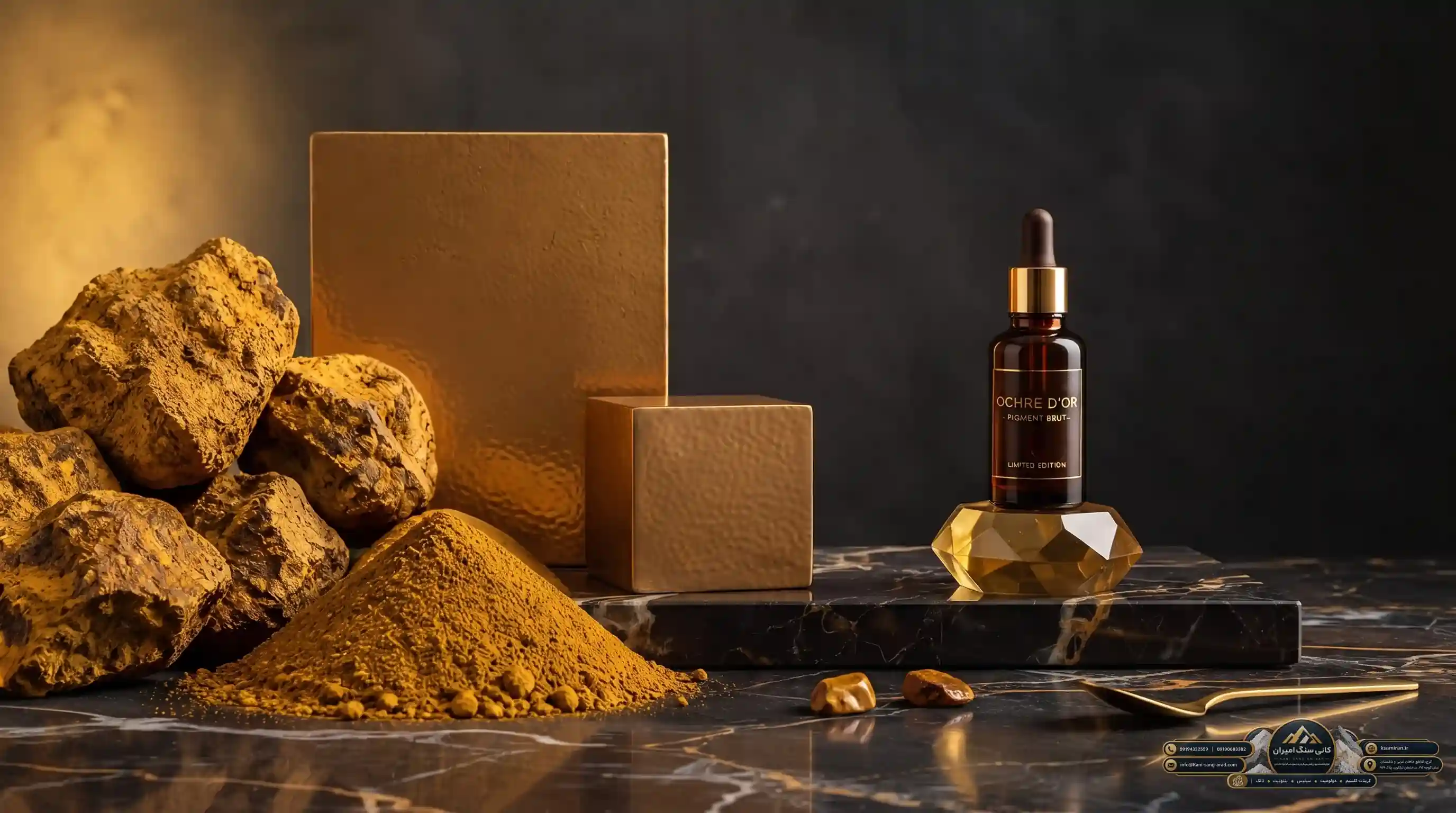
Quality Standards and Humidity Control in the Export of Limonite Oxide (Ochre)
Inteational markets and export standards apply strict rules to the moisture content in micronized minerals. Powders that have moisture higher than the standard limit suffer from physical spoilage, severe clumping, and weight changes during sea or land transport. Therefore, strict control of moisture content before final packaging is an undeniable necessity for producers.
To obtain accurate information about inteational regulations and criteria, reading the professional article on investigating export standards for limonite oxide (ochre) is recommended. Compliance with these standards guarantees the product's successful presence in global markets and competition with similar foreign samples.
Kani Sang Amiran project, considering the importance of this issue, has focused its quality control processes on the moisture level and purity of materials to ensure that a quality product reaches domestic and foreign consumers.
Strategies for Optimizing Storage and Reducing Negative Effects of Humidity
To minimize the negative effects of humidity on the quality of limonite oxide (ochre), following a set of storage and logistics management instructions is mandatory. Warehouses must be equipped with proper ventilation systems, wooden or plastic pallets to distance bags from the floor, and air relative humidity measuring equipment (hygrometers).
Also, the use of multi-layer laminated bags or those with moisture-resistant coatings plays an effective role in maintaining the initial quality of the powder with a 450 to 1500 mesh range. Periodic warehouse inspection and consumption based on production date (FIFO) are other key strategies in the optimal management of these minerals.
By implementing these solutions, consumer industries can ensure that limonite oxide (ochre) enters their production lines with the highest quality, best coloring power, and without any clumping, resulting in a high-quality final product.
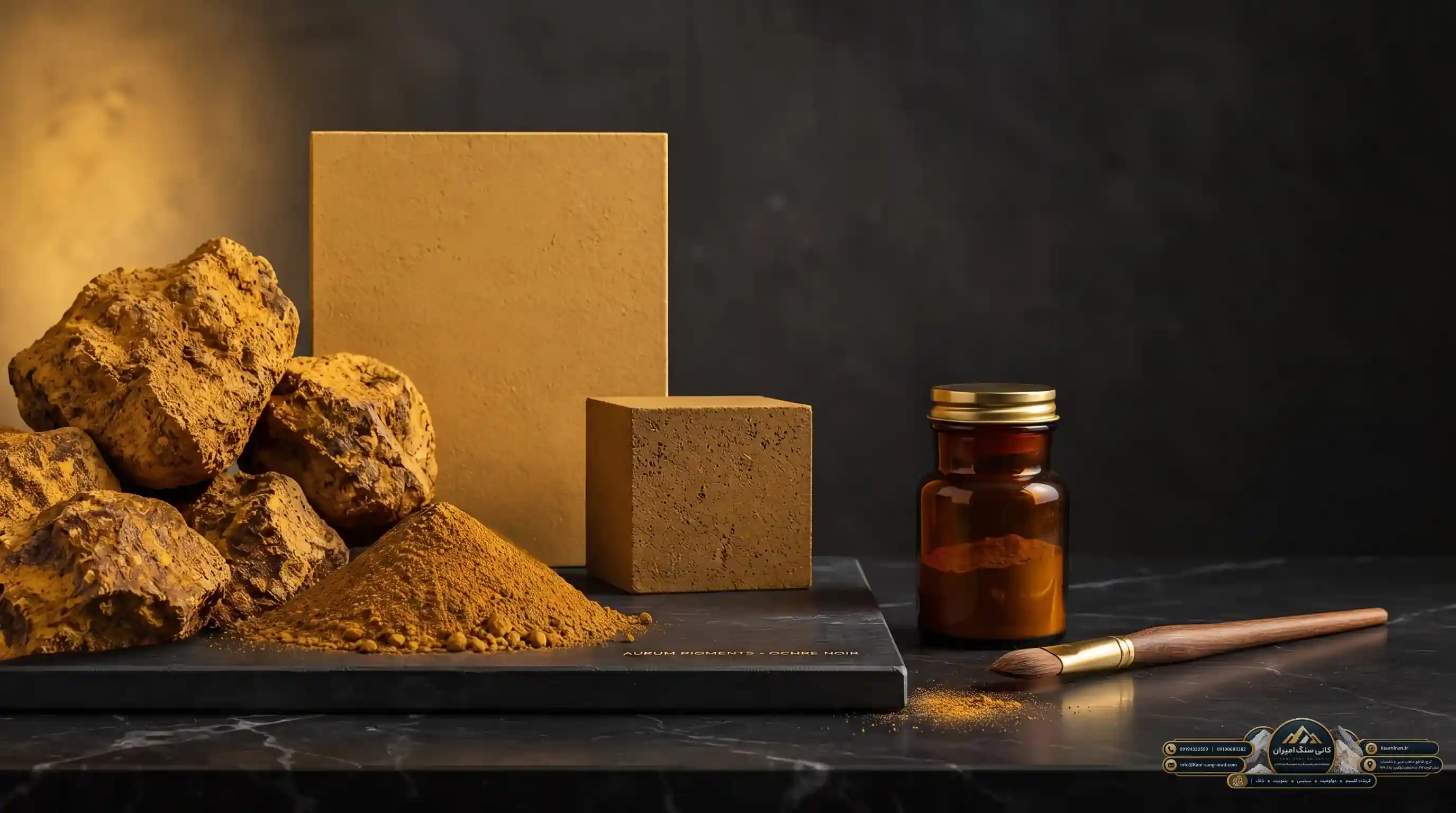
| Question | Answer |
|---|---|
| What is limonite oxide (ochre)? | It is a natural mineral pigment with a brownish-yellow color used in the paint, coating, and construction industries. |
| What is the mesh range of this product? | This product is produced and supplied in the 450 to 1500 mesh range. |
| What are the main applications of limonite oxide (ochre)? | The main applications include mineral pigments, various coatings, and construction products. |
| What is the effect of humidity on the quality of this pigment? | Humidity causes clumping, reduced powder flowability, and creates problems in formulation homogenization. |
| Why are high-mesh particles more affected by humidity? | Because the specific surface area of finer particles (higher mesh) is larger, and environmental humidity absorption occurs more quickly in them. |
| What is the role of humidity in the construction industry? | The moisture in the powder before mixing can affect the water-to-cement ratio and the final strength of the materials. |
| How can product clumping be prevented? | Through dry storage, proper ventilation, palletizing, and moisture-resistant packaging. |
| Does humidity affect color stability? | Yes, the presence of excess moisture can cause a drop in paint film quality, blistering, and reduced adhesion. |
| Which entity produces this product? | Kani Sang Amiran Project — mineral material production. |
| How can the product page be viewed? | By visiting the link to the official product page on the Kani Sang Amiran website. |
Kani Sang Amiran project — Reference for production and processing of minerals and industrial pigments.
برچسب: Limonite oxide (ochre),Investigating the Effect of Humidity on the Quality of Limonite Oxide (Ochre),
نویسنده: رساوب آفرین