
درباره سایت
آخرین مطالب
- سیلیس کانی سنگ امیران مناسب شیشه و سرامیک با دانهبندی ۱۰ تا ۴۵۰
- سفارش سیلیس کانی سنگ امیران در شیشه و سرامیک در مش ۱۰ تا ۴۵۰
- کائولن باکیفیت کانی سنگ امیران برای صنایع سرامیک مش 450 تا 1500
- سیلیس پروژه کانی سنگ امیران برای صنایع شیشه در مش ۱۰ تا ۴۵۰
- اکسید لیمونیت (گل ماش) دقت فنی در تولید پودر صنعتی شما
- خرید سیلیس کانی سنگ امیران مناسب صنعت شیشه دانهبندی ۱۰ تا ۴۵۰ مش
- سفارش کربنات کلسیم ۱۲۵۰ مش با دانهبندی دقیق برای کابل
- فلدسپات باکیفیت کانی سنگ امیران برای محصولات سرامیکی
- تالک صنعتی برای شراکت در فرمولاسیون
- استعلام قیمت کائولن کانی سنگ امیران کاغذسازی با مش 450 تا 1500
امکانات وب
Introduction to Red Iron Oxide (Ochre) and Its Position in the Industry
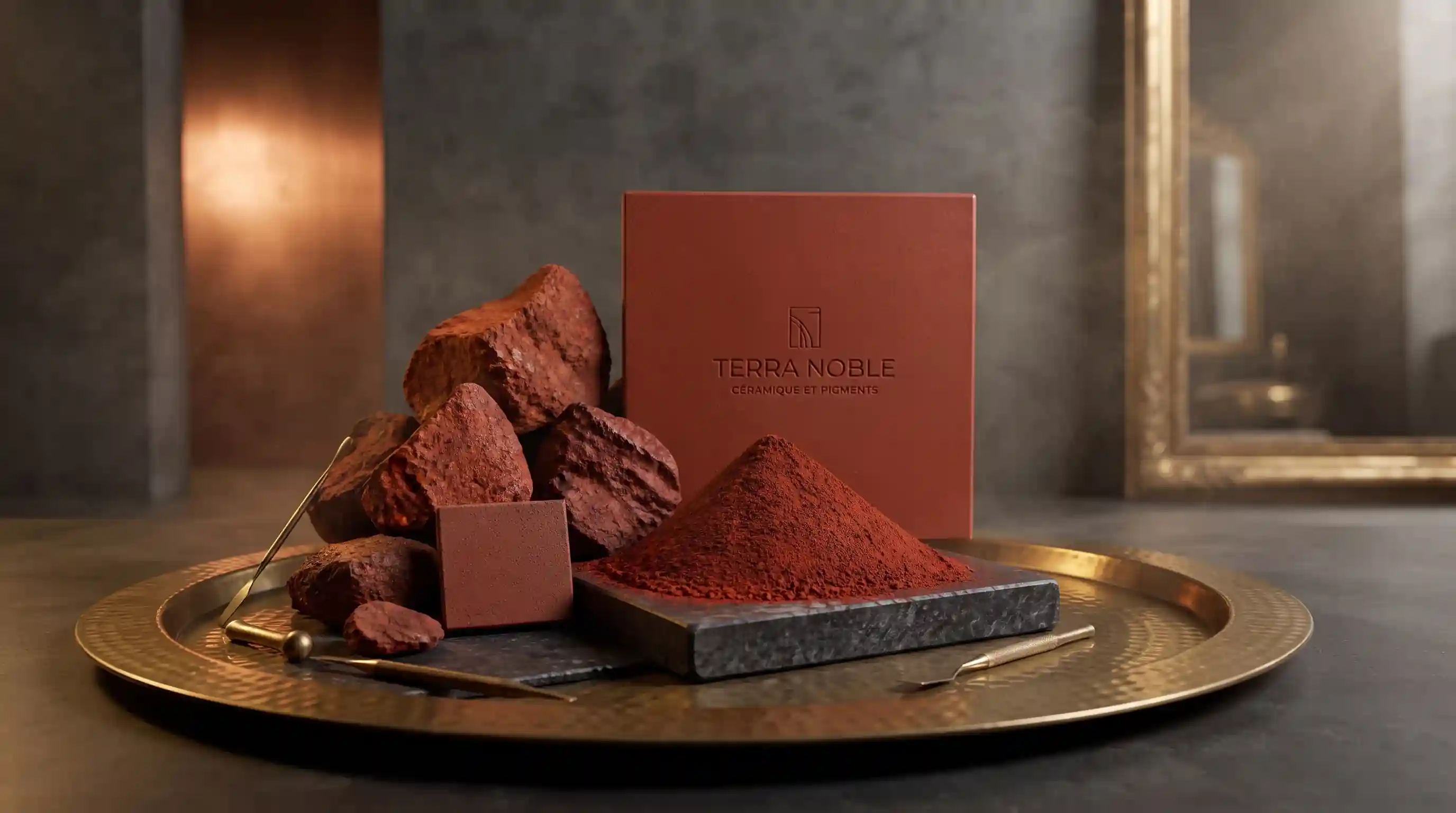
Mineral and chemical industries always require raw materials that are not only highly efficient but also economically viable. Among mineral pigments, red iron oxide (ochre) is recognized as one of the oldest and yet most practical materials, playing a key role in coloring and improving the physical and mechanical properties of various products. The Kani Sang Amiran project, through the precise processing of this mineral material, has played an important role in supplying the needs of domestic industries.
Also known as ochre, this material acts beyond a simple pigment due to its stable chemical composition and stuing coloration. Examining the structural characteristics of this material shows that its appropriate particle sizing and purity can have a direct impact on the final quality of products such as coatings, cement, and ceramics. In the production and supply process, a precise understanding of the features and mesh range of this powder is of utmost importance.
The use of processed mineral materials in mode industries requires specific standards. Red iron oxide (ochre) produced with a mesh range of 450 to 1500 has been able to create uniform coverage and distribution in various matrices. Accordingly, industrial engineers and designers, by utilizing this material, make a significant contribution to improving the color stability and durability of final products.
In addition to traditional applications, the role of this material in more advanced industries is also noteworthy. For example, understanding mineral interactions in various industries such as construction projects and industrial coatings leads us towards the optimal use of this pigment. In the continuation of this article, we will examine the various dimensions of the application of this valuable material in detail to uncover its hidden aspects in the industry.
Physical and Chemical Properties of Red Iron Oxide (Ochre)
A precise understanding of the physical and chemical specifications of red iron oxide (ochre) is extremely vital for engineers and materials science professionals. This mineral is recognized as a natural pigment stable against sunlight and atmospheric factors. Favorable thermal stability and resistance to acidic and weak alkaline environments are among the features that justify its use in stringent industrial formulations.
One of the most important quality parameters of this mineral powder is its mesh range, which varies between 450 and 1500. These micronized particles have been processed with high precision to provide the highest level of coverage and the greatest dispersion rate in liquid and solid environments. The fine particle size helps improve rheological properties and prevents premature settling in color formulations.
Compared to other mineral pigments, ochre has very good tinting strength. This means that by consuming optimal amounts of this powder, the desired color intensity can be achieved. Also, the particle size distribution within the specified range causes the final porosity in products such as ceramics and cement to decrease and structural density to increase.
To better understand the behavior of minerals in various industries, comparing it with other additives is worthwhile. As mentioned in Introduction to Industrial Limonite Oxide (Yellow Ochre) Features, iron oxides, despite differences in color and crystal form, each play specialized roles in the coating and paint industries, and comprehensive knowledge of them leads to improved final quality.
Application of Red Iron Oxide in the Coating and Paint Manufacturing Industry
The coating and paint manufacturing industry is considered one of the largest consumers of mineral pigments in the world. Red iron oxide (ochre) holds a special place in the production of various primers, industrial paints, and anti-corrosion coatings due to its high hiding power, resistance to ultraviolet radiation, and chemical neutrality.
The presence of this pigment in metal protective paint formulations prevents the penetration of moisture and corrosive agents to the underlying surface. Particles with a mesh range of 450 1500 disperse well in various resins and solvents, creating a uniform and adhesive film. This feature directly affects the useful lifespan of metal structures exposed to harsh weather conditions.
In addition to anti-rust paints, this material is also widely used in the production of wood coatings, oil-based building paints, and acrylics. The variety of color spectra from light red to dark brown, resulting from the natural structure of this material, gives designers freedom of choice in selecting the desired color shade. Color stability against sunlight is another competitive advantage of this pigment in the exterior facades of buildings.
To complete the value chain in mineral-dependent industries and specialized coatings, examining other insulating and filling materials is also important. In this regard, it is suggested to take a look at Applications of Industrial Barite in Sound and Thermal Insulation Production to become more familiar with the synergy of these materials in advanced formulations.
The Role of Red Iron Oxide in the Cement and Colored Concreting Industry
Today, the construction and concrete production industry has moved beyond purely structural applications, adopting aesthetics combined with durability as an accepted principle. Red iron oxide (ochre), as a stable mineral coloring additive, plays a major role in coloring cement, concrete blocks, concrete flooring, and artificial stones.
Pigments used in cement must be completely resistant to the severe alkaline environment of cement (high pH) and hydration reactions. Due to its mineral nature and extraordinary chemical stability, ochre does not change color upon reaction with cement compounds and retains its shade in the long term. This feature is of vital importance for long-term civil projects.
The particle sizing of this powder within the mentioned mesh range allows it to penetrate well between cement particles and aggregates, creating a completely homogeneous and uniform color. This uniform distribution prevents the formation of color spots or a drop in the mechanical strength of the concrete. In fact, using this pigment not only gives the structure a beautiful appearance, but also does not weaken the concrete structure due to the absence of harmful soluble salts.
Precast concrete material manufacturers can offer products with high standards and an attractive appearance to the market by utilizing this high-quality mineral material. Kani Sang Amiran Project Company, by continuously supplying this material, meets the needs of cement and concrete manufacturing plants. For purchase and more information, you can visit the Red Iron Oxide (Ochre) page to review the exact product specifications.
Application of Ochre in Ceramic, Tile, and Glaze Manufacturing Industries
The ceramic and tile manufacturing industry has long been a major user of metal oxide pigments. Red iron oxide (ochre), as a rich source of iron and coloring oxide, has wide applications in the production of ceramic bodies, floor and wall tiles, and also in the making of colored glazes.
In the ceramic firing process, very high temperatures are applied that not every pigment can withstand. Due to its excellent thermal stability, ochre preserves its structure in ceramic firing kilns and creates beautiful spectra of red, orange, and brown colors in the body or glaze. This stability prevents the early evaporation or decomposition of the pigment at high temperatures.
The micronized particles of this material with a mesh range of 450 1500 dissolve and disperse well in ceramic slips and glaze frits. This helps significantly in reducing surface defects such as pinholing or the formation of uneven spots on the tile surface. The homogeneous distribution of the pigment causes color uniformity across the entire surface of the final product.
In addition to aesthetic aspects, the presence of iron oxide in some ceramic formulations can also be effective in adjusting the melting point and physical properties of the ceramic body. Precise interaction between raw minerals is the key to achieving high-quality and exportable ceramic products, in the supply of which the country's mineral industries play a major role.
Economic and Technical Advantages of Using Red Iron Oxide Pigment
In today's industrial economy, cost optimization alongside maintaining or improving the quality of final products is the primary goal of any manufacturer. Red iron oxide (ochre), as a natural and abundant pigment, creates an unmatched balance between technical performance and finished price, which distinguishes it from expensive synthetic pigments.
From a technical perspective, high tinting strength means the need to consume a smaller amount of raw material to achieve the desired coverage or color shade. This feature directly reduces formulation costs for the paint, cement, and ceramic industries. Additionally, the long-term durability of this pigment against atmospheric factors minimizes maintenance and repair costs for final products.
From a process perspective, standard processing of this mineral material within the 450 to 1500 mesh range reduces homogenization and mixing time in factory production lines. A powder with uniform particle sizing is less prone to caking and increases the efficiency of production equipment. This in tu reduces energy costs and machinery depreciation.
The sustainable supply of this mineral material by reputable domestic suppliers such as the Kani Sang Amiran project secures the supply chain of consumer industries and eliminates risks resulting from fluctuations in the imported raw materials market. This strategic advantage assists domestic manufacturers in regional and global competitions.
Quality Standards and Important Tips in Warehousing and Safety
Compliance with quality standards in the production, packaging, transportation, and storage of red iron oxide (ochre) guarantees the preservation of the desirable properties of this material until final consumption. Granulation standards, purity percentage, moisture content, and thermal loss are among the parameters that must be evaluated in quality control laboratories.
Regarding warehousing, since this powder has very fine particles in the 450 1500 mesh range, it has high sensitivity to absorbing ambient moisture. Therefore, storing it in dry, indoor environments and on wooden pallets prevents caking and product quality loss. Proper packaging also plays an important role in preventing waste and air penetration.
From the perspective of safety when working with powdered minerals, the use of appropriate personal protective equipment such as anti-dust masks, safety goggles, and gloves is mandatory for production line operators. Although this pigment is non-toxic and poses no severe environmental hazards, continuous inhalation of suspended powder particles can be irritating to the respiratory system.
Reviewing safety and environmental requirements in other mineral industries also indicates the importance of waste management and dust control. For instance, in water and wastewater treatment projects that use various mineral materials, compliance with safety guidelines and quality standards plays a key role, which is similar to the principles of storing dry minerals.
Conclusion and Future Outlook of the Red Iron Oxide Market
A comprehensive review of the applications, features, and advantages of red iron oxide (ochre) shows that this mineral material is far beyond a simple pigment, serving as a backbone for the coating, cement, and ceramic industries. The unique combination of chemical stability, high thermal performance, and surprising coloring power has cemented its position in the industrial raw material portfolio.
With the rapid development of construction industries, specialized coatings, and ceramic products, the demand for high-quality micronized powders with a standard mesh range (450 1500) is always growing. Investing in mode processing technologies can further enhance the purity and efficiency of this material and pave the way for entering new export markets.
Relying on technical knowledge and principled mine extraction, the Kani Sang Amiran project has been able to offer a product compliant with the daily needs of the country's industry. Commitment to quality and continuous supply is the value brought to our business partners across various industries.
Ultimately, the outlook for the red iron oxide market is evaluated as bright; because as industries move towards using natural and eco-friendly minerals, the role of sustainable mineral pigments will become more prominent than ever, and this material will play a lasting role in industrial development.
| Question | Answer |
|---|---|
| What is red iron oxide (ochre)? | It is a natural mineral pigment with high stability used in the paint, coating, cement, and ceramic industries. |
| What is the mesh range of the red iron oxide produced by Kani Sang Amiran? | This product is processed and supplied in a mesh range of 450 to 1500. |
| What are the main applications of red iron oxide? | Color pigment, coating and paint manufacturing industries, coloring cement and concrete, and ceramic and glaze manufacturing industries. |
| Why is ochre used in the cement industry? | Due to high resistance to the alkaline environment of cement and color stability against hydration reactions. |
| Is red iron oxide resistant to heat? | Yes, this material has favorable thermal stability and does not change its structure in ceramic firing kilns. |
| What is the economic advantage of using ochre pigment? | High coloring power, reduced consumption of raw materials, long durability, and a reasonable price compared to synthetic pigments. |
| How can Kani Sang Amiran's red iron oxide be ordered? | By visiting the dedicated product page on the Kani Sang Amiran website, you can review the specifications and proceed. |
| What are the storage and warehousing conditions for ochre powder? | It should be stored on a pallet in dry, indoor environments away from severe moisture. |
| Does this material pose any health risks? | It is non-toxic, but due to being fine-grained (high mesh), using a mask and safety equipment is recommended during work. |
| Why does particle sizing (mesh) affect color quality? | Higher and more uniform mesh results in better particle dispersion, increased hiding power, and prevents caking. |
Kani Sang Amiran Project — Reference for production and processing of mineral and industrial materials of Iran
برچسب: Red Iron Oxide (Ochre),The Role of Red Iron Oxide (Ochre) in the Powder Coating Industry,
نویسنده: رساوب آفرین