
درباره سایت
آخرین مطالب
- راهنمای ثبت سفارش آنلاین و استعلام قیمت کائولن
- چگونه بهترین اکسید آهن قرمز (اخرا) را برای پروژه انتخاب کنیم؟
- بررسی جامع خواص اکوستیک و وزن مخصوص باریت سفید صنعتی
- نقش کائولن در کاهش هزینههای تولید در صنایع معدنی
- نقش سیلیس در افزایش مقاومت حرارتی مواد نسوز
- چرا اکسید آهن قرمز (اخرا) قدرت پوشانندگی بالایی دارد؟
- The role of industrial barite in the papermaking and specialty coatings industries
- How to find the best kaolin supplier in the country?
- How to properly examine feldspar analysis?
- ما هي استخدامات التالك الصناعي في صناعة البلاستيك والمطاط؟
امکانات وب
Why is choosing a kaolin supplier important?
Kaolin is one of the most widely used industrial minerals, playing a key role in the tile, ceramic, glaze, paper, and paint industries. Choosing the right kaolin supplier has a direct impact on the quality of your final product, production costs, and customer satisfaction. In today's competitive market, many manufacturers face problems such as product quality degradation, production line downtime, and financial losses due to choosing the wrong supplier.
The importance of choosing a kaolin supplier comes down to a few main reasons: First, kaolin is a raw material used in the formulation of various products, and any fluctuation in its quality directly affects the characteristics of the final product. Second, the purchase volume of kaolin in industries is usually high, and any problem in the supply chain can lead to production shutdowns. Third, the price of kaolin and its transportation costs make up a significant portion of production costs.
In Iran, numerous kaolin mines are extracted, and many processing companies process this material for industrial uses. However, not all suppliers have the same level of quality. Some of them perform advanced processing and offer products with a standard mesh range and consistent quality, while others may supply products with heterogeneous quality and undefined technical specifications.
The purpose of this article is to guide you in finding the best kaolin supplier in the country. In the following, we will discuss topics such as understanding kaolin and its applications, criteria for choosing a supplier, reviewing technical specifications, quality assessment methods, comparing domestic and foreign suppliers, and common mistakes along this path. If you are looking for a sustainable and high-quality source of kaolin, this guide is designed for you.
Amiran Mineral Stone Project is one of the mineral producers that supplies kaolin with a mesh range of 450 to 1500 mesh for tile, ceramic, glaze, paper, and paint applications. Below we provide you with the necessary points to evaluate such suppliers.
What is kaolin and in which industries is it used?
Kaolin, also known as China clay, is a mineral composed mainly of hydrated aluminum silicate. This material is white or light-colored and is used in a wide range of industries due to its unique properties such as high whiteness, fine particle size, chemical inertness, good adhesion, and thermal resistance. Kaolin is one of the most important raw materials in the ceramic and tile industry and is also used in the production of paper, paint, plastics, rubber, and sanitary products.
In the tile and ceramic industry, kaolin is used as the main raw material for tile and ceramic bodies. Due to its high plasticity, good formability, and favorable thermal behavior at firing temperatures, this material plays a vital role in the production of wall tiles, floor tiles, fine ceramics, and sanitary products. Kaolin increases mechanical strength, reduces water absorption, and improves the surface quality of tiles. The mesh range of 450 to 1500 mesh has a wide application for this industry, because the finer the particles, the higher the surface quality and the strength of the final product.
In the glaze industry, kaolin acts as a suspending and binding agent. Kaolin ensures that the glaze sits well on the surface of the body before firing and achieves proper uniformity and transparency during firing. The whiteness of kaolin is of great importance in light glazes, as any color contamination can severely affect the quality of the glaze.
In the paper industry, kaolin is used as a filler and whitener. This material increases the whiteness, smoothness, and printability of paper while reducing production costs. In the paint industry, kaolin is also used as a natural pigment and filler that gives the paint hiding power, durability, and abrasion resistance.
As you can see, kaolin is a material used in very diverse industries, and each industry has its own specific requirements regarding quality, whiteness, particle size distribution, and chemical purity. For this reason, a supplier that can provide a product with technical specifications tailored to your needs is of very high value.
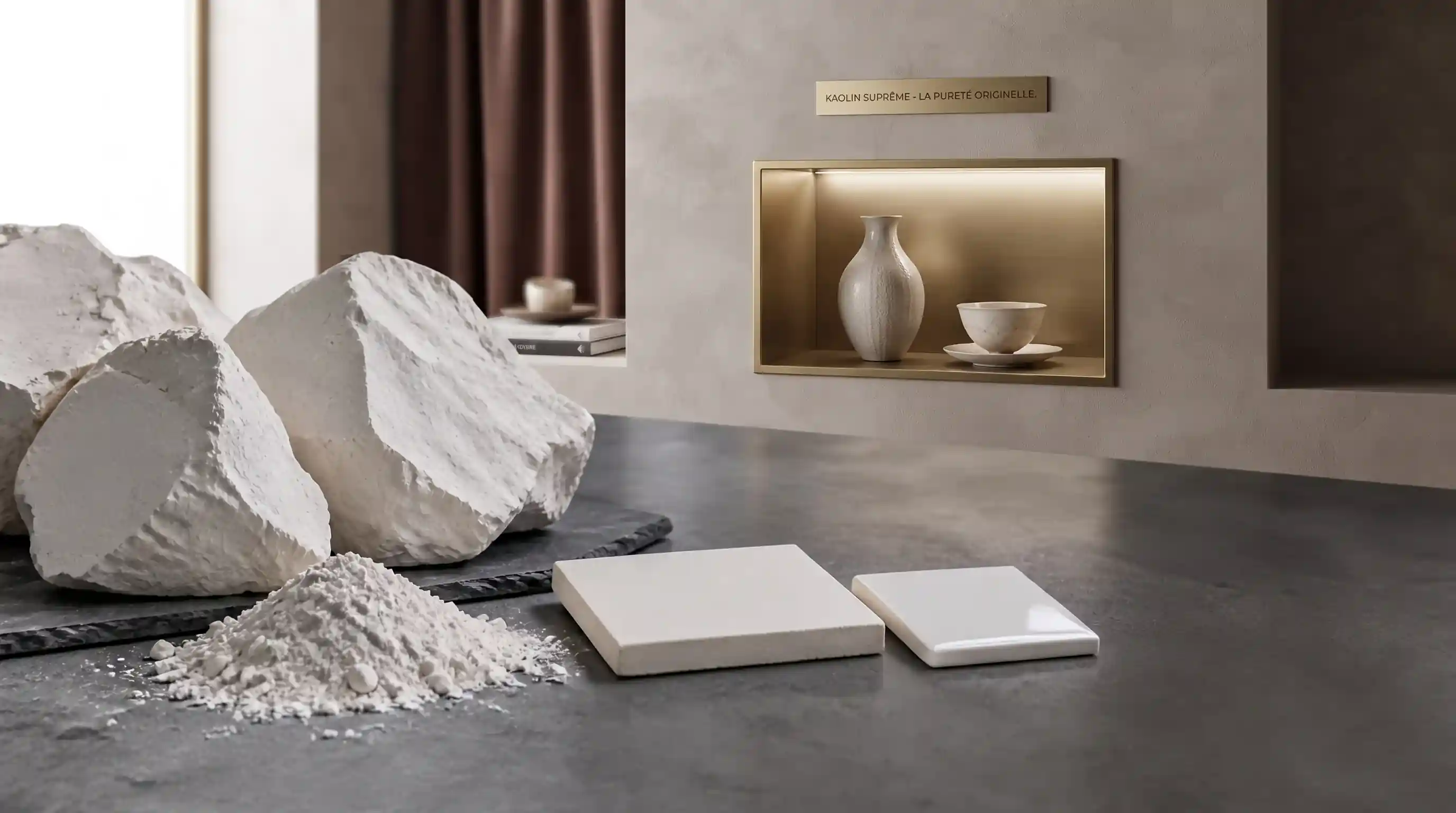
Key criteria in choosing the best kaolin supplier
Choosing the best kaolin supplier requires careful consideration of several key criteria. Below we introduce the most important of these criteria:
1. Product Quality Consistency: The most important criterion in choosing a kaolin supplier is product quality consistency. A good supplier must be able to offer products with a uniform quality level and consistent technical specifications over time. Quality fluctuations can lead to changes in your product formulation and increased waste. To check this, ask the supplier to provide samples from different shipments and document the technical specifications of each.
2. Mesh Range and Product Diversity: A supplier that can offer kaolin in the mesh range of 450 to 1500 mesh provides the possibility of choosing the right product for any industry. For example, the tile and ceramic industries usually require medium to high meshes, while the paper and paint industries may prefer higher meshes and finer particles. Diversity in the mesh range indicates the supplier's advanced processing capability.
3. Documentation of Technical Specifications: A reputable supplier must be able to provide accurate information regarding chemical composition, particle size distribution, whiteness, moisture content, and other quality parameters of the product. This information should be provided as a Data Sheet along with each shipment.
4. Supply Capacity and Reliability: Production capacity and long-term sustainable supply capability are very important. A supplier without sufficient capacity may not be able to deliver your order on time during peak demand times. Also, you should check reliability in timely delivery, proper transportation, and standard packaging.
5. Technical Support: A professional supplier doesn't just sell products; they also provide technical services. This includes consulting on product selection, guidance on formulation, and troubleshooting production problems. If you don't have enough experience using kaolin, the supplier's technical support can be of great value.
6. Price Transparency: The price of kaolin should be transparent and predictable. Ask the supplier to provide clear pricing that includes all costs (product, packaging, shipping). Beware of very low prices, as they may indicate poor product quality.
7. Industry Experience and Track Record: A supplier that has been active in the industry for years and has served various industries usually has a better understanding of customer needs and can provide a more suitable product.
Technical Specifications of Kaolin: Mesh Range and Its Impact on Quality
One of the most important technical specifications of kaolin is its deviation rate or "mesh." The term mesh refers to the particle size of kaolin, and a higher mesh number indicates finer particles. Kaolin with a mesh range of 450 to 1500 covers a wide spectrum of particle sizes, each suitable for specific applications.
In the tile and ceramic industry, the particle size of kaolin has a direct impact on the body's quality. Finer particles (higher mesh) result in higher mechanical strength, lower porosity, and a smoother surface for the tile body after firing. Furthermore, finer particles create better firing behavior and lower the firing temperature, which helps save energy. For wall tiles, medium to high mesh kaolin is typically used, while for floor tiles and technical ceramics, higher meshes are preferred.
In the glaze industry, high-mesh kaolin is important because finer particles create better suspension and ensure the glaze becomes uniform and transparent after firing. If the kaolin particles are coarse, the glaze may develop raised spots or become cloudy after firing.
In the paper industry, kaolin must be very fine (high mesh) to smooth the paper surface and improve printability. Coarse particles can cause wear on printing machines and reduce paper surface quality. Additionally, uniform particle distribution is crucial, as particles with widely varying sizes can cause paper surface roughness.
In the paint industry as well, kaolin must have fine and uniform particles so that the paint can provide adequate coverage and form a smooth, flawless surface. Coarse particles can cause roughness on the paint surface and diminish the visual quality.
When choosing kaolin, you should note that in addition to particle size, particle size distribution is also important. A good product has relatively uniform particle sizes, rather than a mixture of very fine and very coarse particles. To evaluate this, the supplier should be able to provide a particle size distribution chart.
It should also be noted that proper management of mineral particles in storage and transportation is important. To prevent issues such as caking of minerals, proper storage and packaging methods must be followed. If you want to know more about this, the article How to prevent caking of red iron oxide (ochre)? provides useful tips on preventing the caking of minerals.

How to evaluate kaolin quality before purchasing?
Evaluating kaolin quality before purchase is one of the most important steps in choosing a supplier. If you buy without sufficient inspection, you may receive a shipment of subpar quality that degrades your product quality and increases costs. Below, we examine methods for evaluating kaolin quality.
1. Visual Inspection: The first step is a visual inspection of the product. High-quality kaolin should be white or light-colored and free from black, yellow, or other colored impurities. Any discoloration may indicate the presence of impurities such as iron oxide, titanium compounds, or organic matter. Additionally, the product must be free from foreign materials such as stone, wood, or metal.
2. Checking the chemical composition: The chemical composition of kaolin must be documented by the supplier. The most important oxides to check are: silica (SiO2), alumina (Al2O3), iron oxide (Fe2O3), titanium oxide (TiO2), calcium oxide (CaO), magnesium oxide (MgO), sodium oxide (Na2O), and potassium (K2O). The amount of alumina should be within an appropriate range, and the amounts of iron and titanium oxides should be minimal, as these two oxides negatively affect the whiteness and quality of the product.
3. Measuring whiteness: The whiteness of kaolin is measured using specific devices and must be reported by the supplier. For applications where whiteness is important (such as paper, paint, and bright glazes), you should choose kaolin with high whiteness.
4. Checking the particle size distribution: As mentioned earlier, particle size distribution has a great impact on product quality. The supplier must provide the particle size distribution chart, and you must check that this distribution matches your requirements.
5. Application testing: One of the best evaluation methods is conducting an application test. Request a sample from the supplier and test this sample in the production line or at least on a laboratory scale. This method is especially valuable for the tile, ceramic, and glaze industries, as the behavior of kaolin during firing and shaping can be directly observed.
To gain a deeper understanding of kaolin quality assessment methods in the production line, read the article How to assess the quality of consumed kaolin in the production line? This article provides a complete guide on parameters and laboratory methods for kaolin quality evaluation.
6. Checking the moisture content: The moisture content of kaolin must also be within the standard range. High moisture can cause product caking, reduce efficiency in the production process, and increase transportation costs (due to the weight of excess water).
By conducting these evaluations, you can ensure that the kaolin you purchase matches your needs and the quality of your final product is guaranteed.
Domestic or foreign supplier? A complete comparison
One of the important decisions in kaolin sourcing is choosing between a domestic and a foreign supplier. Each of these options has its own pros and cons, which we will examine below.
Advantages of a domestic supplier:
1. Lower transportation costs: Domestic transportation is usually cheaper and faster than importing. This is especially important for kaolin, which has a high volume and heavy weight.
2. Shorter delivery time: Domestic suppliers can deliver orders in a shorter time and provide faster supply in emergencies.
3. Possibility of direct inspection: You can closely inspect the mine, processing plant, and warehouse of the domestic supplier and collect samples directly.
4. Better support: Communicating with a domestic supplier allows for quicker follow-up on issues and better technical support.
5. Reducing exchange rate fluctuation risk: Purchasing from a domestic supplier insures you against exchange rate fluctuations and import-related issues (customs, sanctions, etc.).
Advantages of a foreign supplier:
1. Very high quality: Some imported kaolins are of exceptionally high quality that may not be available domestically. This is especially important for industries requiring ultra-pure kaolin.
2. Greater variety: The global kaolin market is highly diverse, allowing you to find products with vastly different technical specifications.
3. Advanced processing technology: Advanced foreign companies typically perform very precise processing and offer products with highly uniform quality.
Disadvantages of each option:
Domestic sourcing may have limitations in quality or product variety, while foreign sourcing faces challenges such as high transportation costs, long delivery times, customs issues, the need for foreign currency, and the risk of exchange rate fluctuations.
Overall, for most domestic industries, using a domestic supplier is more sensible, especially if you can find a supplier capable of providing kaolin of suitable quality and the required mesh range (450 to 1500 mesh). In Iran, there are numerous mines that produce kaolin of suitable quality for the tile, ceramic, glaze, paper, and paint industries.
The important point is that some domestic suppliers use advanced processing technology and offer products of quality comparable to imported goods. To lea how to use micronized minerals in industries, you can read the article How to use micronized feldspar in industries? which provides useful information regarding the processing and application of micronized minerals.
Common Mistakes in Choosing a Kaolin Supplier
In the process of choosing a kaolin supplier, buyers usually make mistakes that can have costly consequences. Below, we examine these common mistakes so you can avoid them.
1. Deciding based on price alone: One of the biggest mistakes is choosing a supplier solely based on a low price. An extremely low price usually means low quality, incomplete processing, or a lack of supply consistency. Hidden costs such as those resulting from poor product quality, waste, production line downtime, and the need to readjust formulations can far outweigh the initial savings. Always consider quality and consistency alongside price.
2. Failing to test samples before purchase: Purchasing large volumes without testing a sample is a major mistake. Always obtain a sample before bulk purchasing and test it in your laboratory or production line. This ensures that the product matches your requirements.
3. Ignoring quality consistency: Some suppliers may provide high-quality products in the first shipment, but quality may drop in subsequent shipments. To prevent this problem, you should have an agreement regarding quality consistency and the documentation of technical specifications for each shipment.
4. Failing to check supply capacity: If a supplier lacks sufficient capacity, they may not be able to fulfill your order during peak demand times, leading to production line shutdowns. Check production capacity and supply capability before making a long-term agreement.
5. Not having a backup supplier: Relying on a single supplier carries high risk. If your supplier encounters problems (e.g., the mine closes, technical issues arise, or prices increase), you are exposed to the risk of production stoppage. Always have at least two or three backup suppliers.
6. Ignoring payment and delivery terms: Payment terms, delivery times, packaging, and shipping must be clearly stated in the contract. Ambiguity in these matters can lead to future disputes.
7. Failing to inspect received shipments: Upon receiving any shipment, you must check its quality to ensure it matches the agreed-upon specifications. This helps you identify problems early and follow up in a timely maer.
8. Ignoring technical support: Some suppliers offer technical services that can help you optimize formulations and solve production problems. Do not ignore these services, especially if you do not have much experience in using kaolin.
By avoiding these mistakes, you can choose a suitable supplier and ensure the stability and quality of your production.
Conclusion and Introduction to Kani Sang Amiran Kaolin Project
In this article, we examined the complete steps to finding the best kaolin supplier in the country. From understanding kaolin and its applications in various industries to supplier selection criteria, technical specifications, quality assessment methods, comparing domestic and foreign suppliers, and common mistakes in this process.
Key points to remember: First, identify your needs carefully which industry is the kaolin for, and what mesh size and quality level are required? Second, choose a supplier that can offer products with consistent high quality, detailed technical documentation, and technical support. Third, always test samples before bulk purchase and inspect incoming shipments. Fourth, do not rely on a single supplier and always have alteative options.
The Kani Sang Amiran project, as a mineral producer, offers kaolin with a mesh range of 450 to 1500 for tile, ceramic products, glaze, paper, and paint applications. This wide mesh range allows for choosing the right product for various industries. To view full product details and contact the technical team, you can visit the product page of Kaolin.
When choosing a supplier, do not forget that the quality of kaolin directly affects the quality of your final product. Investing in a reputable, high-quality supplier leads to cost savings, reduced waste, and increased customer satisfaction in the long run. Also, note that optimal use of kaolin in the production line requires technical knowledge, and utilizing expert advice can help improve formulations and reduce costs.
Finally, we suggest that before making a final decision, take samples from several suppliers, test them thoroughly, and then make your choice based on the results. This scientific and practical approach will help you on the path to finding the best kaolin supplier in the country and ensure that your final product has the highest possible quality.
| Question | Answer |
|---|---|
| What is kaolin and in which industries is it used? | Kaolin is an aluminum silicate mineral used extensively in the tile, ceramic, glaze, paper, and paint industries. |
| What is the mesh range of the Kani Sang Amiran kaolin project? | This project's kaolin is supplied with a mesh range of 450 to 1500. |
| How does kaolin mesh affect product quality? | Higher mesh means finer particles, which improve strength, provide a smoother surface, and result in higher final product quality. |
| How can we evaluate kaolin quality? | Through visual inspection, chemical composition, whiteness, particle size distribution, moisture content, and practical testing on the production line. |
| Is a domestic or foreign supplier better? | For most domestic industries, a domestic supplier is more reasonable due to lower shipping costs, faster delivery, and better support. |
| Why shouldn't we choose based on price alone? | Very low prices usually indicate low quality, which leads to hidden costs such as waste and production downtime. |
| Should we test samples before buying in bulk? | Yes, a sample test before bulk purchase is essential to ensure the product matches your needs. |
| How many alteative suppliers should we have? | At least two to three alteative suppliers are recommended to reduce the risk of production stoppage. |
| What role does kaolin play in the tile industry? | Kaolin is the main raw material for tile bodies, which improves strength, plasticity, and surface quality. |
| Where should we go to purchase kaolin from the Amiran Mineral Stone Project? | The kaolin product page on the website ksamiran.ir is the reference for kaolin products, information, and contact. |
This article has been prepared based on the kaolin product information of the Amiran Mineral Stone Project (https://ksamiran.ir/products/kaolin/)
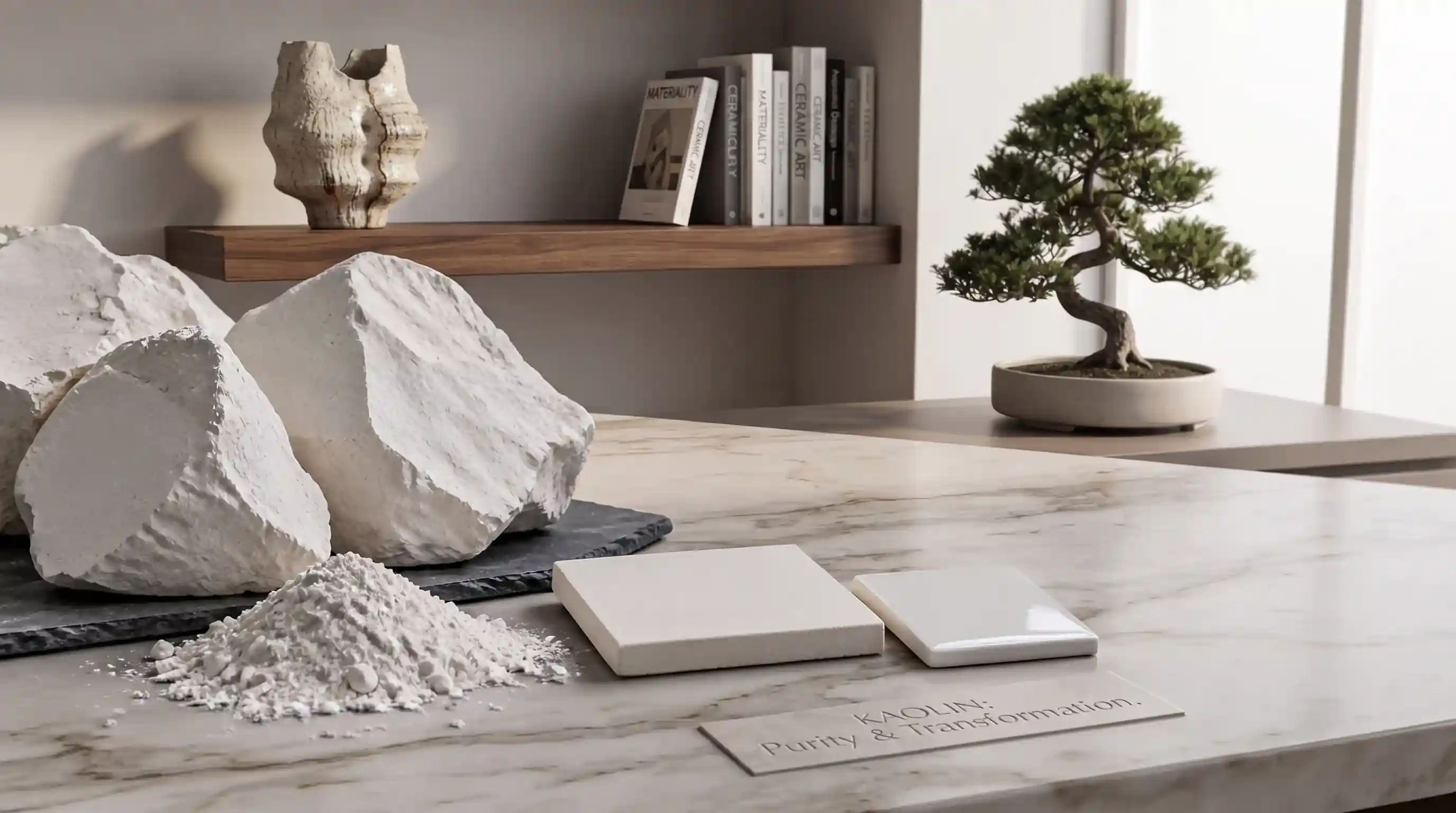
برچسب: Kaolin,How to find the best kaolin supplier in the country?,
نویسنده: رساوب آفرین