
درباره سایت
آخرین مطالب
- استخدام كربونات الكالسيوم في إنتاج الأسمدة الكيميائية وال حبيبات
- Comprehensive Guide to Chemical and Physical Analysis of Kaolin
- دور كربونات الكالسيوم في صناعة الأنابيب ذات الضغط العالي
- راهنمای ثبت درخواست آنلاین اطلاعات کربنات کلسیم
- لماذا يُعد كربونات كالسيوم المسحوق الصناعي الأكثر استخداماً؟
- Storage and Warehousing Guide for Red Iron Oxide (Ochre)
- كل ما تريد معرفته عن التحليل الكيميائي والفيزيائي للتالك الأبيض المعدني
- نقش اکسید آهن قرمز (اخرا) در تولید پودرهای میکرونیزه
- چگونه خلوص اکسید آهن قرمز (اخرا) را آزمایش کنیم؟
- Review of Bentonite Applications in the Automotive Industry
امکانات وب
Introduction to White Talc and Its Industrial Importance
White talc is recognized as one of the most functional mineral materials in various industries, holding a special place due to its unique physical and chemical characteristics. Kani Sang Amiran Mineral Project, as a mineral producer, supplies this material with standard technical specifications. Familiarity with the properties and applications of this material helps various industries achieve the best efficiency from it.
In this comprehensive article, we intend to closely examine the technical specifications, granulation, mesh range, and key applications of white talc so that industry leaders have a complete perspective on choosing this valuable mineral material.
To better understand the position of this material among other mineral additives, we suggest reading the comprehensive guide to understanding various types of micronized powders, especially white barite, which provides you with useful supplementary information.
A precise examination of the quality parameters and granulation of this micronized powder plays a direct role in improving the final quality of manufactured products in the polymer, paint manufacturing, and ceramic sectors.
Expert Review of Mesh Range and Granulation Features of White Talc
The granulation of micronized powders is one of the most important factors in determining their quality and efficiency in industrial formulations. The white talc produced by Kani Sang Amiran Mineral Project is offered in a mesh range of 450 to 2500 mesh, covering a wide spectrum of needs in industries such as masterbatch and compound.
Powders with lower meshes are typically used in applications requiring general filler properties, while higher meshes, such as 1500 to 2500 mesh, have a larger contact surface and much finer particles, which are applied in more sensitive industries.
For further familiarity with the management, maintenance, and proper warehousing of these materials, reading the article comprehensive guide to storage and warehousing of various industrial talc types will be very instructive.
Precise control of the particle size distribution within this mesh range helps ensure that material dispersion in the polymer matrix or fluids is performed in the best possible way and prevents agglomeration.
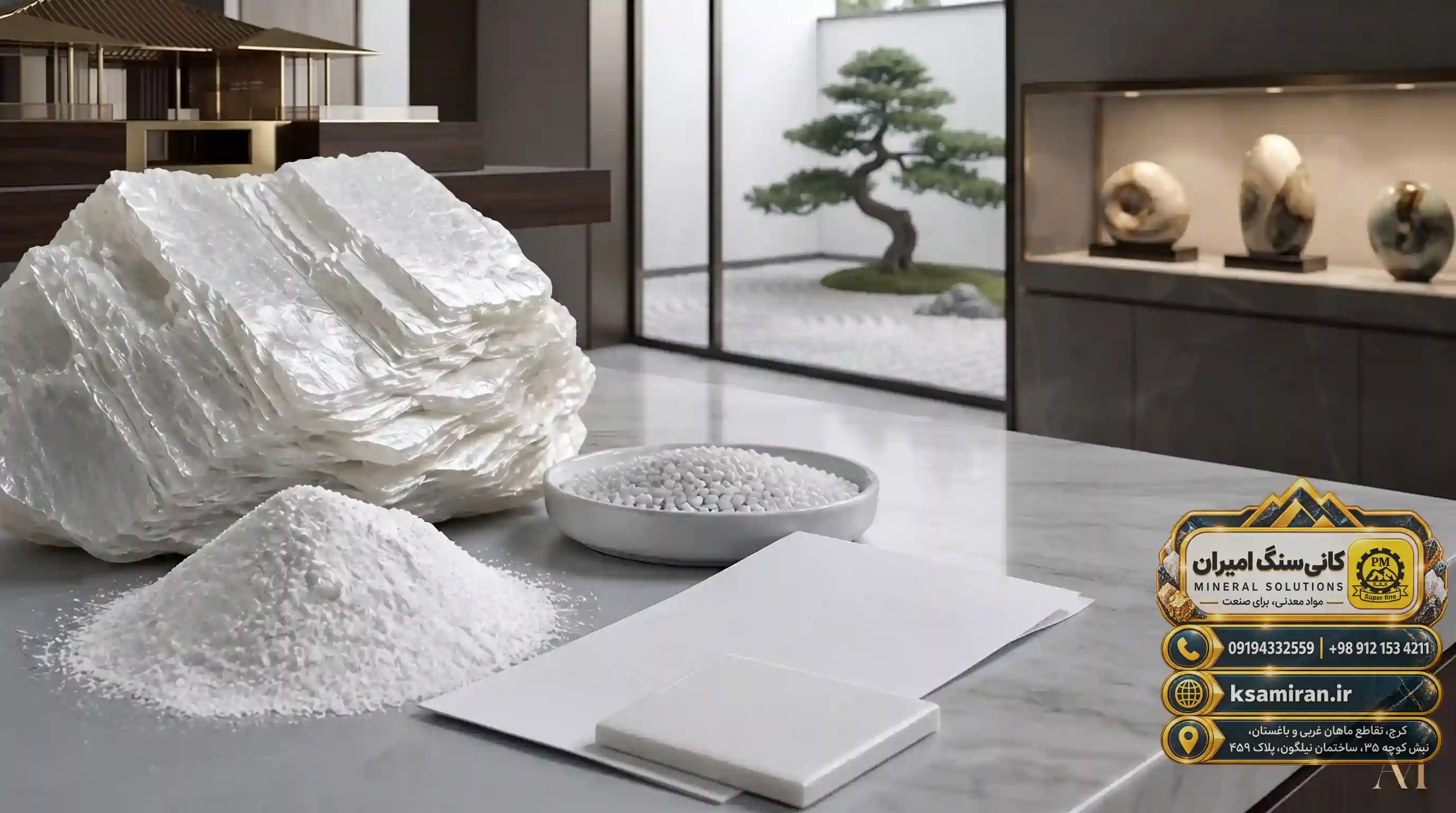
Application of White Talc in Masterbatch and Polymer Compound Manufacturing Industry
The polymer industry, especially masterbatch and compound production, is considered one of the main consumers of white talc. Adding this mineral material to polymers improves mechanical properties, increases hardness, enhances dimensional stability, and reduces the shrinkage of injection-molded parts.
Due to the layered and flaky structure of this material, its particles align parallel to each other within the polymer matrix, which significantly helps improve the flexural modulus and thermal resistance of polymer compounds.
To obtain more information on how to utilize this material in various formulations, you can read the specialized article regarding the application of white talc in various industries and review of its technical features.
Selecting the correct mesh range within the 450 to 2500 mesh interval, tailored to the type of base polymer (such as polypropylene or polyethylene), has a direct impact on the transparency and gloss of the final part.
The Role of White Talc in the Paint Manufacturing and Industrial Coatings Industry
In the paint and coating industry, white talc is used as an efficient filler and a rheology-improving agent. Due to its favorable whiteness and suitable refractive index, this material acts as an extender in water-based and oil-based paints.
The use of micronized talc powder in paint formulations helps control gloss, increases the resistance of the paint film against atmospheric factors, and improves the sanding ability of putties and primers.
The fine particles of this material fill the microscopic surface pores, increasing hiding power and optimizing titanium dioxide consumption, which is also economically advantageous for paint manufacturers.
Kani Sang Amiran Mineral Project supplies white talc in diverse meshes, fulfilling paint manufacturers' needs for this vital mineral material in the best possible way.
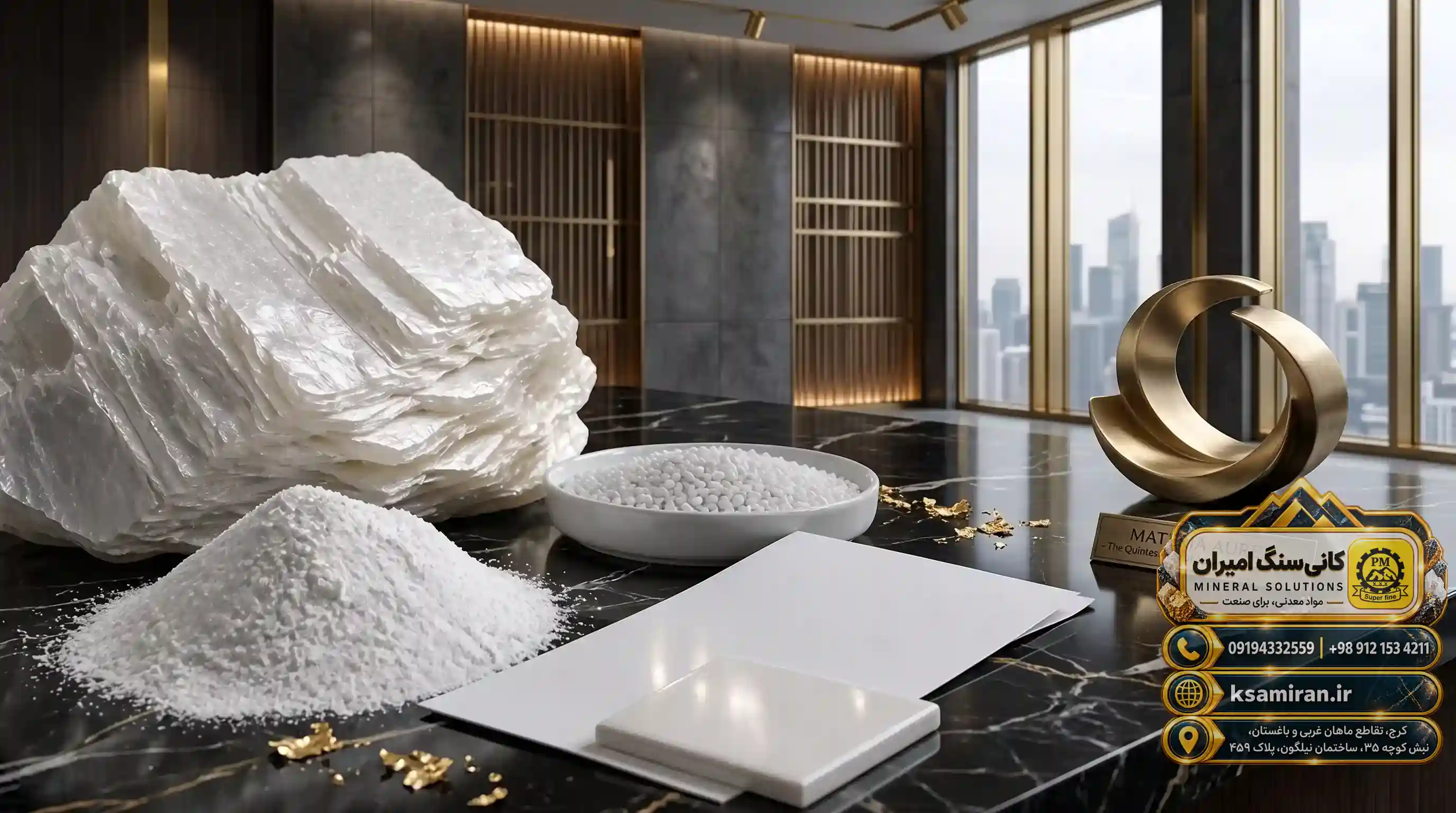
Application of White Talc in the Papermaking Industry
The papermaking industry is another major consumer area for white talc. This material is used as a filler and coating agent in the manufacturing of various types of paper and cardboard to improve the printability and whiteness features of the product.
The presence of micronized talc particles in the paper structure increases surface smoothness, reduces uncontrolled ink absorption, and improves the overall whiteness of the paper. Additionally, this material helps better absorb printing ink.
The relative water-repellent characteristics of this mineral material ensure that the produced papers have appropriate resistance to environmental humidity, and the production process in the wet-end section of the papermaking plant is carried out with higher efficiency.
The precise granulation of this powder prevents clogging in plant equipment and guarantees the final quality of the product.
Application of White Talc in Ceramic Products Manufacturing
In the ceramic and tile-making industries, white talc is recognized as a key component in ceramic bodies and glazes. This material acts as a weak flux at high temperatures and assists in the separation of glass phases.
Adding specific amounts of talc to the ceramic body formula reduces firing shrinkage, prevents warping of parts in the kiln, and improves the mechanical strength of tiles and ceramics after final firing.
Furthermore, in the production of ceramic glazes, this material helps adjust viscosity, improves the surface quality of the glaze, and prevents the occurrence of crazing.
The products of Kani Sang Amiran Mineral Project, possessing standard purity and mesh sizing, are considered a reliable option for the country's ceramic manufacturing industries.
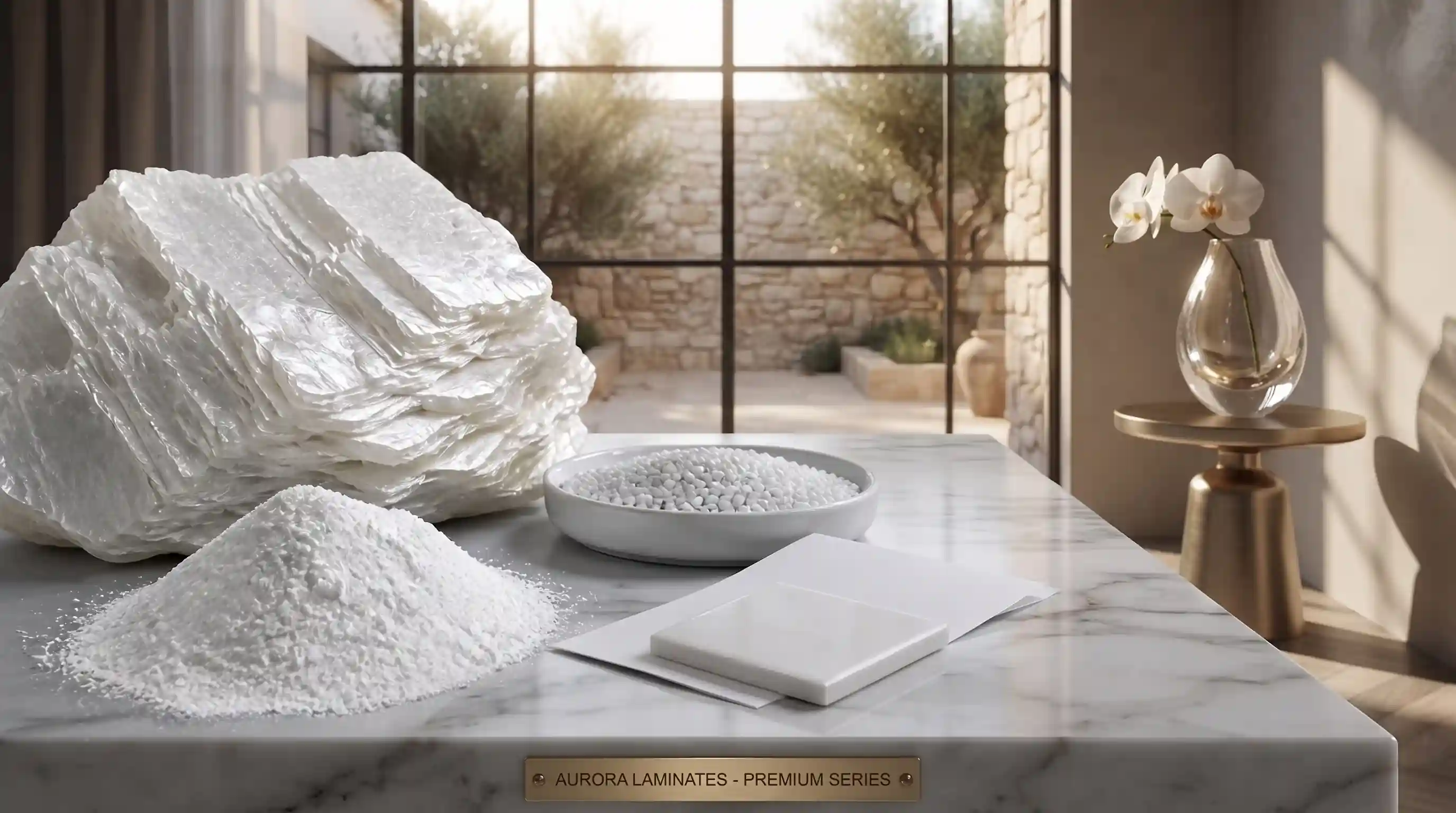
Quality Parameters and Technical Specifications of Amiran White Talc
The quality of micronized powders is evaluated based on numerous physical and chemical factors. The white talc offered by Kani Sang Amiran Mineral Project features characteristics such as high whiteness, desirable softness, and a standard particle size distribution within the 450 to 2500 mesh range.
Continuous quality control in this company's production lines guarantees that the final product is free from harmful impurities and delivers stable performance across various industrial formulations.
Appropriate rheological behavior, optimal bulk density, and the absence of unwanted chemical reactions with other additives are the competitive advantages of this mineral material that set it apart from other similar products.
Relying on the quality consistency of this product, consumer industries can optimize their production processes and minimize production waste.
Conclusion and Purchasing Guide for Industrial White Talc
In this comprehensive article, we examined various technical dimensions, the mesh range (450 to 2500), and key applications of white talc in industries such as masterbatch, compound, paint, paper, and ceramics. Choosing this material correctly plays a decisive role in elevating the quality of final products.
Leveraging up-to-date technical knowledge and rich mines, Kani Sang Amiran Mineral Project is prepared to supply the country's various industries with this mineral material at the highest level of quality.
To obtain more information, inquire about prices, and place an order, you can visit our dedicated product page and communicate with our sales experts.
We hope this comprehensive guide has been able to answer your technical questions regarding the selection and application of this valuable micronized powder.
| Question | Answer |
|---|---|
| What is white talc? | It is a powdered and micronized mineral material used as a filler and property enhancer in various industries. |
| What is the mesh range of Amiran white talc? | This product is produced and supplied in a mesh range of 450 to 2500 mesh. |
| What are the main applications of white talc? | Masterbatch, compound, paint, paper, and ceramic products are among its main applications. |
| Is this material used in the polymer industry? | Yes, it is used in the production of masterbatches and polymer compounds to increase hardness and dimensional stability. |
| What is the role of white talc in the paint industry? | It acts as an extender, gloss improver, and rheology controller. |
| Why is talc used in papermaking? | It is employed to improve the whiteness, surface smoothness, and printability of paper and cardboard. |
| What is the effect of talc in ceramics? | It acts as a weak flux and improves firing shrinkage and mechanical strength. |
| Which group is the manufacturer of this product? | Kani Sang Amiran Mineral Project is the manufacturer of this mineral material. |
| How can this product be purchased? | It is possible by visiting the product page on the Kani Sang Amiran website. |
| Does the granulation of the powder affect quality? | Yes, the selected mesh range has a direct impact on the dispersion and final properties of the product. |
Kani Sang Amiran Project — Production of industrial minerals and micronized powders.
برچسب: White Talc,Comprehensive Guide to Technical Analysis and Specifications of White Talc,
نویسنده: رساوب آفرین