
درباره سایت
آخرین مطالب
- Practical Guide to Determining the Optimal Percentage of Coated Calcium Carbonate in Formulation
- Why Coated Calcium Carbonate is the Best Choice for Adhesive and Resin Industries
- استعراض طرق معالجة أكسيد الليمونيت (الجول ماش)
- چرا آنالیز دقیق فلدسپات برای مهندسان حیاتی است؟
- The Role of Limonite Oxide (Gol Mash) in Cement Production
- دور السيليكا في صناعة الطوب والكتل الخفيفة
- Comprehensive Guide to Buying High-Quality Industrial Barite for Various Industries
- التعرف على الخواص الفيزيائية والكيميائية للبنتونيت المعدني
- تأثیر دانهبندی فلدسپات بر فرآیند ذوب شیشه
- Guide to Choosing Micronized Kaolin for Specific Applications
امکانات وب
Introduction to Kaolin and General Understanding of This Valuable Mineral
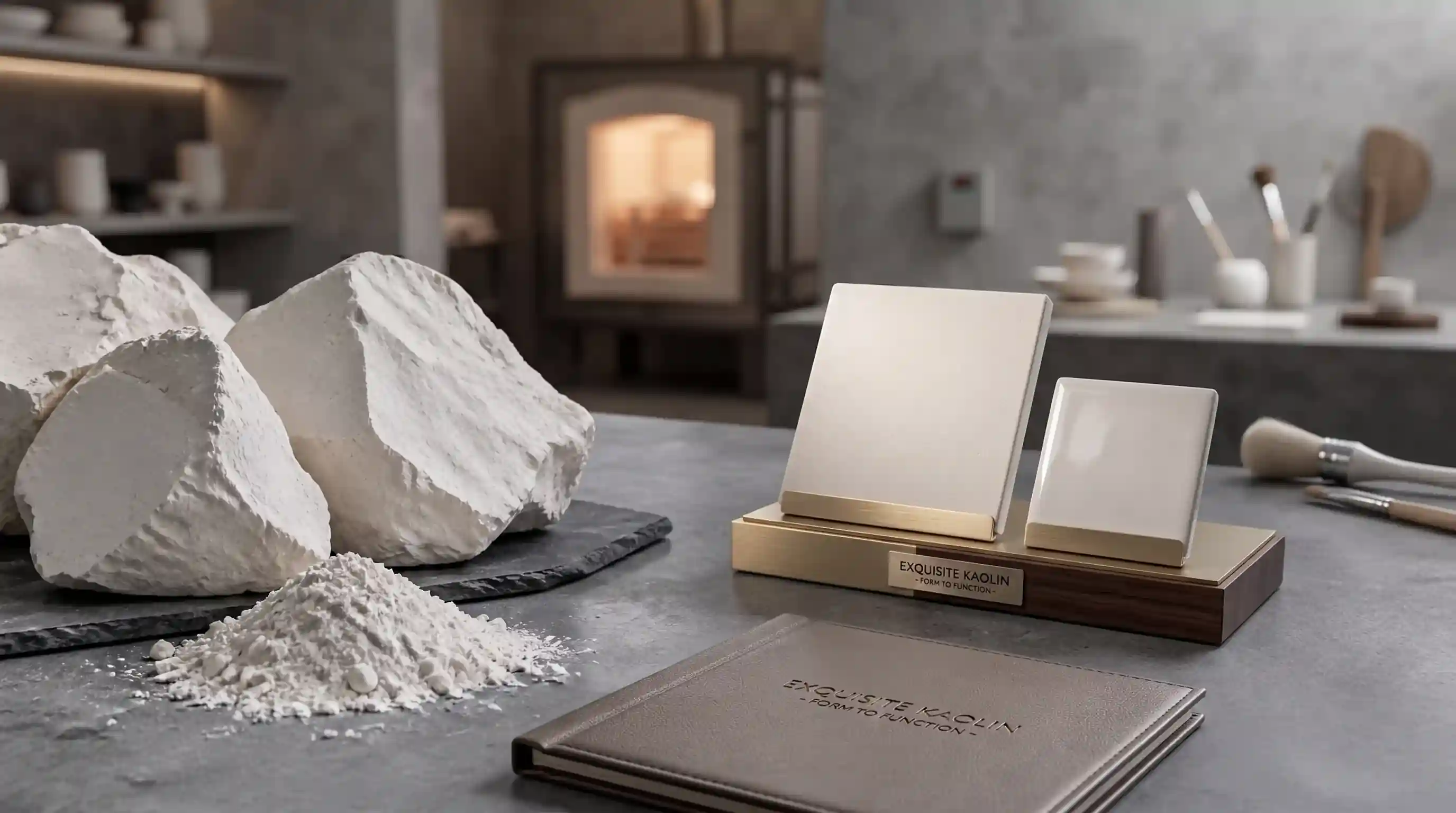
Kaolin, also known as china clay, is one of the most important and versatile minerals in various industries, holding a special place due to its unique physical and chemical properties. Composed mainly of the mineral kaolinite, it is known as a white, soft substance and plays a key role in many industrial processes. Understanding the types of kaolin and their industrial applications helps engineers and manufacturers achieve the best productivity from this mineral. The Amiran Stone Mineral Project, focusing on the production of high-quality minerals, plays an important role in meeting industrial needs.
In the process of kaolin extraction and processing, achieving suitable granulation is of high importance. Due to its appropriate purity and absence of colored impurities, this material is preferred in industries that require high whiteness and brightness. Examination of the structural properties of this mineral shows that its layered structure improves the mechanical and surface properties of the final product.
Iran's mineral industries, due to having rich mines, have provided a suitable platform for supplying this raw material. The use of advanced equipment in kaolin processing ensures that a product with precise technical specifications reaches consumers. Along these lines, getting acquainted with other applicable minerals such as An introduction to the features of industrial limonite oxide (Gole Mash) can also provide comprehensive information about supplying mineral inputs for professionals in this field.
As a neutral mineral, kaolin has low reactivity, making it ideal for use in complex industrial formulations. On the other hand, the excellent dispersion ability of this material in aqueous and oily environments has significantly increased its application in coating and paint-making industries.
Reviewing the Mesh Range and Technical Specifications of Produced Kaolin
The technical specifications of minerals are the primary determinants of their application field in industry. The supplied kaolin has a mesh range of 450 to 1500 mesh, which allows for its use across a wide spectrum of industries. Lower meshes are suitable for applications requiring coarser particles, while higher meshes (up to 1,500 mesh), due to being micronized, are used in sensitive industries such as coating and high-quality paper production.
Extremely fine particles within the high mesh range increase the specific surface area of kaolin. This feature significantly helps improve rheological properties, enhance coverage, and reduce permeability. For more information on specialized products and placing an order, you can visit the dedicated Kaolin page to receive complete information about the physical characteristics of this product.
Precision in grinding and granulating kaolin has a direct impact on the final quality of consumer products. Production engineers create the most optimal viscosity and stability in the product by carefully selecting their required mesh from the 450 to 1,500 mesh range. This high versatility makes kaolin one of the most in-demand raw materials in the mineral market.
Additionally, a detailed review of other widely used minerals in construction and industrial projects, such as The application of industrial barite in the production of sound and thermal insulation, demonstrates how the correct selection of mesh and granulation can improve the ultimate efficiency of the product.
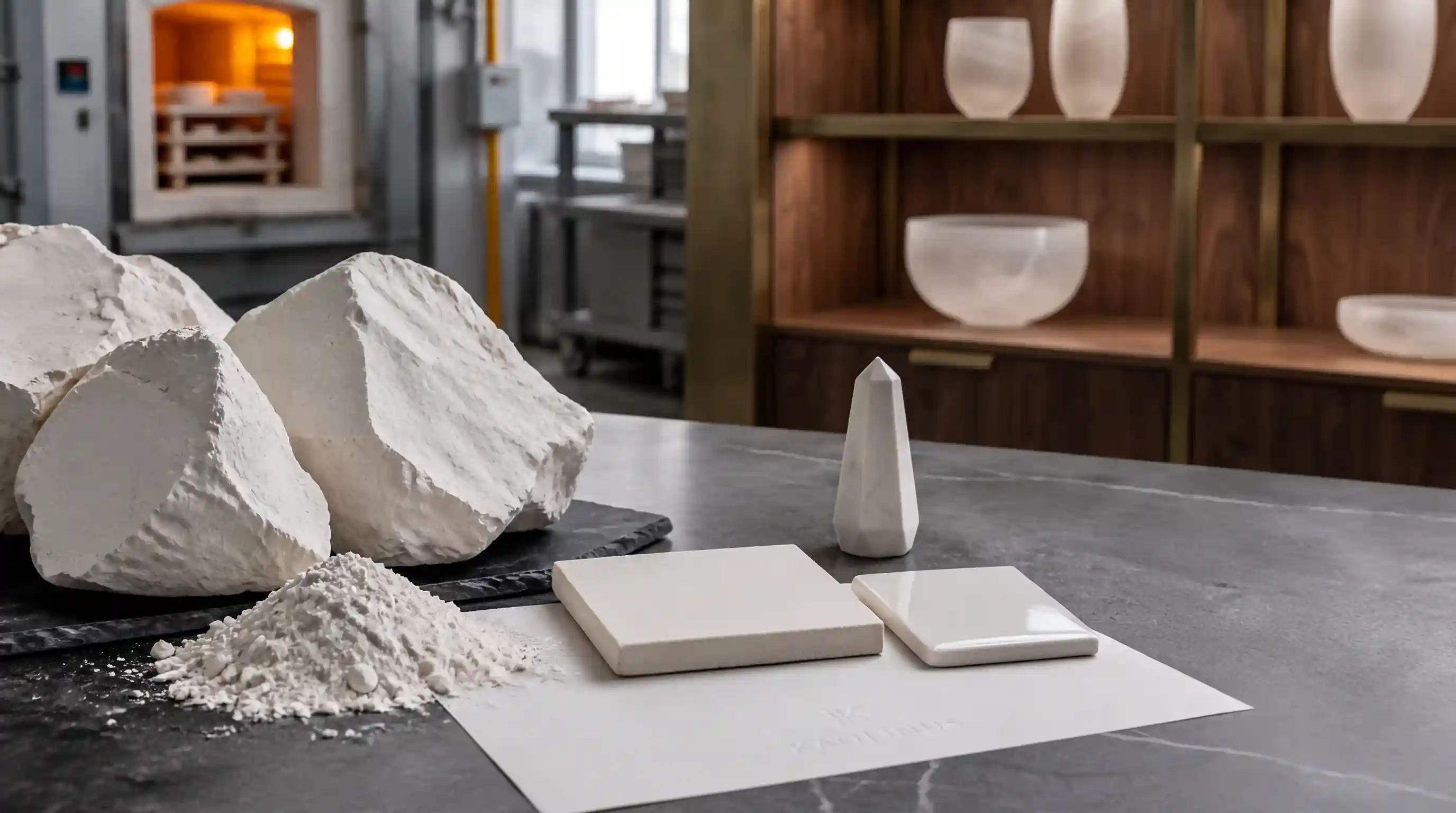
The Vital Role of Kaolin in the Tile and Ceramic Industry
The tile and ceramic industry is one of the largest consumers of kaolin worldwide and domestically. This mineral acts as one of the main components of the tile and ceramic body and, due to its relatively high melting point and favorable thermal stability, helps the body's strength during the firing process. The presence of kaolin in the ceramic body composition reduces drying and firing shrinkage and prevents products from warping.
The white color of kaolin after firing provides a suitable foundation for creating transparent and colored glazes. This feature is crucial for producing wall and floor tiles with a flawless appearance and no discoloration. Manufacturers use various meshes of this material to bring the plasticity and moldability of the ceramic clay to the desired level.
Furthermore, in the purification and preparation processes of raw materials for various industries, the use of complementary minerals such as The role of bentonite in water and industrial wastewater treatment completes the optimization of industrial processes. This synergy between different minerals upgrades the quality of production lines.
Overall, by providing initial plasticity in ceramic paste and creating mechanical strength after firing, kaolin plays an irreplaceable role in the ceramics industry and guarantees the quality of final products.
Application of Kaolin in the Production of High-Quality Ceramic Glazes
Glaze-making is one of the most sensitive sectors of the ceramic and porcelain industries, directly dealing with the aesthetics and durability of the ceramic product. Kaolin is used in glaze formulations as a rich source of silica and alumina. This material helps suspend suspended particles in the glaze slurry and prevents their rapid settling.
When firing glaze in industrial kilns, kaolin helps create a uniform glass network and prevents issues such as crazing. The initial whiteness of this mineral guarantees that the final color of the glaze appears completely transparent and pure, without causing any turbidity.
Choosing the appropriate mesh in preparing the glaze slurry is very important. Using kaolin with precise granulation facilitates the uniform spraying of the glaze on the tile surface and significantly increases surface quality. This leads to a reduction in waste on the production lines of tile and ceramic factories.
By supplying high-quality kaolin suitable for the glaze industry, the Amiran Stone Mineral Project has been able to adequately cover the needs of various manufacturing units and elevate the quality standards of domestic producers.
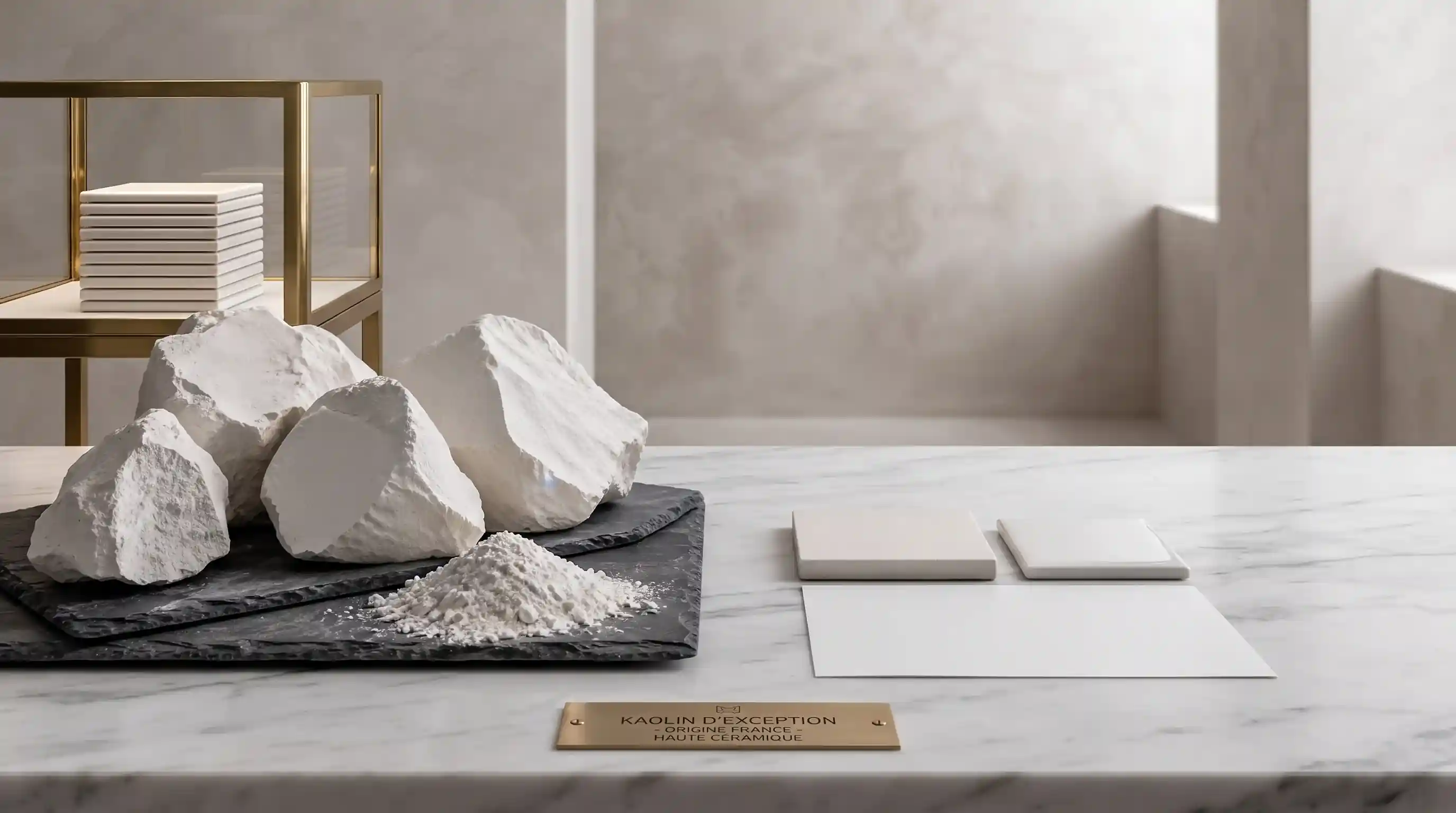
Using Kaolin in the Paper Industry as a Filler and Coating Pigment
The paper industry is another major consumer of kaolin, where this material is used as a filler and coating pigment. Adding kaolin to paper pulp fills the empty spaces between cellulose fibers, resulting in paper that is smoother, more opaque, and produced with much better printability.
In the paper coating section, a layer of micronized kaolin is placed on the paper surface, maximizing its whiteness, brightness, and smoothness. This feature is of extraordinary importance for the production of glossy and magazine paper. The appropriate particle size distribution of kaolin allows printing ink to be absorbed uniformly on the paper.
The use of kaolin also helps reduce the consumption of expensive wood pulp and is economically very cost-effective for paper manufacturing units. The chemical stability of this material makes the produced paper more resistant to color changes caused by sunlight.
Relying on the technical features of the kaolin supplied by the Amiran Stone Mineral Project, paper manufacturers can introduce products with global standards and high quality to the consumer market.
Kaolin in the Paint-Making Industry and Industrial Coatings
In the paint and resin industry, kaolin is recognized as a functional filler pigment that helps improve the optical and mechanical properties of paint. Due to its suitable refractive index, this material significantly helps increase the hiding power of water-based and oil-based paints and reduces the consumption of titanium dioxide, which is an expensive pigment.
The presence of kaolin in paint formulations increases the durability of the paint film against weather conditions, moisture, and sunlight exposure. Additionally, this material helps control paint gloss and makes it possible to produce matte and semi-matte paints with desired quality. The anti-settling properties of kaolin in the paint can also facilitate product storage.
The appropriate granulation of kaolin in high mesh ranges prevents scaling or roughness on the paint surface, creating a completely uniform coating. The application of this material in architectural and industrial paints has become a fixed standard.
By supplying high-quality kaolin for paint manufacturers' formulations, the Amiran Stone Mineral Project has played a significant share in upgrading the quality of protective and decorative coatings.
Economic and Technical Advantages of Using High-Quality Kaolin
Using standard and high-quality minerals like kaolin brings countless economic and technical benefits to production units. From a technical standpoint, high purity, uniform particle size distribution, and the absence of harmful impurities such as iron oxides guarantee the quality of the final product and minimize production errors.
From an economic perspective, stable access to quality raw materials allows factories to have more precise production plaing and reduce costs resulting from waste and production line stoppages. As a cost-effective raw material, kaolin creates high added value in final products.
Purchasing managers and process engineers are always looking for suppliers who offer consistent quality and timely delivery. Committed to providing standard minerals, the Amiran Stone Mineral Project responds to this essential industry need.
A comprehensive examination of kaolin properties shows that investing in the purchase of minerals with precise technical specifications will lead to a faster retu on investment for the tile, ceramic, paint, and paper industries.
Conclusion and Selection Guide for Suitable Kaolin for Industries
In this article, we comprehensively examined the types of kaolin and their industrial applications in the tile, ceramic products, glaze, paper, and paint industries. It became clear that this valuable mineral, with a mesh range of 450 to 1,500 mesh, plays a key role in upgrading quality and improving the mechanical and surface properties of products.
Selecting the appropriate mesh and sourcing kaolin from reliable sources guarantees the success of production processes. Manufacturers must act based on the exact needs of their production line to select the proper granulation and purity for the best results.
By offering high-quality mineral products, the Amiran Stone Mineral Project is ready to cooperate with various industries to supply standard raw materials. To receive specialized consultation and order products, visiting the relevant sections on the website will guide you.
We hope this article has provided you with a clear perspective on the importance and industrial applications of kaolin and serves as a useful guide for optimizing your production processes.
| Question | Answer |
|---|---|
| What is kaolin? | Kaolin is a white, soft clay mineral composed mainly of kaolinite and is used in various industries. |
| What is the mesh range of the supplied kaolin? | This product is supplied and offered in a mesh range of 450 to 1500 mesh. |
| What are the main applications of kaolin? | The main applications include tiles, ceramic products, glazes, paper, and paint. |
| Why is kaolin used in the tile and ceramic industry? | Due to providing suitable plasticity, thermal stability, and reducing shrinkage during the firing process. |
| What is the role of kaolin in the paper industry? | It is used as a filler and coating to increase paper whiteness, smoothness, and printability. |
| How does kaolin improve paint quality? | By increasing hiding power, improving paint durability, and reducing titanium dioxide consumption. |
| What is the advantage of using kaolin in glaze? | It helps suspend the slurry and facilitates the creation of a uniform and transparent glass network. |
| Is kaolin heat resistant? | Yes, it has a suitable melting point and thermal stability. |
| How can the required kaolin be ordered? | It is possible through visiting the kaolin product page on the Amiran Stone Mineral website. |
| What effect does kaolin purity have on the product? | High purity prevents unwanted discoloration in final products such as ceramics and paper. |
Amiran Stone Mineral Project — Reference for Industrial Mineral Supply
برچسب: Kaolin,An Introduction to Types of Kaolin and Their Industrial Applications,
نویسنده: رساوب آفرین