
درباره سایت
آخرین مطالب
- اکسید لیمونیت (گل ماش) استاندارد جدید در صنایع پوشش صنعتی
- کائولن باکیفیت کانی سنگ برای کاغذسازی مش 450 تا 1500
- سیلیس باکیفیت کانی سنگ امیران برای صنایع سرامیک با مش ۱۰ تا ۴۵۰
- تالک صنعتی با دانه بندی استاندارد برای کاربردهای صنعتی
- کائولن مرغوب کانی سنگ امیران برای رنگ و لعاب با مش 450 تا 1500
- کائولن درجه یک کانی سنگ امیران برای کاشی و لعاب مش 450 تا 1500
- خرید کائولن اصیل کانی سنگ برای کاشی و کاغذ دانه بندی 450 تا 1500
- دریافت کاتالوگ و آنالیز فنی کربنات کلسیم ۸۰۰ مش
- سیلیس صنعتی کانی سنگ امیران برای صنایع شیشه در مش ۱۰ تا ۴۵۰
- خرید فلدسپات به عنوان مواد اولیه صنایع شیشه و سرامیک
امکانات وب
Introduction to the Importance and Applications of Industrial Barite
Industrial barite is one of the most important and widely used mineral materials in various industries, holding a special position due to its specific physical and chemical characteristics. Precise understanding of this material and awareness of its quality criteria are of high importance for engineers, buyers, and manufacturers. In this article, we intend to examine laboratory methods for identifying the quality of this mineral and analyze its various dimensions.
Due to its high density and appropriate purity, this material has found extensive applications in various industrial fields. At the Kani Sang Amiran project, this product is supplied and distributed with high precision. For more information regarding the details of this product, you can visit the industrial barite page. The quality of this material directly impacts the final efficiency of products that utilize it in their structure.
Various industries are constantly seeking solutions to assess the quality of their raw materials. For example, in topics related to coatings and insulation, examining physical and mechanical characteristics is of great importance. Furthermore, comparing this material with other widely used minerals can provide professionals with a better perspective. For further reading in this area, the article Application of industrial barite in the production of sound and thermal insulation raises valuable points that are well worth reading.
Examining the microscopic structure and appearance properties of other minerals can also help in better understanding quality standards. In this regard, studying the specialized article How to identify the purity and quality of industrial talc? provides useful supplementary information to researchers. Moreover, a precise understanding of other mineral powders such as calcium carbonate plays a key role in a comprehensive evaluation of raw material quality, which is addressed in the article How to identify original calcium carbonate powder?.
Familiarity with Physical Specifications and the Mesh Range of Industrial Barite
One of the initial steps in examining the quality of industrial barite is a precise understanding of its physical specifications, especially the mesh range. The standard mesh range for this product varies between 200 and 450 mesh, which determines the degree of fineness and particle size of the powder. Particle size directly affects the behavior of the powder in industrial processes, and controlling it in the laboratory requires precise sieving equipment.
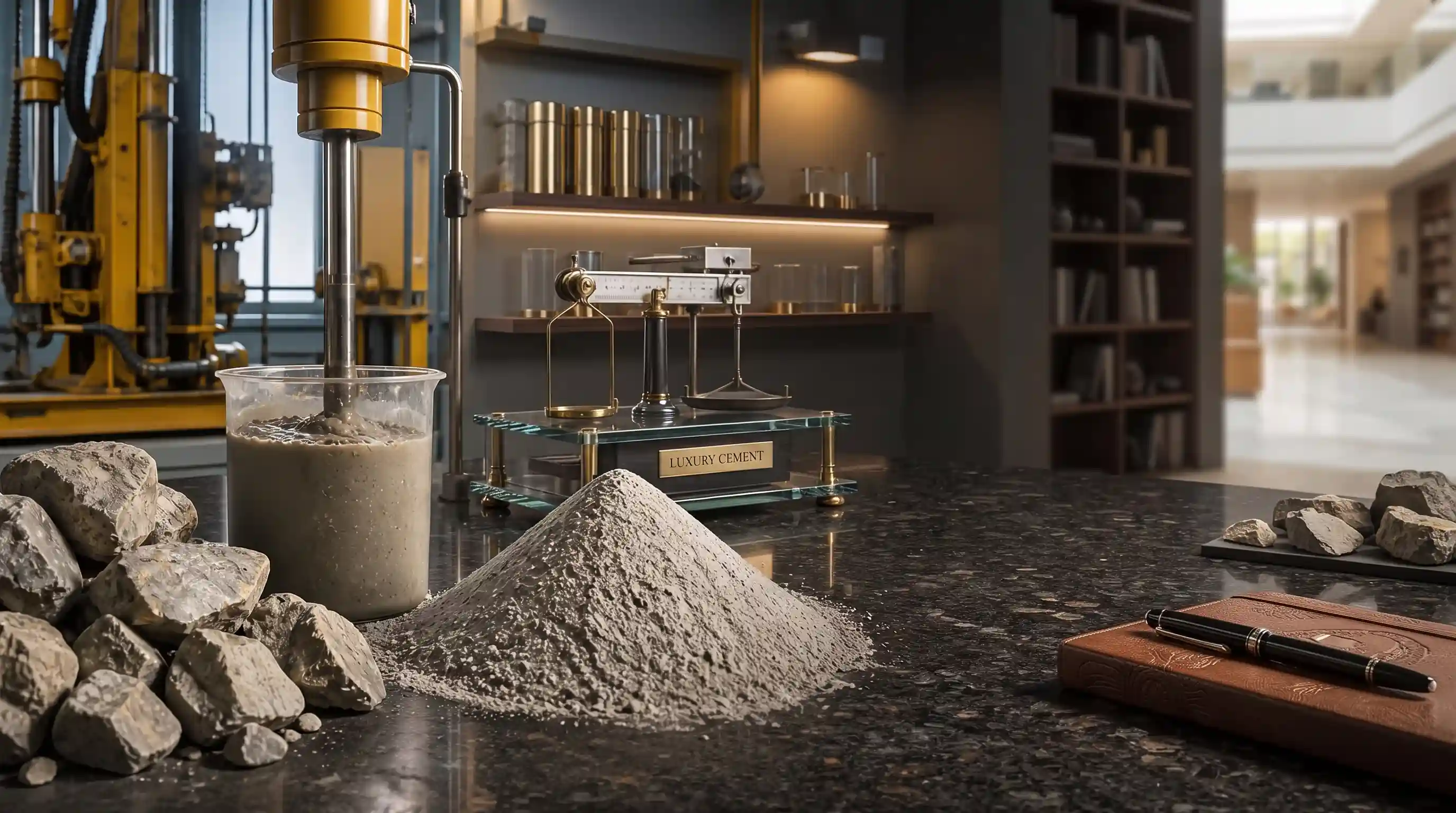
In quality control laboratories, a series of standard laboratory sieves is used to assess particle size distribution. Industrial barite powder is separated by being placed in this device under specific mechanical vibration, and the weight percentage of each mesh is calculated. This test determines whether the final product complies with the declared mesh range or not. Deviation from the standard mesh range can affect the final quality of industrial applications.
In addition to mesh measurement, the physical appearance of the powder, including its color and uniformity, is also examined. Quality barite usually has a light color and is free from impurities visible to the naked eye. Any unconventional discoloration in the sample may indicate the presence of intermediate elements or unwanted host rocks in the mine, which necessitates more detailed chemical investigations.
Quality control teams in industrial units utilize national and inteational standards to conduct periodic sampling of barite shipments. This continuous monitoring helps ensure that a uniform product conforming to the needs of consumer industries is always delivered, preventing technical issues on production lines.

The Role of Industrial Barite in Drilling Fluids and Its Laboratory Methods
One of the primary applications of industrial barite is its use in drilling fluids. In the oil and gas well drilling industry, controlling well pressure and keeping drill cuttings suspended are of vital importance. For this reason, the high density of barite plays a key role in adjusting drilling mud weight and prevents unexpected blowouts.
In specialized drilling fluid laboratories, the density of mud containing barite is measured using mud balance devices. Additionally, the viscosity and yield point of the fluid are examined using rotational viscometers to ensure that the barite powder is well-dispersed in the fluid and that premature settling does not occur. Appropriate particle size distribution within the specified mesh range is highly effective in this regard.
The chemical purity of the barite used in drilling fluids must also be carefully controlled to prevent unwanted reactions with other mud additives. The presence of unwanted associated minerals may alter the rheological properties of the fluid. Therefore, solubility tests and assessments of sulfate and barium compounds are carried out in quality control laboratories.
Drilling mud engineers ensure wellbore stability under harsh geological conditions by performing these continuous laboratory tests. The high quality of the consumed barite leads to reduced operational costs and increased drilling speed, which doubles the importance of accurate laboratory testing.
Application of Industrial Barite in the Electrode Industry and Its Quality Control
The welding electrode manufacturing industry is another major area of industrial barite consumption. In the coating or covering of welding electrodes, various minerals are used to create arc stability, protect the molten pool, and better guide the current. Barite is present in these formulations as one of the heavy mineral compounds.
In the quality control laboratories of the electrode industry, tests related to the uniformity of the electrode coating mixture are of high importance. Industrial barite particles with an appropriate mesh range must be blended with other powders in such a way that a homogeneous coating is formed on the metal core of the electrode. Particle non-uniformity can lead to arc instability and defects in the final weld.
The thermal properties of barite during the combustion and melting of the electrode coating are also examined in the laboratory. This material must maintain its stability at high temperatures and produce no harmful gases. Thermal analyses and checking the moisture content absorbed by the powder are among the common tests to determine barite quality in this specific application.
Electrode manufacturers test the mechanical properties of the dried electrode coating to assess its adhesion and strength. The quality of barite powder has a direct impact on the mechanical resistance of the coating against impact and cracking during storage and transportation.

Examination of Industrial Barite in Rubber and Plastic Products
Industrial barite is widely used as a heavy and efficient mineral filler in the manufacturing industries of rubber and plastic products. Adding this material to polymer compounds can improve mechanical properties, rigidity, and abrasion resistance. Furthermore, the use of mineral fillers significantly helps reduce the final cost of the product.
In the polymer laboratory, to examine the quality of the consumed barite, particle dispersion tests within the polymer matrix are performed. If the barite powder has been produced within the standard mesh range, it will be well-distributed in the polymer, preventing agglomeration and lump formation. Tensile tests, elongation at break, and hardness testing are performed on manufactured rubber and plastic parts to precisely evaluate the impact of barite presence.
The moisture content and volatile substances present in barite are also key parameters in the plastics industry. High moisture in the powder can lead to bubbles and structural defects in injection molding or extrusion processes. Therefore, laboratories perform standard moisture measurement tests before the powder enters the production line.
The chemical compatibility of barite with various polymers such as PVC, natural rubber, and synthetic rubber is examined to ensure that the additive does not cause any reactions leading to the degradation of polymer chains. This precise monitoring guarantees the quality of the final plastic and rubber products.
Advanced Laboratory Methods for Chemical Purity Analysis of Barite
In addition to physical and mesh tests, evaluating the chemical purity of industrial barite requires precise laboratory methods. Barium sulfate is the main constituent of this mineral, and its percentage of purity indicates the overall quality of the processed ore. Spectroscopy and wet chemistry methods are employed to precisely determine the existing elements.
Common chemical tests include measuring the levels of sulfate, barium, iron oxides, and free silica in the sample. The presence of high amounts of free silica or iron oxides may limit the powder's application in sensitive industries such as colored plastics or electrodes. Therefore, accurately determining these amounts is essential for classifying product quality.
Mode laboratory devices such as X-ray Diffraction (XRD) and X-ray Fluorescence (XRF) are powerful tools for identifying mineral phases and elements present in barite. These equipments analyze crystal structure and potential impurities with high precision, providing a comprehensive report of the sample's chemical composition.
Performing these advanced tests allows manufacturers to release a high-quality and standard product to the market. Industrial buyers also rely on the chemical analysis sheet obtained from these equipment to source raw materials for their production lines with greater confidence.

Common Challenges in Sampling and Sample Preparation of Industrial Barite
One of the very important stages in the quality control process of industrial barite is proper sampling from bulk or bagged shipments. If sampling is not performed using principled and standard methods, the obtained laboratory results will not represent the entire shipment and may lead to incorrect judgments regarding product quality.
For sampling barite in a warehouse or production line, primary samples must be prepared from various points of the shipment, and subsequently, using standard sample reduction methods, the final laboratory sample should be prepared. This minimizes errors caused by the heterogeneity of large mineral masses and increases the accuracy of analyses.
Sample preparation in the laboratory includes drying, initial crushing if necessary, and homogenization. The initial moisture of the sample can disrupt weighing and mesh results; therefore, drying the sample at a controlled temperature is one of the preliminary steps. Strictly following these guidelines significantly helps with the reproducibility and validity of laboratory results.
Quality control managers must ensure that laboratory persoel have received the necessary training to correctly execute sampling protocols. Monitoring this foundational process is considered the main bedrock for accurately evaluating the quality of industrial barite across all consuming industries.
Conclusion and Summary of Industrial Barite Quality Standards
In this article, we comprehensively reviewed laboratory methods for identifying the quality of industrial barite. It became clear that evaluating this mineral involves examining physical parameters such as the mesh range (200 to 450 mesh), appearance properties, specialized application tests in drilling fluids, the electrode industry, and the rubber and plastic industries.
The use of mode laboratory equipment to determine density, particle size distribution, moisture, and chemical purity helps industries select the best and highest-quality raw materials. Strict monitoring of the production process and continuous quality control will guarantee high efficiency and the optimization of production costs in various consuming industries.
Kani Sang Amiran always strives to cover the needs of the country's various industries in the best possible way by supplying and offering high-quality and standard barite. Awareness of technical specifications and quality standards assists buyers in making informed decisions and leads to the enhancement of the quality level of final industrial products.
We hope the material presented in this article has provided you, dear readers, with a clear and practical perspective on how to evaluate and identify the quality of industrial barite in a laboratory environment, and that it serves you well in your industrial processes.

| Question | Answer |
|---|---|
| What is the standard mesh range of industrial barite? | The mesh range of this product is generally between 200 and 450 mesh. |
| What are the main applications of industrial barite? | Drilling fluids, electrodes, rubber and plastic products are its main applications. |
| How is the density of barite in drilling fluids checked? | It is done using laboratory equipment such as the mud balance or Mud Balance device. |
| Why is moisture control important in plastic barite? | The presence of moisture causes bubbles and defects in plastic molding processes. |
| What are the main chemical analysis devices for barite? | XRD and XRF devices are used for precise analysis of structure and chemical purity. |
| Why is proper sampling of barite important? | To ensure that the laboratory sample is a true representative of the entire bulk or bagged shipment. |
| What is the role of barite in the electrode industry? | It is used as a heavy mineral in electrode coatings to create arc stability. |
| What is the effect of barite on rubber products? | As a heavy filler, it improves rigidity and abrasion resistance in rubber. |
| Is the color of barite an indicator of its quality? | Quality barite usually has a light color and lacks visible impurities. |
| How can industrial barite be procured? | It can be ordered through the dedicated product page on the Kani Sang Amiran website. |
Reference for standards and methods of analyzing minerals and industrial drilling fluids.
برچسب: Industrial Barite,How to Determine the Quality of Industrial Barite in the Laboratory?,
نویسنده: رساوب آفرین