
درباره سایت
آخرین مطالب
- تاثیر اندازه ذرات کربنات کلسیم در صنایع
- ما هو الفرق بين الفلسبار والكوارتز؟ مقارنة شاملة بين أكثر مادتيْن معدنيتيْن استخدماً
- دليل شراء أكسيد الليمونيت عالي الجودة (الجول ماش)
- What is the Difference Between Kaolin, Bentonite, and Talc in Industry? A Complete Application Comparison
- کربنات کلسیم یا دولومیت؟ بررسی تفاوتها و کاربردهای کلیدی
- مراجعة معايير التصدير لأكسيد الليمونيت (جول ماش)
- راهنمای نگهداری و انبارداری اکسید لیمونیت (گل ماش)
- National Quality Standards of Limonite Oxide (Gol Mash)
- Guide to Receiving the Catalog and Specifications of Limonite Oxide (Gol Mash)
- کاربرد اکسید لیمونیت (گل ماش) در صنایع چرم و پارچه
امکانات وب
Introduction to the Role of Dolomite in Refractory and Construction Industries
Mining and mineral processing have always played a key role in the advancement of various industries. Meanwhile, the mineral dolomite, as a double carbonate of calcium and magnesium, has found a special place in the refractory, glassmaking, and building materials industries. A thorough understanding of the physical and chemical characteristics of this material helps engineers and manufacturers maximize the efficiency of their fuaces and final products. To lea more about this product, you can visit the dolomite page and review its complete specifications.
Alongside this mineral, examining other refractory raw materials is also of high importance. For example, studying related articles such as the role of kaolin in improving the thermal resistance of refractory materials provides professionals with a broader perspective on optimizing heat-resistant structures. The main purpose of this article is to comprehensively review the applications of dolomite in improving the thermal and functional properties of various industries.
Chemical Properties and Mineral Structure of Dolomite
The chemical structure of dolomite includes a combination of calcium carbonate and magnesium carbonate, which results in its remarkable thermal stability. This unique crystalline structure allows the material to exhibit good resistance against thermal shocks and sudden temperature changes. Therefore, in industrial fuaces dealing with high temperatures, the use of this mineral is considered a strategic additive.
Examining other mineral compositions also shows how the synergy of various materials can enhance physical properties. As discussed in the article the role of feldspar in improving the resistance of chinaware products, the careful selection of base raw materials and mineral additives has a direct impact on the final product quality. Dolomite, with its stable elements, plays a similar role in stabilizing ceramic and refractory structures.
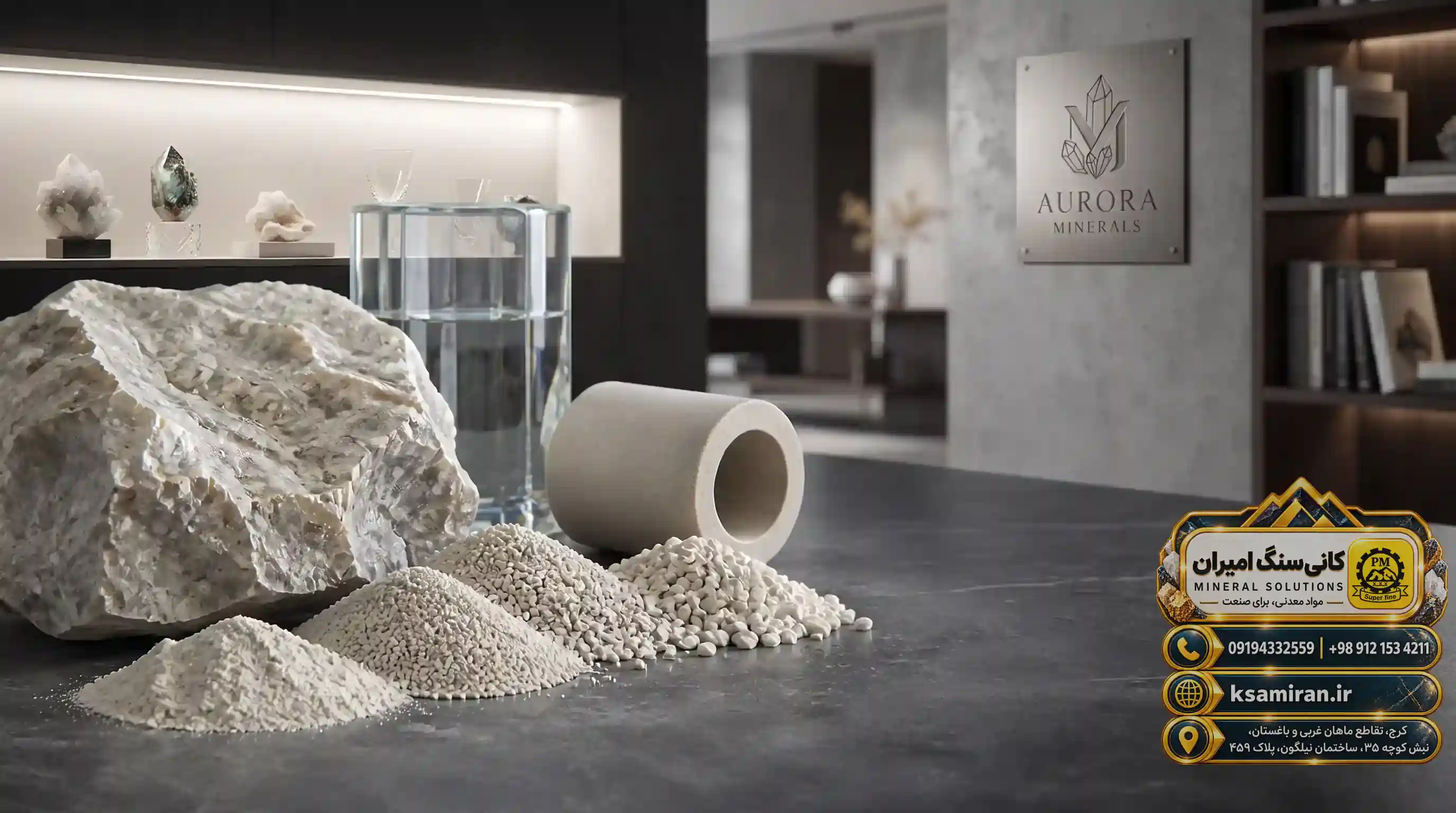
Application of Dolomite in the Glass and Crystal Manufacturing Industries
The glassmaking industry is one of the main consumers of dolomite in the market. The presence of magnesium and calcium oxides in the composition of this mineral acts as a flux, reducing the melting point of glass raw materials. This leads to optimized energy consumption in glass melting fuaces and improves the final quality of the glass in terms of transparency and durability.
Given the importance of minerals in improving mechanical and thermal properties, it is sometimes necessary to investigate the impact of other materials on industrial matrices. For instance, in the fields of composite engineering and advanced materials, studying the article investigating the role of white barite in improving the mechanical properties of composites provides useful information about the behavior of filler particles in various matrices, which helps to better understand the performance of mineral gradations.
The Role of Dolomite in the Ceramic and Chinaware Industry
In the ceramics industry, the use of dolomite is very common due to its ability to create glass phases and control thermal shrinkage. The standard mesh range of 10 to 40 mesh helps this material act as a thermal dissociation activating agent in various ceramic formulations. This feature reduces firing-induced cracking in ceramic kilns.
Producers of ceramic products and building materials can increase the dimensional stability and mechanical strength of manufactured parts by utilizing suitable gradations of this mineral. Kani Sang Amiran Project covers the needs of various industries by supplying this high-quality product.
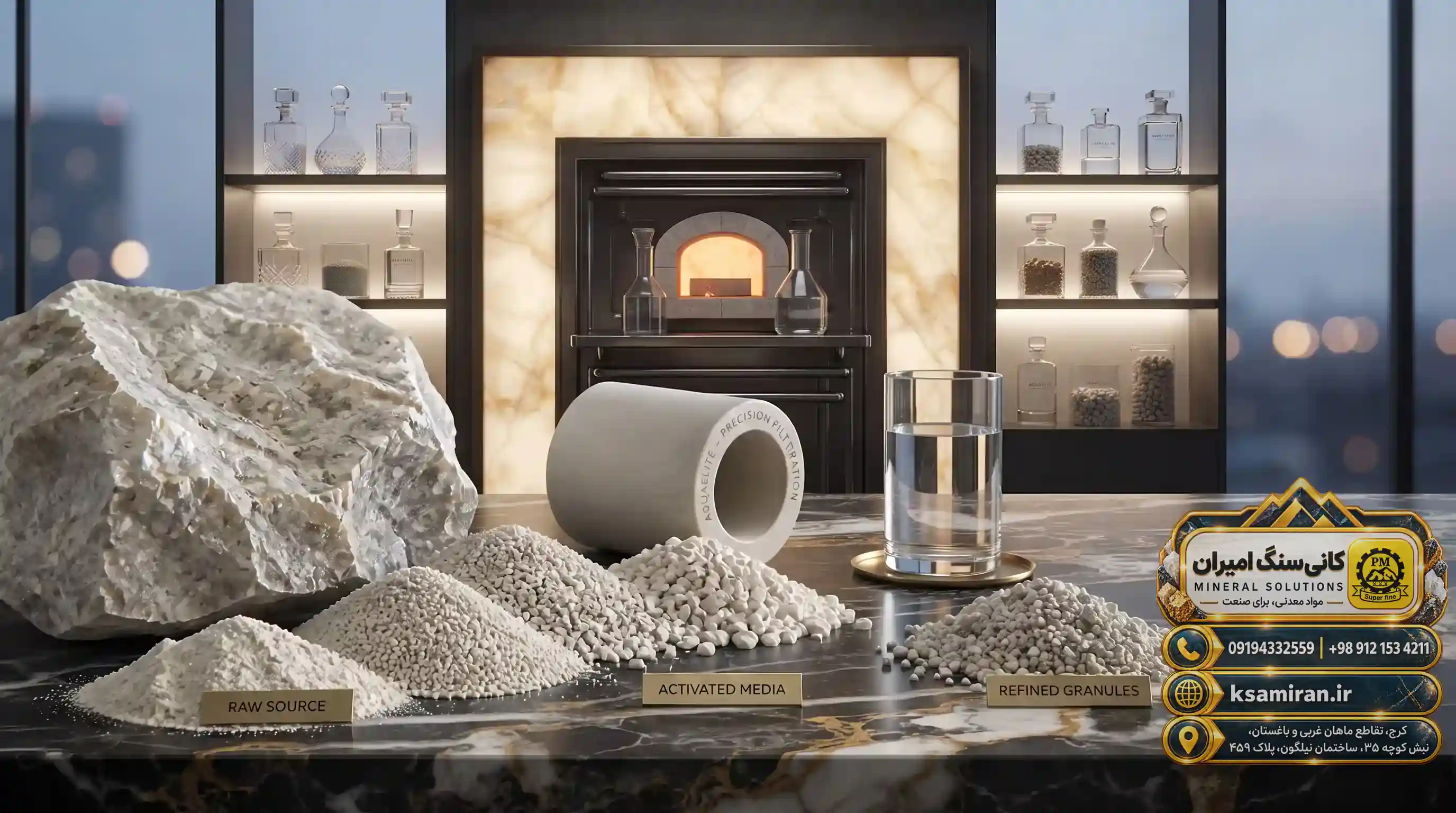
Application of Dolomite in Building Materials and Refractory Mortars
Mode building materials require raw materials that, in addition to mechanical strength, are also stable against environmental and thermal stresses. Dolomite, due to its favorable adhesive properties and stability against atmospheric conditions, is used in the production of various mortars, refractory concretes, and base materials. By filling microscopic pores, this material creates a denser structure.
The 10 to 40 mesh range of this product is designed to provide proper particle distribution within the composition of building materials. This reduces the permeability of the materials and increases the lifespan of civil structures against thermal and chemical destructive factors.
Examining the Mesh Range and the Importance of Gradation in Thermal Performance
Mineral gradation is one of the key parameters in determining the rate of chemical reactions and their thermal properties. Dolomite is supplied with a mesh range of 10 to 40 mesh, and this specific gradation creates a proper balance between the specific surface area of the particles and the reaction speed in industrial fuaces. Particles within this mesh range have good flowability in dry and wet mixtures.
The correct choice of particle size prevents excessive porosity and ensures that heat transfer occurs uniformly throughout the entire volume of the material. This feature is doubly important, especially in refractory applications where stability against severe thermal stresses is required.
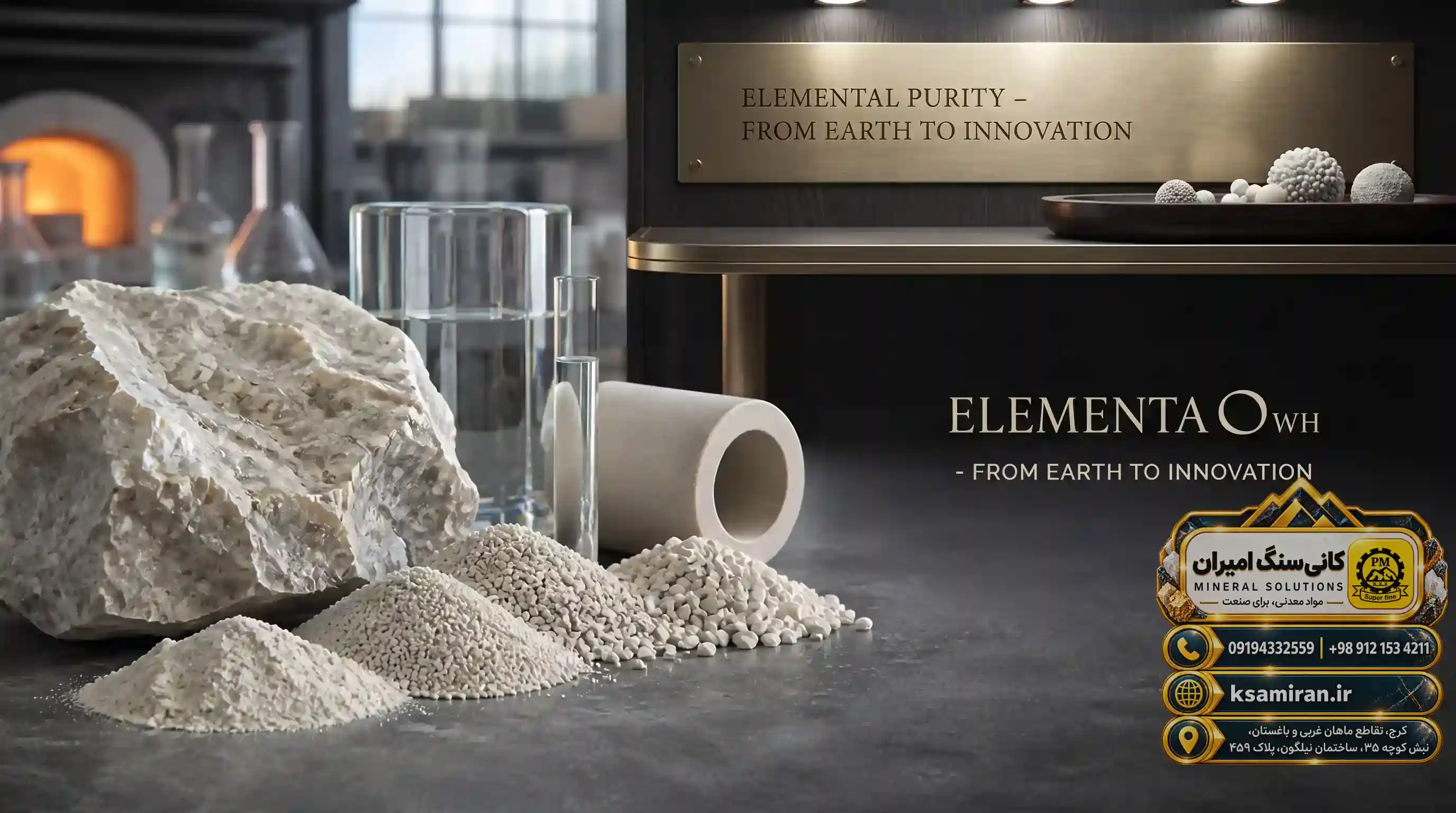
Optimizing Energy Consumption and Industrial Fuace Efficiency with Dolomite
Heavy industries and melting fuaces are constantly looking for ways to reduce fuel consumption and increase thermal efficiency. Adding dolomite as a stable component in the refractory linings of fuaces minimizes heat loss. By creating stable bonds at high temperatures, this material prevents the premature destruction of refractories.
Reducing fuace repair and maintenance costs thanks to the use of high-quality minerals is considered a major economic advantage for production units. Kani Sang Amiran Project plays an important role in enhancing the productivity of these industries by offering standard products.
Conclusion and Future Outlook of Refractory Mineral Applications
In this article, we comprehensively reviewed the role of dolomite in improving thermal properties, glassmaking, ceramics, and building materials. It became clear that this mineral, with its balanced composition and a mesh range of 10 to 40 mesh, meets the demanding needs of various industries. Thermal stability, reduced melting temperatures, and improved structural durability are among its most important advantages.
With the advancement of production technologies and the growing need of industries for high-quality refractory materials, the use of standard mineral resources is gaining even more importance. Kani Sang Amiran Project, as a reputable supplier of minerals, has paved the way for industries to access these valuable products.
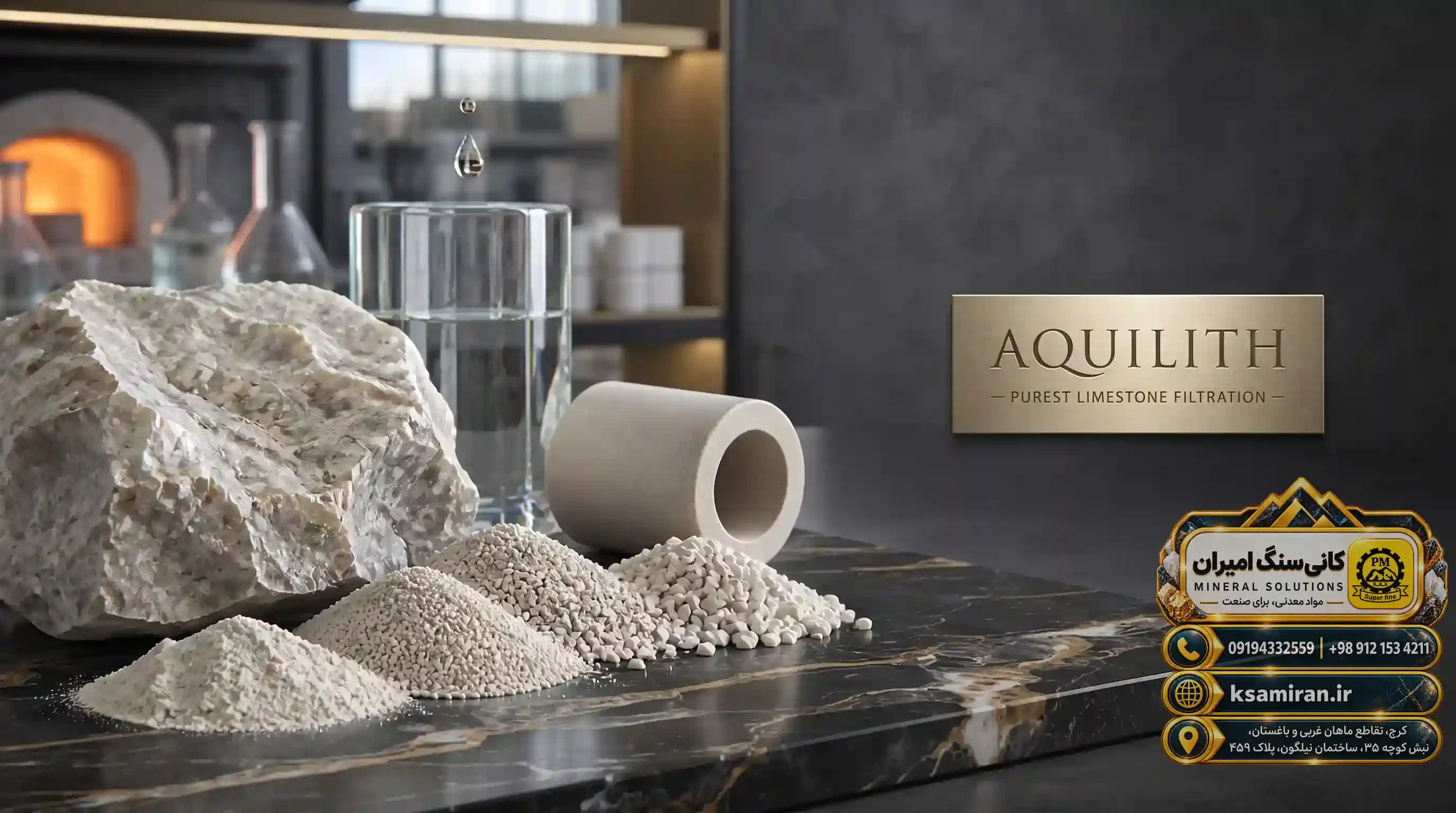
| Question | Answer |
|---|---|
| What is dolomite? | A carbonate mineral composed of a combination of calcium and magnesium, used in refractory, glass, and construction industries. |
| What is the mesh range of the supplied dolomite? | This product is produced and supplied in a mesh range of 10 to 40 mesh. |
| What are the main applications of dolomite? | Glass industries, ceramic products, and building materials are its main applications. |
| What is the role of dolomite in the glass industry? | It acts as a flux and reduces the melting point of glass raw materials. |
| How does dolomite improve thermal properties? | By having a stable structure against thermal shocks and helping stabilize industrial fuaces. |
| Is dolomite used in ceramics manufacturing? | Yes, it is used to control thermal shrinkage and reduce firing cracking. |
| Why is 10 to 40 mesh gradation important? | It creates proper particle distribution and ensures uniform heat transfer in materials. |
| Which entity is the supplier of this product? | Kani Sang Amiran Project is the producer and supplier of these minerals. |
| Is dolomite used in building materials? | Yes, it is used in the production of mortars and to improve the density and durability of structures. |
| How can one obtain more information? | By visiting the dedicated product page on the Kani Sang Amiran website, you can view complete information. |
Kani Sang Amiran Project, specialized production and processing of minerals and refractories.

برچسب: Dolomite,The Role of Dolomite in Improving the Thermal Properties of Refractory Materials,
نویسنده: رساوب آفرین