
درباره سایت
آخرین مطالب
- انتخاب اکسید آهن قرمز (اخرا) برای بهبود کیفیت پیگمنت و پوششهای رنگی
- تامین کربنات کلسیم با دانهبندی دقیق جهت استفاده در مستربچ
- تأمین تخصصی سیلیس برای مصالح ساختمانی، شیشه و صنایع سرامیک
- ویژگیهای فنی بنتونیت کانی سنگ امیران برای کاربردهای خاص
- فلدسپات کانی سنگ امیران برای شیشه کاشی و سرامیک
- کاربرد تالک سفید درجه یک در فرمولاسیون پیشرفته رنگ و محصولات کاغذی
- اکسید آهن قرمز (اخرا) کاربردی جهت تولید محصولات سرامیکی و پوشش
- مشخصات فنی اکسید آهن قرمز (اخرا) مناسب برای پوشش و تولید پیگمنت
- مشاوره تخصصی خرید کربنات کلسیم بر اساس نیاز دقیق صنعت شما
- انتخاب تالک سفید صنعتی مناسب برای تولیدات کاغذ و مستربچ
امکانات وب
Introduction to the Role of Feldspar in the Glassmaking Industry
The glassmaking industry is one of the largest consumers of minerals worldwide, and the final quality of the product depends heavily on the initial composition of the materials. Among these, feldspar is recognized as a strategic raw material that plays a key role in supplying alumina and alkaline oxides. The use of this mineral not only improves the thermal stability of the glass but also has a significant impact on optimizing melting processes. A precise understanding of the physical and chemical characteristics of this material is an important step toward enhancing the productivity of production lines.
In the glass manufacturing process, precise control of melting parameters is of particular importance. Raw materials must be selected in a way that minimizes the boiling point, viscosity, and reaction time of the fuace. In this regard, reviewing the review of feldspar prices in the Iranian mineral market shows how much market fluctuations affect the macroeconomics of this industry. However, the technical value of this material is so high that the glass, tile, and ceramic industries always keep it in their main purchasing basket.
Mining companies extract and process this valuable mineral, releasing it to the market in various granulations. With its effective presence in industrial formulations, this material acts as a strong flux, lowering the melting point of the glass mixture. This, in tu, results in considerable energy savings in fuace operation, which is considered a major competitive advantage for manufacturers.
The Importance of Granulation in Optimizing the Glass Melting Process
The granulation of mineral raw materials, especially feldspar, is one of the vital parameters in glass melting engineering. Particle size directly affects the speed of solid and liquid phase reactions inside the fuace. Very coarse particles may not melt completely within the designated time and can cause impurities or stones in the glass structure; conversely, very fine particles bring about respiratory problems, dust losses, and undesirable sticking in equipment.
To achieve the best result, the standard mesh range between 10 and 450 mesh is recommended for various industrial applications. Choosing the appropriate mesh directly depends on the type of fuace, the duration of material residence in the heating zone, and the overall composition of the glass batch. The particle size distribution must be such that the contact surfaces of the particles with other raw materials, such as silica and sodium carbonate, are maximized.
In addition to glassmaking, precise granulation is also important in other related industries. For example, in topics related to rubber manufacturing, engineers are always looking for the answer to the question how to find suitable feldspar for rubber industries?. In the glass industry as well, an exact match between the consumed mesh size and the fuace's thermal profile is the main key to the uniformity and clarity of the final product.

The Role of Feldspar in Lowering Melting Temperature and Saving Energy
Energy is one of the most costly inputs in the mineral and especially the glassmaking industries. The presence of alkaline oxides such as potassium and sodium in the structure of feldspar causes this material to act as a very strong flux. This fluxing property helps to significantly reduce the overall melting temperature of all compounds present in the fuace, thereby reducing the financial burden of energy consumption.
Lowering the melting temperature not only reduces fuace fuel or electricity costs but also substantially increases the lifespan of the fuace body refractories. This means fewer shutdowns for repairs and higher production line productivity. Glassmakers establish an ideal balance between melting quality and production economics by precisely optimizing the amount of this material in the glass batch.
Alongside this material, other minerals are also used in related industries, and examining their performance is quite worthwhile. For instance, specialized articles show that the impact of dolomite on reducing production costs in mineral industries is very similar to and complements energy optimization processes with the help of fluxes, which together guarantee thermal and economic stability.
Examining the 10 to 450 Mesh Range and Its Industrial Applications
The diversity in the mesh range of feldspar makes it possible to use it in a wide spectrum of industries. The mesh range from 10 to 450 mesh means that both coarser particles for specific uses and very micronized powders for sensitive applications are accessible. Each segment of this range exhibits specific physical properties and reactivity in the fuace.
In general, coarser particles are used in the tile, ceramic product, and glaze manufacturing industries, where complete and rapid melting at low temperatures is not required; rather, the formation of glassy and bonding phases is intended. In contrast, for advanced glassmaking industries, the use of softer and more controlled granulations is preferred to accelerate the dissolution of particles in the melt.
Mineral producers supply this product with the highest quality standards so that its chemical purity and granulation are adjusted precisely to customer requirements. To view detailed specifications, make a purchase, and lea more about this product, you can visit the specialized page for feldspar and examine the complete details of its applications.
The Impact of Chemical Purity on Glass Quality and Transparency
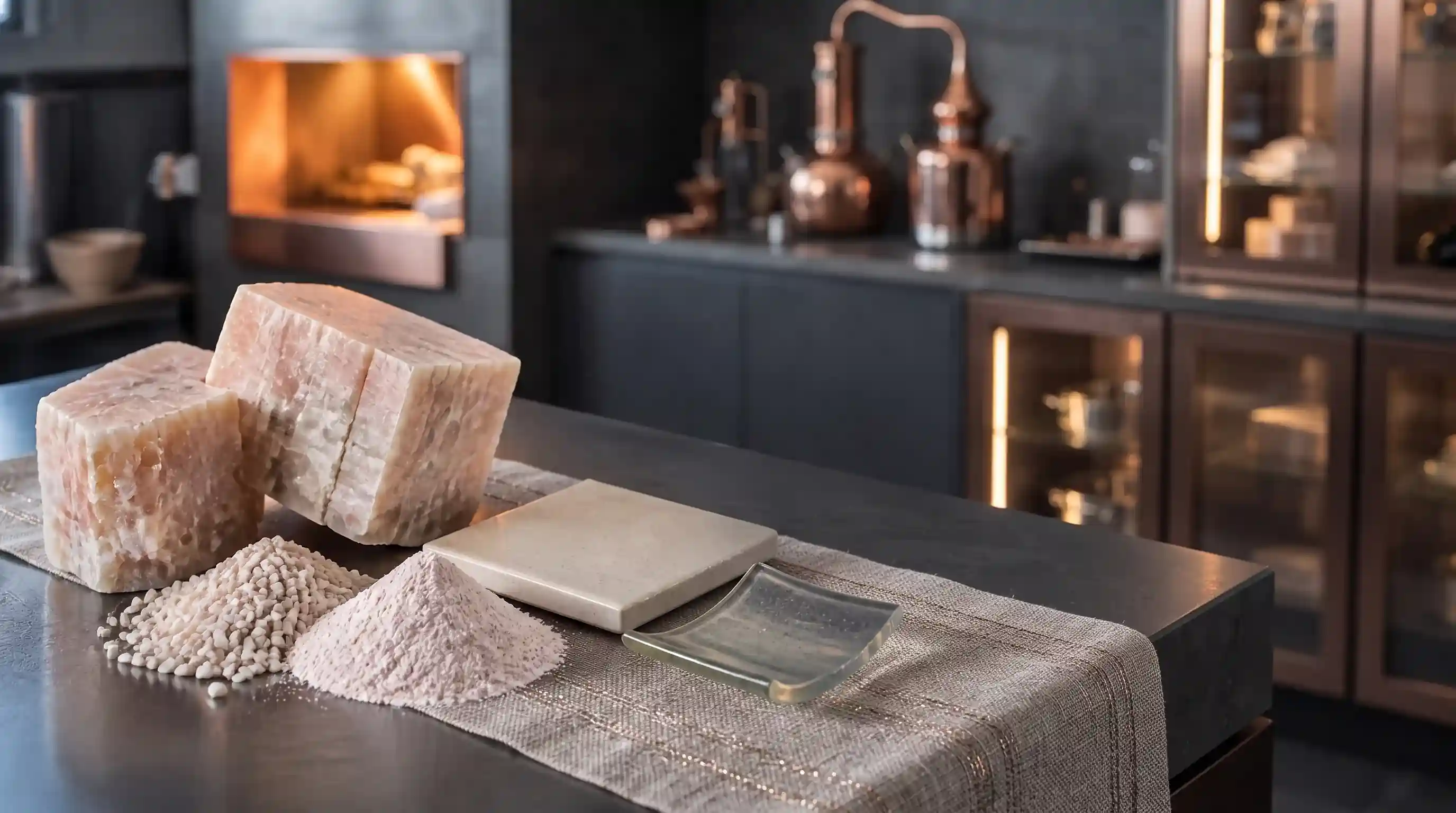
Transparency and the absence of bubbles or impurities in glass are the main factors determining its commercial quality. In addition to supplying alumina, feldspar must be free of coloring elements, especially iron oxide. The presence of an excessive amount of iron can cause an unwanted green or yellow tint in clear glass, which severely degrades the product's quality standards.
Therefore, feldspar processing includes magnetic separation stages and precise purification to reduce the amount of iron oxide to the lowest possible level. This high purity helps chemical reactions inside the fuace proceed in a completely controlled maer, resulting in a transparent, uniform product free of structural defects.
Quality control engineers in glass factories continuously review the chemical analyses of incoming materials to ensure the stability of the quality of the received feldspar. This continuous monitoring guarantees that the melting process is not disrupted and that the final products strictly match technical specifications and market standards.
Diverse Applications in the Tile, Ceramic, and Glaze Industries
In addition to the glass industry, the main applications of feldspar in the tile, ceramic products, and glaze manufacturing industries are also very prominent and undeniable. In tile and ceramic bodies, this mineral acts as a fluxing phase, forming a liquid phase during firing in ceramic kilns that welds other refractory particles together.
In the glaze production industry, this material plays an important role in creating a glossy, smooth coating resistant to wear and chemicals on the ceramic body. Precise adjustment of the mesh granulation in these industries greatly helps control lubrication, glaze adhesion to the body, and prevents problems such as peeling.
A precise understanding of the properties of this mineral allows glaze and tile formulation designers to create the highest mechanical resistance and visual beauty in final products at the lowest cost. Close cooperation between mineral producers and tile and ceramic factories plays a vital role in upgrading the quality of this industry's products.

Physicochemical Melting Mechanisms with the Presence of Feldspar
Understanding the exact physicochemical mechanisms that occur during glass melting in the presence of feldspar helps engineers optimize the fuace process. When the raw material mixture is heated, feldspar begins to soften and melt at lower temperatures compared to pure silica. This initial melt acts as a solvent and accelerates the dissolution of the remaining silica particles.
This phenomenon drastically reduces the time required for homogenizing the glass melt. The presence of alumina in the structure of this mineral, in tu, regulates the viscosity of the melt at high temperatures and prevents excessive fluidity. This balance in viscosity is vital for shaping the glass during the molding stage.
Therefore, the correct selection of the granulation and amount of this mineral directly affects the kinetics of the reactions inside the fuace. The more homogeneous the particle size distribution, the more uniformly the dissolution mechanism will take place, and the final product will be free of thermal stresses and air bubbles.
Conclusion and Future Prospects of Feldspar Consumption in Mineral Industries
In this article, we comprehensively examined the role and impact of feldspar granulation on the glass melting process. It became clear to what extent the precise selection of particle size within the 10 to 450 mesh range, along with appropriate chemical purity, can be effective in reducing energy consumption, improving melting quality, and increasing glass transparency. Beyond glass, the extensive applications of this material in tiles, ceramic products, and glazes have also solidified its position as a strategic mineral.
Advances in mineral processing technologies and increased precision in granulation herald a brighter future for consuming industries. By continuously optimizing formulations and utilizing high-quality domestic resources, producers can reduce their production costs and bring the quality of final products closer to global standards.
Kani Sang Amiran project, by offering high-quality products and diverse granulations, always strives to cover the needs of various mineral, glass, and ceramic industries in the best possible way and take an effective step toward self-sufficiency and upgrading the quality of national production.

| Question | Answer |
|---|---|
| What is feldspar and what are its applications? | It is an important mineral used mainly in the glass, tile, ceramic products, and glaze industries as a flux and alumina supplier. |
| What is the mesh range of this product? | This product is produced and supplied in a mesh range of 10 to 450. |
| Why is granulation important in glass melting? | Proper granulation controls the rate of particle dissolution in the melt, prevents the formation of impurities, and contributes to glass homogeneity. |
| How does this material cause energy consumption reduction? | By containing alkaline oxides, it acts as a flux and lowers the melting temperature of all materials inside the fuace. |
| What is the role of this material in the tile and ceramic industries? | It acts as a fluxing phase and plays a key role in firing the ceramic body and creating a glossy, resistant glaze layer. |
| How can suitable feldspar be ordered? | By visiting the feldspar product page on the Kani Sang Amiran website, you can obtain complete information. |
| What factors affect glass quality? | Chemical purity, especially the low amount of iron oxide and granulation uniformity, are the main factors of quality. |
| Is this material also used in the rubber industry? | Yes, in some other industrial formulations such as rubber, it is also used by selecting the appropriate mesh. |
| What is the impact of dolomite on costs? | Dolomite, like fluxing materials, helps reduce production costs and optimize energy consumption. |
| Why is the chemical purity of this mineral important? | It is necessary to prevent the formation of unwanted colors in clear glass and to maintain the quality standards of the final product. |
Kani Sang Amiran Project — Specialized Reference for Mineral Production and Processing

برچسب: Feldspar,The Impact of Feldspar Granulation on the Glass Melting Process,
نویسنده: رساوب آفرین