
درباره سایت
آخرین مطالب
- استخدام أكسيد الليمونيت (الماغش) في صناعات الزجاج
- کاربرد اکسید لیمونیت (گل ماش) در صنایع شیشهسازی
- A Review of Daily Prices for Limonite Oxide (Ocher) in the Market
- چگونه خالص بودن اکسید لیمونیت (گل ماش) را تشخیص دهیم؟
- بررسی قیمت روز اکسید لیمونیت (گل ماش) در بازار
- Application of Limonite Oxide (Gole Mash) in Glassmaking Industries
- كيف تتعرف على نقاء أكسيد الليمونيت (جول ماش)؟
- How to Determine the Purity of Limonite Oxide (Gol Mash)?
- بررسی استانداردهای ایمنی کار با اکسید لیمونیت (گل ماش)
- Comprehensive Guide to Technical Analysis of Limonite Oxide (Gol Mash)
امکانات وب
Introduction to the Role of Coated Calcium Carbonate in Polymer Industries
The polymer industry and the manufacturing of plastic parts are constantly seeking solutions to improve physical and mechanical properties while reducing final production costs. Amidst this, the use of mineral fillers holds a special place. Calcium carbonate is known as one of the most common fillers, but its modified type, namely coated calcium carbonate, has created a remarkable revolution in this industry. At the Kani Sang Amiran project, this material is supplied with its specific characteristics to meet the precise needs of various industries.
One of the major challenges in using mineral powders in polymer matrices is the problem of agglomeration and improper particle distribution. Coating the particles with stearic acid or similar materials significantly increases the compatibility between the mineral phase and the organic polymer. To better understand this chemical process and the importance of the coating layer, you can read the article Examining the Impact of Stearic Acid in Coated Calcium Carbonate Coating, which provides useful technical details.
Reducing the density and weight of final products is one of the key goals of polymer engineers. When the mineral powder is properly dispersed within the polymer compound, not only do the mechanical properties not drop, but weight optimization is also achieved. This material is produced utilizing up-to-date technologies and is highly ideal for specialized applications. To view precise specifications and place an order, please visit the Coated Calcium Carbonate page to review complete product information.
In the continuation of this article, we will discuss and examine in detail the various dimensions of this valuable material's impact on reducing product weight, improving mechanical properties, and its wide-ranging applications in different industries to provide you with a comprehensive perspective on its performance.
Mechanism of Density and Weight Reduction Using Coated Calcium Carbonate
Reducing the weight of plastic and polymer products not only saves on raw materials and transportation costs, but is also of vital importance in industries such as automotive and packaging. The use of coated calcium carbonate as a functional filler plays a key role in adjusting and optimizing the final density of parts. Due to the particle surface coating process, this material penetrates well into the polymer matrix and prevents particle agglomeration.
The homogeneous distribution of particles within the polymer volume causes the inteal structure of the part to become more uniform, minimizing extra voids or air bubbles that cause quality degradation. This directly helps in lightweighting the product. The mesh range of 450 to 3500 mesh allows formulators to select the best granulation according to the polymer type and part thickness, establishing a perfect balance between weight and strength.
Many manufacturers are conceed that adding minerals will make the final part heavy; however, by carefully selecting this material and adhering to formulation standards, optimal density can be achieved. Engineers can reduce part weight without sacrificing performance by precisely adjusting the weight percentage of this additive. In the following sections, the impact of this material on structural resistance will be discussed further.
Furthermore, improving the melt flowability of the polymer during injection or extrusion reduces pressure drop and enhances production efficiency, which in tu plays a direct role in optimizing the production process and guarantees the final product quality.
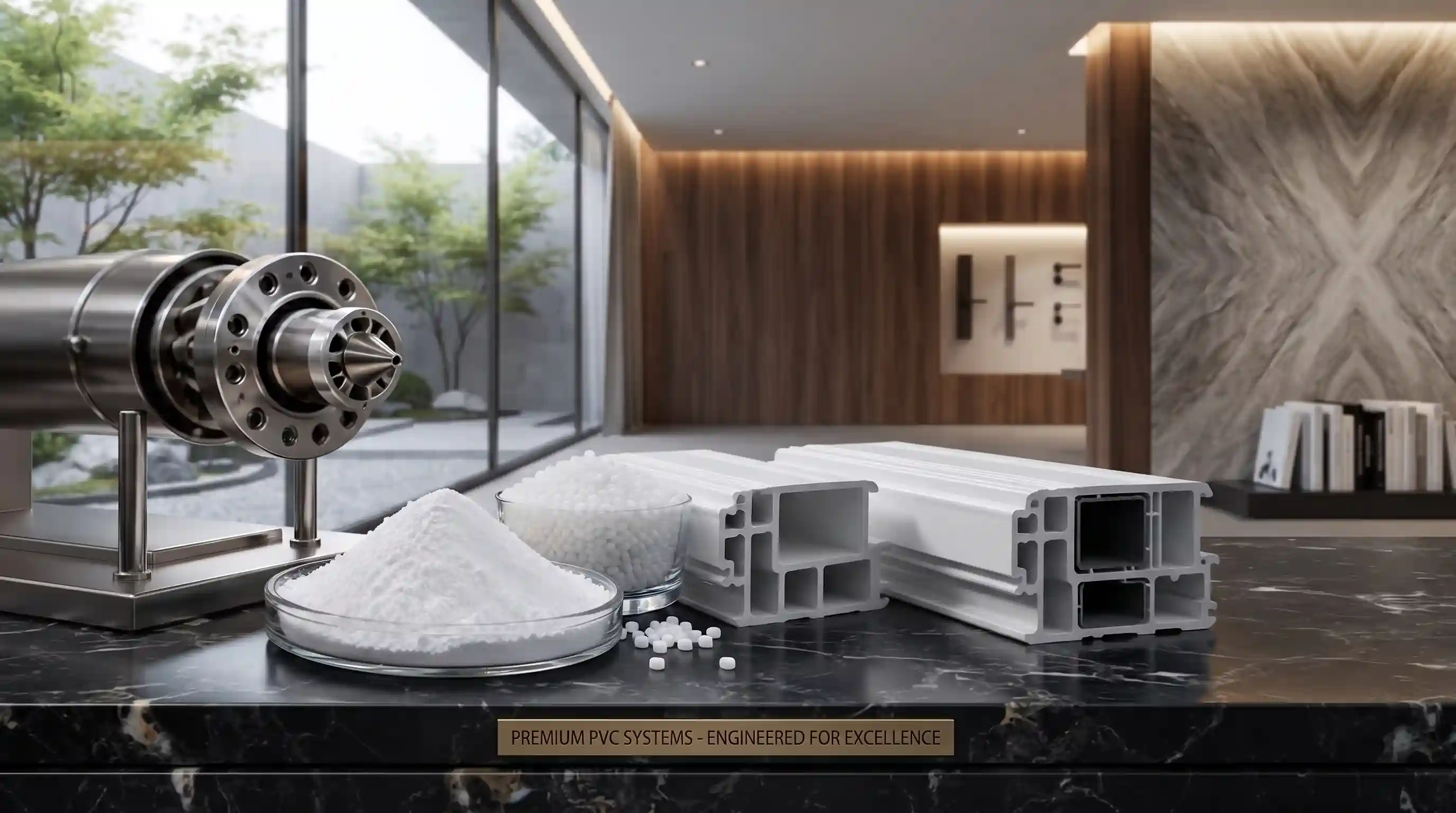
Applications in Polymer Compounds and Granules
The compounding industry and the production of polymer granules require raw materials with the highest level of quality and purity. Coated calcium carbonate is considered a key component in the formulation of various polymer compounds, bonding easily with base polymers due to its suitable surface coating. For compounds, granules, and polymer parts, it is selected with a matching mesh to achieve the best performance.
Choosing the appropriate mesh range (450 3500 mesh) is of high importance in the production of engineering granules. Higher mesh particles create a larger contact surface and greatly help improve the appearance and mechanical properties of the granules. This ensures that the produced granules behave stably in extrusion lines and do not experience breakage or inhomogeneity.
The use of this additive in compounding production lines improves the heat transfer coefficient and consequently increases the curing or cooling speed during the manufacturing process. This economic and technical advantage allows manufacturers to significantly increase the productivity of their production lines. Additionally, the positive effects of this material in preventing thermal degradation of the polymer at high temperatures have been proven.
The role of this material in improving the surface quality of granules and injection-molded parts is undeniable. Creating a smooth, glossy surface free from any appearance defects brings high added value to the final products and ensures customer satisfaction.
The Role of Coated Calcium Carbonate in Profiles, Cables, and Flooring
The construction and electrical industries require parts with high durability, dimensional stability, and optimized weight. The main applications of this material include compounds, polymer granules, profiles, cables, flooring, and PVC parts. In the production of door and window profiles and plastic pipes, the use of coated calcium carbonate helps maintain structural strength while reducing the weight per linear meter of the profile.
In the electric and telecommunications cable manufacturing industry, flexibility and resistance to environmental factors are of extraordinary importance. The surface coating of this type of calcium carbonate improves electrical insulation and increases moisture resistance. The coated particles prevent water absorption by the filler and guarantee the long-term durability of the cable.
Also, in the production of polymer flooring and industrial tires, there is a need for high abrasion resistance and no deformation under continuous pressure. Adding this material to flooring formulations improves surface hardness, reduces thermal shrinkage during cooling, and preserves the initial appearance of the product over time, which is considered a major competitive advantage.
To obtain more information regarding how the mechanical and physical resistance of polymer products is enhanced by this valuable material, it is suggested to read the specialized article How Does Coated Calcium Carbonate Increase the Resistance of Polymer Products?, which presents valuable technical tips.

Improving Mechanical and Processing Properties of PVC Parts
Polyvinyl chloride (PVC) is one of the most widely used polymers in industry, and its formulation heavily relies on mineral additives. The use of coated calcium carbonate in PVC parts brings numerous processing advantages due to its specific coating characteristics. This material acts as an inteal lubricant and reduces the inteal friction of particles.
Reducing inteal friction leads to a decrease in PVC melt viscosity during the extrusion or injection process. This in tu reduces the operating pressure of the machine and optimizes energy consumption. Moreover, due to the absence of agglomerates, the impact strength of PVC parts is vastly improved, which is highly critical for parts under stress.
Alongside PVC parts, this material also has wide applications in other related industries. For example, familiarizing oneself with similar applications of this material in the coating and paint-making industries is worthwhile, and reading the article Comprehensive Guide to Using Coated Calcium Carbonate in Paint Making can create a broader perspective on the industrial applications of this product.
Finally, the thermal stability of PVC parts during processing is increased thanks to the presence of this material, preventing polymer discoloration or degradation and delivering a high-quality, standard product to the consumer market.
Guide to Choosing the Right Mesh (450 to 3500 Mesh)
One of the most important factors in the success of polymer formulation is the precise selection of particle size, namely the mesh. The mesh range of 450 to 3500 mesh provides engineers and manufacturers with a wide spectrum of options to make the best decision according to the part thickness and final application type. Coated calcium carbonate is produced and supplied in this wide granulation range.
Lower meshes (such as 450 to 800 mesh) are typically used for profiles, pipes, and thicker parts that require high flowability and bulk volume filling. In this range, production costs are reduced and extrusion efficiency reaches its maximum level without causing a noticeable drop in mechanical properties.
On the other hand, higher meshes (up to 3500 mesh), due to extremely fine particle sizes, are used for thin films, sensitive engineering compounds, and parts with very high surface quality. These micronized particles create a uniform distribution and prevent the formation of weak points in the part structure.
Choosing the appropriate mesh requires a precise understanding of production equipment, base polymer type (such as heavy or light plastics), and final product standards. The experts of the Kani Sang Amiran project are ready to provide specialized consultation regarding the selection of the best mesh suited to your industrial needs.

Economic Benefits and Optimization of Production Costs
In today's competitive market, managing production costs without sacrificing quality is the key to the survival of any industrial unit. The use of coated calcium carbonate as an efficient substitute for a portion of expensive polymers is one of the most effective ways to reduce final costs. This material not only has a lower price than polymer resins, but also reduces ancillary costs by improving process efficiency.
Energy savings in extruders and plastic injection machines due to improved melt flowability is one of the direct economic benefits of using this coated powder. Reduced viscosity means less pressure on the machine motor, less wear on the barrel and screw, and consequently a longer lifespan for production equipment.
Also, lightweighting final products due to density optimization significantly reduces packaging and transportation costs. When the weight of parts decreases, the number of transportable items in each shipment increases, and logistics costs are heavily optimized.
Finally, improving the appearance and mechanical quality of products minimizes production waste. This increases the overall productivity of the production line, guarantees the company's profitability, and makes investment in quality raw materials completely justifiable.
Conclusion and Summary Regarding Coated Calcium Carbonate
In this article, we comprehensively examined the role of coated calcium carbonate in reducing density and weight and improving the properties of polymer products. It became clear that thanks to specialized surface coating, this material acts beyond a simple filler and is recognized as a powerful structural improver in various industries.
From its wide applications in compounds, polymer granules, profiles, cables, flooring, and PVC parts to the ability to precisely select the mesh from 450 to 3500 mesh, all demonstrate the high flexibility of this product in meeting diverse industrial needs. The Kani Sang Amiran project has taken an important step toward elevating the country's manufacturing industries by offering high-quality products.
Adhering to formulation standards and precisely selecting particle size are the keys to achieving maximum efficiency and quality in the production of lightweight and durable plastic parts. Investing in this mode technology brings numerous competitive advantages such as reduced production costs, improved mechanical properties, and environmental preservation.
We hope this article has been able to provide industrialists and dear engineers with a clear perspective on the added value of this mineral material. To receive more information and place an order, our colleagues in the sales department are ready to assist you dear ones.

| Question | Answer |
|---|---|
| What is coated calcium carbonate? | It is a modified version of calcium carbonate whose particle surface is coated with specific materials such as stearic acid to have better compatibility with polymers. |
| What is the mesh range of this product? | This product is supplied in the mesh range of 450 to 3500 mesh according to the needs of various industries. |
| What are the main applications of this material? | Compounds, polymer granules, profiles, cables, flooring, and PVC parts are among its most important applications. |
| How does it help reduce product weight? | By homogeneously distributing particles and preventing agglomeration, the polymer structure is optimized and the part density is reduced. |
| Why is particle surface coating important? | Surface coating increases the compatibility of the mineral phase with the organic polymer matrix and improves melt flowability. |
| Does using this material cause a drop in strength? | No, on the contrary, with proper distribution and improved intermolecular bonding, the mechanical and impact properties of the parts are enhanced. |
| Which mesh is more suitable for profile production? | Usually, lower meshes in the 450 to 800 mesh range have better application for profiles and thicker parts. |
| How can this product be purchased? | To review complete specifications and place an order, you can visit the dedicated product page on the Kani Sang Amiran website. |
| What is its impact on production costs? | In addition to a lower price compared to resin, it reduces production costs by lowering energy consumption and optimizing logistics. |
| Is it also used in the cable manufacturing industry? | Yes, due to no moisture absorption and improved electrical insulation, it is widely used in cable production. |
Kani Sang Amiran Project — Production of Mineral and Specialized Polymer Materials

برچسب: Coated Calcium Carbonate,The Role of Coated Calcium Carbonate in Reducing Product Density and Weight,
نویسنده: رساوب آفرین