
درباره سایت
آخرین مطالب
- استخدام أكسيد الليمونيت (الماغش) في صناعات الزجاج
- کاربرد اکسید لیمونیت (گل ماش) در صنایع شیشهسازی
- A Review of Daily Prices for Limonite Oxide (Ocher) in the Market
- چگونه خالص بودن اکسید لیمونیت (گل ماش) را تشخیص دهیم؟
- بررسی قیمت روز اکسید لیمونیت (گل ماش) در بازار
- Application of Limonite Oxide (Gole Mash) in Glassmaking Industries
- كيف تتعرف على نقاء أكسيد الليمونيت (جول ماش)؟
- How to Determine the Purity of Limonite Oxide (Gol Mash)?
- بررسی استانداردهای ایمنی کار با اکسید لیمونیت (گل ماش)
- Comprehensive Guide to Technical Analysis of Limonite Oxide (Gol Mash)
امکانات وب
Introduction to the Fundamental Properties of Silica and Its Industrial Importance
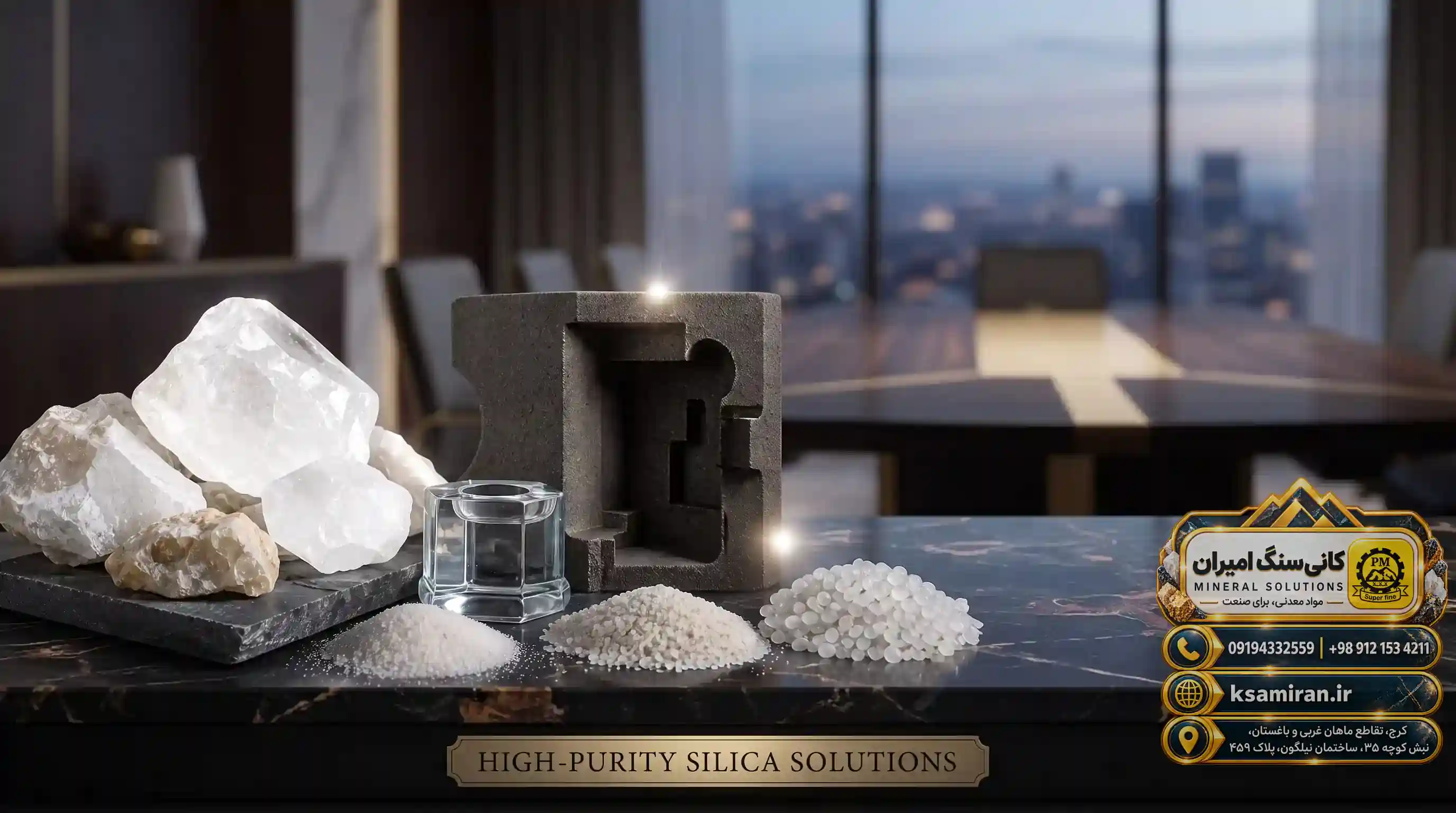
Silica is one of the most widely used mineral compounds in the world, holding a special place in various industries due to its crystalline structure and high chemical stability. This material, also known as silicon dioxide, plays a vital role in a wide range of industries, including glass production and construction materials. For a deeper understanding, you can visit high-quality silica purchase. The primary form of this mineral in nature is quartz, and due to its unique thermal and electrical properties, it is utilized in complex industrial processes.
Electrical Properties of Silica in Materials Engineering
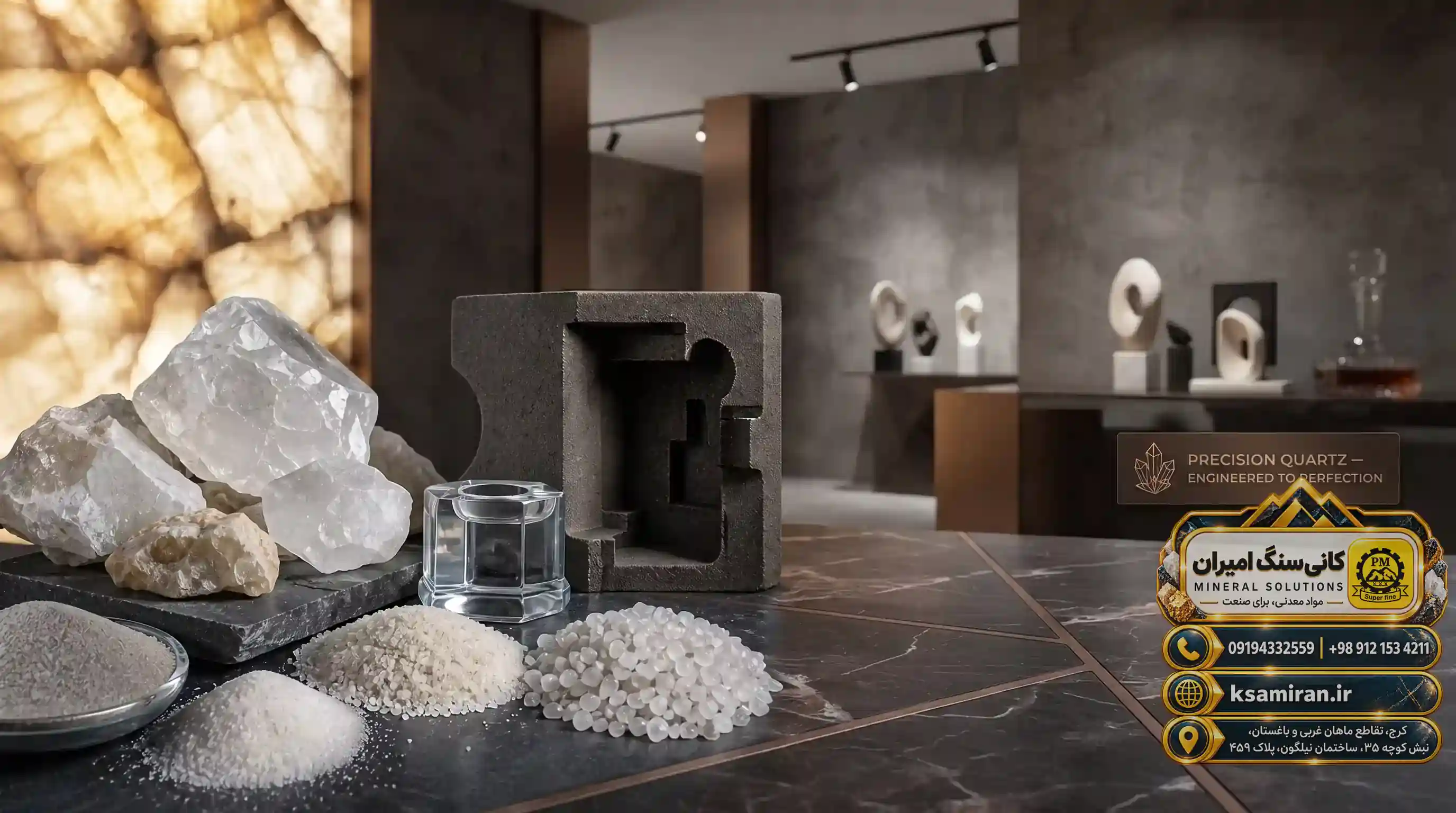
Due to its strong covalent bonds, silica is recognized as a highly effective electrical insulator. This property makes high-purity silica of great importance in the electronics industry and the manufacturing of precision components. The dielectric stability of this material at high temperatures makes it an ideal choice for industrial environments subjected to various voltages. Understanding the production processes of this material is of high importance, which is addressed in the article Professional review of the production and processing of industrial silica.
Thermal Behavior and Stability of Silica at High Temperatures
One of the most notable characteristics of silica is its extraordinary thermal resistance. This mineral has a very high melting point, making it suitable for casting applications and fuace construction. The low coefficient of thermal expansion of this material prevents it from cracking or undergoing structural deformation during extreme temperature fluctuations. This thermal stability is also highly valued in the ceramics industry, as the final quality of fired products is heavily dependent on these physical properties.
Silica in the Glass and Crystal Industry
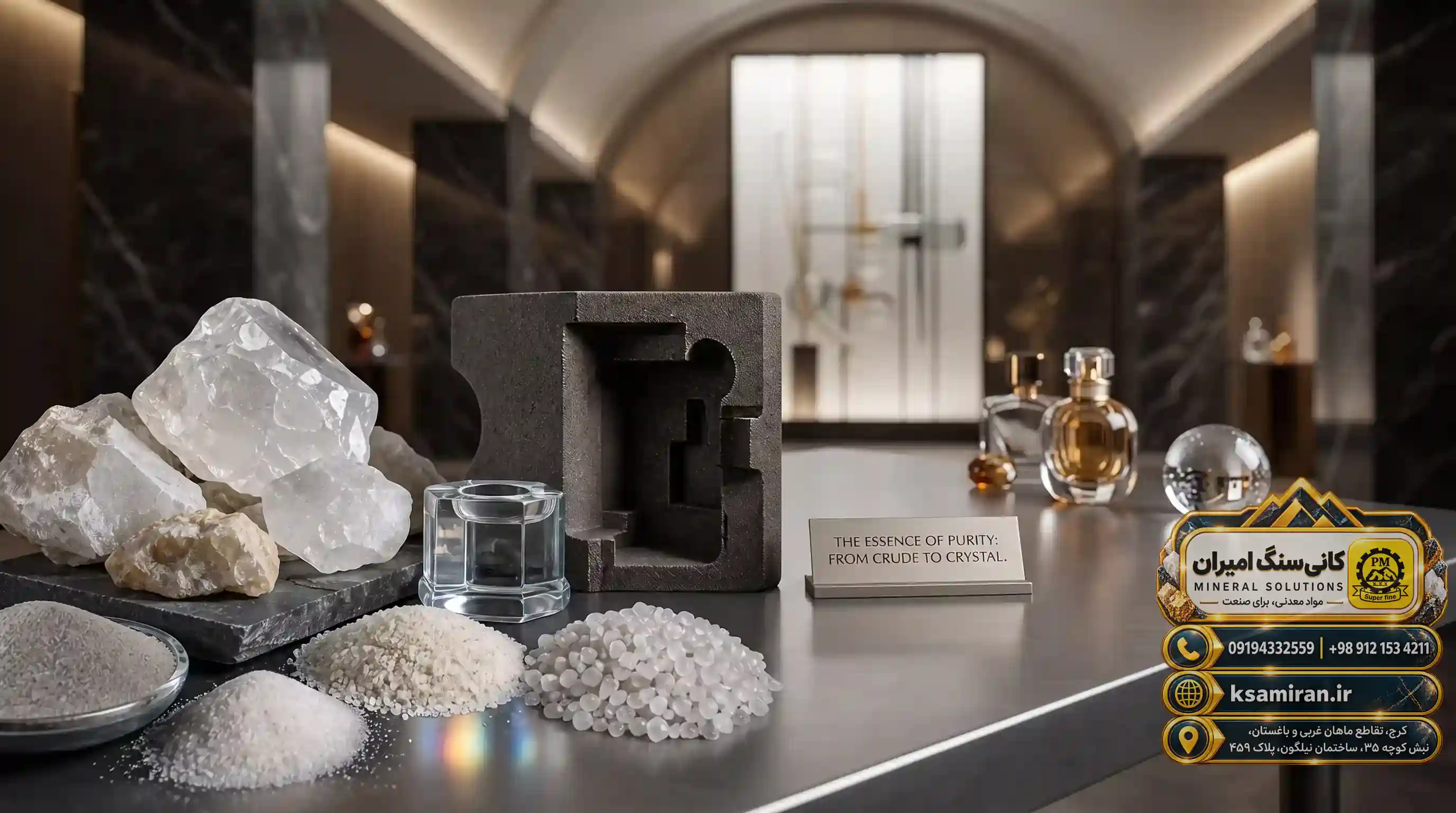
The main raw material in glass production is silica. Given the precise mesh sizing, which typically ranges from 10 to 450 mesh, this mineral allows for uniform dissolution and melting in glass fuaces. The transparency and purity of the final product depend heavily on the silica grain size. Selecting the appropriate mesh to create a homogeneous structure in glass requires careful consultation, for which you can use the comprehensive guide to expert consultation before buying silica.
Role of Silica in Casting and Metallurgy
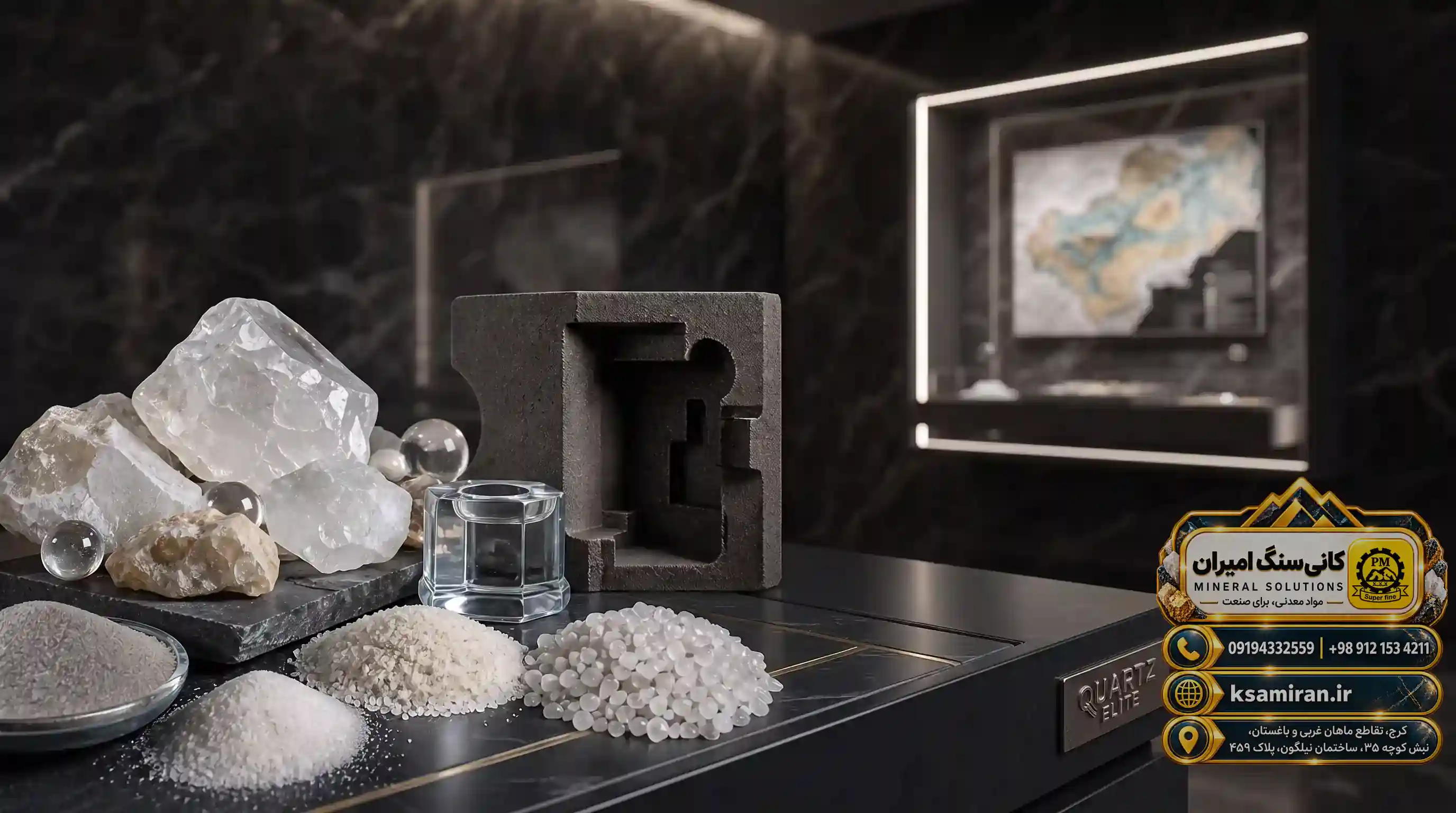
In the casting industry, sand molds made from silica are very popular due to their resistance to the heat of molten metals. Silica can withstand high metallurgical pressure and create a smooth, defect-free surface for cast parts. Using standard mesh-sized silica helps manufacturers achieve higher dimensional accuracy. This mineral minimizes production costs and waste through its optimized performance in molding.
Application of Silica in Ceramic Products and Construction Materials
Industrial ceramics and tiles require the addition of silica for hardness and abrasion resistance. This material not only acts as a filler but also participates in the glassy phase of the ceramic body, increasing the mechanical strength of the product. In construction materials, adding silica to concrete and mortar enhances durability and resistance to environmental factors. To increase efficiency in composite materials, other minerals are sometimes used alongside silica, which is detailed in the article Review of the role of white barite in improving the mechanical properties of composites.
Importance of Granulation and Mesh Sizing in Industrial Productivity
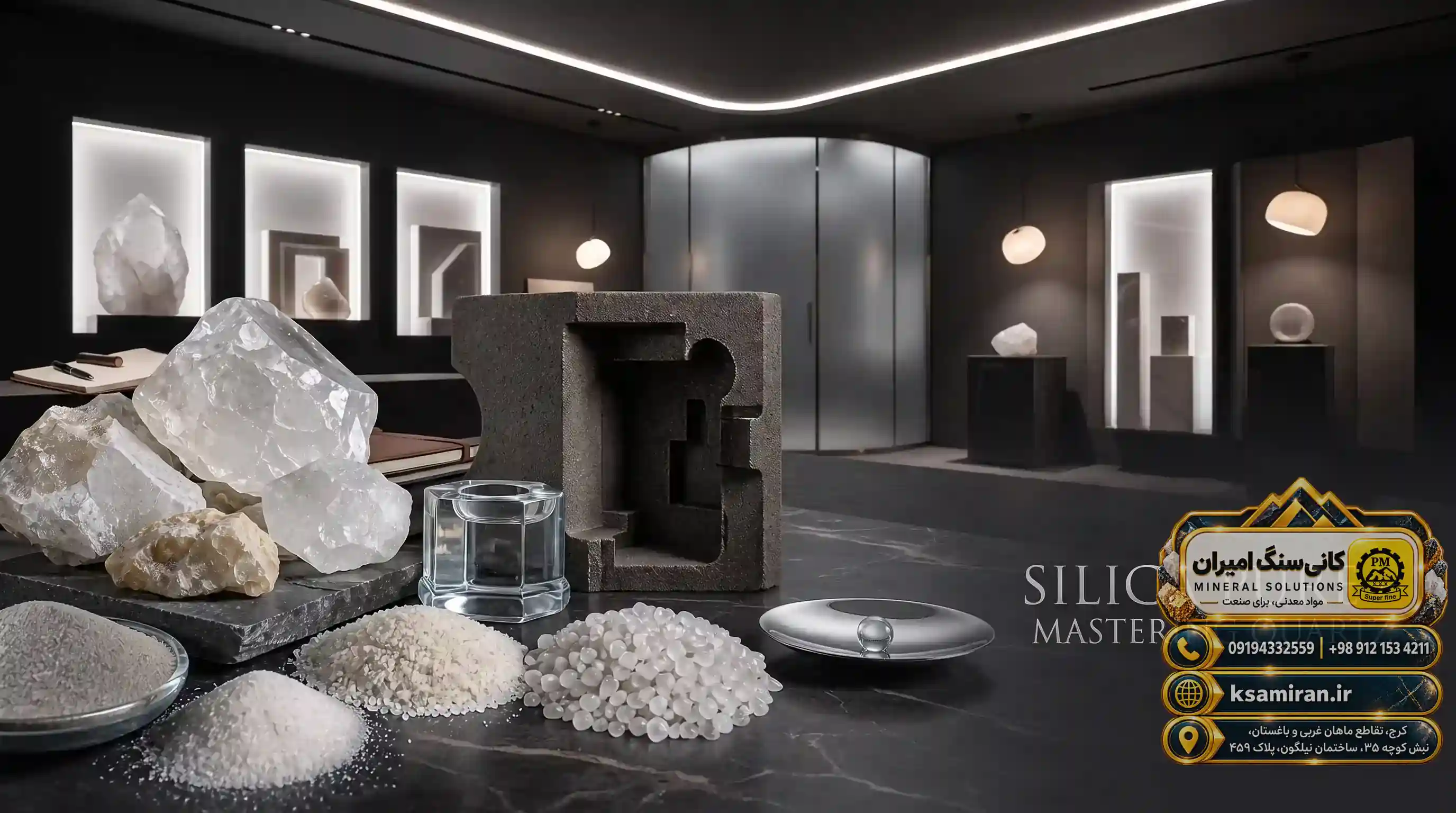
The range of 10 to 450 mesh provides industrial designers with the freedom to choose the appropriate product. Coarser meshes are used for construction applications, while very fine meshes (450 mesh) are used for sensitive ceramic industries and special coatings. Strict control of mesh sizing at the Kani Sang Amiran factory ensures quality and repeatability in production processes. Choosing the correct grain size directly affects the electrical and thermal properties of the final product and optimizes the production process.
Conclusion and the Future of Silica Use in Industry
With technological advancements, the demand for high-purity and precisely graded silica has increased. The Kani Sang Amiran project, focusing on standard extraction and processing, strives to meet the domestic industrial demand for this strategic material with the highest quality. Given the inherent properties of silica, it will remain at the forefront of widely used minerals, and new applications for it are expected in nanotechnology and green technologies.
| Question | Answer |
|---|---|
| What is silica? | A mineral with the chemical formula SiO2 used in the glass and ceramic industries. |
| What is the silica mesh range? | It is produced from 10 mesh to 450 mesh for various uses. |
| What is the use of silica in glassmaking? | It is the main ingredient for making transparent and resistant glass. |
| Why is silica used in casting? | Due to its high thermal tolerance and structural strength in molding. |
| Is silica an electrical insulator? | Yes, it is an excellent insulator due to its strong chemical bonds. |
| What is 450 mesh used for? | For precision ceramic industries and high-fineness industrial coatings. |
| How to choose the right mesh? | Based on the needs of the production process and with expert technical consultation. |
| What is the role of silica in ceramics? | Increasing strength and resistance to abrasion. |
| Is silica suitable for construction materials? | Yes, it improves the durability and strength of concrete. |
| Who is a reputable silica manufacturer? | The Kani Sang Amiran project is a manufacturer of various industrial minerals. |
Scientific sources related to geology and mineral metallurgy, official website of Kani Sang Amiran (ksamiran.ir).
برچسب: Silica,Professional Review of the Electrical and Thermal Properties of Silica,
نویسنده: رساوب آفرین