
درباره سایت
آخرین مطالب
- بررسی کاربرد باریت سفید در صنایع مختلف و رنگسازی
- The Impact of Coated Calcium Carbonate on Improving Dimensional Stability of Parts
- لماذا يُعرف الفلسبار بكونه صهارة حرارية؟
- Analysis of the Chemical and Physical Properties of Various Feldspars
- Why is Feldspar the most widely used mineral flux?
- الدور الهام للتالك الصناعي في صناعة البلاستيك والبوليمرات
- لماذا يُعد السيليكا ذو الحبيبات المتدرجة شائع الاستخدام في الصناعات المعدنية؟
- راهنمای انتخاب تالک صنعتی بر اساس نوع کاربرد
- الدور الرئيسي لكربونات الكالسيوم المغلفة في تحسين الخواص الميكانيكية للبوليمرات
- دور الباریت الأبیض فی صنایع الإلکترونیات وإنتاج القطع الخاصة
امکانات وب
Introduction to the Importance of Industrial Talc in Mode Industries
Industrial talc is recognized as one of the most widely used mineral fillers in the world. With the chemical formula of hydrous magnesium silicate, this mineral plays a key role in many manufacturing processes due to its unique characteristics such as softness, lubricity, and high chemical resistance. In various industries, the quality of raw materials has a direct impact on the final output. To better understand how to utilize this mineral, you can refer to the Industrial Talc Buying Guide with Best Quality and Reasonable Price. This material acts not only as a filler but also as an enhancer of the physical and mechanical properties of materials.
Technical and Physical Characteristics of Industrial Talc
The industrial talc supplied by the Amiran Stone Mineral Project has specific characteristics that distinguish it from other minerals. The mesh range of 450 to 1000 for this product enables its use in a wide range of sensitive industries. Precise granulation is of utmost importance in the production of polymer products and paints. Having a slippery surface, this mineral powder reduces friction in manufacturing processes and improves the surface quality of the final product. A detailed review of the technical specifications of this product on the Industrial Talc page helps engineers make a more accurate choice for their formulations.
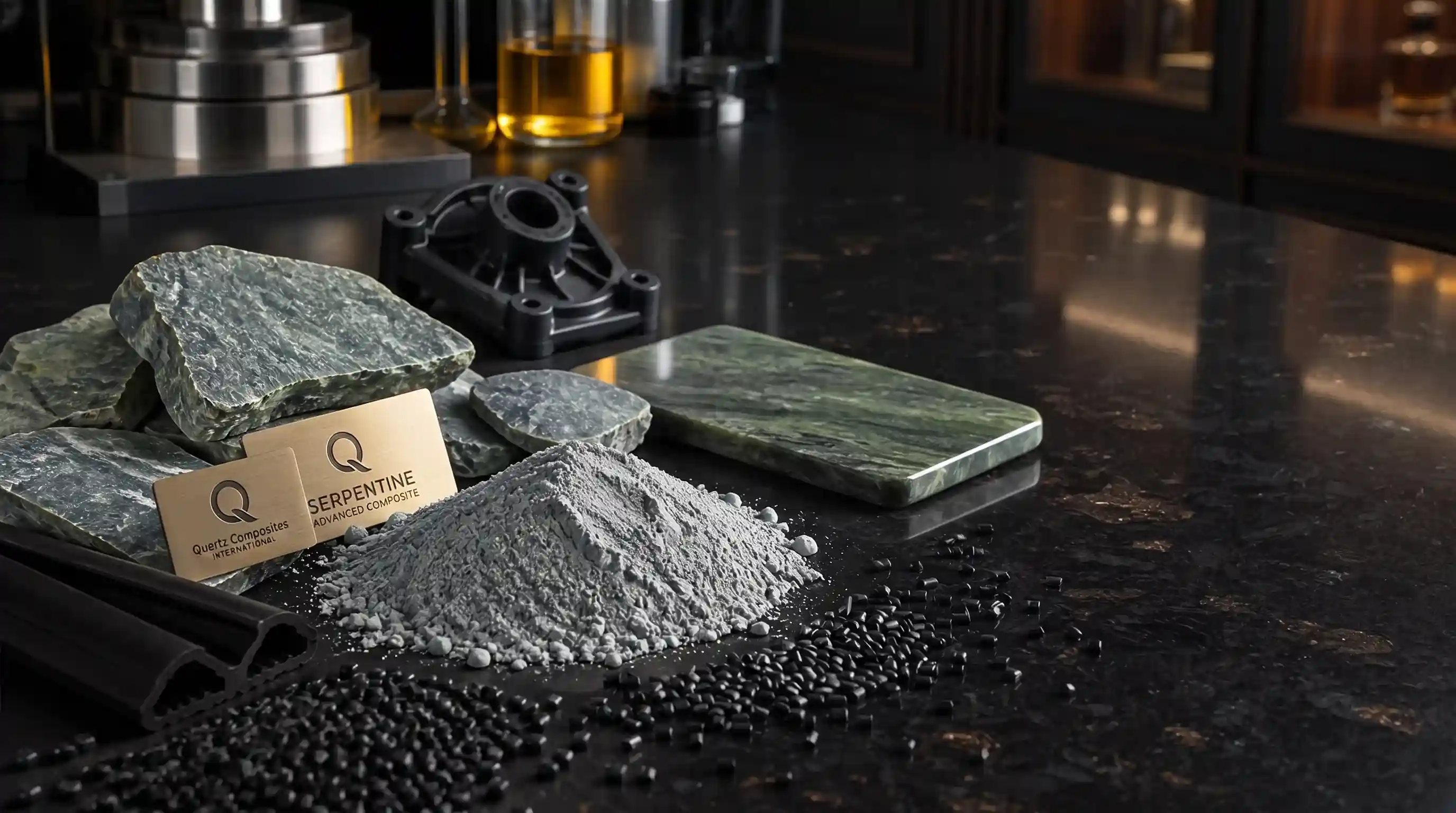
The Role of Industrial Talc in Polymer Industries
In the polymer industry, using industrial talc as a filler to increase the hardness and thermal strength of parts is very common. With its sheet-like structure, talc improves the dimensional stability of plastic parts. Furthermore, in plastic injection molding processes, using this material helps reduce cycle time and improves part ejection from the mold. The proper use of this filler can significantly upgrade the mechanical properties of the product and reduce production costs by replacing a portion of the expensive resin.
Application in Rubber Product Manufacturing
The rubber industry is a major consumer of industrial talc. Talc is used as a reinforcing agent and also to improve processing characteristics in rubber compounding. This material prevents unwanted adhesion of rubber parts to each other and, during the production stage, significantly helps with the uniform dispersion of other additives. In addition to talc, other materials are also used in related industries, such as Application of Industrial Barite in the Production of Sound and Thermal Insulation, which, alongside talc, complete the set of mineral materials required by heavy industries.
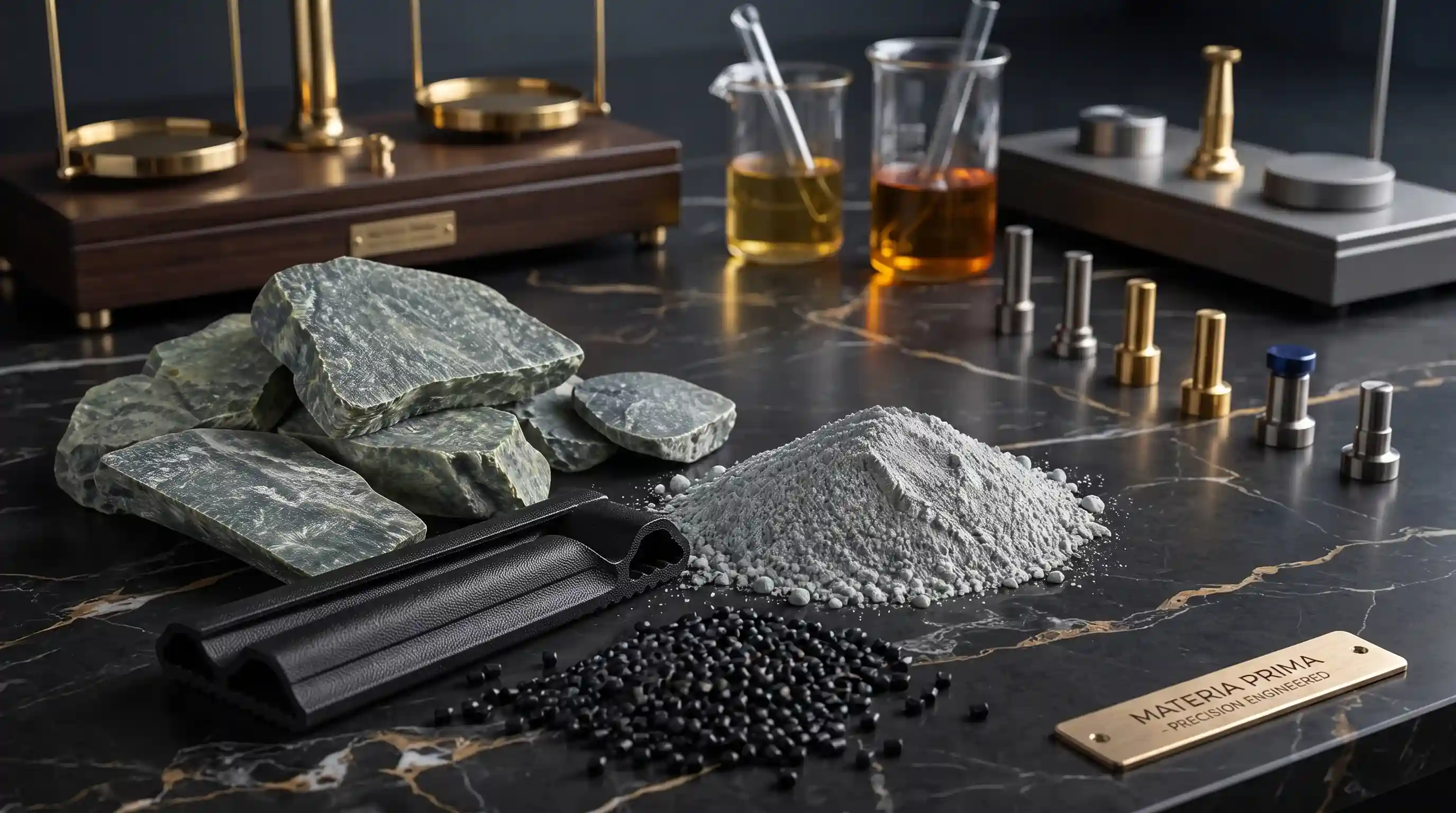
Industrial Talc in the Paint and Industrial Coatings Industry
The paint manufacturing industry heavily depends on minerals to achieve the desired texture and durability. By reducing paint shrinkage during drying, industrial talc prevents cracking in thin layers of paint. Additionally, the anti-corrosion property of this material increases the lifespan of industrial coatings in humid environments. In the specialized review of paint raw materials, the Application of Kaolin in Paint and Industrial Coatings Industries is also of interest, which, alongside talc, holds high potential in producing high-quality paints.
The Importance of Granulation and Mesh Range in Output Quality
The mesh range of 450 to 1000 means that the industrial talc particles have very fine micron dimensions. Finer granulation (such as 1000 mesh) is typically used in high-quality paints and polymer masterbatches, while lower meshes are more suitable for general industrial applications. The uniformity of this granulation guarantees final quality and prevents the degradation of mechanical properties in the final product. The strict supervision of the Amiran Stone Mineral Project over the product's granulation has ensured peace of mind for consumers in sensitive production processes.

Competitive Advantages of Using Talc in Industrial Projects
Using industrial talc as a strategic mineral brings numerous economic and technical advantages. Economically, this material can reduce the final cost of the product without sacrificing quality. Technically, by creating a protective barrier against the penetration of chemicals and gases, talc increases the durability of parts. Choosing the right product based on the application type allows manufacturers to produce products with higher added value and greater longevity in today's competitive market.
Safety and Storage Tips for Industrial Talc
Despite its countless benefits, proper storage of industrial talc in warehouses is essential to maintain its quality. Humid environments can cause the powder to clump and reduce its efficiency in formulations. When working with these materials, wearing a mask is necessary to avoid inhaling fine powder particles. Adhering to warehousing principles in factories and workshops, alongside preserving the physical properties of the product, enhances workplace safety. By offering a pure product, Amiran Stone Mineral Project has taken all necessary standards for industrial environments into account.
| Question | Answer |
|---|---|
| What is the best talc mesh range for plastics? | Depending on the type of part, it usually varies between 450 to 1000 mesh. |
| Does talc have anti-corrosion properties in paint? | Yes, it helps increase coating durability in humid environments. |
| What is the impact of talc on the final cost? | It provides an economical replacement for a portion of expensive resins. |
| Is it suitable for rubber manufacturing? | Yes, it is useful for improving the production process and preventing sticking. |
| What is the mesh of the product? | The products of this collection are offered in the range of 450 to 1000 mesh. |
| What are the applications of Amiran Stone Mineral Talc? | Polymers, rubber, paint, and industrial uses. |
| How to order? | Proceed through the product page on the Amiran website. |
| Does talc increase hardness? | In polymer products, it helps increase the hardness of the part. |
| What are the storage conditions? | It must be stored in a dry environment away from moisture. |
| Is it applicable for industrial paints? | Yes, it prevents paint cracking during the drying process. |
Mineral data reference and physical characteristics: Official website of Amiran Stone Mineral Project at ksamiran.ir
برچسب: Industrial Talc,Industrial Talc Selection Guide Based on Application Type,
نویسنده: رساوب آفرین