
درباره سایت
آخرین مطالب
- نقش اکسید لیمونیت (گل ماش) در صنایع تولید موزاییک
- دور أكسيد الليمونيت (الجيلماش) في صناعات إنتاج الفسيفساء (الموزاييك)
- چگونه کاربرد اکسید لیمونیت (گل ماش) را بهینه کنیم؟
- Company Limonite Oxide (Gol Mash) Price Comparison Guide
- بررسی ویژگیهای ظاهری اکسید لیمونیت (گل ماش) مرغوب
- کاربرد اکسید لیمونیت (گل ماش) در صنایع الکترودسازی
- دراسة الخصائص المظهرية لأكسيد الليمونيت (جول ماش) عالي الجودة
- دراسة الثبات الحراري لأكسيد الليمونيت المعدني (أكسيد الحديد الأصفر)
- The Role of Limonite Oxide (Gol Mash) in Mosaic Manufacturing Industries
- استخدام أكسيد الليمونيت (جول ماش) في صناعة الأقطاب الكهربائية
امکانات وب
Introduction to the Importance of Coated Calcium Carbonate in the Polymer Industry
The use of mineral fillers in the polymer industry is vital for cost reduction and improving the physical and mechanical properties of products. Among these, coated calcium carbonate holds a special position. Coating particles with organic materials enhances their compatibility with the polymer matrix. Choosing a high-quality coated calcium carbonate can revolutionize the final properties of products. By eliminating the tendency to agglomerate, this material creates a uniform distribution within the compound.
Production Process and Technical Characteristics of Coated Calcium Carbonate
Coated calcium carbonate is surface-treated using fatty acids, especially stearic acid. In this regard, a study on the effect of stearic acid in the coating of coated calcium carbonate shows that this process provides hydrophobic properties and reduces moisture absorption. The resulting particles, in the 450 to 3500 mesh range, are suitable for various applications including granulation and the production of injection-molded parts.
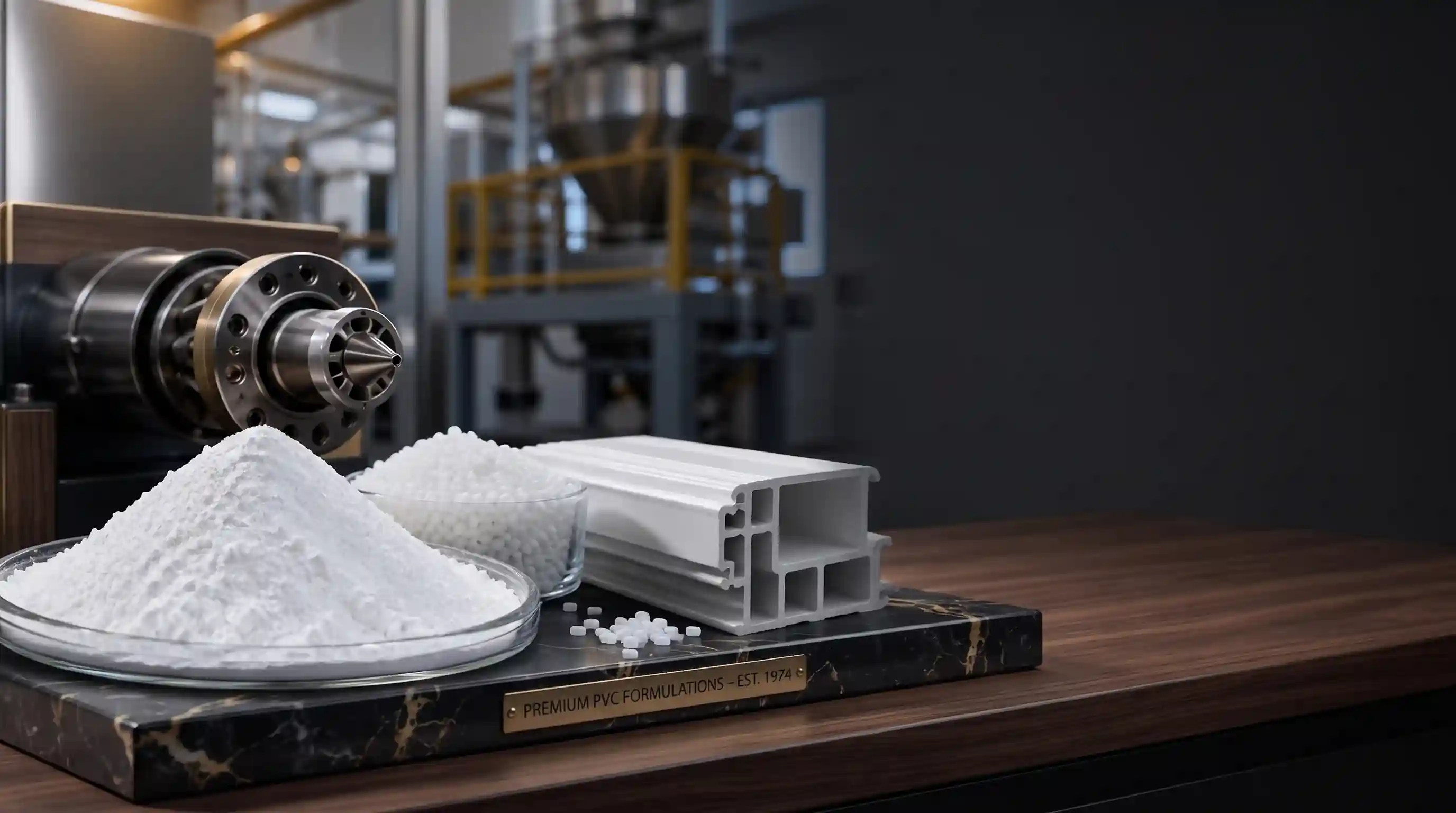
The Impact of Mesh Size on the Mechanical Performance of Products
The selection of the appropriate mesh for coated calcium carbonate is based on the type of final part. Particles with a low mesh count are used to increase thermal resistance, while particles with a high mesh count (near 3500) are used to increase the surface gloss of the part. Using high-quality mineral materials, supplied by the Kani Sang Amiran project, ensures dimensional stability and mechanical properties, as is also highlighted in the review of the role of white barite in improving the mechanical properties of composites regarding the importance of such materials in formulations.
Application of Coated Calcium Carbonate in Profile and PVC Industries
The PVC industry benefits most from coated calcium carbonate. This material acts not only as a low-cost filler but also as a processing aid. In the production of door and window profiles, the use of the appropriate mesh increases impact resistance. Proper distribution of particles in the polymer network reduces the pressure on extruder machinery and significantly increases the surface quality of the parts.
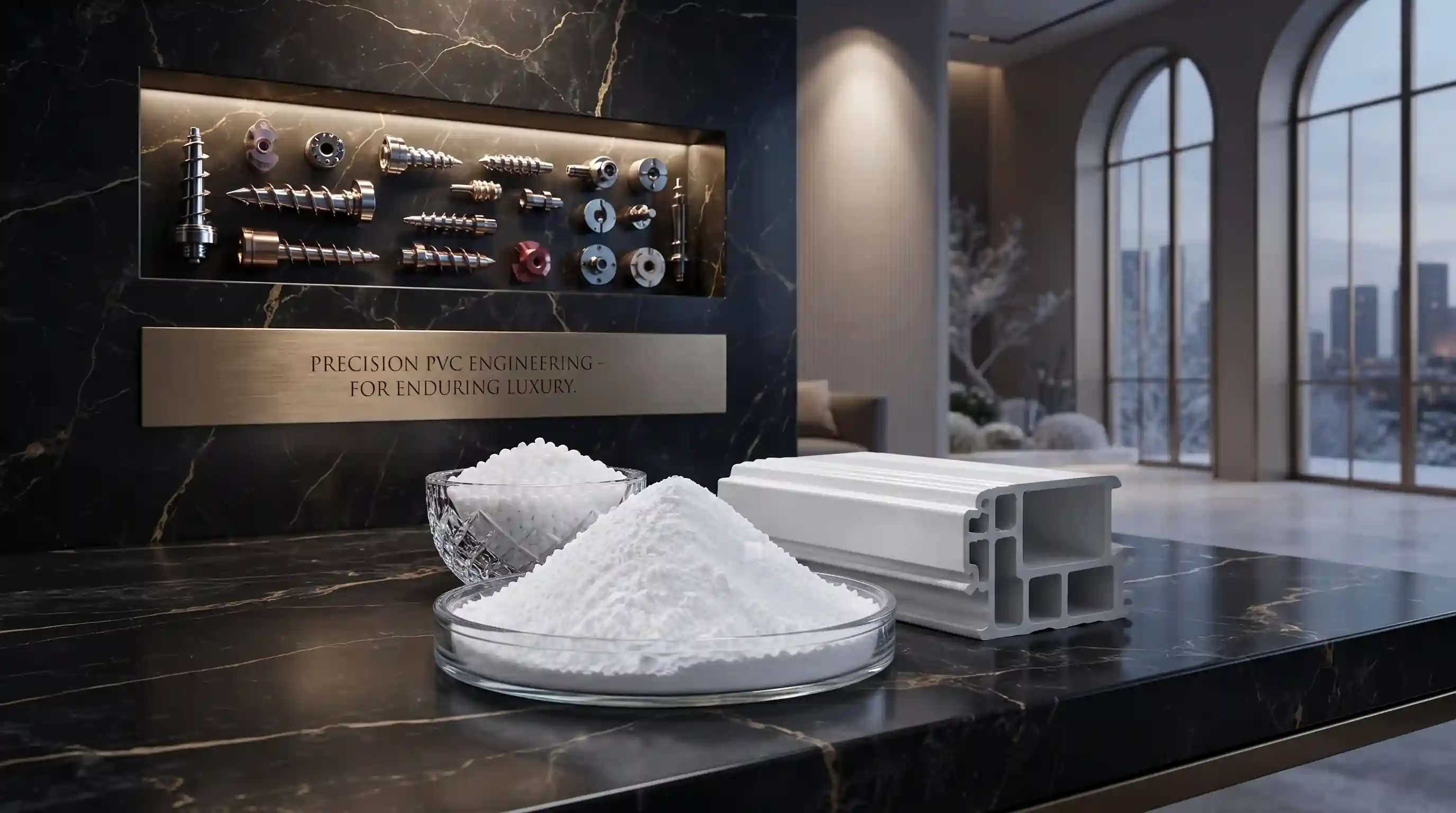
The Role of Mineral Fillers in Cable Manufacturing and Flooring
In sensitive industries such as cable manufacturing, insulation and electrical resistance are paramount. By reducing water absorption and increasing thermal stability, coated calcium carbonate helps improve the electrical properties of cable sheathing. In polymer flooring, this material creates desired hardness and resistance to wear. The incorporation of these particles into the polymer structure ensures the stability of the product against environmental conditions.
Performance Comparison of Coated Calcium Carbonate with Other Additives
In the world of mineral additives, the use of complementary materials to achieve optimal properties is common. For example, as stated in the key role of industrial talc in improving the quality of manufactured products, a combination of minerals sometimes yields the best results. Compared to other fillers, coated calcium carbonate is the primary choice for compound manufacturers due to its competitive price and high processability.

Economic and Environmental Benefits of Using Coated Calcium Carbonate
Reducing the consumption of expensive resins by replacing a percentage of them with coated calcium carbonate offers significant economic savings. In addition to reducing the final cost, this material, due to its natural and stable mineral nature, has fewer detrimental environmental impacts compared to synthetic chemical fillers. By providing standard products, Kani Sang Amiran plays a key role in optimizing the supply chain of raw materials for domestic manufacturers.
Future Outlook on the Development of Filled Masterbatches
The future of the polymer industry is moving toward the production of masterbatches with high percentages of minerals. New research on coated calcium carbonate shows that the use of ultra-fine meshes and mode coating technologies has made it possible to increase the filler percentage without losing mechanical properties. These advancements help manufacturers bring lighter, stronger, and more affordable parts to the market.

| Question | Answer |
|---|---|
| What is coated calcium carbonate? | A type of mineral powder coated with fatty acids for compatibility with polymers. |
| What is the mesh range of this product? | This product is offered in the 450 to 3500 mesh range. |
| What is its role in the PVC industry? | Improving impact resistance and surface quality of profiles. |
| Does it reduce moisture absorption? | Yes, the coating layer increases the powder's hydrophobic properties. |
| What is its effect on granulation? | Improving the distribution process and increasing uniformity in polymer granules. |
| What is its advantage over regular powder? | Excellent compatibility with the polymer matrix and no agglomeration. |
| Does it reduce costs? | Yes, as an economic filler, it replaces a portion of the resin. |
| Is it suitable for cable manufacturing? | Yes, it helps improve the thermal stability and insulation of the cable. |
| How to purchase? | It can be ordered through the Kani Sang Amiran website. |
| Which mesh is better for gloss? | Usually, higher meshes (closer to 3500) have a better effect. |
References: Technical data of Kani Sang Amiran products and specialized polymer engineering books.

برچسب: Coated Calcium Carbonate,The Key Role of Coated Calcium Carbonate in Improving Mechanical Properties of Polymers,
نویسنده: رساوب آفرین