
درباره سایت
آخرین مطالب
- راهنمای ثبت سفارش اکسید لیمونیت (گل ماش)
- Guide to Ordering Limonite Oxide (Gol Mash)
- التعرف على الخصائص الفيزيائية لكربونات كالسيوم الصناعية
- Examining the Rising Demand for High-Quality Industrial Talc
- بررسی ویژگیهای ظاهری و کیفیت پودر سفید دولومیت
- Guide to Choosing the Best Type of Red Iron Oxide (Ochre)
- دليل شراء أكسيد الحديد الأحمر (أخيرا) عالي الجودة والنقاء
- دراسة المعايير الوطنية والدولية في إنتاج التلك الأبيض
- دراسة الاتجاه التصاعدي للطلب على التالك الصناعي عالي الجودة
- بررسی استانداردهای ملی و بینالمللی در تولید تالک سفید
امکانات وب
An Introduction to the Importance of White Talc Mesh and Granulation Standards
Precise knowledge of production and processing standards for mineral materials is one of the main pillars for improving the quality of final products in various industries. In this regard, white talc, as a strategic mineral filler and additive, plays a key role in improving the physical and mechanical properties of products. The process of micronization and particle size determination has a direct impact on the performance of this material in industrial formulations. To better understand this subject, a comparative study with other additives is very enlightening; as the article Reviewing the Structural Differences Between White Talc and Calcium Carbonate addresses these differences in detail.
Mineral producers are always seeking to achieve homogeneous and standardized granulation. The Kani Sang Amiran project, utilizing advanced equipment, has undertaken the production and supply of this material. To lea more about the details of this product, you can visit the White Talc page. In advanced industries, precise control of particle dimensions not only helps improve coverage but also significantly increases production process efficiency.
Mesh Range of 450 to 2500; Dimensional Standards of White Talc
The dimensions of micronized powder particles are measured based on mesh and micron units. Regarding white talc, the standard mesh range varies between 450 and 2500, each designed for specific applications. Powders with lower meshes (such as 450) have larger particles, while high meshes (such as 2500) provide very fine powders with high specific surface area. This variety in mesh size allows formulation engineers to make the most accurate choice depending on the final requirement.
Standardizing the mesh ensures that the Particle Size Distribution (PSD) falls within a narrow and controlled range. This uniformity prevents particle agglomeration and creates optimal dispersion in polymer matrices or fluids. Precision in adhering to these ranges is the main prerequisite for the entry of micronized powders into domestic and foreign competitive markets.

Application of White Talc in Masterbatch and Polymer Compound Industries
The polymer industry and plastic parts manufacturing are among the largest consumers of micronized mineral materials. The use of white talc in the production of masterbatches and compounds brings many technical benefits due to its sheet-like (lamellar) structure. This specific structure helps significantly improve dimensional stability, increase flexural modulus, and reduce shrinkage in plastic parts. Furthermore, the precise examination of particle dimensions in other fillers is of equal importance, which is mentioned in the article Reviewing Mesh Grading Standards in Various Types of Coated Calcium Carbonate.
When this material is added to polymer mixtures with the appropriate mesh range, the Melt Flow Index (MFI) and thermal resistance of the parts also improve. These features cause the manufactured parts in the automotive, home appliance, and packaging industries to have higher structural quality and show greater stability against mechanical stresses.
The Role of White Talc Granulation in the Paint and Industrial Coatings Industry
In the formulation of paints and protective coatings, coverage rate, gloss, and resistance to atmospheric factors are of high importance. The presence of white talc with micronized granulation acts as a reinforcing pigment and filler. Fine particles of this material penetrate well into the inter-pigment voids and make the paint film network more compact, resulting in reduced moisture permeability and increased coating lifespan.
Selecting the appropriate mesh in the paint industry has a direct effect on the viscosity and rheological properties of the final product. Powders with higher meshes create a smoother and more uniform surface. These features, along with desirable whiteness, cause the produced paints to benefit from extraordinary light efficiency and visual aesthetics.

Improving Paper Quality Using Micronized White Talc
The paper industry requires fillers that, in addition to providing whiteness and opacity for paper, also enhance its printability. White talc, due to its inherent softness and low coefficient of friction, is considered an ideal option for this industry. The precise granulation of this material results in filling the tiny pores between cellulose fibers and provides a smooth surface for high-quality printing.
The use of this mineral in the paper production process also helps reduce the amount of wood pulp consumption and optimizes production costs. Proper particle distribution within the standard range prevents wear on papermaking machine equipment and significantly maintains production line efficiency.
Application of White Talc in Ceramic and Tile Industries
In the ceramic industry, controlling firing shrinkage and improving the mechanical properties of the body and glaze are major conces for production engineers. The use of white talc in the body of ceramics and tiles causes a reduction in the thermal expansion coefficient and prevents the formation of micro-cracks (crazing) after the firing process. This material also acts as a fluxing agent at high temperatures and helps better fusion of particles.
Micronized powders with high mesh improve the metallurgical and ceramic properties of the product due to higher reactivity in the fuace. This leads to the production of tiles and ceramic products with high mechanical strength, precise dimensional stability, and a completely uniform and standard appearance.
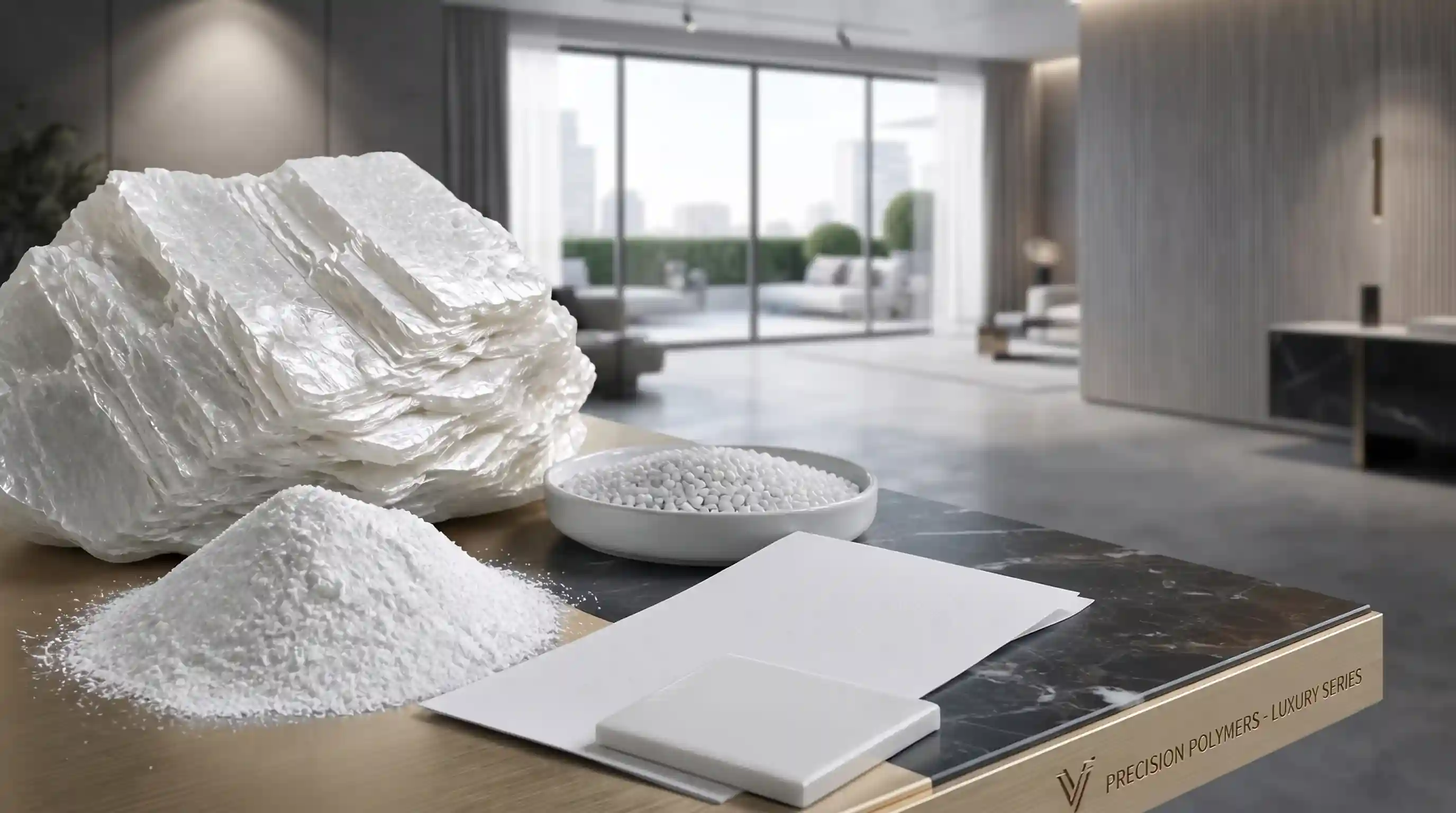
Technical and Economic Advantages of Using Micronized White Talc
Utilizing processed mineral powders brings numerous benefits to manufacturing industries. Examining the technical advantages of this material shows that the correct choice of mesh can create a fundamental transformation in product quality; a subject that has been analyzed more comprehensively in the article Reviewing the Technical Advantages of Using Micronized White Talc. White talc with high purity and engineered granulation, in addition to improving final properties, also helps significantly in reducing the finished cost of products.
From an economic perspective, using high-quality mineral fillers instead of expensive polymer or chemical materials is a smart strategy for cost management. The repeatability of the physical characteristics of this material in every production batch by the Kani Sang Amiran project brings complete peace of mind to consumer industries.
Quality Control and Measurement Methods for White Talc Granulation Standards
Guaranteeing the quality of micronized powders requires advanced laboratory equipment and the precise execution of quality control tests. To accurately measure the particle dimensions of white talc in the 450 to 2500 mesh range, methods such as Laser Diffraction and standard laboratory sieves are used. These tests minimize the standard deviation of particle size.
In addition to measuring mesh, parameters such as moisture content, brightness, and percentage of impurities are also continuously monitored. Strict supervision over all stages of production and processing guarantees the provision of a product in accordance with inteational standards to consumer industries, which strengthens the competitive position of domestic producers.

| Question | Answer |
|---|---|
| What is the mesh range of white talc produced by Kani Sang Amiran? | This product is produced and supplied in the standard mesh range of 450 to 2500. |
| What are the main applications of white talc? | Masterbatch, compound, paint, paper, and ceramic products are the main applications of this material. |
| Is the structure of white talc different from calcium carbonate? | Yes, talc has a sheet-like (lamellar) structure that creates different mechanical properties. |
| What is the role of talc in the masterbatch and compound industry? | It increases flexural modulus, dimensional stability, and reduces plastic shrinkage. |
| Why is talc granulation important in the paint industry? | It improves coverage, increases resistance to moisture, and regulates paint viscosity. |
| What is the effect of white talc on the papermaking industry? | It causes the filling of fiber pores, increases opacity, and improves paper printability. |
| What is the application of talc in the ceramic industry? | It helps reduce the thermal expansion coefficient and prevents ceramic body cracking. |
| How can complete information about this product be viewed? | By visiting the white talc product page on the Kani Sang Amiran website, the information can be reviewed. |
| What are the technical advantages of using micronized talc? | Improving rheological properties, increasing thermal resistance, and reducing production costs are its advantages. |
| What are the methods for measuring the particle size of this mineral powder? | Using laser diffraction tests and precise laboratory sieves to determine mesh. |
Specialized reference for mineral information and mesh grading standards, Kani Sang Amiran project.
برچسب: white talc,A Review of White Talc Mesh and Granulation Standards,
نویسنده: رساوب آفرین