
درباره سایت
آخرین مطالب
- Applications of White Talc in Plastic Production and Industrial Polymer Industries
- Applications of Coated Calcium Carbonate in Chemical and Plastic Industries
- What is Coated Calcium Carbonate? A Guide to Its Application in the Construction Industry
- كيفية اختيار كربونات الكالسيوم المطلي بناءً على التدرج الحبيبي
- How to Choose High-Quality White Barite: Key Purchasing Tips
- استانداردهای دانهبندی تالک سفید برای مصارف گوناگون در صنایع
- White Talc in the Construction Industry: Its Applications and Key Features
- Industrial Barite or Calcium Carbonate? A Complete Comparison of Applications and Benefits
- استانداردهای کیفیت باریت صنعتی و روشهای آزمایش و کنترل آن
- Application of White Barite in Producing Paint and Durable Industrial Coatings
امکانات وب
Guide to Choosing the Best Type of Red Iron Oxide (Ochre)
Red iron oxide (ochre) is one of the oldest known pigments in human history and one of the most widely used mineral pigments in mode industries. Chemically classified among iron oxides (hematite), it has found a special place in the production of paints, protective coatings, colored cement, and ceramic products due to its reddish-brown to bright red color, very high lightfastness, and resistance to weathering. The word "ochre" traditionally refers to soils containing natural iron oxide that, alongside the main pigment, also contain impurities such as silica and clay.
In an overview, red iron oxide (ochre) is offered in the market in two forms: natural and synthetic. The natural type is extracted directly from mines and, after crushing, classification, and processing, is offered in various meshes; while the synthetic type is produced under controlled conditions by neutralizing and oxidizing iron salt solutions. Both groups play an important role in various industries, but choosing the best type depends entirely on the process needs, base system, and quality level of the final product.
The most important feature distinguishing red iron oxide (ochre) from organic pigments is its high chemical and thermal stability. This material shows significant resistance against the sun's ultraviolet rays, moisture, temperature changes, and environmental oxygen, and therefore has stable performance in exterior applications such as building facades, industrial floors, and exterior ceramics. Also, considering its mineral structure, it can be dispersed in most water- and solvent-based systems, polymeric systems, and cement slurries.
Alongside these features, the variety of the mesh range from 450 to 1500 mesh allows the user to choose a product suitable for their needs in the field of coating, pigment, cement, or ceramics. In coarser meshes, dispersion is easier and the finished cost is lower, while in finer meshes, color intensity, surface uniformity, and coating transparency increase. This is why knowing the technical specifications and applications of each type is a necessity before buying.
In the rest of this guide, we will first examine the structure and technical specifications of red iron oxide (ochre), and then take a close look at its four main applications: pigment, coating, cement, and ceramic products. Finally, we will review storage tips, environmental considerations, and criteria for selecting a reliable supplier so you can make the best possible decision for your project and production line.
Structure, Color, and Specifications of Red Iron Oxide (Ochre)
Structurally, red iron oxide (ochre) is formed based on iron and oxygen compounds, and its hematite crystalline structure plays the main role in creating the red color. The intensity and tone of the final color depend on factors such as the percentage of iron oxide, particle size, particle size distribution, and accompanying impurities. The more uniform and controlled the particle size, the more even the final surface color will be; this issue becomes especially important in delicate applications like pigment and ceramics.
One of the most important specifications provided for this product is the mesh range of 450 to 1500 mesh. In the standard system, the mesh number indicates the number of openings per inch of the sieve; in other words, the higher the mesh number, the finer the particle size. At 450 mesh, the particles are relatively coarse, and at 1500 mesh, they are very fine, and this wide range allows industrialists to choose the product according to their needs.
At lower meshes (close to 450), dispersion of particles in viscous mixtures like cement slurry is simpler, and filter drop or sedimentation in systems with weak agitation is minimized. This feature is very valuable for the cement and colored concrete industries, where a large volume of materials is being mixed. Also in ceramic products that require optimal homogeneity in the slurry, choosing the right mesh has a direct impact on the color uniformity of the tile and other surface defects.
In contrast, at higher meshes (close to 1500), due to the increase in the specific surface area of the particles, tinting strength and hiding power increase, and a smoother and more even final surface is achieved. For this reason, finer meshes are used in the production of traffic paints, industrial paints, primers, and fine final coatings. The important point is that increasing fineness does not always mean improving all properties; because very fine particles may tend to agglomerate in some systems and increase oil or base absorption, requiring higher mixing time and energy.
Other technical features of red iron oxide (ochre) include high mineral density, suitable hardness, very low water solubility, resistance to alkalis and dilute acids, and stability against UV rays. This combination of features makes the product have stable and long-lasting performance in indoor and outdoor applications, and not suffer from color fading or structural degradation over time.
When receiving projects, always check the product's technical data sheet; the mesh range, stated iron oxide percentage, moisture content, and particle size distribution must be consistent with your process needs. If the specifications caot be matched to the process needs, even the best product on the market caot perform properly in your project.
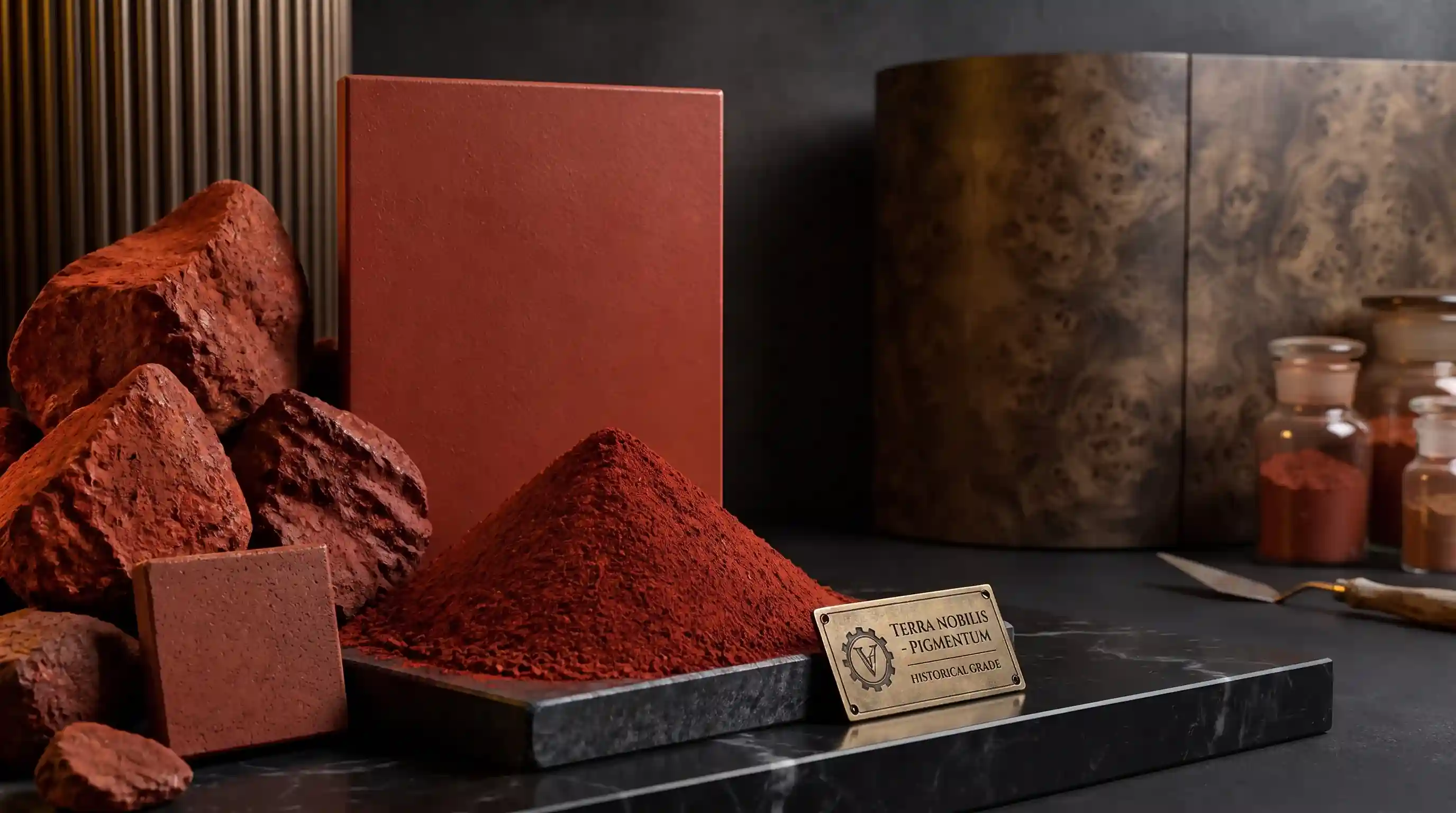
Red Iron Oxide (Ochre) in the Pigment and Paint Industry
One of the most important applications of red iron oxide (ochre) is its use as a pigment in the paint industry. Mineral pigments based on iron oxide, due to their suitable finished cost alongside high color stability, have become an ideal option for producing architectural paints, industrial paints, traffic paints, and protective coatings. This material, by itself or in combination with other pigments, creates a wide range of red, orange, and even brown colors.
In pigment making, two key indicators determine the quality of red iron oxide (ochre): tinting strength and transparency/hiding power. Tinting strength indicates how much pigment is needed to achieve the desired color, and hiding power refers to the paint's ability to hide the underlying surface. Both of these indicators depend on particle size and mesh range. As a general principle, the finer and more uniform the particles, the higher the tinting strength and the higher quality the final surface.
Dispersion is one of the main challenges in using this pigment in paint production lines. If the pigment is not properly dispersed in the paint base, agglomerates form on the surface and the quality of the final paint drops. To solve this problem, high-speed mixers, proper milling, and the use of dispersing agents are usually employed. In addition, observing storage tips such as preventing moisture entry and stirring before use also play an important role in paint uniformity.
A very important issue in the paint industry is choosing between different types of red iron oxide (ochre) according to the paint base (water-based, solvent-based, powder, and two-component). The behavior of each type in different bases, oil absorption amount, and compatibility with gums and resins are different. If you want to make a more precise decision in this field, read the article Comparison of Types of Red Iron Oxide (Ochre) in the Paint and Resin Industries; that article examines the functional differences of the types of this product in different bases.
Other advantages of using red iron oxide (ochre) in pigments include high resistance to light, no color fading outdoors, stability against common chemicals, and compatibility with different concentrations. These features make the paint produced with this pigment suitable for harsh environments such as roads, facades, and industrial surfaces.
Finally, before choosing a pigment for a specific formulation, be sure to conduct small laboratory-scale tests. Sampling and testing tinting strength, dispersion time, and paint can stability will help you identify the best type of red iron oxide (ochre) for your formula before mass production and prevent quality problems in the production line.
Protective Coatings and the Role of Red Iron Oxide (Ochre)
In the protective coatings industry, red iron oxide (ochre) is known as a pigment and, in some formulations, as a barrier-enhancing pigment. The platelet-like structure of iron oxide particles in coating layers lengthens the path for moisture, oxygen, and destructive ions to penetrate, and as a result, the useful life of the coating and the underlying metal surface increases. For this reason, this product is widely used in primers, industrial paints, marine structure paints, and pipelines.
In coatings exposed to the environment, resistance to ultraviolet rays and moisture is of high importance. Red iron oxide (ochre), due to its mineral structure, shows high resistance to photodegradation and retains its color even after years of exposure outdoors. This feature is considered an economic advantage for facade coatings, bridges, tankers, and exterior building surfaces that require frequent repainting.
In coating production, choosing the right mesh is very important. For primers, medium meshes are usually used to achieve proper adhesion and surface filling, while in topcoats, finer meshes (close to 1500 mesh) are used to create a smooth, glossy, and even surface. Also in thick coatings and industrial electroplating, controlling oil absorption and viscosity is essential to prevent sagging and dripping.
One of the key points in using this product in the coating industry is preventing the agglomeration and sedimentation of particles during storage and processing. Agglomeration not only disrupts the pump and mixing system but also severely affects the final surface quality of the coating. To lea about scientific and practical methods to prevent this phenomenon, read the article How to Prevent Red Iron Oxide (Ochre) from Caking?
Alongside technical issues, material safety and sustainability are also important in the protective coatings industry. Red iron oxide (ochre), due to its mineral nature and very low water solubility, is usually classified as a low-hazard material and is a suitable option in environmentally friendly formulations. However, when using paints containing this pigment, observing handling, ventilation, and waste disposal standards according to workplace regulations is essential.
To choose the best type of red iron oxide (ochre) in coating applications, be sure to pay attention to these: type of paint base, need for chemical resistance, environmental corrosion conditions, application method (electrostatic, air, airless), and particle specifications. Small-scale tests and examining the results on a real surface are the best way to confirm the product's compliance with your needs.
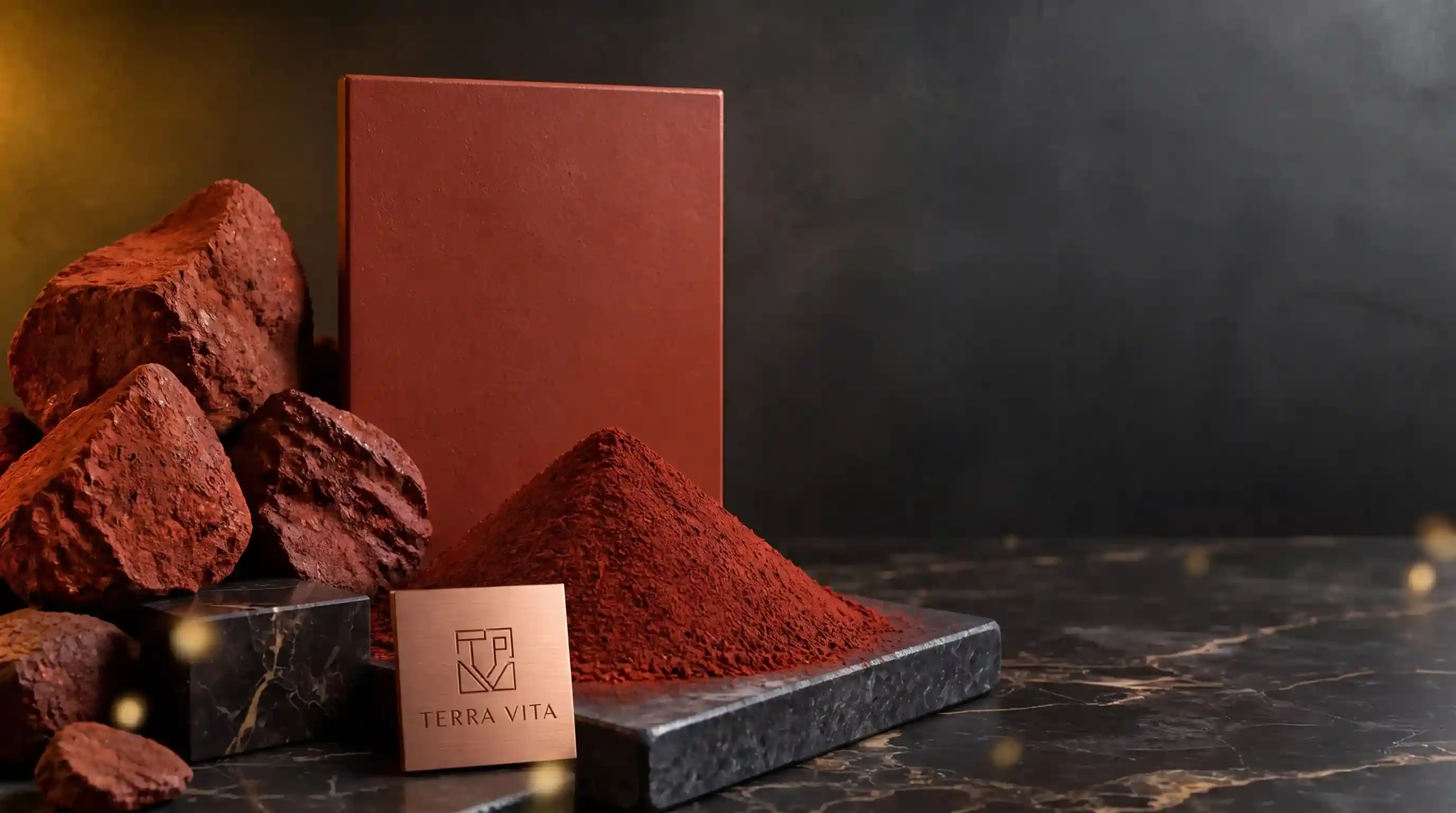
Red Iron Oxide (Ochre) in Cement and Colored Concrete
One of the most widely used areas of consumption for red iron oxide (ochre) is the cement and colored concrete industry. In the past, organic materials or surface paints were used to color mortar and concrete, but today mineral pigments have replaced many of these materials due to color stability, resistance to ultraviolet rays, and durability in alkaline environments. The red, reddish-brown, and earthy tones seen in sidewalks, concrete blocks, industrial floors, and building facades are mostly produced with this pigment.
In the cement industry, the mesh range of 450 to 1500 mesh is a great advantage. In medium and lower meshes, dispersion in cement slurry is faster and the loss of pump and mixer power is lower. On the other hand, in higher meshes, color uniformity on the final concrete surface increases and a smoother, higher-quality surface is achieved. Choosing the right mesh depends on the type of final product (block, paving, repair mortar, or artificial stone) and the available mixing system.
In colored concrete, the amount of pigment consumption depends on the desired color intensity, and usually a small percentage relative to the weight of cement is used. The more pigment, the greater the color saturation; but after a certain point, increasing the pigment amount will not have much effect on changing the color and only raises finished costs. Therefore, determining the optimal percentage through laboratory tests on sample mixtures and comparing the dried color is essential.
Another important point is the uniform distribution of pigment in concrete. If the pigment is not properly spread in the mixer, color streaks, spots, and color differences appear on the final surface. To prevent this problem, the pigment is usually first mixed with some of the water or fine materials, then added to the main mixer. Also, using mixers with sufficient power and standard mixing time has a great impact on the uniformity of the final product.
Since cement and concrete are usually used outdoors and exposed to weather, color stability against moisture, sunlight, and freeze-thaw cycles is very important. Red iron oxide (ochre) shows high chemical resistance in the alkaline environment of cement and does not fade or change color over time; this means your building facade or sidewalk remains beautiful and even after years.
When choosing this product for cement projects, pay attention to these points: mesh range suitable for the mixing system, suggested consumption percentage, maximum allowable moisture of the product, and appropriate packaging to prevent moisture absorption. In large projects, sampling from a homogeneous batch and testing color on a real mixture is the best way to prevent quality loss and color differences in different parts of the project.
Red Iron Oxide (Ochre) in the Ceramic Industry
The ceramic industry is one of the most important consumer markets for red iron oxide (ochre). From floor and wall tiles and ceramics to facing bricks, pottery, ceramic and porcelain dishes, all can use this pigment to create red, brown, and earthy colors. In fact, iron oxides have been used for centuries in traditional ceramics for coloring the body, glaze, and slip.
In ceramic products, red iron oxide (ochre) is consumed in three main areas: body color, glaze color, and surface decoration. In body color, the pigment is directly mixed with ceramic clay and the color of the piece appears after firing. In glaze, iron oxide dissolves as a coloring agent in the glaze formulation and creates different colors depending on concentration, temperature, and kiln atmosphere.
One of the vital features in ceramic application is the thermal stability of the pigment. Ceramic products are fired in kilns at very high temperatures, and the pigment must pass this stage without decomposition or significant color change. Red iron oxide (ochre), due to its stable mineral structure, shows good resistance at high temperatures; of course, its final color can be affected by the kiln atmosphere (oxidizing or reducing) and firing temperature, which is why precise control of firing conditions is a necessity.
The mesh range of 450 to 1500 mesh is very important in the ceramic industry. In tile and ceramic production, coarser particles may cause undesirable color spots, disruption in slurry spraying, or reduced surface quality. For this reason, higher and finer meshes are usually used so that color distribution in the body and glaze is completely uniform. Also, being fine-grained helps prevent rapid settling in dilute slurries.
Alongside choosing the right mesh, attention must be paid to the chemical compatibility of the pigment with other formulation materials. Iron oxide can react with some frits, kaolins, and other minerals and change the final color. Therefore, before mass production, small-scale firing tests on different samples and comparing the color after firing are essential. This helps you find the optimal combination of pigment, clay, and glaze.
Finally, in high-quality ceramic products, color uniformity and its repeatability are of high importance. A supplier that can provide a product with controlled particle size distribution and consistent specifications is a valuable partner for ceramic manufacturers. For this industry, even small changes in pigment quality can lead to color differences between two production series and consequently increased waste.
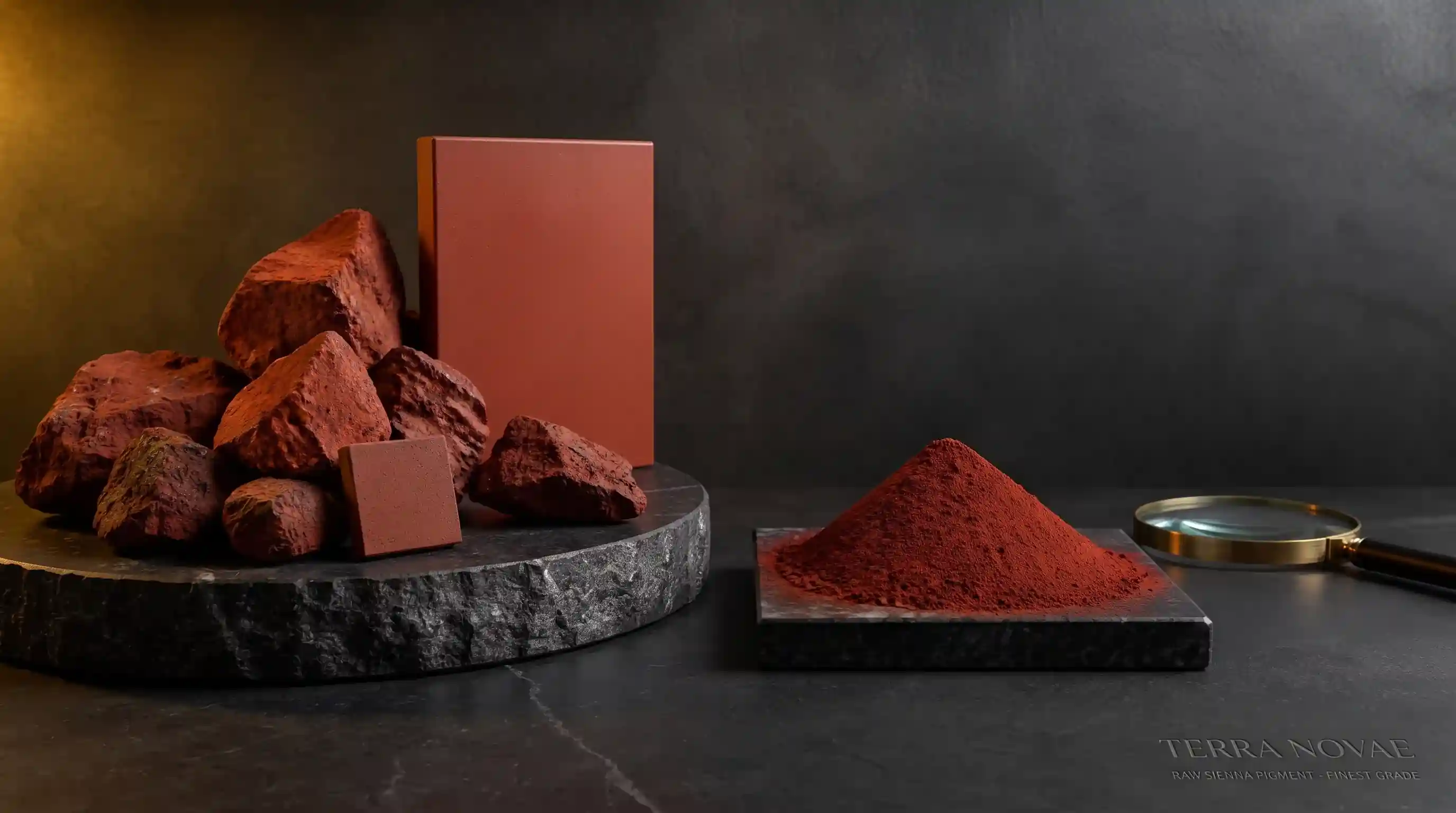
Storage of Red Iron Oxide (Ochre) and Environmental Considerations
One of the most important factors in maintaining the quality of red iron oxide (ochre) from production to consumption is its storage conditions. This product, due to its powdery nature and high specific surface area, can absorb ambient moisture and undergo caking due to the pressure of upper layers in storage or transportation. Caking not only disrupts pigment dispersion but also causes color spots, pipe blockages, and final product quality loss in paint and cement systems.
To prevent this problem, there are a few simple but vital actions: keep the product in a dry, covered environment; avoid storing it in direct exposure to moisture and rain; close the lids of bags and drums completely after use; and prevent stacking layers too much on top of each other. In addition, stirring and sieving the product before use helps restore its powdery state. For more specialized information in this field, read the article How to Prevent Red Iron Oxide (Ochre) from Caking?
Environmentally, red iron oxide (ochre), due to its very low water solubility and mineral structure, has lower-risk effects compared to many organic pigments and heavy metals. This feature has made it known as a more sustainable option in the paint, cement, and ceramic industries. However, like any other mineral powder, long-term inhalation of suspended particles can be harmful to the respiratory system; therefore, using a mask, proper workplace ventilation, and observing occupational hygiene principles are essential.
In the field of waste management, care must also be taken. Wastewater containing this pigment must not enter the environment without treatment, as it can affect water transparency and the aquatic ecosystem. In factories, settling and filtration systems are usually used to recycle suspended particles. If you want to know what environmental impacts using this product has and how it can be managed, read the article Environmental Impacts of Using Red Iron Oxide (Ochre).
In terms of handling safety, this product is usually offered in plastic or multi-layer paper bags and, in some cases, in drums or big bags. During loading and unloading, packaging tears must be prevented to avoid the entry of impurities and moisture into the product. Also, labeling and precise specification of batches (production number, date, technical specifications) helps inventory management and quality tracking.
Finally, a proper maintenance program includes: periodic checks of storage conditions, rotating inventory using the "first in, first out" (FIFO) method, testing stored samples before use in production, and training warehouse and production line persoel. These simple actions preserve the product's useful life and prevent quality loss during storage.
How to Choose the Best Type of Red Iron Oxide (Ochre)?
Choosing the best type of red iron oxide (ochre) does not depend only on the product price; rather, it is a decision that must be made based on process needs, technical specifications, and supplier capabilities. In this section, we review the most important criteria to consider before buying so you can make the best decision for your business.
1. Matching the mesh range to process needs: The first criterion is choosing the right mesh. For delicate applications such as final paint, pigment, and ceramic glaze, higher meshes (close to 1500 mesh) are more suitable; while for cement, concrete, and mortar, where mixing volume is high, medium and lower meshes can offer better performance at lower cost. The 450 to 1500 mesh range allows you to find exactly the product suitable for your needs.
2. Uniformity and quality consistency: Particle size distribution and color consistency between different batches are as important as the quality itself. A reliable supplier must be able to provide a product with repeatable specifications and provide a technical data sheet including mesh range, iron oxide percentage, and moisture content to the customer. This issue is vital, especially in large-scale productions sensitive to color differences.
3. Technical support: A supplier with the necessary technical knowledge can help you in choosing the right product, solving dispersion problems, and adjusting formulations. In the paint, cement, and ceramic industries, technical consultation can determine the boundary between a successful product and a defective one.
4. Packaging and storage conditions: Proper, dry, and moisture-resistant packaging reduces product waste and preserves pigment quality during transport and storage. Also, access to complete information on the packaging makes inventory management and quality tracking simpler.
5. Reputation and experience in the industry: The supplier's experience in the mining industries and history of cooperation with paint, cement, and ceramic factories indicates its capability in supplying products with stable quality. Examining samples and conducting initial tests before long-term contracts is a smart move.
If you are looking for a product introduced for pigment, coating, cement, and ceramic products that covers the 450 to 1500 mesh range, you can get more information through the Red Iron Oxide (Ochre) product page on the Kani Sang Amiran project website. This group, with expertise in producing mineral materials, can be a reliable option for supplying pigment for your project.
Finally, remember that the best type of red iron oxide (ochre) is not the one that is the same for all projects; rather, it is the product that best matches your process, base, budget, and quality needs. By testing samples, comparing options, and cooperating with an expert supplier, you can raise the quality of your final products to a higher level while optimizing production costs.

| Question | Answer |
|---|---|
| What is red iron oxide (ochre)? | A mineral pigment based on iron oxide (hematite) used for pigment, coating, cement, and ceramic products. |
| What does the 450 to 1500 mesh range mean? | The mesh number indicates particle size; a higher mesh means finer particles, greater tinting strength, and a more even final surface. |
| Which mesh is more suitable for paint and pigment? | For final paints and high-quality pigments, higher meshes (close to 1500) are usually more suitable because they have higher tinting strength and hiding power. |
| Is this product suitable for concrete and colored cement? | Yes; red iron oxide (ochre) is stable in the alkaline environment of cement and has high resistance against UV rays and moisture. |
| What is its application in the ceramic industry? | It is used for body color, glaze, and surface decoration of tiles, facing bricks, and ceramic products, and has good thermal stability. |
| How much is the pigment consumption rate? | It depends on the desired color intensity and is usually used as a small percentage relative to the weight of cement or paint base; the optimal amount must be determined by testing. |
| How can product caking be prevented? | Caking can be prevented by storing in a dry environment, closing packaging lids, preventing layer pressure, and stirring before use. |
| Is its use environmentally friendly? | Due to its low solubility in water and mineral structure, it is less hazardous compared to many organic pigments; but its wastewater and suspended particles must be treated. |
| What is the difference between natural and synthetic red iron oxide? | The natural type is extracted and processed from mines, while the synthetic type is produced under controlled conditions and usually has more uniform color and particle size. |
| How do I find a reliable supplier? | Choose a supplier that provides a technical data sheet, has repeatable batch quality, and offers technical support and proper packaging. |
Product information source: Kani Sang Amiran Project (ksamiran.ir) — mineral materials production.
برچسب: Red Iron Oxide (Ochre),Guide to Choosing the Best Type of Red Iron Oxide (Ochre),
نویسنده: رساوب آفرین