
درباره سایت
آخرین مطالب
- بررسی استانداردهای ایمنی کار با اکسید لیمونیت (گل ماش)
- Comprehensive Guide to Technical Analysis of Limonite Oxide (Gol Mash)
- الدليل الشامل للتحليل الفني لأكسيد الليمونيت (جول ماش)
- مراجعة معايير السلامة للعمل مع أكسيد الليمونيت (جول ماش)
- چگونه از تقلب در خرید اکسید لیمونیت (گل ماش) جلوگیری کنیم؟
- How to Prevent Fraud When Purchasing Limonite Oxide (Gol Mash)?
- کاربرد تخصصی اکسید لیمونیت (گل ماش) در تولید بتن
- Specialized Application of Limonite Oxide (Yellow Ochre) in Concrete Production
- راهنمای جامع آنالیز فنی اکسید لیمونیت (گل ماش)
- التطبيق التخصصي لأكسيد الليمونيت (غل ماش) في إنتاج الخرسانة
امکانات وب
An Introduction to the Importance of Kaolin in Mode Plastic and Polymer Industries
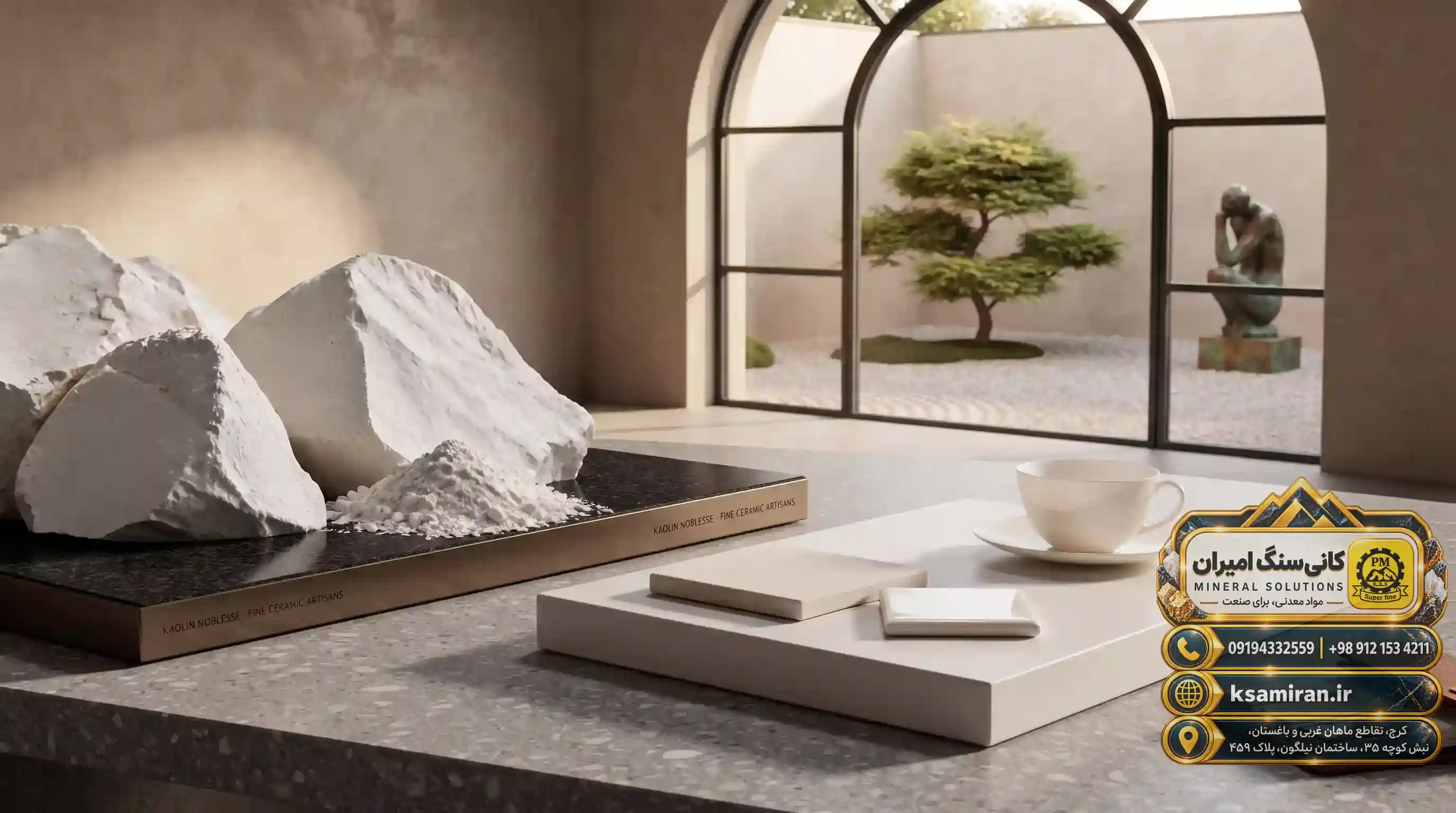
Today's plastic and polymer industries require high-quality and specialized mineral additives to enhance the mechanical, physical, and aesthetic properties of finished products. Among these, the mineral kaolin is recognized as one of the most widely used mineral fillers, playing a significant role in upgrading the quality of polymer composites. The structural and physical characteristics of this material have captured the special attention of materials engineers and polymer manufacturers.
A precise examination of this material's behavior in polymer matrices shows that the correct selection of particle size and purity can have a direct impact on the tensile properties, thermal resistance, and dimensional stability of plastic parts. Therefore, a thorough understanding of the technical specifications and quality standards of this mineral is essential for those active in the polymer industry.
Mineral producers always strive to supply a high-quality product to the market through precise processing. For more information regarding technical specifications and purchasing this material, you can visit the specialized kaolin page on the Kani Sang Amiran project website to lea more about its details.
Optimal use of this material in polymer formulations requires knowledge of its granulation parameters and surface characteristics. In the following sections of this article, we will examine the various dimensions of this valuable material's impact on different industries in more detail to gain a better understanding of its applications.
The Vital Role of Granulation and Mesh Range in Kaolin Efficiency
Granulation and particle size are among the key parameters in determining the quality and efficiency of micronized mineral materials. The standard mesh range for this material typically varies between 450 and 1500 mesh, with each range covering its own specific industrial applications. Finer particles with high mesh create a larger contact surface with the polymer matrix, which leads to improved mechanical properties.
For a better understanding of how to select particle sizes appropriate for industrial needs, a detailed study of specialized resources is highly helpful. You can read the comprehensive article Guide to Choosing the Right Industrial Kaolin Granulation to familiarize yourself with the technical principles of selecting the appropriate mesh.
Precise control of particle size in the micronization process ensures that the resulting powder disperses into polymer compounds without clumping. Uniform distribution of particles within the polymer bed prevents the creation of structural weaknesses and noticeably increases the overall strength of the final part.
In addition to plastics, this material is used in industries such as tile manufacturing, ceramic products, glazes, paper, and paint, each requiring its own specific mesh size. Fine-tuning these parameters allows the manufacturer to bring a homogeneous and high-quality product to the consumer market.
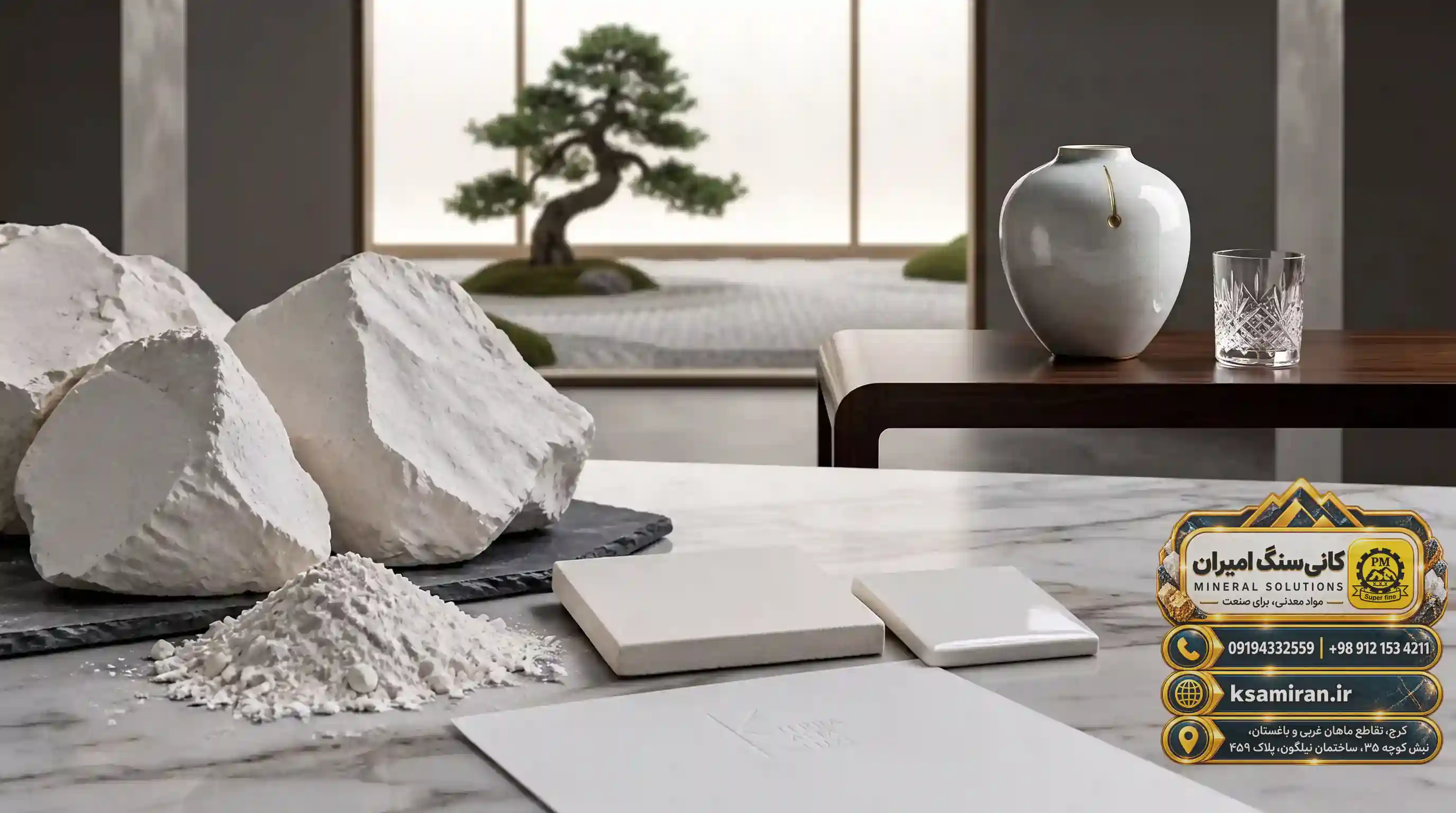
Impact of Kaolin on the Mechanical and Physical Properties of Polymers
When micronized kaolin powder is added as a filler to polymer compounds, significant changes occur in the mechanical properties of the composite. The most important of these changes include increased elastic modulus, improved impact resistance, and increased stiffness of plastic parts. These characteristics are of exceptional importance for parts that are subjected to constant mechanical stress.
The platy structure of this mineral's particles leads to improved dimensional stability and a reduced shrinkage rate of plastic parts in injection molding processes. This advantage helps industrial designers produce parts with very high dimensional accuracy and precise geometric tolerances without worrying about subsequent thermal or mechanical deformation.
Laboratory examinations show that the presence of this mineral filler in the polymer matrix reduces the permeability of gases and moisture into the part. This barrier property significantly increases the lifespan of polymer products in corrosive or humid environments and ensures the final quality of the product.
The Kani Sang Amiran project, utilizing advanced processing equipment, produces a homogeneous powder with standard particle size distribution that is well-compatible with all types of thermoplastic and thermoset resins, demonstrating the highest efficiency in improving the physical properties of polymers.
Traditional and Mode Applications of Kaolin in the Paint and Coating Industry
The paint manufacturing and industrial coating industry is one of the main sectors for the consumption of micronized mineral materials. As a functional filler pigment, this material plays an effective role in adjusting gloss, improving coverage, and increasing the resistance of the paint film to atmospheric factors, helping the paint last longer.
To lea more about the technical details and advantages of using this mineral in coating formulations, it is recommended to read the specialized article Application of Kaolin in the Paint and Industrial Coatings Industries to become familiar with its formulation tips.
In addition to the paint industry, the favorable optical characteristics of this material have led to its use in the paper industry as a coating and surface filler to significantly improve the whiteness, smoothness, and printability of paper, thereby enhancing the final quality of paper products.
Furthermore, the presence of this material in the structure of paints reduces the consumption of expensive titanium dioxide pigments, which is very cost-effective for manufacturers without causing any significant drop in the quality of the final coating.
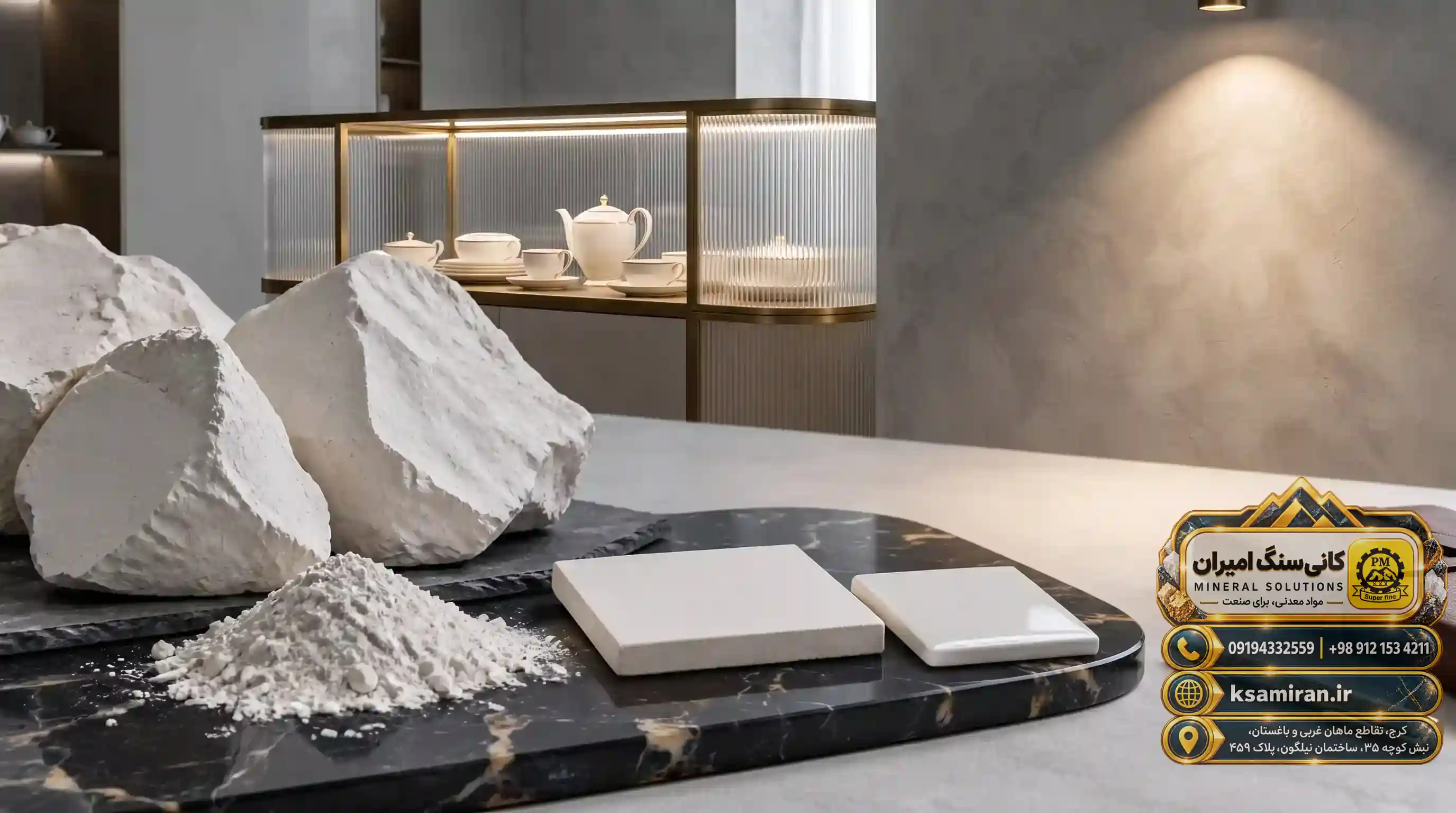
The Role of Kaolin in Producing High-Quality Tiles, Ceramics, and Glazes
The history of using kaolin is rooted in the ceramic and pottery industries, and today, this material is known as one of the main components in the production of tiles, ceramic products, and industrial glazes. The fire-resistant features and high thermal stability of this material make it an irreplaceable element in ceramic body manufacturing.
In the formulation of tile and ceramic bodies, this material acts as a source of alumina and silica, which forms stable mineral phases during the firing process, improving mechanical strength and the thermal shock resistance of the part. Also, its favorable initial whiteness provides the background for creating transparent and colored glazes.
In the glaze production industry, using micronized powder with the appropriate mesh results in smoother and more uniform melting of the glass coating on the body. This prevents surface defects such as pinholing, rippling, or peeling of the glaze, giving a flawless appearance to the final product.
The Kani Sang Amiran project, by supplying high-quality raw materials for the ceramic and glaze manufacturing industries, plays an important role in upgrading the quality of products in this sector and always applies strict quality standards in the processing of its products to attract the full satisfaction of industrial customers.
Technical Examination of the Application of Granulated Silica Alongside Kaolin in Related Industries
In many industrial complexes, various minerals are used together to achieve the best formulation result. For example, in metal and casting industries where minerals play a role in mold making and fireproofing, understanding the physical behavior of materials is very important and encourages engineers to use balanced combinations.
To better understand the similarities and differences in the application of hard mineral materials in different industries, reading the analytical article Why is Granulated Silica Widely Used in Metal Industries? provides a very good perspective on mineral materials engineering and the correct selection of fillers.
Intelligently combining silicate and aluminosilicate fillers such as kaolin with other processed minerals can simultaneously improve the thermal and mechanical properties of industrial composites. This multi-material approach also has many applications in advanced plastic and polymer industries.
Manufacturers, by accurately knowing the physical parameters of each mineral material, can create more optimized formulations that not only guarantee the quality of the final product but also significantly reduce production costs and maximize production line efficiency.
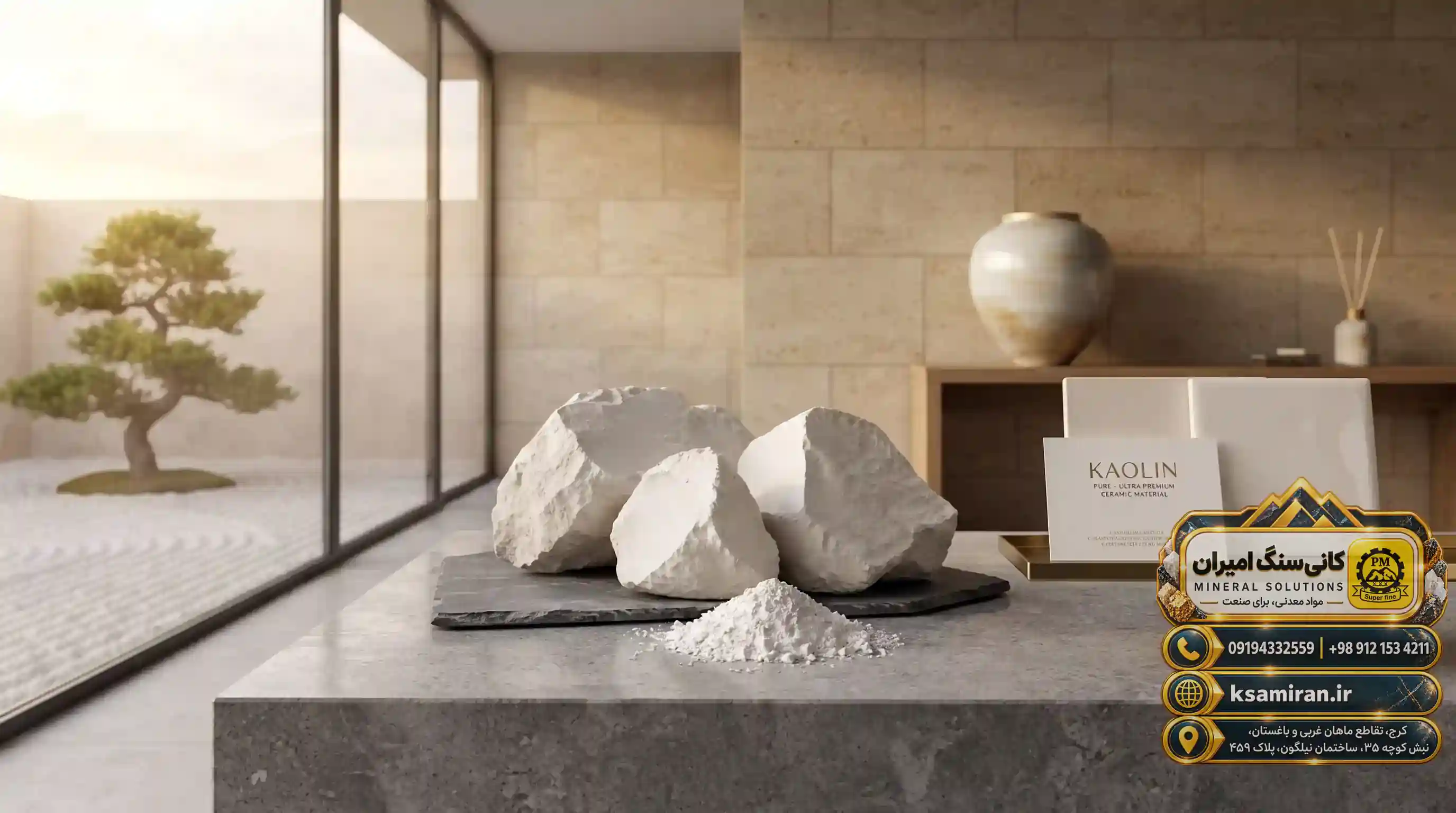
Key Points in Warehousing, Safety, and the Production Process of Products Containing Kaolin
Proper warehousing management and adherence to safety tips when working with micronized mineral powders such as kaolin are of particular importance. Since these materials have a high mesh range (450 to 1500 mesh) and very fine particles, there is a possibility of dust suspension in the air when unloading bags.
Workers and production line operators must use appropriate respiratory protection equipment and safety goggles to prevent the inhalation of fine particles. Also, the storage warehouse for these products must be dry, well-ventilated, and kept away from moisture to prevent the powder from clumping.
In the polymer compounding production sector, uniform distribution of the filler in extruders or industrial mixers requires precise control of temperature and mixing time. Using auxiliary additives and coupling agents (such as silanes) can significantly improve the adhesion between mineral particles and the polymer matrix.
The Kani Sang Amiran project, by providing necessary technical guidance and standard packaging, presents its products to the market in such a way that their transport and storage are safe, easy, and hassle-free for consumer industries, resulting in minimal waste.
Conclusion and Future Outlook of the Kaolin Market in the Polymer and Ceramic Industries
A comprehensive examination of the applications of kaolin in plastics, polymers, paint, paper, tiles, and ceramics shows that this valuable mineral has an irreplaceable place in mode industry. With the advancement of manufacturing technologies and the increasing need for high-quality composite materials, the demand for micronized powders with precise mesh ranges (450 to 1500 mesh) is increasing.
Industrial manufacturers are always looking for reliable suppliers who can guarantee product quality stability in high toages. The Kani Sang Amiran project, as one of the leading mineral producers, with a focus on processing quality, meets the diverse needs of the country's various industries.
A look at the future shows that the development of new polymer formulations and the need for eco-friendly and low-cost fillers will make the role of this mineral more prominent. Investing in advanced processing and precise particle micronization will be the key to success in today's and tomorrow's competitive market.
Ultimately, the smart selection of raw materials and the use of specialized consultations from reputable suppliers will guarantee quality and profitability for production units in the plastic, paint, and ceramic industries and will pave the way for sustainable development.
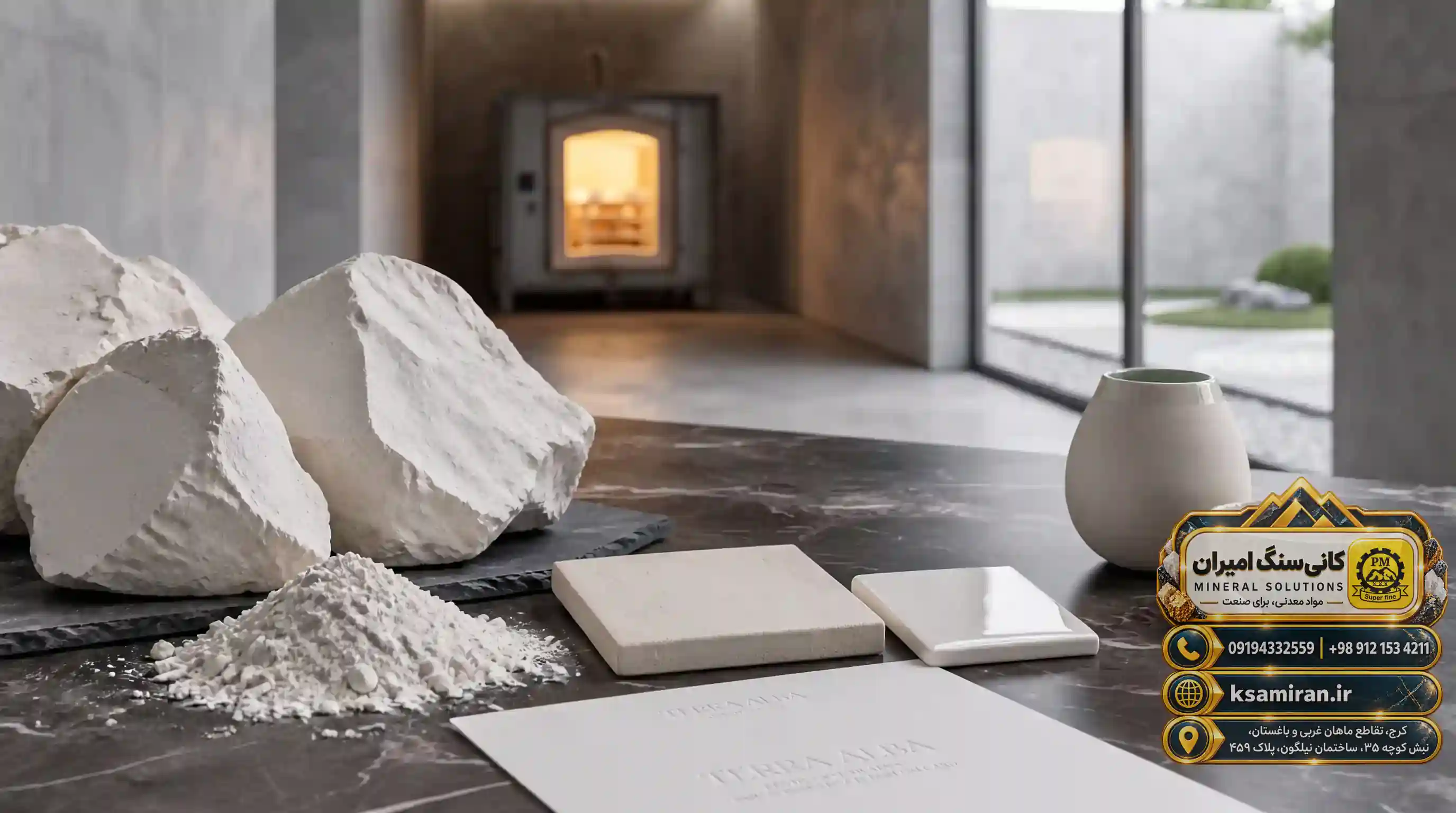
| Question | Answer |
|---|---|
| What is the mesh range of Amiran Kaolin? | This product is produced and supplied in the 450 to 1500 mesh range. |
| What are the main applications of Kaolin? | It is used in tile, ceramic products, glazes, paper, and paint industries. |
| How can Kaolin be ordered? | You can proceed by visiting the product page on the Kani Sang Amiran website. |
| Is this material used in the plastic industry? | Yes, it is used as a mineral filler to improve the mechanical properties of polymers. |
| What is the role of Kaolin in the paint industry? | It improves the durability, gloss, and coverage of the paint film. |
| Is this material also used in the paper industry? | Yes, it increases the whiteness and surface smoothness of paper. |
| What is the main feature of Kaolin in ceramics? | Thermal resistance and supplying aluminosilicate phases for body firing. |
| How should Kaolin powder be stored? | It should be stored in a dry, cool environment away from moisture. |
| Why is Kaolin granulation important? | Because it directly affects the uniform distribution and final properties of the composite. |
| Which entity is the manufacturer of this product? | The Kani Sang Amiran Project. |
Kani Sang Amiran Project — Reference for production and processing of mineral and industrial materials.
برچسب: Kaolin,The Importance of Kaolin Granulation in Plastic and Polymer Industries,
نویسنده: رساوب آفرین