
درباره سایت
آخرین مطالب
- بررسی استانداردهای ایمنی کار با اکسید لیمونیت (گل ماش)
- Comprehensive Guide to Technical Analysis of Limonite Oxide (Gol Mash)
- الدليل الشامل للتحليل الفني لأكسيد الليمونيت (جول ماش)
- مراجعة معايير السلامة للعمل مع أكسيد الليمونيت (جول ماش)
- چگونه از تقلب در خرید اکسید لیمونیت (گل ماش) جلوگیری کنیم؟
- How to Prevent Fraud When Purchasing Limonite Oxide (Gol Mash)?
- کاربرد تخصصی اکسید لیمونیت (گل ماش) در تولید بتن
- Specialized Application of Limonite Oxide (Yellow Ochre) in Concrete Production
- راهنمای جامع آنالیز فنی اکسید لیمونیت (گل ماش)
- التطبيق التخصصي لأكسيد الليمونيت (غل ماش) في إنتاج الخرسانة
امکانات وب
An Introduction to the Importance of Silica in Investment Casting and Industrial Production
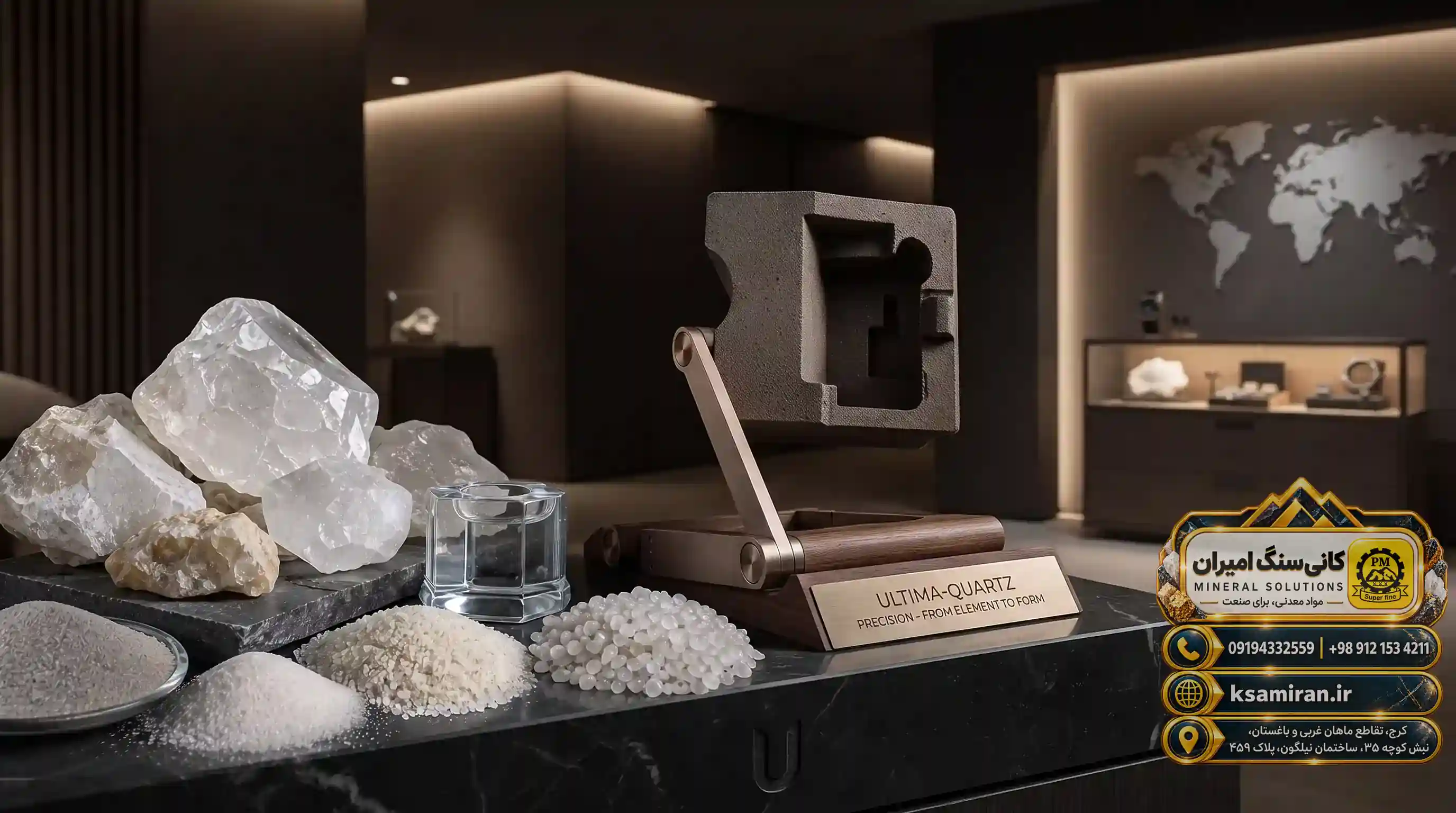
Investment casting industries always require raw materials with high purity and stable physical and chemical specifications to produce parts with highly precise dimensional tolerances and polished surfaces. In this regard, silica is recognized as one of the most fundamental and strategic minerals in various industries, including casting. The unique properties of this mineral make it an unparalleled option for improving the final quality of products.
The Kani Sang Amiran group, by focusing on supplying high-quality mineral materials, provides standardized products for various industries. An examination of the applications of silica shows that this material plays a key role not only in casting but also in the glass, ceramic, and construction material industries. The use of appropriate granulation for this material can significantly increase production efficiency.
To better understand the required standards in this field, reading the specialized article Silica Quality Standards in Mode Manufacturing Industries is recommended. This article provides a detailed examination of the quality parameters and technical requirements that engineers and manufacturers must consider in their industrial processes.
In the advanced sections of this article, various dimensions of using this mineral in molding processes, manufacturing ceramic shells in investment casting, and its impact on the mechanical properties of molds will be discussed and examined to clarify its strategic role even further.
The Vital Role of Silica in Molding and Investment Casting Processes
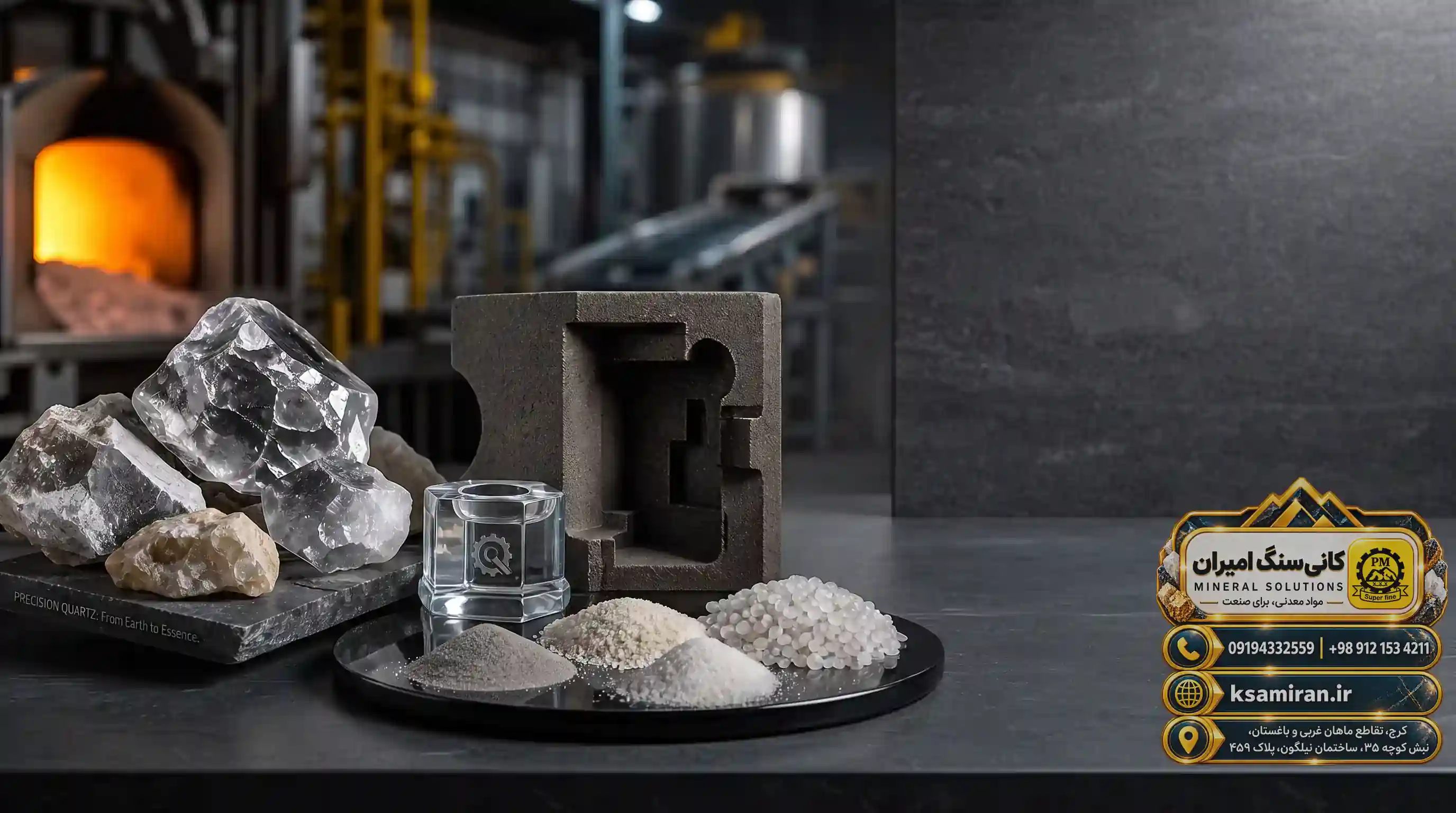
Investment casting is one of the most advanced methods for producing metal parts with high geometric complexity. In this process, creating ceramic shells resistant to high temperatures is of particular importance. The use of silica powders and sands with various mesh sizes, due to their high melting point and excellent thermal stability, acts as the main skeleton of the mold shells and prevents mold deformation during the pouring of molten metal.
The correct selection of the granulation of this material has a direct impact on the surface quality of the cast part and the reduction of waste. Therefore, metallurgical engineers are always looking for reliable suppliers who can provide homogeneous and high-quality raw materials. Exploring the reasons for the widespread use of this material in metal industries is a topic that has been discussed in detail in the article Why is Granulated Silica Widely Used in Metal Industries?
Manufacturers can cover the precise needs of their production lines by utilizing products with a mesh range of 10 to 450 mesh, offered by the Kani Sang Amiran project. This variety in granulation allows operators to choose the appropriate grain for each stage of the molding process (from the initial layer or face-coat to the secondary support layers).
In addition to thermal stability, the low coefficient of thermal expansion of this mineral helps ensure that the dimensions of the final part, after cooling, have the least possible deviation from the original wax model, which guarantees the dimensional accuracy of investment casting.
Widespread Application of Silica in the Glassmaking and Ceramic Products Industry
The glass industry is considered one of the oldest yet most mode consumers of silica in the world. This material acts as the main network-former in the structure of glass and constitutes the major part of the chemical composition of molten glass. Chemical purity and freedom from coloring impurities such as iron oxide are vital factors in selecting this material for the production of transparent and industrial glass.
In addition to glassmaking, this mineral is also used in the ceramic industry as a filler and a stable crystalline phase in the body and glaze of ceramic products. High mechanical resistance and stability against chemical attacks are other advantages of using this material in tiles, ceramics, and porcelain. To lea more about chemical interactions and the impact of mineral compounds on glass quality, it is suggested to read the article The Role of Red Iron Oxide (Ochre) in the Glass Manufacturing Industry, which plays a complementary role alongside this mineral.
To procure this high-quality mineral for use in glass and ceramic industries, you can visit the dedicated Silica page and view its full technical specifications. These products have been extracted and granulated using advanced technologies to meet the stringent standards of firing and melting industries.
The presence of this material with various mesh sizes in the formulation of ceramic bodies controls the shrinkage rate in the drying and firing process and prevents the creation of cracks and warping in products.
Technical Specifications and Mesh Range of Silica in Various Industries
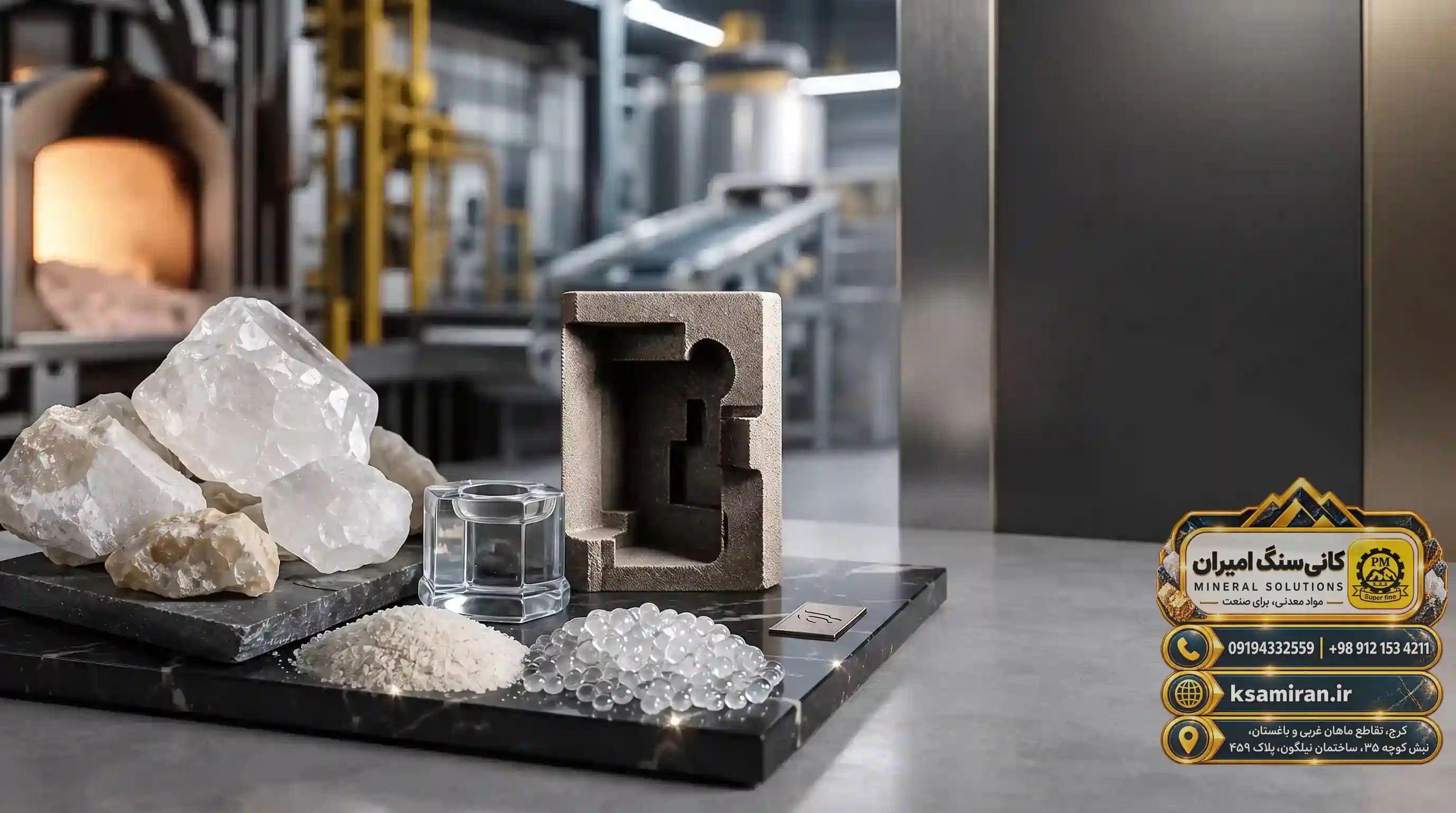
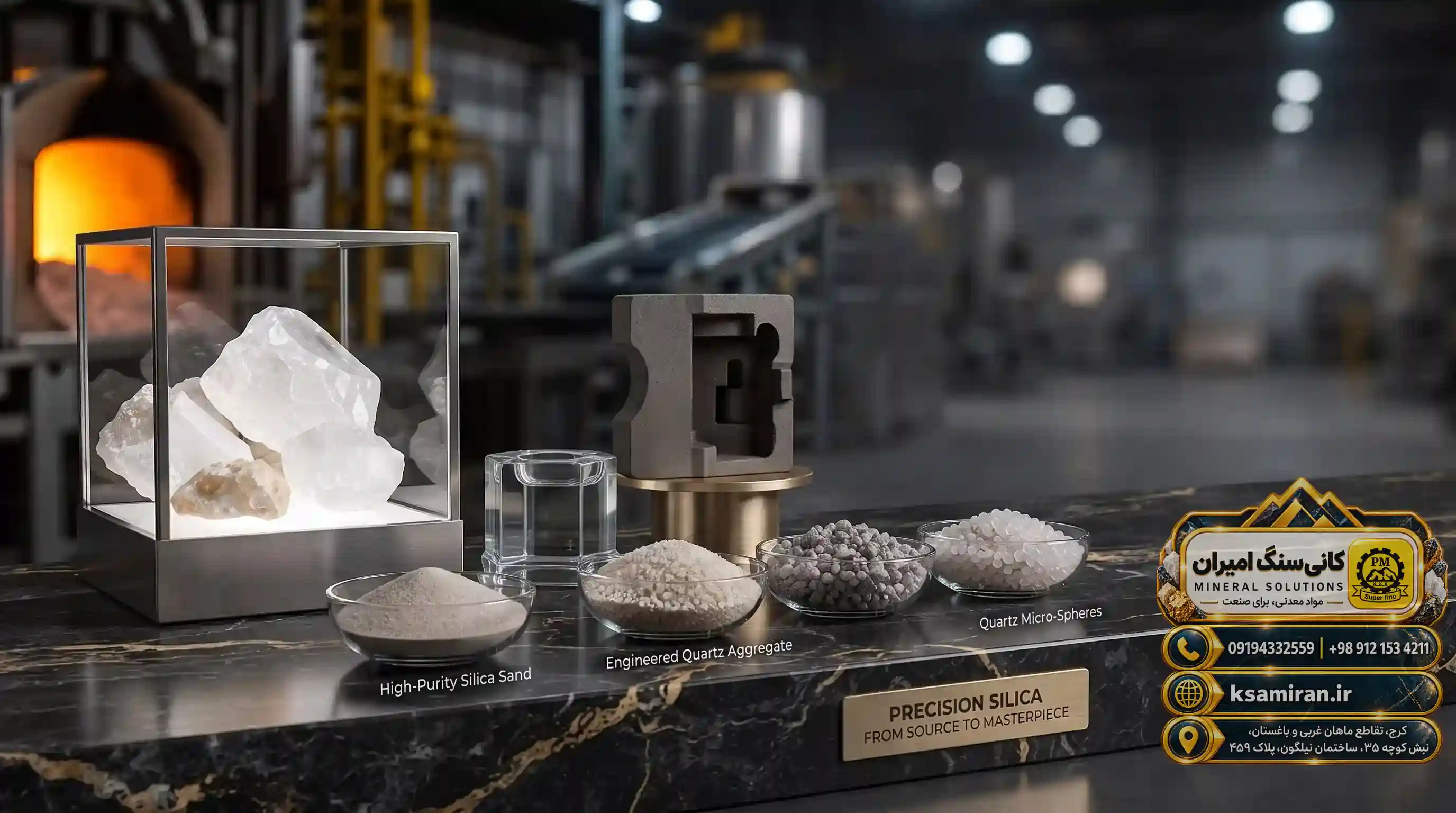
One of the most important parameters in purchasing and applying industrial minerals is having precise knowledge of their mesh and granulation specifications. The 10 450 mesh range covers a wide spectrum of particle sizes, from coarse sandy grains to highly micronized powders. Each of these ranges has its own specific application in diverse industries.
For example, coarser meshes are used in the production of building materials and sand filters for water treatment, while medium to fine meshes are used for casting products, molding sand, and fuaces. Very fine powders with high mesh counts are also employed in the ceramic, paint, and glaze production industries to improve rheological and coating properties.
Manufacturers can achieve the highest level of productivity in their production lines by precisely selecting the desired mesh range from the products offered by the Kani Sang Amiran project. Homogeneity of particle size and their proper distribution ensure the predictable behavior of the material in fuaces and molds.
Precise quality control in the granulation and powdering stages of this material prevents the entry of undesirable particles and delivers a uniform product to the final consumer, which plays a significant role in reducing hidden production costs.
Application of Silica in Building Materials and Mode Civil Engineering
The construction industry, as one of the largest consumers of minerals, always requires durable, resistant, and standardized materials. Due to its high hardness, resistance to abrasion, and chemical stability, this mineral has a special place in the production of high-strength concrete, dry mortars, industrial flooring, and cement-based products.
The use of appropriate granulation of this material in specialized concrete pouring reduces water permeability and significantly increases the lifespan of concrete structures in aggressive environments. Also, in the production of various tile adhesives, grouting powders, and refractory cements, the presence of micronized powders of this material significantly helps to improve adhesion and final strength.
The Kani Sang Amiran project collection, by providing this high-quality mineral, perfectly meets the needs of large civil projects and precast material factories. Civil engineers, by utilizing the favorable physical properties of this material, can improve the quality standards of concrete structures.
Stability against atmospheric factors and lack of reaction with other alkaline compounds of cement are other reasons for the popularity of this material in civil engineering and mode construction, which brings high economic and technical value.
Economic Advantages and Optimization of Production Processes Using High-Quality Silica
Optimizing production costs and increasing the productivity of manufacturing lines is the main goal of every industrial manager. Using high-quality and homogeneous raw materials such as this mineral, although it may seem costly at first glance, is fully economically justified in the long term by significantly reducing waste, decreasing energy consumption in fuaces, and increasing the lifespan of equipment and molds.
In the investment casting and ceramic industries, high purity and the absence of volatile impurities mean a reduction in unwanted exhaust gases, prevention of gas holes in metal parts, and consequently, a reduction in the rate of defective parts. This directly increases the profitability of the production unit.
The Kani Sang Amiran project, relying on production standards and sustainable supply, strives to meet the needs of various industries with a competitive price and guaranteed quality. Access to high-quality raw materials with stable technical specifications brings peace of mind to production managers.
Therefore, investing in the correct choice of type and mesh size of this material is considered an intelligent strategy for improving the competitive position of companies in domestic and inteational markets.
Safety Tips and Standards for Handling and Storing Silica in Industrial Environments
Managing minerals in factories requires strict adherence to safety and occupational health guidelines. Long-term inhalation of dust containing free particles of this mineral can pose risks to the lung health of employees. Therefore, observing safety protocols, using appropriate personal protective equipment such as filtered masks, and installing dust suction systems in production and packaging lines is mandatory.
In addition to human safety requirements, the storage conditions of this material must also be such that it prevents moisture penetration and protects the particles from contamination by foreign substances. Roofed, dry warehouses with appropriate palletizing are the best spaces for storing bags of this material with various mesh sizes.
Observing these simple but vital principles, in addition to maintaining employee health, prevents the powders from clumping and the physical properties of the materials from changing due to moisture absorption. Industrial units can provide a safe and productive environment by continuously training their persoel.
The Kani Sang Amiran collection provides the necessary technical advice for the safe packaging and transportation of these products to its customers so that the unloading and warehousing process in consumer factories is carried out in the best possible way.
Future Outlook and Iovations in Industrial Applications of Silica
With the rapid progress of new technologies in electronics, aerospace, renewable energy, and advanced metallurgy, the demand for minerals with ultra-high purity and more precise engineering specifications is increasing. This strategic material, as one of the main pillars of mode technology, will play a transformative role in the future of the industry.
Research in the field of advanced processing, more precise micronization, and surface modification of particles of this material to improve the properties of composites and polymer composite materials is ongoing. Investment casting and engineering ceramic production industries will be more dependent on these iovations than ever before to produce lighter, more resistant, and higher-quality products.
The Kani Sang Amiran project, in line with current industry standards, strives to expand its product portfolio and meet the growing needs of the market. Staying updated with these industrial developments ensures the survival and progress of production units in today's competitive market.
Ultimately, a deep understanding of the characteristics of this mineral and its scientific use in production processes will be the key to achieving the highest quality and productivity standards in investment casting, glass, ceramic, and construction material industries.
| Question | Answer |
|---|---|
| What is silica and what are its applications? | Silica is a high-quality mineral that is widely used in the glass, casting products, ceramic products, and construction material industries. |
| What is the mesh range of the supplied silica? | This product is supplied and offered by the Kani Sang Amiran project in a range of 10 to 450 mesh. |
| Why is silica important in investment casting? | Due to its high thermal stability, suitable melting point, and low coefficient of thermal expansion, it is ideal for making ceramic shells and casting molds. |
| How can the technical specifications of silica be viewed? | You can visit the Silica page on the Kani Sang Amiran website to check the full specifications. |
| Is silica used in the glassmaking industry? | Yes, this material acts as the main network-former in the structure of glass and the production of transparent industrial products. |
| What points should be observed in silica warehousing? | The product must be stored in roofed, dry warehouses away from moisture to prevent clumping. |
| What is the role of silica in the ceramic industry? | It acts as a stable crystalline phase, filler, and shrinkage rate controller in the body and glaze of ceramic products. |
| Is this material also used in construction materials? | Yes, it is used in the production of resistant concrete, dry mortars, industrial flooring, and tile adhesives. |
| What safety tips are necessary when working with silica? | The use of filtered masks and protective equipment is necessary to prevent the inhalation of dust. |
| How can this product be procured? | It is possible through communication with the Kani Sang Amiran project collection and by visiting the official website of this collection. |
Specialized reference for mineral and industrial material information, Kani Sang Amiran.
برچسب: Silica,The Strategic Role of Silica in Investment Casting Industries,
نویسنده: رساوب آفرین