
درباره سایت
آخرین مطالب
- بررسی استانداردهای ایمنی کار با اکسید لیمونیت (گل ماش)
- Comprehensive Guide to Technical Analysis of Limonite Oxide (Gol Mash)
- الدليل الشامل للتحليل الفني لأكسيد الليمونيت (جول ماش)
- مراجعة معايير السلامة للعمل مع أكسيد الليمونيت (جول ماش)
- چگونه از تقلب در خرید اکسید لیمونیت (گل ماش) جلوگیری کنیم؟
- How to Prevent Fraud When Purchasing Limonite Oxide (Gol Mash)?
- کاربرد تخصصی اکسید لیمونیت (گل ماش) در تولید بتن
- Specialized Application of Limonite Oxide (Yellow Ochre) in Concrete Production
- راهنمای جامع آنالیز فنی اکسید لیمونیت (گل ماش)
- التطبيق التخصصي لأكسيد الليمونيت (غل ماش) في إنتاج الخرسانة
امکانات وب
Introduction to Mineral Silica Standards and Quality Importance
Silica, as one of the most abundant minerals in the Earth's crust, plays a vital role in various industries. The quality and purity of this mineral determine its efficiency in industrial sectors. In reviewing national and inteational silica standards, paying attention to physical and chemical parameters is of high importance. The Kani Sang Amiran project, as a mineral producer, supplies this valuable material with standard technical specifications.
To better understand the position of minerals in industries, studying the Kaolin Price Trend Analysis in the Mining Market provides a comprehensive perspective on the mineral supply chain. A precise understanding of standards helps industrial producers select their raw materials with the highest efficiency and prevent capital waste.
Compliance with quality standards in silica processing ensures that the final product has uniform granulation and minimized impurities. This is doubly important in sensitive industries such as glassmaking and ceramics, for which strict standards have been established.
The Role of Silica in the Glass Industry and Its Standard Regulations
The glass industry is considered one of the largest consumers of silica in the world. To produce high-quality glass, raw materials must have high chemical purity and a minimum amount of iron oxides. The presence of impurities can severely affect the color and transparency of the final product.
In the glass manufacturing process, the granulation and mesh size of the raw material are of key importance. By offering products in the mesh range of 10 to 450 mesh, the Kani Sang Amiran project covers a wide range of glassmaking industry needs. This breadth of granulation allows for precise control of melting and glass quality.
Inteational standards for silica used in glassmaking have set specific limits for impurity elements. Compliance with these standard limits guarantees the mechanical and thermal resistance of the produced glass against thermal shocks and environmental pressures.
Application of Silica in Founding and Industrial Standard Requirements
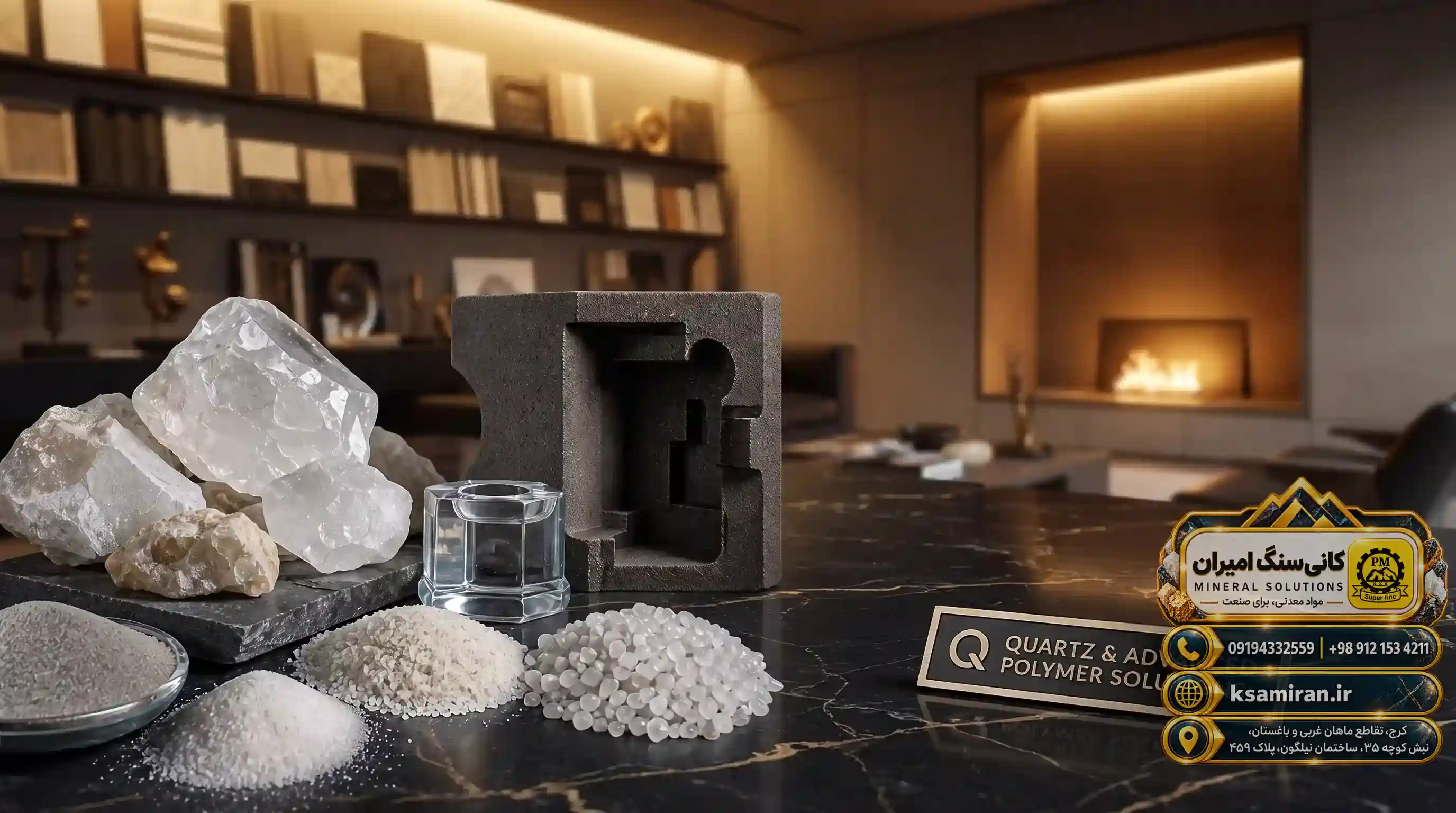
Metal casting requires refractory materials resistant to extremely high temperatures. Due to its high melting point and favorable thermal stability, silica is considered one of the main components in molding and foundry sands. Standards in this area focus more on particle shape, mesh size distribution, and compressive strength.
To better understand processes related to industrial minerals, you can refer to the article Comprehensive Review of Industrial Silica Production and Processing, which raises useful technical details. The quality of foundry sand directly affects the final surface of cast parts and the absence of gas cavities.
By producing silica in various granulations, the Kani Sang Amiran project has made it possible to use this material optimally in the foundry industries. Precise control of particle dimensions improves gas permeability and increases the strength of foundry molds.
The Ceramic Industry and the Importance of Silica Mesh Sizing
In ceramic industries, silica acts as a filler and structural skeleton builder that helps reduce firing shrinkage and improves the dimensional stability of the ceramic body. Quality standards for this material in the ceramic industry emphasize purity, granulation uniformity, and the absence of volatile matter.
Using silica with the appropriate mesh in the formulation of ceramic bodies and glazes plays a decisive role in preventing the formation of micro-cracks and improving the mechanical strength of the product. The 10 to 450 mesh range offered by the Kani Sang Amiran project meets the diverse needs of this advanced industry.
Furthermore, simultaneous review of other minerals such as feldspar is important in the ceramic industries. For more information in this field, reading Feldspar Price Analysis in Iran's Mineral Market is suggested, which analyzes the economic aspects of the ceramic raw materials market.
Silica in Construction Materials and Civil Engineering Standards
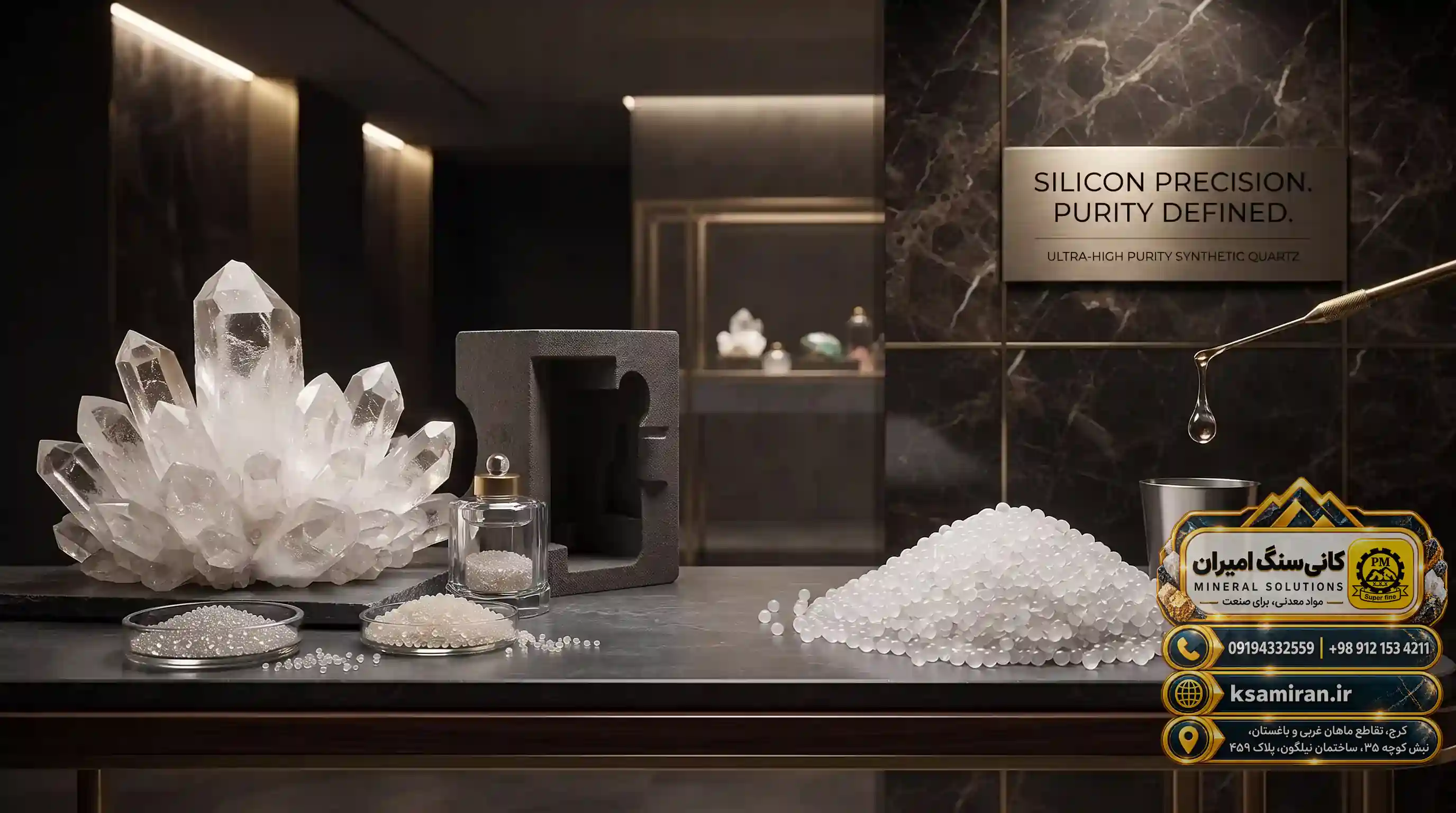
Mode construction materials require raw materials with stable physical properties and standard technical specifications. Silica is used as an aggregate in concrete, mortars, and cement-based products to increase compressive strength and structural durability. National construction material standards precisely specify the allowable limits of granulation and fine particle content.
By supplying high-quality silica for construction materials, the Kani Sang Amiran project helps engineers and builders achieve the safety and quality standards of civil projects in the best possible way. Proper granulation prevents excessive porosity in concrete.
Compliance with extraction and granulation standards for construction silica improves cement adhesion to aggregates, thereby significantly increasing the lifespan of concrete structures against atmospheric and mechanical factors.
Review of the 10 to 450 Mesh Range and Compliance with Granulation Standards
Diversity in mesh sizes is one of the main indicators for evaluating the capability of mineral processing units. The 10 to 450 mesh range includes a wide spectrum of coarse grains to very micronized powders, each having its own specific application in various industries.
National and inteational standards utilize sieving methods and laser devices to determine particle size so that particle size distribution can be measured accurately. Utilizing mode equipment, the Kani Sang Amiran project offers its products strictly in accordance with these granulation standards.
Precise mesh control enables consumer industries to utilize the mineral materials required for their production lines with complete confidence, without the need for additional preparation processes, and to enhance overall production efficiency.
Quality Control and Standard Laboratory Tests for Silica
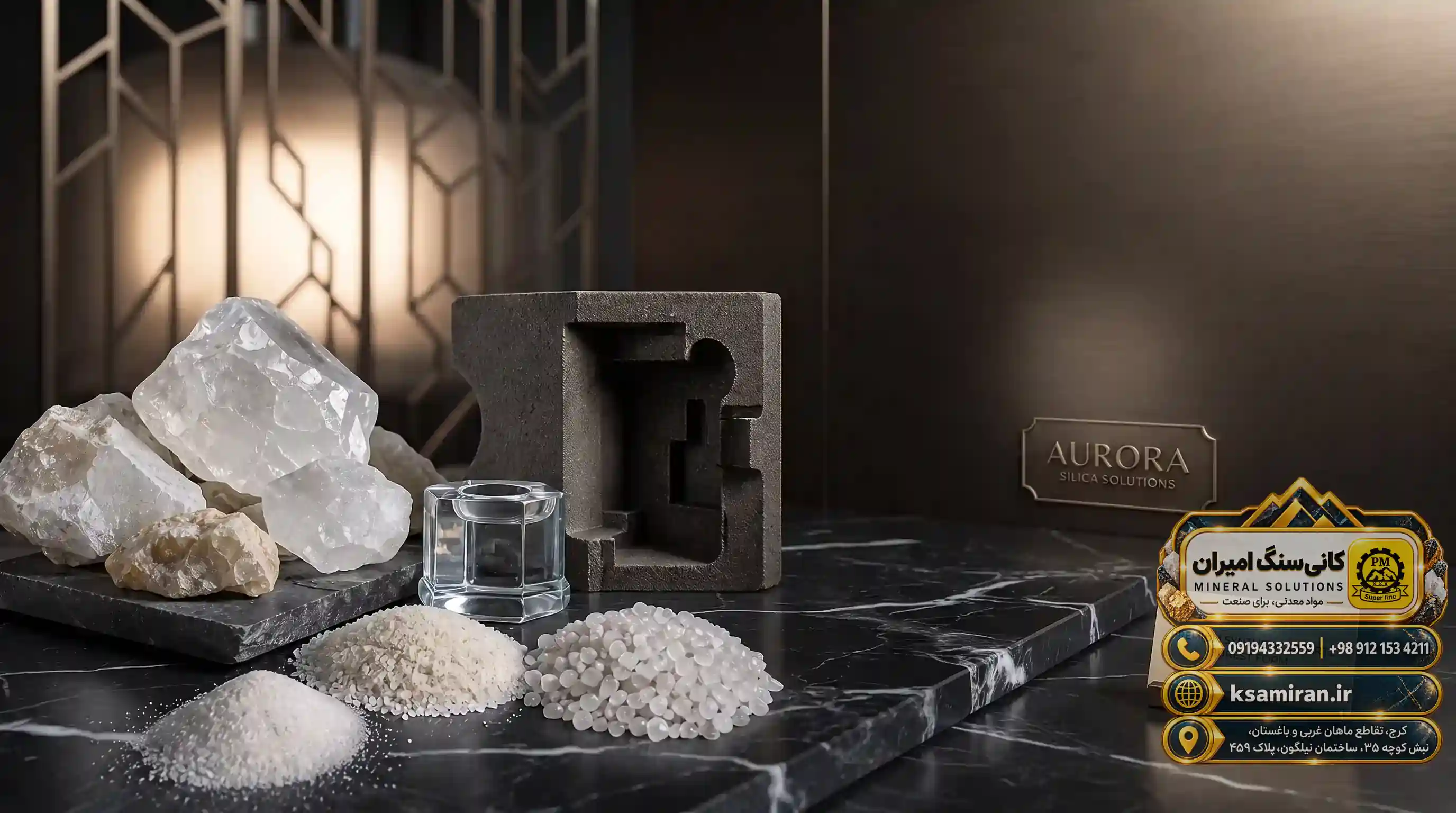
Quality control tests play a fundamental role in complying mineral products with national and inteational standards. Chemical analysis using methods such as X-ray fluorescence (XRF) spectroscopy and X-ray diffraction (XRD) is performed to determine mineral phases.
Adhering to quality control principles, the Kani Sang Amiran project subjects produced silica to rigorous testing before supplying it to the market to ensure purity and the absence of harmful impurities. This scientific approach brings satisfaction to industrial customers.
Continuous performance of physical tests such as granulation measurement, bulk density, and moisture content guarantees that shipped consignments always maintain stable quality consistent with agreed standards.
Market Outlook and the Future of Mineral Silica Standards
With the advancement of industrial technologies, expectations regarding the quality of mineral materials, especially silica, are increasing day by day. Global standards are moving toward reducing the allowable limit of impurities and increasing precision in mesh sizing to meet the demands of high-tech industries.
As an active player in mineral production, the Kani Sang Amiran project strives in alignment with these developments to upgrade the quality standards of its products and optimally cover the growing needs of the glass, foundry, ceramic, and construction materials industries.
Developing novel processing methods and paying attention to environmental requirements are other future trends in the silica industry that can further strengthen the competitiveness of Iran's mineral products in regional and inteational markets.
| Question | Answer |
|---|---|
| What is silica and what are its applications? | Silica is a valuable mineral whose primary applications include glass, foundry products, ceramic products, and construction materials. |
| What is the silica mesh range produced by the Kani Sang Amiran project? | The silica products of this collection are offered in the mesh range of 10 to 450 mesh. |
| Why is silica purity important in the glass industry? | High purity and low iron oxides prevent unwanted coloration and increase glass transparency. |
| What is the role of silica in founding? | Silica is used as a refractory and thermally stable material in molding and foundry sands. |
| Is silica used in the ceramic industries? | Yes, it is used as a filler and an agent to improve dimensional stability and reduce shrinkage in ceramic bodies. |
| What is the application of silica in construction materials? | It is used as an aggregate in concrete and mortars to increase compressive strength and structural durability. |
| How can the required silica be procured? | You can visit the silica product page on the Kani Sang Amiran project website for more information. |
| What tests are performed on silica? | XRF chemical analysis tests and granulation and mesh sizing determination tests are performed on the products. |
| Does particle mesh sizing affect the final quality? | Yes, precision in mesh sizing improves process efficiency across various industries. |
| Which entity is the manufacturer of this product? | The Kani Sang Amiran project supplies this product as a mineral producer. |
Reference: National and inteational standards for mineral industries and silica processing.
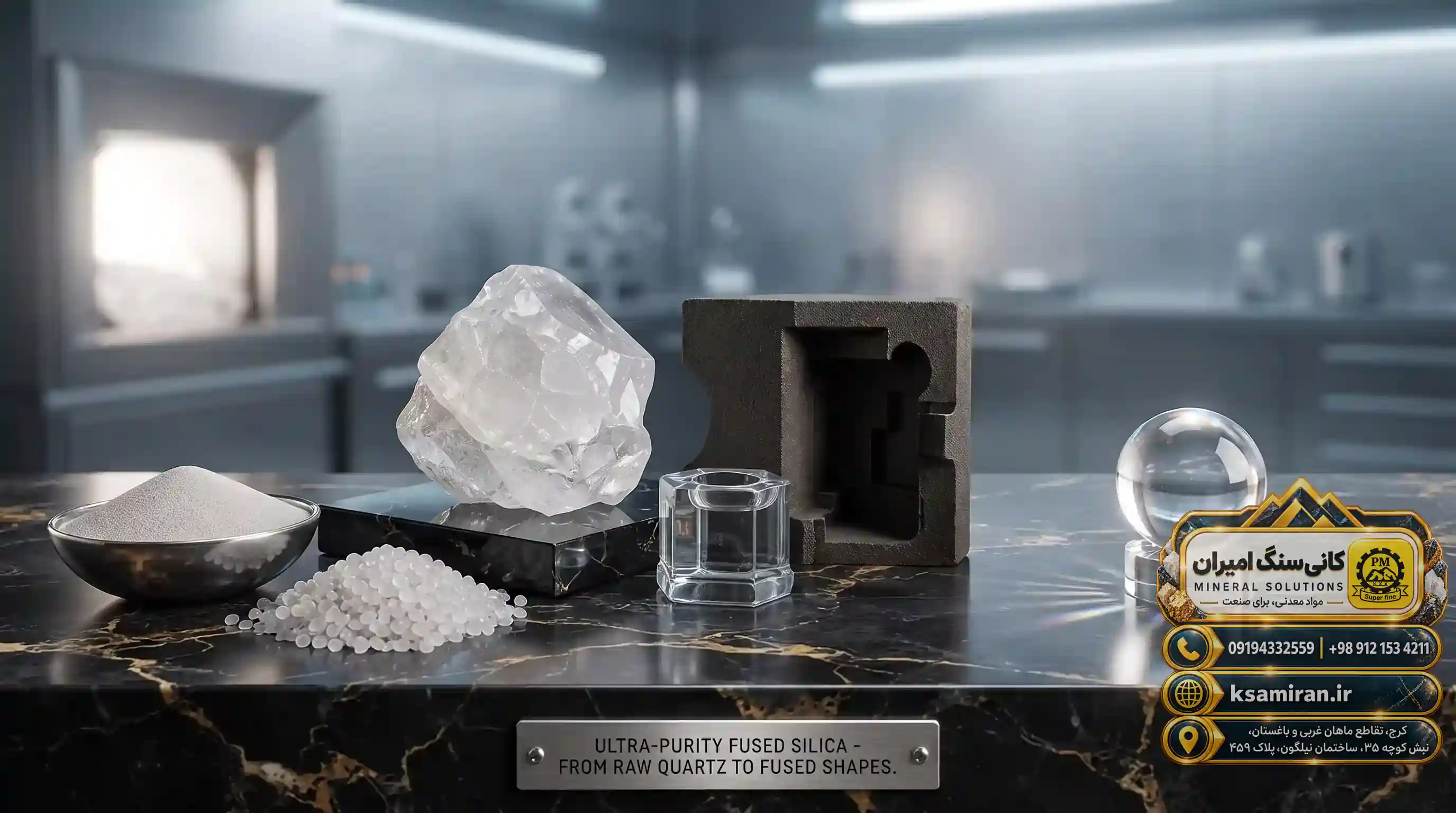
برچسب: Silica,Review of National and International Standards for Mineral Silica,
نویسنده: رساوب آفرین