
درباره سایت
آخرین مطالب
- بررسی استانداردهای ایمنی کار با اکسید لیمونیت (گل ماش)
- Comprehensive Guide to Technical Analysis of Limonite Oxide (Gol Mash)
- الدليل الشامل للتحليل الفني لأكسيد الليمونيت (جول ماش)
- مراجعة معايير السلامة للعمل مع أكسيد الليمونيت (جول ماش)
- چگونه از تقلب در خرید اکسید لیمونیت (گل ماش) جلوگیری کنیم؟
- How to Prevent Fraud When Purchasing Limonite Oxide (Gol Mash)?
- کاربرد تخصصی اکسید لیمونیت (گل ماش) در تولید بتن
- Specialized Application of Limonite Oxide (Yellow Ochre) in Concrete Production
- راهنمای جامع آنالیز فنی اکسید لیمونیت (گل ماش)
- التطبيق التخصصي لأكسيد الليمونيت (غل ماش) في إنتاج الخرسانة
امکانات وب
An Introduction to Industrial Talc and Its Importance in Industrial Coatings
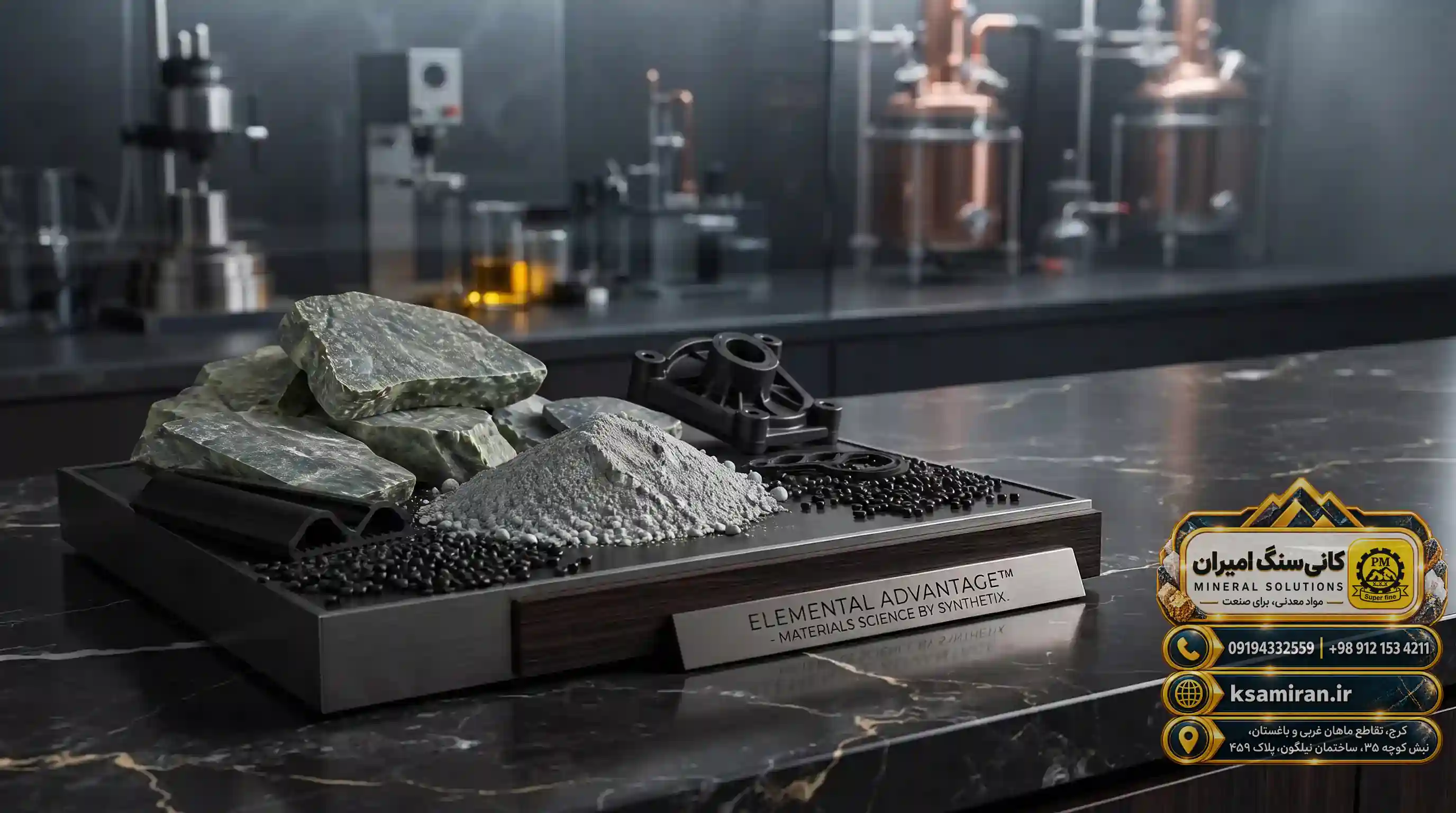
In today's world, various industries are constantly seeking high-quality and efficient raw materials to improve the properties of their final products. One such key mineral is industrial talc, which has found a special place in engineering formulations due to its platy structure and unique properties. With its chemically inert characteristics and layered structure, this mineral has been able to create a significant transformation in various industries.
Kani Sang Amiran project, as one of the active players in the mineral production sector, supplies this product with the highest quality standards. A precise understanding of the properties of this raw material helps design engineers and manufacturers achieve the best performance in polymer, rubber, and paint industries. To lea more about the technical details and purchase this product, you can visit the Industrial Talc page to obtain complete information.
Examining the physical and mechanical properties of this mineral powder is the foundation for producing coatings with high resistance against environmental and mechanical factors. In this article, we intend to comprehensively examine the role of this material in enhancing the durability of coatings and put different dimensions of its application under the magnifying glass.
The correct selection of fillers in the paint and polymer industries requires a precise understanding of their crystalline structure. The mentioned powder, by creating a compact matrix, significantly reduces the permeability of moisture and corrosive agents, which in tu increases the useful life of coating layers in harsh atmospheric and industrial conditions.
Examining the Physical and Mechanical Properties of Industrial Talc Powder
The physical and mechanical properties of minerals are the main determinants of their application in heavy industries and specialized coatings. In this regard, studying specialized articles such as Examining the Physical and Mechanical Properties of Industrial Talc Powder helps industrialists gain a better understanding of how the particles of this material interact with resins and polymers.
This mineral has a soft, layered structure with a low coefficient of friction. This feature improves the flowability of materials in production processes. Also, the low hardness of this powder leads to reduced wear on production equipment compared to other hard mineral fillers.
The particle size distribution and mesh range of this material play a vital role in determining the final properties of the coating. High-quality powder acts as a structural reinforcement, improving the modulus of elasticity and tensile strength in polymer and paint matrices.
Furthermore, the favorable thermal stability of this material ensures that final products exhibit greater resistance to temperature fluctuations and do not undergo deformation or degradation of mechanical properties.
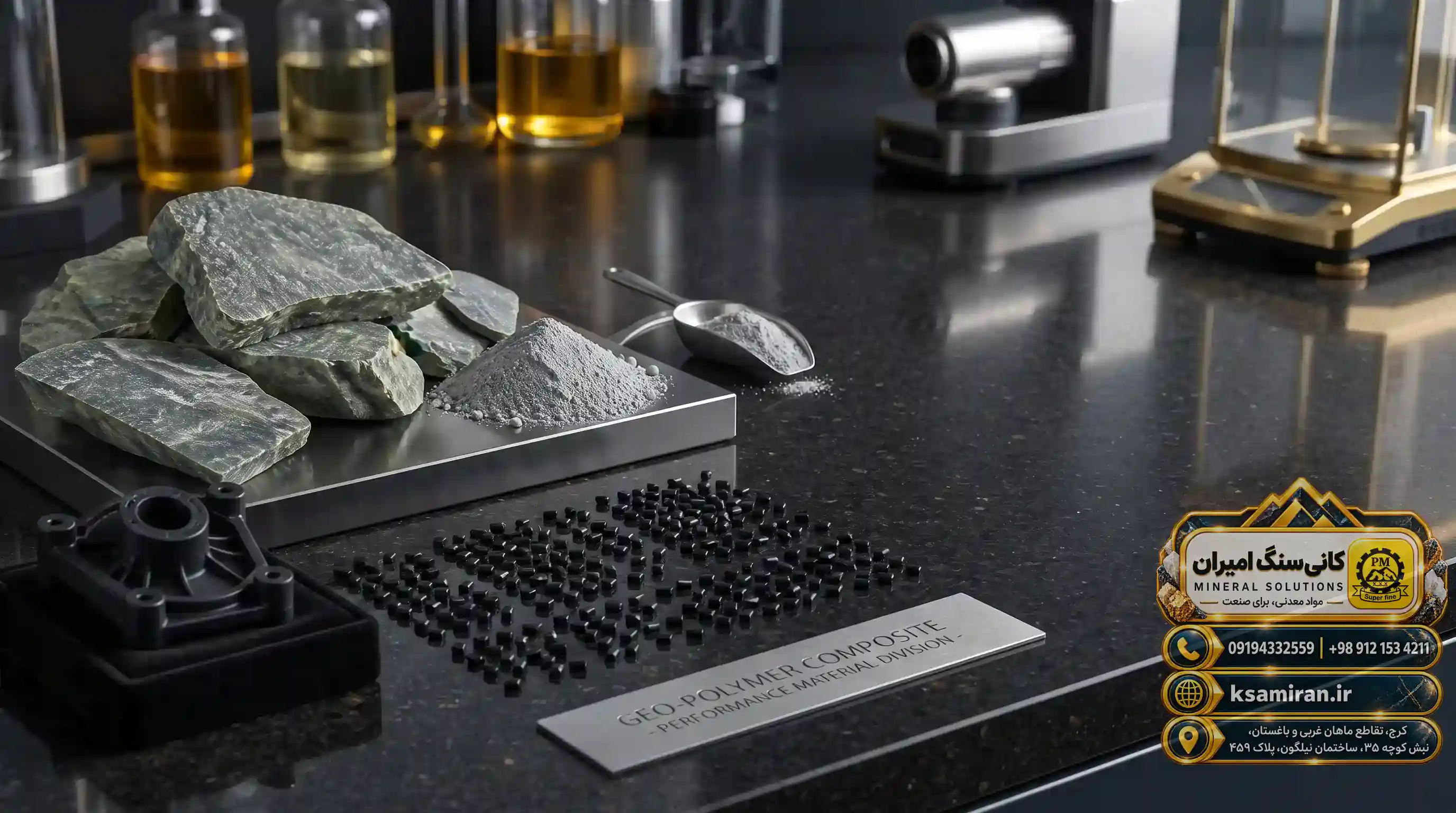
The Role of Industrial Talc in Enhancing the Durability and Stability of Paints and Coatings
Industrial coatings must have high resistance against destructive environmental factors such as UV radiation, moisture, temperature changes, and chemicals. The use of industrial talc as a functional filler significantly reduces the permeability of the paint film to water and gases, which is termed the Barrier Effect.
Due to its natural water-repellency and platy structure, this material creates a longer path for water molecules to penetrate. This mechanism significantly helps in optimally protecting underlying metal surfaces against corrosion and rust.
Also, the presence of this material in paint formulations helps improve the adhesion of the coating layer to the substrate and prevents peeling or blistering of the coating over the long term.
Kani Sang Amiran project, by offering this product in a mesh range of 450 to 1000 mesh, has enabled various industries to achieve coatings with high surface quality, extraordinary mechanical durability, and optimal wear resistance.
Application of Industrial Talc in the Paint Industry and Coating Formulations
The paint and resin industry is one of the largest consumers of micronized minerals. A detailed review of this industry's requirements in an article titled Application of Kaolin in the Paint and Industrial Coatings Industry well demonstrates how layered mineral fillers affect the optical and mechanical properties of paint, and these principles are entirely true for this material as well.
In the formulation of architectural and industrial paints, this powder acts as an extender and a matting agent improver. Its platy particles reflect light uniformly and noticeably increase the final coverage.
Furthermore, the use of this material helps control the viscosity of the paint during storage and application, preventing the paint from sagging on vertical surfaces.
The 450 to 1000 mesh range is highly ideal for use in various primers, anti-corrosive paints, and protective coatings, ensuring homogeneous distribution of particles in the resin bed.
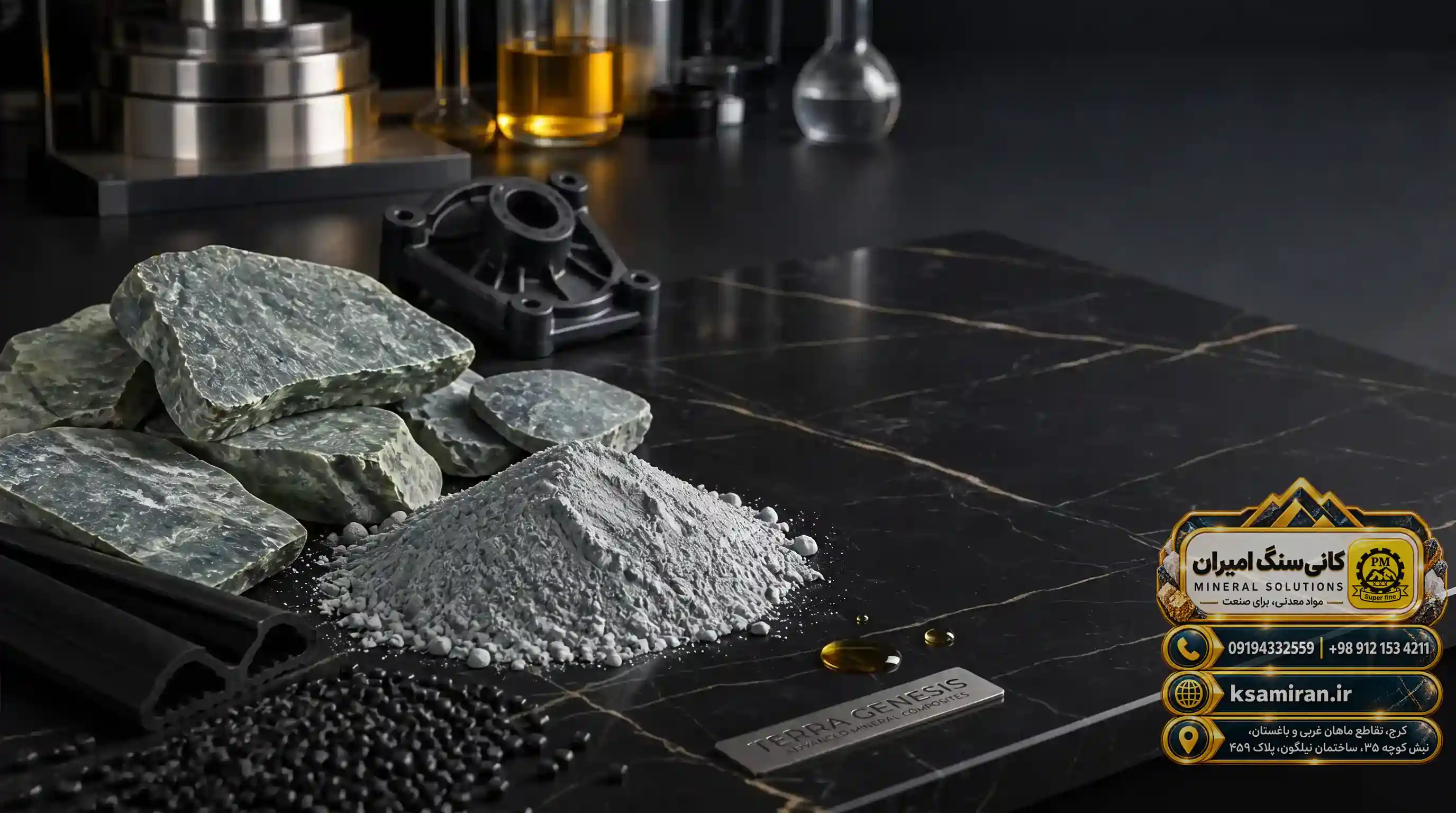
The Effect of Kaolin and Industrial Talc on the Gloss and Appearance of Industrial Coatings
Balancing gloss, surface flatness, and durability is the constant challenge of paint and coating formulators. To better understand this issue, studying the specialized article Examining the Effect of Kaolin on the Gloss and Durability of Industrial Coatings is helpful, as the mechanisms of effect of layered mineral fillers on gloss have great similarities to the behavior of this material.
When this powder with an appropriate mesh is added to the paint formulation, due to the particle dimensions and their parallel arrangement in the paint film surface, it exerts precise control over the gloss level (from matte to semi-gloss).
Maintaining brightness and color stability against sunlight is another advantage of using this material. By reflecting harmful rays, this powder prevents resin degradation and hinders chalking of the paint surface.
Therefore, the smart selection of this mineral from the Kani Sang Amiran project product portfolio guarantees a beautiful, uniform, and lasting appearance for industrial coatings.
Application of Industrial Talc in Polymer and Rubber Industries
In addition to the paint industry, polymers and rubbers are also among the largest consumers of industrial talc. This material is recognized as a cost-effective and high-quality reinforcing agent for improving the mechanical properties of polymer parts.
In polymer products, the addition of this powder leads to increased hardness, flexural modulus, and dimensional stability of the part. It also reduces the shrinkage rate of injection-molded parts and significantly increases the dimensional accuracy of manufactured products.
In the rubber industry, this material acts as an active filler and improves tear resistance, abrasion, and tension in rubber products such as gaskets, hoses, and industrial tires.
Kani Sang Amiran project, by precisely processing these materials in the 450 to 1000 mesh range, provides a uniform product free from harmful impurities for polymer and rubber industries, which leads to increased production efficiency.
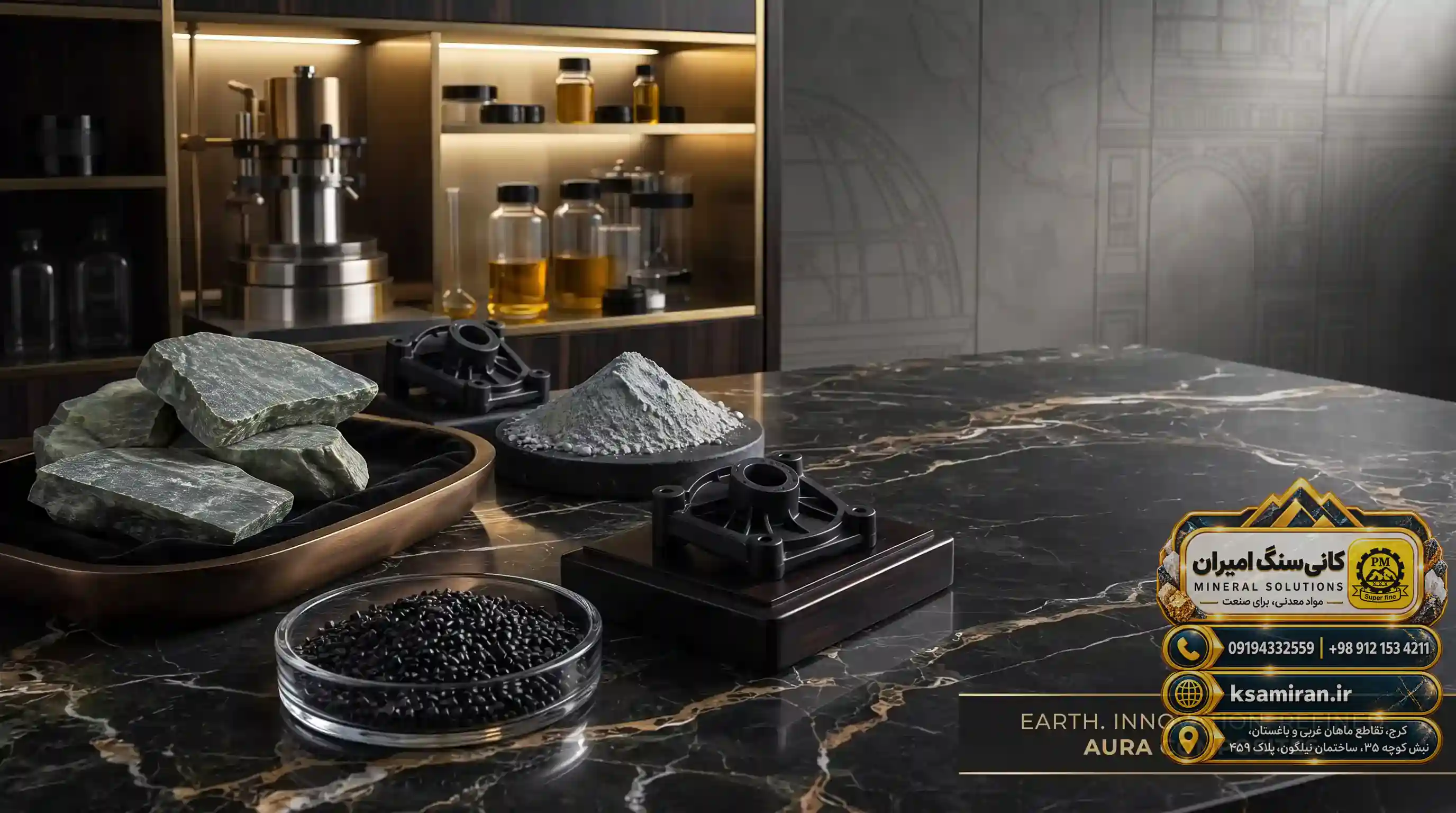
Economic and Technical Advantages of Using Industrial Talc in Mode Production
In today's industrial economy, cost optimization simultaneously with quality improvement is the key to success for manufacturers. The use of this mineral, due to its relative abundance and affordable price, significantly helps in reducing the cost of polymer, paint, and rubber products.
From a technical perspective, reducing the specific gravity of polymer parts and reducing the consumption of expensive resins are other prominent advantages of this filler. This is achieved without any drop in mechanical properties or even with the improvement of certain features.
High chemical stability, inertness against weak acids and bases, and excellent compatibility with various thermoset and thermoplastic resins have vastly expanded the scope of application of this material.
Manufacturers, relying on the quality standards of the Kani Sang Amiran project, can confidently utilize this material in their continuous and mass production lines.
Conclusion and Guide to Selecting and Buying Industrial Talc
In this article, we comprehensively examined the features, advantages, and applications of industrial talc in the coating, paint, polymer, and rubber industries. It became clear that this mineral, with its unique layered structure, plays a key role in increasing durability, resistance to corrosion, dimensional stability, and improving the appearance of products.
Choosing the appropriate granulation (450 to 1000 mesh range) according to the type of application will guarantee the best technical and economic results. The Kani Sang Amiran project, by supplying various high-quality minerals, is ready to provide consultation and supply the needs of the country's various industries.
If you are looking to upgrade the quality of your products and increase the durability of industrial coatings, we suggest you contact our experts now and examine the precise technical specifications of the products.
Adherence to production standards and strict quality control in all processing stages is a commitment that the Kani Sang Amiran project offers to its valued customers to play a role in promoting the country's industry.
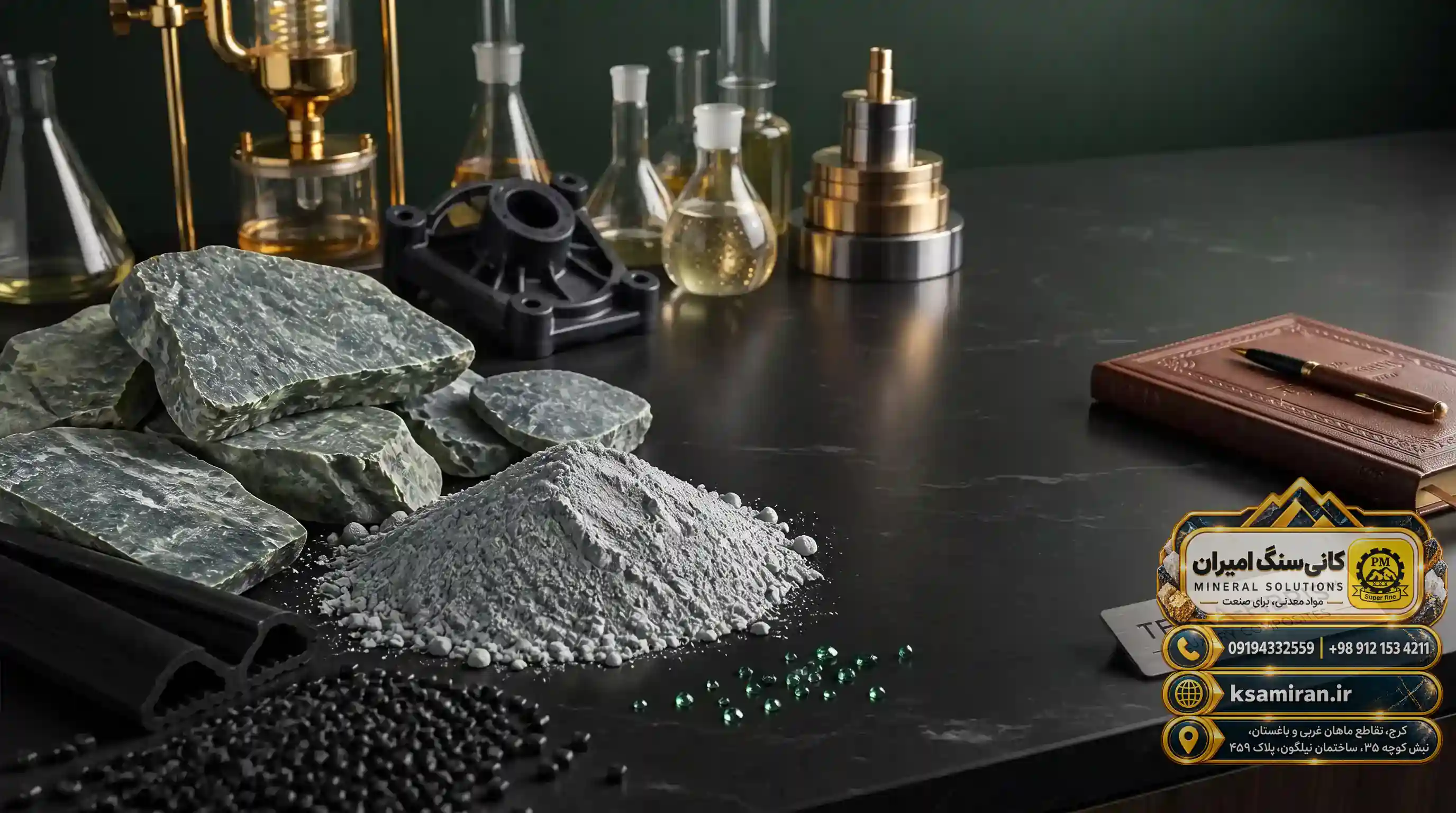
| Question | Answer |
|---|---|
| What is industrial talc? | It is a natural and layered mineral used in polymer, rubber, paint, and industrial coating industries. |
| What is the mesh range of this product? | This product is offered in a mesh range of 450 to 1000 mesh. |
| What are the main applications of industrial talc? | Polymer products, rubber products, paint, and various industrial products. |
| How does this material increase the durability of coatings? | By creating a layered structure and a barrier effect, it reduces the penetration of moisture and corrosive agents to the underlying surface. |
| Does this material affect the gloss of paint? | Yes, it helps control and adjust the gloss and matting levels of the paint film. |
| Which company supplies this product? | Kani Sang Amiran project — Mineral production. |
| What is the role of this material in polymer industries? | Increasing hardness, improving flexural modulus, dimensional stability, and reducing part shrinkage. |
| How can this product be purchased? | It can be ordered through the dedicated product page on the Kani Sang Amiran website. |
| Does the mentioned powder have thermal resistance? | Yes, it imparts favorable thermal stability to polymer and paint products. |
| What is the economic advantage of using this filler? | Reducing the consumption of expensive resins, lowering total costs, and lightening the weight of final parts. |
Specialized scientific sources in mineralogy, national and inteational standards for industrial coatings and polymers.
برچسب: Industrial Talc,The Impact of Industrial Talc on Increasing the Durability of Industrial Coatings,
نویسنده: رساوب آفرین