
درباره سایت
آخرین مطالب
- نقش اکسید لیمونیت (گل ماش) در صنایع تولید موزاییک
- دور أكسيد الليمونيت (الجيلماش) في صناعات إنتاج الفسيفساء (الموزاييك)
- چگونه کاربرد اکسید لیمونیت (گل ماش) را بهینه کنیم؟
- Company Limonite Oxide (Gol Mash) Price Comparison Guide
- بررسی ویژگیهای ظاهری اکسید لیمونیت (گل ماش) مرغوب
- کاربرد اکسید لیمونیت (گل ماش) در صنایع الکترودسازی
- دراسة الخصائص المظهرية لأكسيد الليمونيت (جول ماش) عالي الجودة
- دراسة الثبات الحراري لأكسيد الليمونيت المعدني (أكسيد الحديد الأصفر)
- The Role of Limonite Oxide (Gol Mash) in Mosaic Manufacturing Industries
- استخدام أكسيد الليمونيت (جول ماش) في صناعة الأقطاب الكهربائية
امکانات وب
Introduction to the Role of White Talc in Enhancing the Mechanical Properties of Plastics
The polymer and plastic manufacturing industry is constantly striving to enhance the mechanical, thermal, and appearance properties of final products through the use of efficient mineral additives. Among various mineral fillers, white talc holds a special place due to its lamellar structure and unique properties. The use of this material not only helps reduce the final cost but also plays a direct role in improving key parameters such as flexural modulus, dimensional stability, and impact resistance.
Kani Sang Amiran Company, by producing and processing the finest mineral powders, has prepared this product for various industrial applications. For more familiarity with technical details, you can visit the white talc page. Understanding the behavior of this additive in the polymer matrix requires a precise examination of its crystal structure and particle size distribution, which will be discussed separately below.
By default, plastics may be brittle against sudden impacts or undergo deformation under mechanical stresses. Adding suitable fillers like this material distributes stresses throughout the polymer matrix and prevents stress concentration. This mechanism is considered fundamental for increasing toughness and impact resistance in injection-molded and extruded plastic parts.
In addition to improving impact properties, this material has a significant effect on reducing the shrinkage of molded parts. Given the importance of careful raw material selection, we suggest reading the article on examining the structural differences between white talc and calcium carbonate to gain a better perspective on choosing the appropriate filler.
Chemical and Physical Structure of White Talc and Its Mechanism of Action
This material is a hydrated magnesium silicate with a specific chemical formula whose crystal structure consists of parallel layers stacked on top of each other. This lamellar structure is the main factor behind its lubricating and reinforcing behavior in polymer compounds. When this mineral powder is mixed with the polymer, the layers easily slide over one another and absorb the applied stresses.
The mesh range of this product varies between 450 and 2500 mesh, indicating its high degree of micronization and controlled particle size distribution. Finer particles with a larger contact area establish a stronger bond with the polymer chains and consequently sharply increase the mechanical efficiency of the entire compound.
To maximize the utilization of this material, studying scientific and specialized documentation is of high importance. In this regard, reading the article examining the technical benefits of using micronized white talc provides comprehensive information for polymer engineers to optimize processing parameters.
Compared to other mineral fillers, the lamellar geometric shape of this material allows it to exhibit better resistance to impact cracking. When an impact is applied to a plastic part, the impact energy is dispersed along the lamellar sheets, preventing the growth of surface and deep cracks.
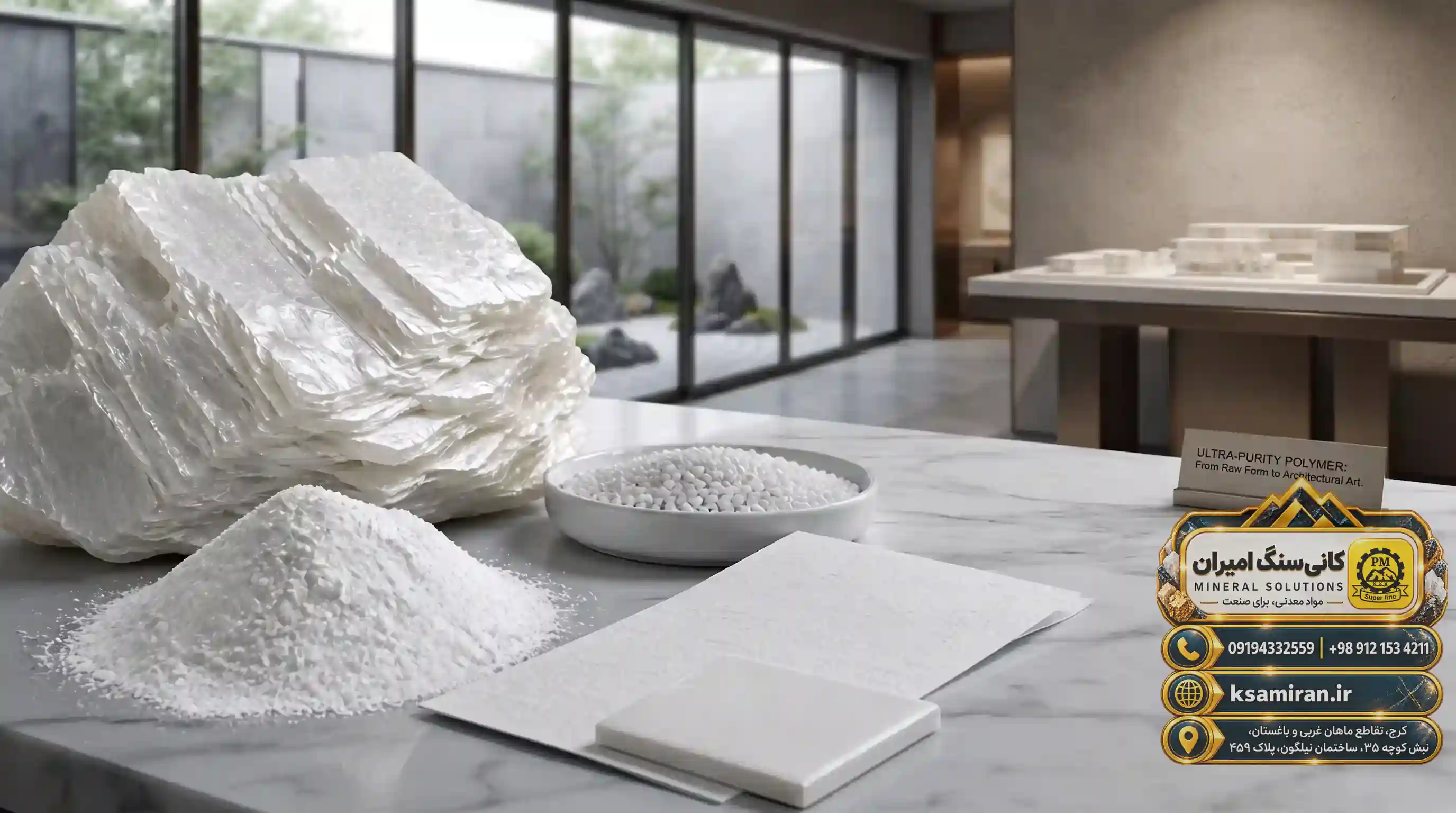
The Role of White Talc in Masterbatch and Polymer Compound Industries
Masterbatch and compounding industries are among the largest consumers of mineral powders. In these industries, adding this material as a reinforcing filler to polymers such as polypropylene (PP) and polyethylene (PE) leads to a dramatic improvement in thermal resistance, hardness, and impact resistance.
The 450 to 2500 mesh range of this product allows it to be used in a wide spectrum of colored and specialized masterbatches. Homogeneous particle distribution in the polymer matrix prevents localized weak points and maintains the overall toughness of the part. This feature is of vital importance for automotive parts and household appliances that are under continuous mechanical stresses.
In addition to standard polymers, this material is also used in the formulation of engineering compounds to improve dimensional stability. Choosing the right mesh based on the type of production process is very important; just as key points are mentioned in the guide to choosing suitable mesh for coated calcium carbonate in injection molding, matching the particle size of this material with extruder and injection machines also plays a key role in the final quality.
The use of this additive in masterbatch production lines also greatly helps reduce warping phenomena in injection-molded parts. The stable structure of this material prevents uneven shrinkage of the polymer during mold cooling.
Diverse Applications of White Talc in Paint, Paper, and Ceramics
In addition to the plastics industry, this material has widespread applications in the paint manufacturing, paper production, and ceramic product industries. In the paint industry, this material acts as an extending pigment and an enhancer of opacity, adhesion, and peeling resistance.
In the papermaking industry, using the micronized powder of this material helps improve surface smoothness, printability, and increase paper whiteness. Proper particle distribution within the 450 to 2500 mesh range fills the pores between cellulose fibers and creates a uniform texture.
In ceramic and tile products, this material acts as a thermal flux and strengthens glass phases at firing temperatures. This results in reduced firing shrinkage and increased mechanical resistance of the ceramic body against physical and thermal shocks.
The high processing quality of this product by the Kani Sang Amiran project guarantees purity and the absence of harmful impurities across all these sensitive industrial applications.

The Impact of Particle Size Distribution (450 to 2500 Mesh Range) on Impact Properties
The particle size of the mineral filler is one of the fundamental parameters in determining the final properties of the plastic compound. The 450 to 2500 mesh range of this material covers a wide spectrum of particle sizes, each optimized for a specific application.
Particles with lower meshes (such as 450) have coarser dimensions and are mostly used to reduce costs and increase general hardness, whereas particles with high meshes (such as 2500) are extremely fine and produce the greatest impact in improving impact properties and fracture toughness.
When very fine particles are combined with the polymer matrix, the distance between particles decreases and the transition zone between the polymer and filler expands. This strong molecular bond prevents phase separation under sudden impact and uniformly absorbs and dissipates the applied mechanical energy.
By carefully selecting the required mesh from Kani Sang Amiran's product portfolio, manufacturers can create an ideal balance between melt flow, mechanical properties, and final cost.
Mechanisms for Improving Plastic Impact Resistance by Adding Mineral Fillers
Improving impact resistance in filler-filled plastics depends on complex physical mechanisms. When a soft polymer is reinforced with hard mineral particles, mechanisms such as local buckling, matrix shear yielding, and micro-crack generation are activated.
The lamellar structure of this material plays an effective role in deflecting the crack path. When a crack begins to grow inside the polymer as a result of impact, it is forced to change direction upon encountering the mineral sheets. This directional change increases the length of the fracture path and consumes a great deal of energy.
In addition, the presence of mineral particles creates localized stresses around themselves, which in tu stimulate the plastic flow of the matrix and prevent brittle and sudden failure.
These features cause plastics containing this additive to exhibit much better results in standard impact tests (such as Izod and Charpy) compared to pure polymer.
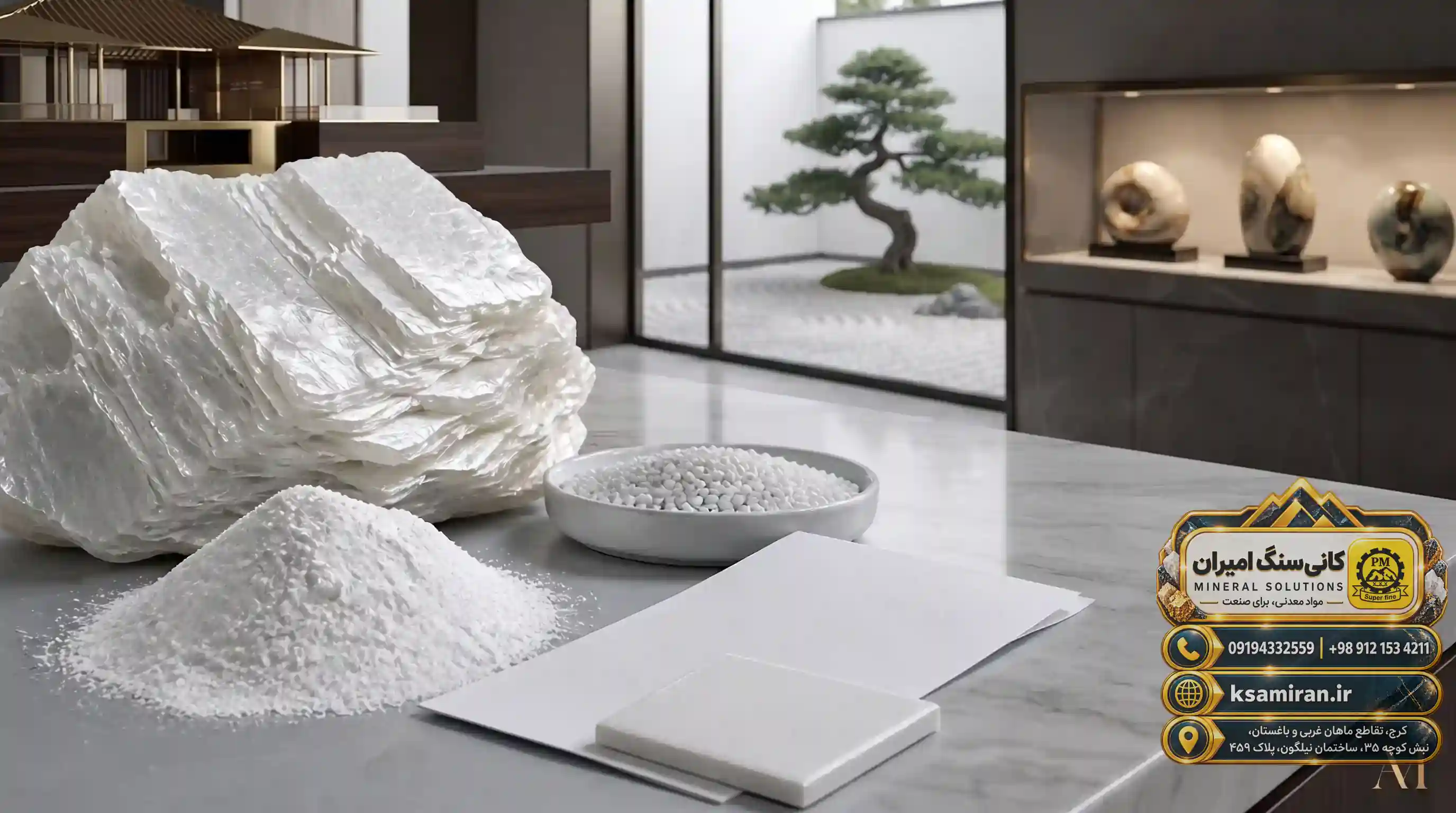
Optimizing the Production Process and Technical Tips for Mixing White Talc
Achieving maximum impact resistance requires a completely homogeneous distribution of the mineral powder within the polymer matrix. If deagglomeration or particle dispersion is not done properly, these lumps themselves become stress concentration points and reduce the impact resistance of the part.
The use of twin-screw extruders with suitable screw profiles and optimal processing temperatures is highly recommended for mixing compounds. Controlling mechanical shear during extrusion prevents the degradation of polymer chains.
Also, the surface moisture of the mineral powder must be controlled before entering the injection or extrusion process to prevent the creation of gas voids and the loss of mechanical properties in the final part.
The Kani Sang Amiran project, by providing standard quality products, has facilitated the production process for masterbatch and compound factories.
Conclusion and Future Outlook of White Talc Application in the Plastics Industry
The use of engineered mineral additives such as this product plays a key role in upgrading the quality of plastic products. The simultaneous improvement of mechanical properties, dimensional stability, and impact resistance has made this material one of the main pillars in the formulation of mode compounds.
With the advancement of production technologies and access to higher meshes up to 2500, the possibility of achieving lighter, more resistant plastic parts with superior surface quality has been provided more than ever before.
The smart selection of raw materials from reputable suppliers such as Kani Sang Amiran will guarantee quality stability and competitiveness in domestic and inteational markets.
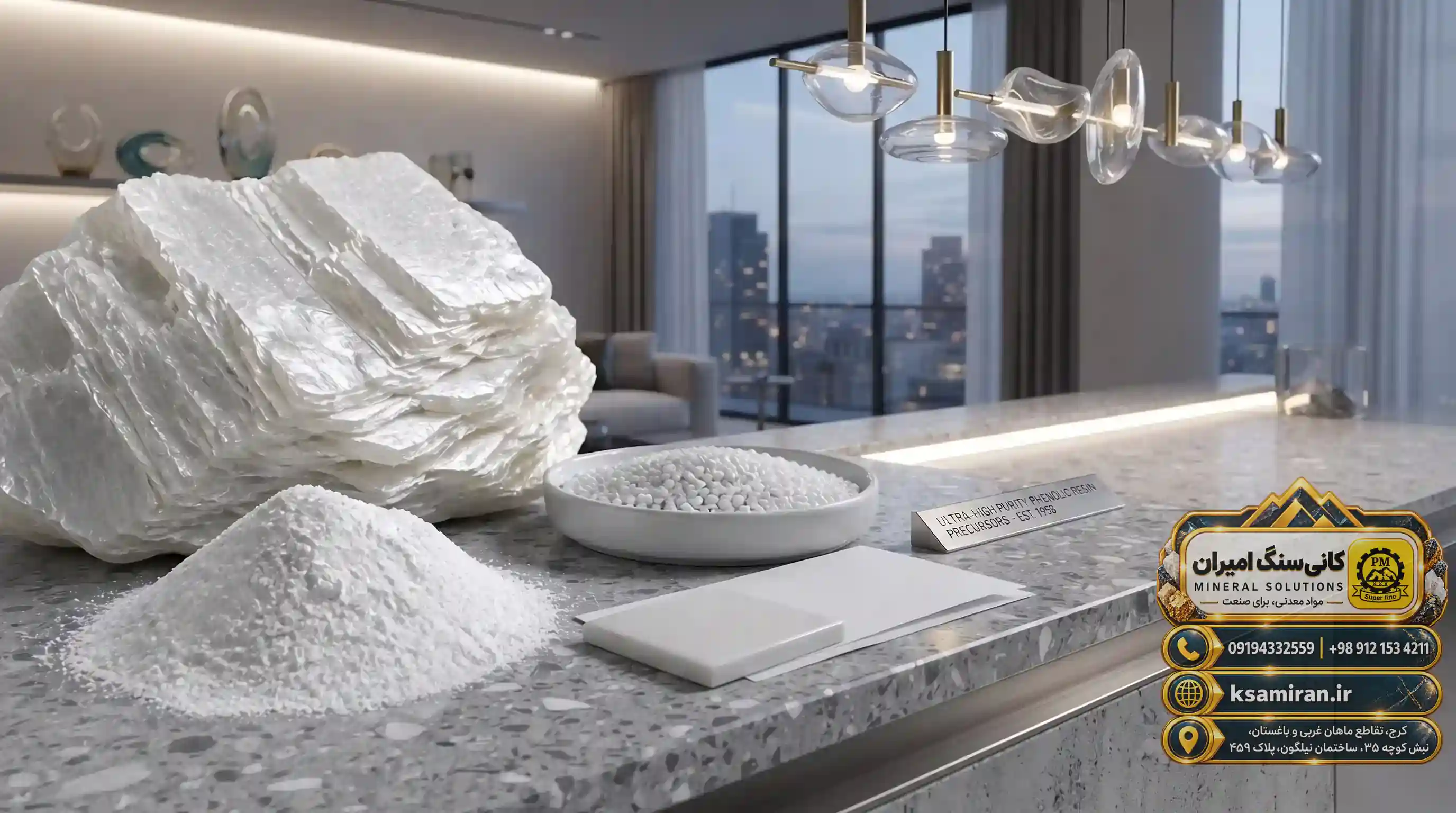
| Question | Answer |
|---|---|
| What is white talc? | It is a natural hydrated magnesium silicate with a lamellar structure used as a reinforcing filler in various industries. |
| What is the mesh range of this product? | This product is produced and supplied in a mesh range of 450 to 2500. |
| What are the main applications of white talc? | Masterbatch, compound, paint, paper, and ceramic products are its main applications. |
| How does it increase the impact resistance of plastic? | Through uniform stress distribution, creating a strong bond with the polymer, and deflecting the path of impact cracks. |
| Is it used in the masterbatch industry? | Yes, it is used as one of the primary additives in the production of polymer masterbatches. |
| What is its role in the paint industry? | It acts as an extending pigment, opacifier, and paint adhesion enhancer. |
| Why is the lamellar structure important? | The lamellar structure causes the layers to slide over each other, improving flow and absorbing impact energy. |
| Who is the manufacturer of this product? | Kani Sang Amiran Project — Mineral Materials Production. |
| How can the appropriate mesh be chosen? | It is determined based on the type of process (injection or extrusion) and the need for specific mechanical or appearance properties. |
| Does it reduce the shrinkage of plastic parts? | Yes, it increases dimensional stability and prevents the warping of molded parts. |
Specialized reference for minerals and polymers, Kani Sang Amiran Project.
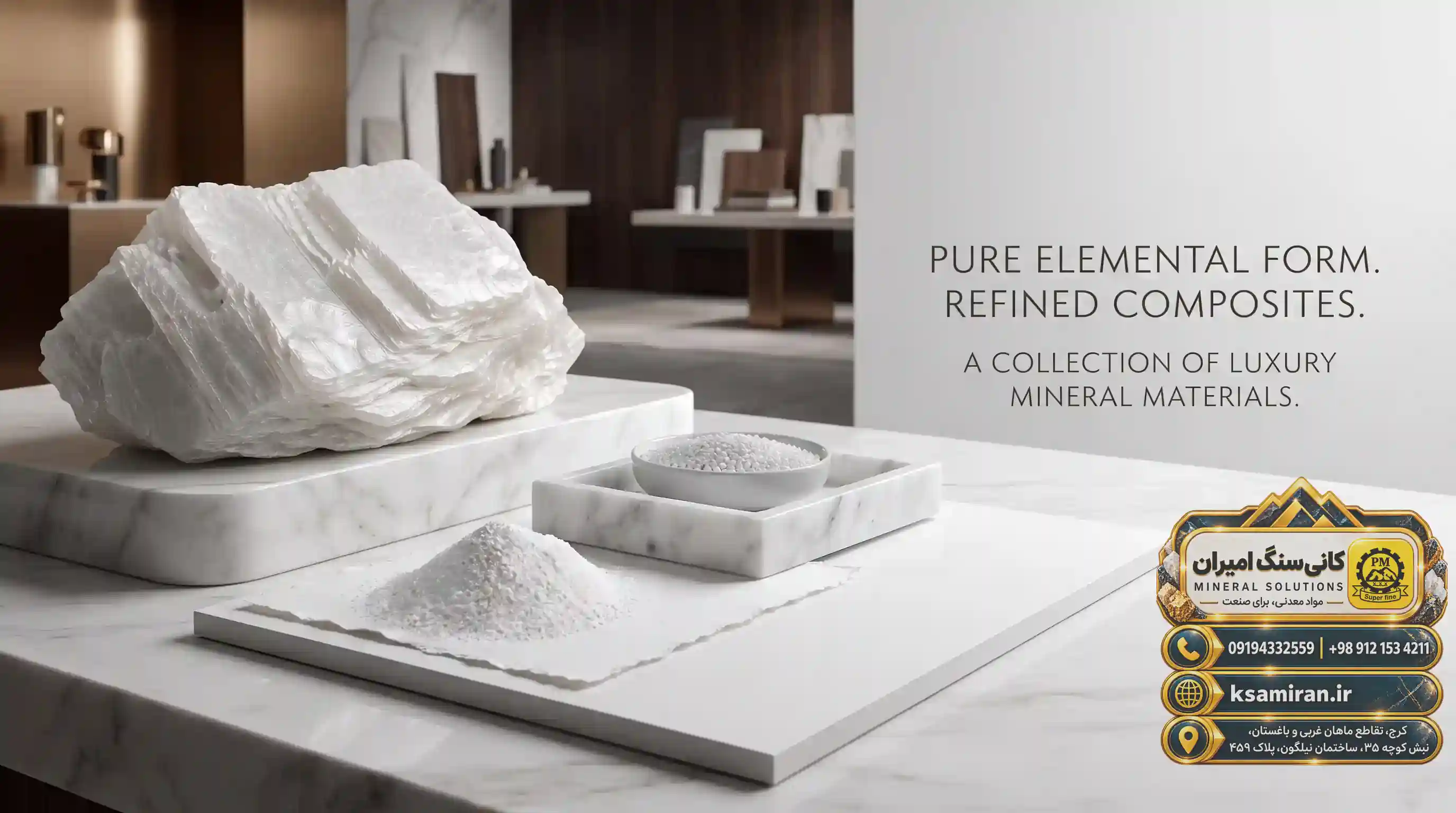
برچسب: White Talc,The Impact of White Talc on Improving the Impact Resistance of Plastics,
نویسنده: رساوب آفرین