
درباره سایت
آخرین مطالب
- راهنمای ثبت سفارش اکسید لیمونیت (گل ماش)
- Guide to Ordering Limonite Oxide (Gol Mash)
- التعرف على الخصائص الفيزيائية لكربونات كالسيوم الصناعية
- Examining the Rising Demand for High-Quality Industrial Talc
- بررسی ویژگیهای ظاهری و کیفیت پودر سفید دولومیت
- Guide to Choosing the Best Type of Red Iron Oxide (Ochre)
- دليل شراء أكسيد الحديد الأحمر (أخيرا) عالي الجودة والنقاء
- دراسة المعايير الوطنية والدولية في إنتاج التلك الأبيض
- دراسة الاتجاه التصاعدي للطلب على التالك الصناعي عالي الجودة
- بررسی استانداردهای ملی و بینالمللی در تولید تالک سفید
امکانات وب
Introduction to the Role of Kaolin in the Ceramic Industry and Shrinkage Reduction
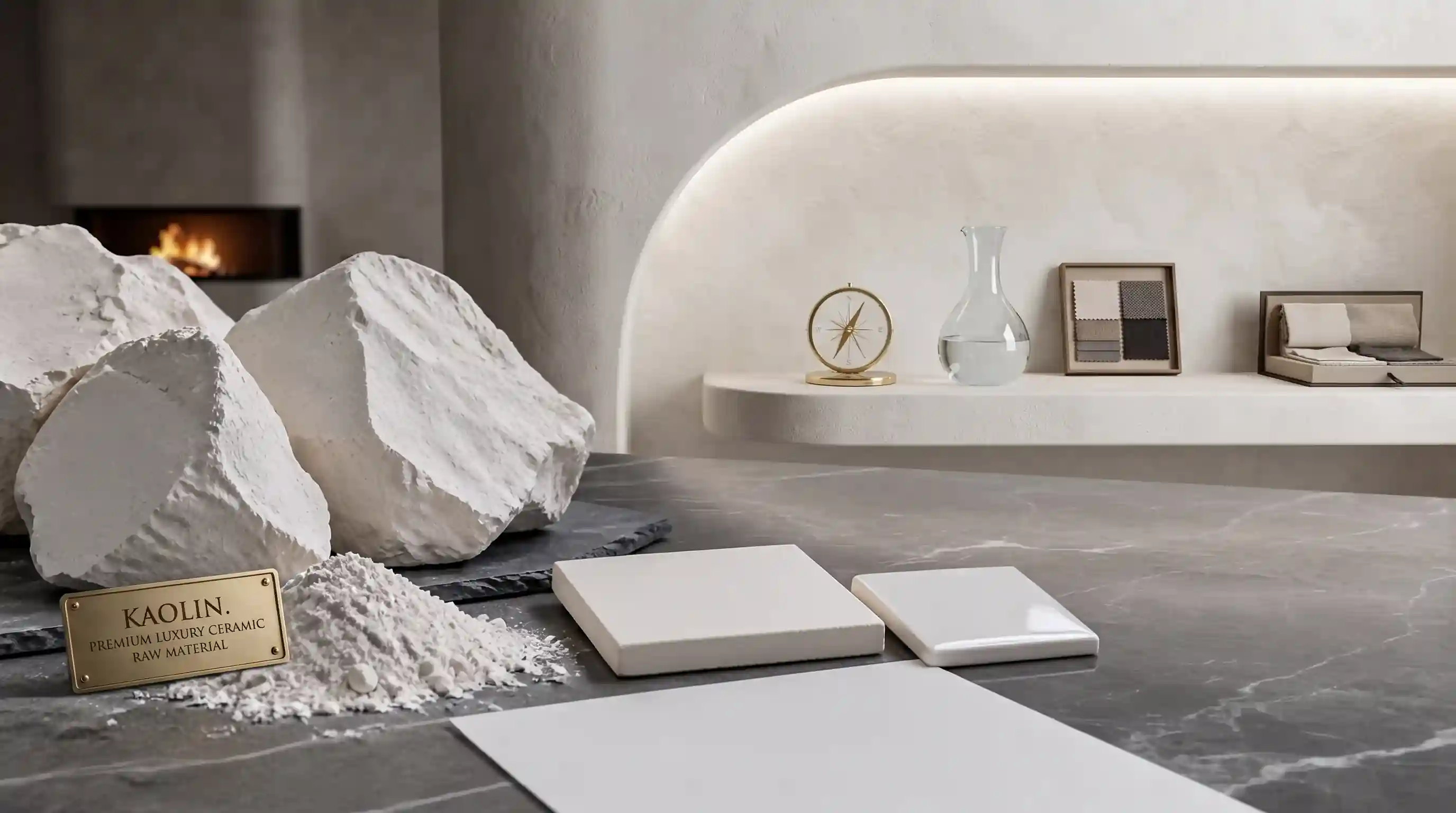
The ceramics and tile production industry has always faced numerous technical challenges, one of the most significant being the phenomenon of shrinkage during drying and firing stages. When ceramic products are heated, structural physical and chemical changes occur, leading to a reduction in the volume and dimensions of the piece. In this context, the use of high-quality mineral raw materials is the key to controlling these changes. The mineral Kaolin, as a hydrated aluminum silicate, plays a vital role in the dimensional stability of the ceramic body and helps manufacturers produce products with more precise dimensional approximations and without warping or cracking. The Kani Sang Amiran project, through the precise processing of this mineral, has made standardized grain sizes accessible.
Controlling shrinkage not only affects the final appearance of the piece but also guarantees its mechanical strength. If shrinkage occurs unevenly, severe inteal stresses are created in the ceramic structure, eventually leading to product failure. Understanding the thermal and structural behavior of Kaolin allows engineers to optimize body formulations. To lea more about these processes, reading Examining the Technical Benefits of Using Kaolin in Ceramics provides useful supplementary information for professionals, helping them better understand the mechanisms of this material.
In addition to the ceramic industry, the variety of applications for this mineral is vast. According to the technical specifications provided for Kaolin, this material is widely introduced for tiles, ceramics, glaze, paper, and paint, and its mesh range of 450 to 1500 meets various industrial needs. Consistency in the quality of supplying this mineral ensures the repeatability of the production process in large tile and ceramic factories, which in tu significantly reduces production waste.
Understanding the Chemical and Mineral Structure of Kaolin and Its Physical Properties
Kaolin, which is generally composed of the mineral kaolinite, has a layered structure (1:1) consisting of a silica tetrahedral layer and an alumina octahedral layer that form a strong bond. This unique layered structure causes it to exhibit specific thermal stability. When heat is applied, the interlayer water and structural water are gradually released, but unlike some other clays, its volume changes are more controlled and predictable. This structural feature plays a direct role in reducing the linear and volumetric shrinkage of ceramic products during firing.
One of the key parameters in determining the quality of Kaolin is the granulation or the mesh range. Products supplied with a 450 1500 mesh range have a suitable specific surface area, which improves their reactivity in the kiln. Finer particles help fill the void space between coarser particles and increase the density of the Green Body. Increased initial density means less porosity and, consequently, less shrinkage during the firing process, which ensures the dimensional stability of the piece.
A precise understanding of these physical specifications allows material engineers to adjust body composition ratios with greater accuracy. To examine economic trends and market impacts on the supply of these materials, reading the article Reviewing the Trend of Kaolin Price Changes in the Mining Market provides a more comprehensive view of the finished costs of producing ceramic products and the sustainable supply of raw materials.
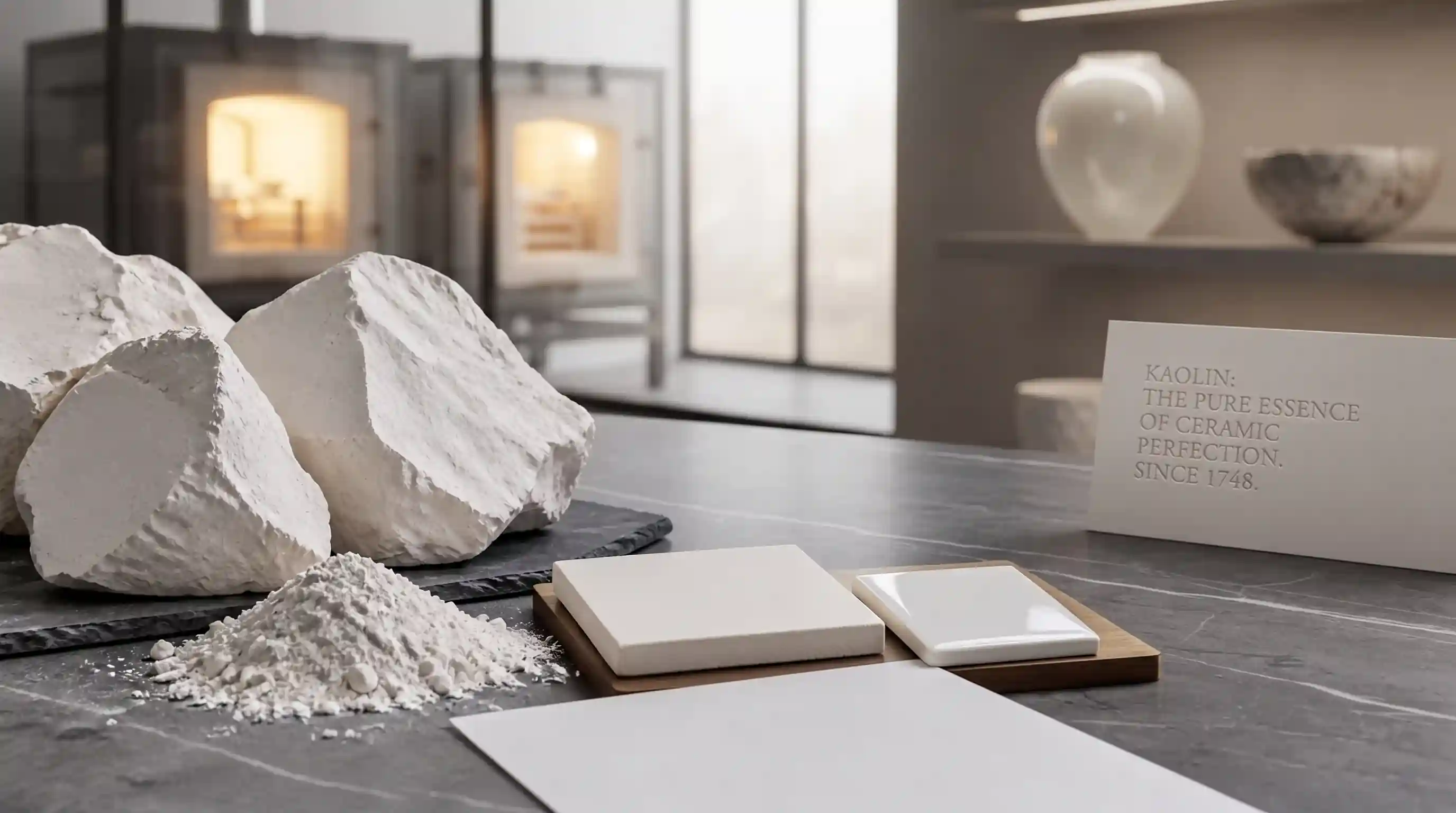
Mechanisms of Shrinkage in Ceramic Firing and the Role of Kaolin
Shrinkage in ceramic firing occurs in several distinct stages: mechanical water evaporation at low temperatures, loss of structural water or hydroxyl water at medium temperatures (between 400 to 700 degrees Celsius), and finally, sintering and the formation of glassy phases at high temperatures. In each of these stages, dimensional change occurs, which, if not managed, leads to product deformation. Kaolin, with its stable thermal behavior, acts as a mineral skeleton that prevents sudden body deformation.
During the structural water loss stage, Kaolin transforms into metakaolin, which has an amorphous and porous structure. This transformation is accompanied by shrinkage that must be compensated for with computational precision in the formulation. However, due to the absence of sudden, destructive expansions in the pure Kaolin structure, the overall body shrinkage occurs more homogeneously. The presence of this material in tile and ceramic compositions causes thermal stresses to be distributed among the particles, preventing the formation of hairline cracks.
In addition to ceramic industries, the effect of minerals on structural properties is also examined in other industries. For example, in industries other than ceramics, such as the rubber industry, this material has different applications; for further reading, you can refer to the article Reviewing the Application of Kaolin in the Car Tire Manufacturing Industry, although the main focus here is on dimensional stability and shrinkage reduction in ceramics.
The Importance of Granulation and Mesh Range in Controlling Thermal Shrinkage
One of the most important factors influencing the rate and process of ceramic product shrinkage is the particle size distribution of raw materials. Kaolin with a 450 1500 mesh range covers a wide range of particle sizes, each of which contributes specifically to body densification. Coarser particles maintain the skeleton and structural stability, while the very fine particles present in higher meshes (up to 1500 mesh) act as pore fillers and minimize initial porosity.
When the initial porosity of the green body is low, there is less space for particle movement during the sintering process, and as a result, total firing shrinkage is reduced. This is particularly important in the production of wall and floor tiles with strict dimensional standards. Using the appropriate Kaolin mesh allows manufacturers to calculate the linear shrinkage rate in advance and design molds or initial dimensions accordingly.
Precision in selecting the appropriate mesh also affects the water absorption rate of the final piece. Micronized Kaolin with a high mesh creates a larger contact surface, which leads to faster reaction at firing temperatures and, consequently, achieving desired density with minimal dimensional change. This feature is the key to producing high-quality tiles and ceramics with negligible waste.
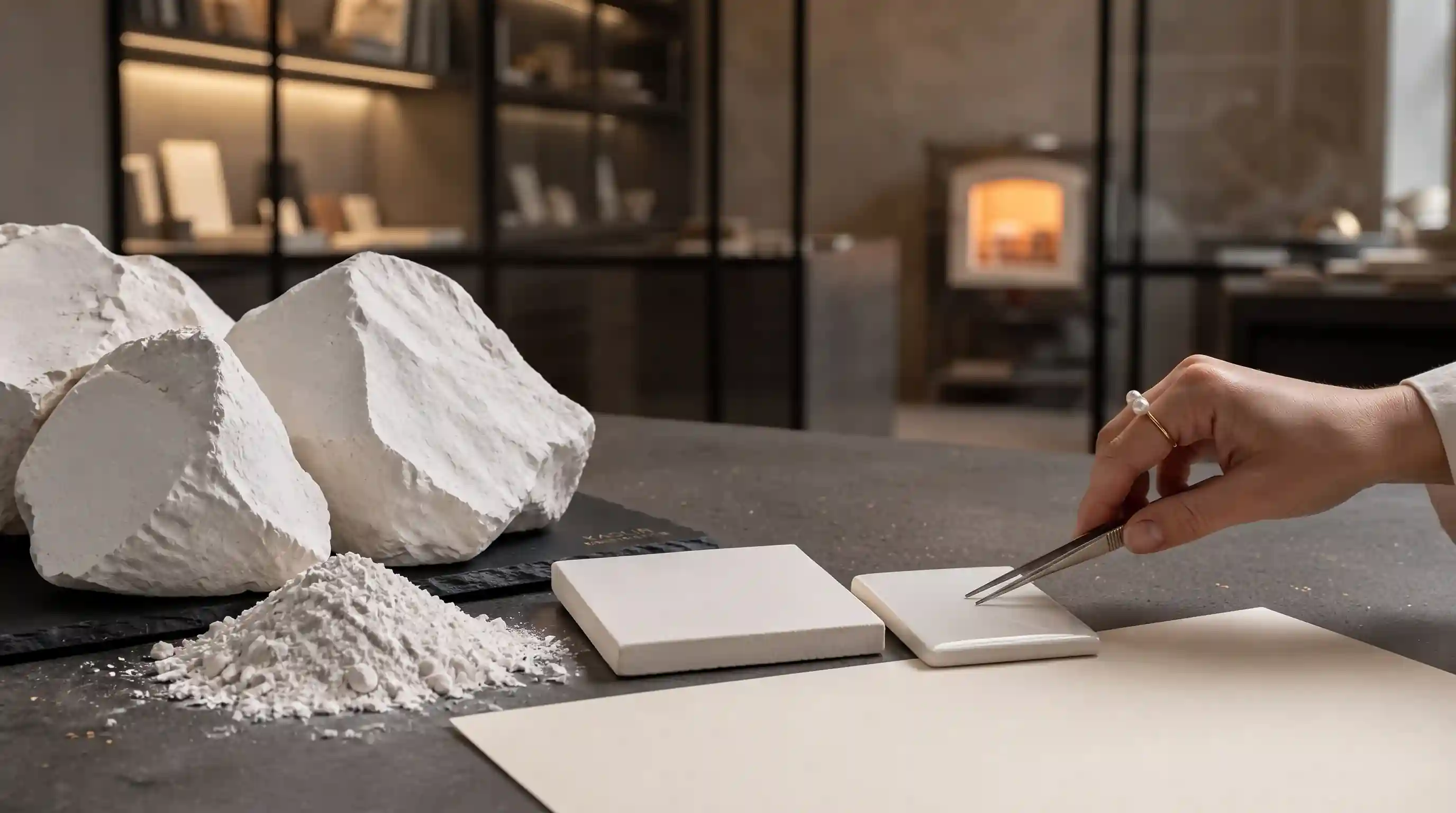
Optimizing Ceramic Body Formulation Using Kaolin
Ceramic body formulation is a complex system of clays, feldspars, silica, and Kaolin, each having a specific task. Feldspar acts as the fluxing phase, silica regulates thermal stability, and Kaolin plays the role of a balancing agent between plasticity in the raw state and stability during firing. The optimal ratio of these materials determines the final shrinkage of the piece. Increasing the percentage of high-quality Kaolin in the body usually slightly increases drying shrinkage but strongly controls and stabilizes thermal shrinkage in the kiln.
Manufacturers evaluate the thermal shrinkage behavior of bodies containing Kaolin by performing Dilatometry tests. These tests show at what temperature range the greatest volume changes occur. By precisely adjusting the amount of Kaolin, the slope of the shrinkage curve can be made smoother to prevent structural shocks. This is especially vital in Fast Firing kilns, which are common in the tile industry today.
Adherence to quality standards in raw material supply by the Kani Sang Amiran project ensures that formulation parameters do not undergo unwanted changes. This chemical and mineral stability allows factory engineers to confidently use Kaolin in mass production lines and offer products with very low dimensional tolerances to the market.
The Role of Kaolin in Improving Glaze Quality and Preventing Firing Defects
In addition to the ceramic body, glaze as a surface coating is also exposed to intense thermal shrinkage. A mismatch in shrinkage between the body and the glaze leads to common defects such as Crazing or Shivering. Due to its excellent suspending and adhesive properties, Kaolin is one of the key components in the structure of glaze slurry, which helps significantly in harmonizing the thermal behavior of the glaze layer and the body.
The presence of Kaolin in the glaze formulation increases suitable viscosity at melting temperatures and prevents glaze ruing. Also, by creating a stable mineral network, it reduces stresses caused by differential shrinkage at the moment the piece cools down. This causes the glaze to sit completely smooth, uniform, and free of any structural defects on the ceramic body after firing.
The physical properties of this mineral, including high purity and the absence of coloring impurities such as excess iron oxide, lead to better transparency and brilliance of the final glaze. These features have made Kaolin an irreplaceable material in the industries of producing decorative tiles and ceramic tableware, where the quality of surface appearance and the absence of heterogeneous shrinkage are of vital importance.
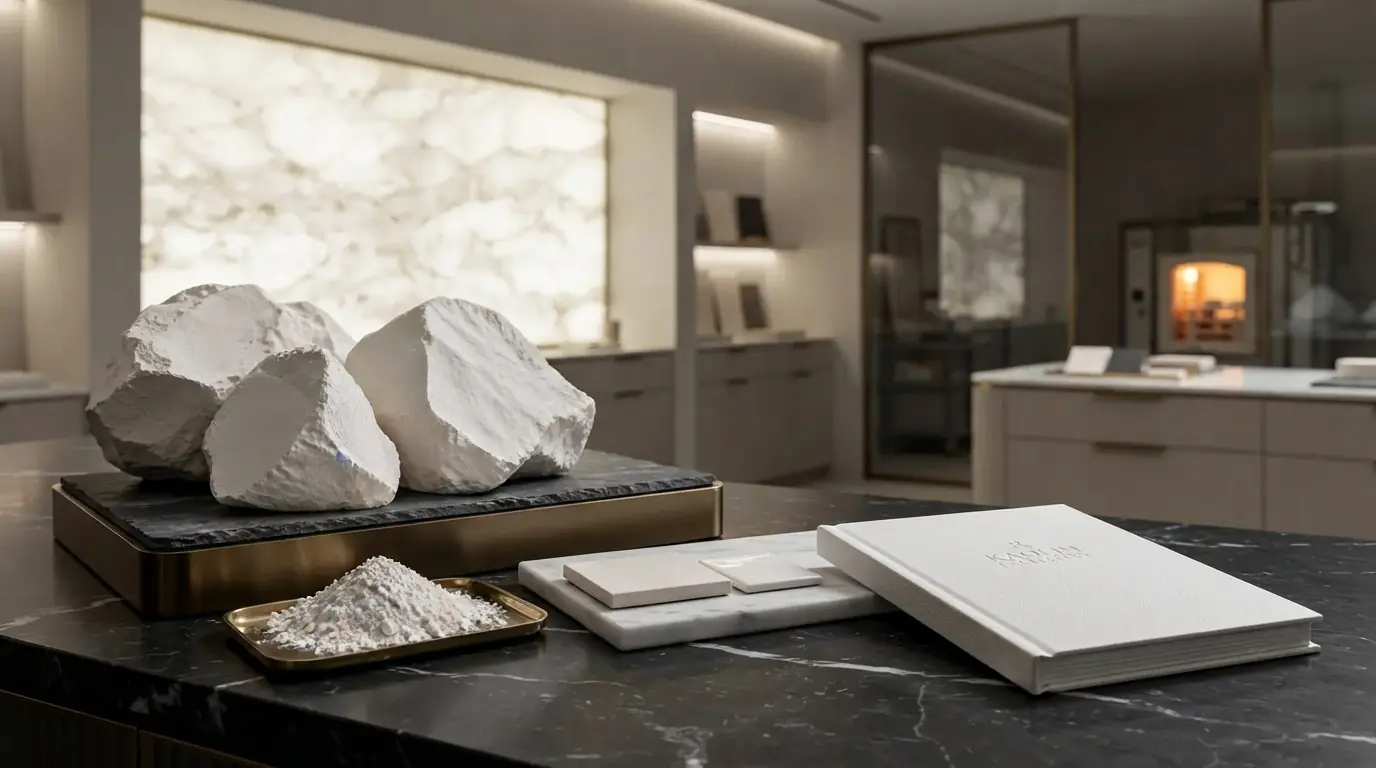
Broad Industrial Applications of Kaolin Beyond Ceramics
Although the main focus of this article is on the role of Kaolin in reducing ceramic shrinkage, one should not neglect the wide industrial applications of this material. Due to its high whiteness, fine particle size, and unparalleled coating properties, this valuable mineral performs brilliantly as a filler and coating in other industries such as paper and paint. In the paper industry, Kaolin improves printability, smoothness, and the whiteness of the paper surface.
In the paint industry, this material acts as a reinforcing pigment, and while reducing the consumption of expensive resins, it improves durability, coverage, and resistance to paint peeling. The variety of applications indicates the high flexibility of this mineral in meeting various engineering needs. The 450 1500 mesh range enables its optimal use in diverse formulations of industrial paints and coatings.
Companies and industries looking to upgrade the quality of their products in the fields of tiles, ceramic products, glaze, paper, and paint can maximize the efficiency of their processes by relying on standard mineral resources. A precise understanding of the physical and chemical properties of this material will pave the way for iovation in producing industrial products with high added value.
Conclusion and Future Outlook on the Utilization of Mineral Kaolin
In total, Kaolin, as one of the most essential mineral raw materials, plays an unparalleled role in controlling and reducing ceramic firing shrinkage. A stable layered structure, suitable particle distribution in the 450 to 1500 mesh range, and favorable chemical purity have made this material a powerful tool for material engineers and tile and ceramic manufacturers. Precise management of shrinkage not only prevents waste and cracking but also significantly improves the quality standards of the final product.
The Kani Sang Amiran project, by focusing on the extraction and standard processing of mineral materials, has provided various industries access to this valuable material with stable quality. Continued use of these high-quality mineral materials in production lines will guarantee economic efficiency and competitiveness in domestic and inteational markets.
With the advancement of fast construction and firing technologies in the ceramic industry, the need for raw materials with completely predictable thermal behavior is felt more than ever. Kaolin, with its unique characteristics, will remain the backbone of advanced ceramic formulations and will usher in a bright outlook for the production of flawless, high-quality products.
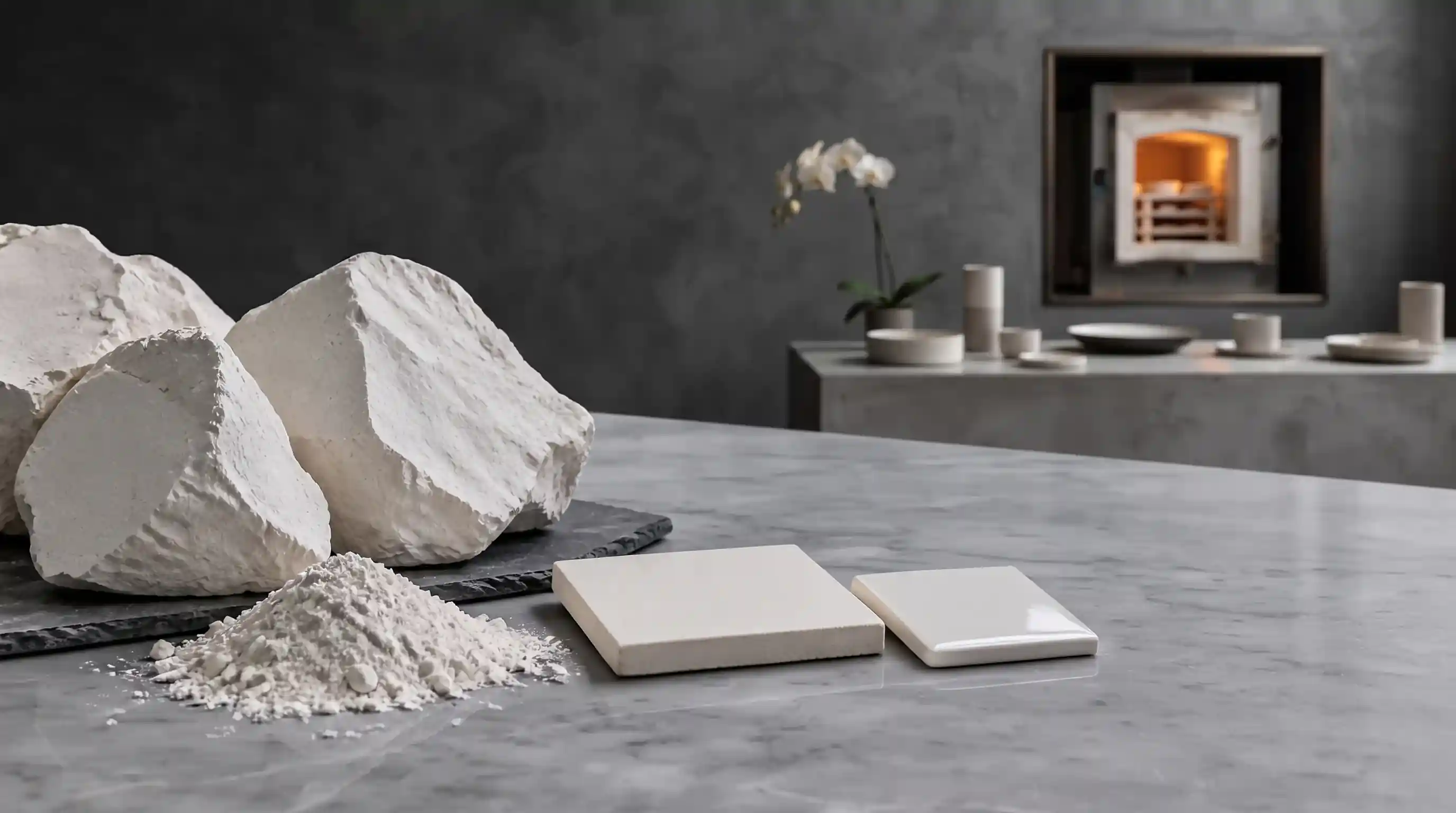
| Question | Answer |
|---|---|
| What is Kaolin and what is its composition? | Kaolin is a hydrated aluminum silicate composed of the mineral kaolinite and has a layered structure. |
| What is the role of Kaolin in reducing ceramic shrinkage? | Kaolin, having thermal stability and regular behavior against heat, controls stresses caused by phase changes and prevents uneven shrinkage. |
| What is the mesh range of the supplied Kaolin? | This material is processed and supplied in the 450 1500 mesh range, which is suitable for various applications. |
| What are the main applications of Kaolin? | Kaolin is used in tile, ceramic product, glaze, paper, and paint industries. |
| How does Kaolin mesh affect shrinkage? | Higher and finer meshes help fill the pores of the green body and increase initial density, thereby reducing firing shrinkage. |
| Is Kaolin also used in the glaze industry? | Yes, Kaolin helps improve the viscosity of glaze slurry and harmonize shrinkage between glaze and body. |
| Why is controlling shrinkage in ceramic firing important? | It is necessary to prevent deformation, warping, cracking, and to maintain precise dimensional tolerances of the final product. |
| What is the role of Kaolin in the paper and paint industry? | It acts as a filler, whitener, surface smoother, and provides excellent coverage. |
| Does Kaolin quality affect production waste? | Yes, using standard and stable Kaolin significantly reduces waste caused by breakage and cracking. |
| How can high-quality Kaolin be procured? | It can be obtained through reputable mineral suppliers such as the Kani Sang Amiran project. |
Kani Sang Amiran Project, Comprehensive Guide to Technical Specifications and Mineral Applications of Kaolin.
برچسب: Kaolin,Investigating the Effect of Kaolin on Reducing Shrinkage in Ceramic Firing,
نویسنده: رساوب آفرین