
درباره سایت
آخرین مطالب
- راهنمای ثبت سفارش آنلاین و استعلام قیمت کائولن
- چگونه بهترین اکسید آهن قرمز (اخرا) را برای پروژه انتخاب کنیم؟
- بررسی جامع خواص اکوستیک و وزن مخصوص باریت سفید صنعتی
- نقش کائولن در کاهش هزینههای تولید در صنایع معدنی
- نقش سیلیس در افزایش مقاومت حرارتی مواد نسوز
- چرا اکسید آهن قرمز (اخرا) قدرت پوشانندگی بالایی دارد؟
- The role of industrial barite in the papermaking and specialty coatings industries
- How to find the best kaolin supplier in the country?
- How to properly examine feldspar analysis?
- ما هي استخدامات التالك الصناعي في صناعة البلاستيك والمطاط؟
امکانات وب
The Fundamental Role of Silica in Materials Engineering
In the world of materials engineering and industrial composites, the selection of appropriate mineral additives plays a vital role in determining the final product's characteristics. Among all mineral compounds, silica is recognized as one of the most widely used and strategic materials in various industries. This material, famous for its stable chemical structure and extremely high hardness, is used on a large scale to optimize mechanical properties in composites. The Kani Sang Amiran project, by producing high-quality types of this material, has provided a platform for industries to benefit from precise granulation ranging from 10 to 450 mesh. Using silica as a key component not only improves the thermal resistance of composites but also ensures their dimensional stability under harsh industrial conditions.
The Impact of Micronized Structure on the Mechanical Properties of Composites
Particle distribution and their dimensions in composites have a direct impact on stress distribution within the product body. When it comes to industrial applications, choosing the right granulation, which falls in the 10 to 450 mesh range, becomes important. Finer particles help fill intermolecular voids and, by creating a cohesive network, increase the modulus of elasticity of the composite. Compared to other minerals, if you are looking for a more comprehensive analysis, we suggest reading the examination of the physical and mechanical properties of industrial talc powder to better understand the functional differences between silica and talc in stress-inducing environments.
Application of Silica in the Glass Industry
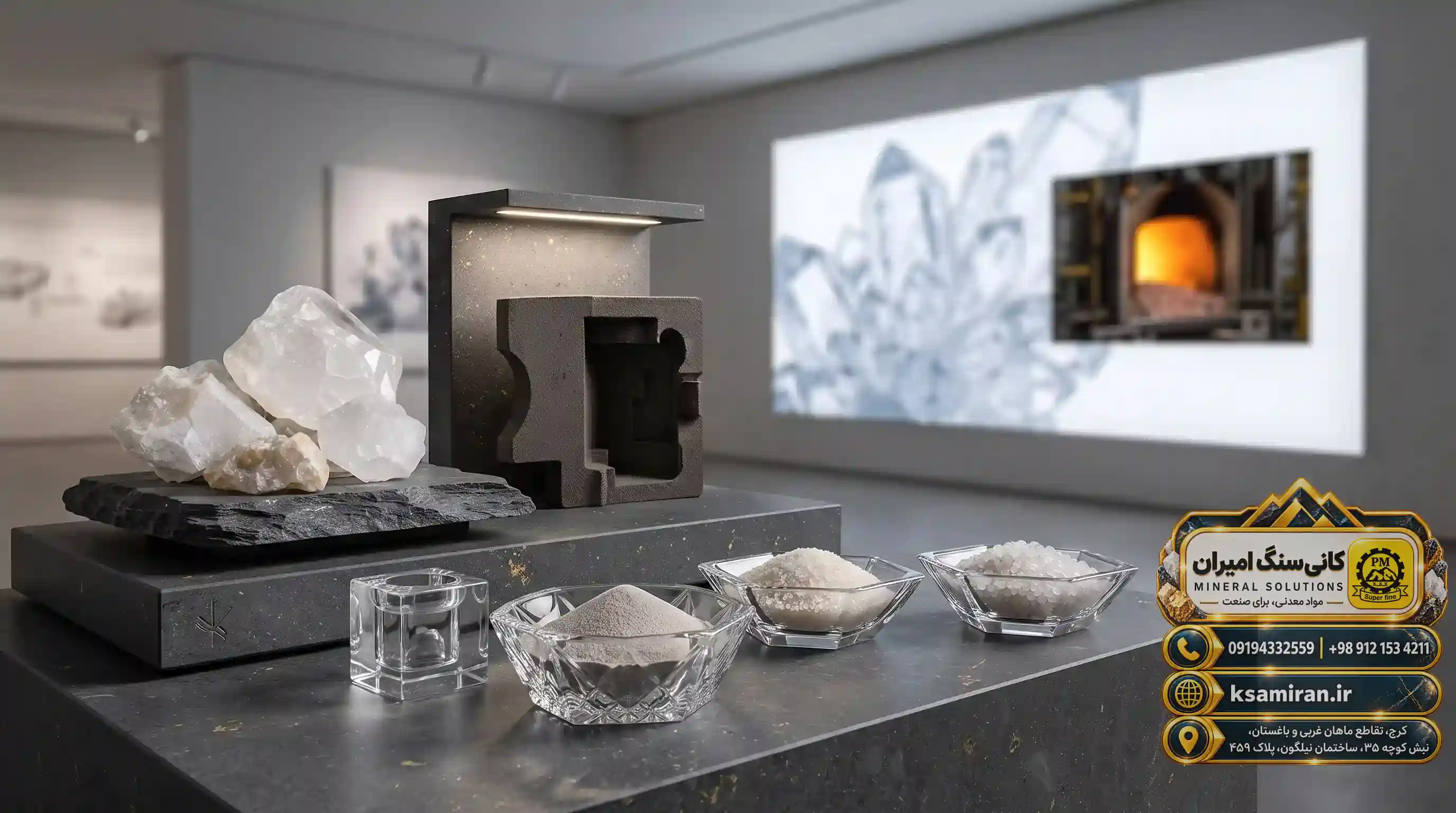
The glass industry is one of the main consumers of this mineral. Due to its high melting point and chemical purity, this material acts as the primary raw material for creating transparency and mechanical strength in flat glass, bottles, and crystal glass. The presence of this material in the melt composition controls the glass viscosity at high temperatures and prevents the formation of air bubbles. Products manufactured by the Kani Sang Amiran project, with high mesh precision, provide very uniform and impurity-free outputs for industrial fuaces, which results in reduced energy consumption and increased final glass quality.
Silica in the Foundry Industry: Precision and Durability
In foundries, industrial sands must be highly resistant to thermal shocks. The use of this material due to its low thermal expansion coefficient ensures that casting molds do not crack during the melting process. To achieve the best result in molding composite formulations, it is sometimes recommended to combine it with other heavy minerals. In this regard, reading the examination of the role of white barite in improving the mechanical properties of composites can offer you new technical insights regarding the combination of filler materials.
Revolution in Ceramic and Tile Products
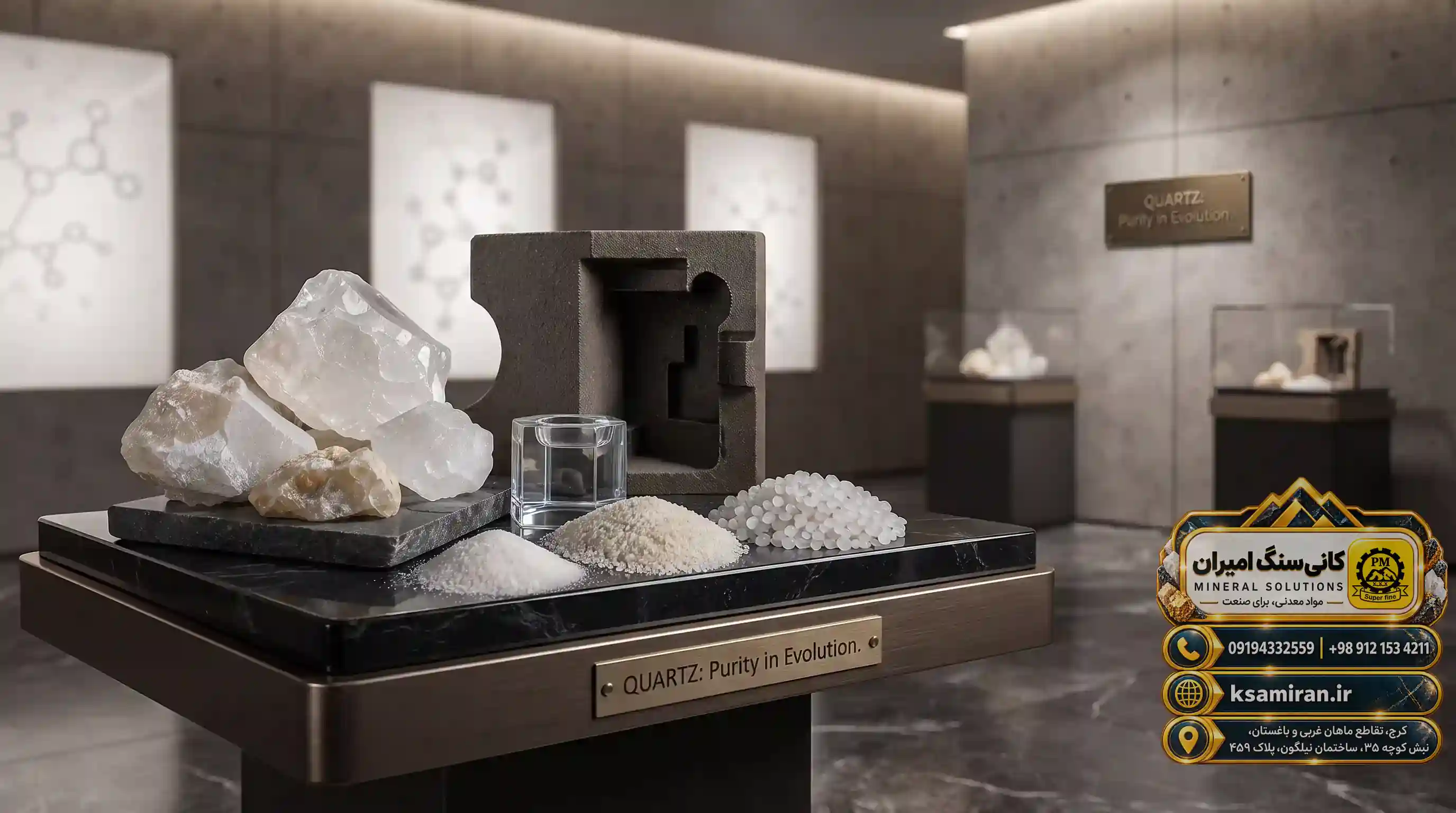
In the ceramic industry, this material acts as a sturdy framework. By adding it to the ceramic body, the flexural and abrasive resistance of the products increases significantly. In addition to strength, this compound is also known for creating gloss and chemical resistance in ceramic glazes. The Kani Sang Amiran project, by offering standard products, allows for precise control of physical properties in pressing and firing processes, so that ceramic manufacturers can offer products with lower water absorption and higher surface quality.
The Importance of Silica in Mode Construction Materials
Mode building materials require substances that, in addition to being lightweight, possess extremely high compressive strength. This mineral is used as a substitute or additive in the production of self-compacting concrete and engineered mortars to improve resistance to moisture penetration and mechanical erosion. By increasing the useful life of structures through the addition of this material, maintenance costs are significantly reduced. To better understand how the durability and appearance of industrial coatings—which are sometimes used along with these materials—are improved, you can refer to the article investigating the effect of kaolin on the gloss and durability of industrial coatings.
Optimizing Industrial Formulation by Selecting the Right Mesh
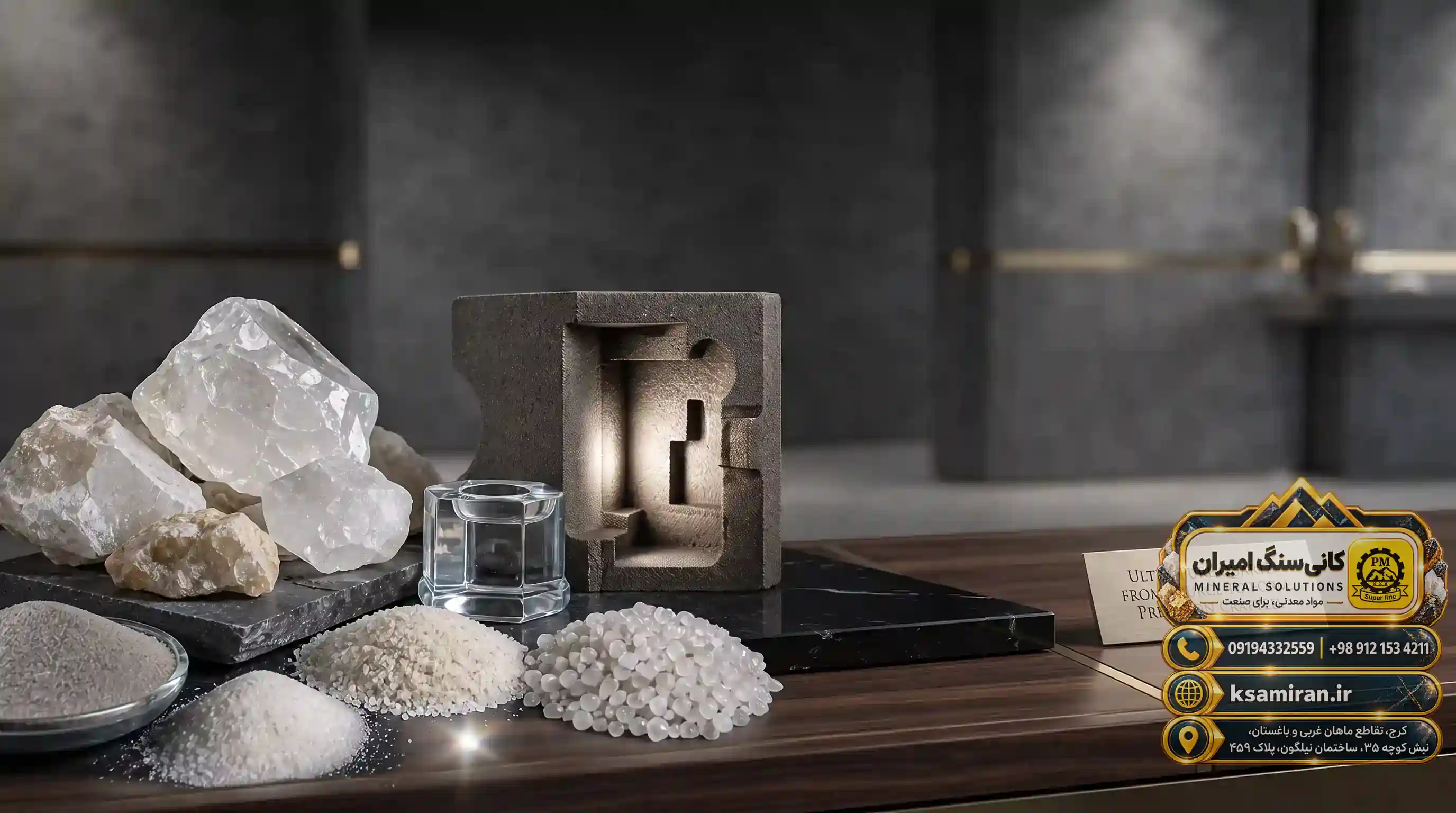
Correctly selecting the granulation between 10 and 450 mesh is the golden key to success in composite engineering. Coarser meshes are used to increase structural strength, and very fine meshes (close to 450) are used to increase surface area and improve surface properties. Specialists at the Kani Sang Amiran project are ready to provide expert consultations for selecting the best granulation based on your final product type. This precision in mesh selection is the difference between an ordinary industrial product and a product with global standards.
Future Outlook on the Use of Industrial Minerals
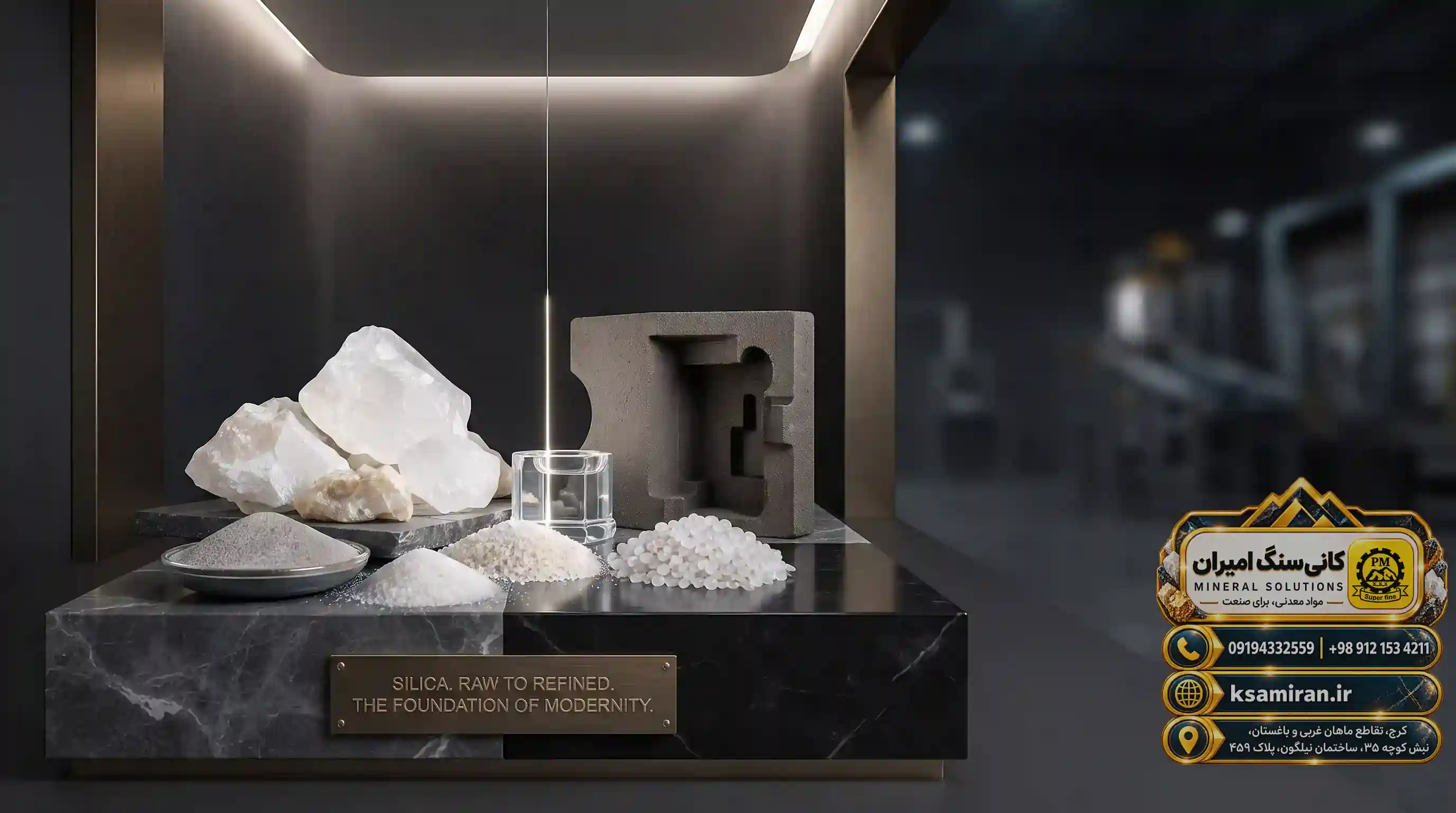
With the advancement of manufacturing technology, the demand for higher purity of this mineral is increasing daily. Relying on technical knowledge and optimal extraction, the Kani Sang Amiran project has maintained its commitment to providing high-quality raw materials for the glass, foundry, ceramic, and construction industries. Investing in the quality of raw materials is the most direct path to improving the mechanical properties of industrial composites and reducing waste in production lines. In the near future, the role of these minerals in the construction of advanced composite materials for the aerospace and new energy industries will become even more prominent.
| Question | Answer |
|---|---|
| In what mesh range is silica available? | This product is produced in the 10 to 450 mesh range. |
| What are the main applications of this material? | Glass, foundry, ceramics, and construction materials. |
| Is this product used in construction? | Yes, to increase compressive strength and reduce permeability. |
| What is the effect of this material on glass? | Increasing transparency and controlling viscosity at melting temperature. |
| What services does the Kani Sang Amiran project offer? | Production and supply of industrial-quality minerals. |
| What is the effect of mesh size on composites? | Determining structural strength and surface quality. |
| Can it be used for foundry purposes? | Yes, due to high resistance against thermal shock. |
| What is the difference between this material and talc? | Each has different mechanical properties for specific formulations. |
| What is the best mesh for structural strength? | It varies depending on the formulation and it is suggested to contact consultants. |
| How should we use this product? | According to mineral material mixing standards in the respective industries. |
All technical and practical information has been compiled based on the mineral extraction standards of the Kani Sang Amiran project.

برچسب: Silica,The Impact of Silica on the Mechanical Properties of Industrial Composites,
نویسنده: رساوب آفرین