
درباره سایت
آخرین مطالب
- راهنمای ثبت سفارش اکسید لیمونیت (گل ماش)
- Guide to Ordering Limonite Oxide (Gol Mash)
- التعرف على الخصائص الفيزيائية لكربونات كالسيوم الصناعية
- Examining the Rising Demand for High-Quality Industrial Talc
- بررسی ویژگیهای ظاهری و کیفیت پودر سفید دولومیت
- Guide to Choosing the Best Type of Red Iron Oxide (Ochre)
- دليل شراء أكسيد الحديد الأحمر (أخيرا) عالي الجودة والنقاء
- دراسة المعايير الوطنية والدولية في إنتاج التلك الأبيض
- دراسة الاتجاه التصاعدي للطلب على التالك الصناعي عالي الجودة
- بررسی استانداردهای ملی و بینالمللی در تولید تالک سفید
امکانات وب
Introduction to Kaolin and the Importance of Evaluating Visual Quality and Color
Kaolin, as one of the most important industrial minerals, holds a special place in various industries including tile, ceramic, glaze, paper, and paint production. A precise understanding of the physical and visual characteristics of this mineral plays a decisive role in the final quality of manufactured products. Industrial projects are constantly looking for raw materials that are at the highest standard level in terms of purity and appearance. In this article, we provide a comprehensive review of the quality factors related to the appearance and color of kaolin.
The visual quality of kaolin directly affects the optical properties, whiteness, and transparency of the final product. For example, in the papermaking and paint industries, the white and uniform color of kaolin is a vital parameter. The color purity of this material indicates the absence of iron oxide or titanium impurities, which can cause discoloration and a drop in quality. To lea more about the exact specifications of this material, you can visit the specialized Kaolin page on the Kani Sang Amiran website.
In addition to color, other factors such as granulation and the mesh range also affect the overall appearance of the powder. The mesh range of 450 to 1500 indicates the variety in powder fineness, each optimized for a specific application. Correct understanding of these specifications helps engineers and quality control officers select the best mineral for their production lines and prevent structural problems.
The Role of Kaolin in Tile, Ceramic, and Glaze Industries
The tile and ceramic industries are among the largest consumers of kaolin powder in the industrial market. The presence of this mineral in the body of tiles and ceramics significantly helps improve mechanical strength, thermal stability, and reduces firing shrinkage. The appearance of the powder and the absence of dark spots in raw kaolin guarantee that unwanted spots will not appear on the tile surface after firing in industrial kilns.
In the glazing sector, kaolin acts as a suspending and clarifying agent. Ceramic glazes require a very pure and white base so that the applied pigments can show their true brilliance. Any color impurity in kaolin can cause the glaze to become cloudy or create unwanted color changes. Therefore, accurate visual evaluation of the powder before entering the factory batching is of high importance.
Ceramic product manufacturers create better flowability in the slurry by using appropriate mesh sizes of this material. Strict control of the powder's visual quality allows the quality control unit to ensure the uniformity of production batches and supply a high-quality, flawless product to the market.
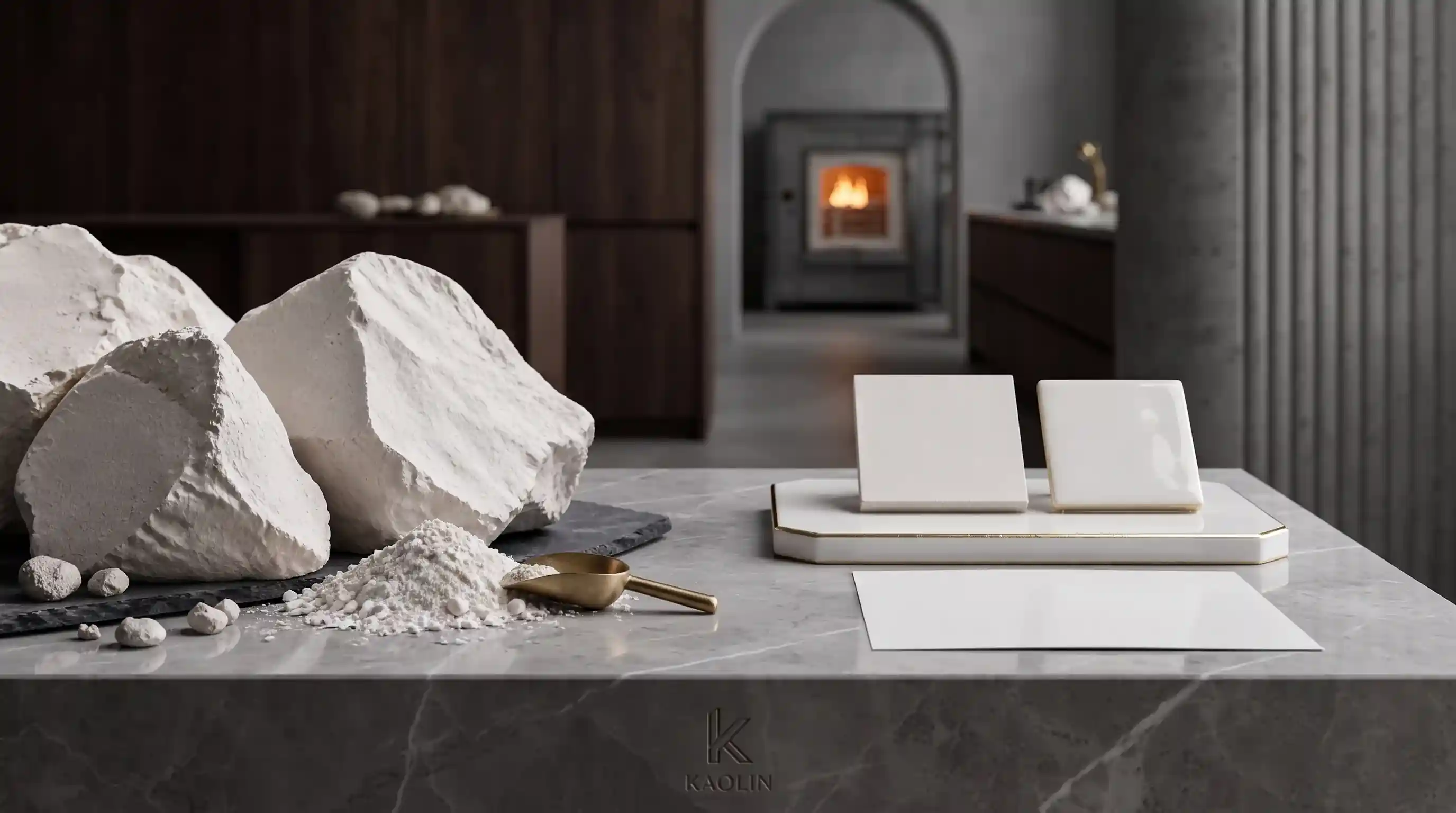
Application of Kaolin and Other Mineral Powders in the Paint and Resin Industry
The paint and architectural coating industry requires fillers with high chemical stability and proper particle distribution. Due to its favorable rheological properties and excellent coverage, kaolin is used as a filler and extender pigment in paint formulations. The whiteness of kaolin powder helps maintain brilliance and reduces the consumption of titanium dioxide, which is also very cost-effective economically.
In this regard, a detailed review of the benefits of using kaolin in architectural paints provides comprehensive information for experts on how to improve paint performance. In addition to kaolin, the combined use of other minerals such as carbonates and silicates is also common in industrial formulations. For example, understanding the properties of other widely used minerals can give formulator engineers a more comprehensive perspective; in this regard, studying the article application of dolomite in paint and resin industries will be very insightful.
The appearance of the kaolin powder used in paint must be completely soft, free of hard lumps, and devoid of coarse particles. Clumped particles can ruin the appearance of the paint film and cause uneveess on the final surface of the coating. For this reason, checking the mesh parameters and the appearance of the powder before final mixing is essential.
The Importance of Whiteness and Mesh Range (450 1500) in Visual Quality
One of the main indicators for assessing the visual quality of kaolin is its whiteness level. Powder whiteness has a direct relationship with the purity degree of the mineral and its processing methods. Powders with a mesh range of 450 to 1500 used in various industries must be free of any yellowish or severe grayish tint, unless the final application requires specific colored kaolins.
Particle size, or mesh sizing, determines the visual texture of the powder. Higher meshes (close to 1500) have extraordinary fineness and appear as a very delicate and soft powder, while lower meshes (like 450) look slightly coarser. This difference in the microscopic and macroscopic appearance of the powder has a direct impact on oil absorption, viscosity, and coverage in the final product.
Visual tests and comparing standard samples with the received powder are the simplest initial methods for quality control. However, advanced factories use optical equipment to accurately measure the percentage of whiteness to ensure that the purchased kaolin exactly matches the required technical specifications.

The Role of Pigments and Kaolin in Dyeing Industries and Special Coatings
In the coating and paint-making industries, besides kaolin, the use of natural mineral pigments is also common. These pigments help create warm and stable undertones. For example, in manufacturing processes that require specific color spectrums from yellow to brown, choosing high-quality raw materials becomes doubly important, and studying the buying guide of limonite oxide (yellow ochre) with the best quality can provide complementary and useful information in this field.
Due to its chemical neutrality and white base, kaolin acts as a suitable substrate for the uniform distribution of these pigments. When high-mesh kaolin powder is mixed with various pigments, the final appearance of the product will be completely homogeneous and free of color speckles. This visual homogeneity indicates proper particle size distribution and high mineral processing quality.
Controlling the appearance of the powder when mixing with resins and solvents is also very important. Premium kaolin powder easily disperses in water-based and solvent-based systems, creating a transparent and uniform final appearance in the coating product, preventing orange peel or sedimentation.
Kaolin in the Papermaking Industry; Gloss and Surface Smoothness
The papermaking industry is a major consumer of kaolin as a filler and surface coating for paper. The presence of kaolin in the paper structure improves whiteness, transparency, printability, and paper surface smoothness. The appearance of the kaolin powder must be such that there are no abrasive particles or coarse impurities in it so as not to damage the rollers of papermaking machinery.
High-mesh kaolin powders help fill the pores between cellulose fibers and make the paper surface very smooth and polished. This feature causes the printing ink to spread uniformly on the paper and significantly increases the quality of printed images and texts. Color control of the powder in this industry directly affects the brightness degree of the produced paper.
Paper manufacturers require quality consistency in shipped consignments. Any change in the whiteness or appearance of the kaolin powder can lead to a change in the color of the final paper and rejection of the product in the market. For this reason, meticulous visual inspection and routine laboratory tests are always on the agenda of paper quality control units.
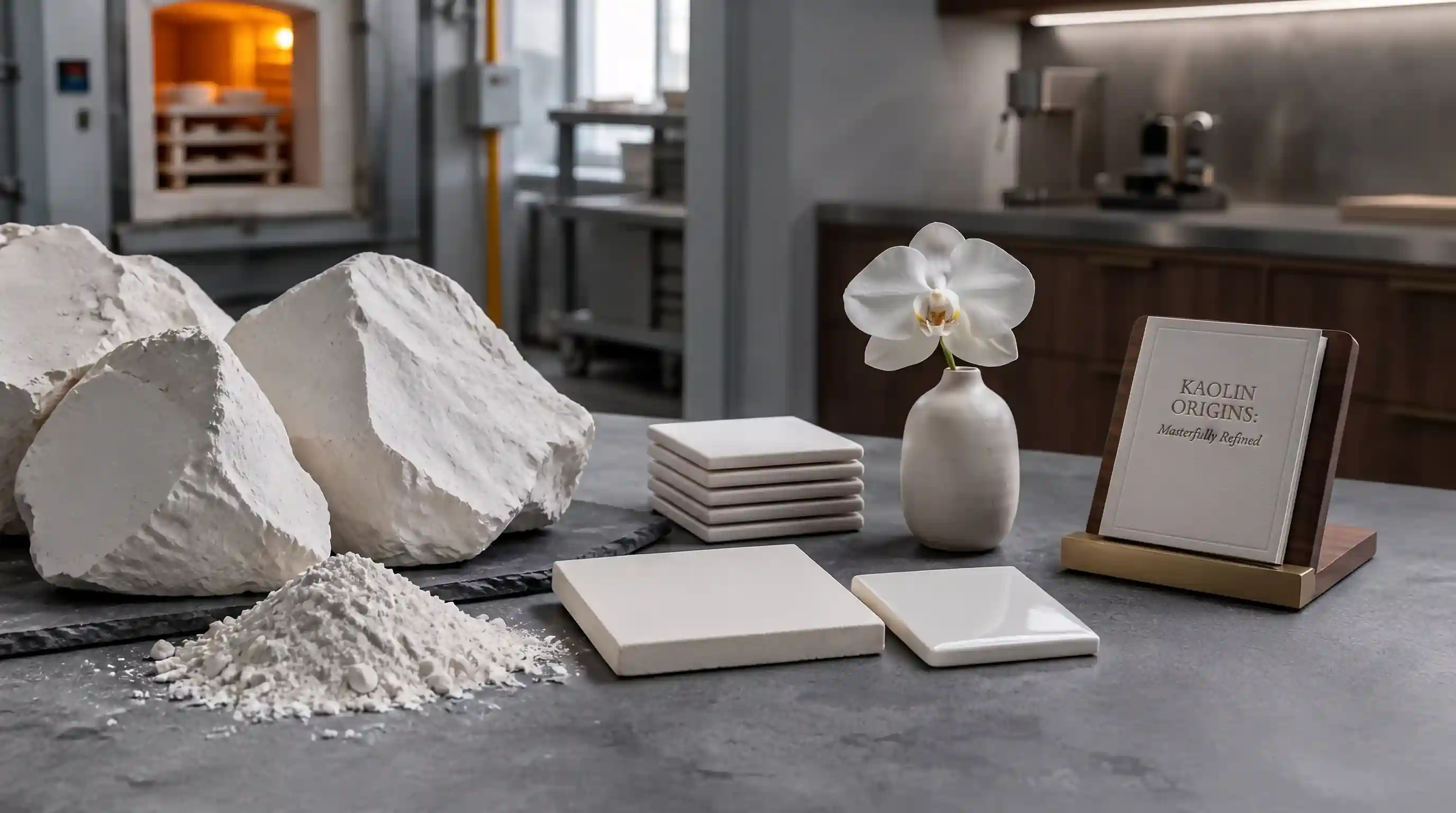
Inspection Methods and Visual Quality Control of Kaolin in Factories
Visual quality inspection of kaolin includes a set of simple and advanced methods performed to ensure the health and purity of the powder. The first step in visual inspection is to check the powder color in natural light and compare it with the reference sample. The powder must be completely uniform, with no trace of black, brown, or heterogeneous colored particles.
Checking the softness level and the presence of lumps are other quality control steps. By touching the powder or passing it through standard sieves related to the 450 to 1500 mesh range, particle dimensions can be verified to some extent. Hard lumps usually indicate high moisture in storage or processing problems in the manufacturing plant, which must be prevented from entering the production line.
In addition to visual inspections, performing laboratory tests such as measuring moisture percentage, particle size distribution (PSA), and assessing whiteness with spectrophotometer devices gives more precise information to the quality control team so that industrial standards are fully met.
Conclusion and Golden Tips on Selecting and Buying Kaolin Powder
A detailed review of the visual quality and color of kaolin powder is a key and unignorable step in the raw material supply process for the tile, ceramic, glaze, paper, and paint industries. Paying attention to parameters such as uniform whiteness, absence of color impurities, and compliance of the mesh range (450 1500) with the technical requirements of the production line will guarantee the quality and durability of the final product.
Choosing a reputable supplier that complies with quality standards across all production batches minimizes production risk. Kani Sang Amiran, by offering high-quality mineral products, has provided a suitable platform for various industries to supply their raw materials with peace of mind. Continuous evaluation of the physical and visual specifications of the powder prior to bulk consumption is the key to success in optimizing industrial processes.
Ultimately, investing in the quality control of raw materials such as kaolin will bring a high retu on investment through reduced waste, improved final product appearance, and increased customer satisfaction. Following the tips mentioned in this guide will help industrialists make the smartest decisions in their supply chain.
| Question | Answer |
|---|---|
| What is kaolin and what are its applications? | Kaolin is a valuable mineral consumed as a filler and coating in the tile, ceramic, glaze, paper, and paint industries. |
| What is the mesh range of Kani Sang Amiran kaolin powder? | This powder is supplied in the mesh range of 450 to 1500. |
| Why is checking the color of kaolin important? | The white and uniform color of kaolin indicates high purity and the absence of impurities such as iron oxide, which affects the quality of the final product. |
| What is the role of kaolin in the paint industry? | Kaolin is used as a filler, coverage enhancer, and titanium dioxide consumption reducer in architectural and industrial paints. |
| Is kaolin used in the papermaking industry? | Yes, kaolin helps improve whiteness, surface smoothness, and paper printability. |
| How can the visual quality of kaolin be checked? | Through visual color inspection under natural light, tactile softness testing, and ensuring the absence of coarse particles and lumps. |
| What is the relationship between kaolin quality and the tile and ceramic industries? | Kaolin increases body strength and acts as a clarifying and suspending agent in glazes. |
| Where is the kaolin product introduction page located? | You can visit the kaolin page on the Kani Sang Amiran website. |
| Does mesh sizing affect the appearance of the powder? | Yes, higher meshes (up to 1500) create a much softer and smoother powder. |
| Why is quality control of kaolin batches necessary? | To prevent a drop in the quality of the final product, unwanted discoloration, and to maintain production stability in factories. |
Scientific and specialized sources of mining and kaolin mineral processing.

برچسب: Kaolin,Guide to Evaluating the Visual Quality and Color of Kaolin Powder,
نویسنده: رساوب آفرین