
درباره سایت
آخرین مطالب
- بررسی استانداردهای ایمنی کار با اکسید لیمونیت (گل ماش)
- Comprehensive Guide to Technical Analysis of Limonite Oxide (Gol Mash)
- الدليل الشامل للتحليل الفني لأكسيد الليمونيت (جول ماش)
- مراجعة معايير السلامة للعمل مع أكسيد الليمونيت (جول ماش)
- چگونه از تقلب در خرید اکسید لیمونیت (گل ماش) جلوگیری کنیم؟
- How to Prevent Fraud When Purchasing Limonite Oxide (Gol Mash)?
- کاربرد تخصصی اکسید لیمونیت (گل ماش) در تولید بتن
- Specialized Application of Limonite Oxide (Yellow Ochre) in Concrete Production
- راهنمای جامع آنالیز فنی اکسید لیمونیت (گل ماش)
- التطبيق التخصصي لأكسيد الليمونيت (غل ماش) في إنتاج الخرسانة
امکانات وب
An Introduction to the Mineral Market and the Position of White Talc
The mineral market is one of the fundamental and strategic pillars in the supply chain of major manufacturing industries. In this sector, industrial minerals, due to their specific physical and chemical properties, play a very decisive role in improving the quality of final products. Understanding the precise pricing trends and the factors influencing the valuation of these materials is of great importance to purchasing managers and industrial stakeholders. Among all widely used minerals, white talc is known as one of the softest and most functional magnesium silicates, which has found a special place in various industries due to its flaky structure, brilliance, and high purity.
The Kani Sang Amiran project, as a participant in the supply and processing of minerals, strives to provide a suitable platform for industries to access this valuable material. An examination of price trends in the mineral market shows that factors such as purity grade, particle size (mesh), and micronization processes have a direct impact on the final rate of this product. To better understand the dynamics of this market, comparing the price behaviors of other consumer minerals is helpful; for example, studying the review of white talc prices and the factors affecting its valuation provides a more comprehensive view of the real value of this material. Additionally, simultaneously reviewing other applicable minerals such as the analysis of kaolin price trends in the mineral market and analyses related to the review of feldspar prices in the Iranian mineral market helps industrial stakeholders manage their purchasing portfolios with full awareness of overall market fluctuations.
Technical Specifications and Mesh Range of White Talc
One of the most important parameters in the valuation and quality determination of white talc is its grain size—how coarse or fine the particles are—which is measured in mesh units. The micronization process plays a key role in converting mineral lumps into ultra-fine powders prepared for industrial applications. This product is processed and supplied with a mesh range of 450 to 2500, and this wide range allows it to be used in a diverse spectrum of sensitive industries. Coarser particles are produced in lower mesh ranges, while extremely fine particles are produced using advanced industrial milling technologies in higher ranges.
High purity, stuing whiteness, suitable thermal stability, and chemical inertness are among the inherent characteristics of this mineral, which are maintained during the process within the mentioned mesh range. Various industries request different mesh sizes based on their technological needs, which in tu affects production and milling costs. Familiarity with exact technical specifications is the first step toward selecting the right mineral for production lines. For more information about the characteristics of this product, you can visit the dedicated page for white talc to view its complete specifications.
Application of White Talc in the Masterbatch and Compound Industry
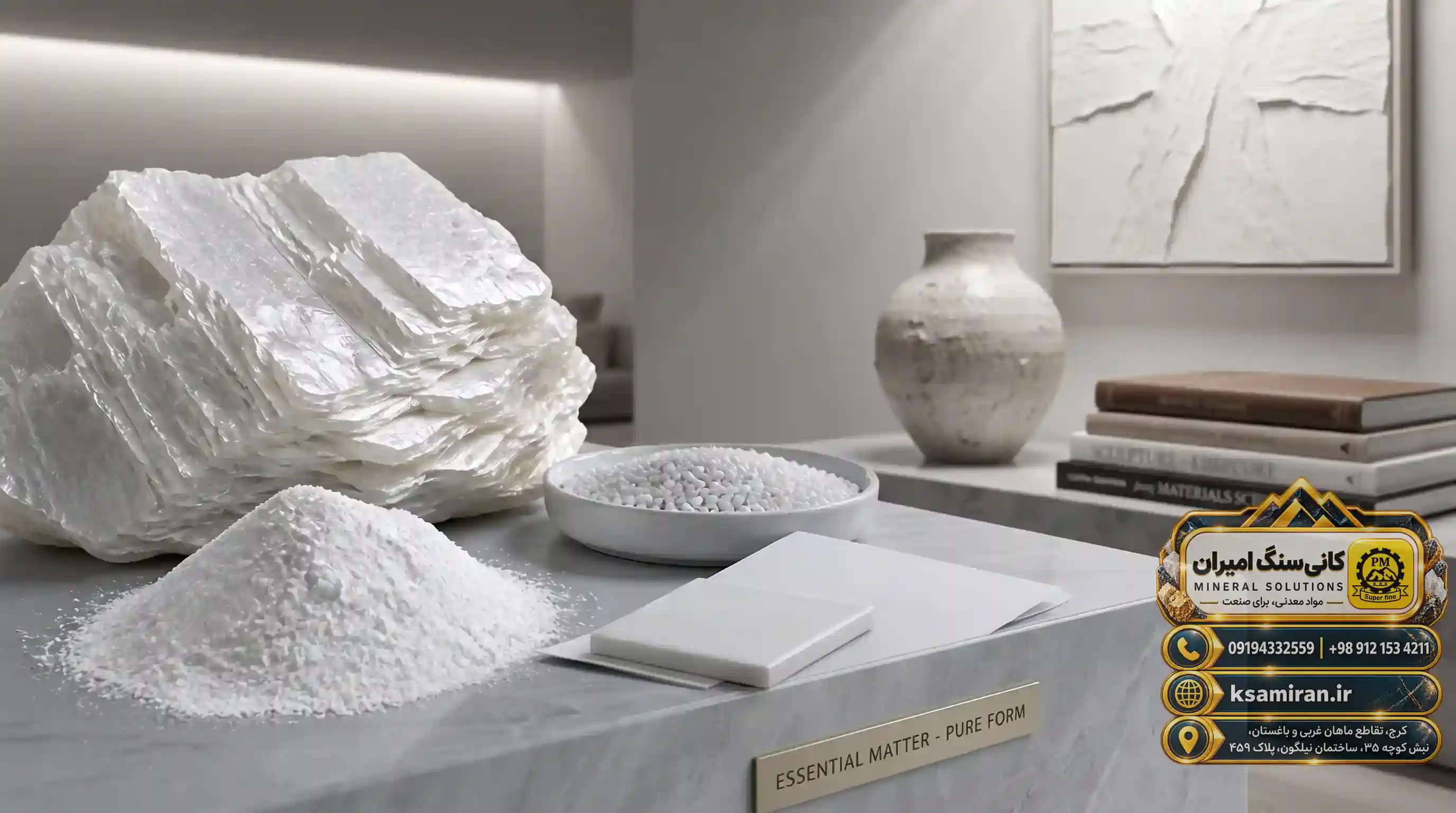
The polymer and plastic industry, as well as the production of masterbatch and compounds, is considered one of the largest consumers of micronized minerals in the world. In this context, white talc is recognized as a highly efficient filler and mechanical property enhancer that significantly contributes to improving the flexural modulus, dimensional stability, and heat resistance of plastic parts. The flaky structure of talc particles allows them to orient properly during plastic injection, preventing the final parts from shrinking or warping.
In the production of various colored and additive masterbatches, the use of this mineral is very common due to its whiteness and uniform particle size distribution within the 450 to 2500 mesh range. The quality of mineral processing and the purity of this powder have a direct impact on the appearance and durability of the polymer product. For this reason, plastic manufacturing industries are always looking for suppliers who can guarantee consistency in quality and continuity in delivery. Reviewing the price fluctuations of this mineral in the market helps masterbatch production units to plan the optimization of their finished product costs more effectively.
The Role of White Talc in the Paint and Coating Industries
The paint and resin industry always requires pigments and fillers that, in addition to improving hiding power, contribute to the durability and stability of the paint layer against atmospheric factors. Due to its natural water-repellent property, low coefficient of expansion, and excellent adhesion, white talc is used as a key extender or filler in the formulation of various architectural paints, industrial paints, and anti-corrosive coatings. The presence of this material in the paint formulation prevents the rapid settling of components and creates suitable viscosity.
Selecting the appropriate mesh grade is of great importance in the paint manufacturing industry; softer and higher meshes help create smoother surfaces and better gloss. The uniform distribution of particles and the whiteness of this mineral reduce the consumption of expensive titanium dioxide pigments, thereby resulting in significant economic optimization for paint producers. A precise evaluation of the pricing trends for this mineral helps paint industry managers maintain their competitiveness in the market by controlling the cost of goods sold.
Application of White Talc in the Paper and Cellulose Industry
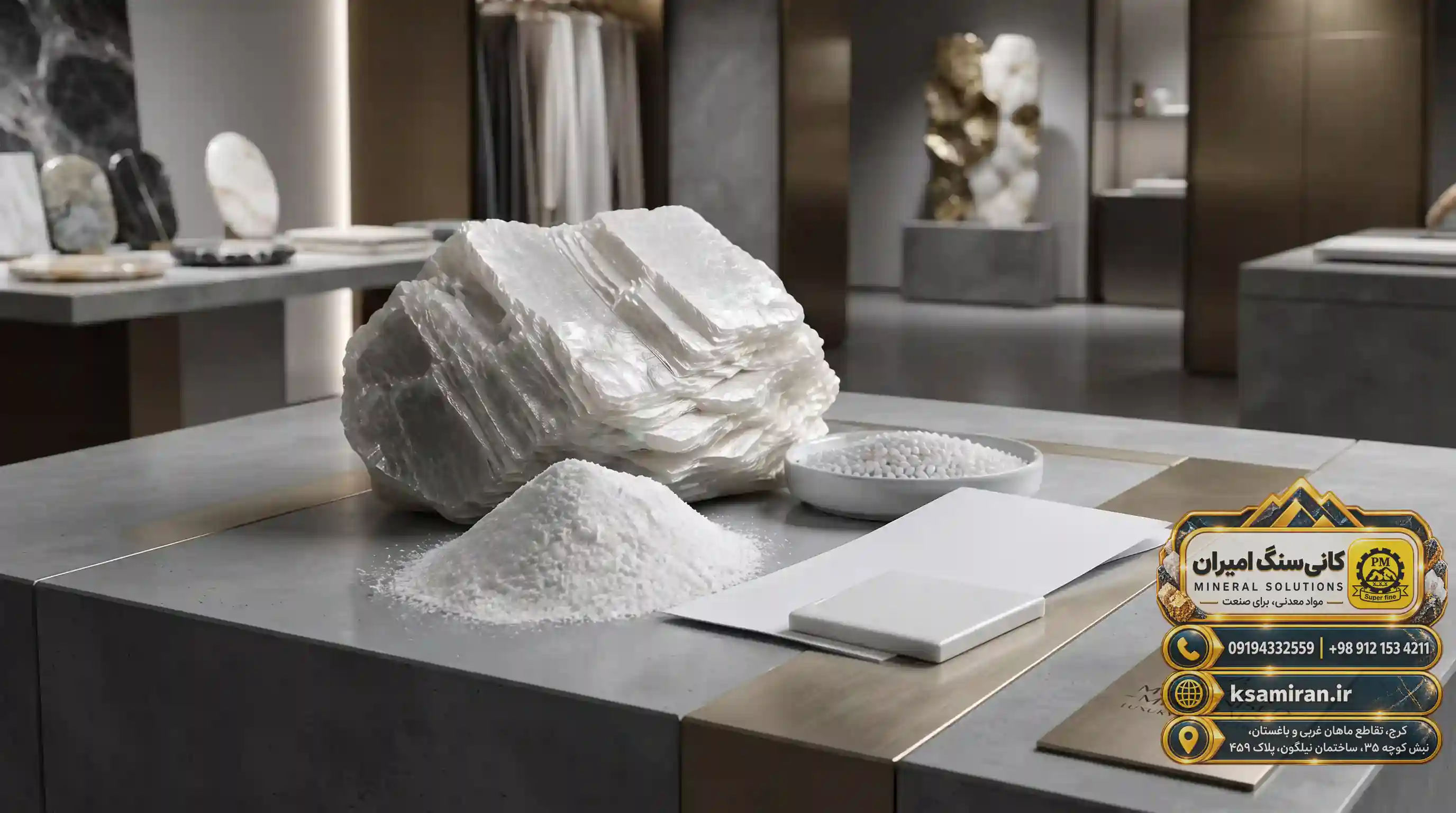
In the paper and cardboard manufacturing industry, achieving the highest levels of whiteness, opacity, and surface smoothness are the primary goals of production units. White talc is widely used as a filler and surface coating agent for paper. This material helps fill the pores between cellulose fibers, providing a smooth surface suitable for high-quality printing. Furthermore, the use of this mineral powder improves ink absorption in printing processes and doubles the brightness of the paper.
The physical characteristics of this mineral, including its extraordinary softness, prevent damage to the equipment and rollers of papermaking machinery. Given that the papermaking industry faces high volumes of raw material consumption, price stability and sustainable access to this mineral are of vital importance. Analyzing mineral market trends and having a precise understanding of the factors affecting the cost of micronized powders is considered an efficient tool for long-term plaing in the cellulose industry.
Application of White Talc in the Ceramic and Tile Industry
The ceramic and tile industry is another major consumer of mineral silicates, utilizing these materials in body and glazing processes. As a rich source of magnesium oxide, white talc plays an important role in reducing the firing temperature of the ceramic body, improving mechanical properties, and increasing resistance to thermal shock. The presence of an optimal amount of this material in the ceramic body formulation accelerates liquid-phase reactions and improves the final density of the fired piece.
High chemical purity and minimal colored impurities such as iron and chromium oxides are of extreme importance to the ceramic industry to prevent spots or color changes in the body inside the kiln. The Kani Sang Amiran project covers the needs of the ceramic industry for this strategic material by supplying this high-quality product. Continuously monitoring market fluctuations and developments in the prices of minerals related to ceramics plays a key role in the financial management of tile and ceramic factories.
Key Factors Influencing White Talc Pricing
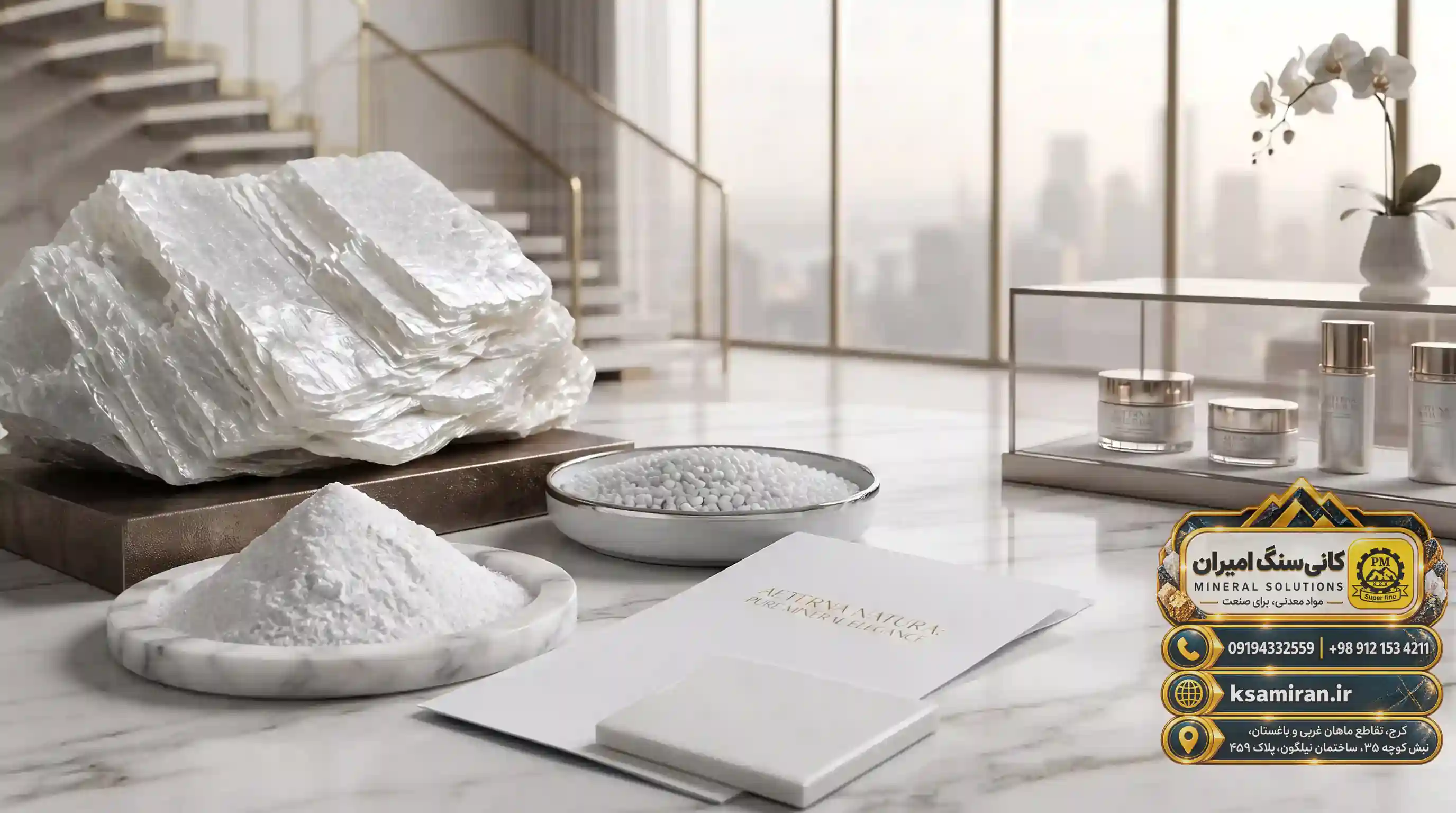
Determining the final price of mineral powders is not a simple process and is influenced by a set of technical, economic, and logistical factors. Regarding white talc, the first determining factor is the quality and purity grade of the primary deposit from which it is extracted. The natural whiteness of the ore and the percentage of associated impurities define the inherent value of the material. The second, very important factor is the processing and micronization technology; achieving high mesh ranges such as 1500 to 2500 mesh requires advanced milling equipment and higher energy consumption, which directly affects the cost of production.
Extraction costs, transportation from the mine to the processing plant, standard packaging costs, and general inflation rate fluctuations are other variables affecting the market. Large industrial buyers are always looking for a balance between price and desired quality to maintain their production standards. Continual monitoring of market developments and analyzing the price trends of industrial minerals is a reliable guide for making optimal decisions in the field of industrial procurement.
Prospects and Future of the White Talc Market in Iran
With the ever-increasing development of domestic industries such as petrochemicals, masterbatch production, paint, paper, and ceramics, the demand for high-quality and standard minerals has taken an upward trend. Due to its unique characteristics, white talc has an undeniable position in these industries, and the outlook for its consumption is linked to the growth of production technologies. Investing in updating processing lines, improving precise grain sizing, and enhancing quality control are the most important approaches for stakeholders in this field to meet the growing market needs.
Relying on production standards and the continuous supply of minerals, the Kani Sang Amiran project strives to play an effective role in the sustainable supply of this product. Industrial stakeholders and purchasing managers can optimize their supply strategies and maximize production line productivity by precisely analyzing market trends and being aware of the technical and practical features of this material. The future of the mineral market belongs to groups that prioritize transparency, quality, and price stability in their operations.
| Question | Answer |
|---|---|
| What mesh range does white talc have? | This product is processed and supplied in the range of 450 to 2500 mesh. |
| What are the main applications of white talc? | Masterbatch, compounding, paint, paper, and ceramic products are its main applications. |
| Does purity and whiteness affect the price of this material? | Yes, the purity grade and whiteness level of the deposit are the main factors in its valuation. |
| What is the role of talc in the masterbatch industry? | It acts as a filler that improves flexural modulus, dimensional stability, and heat resistance. |
| Why is this powder used in the paint industry? | It is used due to its water-repellent properties, improved coverage, and reduction in the consumption of expensive pigments. |
| What are the benefits of using talc in papermaking? | It increases whiteness, surface smoothness, and improves the printability of paper. |
| What is the effect of white talc in the ceramic industry? | It serves as a source of magnesium oxide, reduces firing temperature, and improves thermal shock resistance. |
| How can I view the technical specifications of this product? | By visiting the dedicated white talc page on the Kani Sang Amiran website, you can view the complete information. |
| What factors influence the final cost? | Extraction costs, mesh grade, processing technology, and transportation costs are the influencing factors. |
| Who is the producer of this mineral? | The Kani Sang Amiran project is responsible for the production and supply of these minerals. |
Professional reference for mineral information and processing by the Kani Sang Amiran project.

برچسب: white talc,An Analysis of White Talc Pricing Trends in the Mineral Market,
نویسنده: رساوب آفرین