
درباره سایت
آخرین مطالب
- راهنمای ثبت سفارش آنلاین و استعلام قیمت کائولن
- چگونه بهترین اکسید آهن قرمز (اخرا) را برای پروژه انتخاب کنیم؟
- بررسی جامع خواص اکوستیک و وزن مخصوص باریت سفید صنعتی
- نقش کائولن در کاهش هزینههای تولید در صنایع معدنی
- نقش سیلیس در افزایش مقاومت حرارتی مواد نسوز
- چرا اکسید آهن قرمز (اخرا) قدرت پوشانندگی بالایی دارد؟
- The role of industrial barite in the papermaking and specialty coatings industries
- How to find the best kaolin supplier in the country?
- How to properly examine feldspar analysis?
- ما هي استخدامات التالك الصناعي في صناعة البلاستيك والمطاط؟
امکانات وب
Introduction to the Importance of Receiving Technical Catalogue and Expert Analysis of Silica
In today's mode industries, choosing high-quality mineral raw materials plays a decisive role in improving final product quality, increasing productivity, and reducing production costs. One of the most widely used and strategic minerals across various industries is silica, which holds a special position due to its unique physical and chemical properties. Production projects and factories, before purchasing this valuable material, need to carefully examine its technical data, particle size distribution (mesh), purity, and metallurgical specifications. For this reason, a precise review of the specifications provided in this regard is of great importance.
Receiving the technical catalogue and expert analysis of this mineral helps engineers, purchasing managers, and quality control officials make fully informed decisions. Since selecting an unsuitable type of this material can damage production lines, access to documented information through reliable production sources is essential. To become more familiar with mineral supply processes, you can visit the official silica page and study the foundational information.
The Kani Sang Amiran project, as one of the reputable producers of mineral materials, has enabled various industries to access precise technical information. In this article, we intend to examine the different dimensions of receiving technical catalogues and expert analyses of this material, and to provide a comprehensive guide for industrial practitioners. Careful study of this guide will help you observe the necessary standards in selecting your consumable materials.
Also, before finalizing industrial orders, reading related articles such as the Comprehensive Guide to Expert Consultation Before Buying Silica can fully resolve your technical ambiguities and pave a smoother path for optimal purchasing.
Familiarity with the Features and Technical Specifications of Industrial Silica
Precise knowledge of the technical and physical specifications of the silica mineral is the first step toward its optimal use in industrial processes. This material is found naturally in various mines and, after extraction, undergoes crushing, screening, and sometimes beneficiation processes to become ready for diverse applications. The most important technical characteristic examined in expert analyses of this material is its purity level, accompanying chemical compounds, and particle size distribution, measured based on the mesh range.
The Kani Sang Amiran complex produces and supplies this material in the 10 to 450 mesh range, and this wide range will meet the needs of a broad spectrum of industries. Precise particle size distribution is one of the critical parameters detailed in technical catalogues. The more accurate the information stated in the analysis sheet, the better process engineers can predict the behavior of this material in fuaces, molds, or building formulations.
Examining factors such as free silica percentage, the level of possible impurities, and particle size distribution are among the main parts of expert analysis. Different industries require specific amounts of these parameters based on their domestic and inteational standards. Therefore, studying the technical documentation provided by the manufacturer before signing a purchase contract will guarantee that the received material matches the technical requirements of the production line.
In addition, examining the quality compliance of other raw materials such as calcium carbonate is also important in similar industries; to obtain more information, you can refer to the Guide to Receiving the Technical Catalogue of Calcium Carbonate and study the similarities in technical documentation.
The Role of Silica in the Glass and Crystal Industry
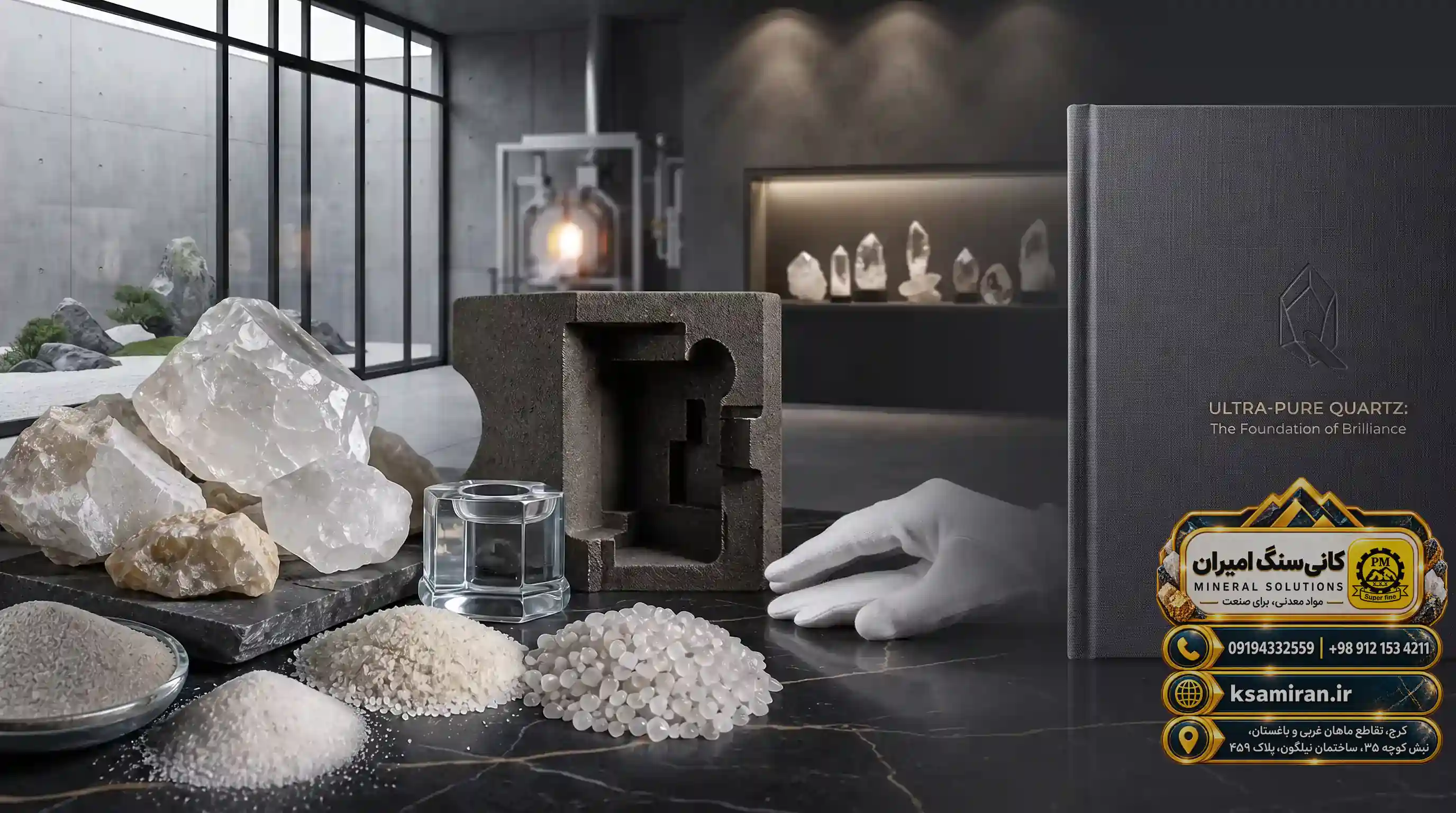
The glass and crystal industry is considered one of the oldest and largest consumers of silica throughout the world. In the production of flat glass, glass containers, glass fibers, and optical products, this material serves as the main raw material forming the glass network. The presence of this material with high purity and controlled particle size distribution results in transparency, adequate thermal resistance, and chemical stability in the final product.
In the technical catalogues and expert analyses related to this industry, the iron content in this material is of vital importance; because even minute amounts of iron oxide can cause discoloration or reduced glass transparency. The particle size distribution of this material must also be such that it melts uniformly and with the least amount of energy in melting fuaces. All of these characteristics are documented in the manufacturer's technical documents.
Understanding the sensitive needs of the glass industry, the Kani Sang Amiran project offers its products with standard technical specifications in a defined mesh range so that glassmaking factories can supply their raw materials with peace of mind. Awareness of these specifications via the analysis sheet helps fuace engineers optimize their batch composition and enhance the quality of the output product.
Careful observance of quality standards in selecting raw materials also requires knowledge of quality evaluation tools; reading the Guide to Distinguishing High-Quality Silica from Inferior Samples provides you with valuable information along this path, so that potential damages to the production line are prevented.
Application of Silica in Casting and Molding Products
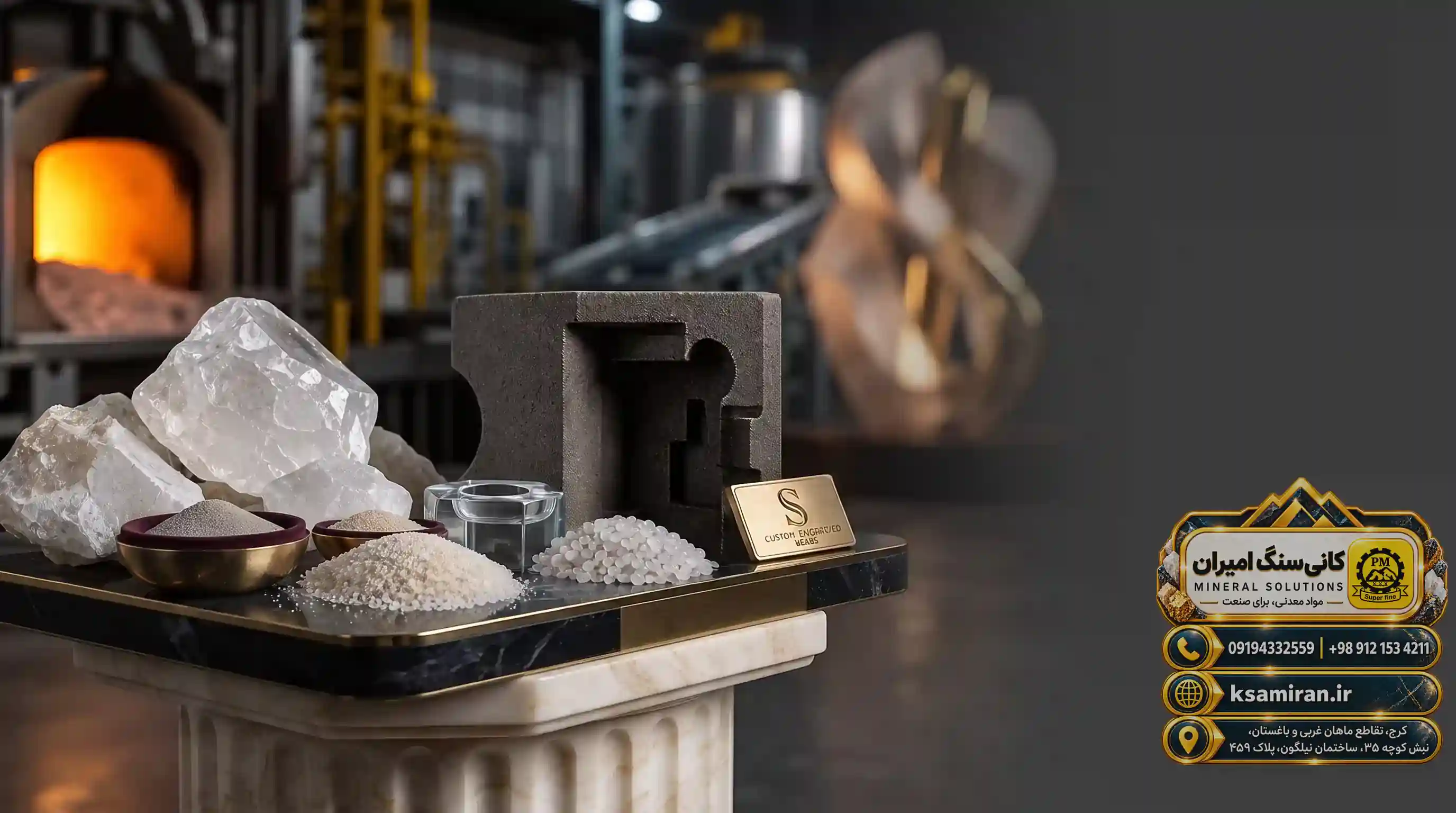
The casting industry, due to its dealings with high-temperature molten metals, requires refractory and molding materials with extraordinary thermal resistance. Silica, as the main component of foundry sands and refractory coatings, plays a key role in making molds and cores. Resistance to high temperatures, dimensional stability during casting, and the absence of undesirable reactions with molten metal are among the prominent characteristics of this material in casting.
In the expert analyses provided for casting applications, in addition to particle size distribution and mesh classification, the bonding strength, clay percentage, and grain shape (rounded or angular) are examined. These factors directly affect gas permeability and the mechanical strength of the mold. The precise technical information included in catalogues helps foundry engineers correctly adjust the sand-to-binder mixing ratios.
The mineral products offered by the Kani Sang Amiran project in the 10 to 450 mesh range provide a suitable spectrum for all types of casting methods, including green (wet) and dry sand molds. Access to a valid analysis sheet provides the necessary assurance for producing defect-free cast parts with a quality surface finish.
Quality control of these materials before they enter the casting unit prevents problems such as sand buing, mold expansion, or rough surfaces in the cast part. For this reason, reviewing technical documentation is always on the agenda of quality control units.
Application of Silica in the Ceramic and Tile Industry
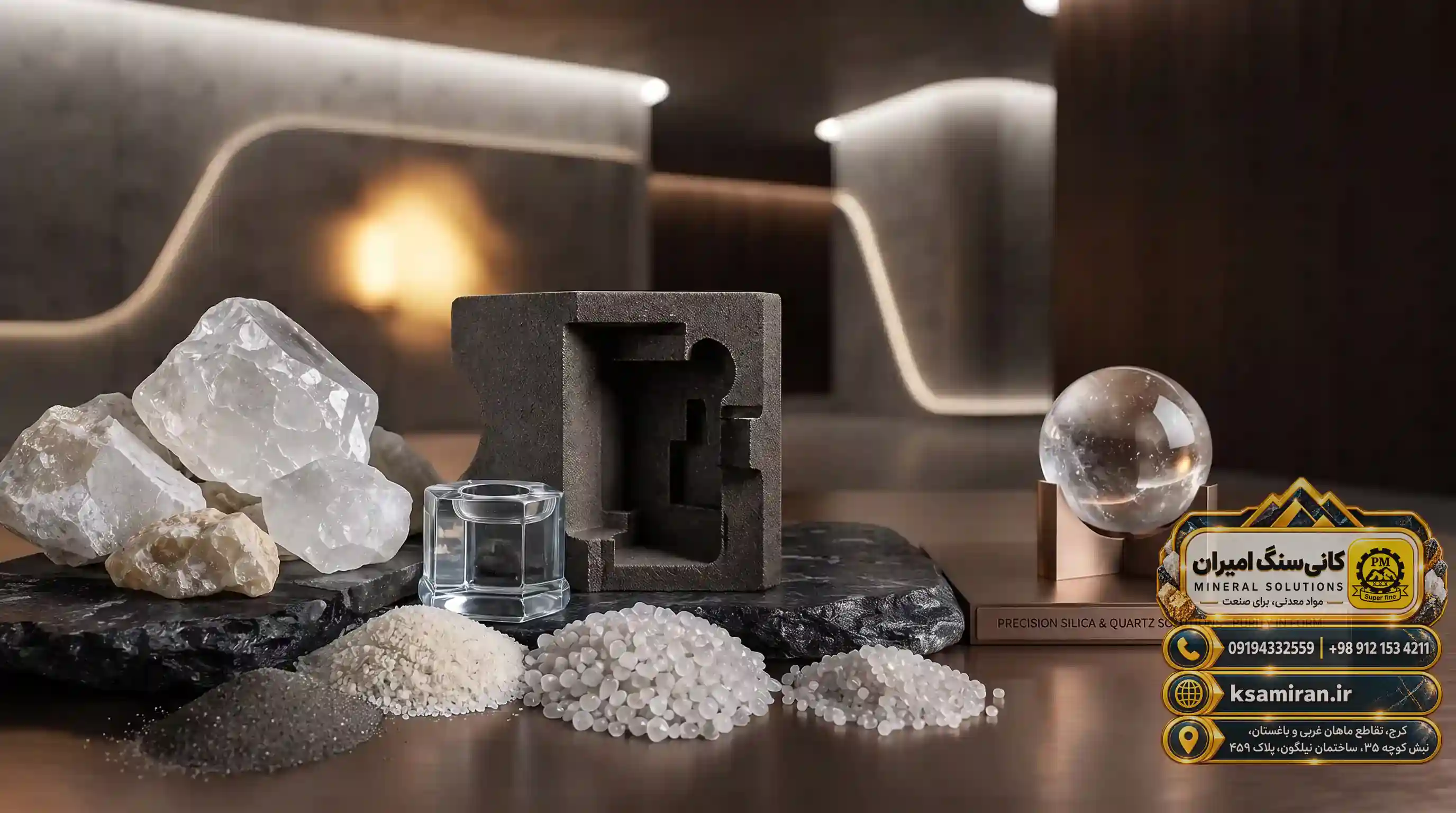
The ceramic industry includes the production of various tiles, porcelain ceramics, sanitary ware, and industrial refractories, in all of which silica is used as an important structural and skeletal phase. This material serves a filling and thermal-shrinkage-controlling role in the ceramic body, and in glazes it acts as the main source of silica for creating a glassy and glossy coating.
In the expert analysis of this material for ceramic applications, particle size distribution and chemical purity are highly important. Very fine particles in high mesh ranges help solid-state reactions occur at lower firing temperatures and improve the density of the ceramic body. Technical catalogues provide comprehensive information about the percentage of various oxides present in the material's structure, which is essential for body and glaze formulation.
The Kani Sang Amiran complex, by supplying this mineral in various meshes, covers the needs of tile and ceramic factories. Research and development experts in the ceramic industry can examine expert analyses to predict the thermomechanical behavior of their products and prevent firing cracks or unwanted dimensional changes.
Using scientific sources and specialized guides in this field greatly contributes to the development of more stable and economical formulations, and assists production units on the path to self-sufficiency and quality enhancement.
The Role of Silica in the Construction Materials and Civil Engineering Industry
The construction industry and the production of mode materials are always seeking to increase mechanical strength, durability, and structural stability. Silica, due to its high hardness, resistance to chemical agents, and abrasion stability, is widely used in the production of high-strength concrete, ready-mixed dry mortars, various tile adhesives, epoxy floor coatings, and cement-based materials.
In the technical catalogues related to construction materials, specifications such as particle size distribution (mesh), water absorption rate, and the absence of organic impurities are stated. These parameters determine how the mineral reacts with cement or other binders to create a denser structure. Using appropriate meshes in mortar production improves workability and reduces cracking.
The Kani Sang Amiran project, by offering this mineral in the 10 to 450 mesh range, has made precise selection possible for contractors, ready-mix concrete producers, and the building chemicals industry. Examining the expert analysis of these products guarantees that the final materials are produced in accordance with the codes and national and inteational standards of the construction industry.
Optimal quality management in construction projects is made possible by relying on precise technical information and reputable manufacturer documentation, and it guarantees the long-term durability of structures.
How to Interpret the Expert Analysis Sheet and Technical Catalogues
Correct interpretation of the analysis sheet and technical catalogue of silica requires familiarity with common mineralogical, chemical, and laboratory terminology. Engineers and purchasing officials should know the meaning of each parameter listed in the analysis table and how it affects the final product quality. Factors such as purity percentage (SiO2), levels of iron oxide impurities (Fe2O3), alumina (Al2O3), and moisture are among the most important factors to examine.
In addition to chemical compounds, the particle size distribution — i.e., mesh classification, defined in the 10 to 450 mesh range — forms the particle size distribution curve. Examining this curve shows the buyer what percentage of the particles fall within the desired size range. This precision in technical documentation prevents raw material waste and the occurrence of process errors in factories.
Reputable producers such as the Kani Sang Amiran project, by providing transparent and documented analysis sheets, place all the necessary information at the disposal of consuming industries. By matching this data with their inteal standards, buyers can make the best decision and be assured of the quality of their consumable materials.
Training purchasing and quality control teams on how to read these reports is one of the key measures toward improving the productivity of industrial organizations and should not be overlooked.
Conclusion and Guide to Ordering and Receiving Catalogues from Kani Sang Amiran
In conclusion, receiving the technical catalogue and expert analysis of silica is recognized as the main prerequisite for any industrial activity related to glass, casting, ceramics, and construction materials. Access to precise, transparent, and documented data helps industries select their high-quality raw materials with minimal risk and maximize the efficiency of their production lines.
The Kani Sang Amiran project, focusing on the production and supply of quality mineral products in the 10 to 450 mesh range, has provided a suitable platform for meeting diverse industrial needs. To receive supplementary information and precise technical consultation, you can visit the official silica page and stay in touch with the sales and support specialists.
Observing engineering principles in the raw material supply process will be a reliable investment for improving the quality of final products and the sustainable development of the country's industries. We hope this guide has provided you with a comprehensive and practical perspective on the importance of catalogues and expert analyses of this valuable material.
| Question | Answer |
|---|---|
| What is silica and what are its applications? | It is a mineral material used in the glass, casting, ceramic, and construction materials industries. |
| What is the mesh range of Kani Sang Amiran silica? | These products are produced and supplied in the 10 to 450 mesh range. |
| Why is receiving a silica technical catalogue important? | It is essential for examining purity, chemical compounds, and their compliance with production line standards. |
| Is silica used in the glassmaking industry? | Yes, it is used as the main raw material to create transparency and stability in glass. |
| What is the role of silica in casting? | It is used as refractory sand and molding material with high thermal resistance. |
| How can one receive an expert silica analysis? | It is possible by visiting the product page on the Kani Sang Amiran website. |
| What is the application of silica in the ceramic industry? | It serves a filling and skeletal role in making ceramic bodies, tiles, and glazes. |
| What is the role of silica in construction materials? | It is used in high-strength concrete, dry mortar, and tile adhesive to improve mechanical strength. |
| How can we assess the quality of silica? | By studying the chemical analysis sheet and examining impurity levels such as iron oxide. |
| How can we get in touch with Kani Sang Amiran? | By visiting this complex's official website and the products section. |
Kani Sang Amiran Project — A reference for the production and supply of industrial minerals
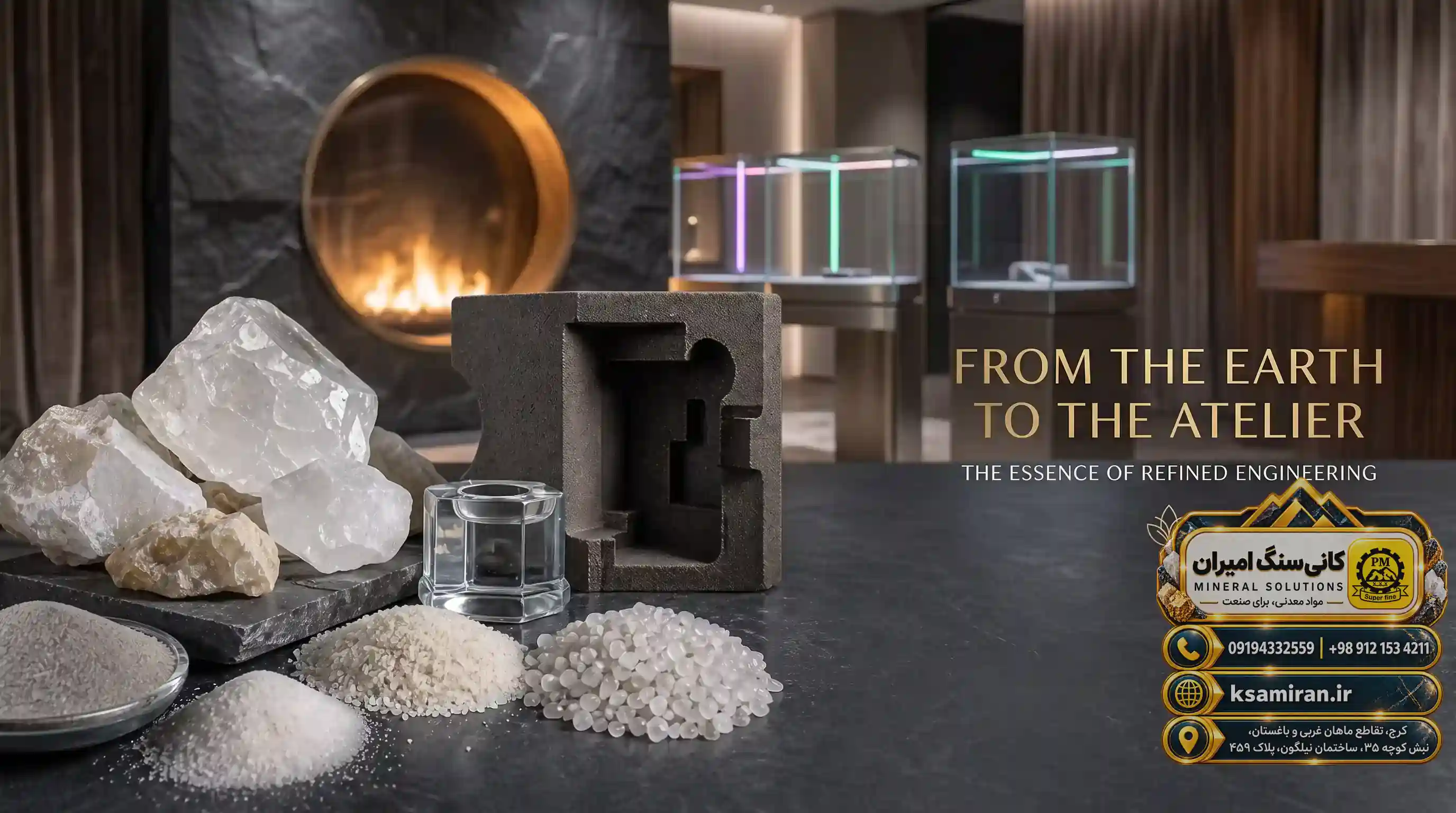
برچسب: Silica,Guide to Receiving Technical Catalogue and Expert Analysis of Silica,
نویسنده: رساوب آفرین