
درباره سایت
آخرین مطالب
- نقش اکسید لیمونیت (گل ماش) در صنایع تولید موزاییک
- دور أكسيد الليمونيت (الجيلماش) في صناعات إنتاج الفسيفساء (الموزاييك)
- چگونه کاربرد اکسید لیمونیت (گل ماش) را بهینه کنیم؟
- Company Limonite Oxide (Gol Mash) Price Comparison Guide
- بررسی ویژگیهای ظاهری اکسید لیمونیت (گل ماش) مرغوب
- کاربرد اکسید لیمونیت (گل ماش) در صنایع الکترودسازی
- دراسة الخصائص المظهرية لأكسيد الليمونيت (جول ماش) عالي الجودة
- دراسة الثبات الحراري لأكسيد الليمونيت المعدني (أكسيد الحديد الأصفر)
- The Role of Limonite Oxide (Gol Mash) in Mosaic Manufacturing Industries
- استخدام أكسيد الليمونيت (جول ماش) في صناعة الأقطاب الكهربائية
امکانات وب
Introduction to Calcium Carbonate and the Importance of Choosing the Right One
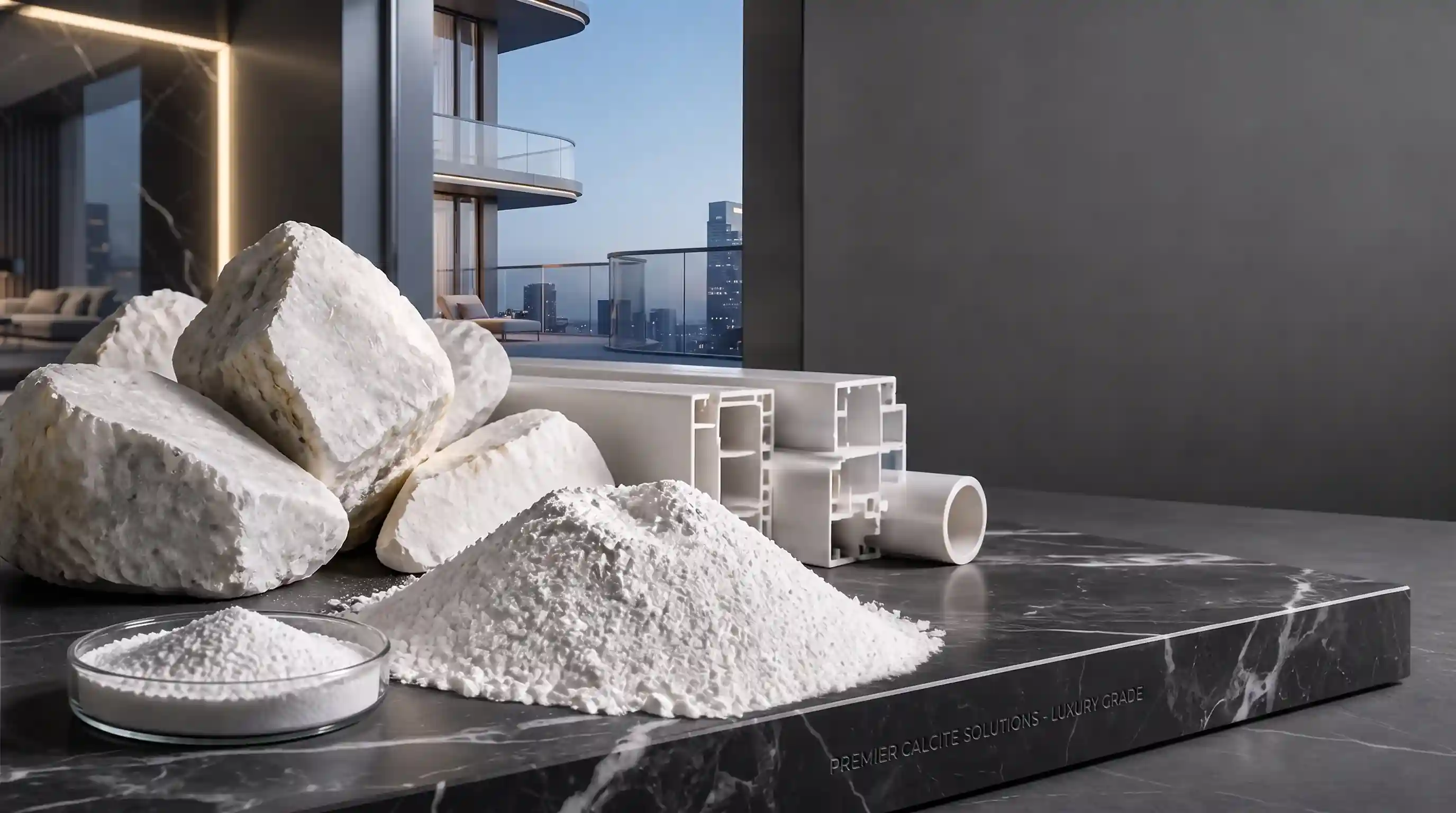
Calcium carbonate with the chemical formula CaCO₃ is one of the most abundant and best-known minerals in the world's industries. This compound is produced as a white powder and, due to its abundance in nature, reasonable price, and high compatibility with industrial processes, has secured a key position in the polymer, paint, paper, adhesive, and engineered product industries. The production range of this material extends from 100 mesh for general applications to 3500 mesh for fine and specialized applications, and this broad range makes the right choice a critical technical decision.
The importance of choosing the right calcium carbonate lies in the fact that this material is not merely a "cheap filler"; it is a material that affects the mechanical, optical, thermal, and surface properties of the final product. An inappropriate choice can lead to a drop in impact resistance, reduced surface gloss, dispersion problems in the polymer melt, increased machine wear, and ultimately higher production costs. In contrast, a precise choice helps improve surface quality, increase production rate, and reduce formulation costs.
Amiran Stone Mineral Project (production of mineral materials) offers the Calcium Carbonate product for polymer, paint, paper, and engineered product applications. This product is used in key applications such as PVC/UPVC profiles and pipes, masterbatch, cable, artificial leather, paint, paper, adhesive, and engineered stone, and covers the mesh range of 100 to 3500 mesh. The mesh variety enables the user to choose exactly the grade that matches their process and final product.
In this guide, which is organized into eight chapters, we first review the structure, production method, and the concept of "mesh," then examine the main applications of this product in the polymer, paint, paper, adhesive, and engineered stone industries, and finally provide a practical framework for making the right choice based on need. The goal is for the reader, after studying this guide, to be able to identify the suitable product with a technical perspective and based on real criteria.
A point to keep in mind from the very begiing is that there is no universally "best product"; rather, there is the "most suitable product for each application." A calcium carbonate that is suitable for paint is not necessarily suitable for UPVC profiles, and vice versa. For this reason, in this guide, instead of introducing a single general product, we explain the selection criteria for each application separately so that your final decision is shaped based on the real needs of your process.
Structure, Production, and the Concept of Mesh in Calcium Carbonate
Chemically, calcium carbonate is a salt of calcium and carbonic acid that is found in nature as limestone, marble, gypsum, and the shells of living organisms. Its crystal structure appears in three main forms: rhombohedral (calcite), orthorhombic (aragonite), and hexagonal (vaterite), of which calcite is the most common form in industrial applications. Chemical purity, color, particle size distribution, and the processing method are the parameters that determine the final quality of the powder.
The production method of this material is generally divided into two categories. The first method is grinding limestone (GCC), in which the rocks are crushed and classified after extraction to obtain powder with the desired mesh. The second method is chemical precipitation (PCC), which results from the reaction of calcium oxide with water and carbon dioxide and produces very fine and uniform particles. The product introduced in this guide is offered through mineral processing in the mesh range of 100 to 3500 mesh.
The concept of "mesh" is a criterion for expressing particle size: the higher the mesh number, the finer the particles. For example, 100-mesh powder is coarser and 3500-mesh powder is very fine. Choosing the appropriate mesh depends on the type of application; in industries where surface appearance and uniformity are of great importance (such as paint, paper, and masterbatch), higher meshes are preferred, while in applications where this material mostly plays a filling and cost-reducing role (such as some profiles and adhesives), lower meshes can be a more economical option.
Alongside particle size, factors such as oil absorption, pH, moisture, and brightness also play a role in the processing behavior of the powder. Finer is not always better; very fine particles may have difficult dispersion in the polymer melt and require a coating agent. This is why in the following chapters we examine mesh selection in a practical way for each industry separately.
In the quality control process, parameters such as particle size distribution (PSD), brightness, moisture, and purity are often measured with standard instruments. These parameters are stated in the product's technical data sheets (Data Sheet) and must correspond to your process needs. Awareness of these concepts helps you receive accurate technical information at the time of inquiry and choose a product that truly matches your needs.

Application of Calcium Carbonate in PVC/UPVC Profiles and Pipes
One of the most important markets for calcium carbonate is the PVC/UPVC profile and pipe industry. In these products, this material acts as a mineral filler and accounts for a significant share of the formulation. Its main role in this application is to replace part of the expensive resin, reduce the final cost of the product, and at the same time preserve the mechanical properties.
In UPVC profiles used for windows, doors, and other building materials, calcium carbonate helps improve compressive resistance, reduce the shrinkage coefficient, and increase dimensional stability. In PVC pipes, this material helps increase hardness and improve behavior in the extrusion process. The choice of appropriate mesh in this application is usually in a range where the balance between price and quality is maintained; very fine meshes can improve surface gloss, but at a higher cost.
One of the challenges of using calcium carbonate in the extrusion process is the dispersion of particles in the polymer melt. Particles that are not well dispersed can lead to a drop in impact resistance and the creation of weak points in the pipe wall. For this reason, the use of coated calcium carbonate is common in these applications; the surface coating of the particles provides better dispersion and reduces machine wear. In the seventh chapter of this guide, we examine the technical advantages of this type of product more thoroughly.
In choosing a product for profiles and pipes, you should pay attention to the following points: chemical purity (due to the thermal stability of PVC), uniform particle size distribution, low moisture, and sufficient brightness. Also, the consumption level in the formulation must be determined precisely; excessive consumption can lead to reduced flexibility and brittleness of the product. Reviewing the product's technical data sheet and consulting with the supplier's technical team is an essential step before purchase.
Also, in the production of complex profiles with thin sections, the uniformity of melt flow is of great importance. Calcium carbonate with an appropriate particle size and a homogeneous distribution can help improve flowability and reduce deformation at the die exit. This issue has a direct impact on the amount of production waste and final quality, especially in window profiles with thin walls and tight tolerances.
Application of Calcium Carbonate in Masterbatch, Cable, and Artificial Leather
In the masterbatch industry, calcium carbonate is one of the most widely used fillers. Masterbatch is a concentration of color or additives in a polymeric carrier used for coloring or modifying the properties of polymer compounds. In this application, calcium carbonate acts as an inexpensive carrier and filler, and is used to maintain color concentration and improve dispersion in the final part.
In masterbatch, a higher mesh, due to the greater specific surface area, brings about better color dispersion and higher gloss in the final product. For this reason, masterbatch producers typically use finer meshes. In addition, coated calcium carbonate in this application is a preferred option due to improved flowability and reduced absorption of expensive oils.
In the cable industry, calcium carbonate is used in cross-sectional coverings and insulation. Its role in this application is to improve electrical properties, increase mechanical resistance, and reduce formulation costs. In cables installed in harsh environments, abrasion resistance and dimensional stability are of great importance, and choosing the appropriate mesh and coating type can improve these properties.
Artificial leather is another important application of this product. In the production of PVC- or PU-based artificial leather, calcium carbonate helps create a natural texture, adjust hardness, and control the weight of the product. In this application, uniformity of particle size is very critical; any coarse particles can lead to uneveess in the leather surface and affect the visual quality of the product.
A common point in all three applications above is the importance of quality consistency in repeat purchases. Changes in particle size or purity between different shipments can cause changes in process settings and increased waste. For this reason, choosing a supplier that provides consistent quality control is as important as choosing the appropriate mesh.
Also, in artificial leather and cable, resistance to the high temperature of the process and color stability are among the other selection factors. Calcium carbonate with high purity and low metallic impurities shows better behavior at process temperature and prevents discoloration of the final product. This issue is of high importance especially in light-colored products that are sensitive to discoloration.

Application of Calcium Carbonate in Paint, Paper, Adhesive, and Engineered Stone
In the paint industry, calcium carbonate is used both as a filler and as a white pigment. Due to its high brightness, reasonable price, and good behavior in formulation, this material has broad application in architectural paints, industrial paints, and surface coatings. In paint manufacturing, particle size has a direct effect on the covering power, gloss, and abrasion resistance of the dried layer.
In the paper industry, calcium carbonate is one of the most important materials in the coating and filling process. This material helps improve the brightness, whiteness, surface smoothness, and printability of paper, and at the same time reduces production costs. In papermaking, a product with controlled particle size and high purity is required, since impurities can lead to problems in the coloring and printing process.
Adhesives are another application of this product. In the adhesive industry, calcium carbonate is used to adjust viscosity, increase volume, and reduce cost. The choice of appropriate mesh in this application depends on the type of adhesive and its final application; in adhesives applied as a thin layer, finer particles are needed for better uniformity.
Engineered stone is a relatively new and growing application of this product. In the production of artificial stones, calcium carbonate is used as the main filler alongside resins and plays an important role in the appearance, hardness, and weight of the final product. In this application, particle size and its uniformity are critical for creating a natural appearance and preventing the formation of cavities on the stone surface.
In addition, in the paint and paper industries, resistance to environmental conditions such as humidity and light exposure is also important. Calcium carbonate with high purity and a controlled structure shows good stability against these conditions and prevents discoloration or a drop in the quality of the final product over time. This feature is of strategic importance especially in building products and high-quality papers that have a long service life.
In all of these applications, one principle is constant: the choice of mesh and product type must be made based on the needs of the process and the characteristics of the final product. In the next chapter, we provide a practical guide for choosing the mesh based on need.
Guide to Choosing the Calcium Carbonate Mesh Based on Need
Choosing the appropriate mesh is the most important decision in purchasing calcium carbonate. In general, the higher the mesh, the finer the particles, the greater the specific surface area, and the higher the product price. Therefore, a balance must be struck between the technical need and the available budget. In this chapter, we provide a general guide for choosing the mesh based on the type of application.
- General applications and economical filler (such as some adhesives and economical profiles): lower meshes (around 100 to 400 mesh) are usually sufficient.
- PVC/UPVC profiles and pipes: intermediate meshes are usually used so that the balance between price and surface quality is maintained.
- Masterbatch and artificial leather: higher meshes are preferred for better color dispersion and surface uniformity.
- Paint, paper, and engineered stone: usually high meshes and precise particle uniformity are required.
To study this topic in more depth, read the article Guide to Choosing the Suitable Mesh for Coated Calcium Carbonate in Plastic Injection Molding. In this article, the effect of the mesh on the behavior of coated calcium carbonate in the plastic injection molding process is examined, and it provides practical information for making the right choice.
Along with the mesh, you should also pay attention to the type of coating (Coated/Uncoated). In applications where dispersion and flowability in the melt matter, coated calcium carbonate is a better option. In applications where this material is used in an aqueous or solvent environment (such as paint and paper), the coating type must be compatible with the process environment.
It should also be noted that choosing the mesh does not depend only on the final product; it also relates to the process equipment. Machines with small gaps or fine filters may have trouble with coarse particles, while in systems with a short residence time, very fine particles may not achieve complete dispersion. Consulting with the supplier's technical team and, if possible, testing a sample on a pilot scale is the best way to ensure the right choice.
Final note: before purchase, be sure to specify your process needs with concrete numbers: the desired mesh, the consumption level in the formulation, the required brightness, and the coating type. This information helps you make a more precise inquiry and choose a product that is truly suitable for your needs.

Coated Calcium Carbonate and Its Technical Advantages
Coated Calcium Carbonate is a type of this product in which the surface of the particles is covered with a coating agent (usually stearic acid or similar compounds). This surface coating significantly improves the behavior of the particles in the polymer melt, and for this reason it is preferred in sensitive polymer applications.
The main advantages of coating include the following:
- Improved dispersion of particles in the polymer melt
- Increased flowability and reduced bridging in feeding equipment
- Reduced machine wear and increased screw and die life
- Reduced absorption of oil and moisture
- Improved surface gloss of the final product
In the extrusion process, these advantages lead to a lower process temperature, a higher production rate, and reduced waste. For a specialized study of this topic, see the article Examining the Technical Advantages of Coated Calcium Carbonate in Extrusion. In this article, the technical details of using this product in extrusion processes and its advantages for the polymer industries are examined in a specialized way.
The difference between coated and uncoated is not only in price; it is in process behavior. In applications where dispersion, surface gloss, and melt flow are critical (such as masterbatch, artificial leather, and high-quality profiles), the coated type is a better option. In applications where calcium carbonate merely plays the role of an economical filler and the process is less sensitive to dispersion, the uncoated type can be a more cost-effective option.
In addition, in formulations containing a high amount of calcium carbonate (High Loading), coating plays a more critical role. In these formulations, uncoated particles tend to agglomerate and their dispersion in the melt becomes difficult. The surface coating keeps the particles separated from one another and allows a high percentage of this material to be used in the formulation without a loss of quality. This contributes significantly to reducing the final cost of the product.
It should also be noted that the type of coating agent must be compatible with your polymer system. Various agents are used in the industry, and each exhibits different behavior in different polymers. For example, what is suitable for PVC is not necessarily suitable for polypropylene or polyethylene. Therefore, always inquire from the supplier about the type of coating used in the product. Ultimately, the choice between coated and uncoated should be made based on the process needs and budget, and in case of doubt, requesting a sample for testing is the best decision-making method.
Calcium Carbonate versus White Talc and Conclusion
In the industrial mineral market, calcium carbonate and white talc are two widely used fillers that are often compared with one another. Both are used as mineral fillers in the polymer industry, but they have important structural differences that determine the choice between them. To study this topic, see the article Examining the Structural Differences Between White Talc and Calcium Carbonate.
In brief, calcium carbonate is structurally crystalline and isotropic, whereas talc has a layered structure (Phyllosilicate). This structural difference creates different behavior in mechanical properties: talc helps increase strength and stiffness in specific directions, while calcium carbonate produces more balanced behavior in different directions. In terms of price as well, calcium carbonate is usually the more economical option.
In conclusion to this guide, it must be said that choosing the right calcium carbonate requires a precise understanding of the process, the final product, and the equipment. This material is not a single product; it is a family of products with various meshes and characteristics. The right choice helps reduce costs, improve quality, and increase production productivity.
The general steps for choosing are as follows:
- Specify your process needs (mesh, coating type, brightness).
- List the final application and its required characteristics.
- Request the product's technical data sheet from the supplier.
- If possible, test the sample within your own process.
- Finalize your purchase based on the test results.
Amiran Stone Mineral Project (production of mineral materials) offers this product for polymer, paint, paper, and engineered product applications and provides mesh coverage from 100 to 3500 mesh. By taking the criteria of this guide into account, you can choose a product that truly matches your needs.
Finally, do not forget that the quality of a mineral product is not defined by mesh alone. Particle size distribution, chemical purity, consistency between shipments, and the stability of quality control all play a role in the final value of the product. A supplier that transparently places this information at your disposal is your technical partner in production, not merely a raw material seller.

| Question | Answer |
|---|---|
| What is calcium carbonate? | A mineral salt with the chemical formula CaCO₃ that is used as a filler and white pigment in the polymer, paint, paper, and engineered product industries. |
| What is the mesh range of this product? | This product is offered in the range of 100 to 3500 mesh. |
| What are the main applications of calcium carbonate? | PVC/UPVC profiles and pipes, masterbatch, cable, artificial leather, paint, paper, adhesive, and engineered stone. |
| What is coated calcium carbonate? | A type of this product in which the surface of the particles is covered with a coating agent so that dispersion and flowability in the polymer melt are improved. |
| What is the difference between low mesh and high mesh? | The higher the mesh number, the finer the particles; a higher mesh provides better gloss and uniformity and has a higher price. |
| Which mesh is suitable for UPVC profiles? | Depending on the formulation, intermediate meshes are usually used so that the balance between cost and surface quality is maintained. |
| What is the difference between calcium carbonate and white talc? | The main difference is structural; calcium carbonate has a crystalline and isotropic structure, whereas talc has a layered structure. |
| What role does this material play in the paint industry? | It is used as a filler and white pigment and affects the covering power and gloss of the paint layer. |
| How should the suitable product be chosen? | Based on the process needs (mesh, coating type, brightness), reviewing the technical data sheet, and if possible testing a sample before the final purchase. |
| What are the engineering applications of this product? | Use in engineered stone and engineered products as the main filler alongside resins, with an effect on the appearance, hardness, and weight of the product. |
The technical information in this article is extracted from the product page of Amiran Stone Mineral Project (production of mineral materials) and from technical articles published on the same group's website.
برچسب: Calcium Carbonate,Guide to Choosing Calcium Carbonate Based on Your Needs,
نویسنده: رساوب آفرین