
درباره سایت
آخرین مطالب
- نقش اکسید لیمونیت (گل ماش) در صنایع تولید موزاییک
- دور أكسيد الليمونيت (الجيلماش) في صناعات إنتاج الفسيفساء (الموزاييك)
- چگونه کاربرد اکسید لیمونیت (گل ماش) را بهینه کنیم؟
- Company Limonite Oxide (Gol Mash) Price Comparison Guide
- بررسی ویژگیهای ظاهری اکسید لیمونیت (گل ماش) مرغوب
- کاربرد اکسید لیمونیت (گل ماش) در صنایع الکترودسازی
- دراسة الخصائص المظهرية لأكسيد الليمونيت (جول ماش) عالي الجودة
- دراسة الثبات الحراري لأكسيد الليمونيت المعدني (أكسيد الحديد الأصفر)
- The Role of Limonite Oxide (Gol Mash) in Mosaic Manufacturing Industries
- استخدام أكسيد الليمونيت (جول ماش) في صناعة الأقطاب الكهربائية
امکانات وب
Introduction to Red Iron Oxide (Ochre) and Its Position in the Mineral Market
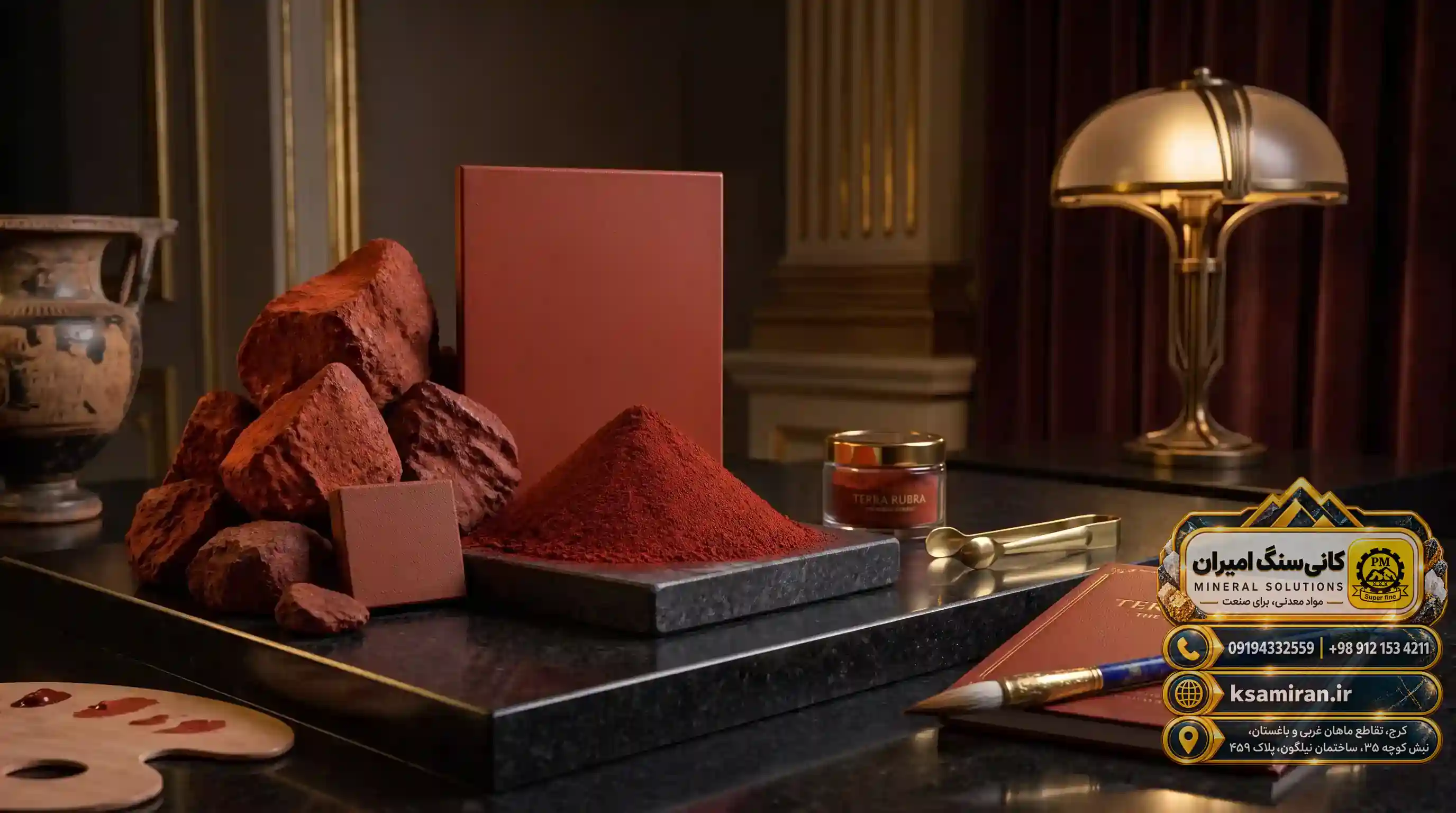
Red iron oxide (ochre) is one of the most well-known mineral pigments in the world, with a history of use dating back thousands of years. This material is offered in the market as a fine powder with a red to reddish-brown color, and it is actually iron oxide (Fe₂O₃) which, due to its special composite structure, has a high ability to produce stable and lasting color. The word «ochre» (Ochre) has Greek roots and in Persian is also pronounced as «okhra», «ekr», or «akhar»; however, in the Iranian mineral market, the commercial and well-known name of this product is «Red Iron Oxide (Ochre)».
In recent years, with the significant growth of the construction, paint, plastic, ceramic, and paper industries, the demand for high-quality mineral pigments has increased, and this has doubled the importance of reviewing the price of red iron oxide (ochre) for activists in these industries. Unlike synthetic chemical colors that are unstable against light and atmospheric conditions, red iron oxide (ochre), due to its crystalline and natural structure, shows high resistance to ultraviolet rays, heat, and atmospheric agents, and this feature has made it a popular option for producing exterior building paints, industrial coatings, and ceramic products.
One of the prominent features of this product is its mesh variety. Red iron oxide (ochre) is produced and offered in the mesh range of 450 to 1500, and each of these grades has its own specific application in various industries. In other words, as the mesh number increases, the product particles become finer and cover more delicate and sensitive applications such as high-quality paint pigments. Amiran Stone Mineral Project, as one of the mineral material producers in Iran, offers this product with standard technical specifications for the pigment, coating, cement, and ceramic product industries, and its supplementary information is visible on the Red Iron Oxide (Ochre) product page.
Ultimately, it should be noted that reviewing the price of red iron oxide (ochre) is not limited to the final invoice figure; rather, factors such as purity, meshing, production method, packaging, and purchase volume all play a role in determining the final price and economic value of the product. In the following chapters, we will examine each of these factors more precisely so that buyers and industry activists can make decisions with a broader and more informed perspective.
Red Iron Oxide Production Methods and Their Effect on the Final Price
Red iron oxide (ochre) is produced by both natural and synthetic (artificial) methods, and this difference in production method is one of the main factors in determining the price of this product in the mineral market. In the natural method, rocks containing iron oxide are extracted, and after crushing, grinding, and physical processing, they are converted into powder with the desired mesh grade. This method has lower production costs due to the use of available mineral resources and the lack of need for complex chemical processes, and is usually cost-effective for applications where very high purity is not a condition.
In the synthetic method, red iron oxide is produced through controlled chemical reactions, oxidation of iron salts, or recovery from steel industry waste. The product resulting from this method has higher purity, better color uniformity, and a more controlled particle size distribution, which is more suitable for sensitive industries such as producing high-quality paints and decorative pigments. Naturally, the higher production cost of this method directly affects the final price of red iron oxide (ochre) in the market, and the buyer must know what they need: is the natural product with a better price sufficient for their needs, or the synthetic product with high purity?
In addition to the production method, the grinding and meshing process also constitutes an important part of the costs. Bringing iron oxide powder to 1500 mesh requires advanced mills, more energy consumption, and a longer time compared to 450 mesh. For this reason, products with a higher mesh usually have a higher price in the market, and this must be taken into account in the cost calculations of industrial projects.
Another point is the effect of packaging and transportation on the final price. Red iron oxide (ochre) is usually offered in multi-layer bags or bulk packages, and the choice of packaging type depends on the buyer's needs and transportation conditions. Amiran Stone Mineral Project, as a mineral materials producer, understanding these needs, introduces its product for pigment, coating, cement, and ceramic product applications so that each industry can procure the grade appropriate to its needs.
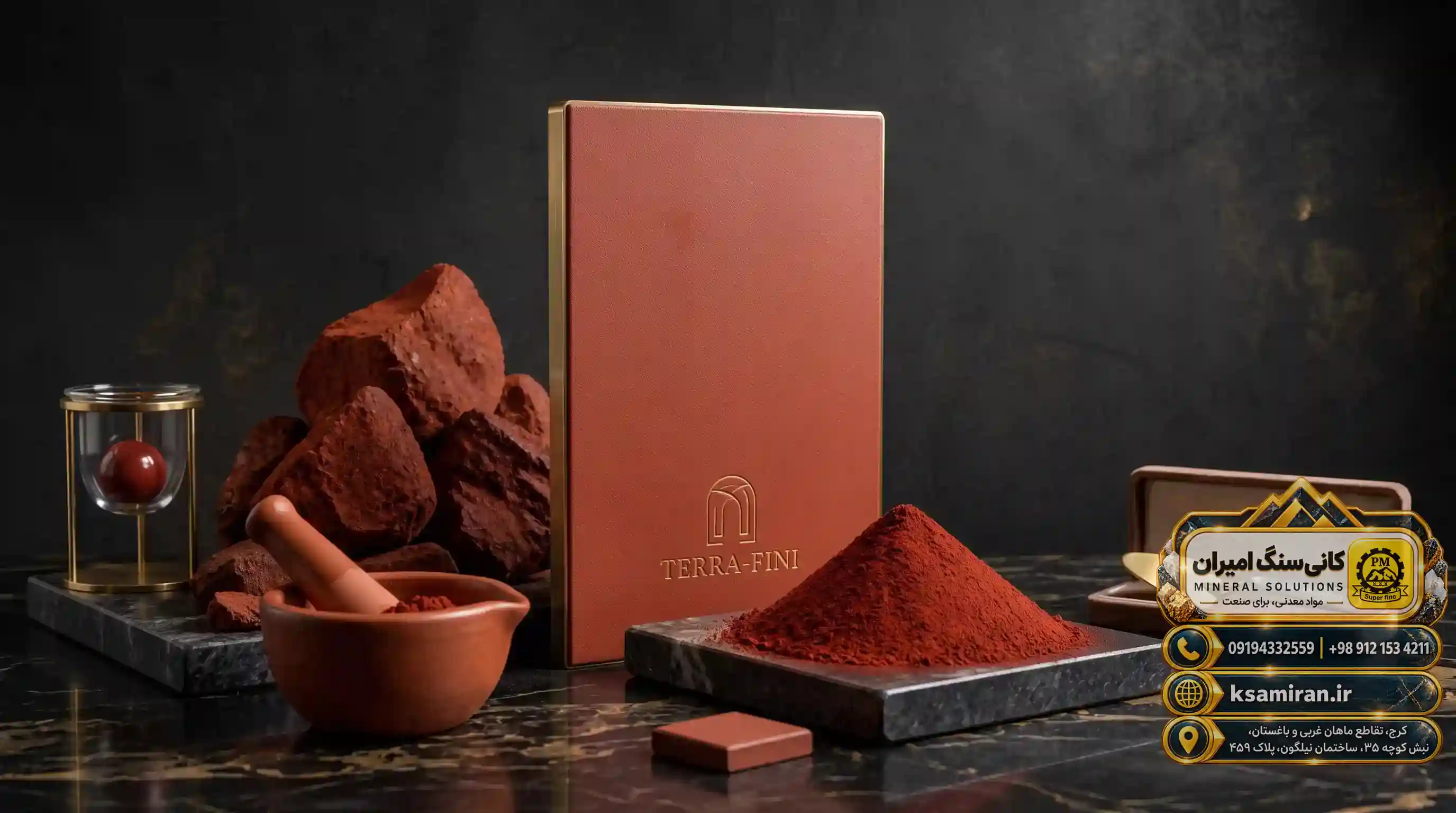
Red Iron Oxide (Ochre) Meshing; Understanding the 450 to 1500 Mesh Range
One of the most important technical parameters in reviewing the price of red iron oxide (ochre) is the meshing of this product. The word «Mesh» means the number of holes per inch of the sieve through which the powder passes; the higher the mesh number, the finer and smoother the product particles will be. Red iron oxide (ochre) is produced and offered in the 450 to 1500 mesh range, and this wide range allows the selection of the appropriate product for various industries.
Lower grades such as 450 to 600 mesh are usually used for applications that do not require very high fineness; for example, in coloring cement, building facade concretes, bricks, and building materials, these same grades perform well and are more economically cost-effective. In contrast, higher grades such as 1000 to 1500 mesh, due to the fineness of the particles and greater uniformity, are used in the production of industrial paints, surface coatings, delicate ceramics, and decorative tiles, and they also have a higher price.
The effect of mesh on price is not limited to grinding costs. Finer particles have a larger contact surface and create better dispersion in paint and resin formulations; meaning that by using a product with a higher mesh, a more uniform color and better surface quality can be achieved. This quality superiority is the main reason for the price difference between various grades of red iron oxide (ochre) in the market.
Smart buyers, before purchasing, first specify the technical needs of their project: is a 450 mesh product sufficient for coloring cement, or is a 1200 grade needed for industrial paint production? Choosing the wrong grade can lead to increased costs or a drop in the quality of the final product. For this reason, consulting with the supplier and carefully reviewing the technical specifications is an essential step in the purchasing process of this mineral material.
Application of Red Iron Oxide (Ochre) in Pigment and Coating Industries
The pigment and coating industry is one of the largest consumers of red iron oxide (ochre) in the world. This material, due to its natural red color, high light stability, and resistance to atmospheric conditions, is used as an organic and safe mineral pigment in the production of building paints, industrial paints, primers, and protective coatings. Unlike synthetic colors that quickly fade against sunlight and moisture, red iron oxide (ochre) retains its original appearance for years without any significant color change.
In paint production, iron oxide particles must be well dispersed in the resin or solvent substrate. The higher the mesh of the product, the better this dispersion occurs, and the surface quality of the final paint becomes more uniform. For this reason, manufacturers of high-quality paints usually choose the higher grades of this product. To become familiar with the exact difference between the types of this product in the paint industry, read the article Comparison of Types of Red Iron Oxide (Ochre) in the Paint and Resin Industries which examines the difference between grades in these industries.
In the industrial coatings sector, red iron oxide is also used as an anti-corrosion agent and protective coating for metals, pipes, metal structures, and industrial equipment. The coating layer containing this mineral material, due to the density and structure of the particles, creates a barrier against the penetration of moisture and oxygen and prevents the rusting of infrastructure. This feature has made red iron oxide (ochre) a strategic material in infrastructure projects and the oil, gas, and petrochemical industries.
Also, in the production of plastics, colored paper, ink, and markers, this material is used as a safe and stable mineral pigment. The safety of this product for humans and the environment is one of its important advantages over chemical colors; because iron oxide is a natural and non-toxic compound. This wide range of applications has caused the demand for red iron oxide (ochre) in the mineral market to be constantly on the rise, and its price fluctuations affect dependent industries.
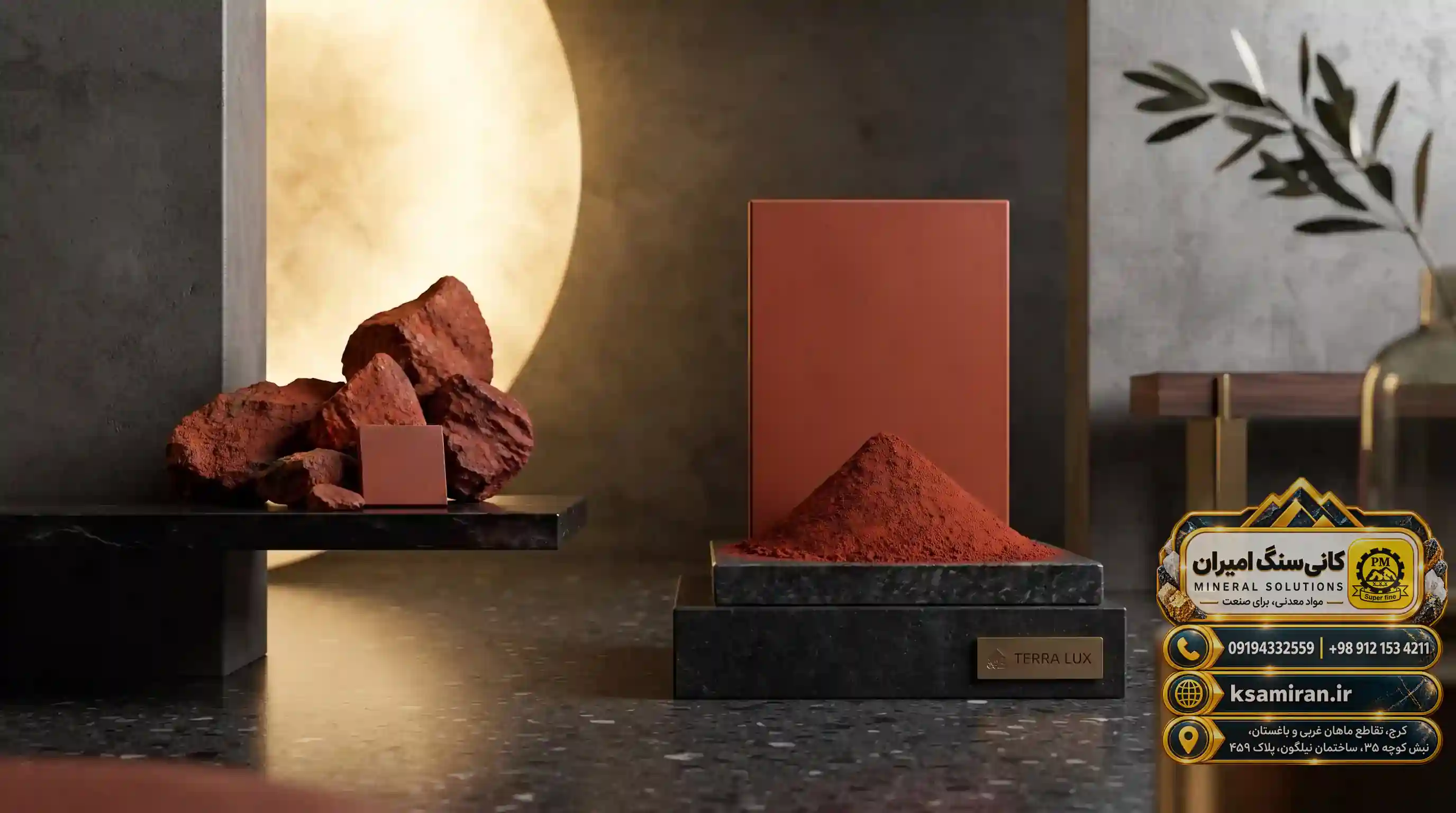
Application of Red Iron Oxide (Ochre) in Cement and Ceramic Product Industries
The cement and ceramic industries are among the most important consumer markets for red iron oxide (ochre) in Iran and the world. In the cement industry, this mineral material is used as a colorant and mineral additive for the production of colored cements, building facade concretes, colored bricks, mosaics, and decorative materials. The red-brown color of this material, in combination with white or gray cement, creates an attractive color variety for architects and designers of interior and exterior spaces.
One of the advantages of using red iron oxide (ochre) in cement is the stability of the color over time. Organic and chemical colors usually fade against light and environmental moisture, while mineral pigments based on iron oxide, due to their stable crystalline structure, retain their original color for years. This feature has made colored cement produced with this product very popular in building facades and urban spaces.
In the ceramics, tile, glaze, and glass industries, red iron oxide also plays a coloring role and, in some cases, a catalytic role in the firing process. Ceramic glazes, tile bodies, and decorative ceramic products take on warm and natural colors using this material. The grade required in this industry usually must have a higher mesh so that the particles are completely dissolved in the glaze and color uniformity on the surface of the final product is guaranteed.
Also, in the production of facing bricks, exposed concrete, and artificial stones, this mineral material is used as a coloring and reinforcing additive. The variety of grades from 450 to 1500 mesh allows manufacturers to choose the appropriate product for each of these applications. Amiran Stone Mineral Project also introduces red iron oxide (ochre) with these applications for the cement and ceramic industries and provides access to various grades for buyers.
Factors Affecting the Price Fluctuations of Red Iron Oxide (Ochre)
The price of red iron oxide (ochre) in the mineral market is not a fixed number and is constantly changing under the influence of various factors. Knowing these factors helps buyers to recognize the right time to buy and make more economic decisions against market fluctuations. One of the most important factors is the price of raw materials and iron ore. Since red iron oxide is extracted or derived from iron mineral rocks, any change in the price of iron ore and extraction costs directly affects the price of this product.
The second factor is energy costs. The process of extraction, crushing, grinding, and reaching high meshes (up to 1500 mesh) requires significant electricity and fuel consumption. Fluctuations in the price of energy carriers are one of the main reasons for changes in the prices of mineral materials in the Iranian market. The third factor is the exchange rate and machinery imports. Part of the processing and laboratory equipment needed by producers is imported, and with a change in the exchange rate, production costs and consequently the final price of the product change.
The fourth factor is market demand. In peak construction seasons and civil projects, the demand for building paints, colored cement, and ceramics increases, and this can temporarily raise the price of red iron oxide (ochre). Also, export and import policies can affect domestic supply. The fifth factor is the quality and purity of the product; products with higher purity and better color uniformity have higher prices.
To better understand the fluctuations of the mineral market, studying related reports such as Analysis of Kaolin Price Trend Changes in the Mineral Market can provide a perspective on the pricing pattes of this industry. Ultimately, it is suggested that buyers get price quotes from several suppliers before buying in high volume, and in addition to the final figure, consider items such as purity, mesh, packaging, and the ability to supply sustainably.
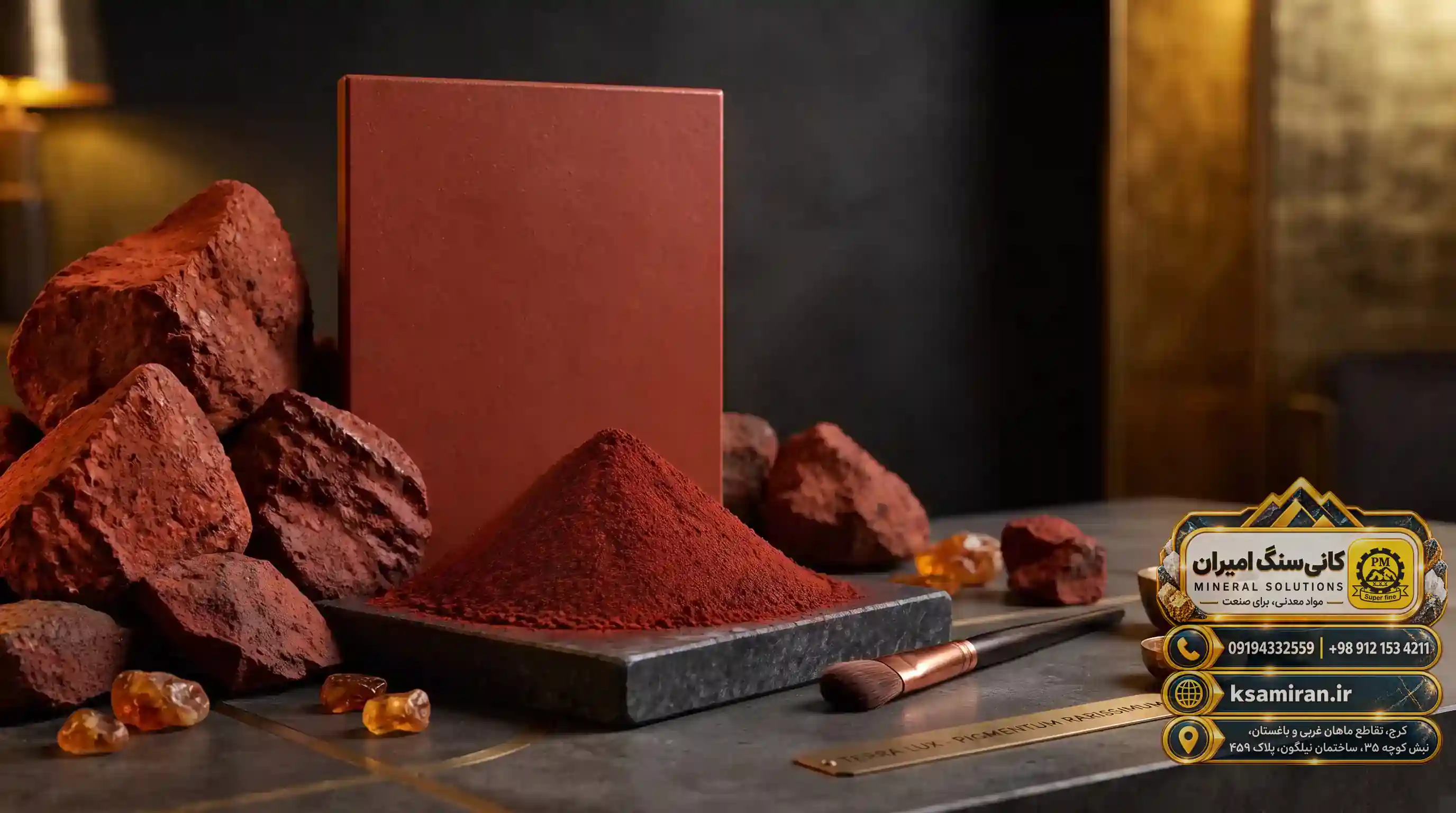
Comparison of Red Iron Oxide (Ochre) with Other Industrial Minerals
In the Iranian mineral market, red iron oxide (ochre) holds a special position alongside other minerals such as feldspar and kaolin. Each of these materials has applications in various industries, and comparing their market behavior provides a clear perspective on the position of red iron oxide. Feldspar is mainly used in the ceramics, glass, and tile industries as a filler and charger, and to become familiar with its market situation, you can read the article Review of Feldspar Price in Iran's Mineral Market. Kaolin, which is an industrial clay, is widely used in the paint, plastic, paper, and rubber industries.
The main difference between red iron oxide (ochre) and these minerals is its role as a pigment. While feldspar and kaolin mostly play the role of filler, extender, and regulator of physical properties, red iron oxide is responsible for coloring and light resistance of the final product. This difference in role causes the demand for this product to be more dependent on the paint, colored cement, and decorative ceramics industries.
In terms of market structure, all three minerals are affected by similar factors such as extraction costs, energy, exchange rate, and construction industry demand. However, red iron oxide, being offered as a product with higher added value (pigment), usually has a different price range than raw materials. Also, the variety of grades from 450 to 1500 mesh causes this product to be offered to the market in several different price classes.
One of the important points for buyers is understanding that the choice of minerals should be based on the technical needs of the project, not just the price. For example, in the formulation of a ceramic paint, a combination of feldspar (as a substrate), kaolin (as a regulator), and red iron oxide (as a pigment) is used, and their incorrect substitution severely affects the quality of the final product. Therefore, studying market reports and comparing the factors affecting the price of each of these materials helps in better decision-making.
Guide to Buying Red Iron Oxide (Ochre) and Choosing a Reliable Supplier
Buying red iron oxide (ochre) requires precision and attention to technical details. The first step in the purchasing process is determining the project's need: what is your application? Do you want this material for coloring cement, producing industrial paint, ceramics, or protective coatings? The answer to this question determines the mesh of the product (450 to 1500 mesh) and the required purity. For example, for colored cement, lower grades are more economical, while for industrial paints, higher grades offer better quality.
The second step is choosing a reliable supplier. A reliable supplier must transparently present the technical specifications of their product, including mesh, purity, and applications, and provide the possibility of direct coordination with the technical team. Amiran Stone Mineral Project, as a mineral materials producer, has introduced red iron oxide (ochre) for pigment, coating, cement, and ceramic product applications, and its complete information is available on the Red Iron Oxide (Ochre) product page.
The third step is evaluating the product's quality. Before buying in high volume, requesting and examining a sample is mandatory. When examining the sample, pay attention to color uniformity, particle fineness, and the absence of large impurities. Although precise tests require specialized facilities, initial inspection can prevent purchasing an inappropriate product. Also, ensure with the supplier about the possibility of sustainable supply during the project; because changing the supplier in the middle of the work can cause a drop in the quality of the final product.
The fourth step is negotiating the price and purchase terms. The final price depends on factors such as purchase volume, packaging type, and delivery terms. Buying in high volume usually has a lower unit price. Ultimately, it is recommended to convert a verbal contract into a written one and include all agreed specifications (mesh, purity, packaging, delivery time, and price). This action preserves the buyer's rights in the event of a dispute and brings you a more reliable shopping experience.
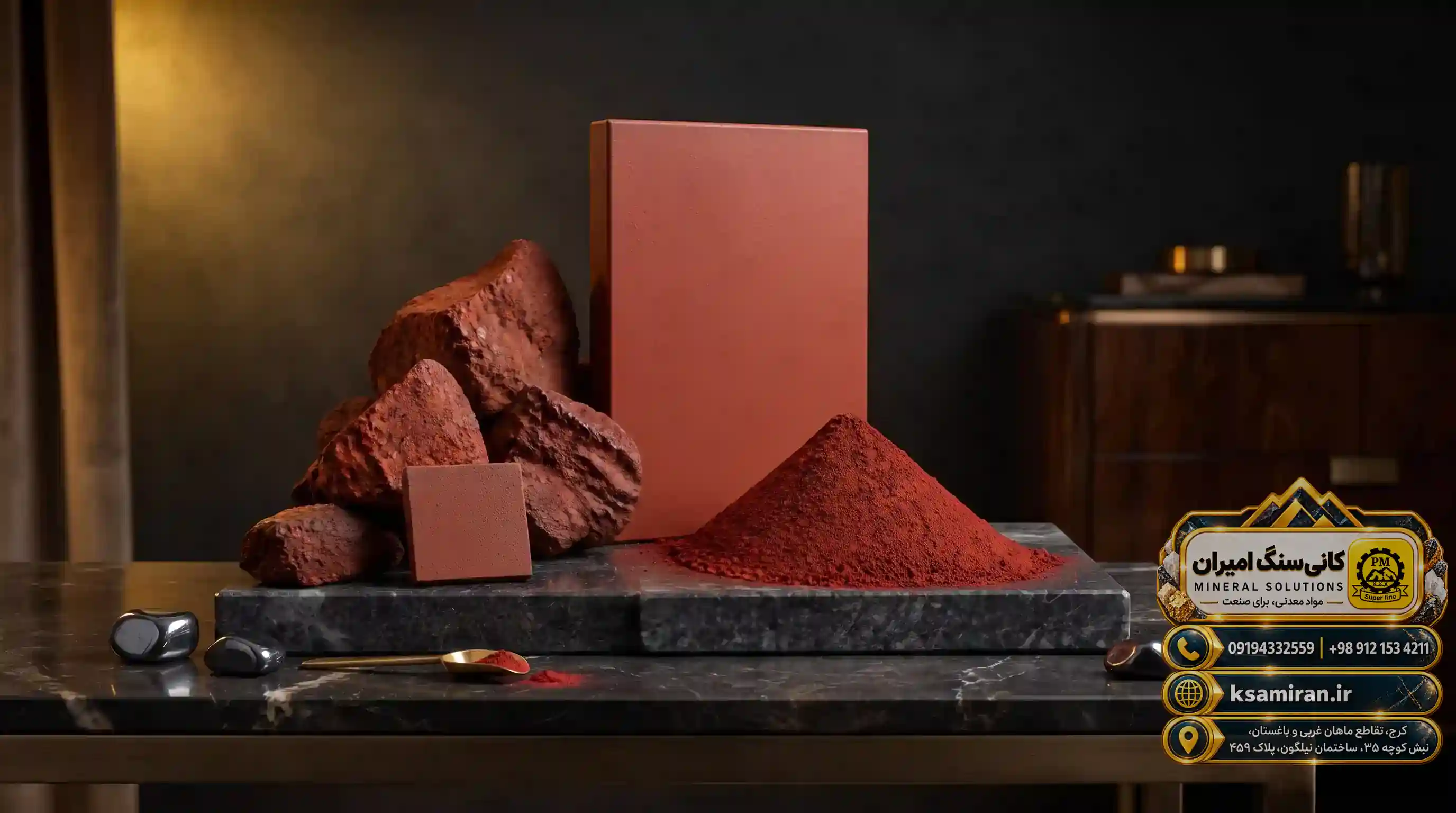
| Row | Question | Answer |
|---|---|---|
| 1 | What is the price of red iron oxide (ochre)? | The price of this product is not fixed and depends on factors such as purity, mesh (450 1500), production method, and purchase volume. To know the current price, a quote must be requested from the supplier. |
| 2 | What are the main applications of red iron oxide (ochre)? | This product is mainly used in the pigment, coating, colored cement, and ceramic product industries. |
| 3 | What is the difference between the different meshes of this product? | The higher the mesh number, the finer the particles. Lower meshes are more suitable for cement, and higher meshes for paint and ceramics. |
| 4 | What is the difference between natural and synthetic red iron oxide? | The natural type is extracted from the mine and has a lower price; the synthetic type has higher purity and uniformity and is more expensive. |
| 5 | Is red iron oxide suitable for coloring cement? | Yes, due to its color stability against light and moisture, this product is one of the common pigments in colored cement and building facade concrete. |
| 6 | Which grade is suitable for application in ceramics? | For glaze and ceramics, grades with a higher mesh (such as 1000 to 1500) are usually recommended to guarantee color uniformity. |
| 7 | What are the factors affecting the price of this product? | Raw material prices, energy costs, exchange rates, market demand, product purity, and mesh are among the main factors. |
| 8 | How to recognize a reliable supplier of red iron oxide? | A supplier that transparently presents the product's technical specifications, provides the possibility of sending samples, and guarantees sustainable supply is more reliable. |
| 9 | Is buying in large volumes cheaper? | Usually yes; wholesale purchases have a lower unit price, but before buying in high volume, a product sample must be examined. |
| 10 | Where to buy red iron oxide (ochre)? | This product is offered by Amiran Stone Mineral Project and its information is available on the red iron oxide (ochre) product page. |
The specifications and applications mentioned in this article are based on information provided by the Amiran Stone Mineral Project (mineral production).
برچسب: Red Iron Oxide (Ochre),Review of Red Iron Oxide (Ochre) Price in the Mineral Market,
نویسنده: رساوب آفرین