
درباره سایت
آخرین مطالب
- راهنمای ثبت سفارش آنلاین و استعلام قیمت کائولن
- چگونه بهترین اکسید آهن قرمز (اخرا) را برای پروژه انتخاب کنیم؟
- بررسی جامع خواص اکوستیک و وزن مخصوص باریت سفید صنعتی
- نقش کائولن در کاهش هزینههای تولید در صنایع معدنی
- نقش سیلیس در افزایش مقاومت حرارتی مواد نسوز
- چرا اکسید آهن قرمز (اخرا) قدرت پوشانندگی بالایی دارد؟
- The role of industrial barite in the papermaking and specialty coatings industries
- How to find the best kaolin supplier in the country?
- How to properly examine feldspar analysis?
- ما هي استخدامات التالك الصناعي في صناعة البلاستيك والمطاط؟
امکانات وب
Introduction: Why Choosing the Right Mineral Matters?
In today's world, minerals form the basis of many products we use daily — from window glass and ceramic tableware to industrial parts and building concrete. Among these materials, two minerals known as silica and bentonite play prominent roles across various industries and are often compared with one another. Although both are extracted from the earth and used in industrial processes, the differences in their chemical structure and process behavior are so significant that mistakenly substituting one for the other can severely impact the quality of the final product.
Silica, with the chemical formula SiO₂, is one of the most abundant compounds in the Earth's crust. Thanks to its high thermal stability, suitable hardness, abrasion resistance, and transparency after melting, it is widely used in the glassmaking, foundry, ceramic, and building materials industries. This mineral is produced and supplied in the 10 450 mesh range, and depending on the industry and production process, its particle size plays different roles.
On the other hand, bentonite is a type of clay capable of swelling upon contact with water, and is mainly used as a binder, moisture absorbent, preform material, and purifying agent across various industries. Bentonite's layered structure allows it to absorb water and expand to several times its volume — a characteristic that silica does not possess.
The importance of choosing correctly between these two materials is not limited to product quality alone. Using an unsuitable mineral — or even the wrong mesh size — can increase fuace energy consumption, reduce mold lifespan, destabilize the production process, and ultimately lead to defective parts and higher costs. For example, in the glass industry, using silica with an inappropriate particle size leads to incomplete melting and increased energy consumption; in foundries, incorrect use of binders can cause mold collapse and molten metal loss.
Choosing the right mineral depends on several factors: the type of industry, the production process, fuace temperature, available equipment, and ultimately the project budget. Before any purchase, you must understand your industry's precise requirements and match the characteristics of each mineral to those needs. Otherwise, you may end up buying a product that is technically unsuitable for your production line, imposing heavy long-term costs.
In this article, we will first examine the properties of silica and bentonite separately, then compare their performance across four main industries — glass, foundry, ceramics, and building materials — and finally provide a practical guide for making the right choice. If you are deciding on purchasing minerals for your project, this article is written specifically for you.
Silica, with the chemical formula SiO₂ (silicon dioxide), is one of the most abundant compounds in the Earth's crust. This mineral occurs naturally in several crystalline and amorphous forms, and its most important commercial form — widely used across industries — is quartz. Pure silica is typically white or colorless, but impurities of iron, aluminum, and other compounds can give it yellow, pink, gray, or brown hues.
One of silica's most important properties is its high melting point. Pure silica melts at approximately 1710 °C, making it an ideal material for high-temperature applications such as the glass and foundry industries. In addition, silica's hardness is about 7 on the Mohs scale, making it one of the hardest common minerals. Silica is resistant to most acids, is a poor electrical conductor, and is highly stable against abrasion and weathering.
Silica Mesh Range
In the market, silica is supplied in the 10 450 mesh range. The mesh number indicates the number of openings per square inch of the sieve — the higher the mesh number, the finer the particles. Low-mesh (coarser) silica is suitable for applications such as foundry, building materials, and filtration, while high-mesh (finer) silica is used in the glass, ceramic, glaze, and filler industries. Choosing the right particle size depends entirely on your production process, and a wrong choice can cause process instability and reduced product quality.
At the Kani Sang Amiran project, silica is produced in the 10 450 mesh range and supplied to the glass, foundry, ceramic, and building materials industries. Manufacturers can select the appropriate mesh based on their production line requirements.
Main Applications of Silica
- Glass industry: Silica is the primary raw material for producing all types of glass and makes up the bulk of ordinary glass compositions.
- Foundry industry: Due to its high thermal resistance, it is used in producing foundry molds and foundry sands.
- Ceramic industry: It serves as the main material in making ceramic bodies and formulating glazes.
- Building materials: It is used as aggregate and filler in the production of concrete, mortar, bricks, and other building products.
In addition to the above applications, silica is also used in the chemical industry, silica gel production, water filters, paint manufacturing, and other specialized applications. Overall, silica is a versatile mineral whose presence in many industries is irreplaceable.
Important safety note: Silica dust can be hazardous to the lungs if inhaled over long periods. For this reason, respiratory protective equipment and dust control systems must be used during silica crushing, screening, and transport. This is of critical importance in factories and mines, and failure to observe it can endanger workers' health.
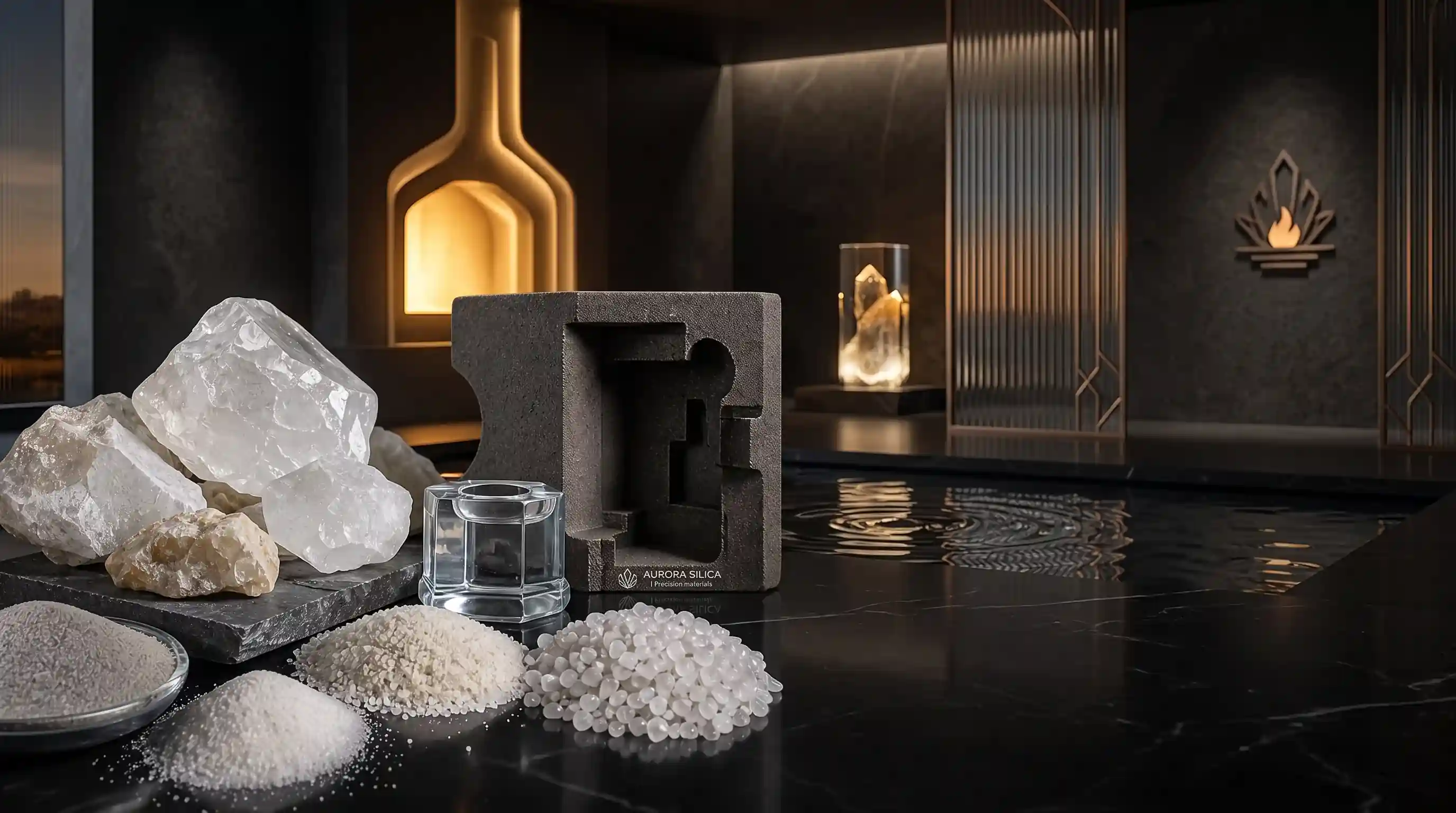
Bentonite is a natural mineral from the clay family, composed primarily of montmorillonite (a swelling clay). It forms over millions of years through chemical changes and the weathering of volcanic ash, and is mined from various deposits. Bentonite's most important property is its ability to absorb water and swell to several times its original volume.
Bentonite is generally divided into two categories: sodium (containing sodium) and calcium (containing calcium). Sodium bentonite has a higher swelling capacity and is used in applications requiring binding, gelling, and suspension, while calcium bentonite swells less and is mostly used in moisture-absorbing, purification, and desiccant applications. The type of bentonite should be selected based on the industry's needs.
Properties of Bentonite
- High swelling capacity: In contact with water, its volume expands several-fold.
- Natural binding: It is used as a natural binder in many processes.
- Moisture absorption: It can absorb water and other liquids.
- Plasticity: When mixed with water, it becomes a pliable, moldable paste.
- Particle adsorbent: It is used in purification and impurity adsorption.
Main Applications of Bentonite
Bentonite is used across a highly diverse range of industries. In the foundry industry, it serves as a molding sand binder, helping the sand stick together and creating a mold strong enough to receive molten metal. In drilling, bentonite is the base of drilling mud and is used as a lubricant and bit coolant. In the food, agricultural, livestock, detergent, and even personal care industries, bentonite is used as a moisture absorbent and purifier. It is also used in environmental applications such as sealing dams and canals, waste disposal, and soil stabilization.
The fundamental difference between bentonite and silica becomes apparent at exactly this point: bentonite, due to its clay structure, offers binding and swelling properties, while silica is a hard, stable, heat-resistant material. This essential difference means the two materials caot substitute for one another, and each has its own specific applications. In fact, in many processes such as foundry work, the two are used side by side to play complementary roles.
Unlike silica, bentonite behaves completely differently upon contact with water — it becomes a paste, swells, and becomes shapeable. These properties make bentonite suitable for binding and molding applications, but unsuitable for applications requiring dimensional stability at high temperatures.
In the following chapters, we will examine the application of both materials across major industries to see which one performs better in each industry and why.
The glass industry is one of the world's largest consumers of silica. In the production of ordinary glass, silica makes up the bulk of the raw batch and forms the structural skeleton of the glass. When silica is melted with soda ash (sodium carbonate) and limestone in a fuace, a transparent and uniform glass is produced — used in windows, tableware, automotive glass, and thousands of other products.
In the glass industry, the quality of silica is critically important. Impurities such as iron and other heavy metals can reduce the glass's transparency and give it a green or blue tint. For this reason, high-purity silica is used to produce clear, high-quality glass. In specialty glasses such as optical glass, borosilicate, and crystal glass, silica purity requirements are far more stringent, and any impurity can ruin the final product.
Silica's particle size is also crucial in this industry. Finer-mesh silica melts faster in the fuace and reduces energy consumption, while coarser silica may melt incompletely and cause defects in the final glass. Choosing the right mesh depends on the fuace type, melting temperature, and final product, and it is one of the key factors in optimizing energy consumption.
Bentonite has no direct application in the main glass batch. Substituting it for silica is practically impossible, because bentonite behaves completely differently at high temperatures — it swells, and its aluminum compounds and water content cause bubbles and haziness in the glass. In some auxiliary processes such as fuace water treatment or waste disposal, bentonite may be used, but it has no place in the main glass composition and caot fulfill silica's role.
Types of Glass and the Role of Silica
In float glass used for windows, high-purity silica contributes to full transparency. In colored and decorative glass, impurities in the silica can act as coloring agents. In heat-resistant glass, silica plays the main role in withstanding thermal shock. In each of these products, the mesh range and purity of silica must be selected based on the formulation.
Conclusion for the Glass Industry
For the glass industry, silica is unrivaled. Thanks to its thermal stability, post-melt transparency, and abundance, it is the primary, irreplaceable material in glass production. If you operate in this industry, you should look for high-purity silica with the appropriate mesh size. Silica with a wide mesh range can cover the diverse needs of glassmaking and be the most optimal choice for your production line.
At the Kani Sang Amiran project, silica in the 10 450 mesh range is supplied to the glassmaking industry, and manufacturers can select the appropriate mesh based on their production line needs. Choosing the right silica mesh can optimize fuace energy consumption and improve the quality of the final glass.
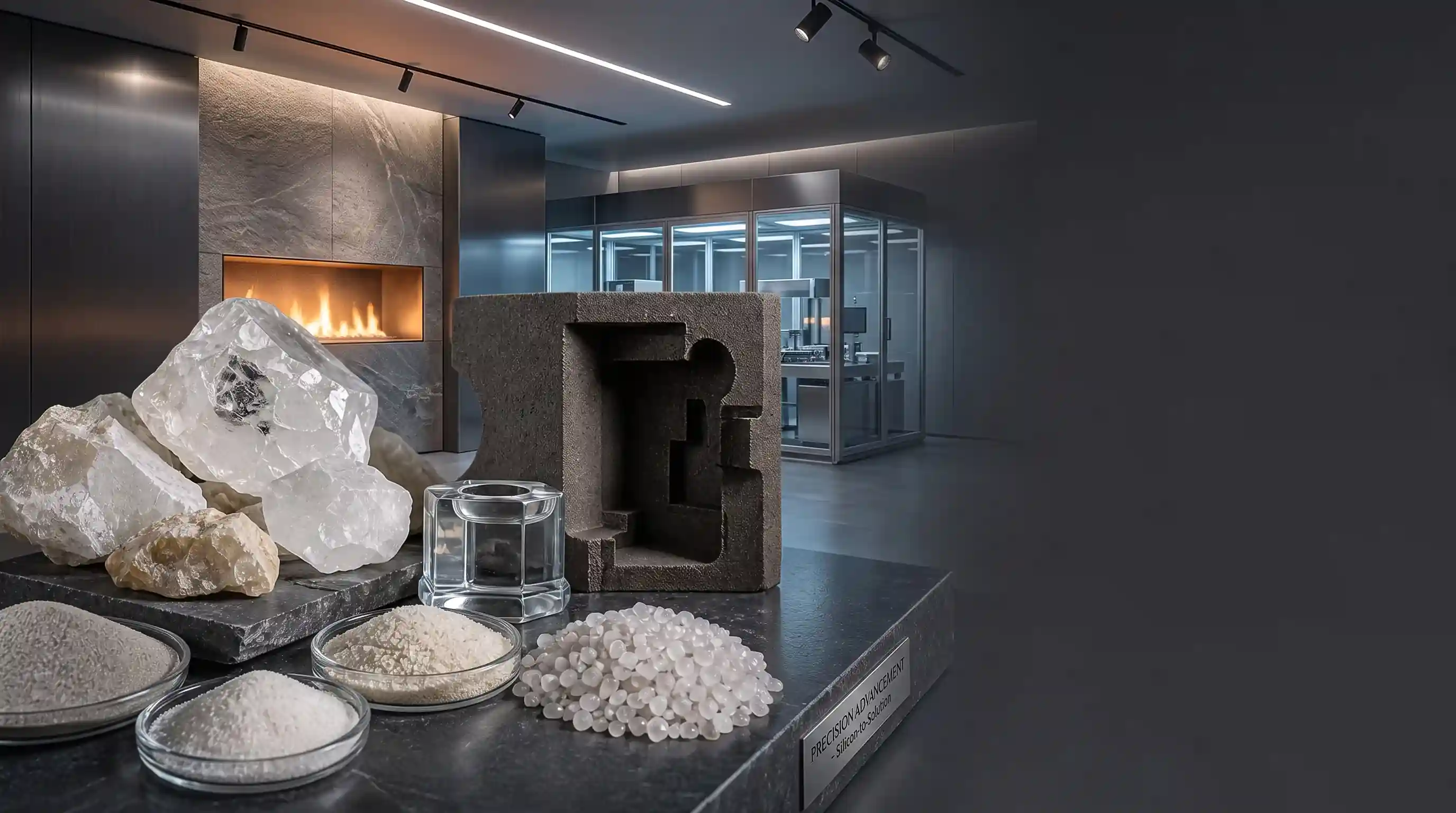
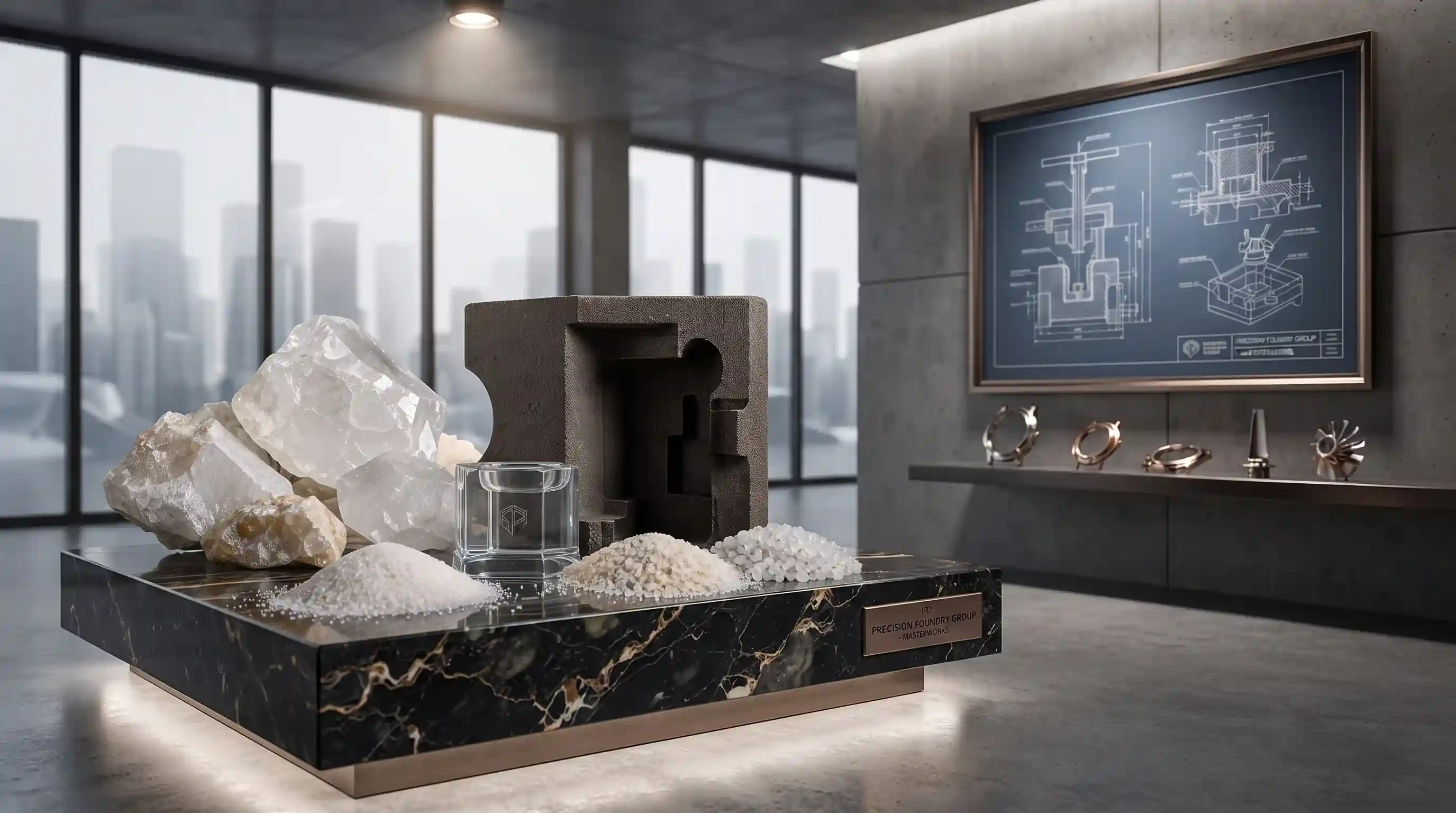
In the foundry industry, both silica and bentonite are used, but their roles are completely different. Silica sand — thanks to its high thermal stability and suitable density — is the primary material for making foundry molds. A silica mold can withstand the extremely high temperature of molten metal without deforming or reacting with the melt.
Bentonite, on the other hand, is used in the foundry industry as a binder. Silica sand does not stick together on its own, so a binding material is needed for the mold to hold its shape. Bentonite ensures the mold's strength by creating bonds between the sand particles and utilizing moisture. This combination of silica sand, bentonite, and water is exactly what is used in the green sand casting process — one of the most common casting methods in the world.
Properties of Silica in Foundry
- High thermal resistance: The high melting point makes the mold resistant to molten metal.
- Suitable density: It gives the mold strength and dimensional stability.
- Particle size distribution: A blend of different meshes improves mold packing and reduces porosity.
- Recyclability: Silica sand can be reused in subsequent cycles, reducing production costs.
In foundry work, silica quality directly affects the quality of the final part. Silica with high impurity levels can cause gas generation in the mold, bubbles in the part, and even mold collapse. For this reason, selecting silica with a standard mesh range and adequate purity is very important. Additionally, silica with the right mesh produces a smoother surface on the final part and reduces the need for machining.
Bentonite must also be selected based on the type of process. Sodium bentonite is suitable for molds requiring higher binding strength, while calcium bentonite is used for simpler applications and moisture absorption. Bentonite quality also directly affects the part's surface quality and the number of defective pieces.
Foundry Sand Recycling
One advantage of using silica in foundry work is the ability to recycle the sand after casting. Used sand, after being separated from the part, can be reprocessed and retued to the production cycle. This both reduces raw material purchase costs and benefits the environment. Of course, recycled sand must undergo quality testing to ensure it still retains the appropriate properties.
Conclusion for the Foundry Industry
In foundry work, silica and bentonite complement — rather than compete with — each other. Silica builds the mold body, and bentonite binds it together. So if you operate in this industry, you need both minerals. The Kani Sang Amiran project supplies silica in the 10 450 mesh range for the foundry industry, and manufacturers can select the mesh their production line requires.
The ceramic industry is another major consumer of silica. Silica plays an essential role in producing ceramic bodies, tiles, tableware, sanitary ware, and technical parts. In ceramic body formulation, silica acts as the skeleton-builder and primary constituent, and during firing it creates a glassy structure that gives the ceramic its strength. Without silica, producing ceramics with the desired strength is practically impossible.
Silica is also one of the main components in producing ceramic glaze. Combined with feldspar, calcium carbonate, and other materials, silica forms a transparent and durable glaze that covers the ceramic surface, giving it brightness and moisture resistance. Silica's particle size is very important here — finer particles melt at lower temperatures and create a more uniform glaze, while coarser particles can cause glaze instability and surface defects.
Bentonite is also used in the ceramic industry, but in a different capacity. It is used as a binder and plasticizer in ceramic body formulation so that the ceramic paste becomes formable and does not crack during drying. In specialty and technical ceramics, bentonite can also act as a preform agent and increase green strength.
Types of Ceramics and the Role of Silica
In traditional ceramics such as tiles, tableware, and bricks, silica makes up a large portion of the composition. In advanced ceramics such as oxide ceramics, cutting tools, and wear-resistant parts, silica compounds form the product's foundation. In wall and floor tiles, silica is used in both the body and the glaze, and its quality directly affects the product's durability, color, and water absorption.
In the tile and ceramic industry, selecting silica with the right mesh allows firing at lower temperatures with less energy consumption and yields a more durable final product. Consistency of silica particles also prevents segregation and darkening of the product's color.
Differences in Roles within Ceramics
Again we see that silica and bentonite are not substitutes for one another; each has its own specific role. Silica provides the skeleton and strength, while bentonite provides formability and binding. Removing silica from a ceramic formulation is practically impossible, because the product's strength depends entirely on it. Bentonite, in smaller quantities, aids the forming process.
Conclusion for the Ceramic Industry
For the ceramic industry, silica is the primary, irreplaceable material. Silica's quality and mesh size directly affect the final product's strength, color, and surface quality. The Kani Sang Amiran project produces silica suitable for the ceramic industry in a wide mesh range, and manufacturers can select the appropriate mesh based on their formulation and fuace temperature.
In the building materials industry, silica is one of the most widely used minerals. In the production of concrete, mortar, bricks, blocks, and other building products, silica is used as aggregate and filler. High-quality silica can increase concrete's strength and improve the durability of building products.
In industrial concrete and high-performance concrete, silica quality directly affects durability and final strength. The SiO₂ in silica undergoes a pozzolanic reaction with cement water, creating a denser structure that is more resistant to water and chemical penetration. For a deeper understanding of this topic, read the article The Effect of Silica Quality on the Durability and Strength of Industrial Concrete.
Silica is also used in producing silica bricks, lightweight blocks, plaster and cement, and prefabricated building products. In building mortars, silica serves as a filler and strengthening agent. The particle size of silica in these products varies depending on the product type and application — from coarse meshes for concrete to fine meshes for delicate mortars.
In large construction projects, the quality of aggregates including silica has a direct impact on the structure's lifespan. Low-quality concrete can cause cracking, moisture penetration, and ultimately premature structural failure. For this reason, engineers on major projects always place great importance on the silica supply source and its quality, and specify its technical requirements in contracts.
In the construction industry, bentonite is mostly used in specialized applications — such as drilling mud for foundations, moisture insulation, wall glazing, and construction adhesives. Bentonite performs well in these applications due to its swelling and binding properties, but it caot replace silica as aggregate in concrete and caot fulfill the role of an aggregate.
Comparison in Building Materials
For the building materials industry, silica is the primary, irreplaceable material. From bricks and blocks to concrete and mortar, all rely on silica as their base material. Bentonite only has a place in specialized applications such as drilling mud or specialty insulation. So if you are a building materials manufacturer, silica is the core mineral for your production line, and you should pay special attention to its quality and mesh.
At the Kani Sang Amiran project, silica in the 10 450 mesh range is supplied to the building materials industry. This wide range allows manufacturers to select the appropriate mesh for each product — from coarse aggregates for concrete to fine particles for mortars and more delicate products.
So far, we have seen that silica and bentonite are two completely different minerals, each with its own specific applications. Here is a practical summary for making your final choice:
- If your industry is glassmaking: Silica is the only viable option. Bentonite has no place in the main glass composition.
- If your industry is foundry: You need both — silica for mold-making and bentonite as a binder.
- If your industry is ceramics: Silica is your product's skeleton, and bentonite helps form the paste.
- If your industry is building materials: Silica is your primary material, unless you are involved in specialized applications like drilling mud.
In addition to selecting the type of mineral, choosing the right mesh is also very important. Silica's particle size can greatly affect the production process and final product quality. To better understand the principles of mesh selection in minerals, you can read the Guide to Choosing the Right Coated Calcium Carbonate Mesh for Plastic Injection Molding, which explains the general principles of particle size selection in industrial processes.
Also, if you are active in the rubber or plastics industries and are looking for suitable minerals, the article How to Find the Right Feldspar for the Rubber Industry can be a useful guide to understanding mineral selection in polymer industries.
Summary of Differences
Silica: A hard, heat-resistant material that is transparent after melting, with a high melting point. Suitable for glass, ceramics, foundry, and building materials.
Bentonite: A swelling clay, natural binder, and moisture absorbent. Suitable for foundry (as a binder), drilling mud, purification, and moisture-absorbing applications.
Silica Purchasing Checklist
- Identify your industry type and production process.
- Determine the required mesh based on your final product.
- Assess silica purity based on your product's sensitivity.
- Buy from a supplier that provides precise technical information.
- Consider safety equipment for dust control.
Conclusion
Silica and bentonite are not competitors; they complement each other. Silica is the hard, resistant, and stable material that forms the skeleton of many industrial products, while bentonite is a binding and absorbent material used in specialized applications. By understanding your industry's needs, you can make the right choice and benefit from smart mineral purchasing. The Kani Sang Amiran project, as a mineral producer, manufactures silica in the 10 450 mesh range for the glass, foundry, ceramic, and building materials industries.
| Question | Answer |
|---|---|
| What is silica and what are its applications? | Silica (SiO₂) is silicon dioxide and is used in the glass, foundry, ceramic, and building materials industries. |
| What is bentonite and how does it differ from silica? | Bentonite is a swelling, binding clay, whereas silica is a hard, heat-resistant material. |
| What is the silica mesh range at the Kani Sang Amiran project? | Silica is produced and supplied in the 10 450 mesh range. |
| Which mineral is more suitable for the glass industry? | Silica, because bentonite has no place in glass compositions and causes haziness and bubbles. |
| Can bentonite be used instead of silica in foundry work? | No; in foundry work, silica builds the mold and bentonite acts as the binder — both are needed. |
| What role does silica play in ceramic production? | Silica is the skeleton-builder of the ceramic body and one of the main components of glaze; the product's strength depends on it. |
| What is the effect of silica quality on industrial concrete durability? | Silica's pozzolanic reaction makes the concrete structure denser, increasing its durability and strength. |
| Which silica mesh is right for my industry? | It depends on the industry; coarser meshes are more suitable for foundry and building materials, while finer meshes are better for glass, ceramics, and glaze. |
| Are there safety hazards in handling silica? | Yes; prolonged inhalation of silica dust is harmful, and respiratory protective equipment and dust control must be used. |
| How can I buy high-quality silica? | Buy from a supplier that provides precise technical information about purity and mesh range, such as the Kani Sang Amiran project. |
The specifications and applications mentioned in this article are compiled based on information available on the Kani Sang Amiran project website (ksamiran.ir).
برچسب: Silica,Silica or Bentonite? Which Mineral Is Right for Your Industry?,
نویسنده: رساوب آفرین