
درباره سایت
آخرین مطالب
- استخدام الباريت الصناعي في الصناعات التحويلية وتجهيز الأقمشة
- دراسة التأثيرات الحرارية لأكسيد الليمونيت (جل ماش)
- The Impact of Color and Whiteness of Industrial Talc Powder in the Paint Industry
- نقش اکسید آهن قرمز (اخرا) در صنایع تولید شیشه
- A Review of Modern Applications of Calcium Carbonate in Industry
- Review of the Application of Industrial Barite in the Pharmaceutical and Cosmetic Industries
- Bentonite and its Wide Application in the Ceramic and Glaze-Making Industries
- كيفية تحديد جودة الباريت الصناعي في المختبر؟
- الاستخدام المتخصص لأكسيد الحديد الأحمر (المغرة) في إنتاج البلاستيك
- استعراض التطبيقات الحديثة لكربونات الكالسيوم في الصناعة
امکانات وب
Introduction to the Importance of Kaolin in Mode Industries
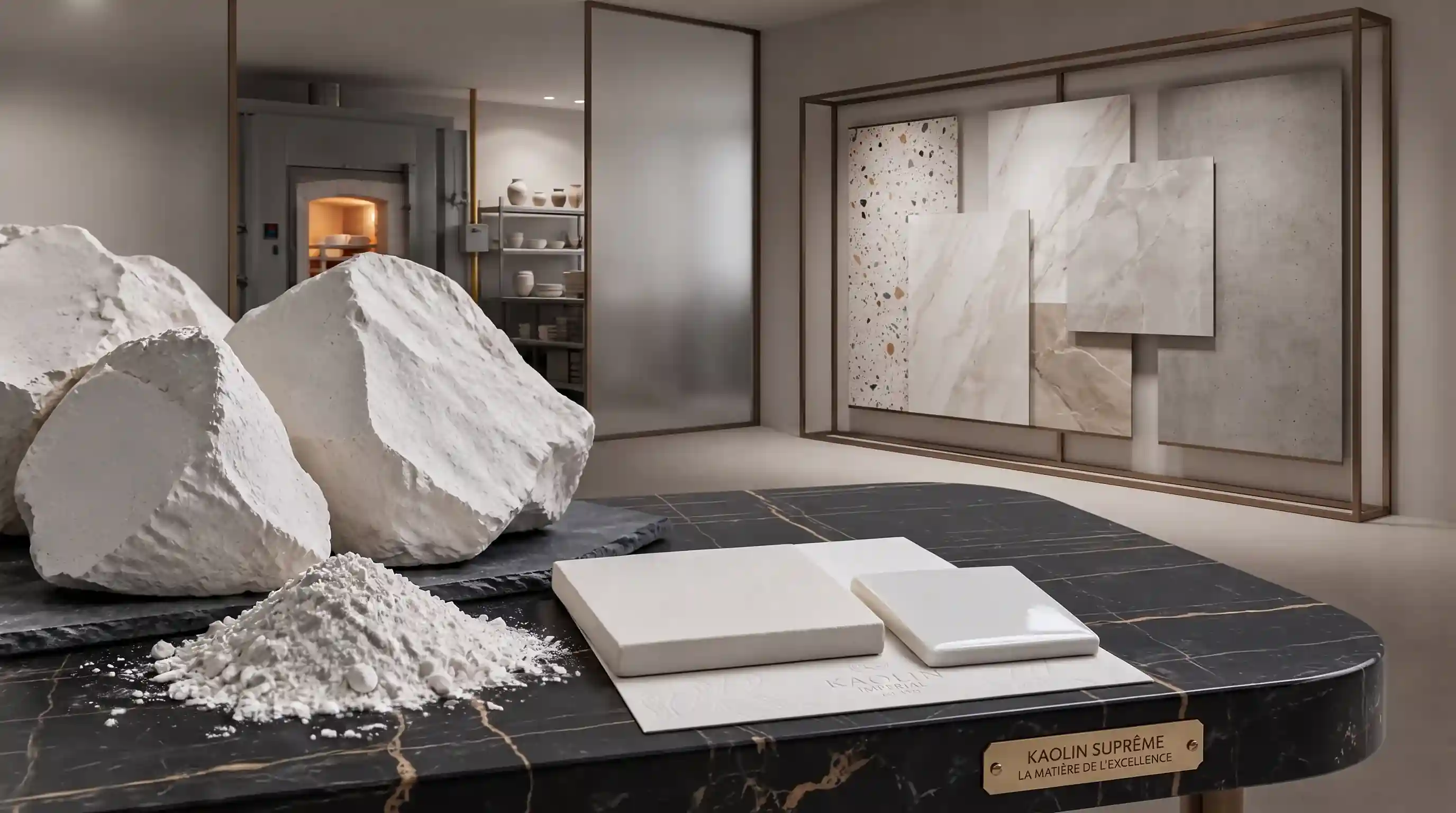
Kaolin mineral is recognized as one of the most strategic raw materials in various industries, holding a special place in industrial production due to its unique physical and chemical properties. Choosing the right material can have a direct impact on the final quality of products. In this article, we intend to closely examine the characteristics, applications, and how to choose the best type of kaolin for your factory so that the process of purchasing and using this mineral is done with full awareness.
Today, various industries are looking to improve the quality of their products, and the use of high-grade minerals plays a key role in this field. To lea more about other widely used industrial minerals, reading the article Why Dolomite is the Industrial Choice of Kanisang Amiran can give you a comprehensive perspective on raw material sourcing. However, kaolin remains unrivaled due to its specific characteristics.
A precise understanding of kaolin's properties helps purchasing managers and production engineers select a product suited to their production line. In the following chapters, we will explore the various dimensions of using this material in the tile, ceramic, paint, and paper industries to make the best possible decision.
Introduction to Kaolin and Its Technical Specifications
Kaolin is a hydrated aluminum silicate obtained from the weathering of feldspars and other silicate minerals. This material has found widespread applications due to its white color, high thermal stability, and excellent coating properties. The technical specifications of this material include items such as chemical composition, impurity levels, and particle size distribution, which are of high importance in industrial processes.
One of the most important factors in determining the quality of kaolin is its mesh range. The mesh range of 450 to 1500 mesh indicates the fineness of the powder, which is selected based on the needs of various industries. Finer powders are much more suitable for applications requiring a smooth and polished surface, such as paint manufacturing and special coatings.
Kanisang Amiran collection covers various industrial needs by producing and supplying high-quality kaolin in standard mesh ranges. To view detailed specifications and make a direct purchase, you can visit the Kaolin introduction page and gain more complete information.

Application of Kaolin in the Tile and Ceramic Industry
The tile and ceramic industry is one of the largest consumers of kaolin in the market. Due to its high melting point and the formation of a dense structure during firing, this material significantly increases the dimensional stability and mechanical strength of tiles. The presence of this mineral in the ceramic body reduces shrinkage and prevents warping of parts in firing kilns.
In addition to the body, kaolin is also used in glaze manufacturing as a suspending agent and adhesion improver. To better understand this, a closer look at the technical benefits of this material will be very helpful. Accordingly, reading the article Reviewing the Technical Benefits of Using Kaolin in Ceramics will help engineers achieve a more optimal formulation.
The correct choice of kaolin for tiles and ceramics depends on factors such as the amount of iron and titanium impurities, which affect the final color of the product. The products manufactured by Kanisang Amiran are processed with high precision to meet the necessary standards for this sensitive industry.
The Role of Kaolin in Paints and Industrial Coatings Industries
In the paint manufacturing industry, kaolin is recognized as an extender pigment that improves the optical and mechanical properties of the paint. Due to its appropriate refractive index, this material significantly helps improve paint coverage and reduce the consumption of titanium dioxide (which is an expensive material).
The mesh range of 450 to 1500 mesh is very ideal for use in paints and coatings, because finer particles help the uniform dispersion of paint in the solvent and prevent early sedimentation. Additionally, kaolin increases the paint's resistance to weathering, corrosion, and abrasion, ensuring the durability of the final coating.
Compared to other fillers like calcium carbonate, kaolin offers superior secondary properties. Of course, to better understand fillers in the industry, it is recommended to also read the article How to Identify Original Calcium Carbonate Powder? to become more familiar with the quality assessment criteria of mineral powders.
Application of Kaolin in the Paper Industry
The paper manufacturing industry is another major consumer of kaolin, using this material both as a filler in the paper structure and as a coating on the paper surface. Adding this material to paper pulp increases whiteness, opacity, surface smoothness, and improves the printability of the paper.
Fine kaolin particles effectively fill the empty spaces between cellulose fibers, creating a smooth surface that is essential for high-quality printing and color magazines. The appropriate mesh range for this industry should be such that it prevents equipment clogging while creating the best coverage.
Paper manufacturing plants can optimize the amount of ink used in printing and enhance the final product quality by selecting high-grade kaolin. Kanisang Amiran company well supplies the needs of paper production units by continuously providing this mineral material.
Examining the Mesh Range and Its Impact on Kaolin Selection
One of the most important technical parameters when purchasing kaolin is paying attention to its mesh range. Kaolin powders are usually supplied in the 450 to 1500 mesh range, each suitable for a specific application. Lower meshes have coarser particles, and higher meshes have much finer and micronized particles.
Choosing the wrong mesh can create many problems in the production line. For example, using coarse particles in the paint industry causes a drop in paint surface quality, while using very fine particles in some ceramic bodies may complicate the drying process.
Therefore, factory managers must examine the exact needs of their production line based on the product type and order the appropriate mesh before purchasing. Kanisang Amiran's technical experts are ready to provide consultation regarding the precise selection of mesh suited to each industry's needs.
How to Evaluate the Quality and Purity of Kaolin?
Evaluating the quality of kaolin before bulk purchasing is vital for any factory. Parameters such as the percentage of iron oxide (which causes stains and yellow color during firing), moisture content, particle size distribution, and post-firing whiteness are considered the most important purity assessment factors.
Quality control laboratories can determine the purity percentage and type of associated minerals by performing chemical analysis tests (XRF and XRD). Factories looking for quality consistency in their products (such as tiles, ceramics, and paints) must always request the raw material analysis sheet from the supplier.
The Kanisang Amiran collection provides the necessary peace of mind for its industrial customers by offering standard products and a valid analysis sheet so they can proceed with sourcing raw materials for their production line with complete confidence.
Ultimate Kaolin Purchasing Guide for Factory Procurement Managers
Ultimately, choosing the best type of kaolin for a factory requires a systematic approach in which items such as technical specifications, mesh range, final industrial application (tile, ceramic, glaze, paper, or paint), and supplier credibility are carefully reviewed. Direct communication with reputable manufacturers can reduce purchasing costs and ensure sustainable access to raw materials.
Procurement managers must also pay special attention to packaging methods, transportation conditions, and continuity of product supply to prevent any stoppage in the production line. Choosing Kanisang Amiran as a business partner is a guarantee for receiving high-quality and standard mineral materials.
Considering all the points mentioned in this article, you can now proceed to place an order for the kaolin needed by your factory with a broader perspective and more complete knowledge, noticeably improving the quality of your final products.
| Question | Answer |
|---|---|
| What is kaolin and what are its applications? | Kaolin is a hydrated aluminum silicate used in the tile, ceramic, glaze, paper, and paint industries. |
| What is the mesh range of the supplied kaolin? | Kaolin products are produced and supplied in a mesh range of 450 to 1500 mesh. |
| How do we choose the appropriate mesh for our factory? | Mesh selection depends on your industry; finer meshes are suitable for paint and paper, and standard meshes are suitable for tiles and ceramics. |
| Is kaolin also used in the paint manufacturing industry? | Yes, it is used as a filler and to improve paint coverage properties. |
| What is the role of kaolin in the tile and ceramic industry? | It increases thermal stability, mechanical strength, and reduces firing shrinkage. |
| How can the kaolin analysis sheet be obtained? | By contacting Kanisang Amiran's sales and support department, you can obtain the exact product analysis sheet. |
| What is the difference between kaolin and calcium carbonate? | Kaolin is an aluminum silicate, whereas calcium carbonate is a different mineral salt with other physical properties. |
| Does kaolin have an impact on the paper manufacturing industry? | Yes, it improves the whiteness, smoothness, and printability of paper. |
| How to order kaolin from Kanisang Amiran? | You can submit your request through the products page on the website. |
| What factors affect the price of kaolin? | Purity percentage, whiteness level, mesh range, and order volume are the main price-determining factors. |
Kanisang Amiran Project — Mineral and Industrial Production
برچسب: Kaolin,How to Choose the Best Type of Kaolin for Your Factory?,
نویسنده: رساوب آفرین