
درباره سایت
آخرین مطالب
- The Role of Kaolin in Improving Viscosity in Chemical Compounds
- كيفية قياس تحبيب التلك الأبيض لتلبية احتياجات صناعتك؟
- The Role of Dolomite in the Construction Powder Manufacturing Industry
- نقش کائولن در بهبود ویسکوزیته در ترکیبات شیمیایی
- نقش دولومیت در صنایع تولید پودرهای ساختمانی
- چگونه دانهبندی تالک سفید را برای نیاز صنعت خود بسنجیم؟
- دور الكاولين في تحسين اللزوجة في التركيبات الكيميائية
- Reviewing the Impact of Kaolin on Gloss and Durability of Industrial Coatings
- دور كربونات كالسيوم المغلف في زيادة مقاومة الصدمات للأجزاء البلاستيكية
- Examining the Effect of Feldspar on the Mechanical Properties of Tiles
امکانات وب
Introduction to the Importance of Dolomite in the Construction Powder Industry
The construction industry and the production of mode building materials always require raw materials that guarantee not only mechanical strength but also the durability and stability of structures. Minerals play a vital role in this regard, and one of the most prominent is dolomite. With its unique composition, this mineral has secured a special place in the formulation of various construction powders. To lea more about related mineral products, you can visit the dolomite page.
The use of standard mineral powders in the construction industry is of high importance due to their direct impact on the final quality of mortars, concretes, and surface coatings. This material is known as a filler and a physical property enhancer. By leveraging the unique characteristics of this material, engineers and manufacturers bring higher-quality products to the market that comfortably meet industrial standards.
A closer examination of the applications of this material shows that in many civil engineering projects, the presence of this mineral compound helps optimize cement consumption and provides better adhesion. Moreover, a deeper understanding of what the important application of dolomite in construction and manufacturing industries is can help various industries make the right choice of raw materials.
In the remainder of this article, the various dimensions of using this material, its technical specifications, and its impact on improving the quality of construction powders will be discussed and examined so that active professionals in the mining and construction sectors can gain a more comprehensive perspective on this subject.
Understanding the Chemical and Physical Structure of Dolomite
To better understand the performance of dolomite in construction powders, it is essential to understand its chemical composition and mineralogical structure. This carbonate sedimentary rock consists of calcium and magnesium carbonate. The chemical formula of this material indicates the simultaneous presence of calcium and magnesium ions, which gives it special properties and distinguishes it from ordinary limestone.
Physically, this material has medium hardness and a specific density that makes its crushing and sizing possible across various ranges. The mesh size range of the offered products typically varies between 10 to 40 mesh, and these particle size ranges are evaluated as highly efficient and suitable for specific uses in the building materials, ceramics, and glass manufacturing industries.
The thermal properties and chemical stability of this material enable it to exhibit good resistance against environmental factors and temperature changes. This stability is particularly crucial and decisive in industrial applications and the production of building materials that require a long lifespan.
Using advanced mining equipment, manufacturers convert this material after extraction into powders with uniform particle sizing. This uniformity in particle size improves the final product's performance when combined with other construction additives.
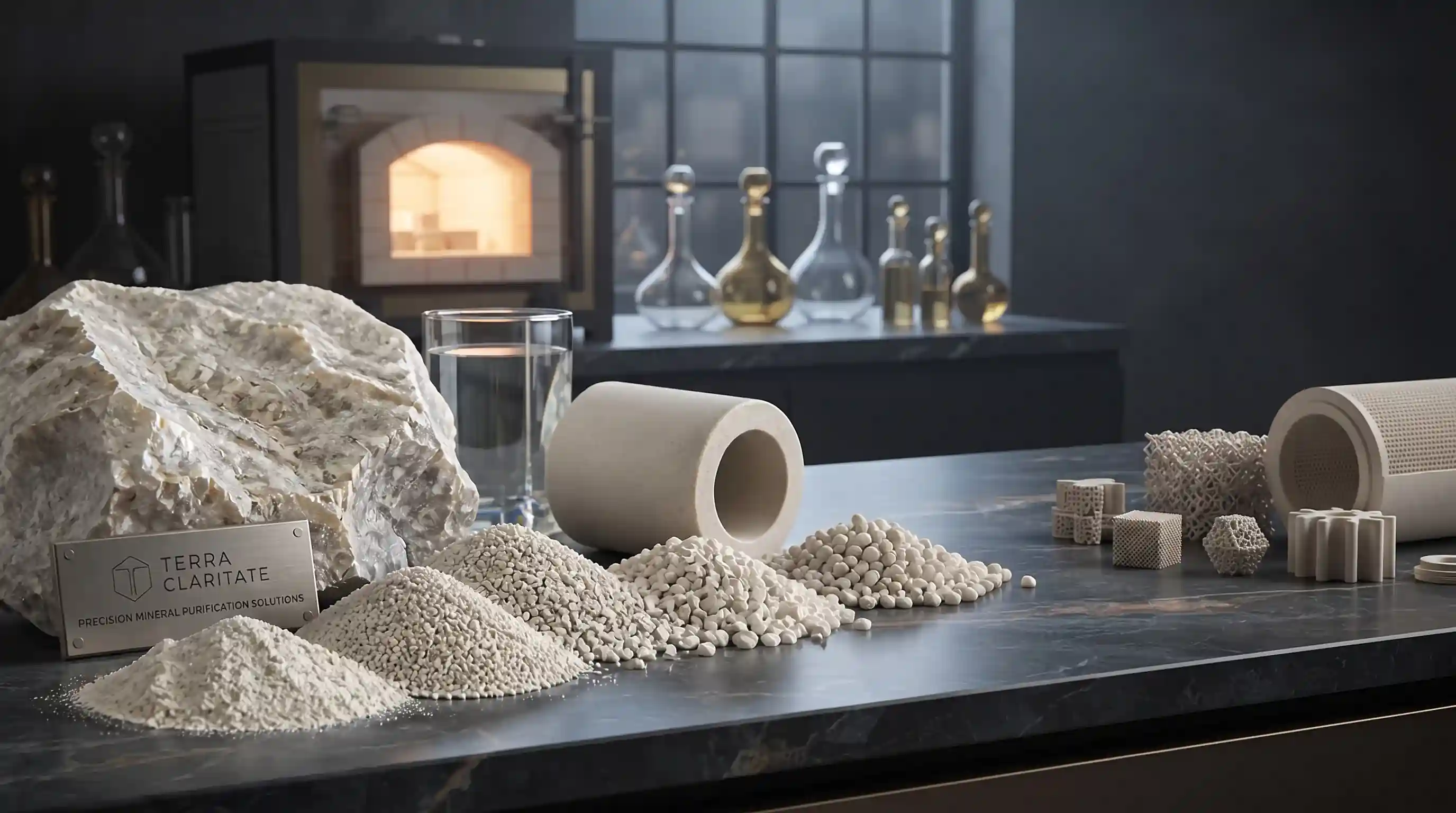
The Role of Dolomite in Improving the Quality and Properties of Construction Powders
Mode construction powders require compounds that can increase the workability, flowability, and final strength of the mortar. The use of dolomite in these formulations acts as a mineral filler that fills the empty space between larger particles and significantly increases structural density.
Additionally, the presence of magnesium in the structure of this material improves resistance against wear and corrosive agents. In tile grouts, tile adhesives, and ready-mixed mortars, these characteristics greatly contribute to the longevity of the structure. Furthermore, for further reading regarding the industrial uses of this material, studying the article Review of Dolomite Application in Paint and Resin Industries is recommended.
The proper dispersion of this material's particles in combination with other binders reduces mortar shrinkage during drying. This prevents the formation of surface and deep cracks, making the final appearance of the work very smooth, uniform, and high-quality.
Compared to other carbonates, this material, due to its balanced mechanical properties, is recognized as an economical and efficient option in dry construction powder manufacturing plants, which also helps reduce overall production costs.
Main Applications of Dolomite in Glass and Ceramics
In addition to construction materials, dolomite has extensive applications in the glass manufacturing and ceramic product production industries. In the glass industry, the magnesium present in this compound acts as a stabilizer that lowers the melting point of raw materials and facilitates the fuace melting process.
In the ceramic and glazing industry, this material acts as a flux that assists in the formation of glassy phases and better firing of the ceramic body at high temperatures. This process increases mechanical strength and reduces water absorption in the final ceramic products.
The various mesh size ranges of this material allow engineers to choose the best blending percentage according to the type of fuace and the desired formulation. The purity and uniformity of the powder have a direct impact on glass transparency and the color and quality of the ceramic glaze.
Mineral producers, through precise processing, manufacture products free from harmful impurities such as iron oxide so that this material can exhibit its highest efficiency in sensitive glass and ceramic industries.
Comparison of Dolomite with Other Carbonates in Polymer and Construction Industries
In manufacturing and construction industries, various minerals are used as fillers. Understanding the differences helps in making a better choice. For example, awareness of the role of calcium carbonate in plastic pipe manufacturing shows that each mineral has its own specific characteristics.
While pure calcium carbonate is mostly used in the plastics, rubber, and paint manufacturing industries, dolomite, due to its simultaneous magnesium carbonate content, offers different hardness and thermal stability, making it more suitable for construction applications and industrial fuaces.
The choice between these materials depends entirely on the type of final application, expected mechanical properties, and the factory's process conditions. In many cases, engineers employ a combination of these materials to achieve the highest economic and qualitative efficiency.
The Kani Sang Amiran project, by offering high-quality mineral products, strives to meet the needs of various industries for standard and reliable raw materials in the best possible way.
Standards and Technical Specifications of the 10 to 40 Mesh Range in Powders
The particle sizing of mineral powders is one of the key parameters in determining the quality of the final product. Dolomite with a 10 to 40 mesh range has relatively coarser particles used for specific applications in the building materials industry and the production of industrial products.
Due to the absence of excessive fines, this mesh range creates suitable flow properties in mortars and prevents severe dust generation in the workspace environment. Strict quality control during the sizing stages ensures that the final product fully complies with customer requests.
Advanced screening and grinding equipment play an important role in the precise separation of these particle sizes. The presence of particles in this mesh range creates suitable porosity in certain materials, which is very useful for the breathability of walls and construction materials.
Adhering to sizing standards allows material manufacturing plants to maintain a consistent formulation and prevent quality fluctuations in the products they supply to the market.
Economic and Environmental Benefits of Using Dolomite
Using domestic mineral resources such as dolomite, in addition to technical advantages, has high economic justification for manufacturing industries. Access to rich mines within the country reduces transportation and raw material supply costs for factories.
From an environmental perspective, this material is completely natural and poses no toxicity or danger to the ecosystem and human health during processing and consumption. Using these natural mineral fillers is considered a suitable substitute for synthetic and expensive chemical materials.
The reduction of energy consumption in firing and production processes, due to the catalytic and fluxing properties of this material, leads to fuel consumption optimization in industries such as glass manufacturing and ceramics, which in tu reduces carbon emissions.
Sustainable development in the mining and mineral processing industry requires the optimal use of these valuable resources, and the Kani Sang Amiran project has always adhered to these principles.
Conclusion and Future Outlook of the Construction Mineral Powders Market
Overall, dolomite, as a strategic mineral, plays an undeniable role in enhancing the quality of construction powders, glass, and ceramics. Its unique chemical and physical properties have caused the demand for this product to be constantly growing in both domestic and foreign markets.
With advancements in production technologies and improvements in sizing methods, newer applications for this mineral are being discovered, promising a bright future for the mining and building materials industry. Investing in the advanced processing of this material creates high added value.
Manufacturers, relying on quality standards and sustainable raw material supply, can respond to the growing needs of various industries. Precise selection of raw materials is the key to success in today's industrial competitions.
We hope this article has provided you with a comprehensive and useful view of the importance and applications of this valuable mineral product and serves as a suitable guide for your industrial choices.
| Question | Answer |
|---|---|
| What is dolomite? | It is a natural mineral composed of calcium and magnesium carbonate used in the construction, glass, and ceramic industries. |
| What are the main applications of dolomite? | Glass, ceramic products, and construction materials are the main applications of this material. |
| What is the mesh range of this product? | The supplied dolomite products have a mesh range of 10 to 40. |
| What is the role of dolomite in the glass industry? | It acts as a stabilizer and melting point reducer in the fuace. |
| Why is dolomite used in construction powders? | It is used to improve density, increase mortar strength, and reduce shrinkage. |
| Is this material also used in the ceramic industry? | Yes, it is used as a flux for better firing and increased strength of the ceramic body. |
| What is the difference between dolomite and calcium carbonate? | Dolomite contains magnesium, which creates different mechanical properties and thermal stability. |
| Where is the product introduction page? | The dedicated product page can be viewed at https://ksamiran.ir/products/dolomite/ |
| What is the economic advantage of using this material? | It brings easy access, reasonable prices, and reduced final production costs of materials. |
| Which entity supplies these materials? | Kani Sang Amiran project operates as a mineral producer. |
Kani Sang Amiran Project — Production and processing of minerals and industrial powders.
برچسب: Dolomite,The Role of Dolomite in the Construction Powder Manufacturing Industry,
نویسنده: رساوب آفرین