
درباره سایت
آخرین مطالب
- The Role of Kaolin in Improving Viscosity in Chemical Compounds
- كيفية قياس تحبيب التلك الأبيض لتلبية احتياجات صناعتك؟
- The Role of Dolomite in the Construction Powder Manufacturing Industry
- نقش کائولن در بهبود ویسکوزیته در ترکیبات شیمیایی
- نقش دولومیت در صنایع تولید پودرهای ساختمانی
- چگونه دانهبندی تالک سفید را برای نیاز صنعت خود بسنجیم؟
- دور الكاولين في تحسين اللزوجة في التركيبات الكيميائية
- Reviewing the Impact of Kaolin on Gloss and Durability of Industrial Coatings
- دور كربونات كالسيوم المغلف في زيادة مقاومة الصدمات للأجزاء البلاستيكية
- Examining the Effect of Feldspar on the Mechanical Properties of Tiles
امکانات وب
Introduction to Kaolin and Its Importance in the Chemical Industry
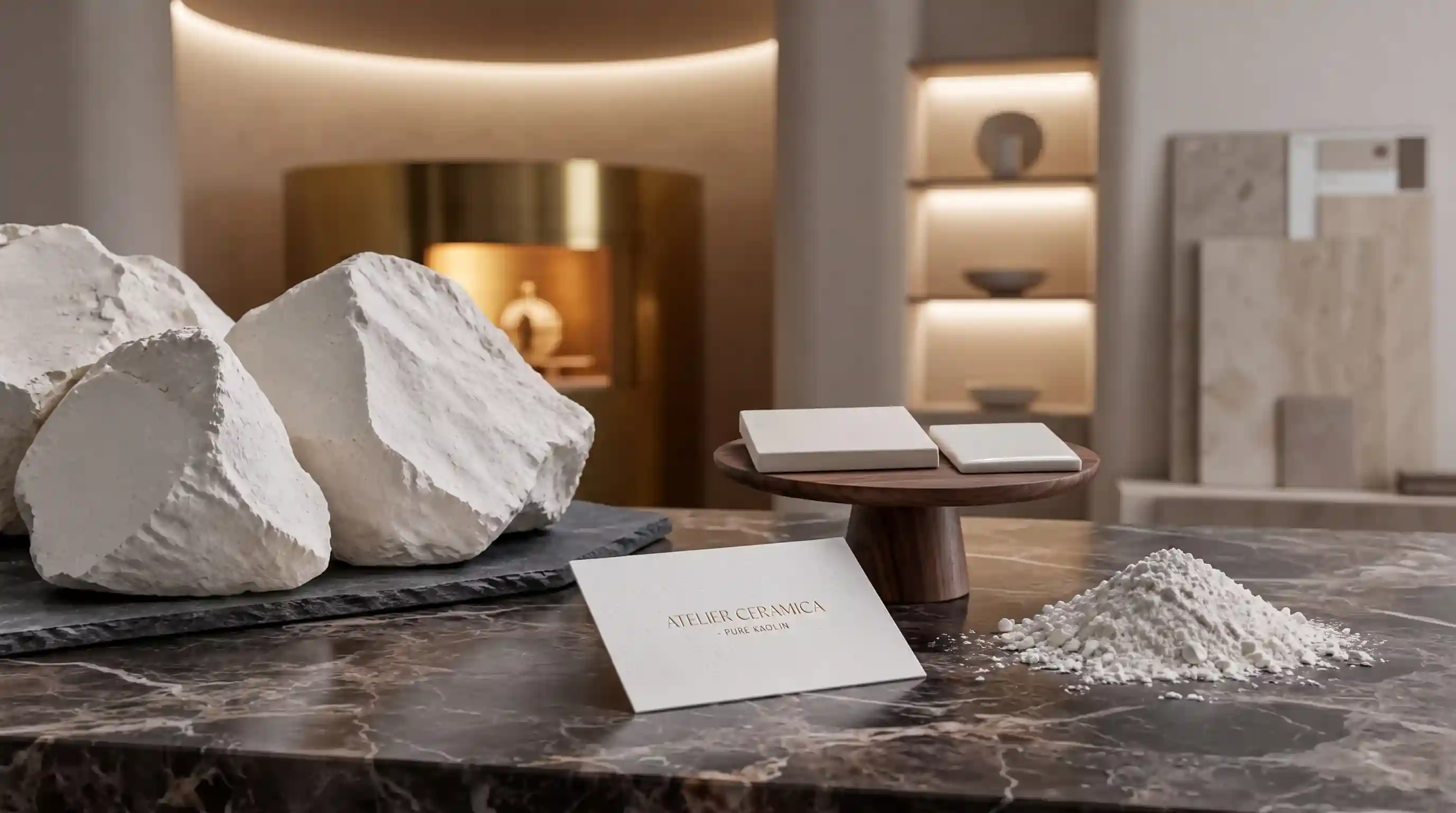
Mining and mineral processing have always played a key role in advancing various industries. Meanwhile, kaolin, as one of the most widely used mineral clays, holds a special place in chemical formulations. This valuable material, also known as China clay, due to its layered structure and specific physical and chemical properties, has a significant impact on improving the viscosity and flow properties of various compounds. A precise understanding of this material's structure helps engineers and industrial designers significantly increase the efficiency of their processes.
Amiran Stone Mineral Project Company, focusing on the production of high-quality minerals, supplies this mineral within standard and industrial mesh ranges. The correct use of this material in industries such as paint production, coatings, and papermaking requires a deep understanding of its rheological behavior. Viscosity is one of the vital parameters in the final quality of chemical products, and the presence of kaolin can help precisely control this property. For more information and to view product details, you can visit the official Kaolin page.
Engineering reviews show that the correct selection of raw mineral materials guarantees the durability and stability of the final product. In the continuation of this article, we will examine in more detail the various dimensions of kaolin's impact on viscosity and its specialized applications in the tile, ceramic, and paint industries to further clarify the technical importance of this material.
The Role of Kaolin in Improving Viscosity and Rheological Behavior of Compounds
The rheological behavior of chemicals and industrial liquids is one of the most important challenges in production lines. Proper viscosity ensures that a compound is neither excessively fluid nor so thick that pumping or applying it becomes impossible. Thanks to its fine particles and hexagonal plates, kaolin creates a specific structural network in liquids that greatly helps adjust and control viscosity. This feature is especially important in water-based systems and industrial coatings.
Compared to other mineral fillers, kaolin can provide better stability against shear stress changes. This stability means maintaining the desired viscosity under various process conditions. Furthermore, in some thermal applications, examining the role of kaolin in improving the thermal resistance of refractory materials also shows how much the structural stability of this material is effective in improving the overall quality of products. Precise control of particle size distribution in the 450 to 1500 mesh range plays a key role in fine-tuning these rheological properties.
Chemical engineers can precisely manage the viscosity point by adjusting the percentage of kaolin used. This prevents the premature settling of heavy particles in liquid mixtures and ensures product homogeneity during storage and consumption.
Application of Kaolin in the Paint and Industrial Coatings Industry
The paint and coating industry is one of the major consumers of micronized minerals. In the formulation of architectural and industrial paints, achieving proper coverage and preventing paint sagging on vertical surfaces is of high importance. Kaolin acts as a viscosity-modifying agent and, by creating a pseudoplastic structure in the paint, prevents the unwanted movement of the paint layer after application. This material also helps improve the gloss, whiteness, and opacity of the paint.
The use of mineral powders with appropriate mesh sizing, such as the 450 to 1500 mesh range in paint manufacturing, ensures that particles are uniformly dispersed within the resin matrix. This uniform distribution not only keeps viscosity at a standard level but also increases the resistance of the paint film against abrasion and atmospheric factors. Unlike some coarse-grained fillers, kaolin creates a smooth and even surface that is highly desirable for final coatings.
Alongside kaolin, engineers may also use other minerals to improve appearance properties; for example, examining the role of white talc in improving the appearance quality of polymeric products shows what great achievements the synergy between different minerals brings to the industry. However, kaolin, due to its inherent adhesion and electrostatic properties, is an unrivaled choice in paint base formulations.
The Impact of Kaolin on the Papermaking Industry and Improving Its Texture
The papermaking industry requires minerals that act both as fillers and surface coatings. Due to its high whiteness, non-toxicity, and ability to fill the empty space between cellulose fibers, kaolin is one of the main components in the production of high-quality printing and writing paper. When the kaolin suspension is added to the paper pulp, the viscosity of this mixture plays a decisive role in the speed and quality of coating on papermaking machines.
Controlling the viscosity of the paper slurry by kaolin ensures that the surface coating is applied completely uniformly onto the paper. This uniformity helps improve print quality, reduce excessive ink absorption, and increase the gloss of the paper sheet. The standard mesh range processed by the Amiran Stone Mineral Project is adjusted so that particles easily penetrate the fiber pores and create a smooth and polished surface.
Optimal use of this mineral also reduces energy consumption in paper drying processes, because less free moisture remains trapped within its structural network. This economic and technical advantage has made kaolin a strategic material in mode papermaking mills.
The Vital Role of Kaolin in the Tile, Ceramic, and Glaze Industries
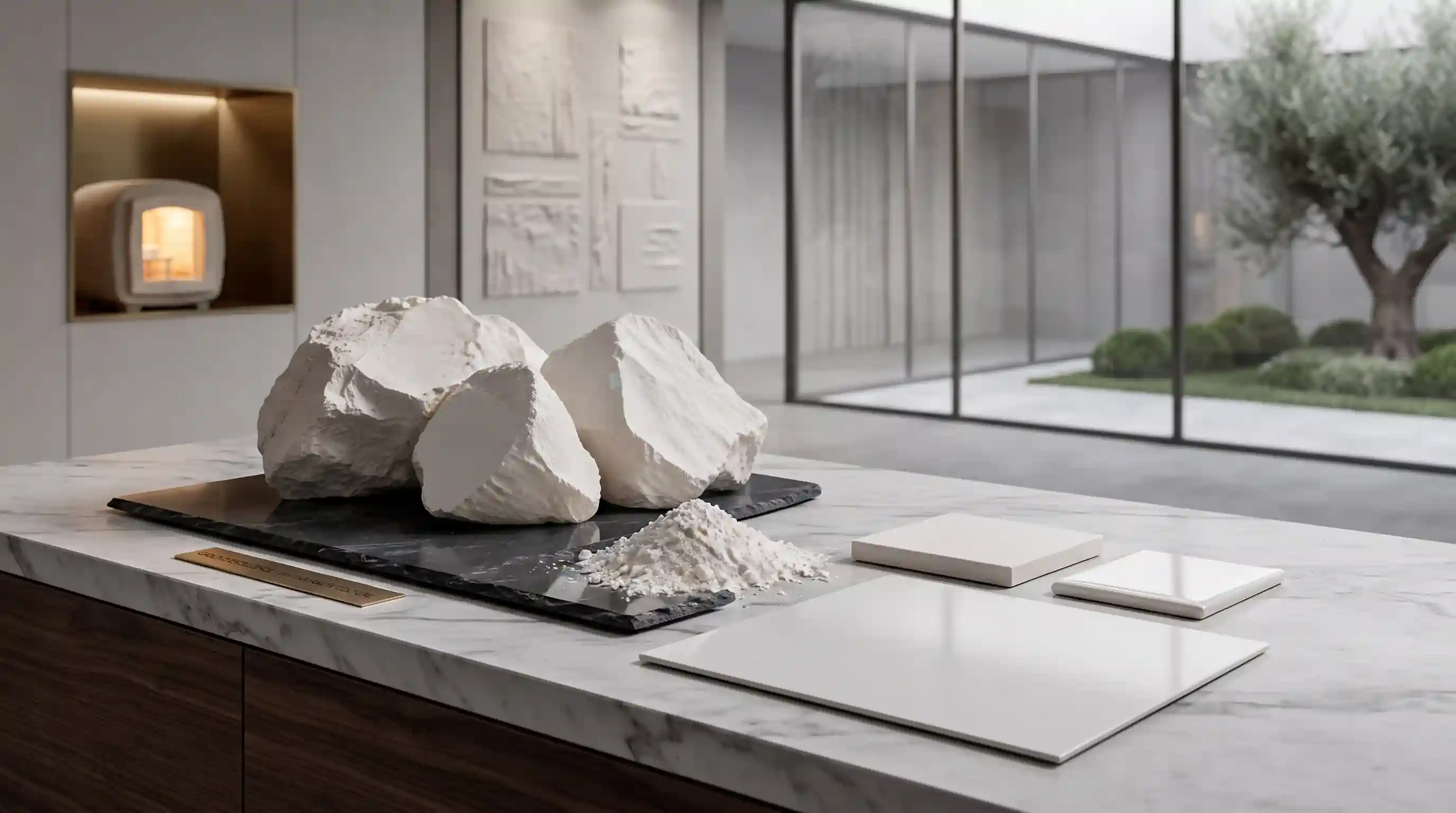
The ceramic and tile-making industry has the greatest historical dependence on kaolin. As the primary source of aluminosilicate, this material imparts the necessary plasticity to the green body of the tile and ensures strength and dimensional stability during firing. In preparing ceramic slips and glazes, precise viscosity adjustment is essential to prevent the sedimentation of heavy glaze particles on the body. With its outstanding suspending properties, kaolin creates a stable and homogeneous slip.
To better understand the engineering processes related to this field, reading the specialized article Examining the Technical Benefits of Using Kaolin in Ceramics is recommended to all professionals. This article provides more details on the behavior of kaolin at high temperatures and its impact on reducing firing shrinkage. The 450 to 1500 mesh range enables the use of this material in both dense bodies and glossy glazes.
The presence of kaolin in the glaze formulation ensures that the final surface of the tile is produced without pinholes, pinholing, or cracking. These appearance and mechanical properties create high added value for ceramic products and elevate quality standards.
Technical Review of the 450 to 1500 Mesh Range and Its Impact on Viscosity
Particle size is one of the main parameters in determining the physical properties of mineral powders. The kaolin supplied by the Amiran Stone Mineral Project is produced in the 450 to 1500 mesh range. This wide spectrum of mesh sizing allows industrialists to choose the appropriate particle size precisely tailored to their needs. Finer particles (higher meshes) create a larger contact area and have a more dramatic impact on increasing viscosity and improving the coverage of liquid systems.
Conversely, lower meshes (such as 450 mesh) provide better flowability in high solid content systems and prevent excessive viscosity increases. This variety in granulation enables engineers to design custom formulations for specific paint, paper, or ceramic applications. Precise control of micronization eliminates agglomerated particles and ensures the uniformity of the final product.
Therefore, a precise understanding of the relationship between kaolin mesh sizing and its viscosity behavior is the main key to optimizing industrial production processes and prevents issues such as improper dissolution or clogging of spray nozzles.

Economic and Industrial Advantages of Using Amiran Kaolin
Using high-quality domestic minerals, in addition to technical benefits, has positive effects on optimizing production costs. By utilizing rich mines and advanced processing technologies, the Amiran Stone Mineral Project supplies standard kaolin with the highest purity to the market. This reduces domestic industries' dependence on imported samples and accelerates the raw material supply chain.
Reducing production waste, improving the surface quality of final products, increasing the lifespan of spraying tools, and reducing energy consumption in homogenization processes are among the economic achievements of utilizing this material. Quality consistency in successive delivered shipments gives production managers peace of mind regarding the stability of chemical formulations.
The conscious selection of raw mineral materials is a reliable investment for enhancing the competitive position of products in domestic and foreign markets. Relying on strict production standards, Amiran Kaolin meets the precise needs of various industries.
Conclusion and Future Prospects of Kaolin Application in Mode Formulations
Ultimately, as a multifunctional mineral, kaolin plays an irreplaceable role in improving viscosity, rheological stability, and enhancing the qualitative quality of chemical products, paint, paper, and ceramics. The unique structural characteristics of this material make it a key component in mode formulation engineering. With the advancement of production technologies and industries' demand for higher quality products, the importance of using standard micronized powders becomes more apparent than ever.
By continuously supplying high-quality kaolin in the 450 to 1500 mesh range, the Amiran Stone Mineral Project has always supported the country's manufacturing industries. Scientific studies and industrial experiences show that investing in the precise processing of this mineral will bring high added value to affiliated industries.
The future outlook of kaolin application indicates an increasingly greater tendency of industries toward the use of eco-friendly and efficient fillers. A deeper understanding of this material's potentials is a firm step toward sustainable development and the advancement of production technologies at national and inteational levels.
| Question | Answer |
|---|---|
| What is kaolin? | Kaolin is a type of mineral clay rich in aluminosilicate that has widespread applications in the tile, ceramic, paint, paper, and glaze industries. |
| What is the mesh range of Amiran kaolin? | This product is produced and supplied in the standard mesh range of 450 to 1500. |
| What is the effect of kaolin on viscosity? | By creating a proper network structure, kaolin helps control and improve viscosity and the rheological behavior of liquid compounds. |
| What are the main applications of kaolin? | Main applications include the production of tiles, ceramic products, various glazes, papermaking, and paint formulations. |
| Is kaolin used in the paint industry? | Yes, it is used as a viscosity modifier, to increase coverage, and to improve gloss in paint. |
| What is the role of kaolin in papermaking? | It is used as a filler and surface coating to increase the whiteness and smoothness of paper texture. |
| Why is mesh sizing important in kaolin? | Particle size has a direct impact on the degree of viscosity, slurry stability, and the final quality of the product. |
| Does kaolin create plasticity in the ceramic industry? | Yes, it increases the plasticity of the green body and controls firing shrinkage. |
| How can Amiran kaolin be procured? | It is possible by visiting the official website of the Amiran Stone Mineral Project and the dedicated product page. |
| What is the industrial advantage of using kaolin? | Improving stability, reducing waste, increasing surface quality, and optimizing production costs are among its advantages. |
Amiran Stone Mineral Project — Specialized reference for the production and processing of mineral and industrial materials.
برچسب: Kaolin,The Role of Kaolin in Improving Viscosity in Chemical Compounds,
نویسنده: رساوب آفرین