
درباره سایت
آخرین مطالب
- راهنمای ثبت سفارش آنلاین و استعلام قیمت کائولن
- چگونه بهترین اکسید آهن قرمز (اخرا) را برای پروژه انتخاب کنیم؟
- بررسی جامع خواص اکوستیک و وزن مخصوص باریت سفید صنعتی
- نقش کائولن در کاهش هزینههای تولید در صنایع معدنی
- نقش سیلیس در افزایش مقاومت حرارتی مواد نسوز
- چرا اکسید آهن قرمز (اخرا) قدرت پوشانندگی بالایی دارد؟
- The role of industrial barite in the papermaking and specialty coatings industries
- How to find the best kaolin supplier in the country?
- How to properly examine feldspar analysis?
- ما هي استخدامات التالك الصناعي في صناعة البلاستيك والمطاط؟
امکانات وب
Introduction to the Importance of White Talc in Mode Industries
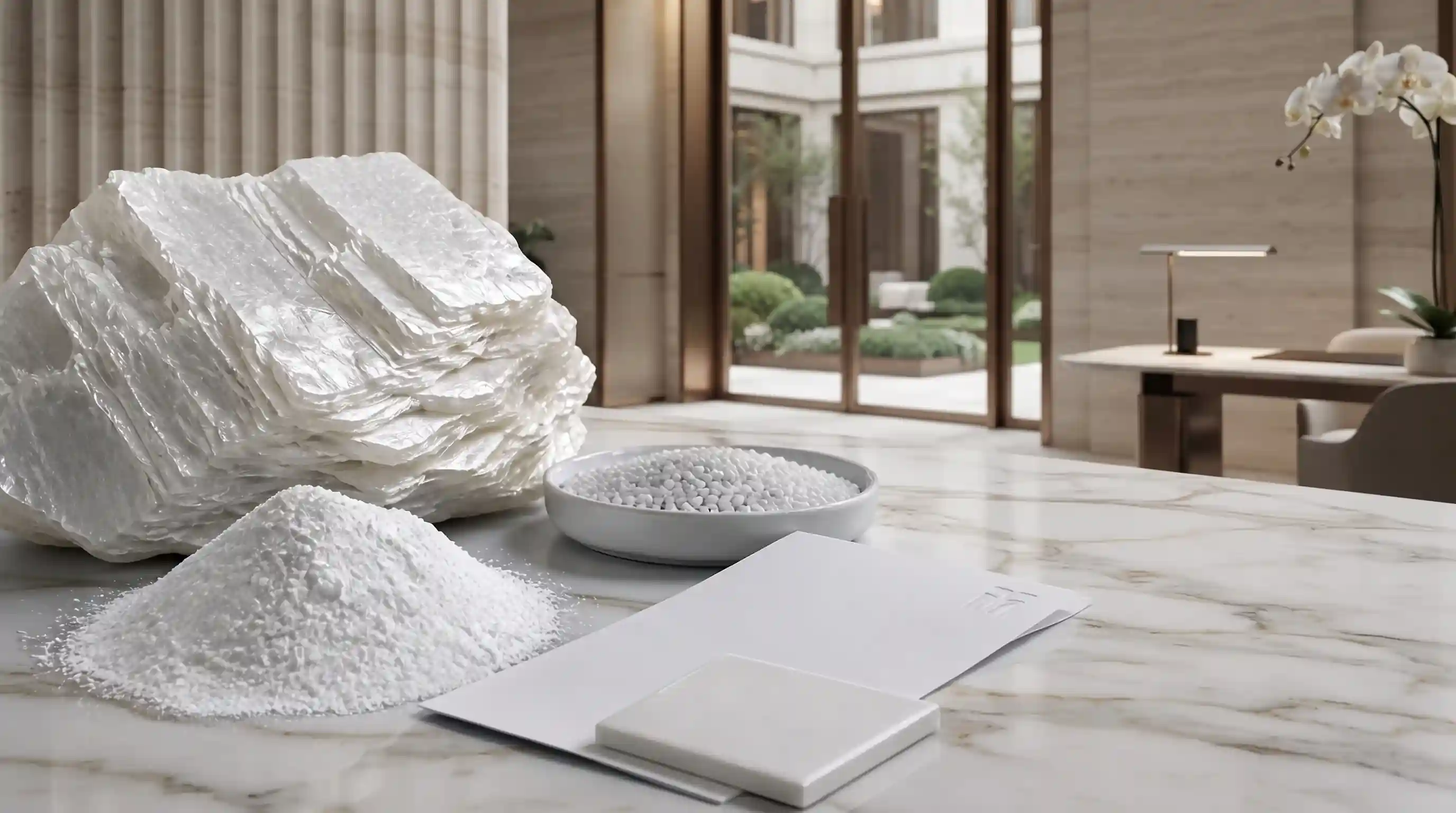
Mining and mineral processing have always been recognized as one of the main pillars of industrial development. Among these materials, white talc, as a hydrated magnesium silicate with a unique flaky structure, holds a special place in industrial formulations. Due to its specific physical and chemical properties, this mineral is used as a filler and performance enhancer in various industries. A precise understanding of the properties of white talc helps engineers and manufacturers produce higher-quality and more durable end products.
Kani Sang Amiran Company, focusing on the standard extraction and processing of minerals, has provided access to this high-quality mineral powder. The importance of using white talc in mode industries is such that many production lines caot compete in the market without it. In this article, we will examine the various dimensions of this material's application in the adhesive, resin, paint, paper, and ceramic industries to further reveal its key role.
The layered structure of white talc allows its particles to easily slide over one another, and this feature significantly helps improve flow properties and viscosity in liquid-based products. Additionally, the inherent softness of this material prevents wear and tear on industrial equipment and increases production efficiency. For more information and to view product details, you can visit the white talc page.
Technical Characteristics and Physical Specifications of White Talc
Understanding the technical specifications of any mineral before entering the production cycle is vital. Featuring a mesh range from 450 to 2500 mesh, white talc covers a vast array of particle sizes, which creates high flexibility in various industrial applications. Precise and homogeneous granulation, appropriate dimensional distribution, and dazzling whiteness are among the main indicators of this product, directly influencing the final quality of paint, paper, and ceramics.
Chemically, this material is neutral and exhibits high resistance against acids and weak bases. This chemical stability ensures that white talc does not undergo structural changes or unwanted reactions in harsh industrial environments. Moreover, its relative water-repellent (hydrophobic) property helps improve the ultimate moisture resistance of products.
In addition to the aforementioned cases, the improvement of mechanical properties in masterbatches and compounds through the addition of white talc has been proven. The flaky shape of the particles helps reinforce the polymer structure, optimizing tensile strength and impact resistance. For a better understanding of this material's impact on the appearance of polymeric products, reading the article The Role of White Talc in Improving the Appearance Quality of Polymeric Products is recommended.
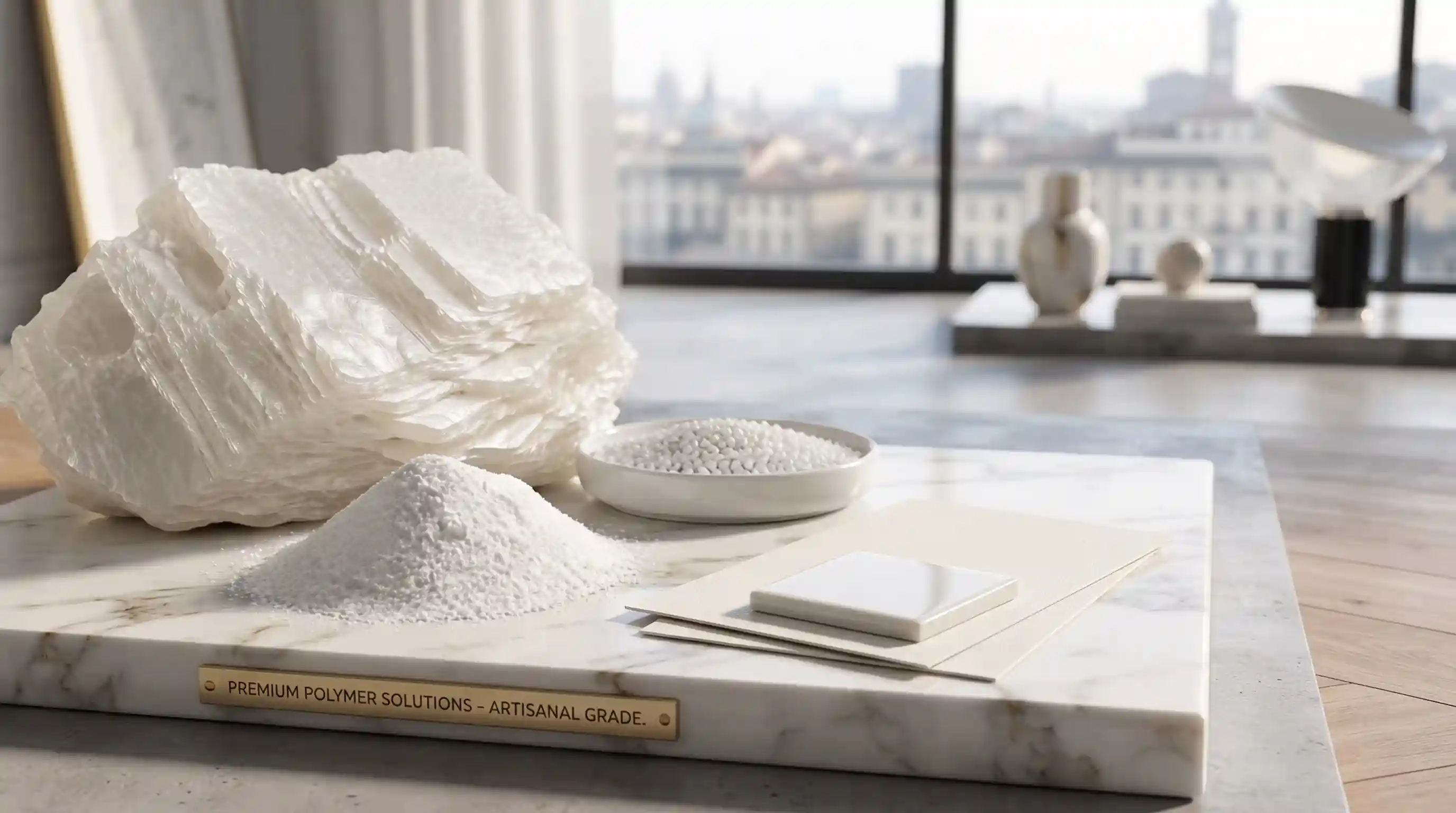
Application of White Talc in Masterbatch and Compound Industries
The polymer industry and plastics manufacturing are constantly seeking additives that can simultaneously improve mechanical properties and reduce the final product price. Meanwhile, white talc is recognized as an ideal mineral filler in the masterbatch and compound industries. The mesh range of 450 to 2500 mesh allows particles to disperse well within the polymer matrix without causing any agglomeration or clumping.
Adding this mineral powder to polymers increases the flexural modulus, improves thermal dimensional stability, and reduces the shrinkage of injection-molded parts. These features are of high importance, especially in the production of automotive parts, home appliances, and industrial plastic bodies. The uniform distribution of white talc particles in compounds plays a direct role in upgrading the surface quality and final appearance of the part.
Beyond improving mechanical properties, using white talc in color and white masterbatches acts as a strong opacifying agent, reducing titanium dioxide consumption, which is very cost-effective for manufacturers. This material also provides suitable sound and thermal insulation, which is applied in certain industries—similar to the characteristics seen in Industrial Barite Applications in Sound and Thermal Insulation Production.
The Role of White Talc in the Paint and Industrial Resins Industry
The paint and resin industry requires fillers that, in addition to high whiteness, can act as a controlling agent over gloss, coverage, and paint durability. With its flaky structure, white talc creates a dense protective layer within the paint film, drastically reducing the penetration of moisture and corrosive agents to the underlying surface. This feature significantly helps increase the lifespan of industrial and architectural paints.
In the formulation of industrial resins and adhesives, using this mineral leads to viscosity adjustment and prevents paint sagging on vertical surfaces. The diverse mesh range of white talc allows formulators to precisely control the roughness and matness of the paint. Furthermore, this mineral powder helps improve paint adhesion to the substrate and increases resistance to mechanical abrasion.
The optical and chemical stability of white talc ensures that the paint does not suffer from discoloration or premature chalking when exposed to sunlight and weather changes. These technical advantages have made the presence of this material a constant and irreplaceable factor in high-quality paint manufacturing standards.
Application of White Talc in the Papermaking Industry
The papermaking industry is another major consumer of mineral powders seeking to improve paper whiteness, surface smoothness, and printability. White talc is used as an excellent filler and coating agent in the production of various papers and cardboards. The fine particles of this material fill the empty pores between cellulose fibers, providing a completely smooth and uniform surface for high-quality printing.
In addition to improving appearance characteristics, using white talc in papermaking helps reduce undesirable ink absorption and increases paper opacity. The flaky structure of the particles makes the produced paper more resistant to tearing while providing a softer feel. The paper manufacturing process requires precise control over raw material quality, and Kani Sang Amiran, by supplying high purity in this product, adequately covers this industry's needs.
An examination of industrial processes shows that waste management and water treatment in papermaking and dyeing units are also of high importance. Just as the use of other minerals like bentonite matters in treatment processes (for further reading, refer to the article The Role of Bentonite in Water and Industrial Wastewater Treatment), careful selection of fillers also helps optimize water and chemical consumption.
Application of White Talc in the Ceramic and Tile Industries
In the ceramic and tile manufacturing industry, white talc is recognized as a key component in the body and glaze of products. The presence of this mineral in the ceramic body composition reduces firing temperatures, increases thermal stability, and prevents parts from warping in the kiln. The magnesium oxide present in the talc structure reacts with other oxides at high temperatures, creating durable glass phases that double the mechanical strength of the final piece.
In ceramic glaze formulations, white talc acts as a fluxing and matting agent, helping to create a uniform, crack-free coating with high durability. The mesh range of 450 to 2500 mesh allows this material to be used both in the preparation of ceramic slurries and in glazing. The uniform distribution of particles prevents uneveess on the glaze surface, imparting a beautiful gloss to the product.
Tile and ceramic manufacturers, relying on the stable physical properties of white talc, can minimize production waste and maximize the efficiency of firing kilns. This directly impacts energy cost reduction and increases the profitability of production units.
Economic and Industrial Benefits of Using Amiran Talc Powder
Selecting high-quality mineral raw materials has always been one of the primary conces of production managers and procurement officers in large industrial factories. The white talc supplied by the Kani Sang Amiran project, possessing the necessary standards in granulation and purity, has successfully gained the satisfaction of various industries, including masterbatch, compound, paint, paper, and ceramics. Access to a mesh range of 450 to 2500 mesh allows different industries to select the product precisely tailored to their technical needs.
From an economic perspective, using this mineral as a cost-effective filler helps reduce the final price of end products without causing a noticeable drop in functional or appearance quality. The stability of the supply chain and the regular extraction of this mineral guarantee the continuity of industrial production lines.
Processing quality and precise granulation also lower machinery and equipment maintenance costs; because the micronized and homogeneous particles of white talc do not damage extruders, pumps, and paint spray nozzles. These technical and economic advantages make white talc an unrivaled option in the raw material purchasing basket of industries.
Conclusion and Future Outlook of the White Talc Market
Given the rapid expansion of manufacturing industries and the need for advanced raw materials, the position of white talc as a filler and performance enhancer has become even more prominent. The diverse applications of this material in masterbatch, compound, paint, paper, and ceramic products demonstrate the high potential of this valuable mineral in the industrial economy. Kani Sang Amiran Company, through the standard extraction and processing of this material, plays an effective role in supplying the needs of domestic industries.
Future trends in the mineral market indicate that industries will move toward using more specialized fillers with more precise granulation and higher purity. The mesh range of 450 to 2500 mesh responds to this growing demand and guarantees access to optimal technical specifications. Investing in the correct application of these materials will be the key to success and survival for manufacturers in today's competitive markets.
Ultimately, the correct selection of a mineral tailored to the product formulation makes the difference between an ordinary product and a superior product in the market. It is suggested that for specialized consultation and order registration, you proceed through the Kani Sang Amiran website and benefit from the unmatched quality of this product.
| Question | Answer |
|---|---|
| What is white talc? | It is a hydrated magnesium silicate with a flaky structure used as a mineral filler. |
| What is the mesh range of Amiran white talc? | This product is processed and supplied in a mesh range of 450 to 2500 mesh. |
| What are the main applications of white talc? | Masterbatch, compound, paint industries, papermaking, and ceramic products. |
| Why is talc used in masterbatches and compounds? | To improve mechanical properties, increase flexural modulus, and optimize surface quality. |
| What is the role of talc in the paint industry? | It acts as a gloss-controlling agent, improves coverage, and increases moisture resistance. |
| Is talc used in the ceramic and tile industries? | Yes, it is used to reduce firing temperature and increase the strength of ceramic bodies and glazes. |
| What is the advantage of white talc in papermaking? | Increasing whiteness, surface smoothness, and improving paper printability. |
| How can white talc be obtained? | Through the Kani Sang Amiran product page at https://ksamiran.ir/products/white-talc/ |
| Is this material resistant to chemicals? | Yes, this material is neutral and stable against acids and weak bases. |
| What factors determine the quality of talc? | Degree of whiteness, chemical purity, and precision in granulation (mesh). |
Specialized references in economic geology and technical data on mineral processing by Kani Sang Amiran.
برچسب: White Talc,The Role of White Talc in Adhesive and Industrial Resin Industries,
نویسنده: رساوب آفرین