
درباره سایت
آخرین مطالب
- راهنمای ثبت سفارش آنلاین و استعلام قیمت کائولن
- چگونه بهترین اکسید آهن قرمز (اخرا) را برای پروژه انتخاب کنیم؟
- بررسی جامع خواص اکوستیک و وزن مخصوص باریت سفید صنعتی
- نقش کائولن در کاهش هزینههای تولید در صنایع معدنی
- نقش سیلیس در افزایش مقاومت حرارتی مواد نسوز
- چرا اکسید آهن قرمز (اخرا) قدرت پوشانندگی بالایی دارد؟
- The role of industrial barite in the papermaking and specialty coatings industries
- How to find the best kaolin supplier in the country?
- How to properly examine feldspar analysis?
- ما هي استخدامات التالك الصناعي في صناعة البلاستيك والمطاط؟
امکانات وب
Complete introduction to red iron oxide (ochre) and its fundamental characteristics
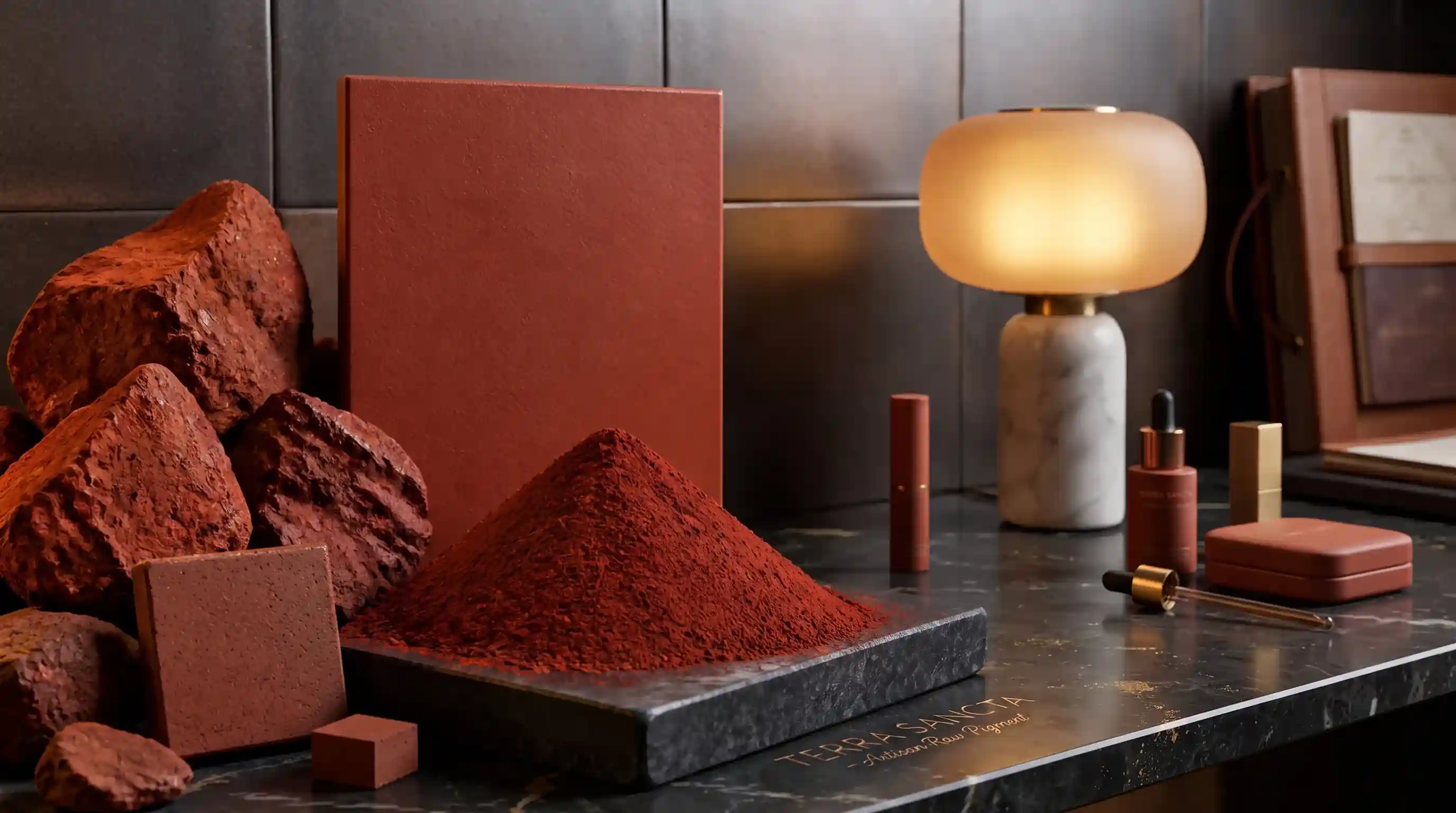
Red iron oxide (ochre) is one of the oldest and most widely used mineral pigments in human history. This substance with the chemical formula Fe2O3 is found abundantly in nature, and humans have used it for thousands of years for cave painting, body painting, and pottery decoration. Today, this material has become an industrial product of global importance and is widely used in pigment, coating, cement, and ceramic products.
The name "ochre" is derived from the Greek root "ὠχρός" meaning "pale yellow," but in today's industrial application, red iron oxide (ochre) refers to a spectrum of colors ranging from earthy red to reddish brown. The final color of this substance depends on factors such as particle size, purity, crystal composition, and processing method.
In terms of crystal structure, red iron oxide (ochre) crystallizes in the hexagonal (rhombohedral) crystal system. This crystal structure provides very high thermal and chemical stability, making this material suitable for demanding industrial applications. Red iron oxide is insoluble in water, organic solvents, and resins, and has good resistance to weak acids and bases.
One of the prominent features of red iron oxide (ochre) is its excellent lightfastness. This material does not change color under the ultraviolet (UV) rays of sunlight, which is why it is very suitable for exterior applications such as facades, architectural paints, and metal coatings. Also, its high thermal stability (up to temperatures above 1000 degrees Celsius) makes its use in the ceramic and cement industries possible.
In today's market, red iron oxide (ochre) is offered in two general forms: natural and synthetic. Its natural form is extracted from mines and offered to customers after processing, which includes crushing, grinding, classification, and packaging. Amiran Rock Stone Project, as a mineral producer, offers this product with a mesh range of 450 to 1500 mesh for pigment, coating, cement, and ceramic product applications.
To get acquainted with the complete specifications of this product and to order, you can visit the page Red iron oxide (ochre) on the Amiran Rock Stone Project website. In the rest of this article, we will examine all aspects of selecting and using this material in detail.
Applications of red iron oxide (ochre) are very diverse, and this material is used in four main areas: pigments, coatings, cement, and ceramic products. In this chapter, we examine each of these applications in detail.
1. Pigment and paint industry
The largest consumption of red iron oxide (ochre) is in the pigment industry. This material is used as the primary pigment in the production of red, brown, and orange paints. Paints produced from this material have lightfastness, chemical stability, and resistance to weather conditions. This pigment is used in the production of architectural paints (interior and exterior facades), industrial paints, printing inks, plastic paints, and leather paints.
2. Coating industry
In the coating industry, red iron oxide (ochre) plays two simultaneous roles: pigment and protective agent. Due to its high density and layered structure, this material creates a physical barrier against moisture and oxygen, preventing corrosion and rusting of metals. Therefore, it is widely used in industrial coatings, marine paints, pipeline coatings, and automotive paints.
3. Cement and concrete industry
In the cement industry, red iron oxide (ochre) is used in two forms. First, as a pigment for the production of colored cement, decorative concrete, colored blocks, and exposed concrete. Second, it acts as a raw material in the production process of cement clinker, which reacts in the kiln with other materials to form mineral phases of cement (including alumino-ferrite phases).
4. Ceramic products
In the ceramic industry, red iron oxide (ochre) is used for coloring the body, glaze, and engobe. This material has good stability at high kiln temperatures and produces a distinct red to brown color in ceramic products. This material is used in the production of tiles and ceramics, pottery vessels, facade bricks, and refractory products.
5. Other applications
In addition to the four main applications, red iron oxide (ochre) is also used in other industries. For example, in the production of clay bricks, this material creates the characteristic red color of the brick. To lea more about this application, read the article How is red iron oxide (ochre) used in brick manufacturing? It is also used in the plastics industry, plastic tiles, papermaking, and even in some medical and cosmetic applications.
Understanding the diversity of applications of red iron oxide (ochre) helps you better identify your project's exact needs and choose the right product when selecting this item.
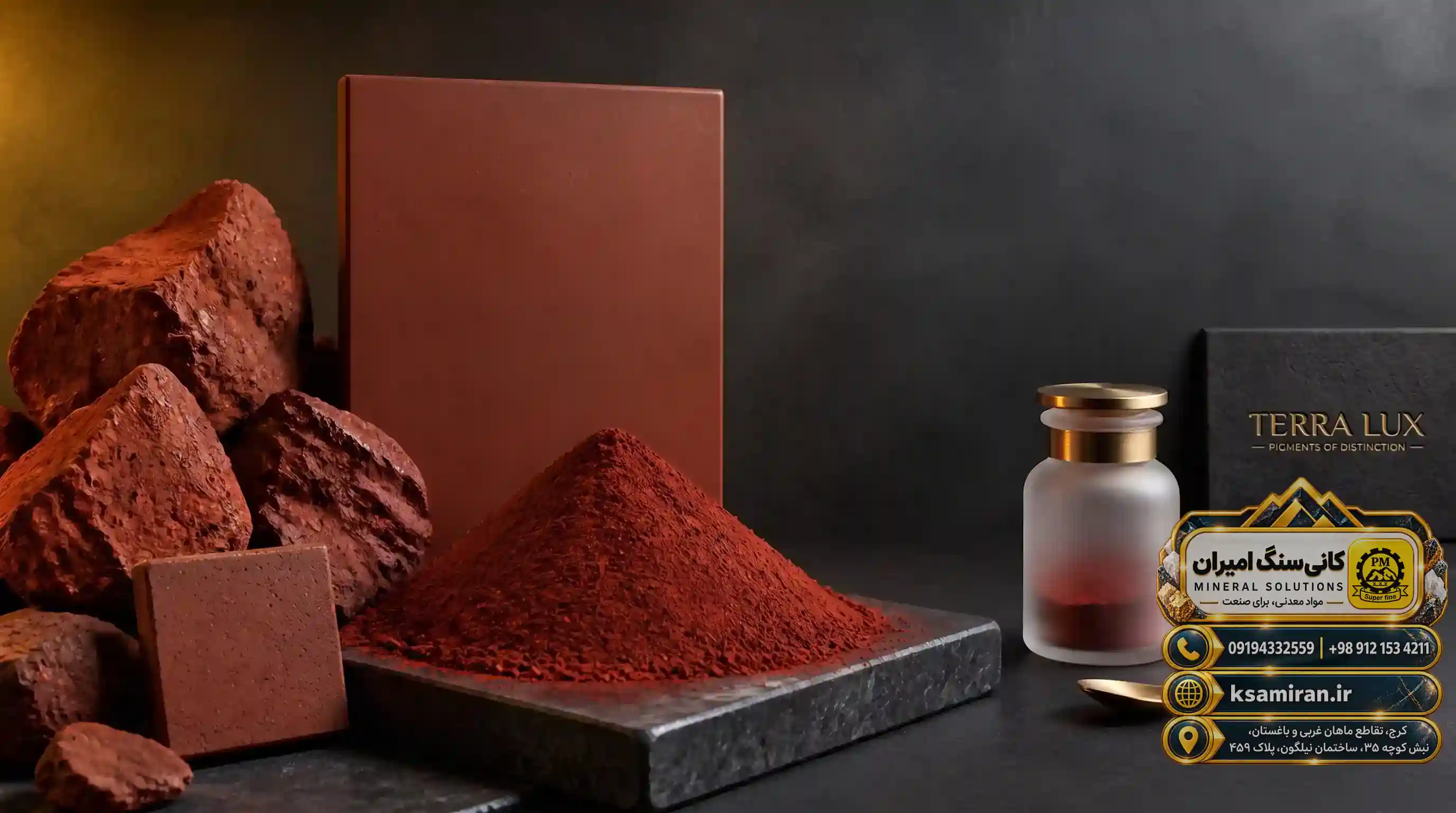
One of the most important factors in choosing red iron oxide (ochre), is the particle size or, in other words, its mesh count. The mesh range of 450 to 1500 offered for this product covers a wide spectrum of particle sizes, each suitable for a specific application. In this chapter, we discuss the importance of this range and provide a guide for selecting the appropriate mesh.
What is the concept of "mesh"?
The word "mesh" actually indicates the number of sieve openings in one square inch. The higher the mesh number, the smaller the openings and consequently the smaller the passing particles. For example, particles with a mesh of 450 have an average size of about 30 microns, while particles with a mesh of 1500 are much finer and their average size reaches a few microns.
The effect of particle size on color
The particle size of red iron oxide (ochre) has a direct effect on the final color. Smaller particles (higher mesh) produce lighter, more transparent, and more vibrant colors, because the larger specific surface area causes better light scattering. In contrast, larger particles (lower mesh) create darker, more opaque, and earthier colors. This color difference is very important for projects that require precise color matching.
Selecting the appropriate mesh based on application
For pigments and paint making: Higher meshes (1000 to 1500) are usually suitable, as they create a more uniform color, better coverage, and a smoother surface. High-quality paints require fine particles so that the painted surface is smooth and free of bumps.
For cement and concrete: Medium meshes (455 to 800) are usually sufficient. In these applications, the color needs to be dispersed throughout the concrete, but extreme precision is not required. Medium particles create a better mixture and are also less costly.
For ceramic products: Depending on the type of product and the manufacturing process, various meshes are used. Higher meshes are usually suitable for glazes, and medium meshes for ceramic bodies.
For industrial coatings: High meshes (1000 and above) are usually required to create a smooth, uniform surface and prevent roughness on the surface.
Particle size distribution
In addition to the average particle size, the particle size distribution is also of great importance. A uniform distribution results in better color and coverage. Irregular distribution can cause color spots, surface inconsistencies, and a reduction in the quality of the final product. Reputable manufacturers usually provide the particle size distribution chart for each production batch.
Measurement methods
The particle size of red iron oxide (ochre) is measured using various methods. The most common methods include sieving for low meshes, laser diffraction analysis for a wide range, and electron microscopy (SEM) for very fine particles. The laser diffraction method is the most widely used due to its speed, accuracy, and repeatability.
Practical tips when choosing a mesh
When choosing the appropriate mesh, the following factors should be considered: the type of final application and its appearance requirements, the processing method (mixing, grinding), the carrier system (water-based, solvent-based), the thickness of the film or final layer, and the appearance requirements of the final product. Consulting with the supplier and requesting a sample before bulk purchase is always recommended.
Choosing the best red iron oxide (ochre) for your project requires attention to several key factors. In this chapter, we examine these criteria in detail so that you can make the best decision.
1. Material purity
The purity of red iron oxide (ochre) is one of the most important factors in determining its quality. Impurities such as silica, alumina, calcium, and magnesium can negatively affect the color, stability, and performance of the material. For sensitive applications like high-quality pigments, a high purity of over 90% Fe2O3 is required. Requesting a Certificate of Analysis (COA) from the supplier is essential.
2. Fe2O3 content
The percentage of Fe2O3 in the final product indicates the pigment concentration. The higher this percentage, the greater the coloring strength and the lower the material consumption. For pigment applications, an Fe2O3 percentage above 85% is usually suitable, but for cement and ceramics, a lower percentage may also be acceptable.
3. Color and tinting strength
The final color of the product must match your project standards. Tinting strength indicates how well the material can transfer its color to other materials. This parameter is measured using standard comparative tests. Be sure to request a color sample from the supplier and compare it with your standards.
4. pH and Solubility
Red iron oxide (ochre) must be insoluble in water and organic solvents. The pH of its aqueous solution should be in the near-neutral range (6 to 8) to be compatible with other systems. This is especially important for applications where the iron oxide is mixed with other reactive substances.
5. Moisture
The moisture content of the product affects its processability and shelf life. Higher moisture can cause caking, manufacturing process issues, and reduced color quality. Moisture should typically be below 1%. To prevent issues caused by moisture and caking, read the article How to Prevent Caking of Red Iron Oxide (Ochre)?.
6. Oil Absorption
This parameter indicates how much oil or resin the material absorbs. Proper oil absorption results in a uniform and stable mixture and also helps determine the required amount of resin or solvent. This parameter is crucial for the paint and coating industry.
7. Thermal Stability
For high-temperature applications (such as ceramics, cement, bricks), the thermal stability of red iron oxide (ochre) is vital. This material must retain its color at kiln temperatures (sometimes up to 1200 °C). Be sure to choose a supplier that has performed the thermal stability test.
8. Lightfastness
For exterior applications, UV resistance and lightfastness are extremely important. Red iron oxide (ochre) generally has very good lightfastness (rating 7 to 8 out of 8 on the blue scale), but confirming this parameter with the supplier is important.
9. Production Batch Uniformity
A good product must be uniform across all production batches. Variations in color or specifications between different batches can cause serious production problems. Choose a supplier with a strong quality control system.
10. Packaging and Shipping
Proper packaging protects against moisture and contamination. Paper-lined polyethylene bags, correct palletization, and suitable transport capabilities are requirements.
Quality control of red iron oxide (ochre) is a multi-step and precise process that begins with raw material extraction and continues until final product delivery to the customer. In this chapter, we examine the standards, methods, and importance of quality control.
Relevant Standards
There are several inteational and national standards for iron oxide pigments. ISO standards (such as ISO 1248 for iron oxide pigments), ASTM standards (such as ASTM D3724), and national standards of each country serve as a guide for the production, testing, and quality control of these materials. Reputable manufacturers usually produce and test their products based on these standards.
Quality Control Steps
1. Raw Material Inspection: The raw material extracted from the mine is first checked for purity, color, chemical composition, and impurities. Only high-quality raw materials enter the production line.
2. Process Control: During processing including crushing, milling, classification, and packaging, various parameters such as temperature, milling time, sieve speed, and moisture are continuously controlled.
3. Final Product Testing: The final product is tested for all key parameters such as color, particle size, purity, pH, and moisture.
Common Tests
Chemical analysis (XRF or ICP): To determine the chemical composition and the percentage of Fe2O3 and impurities. The XRF (X-ray fluorescence) method is fast and accurate and is used for daily quality control.
Particle size analysis: The laser diffraction method is used to determine the particle size distribution. This test shows the complete particle distribution from very fine to coarse.
Colorimetry: Color-measuring devices (such as the CIE Lab device) are used to measure color and tinting strength. This test specifies the product's color numerically and allows for precise comparison between production batches.
pH determination: To control chemical compatibility, the pH of a standard suspension of the product is measured.
Moisture determination: To control physical quality, the product's moisture is measured using the gravimetric method (drying at a specified temperature).
Oil absorption: The amount of oil required to form a uniform paste is measured. This test is important for paint and coating applications.
Thermal stability test: The product is heated at various temperatures and its color change is examined. This test is essential for ceramic and cement applications.
The importance of product uniformity
Product uniformity is of special importance. Variations in color, particle size, or chemical composition between different batches can cause problems in the customer's production line. Regular and accurate quality control ensures that each batch of product matches previous batches and gives customers confidence that the product they receive has the same quality as before.
Documents and Certificate
Each production batch must have complete test documents (Certificate of Analysis). These documents include the chemical, physical, and color specifications of the product. Professional buyers always request and review these documents. Amiran Stone Mineral Project, as a mineral producer, provides product information transparently to customers.
In today's market, there are various red pigments, each with its own advantages and disadvantages. In this chapter, red iron oxide (ochre) is compared with other available options so that you can make the best choice for your project.
Red iron oxide (ochre) versus synthetic pigments
Synthetic pigments such as cadmium red, Pigment Red 14 (PR14), and other organic pigments produce stronger, brighter, and more vivid colors. However, these pigments are much more expensive and in some cases (such as cadmium) toxic and harmful to the environment. Red iron oxide (ochre), although it has less tinting strength, is safer, cheaper, and more accessible.
Red iron oxide versus yellow iron oxide
Both materials belong to the iron oxide family but have different colors and characteristics. Yellow iron oxide (FeOOH) produces a yellow to yellowish-brown color and has lower thermal stability (begins to change color above 170 degrees). In contrast, red iron oxide (ochre) has much higher thermal stability and retains its color at fuace temperatures.
Red iron oxide versus black iron oxide
Black iron oxide (Fe3O4) produces a black to gray color and has magnetic properties. This material is suitable for dark colors and magnetic applications. Red iron oxide (ochre) has very weak magnetic properties and is used for red and brown colors.
Advantages of red iron oxide (ochre)
Safety: Non-toxic and safe for users and the environment
Stability: Very high thermal, chemical, and light stability
Price: Very cost-effective compared to synthetic pigments
Availability: Mass production and availability in various mesh sizes
Environmental compatibility: A natural mineral whose decomposition does not harm the environment
Color variety: Creation of a wide spectrum of colors from red to brown
Disadvantages of red iron oxide (ochre)
Lower tinting strength: Compared to synthetic pigments, it has lower tinting strength and requires a larger amount
Duller color: The produced colors are less vivid and glossy
Color spectrum limitation: It only produces red to brown colors and caot create bright and transparent colors
When to choose which?
For applications where safety, durability, and cost are important (such as architectural paints, cement, ceramics, bricks), red iron oxide (ochre) is the best choice. However, for applications requiring very vivid and glossy colors (such as decorative paints, high-quality printing inks), synthetic pigments may be more suitable.
Ultimately, the choice between red iron oxide (ochre) and other pigments depends on your project's needs, budget, and technical requirements. Consulting with a reputable supplier can help you in this decision-making process.
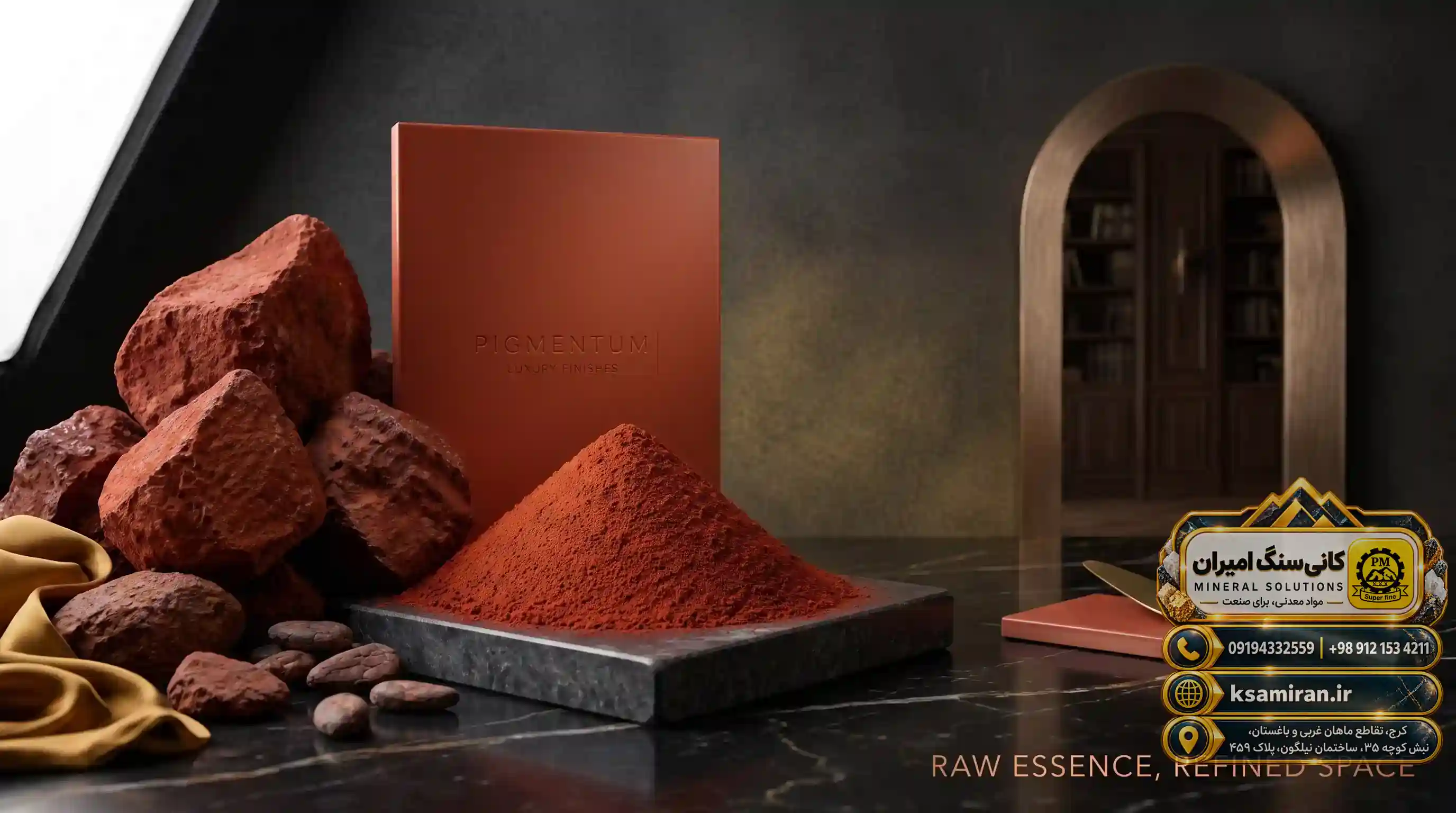
Proper storage and warehousing of red iron oxide (ochre) is essential to maintain its quality and performance over time. In this chapter, we examine the storage, safety, and environmental issues of this material.
Storage conditions
Red iron oxide (ochre) must be stored under appropriate conditions to maintain its quality:
Dry environment: Moisture is the greatest enemy of this product. The warehouse must be dry and have proper ventilation.
Away from water: Direct contact with water must be completely avoided, as it causes caking and degrades quality.
Away from reactive chemicals: Strong acids and bases must be kept away from this product.
In tightly sealed containers: After opening the original packaging, the product must be stored in a tightly sealed container.
Away from direct light: Although the light stability of this material is high, long-term storage in direct sunlight is not recommended.
Storage Principles
Use of pallets: Bags should be placed on wooden or plastic pallets to prevent contact with the floor and its moisture.
Allowed height: Stacking bags excessively causes pressure and product caking. The standard height is usually a maximum of 8 to 10 bags.
Inventory rotation: The First-In, First-Out (FIFO) principle must be observed so that old product does not remain in the warehouse.
Periodic inspection: Warehouse environmental conditions (humidity, temperature) must be periodically checked and recorded.
Preventing Caking
One of the common problems in storing red iron oxide (ochre) is caking caused by moisture and pressure. This problem creates hard lumps that cause issues in the production process. To lea about complete methods to prevent this problem, read the article How to prevent caking of red iron oxide (ochre)?.
Work Safety
Red iron oxide (ochre) is generally a safe and non-toxic material, but observing the following safety tips is necessary:
Use of masks: The dust of this material can cause respiratory tract irritation if inhaled for a long time. Using a dust mask (N95 or higher) when working with the powder is recommended.
Use of gloves and work clothes: To prevent skin contact and staining of skin and clothes.
Washing hands: After working with this material, hands must be thoroughly washed.
Preventing ingestion: This material must not be swallowed. In case of accidental ingestion, seek medical attention immediately.
Environmental issues
Red iron oxide (ochre) is a natural mineral that is non-toxic to the environment. It is insoluble in water and solvents, and in the environment, its decomposition reverts back to natural iron oxide. However, its extraction and processing can have environmental impacts. To fully understand this, read the article Environmental impacts of using red iron oxide (ochre).
Overall, by observing simple maintenance and safety tips, you can maintain the quality of red iron oxide (ochre) for a long time and use it safely and effectively in your projects.
In this article, we examined various aspects of choosing and using red iron oxide (ochre). In this final chapter, we summarize the key points and provide a practical guide for choosing the best product.
Summary of Key Points
Red iron oxide (ochre) is a mineral pigment with the chemical formula Fe2O3, which is found abundantly in nature. Due to its high thermal, chemical, and light stability, safety, reasonable price, and availability, it has become a popular choice for pigment, coating, cement, and ceramic products industries.
The mesh range of 450 to 1500 offered for this product includes a wide spectrum of particle sizes. Choosing the appropriate mesh depends on the type of application: higher meshes for pigments and coatings, medium meshes for cement and concrete, and various meshes for ceramics depending on the product type.
Practical Steps for Selection
Step 1: Determine your needs. Specify the application type (pigment, coating, cement, ceramic), desired color, environmental conditions (indoor/outdoor, temperature, humidity), and quality requirements.
Step 2: Choose the appropriate mesh. Based on project needs, choose mesh 450 to 1500. In case of ambiguity, consult the supplier.
Step 3: Check the quality of the material. Request a Certificate of Analysis (COA). Check purity, Fe2O3 percentage, color, pH, moisture, and particle size distribution.
Step 4: Request a sample. Before bulk purchasing, request a sample and test it under your actual project conditions.
Step 5: Choose a reliable supplier. Choose a reputable manufacturer with a strong quality control system, uniform products, and good services. Amiran Sang Mineral Project, as a mineral manufacturer, offers this product with a mesh range of 450 to 1500 and for various applications.
Step 6: Provide storage conditions. Maintain a dry, cool, well-ventilated warehouse, use pallets, and follow FIFO principles.
Common Mistakes and How to Avoid Them
1. Choosing the wrong mesh: Choosing a too coarse mesh for fine applications or a too fine mesh for coarse applications. Solution: Consulting with the supplier and testing the sample.
2. Ignoring purity: Purchasing a low-purity product that reduces color quality and performance. Solution: Requesting a Certificate of Analysis.
3. Improper storage: Storing in a humid environment or exposed to water. Solution: Follow recommended storage and warehousing conditions.
4. Lack of sample testing: Buying in bulk without prior testing. Solution: Always test a sample before making a large purchase.
5. Ignoring batch uniformity: Quality variation between different production batches. Solution: Choose a supplier with strong quality control and request documentation for each batch.
Final word
Choosing the best red iron oxide (ochre) requires a complete understanding of project requirements and the characteristics of this material. Given its stability, safety, reasonable price, and variety of applications, this material is an excellent choice for most industrial projects. By following the tips mentioned in this article, you can choose the best product for your project and use it effectively.
To view full product specifications, request a sample, and place an order, visit the Red Iron Oxide (Ochre) page on the Amiran Stone Mining Project website. The expert team of this company is ready to provide consultation and answer your questions.
| Question | Answer |
|---|---|
| What is red iron oxide (ochre)? | Red iron oxide (ochre) is a natural mineral pigment with the chemical formula Fe2O3 that produces a red to brown color and is used in pigment, coating, cement, and ceramic industries. |
| What does the 450 to 1500 mesh range mean? | This range indicates the particle size of the product. 450 mesh represents coarser particles and 1500 mesh represents very fine particles. The higher the mesh, the finer the particles and the lighter the color. |
| Which mesh is suitable for my application? | For pigments and coatings, meshes 1000 to 1500 are usually suitable; for cement and concrete, meshes 450 to 800; and for ceramics, different meshes are suitable depending on the product type. |
| Is red iron oxide (ochre) toxic? | No, this material is non-toxic and safe, but following safety precautions such as wearing a mask and gloves when working with the powder is recommended. |
| How to prevent red iron oxide from clumping? | Storing in a dry environment, using tightly sealed containers, using pallets, and observing warehousing principles prevents clumping. |
| What is the thermal stability of red iron oxide (ochre)? | This material has good stability at high temperatures (up to over 1000 degrees Celsius) and retains its color in the kiln, which is why it is used in ceramics and cement. |
| What is the difference between natural and synthetic red iron oxide? | The natural type is obtained from mining and the synthetic type is produced through chemical processes. The synthetic type usually has a more uniform color and higher purity but is more expensive. |
| How to check the quality of red iron oxide? | Requesting a Certificate of Analysis (COA), checking the Fe2O3 percentage, particle size, color, pH, and moisture, and testing a sample before bulk purchase is recommended. |
| In which industries is red iron oxide (ochre) used? | The main applications include pigment and paint manufacturing, industrial coatings, colored cement and concrete, ceramic products, and brick production. |
| Where can red iron oxide (ochre) be purchased? | This product is produced and supplied by the Amiran Mineral Stone Project. To place an order, you can visit the product page on this company's website. |
For more information about the technical specifications and to order red iron oxide (ochre), visit the product page on the website of the Amiran Mineral Stone Project (https://ksamiran.ir/products/red-iron-oxide/)
برچسب: Red Iron Oxide (Ochre),How to choose the best red iron oxide (ochre) for the project?,
نویسنده: رساوب آفرین