
درباره سایت
آخرین مطالب
- راهنمای ثبت سفارش آنلاین و استعلام قیمت کائولن
- چگونه بهترین اکسید آهن قرمز (اخرا) را برای پروژه انتخاب کنیم؟
- بررسی جامع خواص اکوستیک و وزن مخصوص باریت سفید صنعتی
- نقش کائولن در کاهش هزینههای تولید در صنایع معدنی
- نقش سیلیس در افزایش مقاومت حرارتی مواد نسوز
- چرا اکسید آهن قرمز (اخرا) قدرت پوشانندگی بالایی دارد؟
- The role of industrial barite in the papermaking and specialty coatings industries
- How to find the best kaolin supplier in the country?
- How to properly examine feldspar analysis?
- ما هي استخدامات التالك الصناعي في صناعة البلاستيك والمطاط؟
امکانات وب
Introduction to Silica and Its Role in Refractory Materials
Silica or silicon dioxide (SiO2) is the most abundant oxide in the Earth's crust and forms a large part of sands, quartz, igneous rocks, and mineral deposits. This seemingly simple chemical compound is today considered one of the main pillars of the refractory materials industry—an industry that produces parts such as kiln bricks, melting crucibles, casting nozzles, and fuace linings capable of withstanding temperatures exceeding 1500 degrees Celsius for long hours. Neglecting the quality of the raw material in this application directly leads to production line downtime, electricity and repair costs, and even workplace accidents.
Silica-based refractory materials, due to their high softening temperature, suitable high-temperature load-bearing resistance, and favorable rheological behavior, have found a special place in iron, steel, and aluminum melting fuaces as well as coke-baking fuaces. In practice, the final cost of steel and the short lifespan of fuaces are directly related to the durability of the wall silica bricks, which is why metallurgical engineers are always looking for silica whose phase changes and impurities are well controlled.
From an application perspective, silica is widely used not only in the refractory industry but also in glassmaking, ceramic parts manufacturing, casting products, and building materials. The diversity of applications for this material doubles the importance of accurately understanding its thermal properties; because the specifications suitable for a melting crucible are not necessarily the same for molding sand or glass composition.
Amiran Kani Sang Project, as a mineral producer, supplies silica to the market in a mesh range of 10 to 450 with four main applications: glass, casting products, ceramic products, and building materials. In the following sections, we will practically examine the crystal structure of silica, thermal resistance mechanisms, the effect of particle size, and the selection criteria for this product so that factories and production lines can make more precise choices.
Crystal Structure and Different Phases of Silica
The thermal resistance of silica is rooted in its crystal structure. In nature and during thermal processes, SiO2 appears in three main phases: quartz, tridymite, and cristobalite, each having different densities, atomic arrangements, and thermal behaviors. Quartz is the most stable phase at ambient temperature and undergoes an alpha-to-beta transformation at 573 degrees Celsius—a rapid and reversible transformation with a volume change of about 0.8 percent. This small volume change, on the scale of a large piece, is the primary factor in thermal cracking.
With increasing temperature, quartz transforms into tridymite at around 870 degrees Celsius and into cristobalite at around 1470 degrees Celsius, finally melting close to 1710 degrees Celsius. These transformations are slow and dependent on time, temperature, impurity, and particle size. In the production of silica bricks, these transformations are a double-edged sword: on the one hand, cristobalite and tridymite show different thermal expansion due to their more open structure, and on the other hand, the formation of new phases can reduce the density of the piece and create porosity.
A key point is that the presence of impurities such as iron oxide, aluminum oxide, titanium, calcium, and sodium drastically alters the rate and temperature of these transformations. For example, iron acts as a mineral catalyst to increase the rate of quartzification, while alumina and alkalis lower the softening point of the piece and reduce its high-temperature creep resistance. Therefore, accurately determining the chemical composition of the incoming silica to the production line is the primary quality control measure.
The same logic applies to glassmaking and ceramic applications; the presence of uncommercialized quartz particles in the ceramic body leads to sudden expansion and surface defects. Therefore, awareness of the crystal phase of silica and its thermal history is not just a theoretical discussion, but a practical tool for predicting the behavior of the material in and out of the fuace. Combining this knowledge with the selection of standard raw materials forms the basis for designing a sustainable formulation in all four application areas of this product.
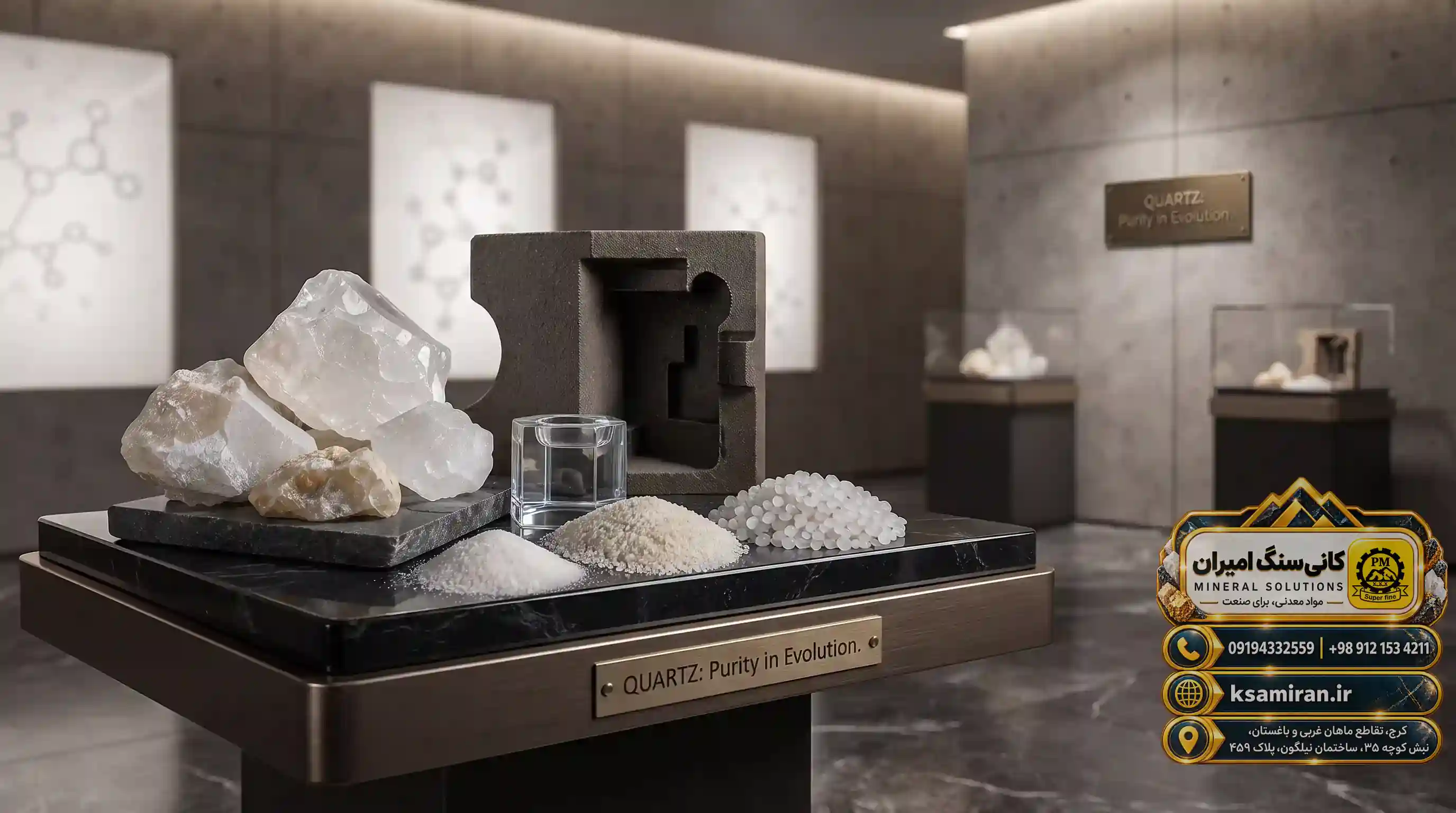
Mechanisms of Increasing Thermal Resistance by Silica
The thermal resistance of a refractory material is not limited merely to "temperature tolerance"; rather, it is a combination of thermal shock resistance, load-bearing creep resistance, softening temperature, chemical stability against slag and gases, and high-temperature mechanical toughness. Thanks to its strong Si O bonds and stable three-dimensional network, silica performs brilliantly in several of these dimensions. The relatively low and uniform coefficient of thermal expansion of the network is the primary factor in thermal shock resistance.
In bulky parts, the particle size distribution of silica determines the degree of packing. The combination of coarse, medium, and fine particles (in the mesh range of 10 to 450) ensures that the empty spaces between coarse particles are filled with fine particles, bringing the relative density close to 90 percent. The higher the density, the longer the penetration path of slag and corrosive gases, the lower the open porosity, and the greater the chemical resistance of the part. This is the exact logic used in coke oven bricks, melting fuace walls, and crucibles.
The third mechanism is the formation of ceramic bonding phases at high temperatures. In the presence of minor amounts of alumina, alkalis, and accessory minerals, silica generates molten and glassy phases at high temperatures that bind the particles together. Although an excess of melt softens the part, an optimal amount increases creep resistance and toughness. Meanwhile, the role of kaolin as a mineral that provides both alumina and clay-like bonding is extremely important; just as discussed in detail in the article The Role of Kaolin in Improving the Thermal Resistance of Refractory Materials.
The fourth mechanism is chemical stability. Silica has good resistance to acidic oxides such as iron slags and acidic gases, which is why it is used in acidic fuaces and steel casting molds. However, it performs poorly against strong alkalis and fluorides, and its selection in basic processes or applications containing fluorine requires reconsideration. A precise understanding of these four mechanisms allows engineers to correctly identify where silica shines and where it should be replaced or combined with other minerals.
Application of Silica in Casting Parts and Refractory Bricks
The casting industry is one of the largest consumers of silica. In sand molds, silica sand shapes main chaels, pattes, and cores due to its appropriate particle size distribution and shape, thermal stability, and low cost. The molding sand must both resist the sudden expansion of quartz and possess sufficient porosity for gas escape to minimize defects such as surface scab, expansion defects, and gas cavities in the final piece.
To control expansion, factories use a combination of sand with refractory coatings, yield-enhancing additives, and organic bonding systems to absorb the strain energy caused by the alpha-beta transformation of quartz. In steel and cast iron casting, the contact surface of the sand with the melt is 1400 to 1550 degrees Celsius; that is, exactly the range where silica must protect the piece against molten metal splashing without severe chemical reaction with iron. Silica's resistance to molten acidic metals makes it a standard choice for these lines.
In the production of silica refractory bricks, sand and silica flour are pressed with iron binders and mineral additives and fired at high temperatures so that the quartz transforms into tridymite and cristobalite to the desired extent. These bricks are used in coke ovens, hot blast stoves, glass fuace roofs, and ladles. The proper combination of coarse particles (structure stabilizer) and fine particles (filler and reactant) determines the density, porosity, and ultimately the lifespan of the brick.
Silica also plays a prominent role in refractory and semi-refractory building materials. Refractory mortars and concretes, thermal brick kiln linings, and dust collectors all use silica flour to increase the temperature rating. Naturally, because these products are often combined with kaolin, feldspar, and other minerals, formulation design requires a shared understanding of the thermal behavior of all these materials so that the final part has both sufficient durability and an economical production process.
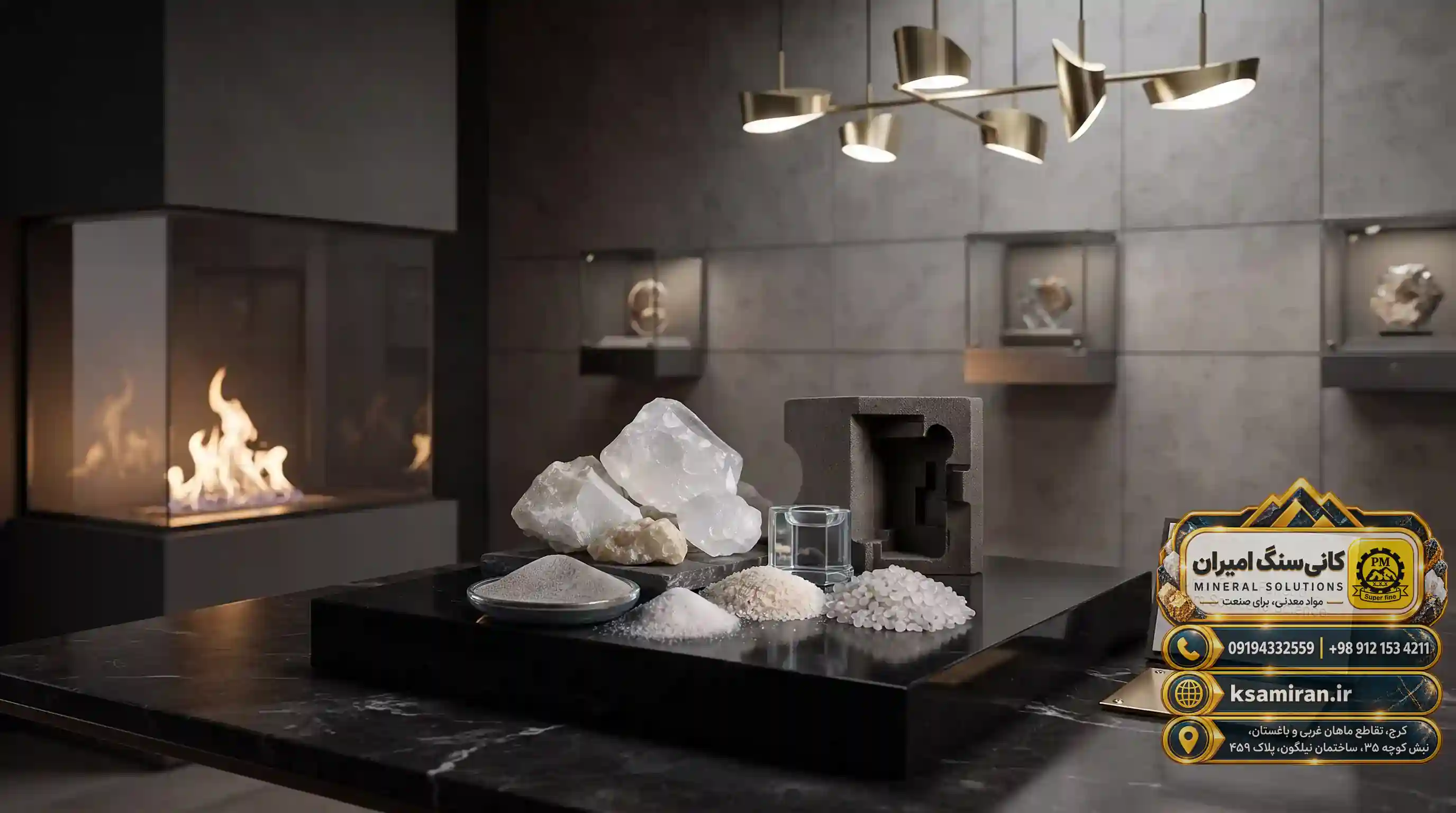
The Role of Silica in Glass and Ceramic Products
In the glass industry, silica acts as the primary network former. Si4+ ions form a continuous network with oxygen, in which other components dissolve. The chemical purity of silica, especially the low amount of iron oxide, determines the final transparency of the product; even small amounts of iron can tu the glass green or blue, which is considered a weakness for packaging glass, clear glass, and flat glass. For photovoltaic and projector glass, this purity requirement reaches its peak.
The thermal behavior of silica in the glass fuace is also important. Particles with uniform size and controlled particle size distribution increase the melting rate and melt uniformity, and reduce sediment or heavy impurities in the fuace. Furthermore, the stability of the particle size distribution affects energy consumption and fuace lining wear. Selecting particles with an appropriate distribution in the mesh range of 10 to 450 is a practical tool for balancing melting speed, melt viscosity, and final glass surface quality.
In ceramic products, silica forms the bulk of the body's skeleton. The quartz present in the body provides thermal resistance, hardness, and dimensional stability, while alkaline metals and feldspars play the role of leaching and bonding. To better understand the synergy of these materials, reading The Role of Feldspar in Improving the Resistance of Porcelain Products and The Role of Feldspar in Increasing the Durability of Ceramic Bodies helps formulation engineers better design the balance between transparency, thermal resistance, and body toughness.
In industrial refractory ceramics such as melting bowls, fuace coils, and thermal insulation, coarser silica particles stabilize the structure while finer particles improve the surface and bonding. The controlled chemical composition limits the introduction of colored and alkaline impurities so that the final product does not undergo discoloration, degradation, or creep at high temperatures. This same principle highlights the importance of continuous quality control in silica processing.
The effect of particle size (10 to 450 mesh range) on thermal resistance
One of the most important technical specifications of silica is its particle size, measured in mesh units. The larger the mesh number, the finer the particle; for example, 10 mesh specifies particles in the range of a few millimeters, and 450 mesh specifies particles in the range of a few tens of micrometers. The Amiran Stone Mineral Project produces this product in a wide range of 10 to 450 mesh to cover the diverse needs of the glass, foundry, ceramic, and construction materials industries.
In pressed refractory components, particle size distribution determines the final density and porosity. An ideal composition includes coarse particles as a skeleton, intermediate particles to fill intergranular spaces, and fine particles as a reactive filler. This arrangement maximizes density, reduces slag permeability, and increases the high-temperature creep resistance of the component. Conversely, a narrow or single-grain distribution results in high porosity and low durability.
In casting molds, coarse particles provide permeability for gas escape, while fine particles improve the surface smoothness of the cast part. Improper composition can lead to surface defects, breakage, and even mold explosion. In glass and glazes, fine particles increase melt homogeneity and reduce fuace sedimentation, but they increase grinding energy consumption and the risk of agglomeration; therefore, determining the particle size grading is both a technical and economic decision.
Particle size also affects the rate of phase transformations; due to their high specific surface area, fine particles quartzify faster and react more rapidly with bonding phases. This behavior is useful in designing the firing cycle, heating rate, and holding time at peak temperature. Consequently, the wide range of 10 to 450 mesh is not just product statistics, but a formulation design tool: every factory must choose a composition proportional to the pressure the component withstands in the fuace.
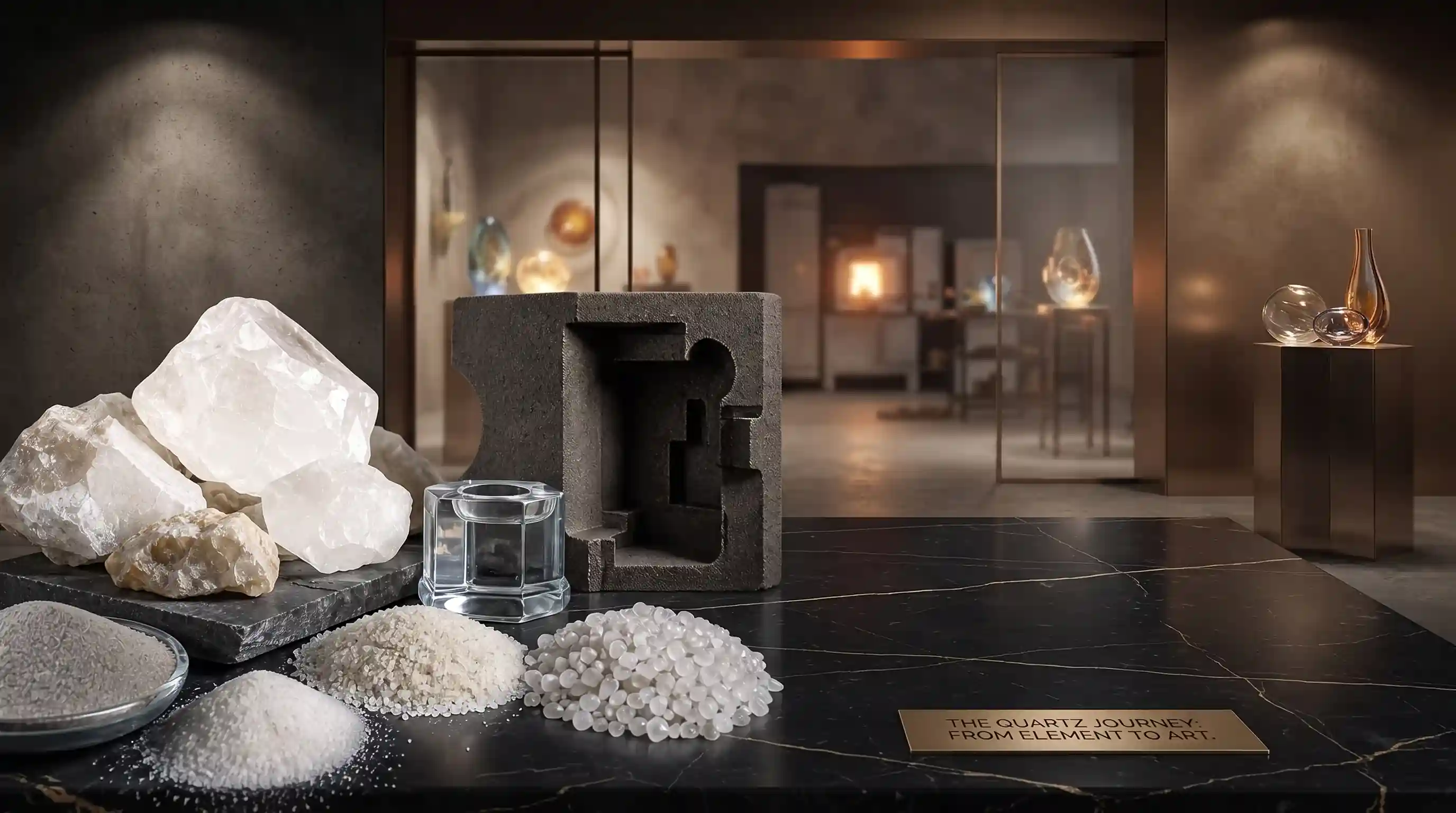
Criteria for silica selection and quality control
Selecting the appropriate silica begins with precisely determining the process requirements. The first step is determining the chemical composition: total SiO2, iron oxide, alumina oxide, calcium oxide, alkalis, and loss on ignition (LOI). For clear glass and bright ceramic products, iron must be at a minimum, whereas for construction materials and some refractory bricks, the iron limit is looser. This difference is the logic behind the multi-grade nature of the product in the market.
The second step is particle size and grain shape. Spherical-angular particles have good flowability and compaction, and sharp-coered particles allow gases to pass better during molding. In casting, the presence of very fine dust and waste fines can cause gas and surface defects. For accurate purchasing, be sure to use sieve analysis (precise grading) and sometimes laser particle analysis to match the declared specifications.
The third step is uniformity across deliveries. A sudden change in composition or grading between shipments can disrupt fuace parameters, pressing density, glass viscosity, or mold reaction time. A committed supplier provides the test results for each batch. The product Amiran Stone Mineral Project silica with a mesh range of 10 to 450 and main applications in glass, foundry products, ceramic products, and construction materials, is an option to consider at this stage.
The fourth step is storage and transportation conditions. Silica must be stored in a dry environment away from organic, metallic, and dust contamination, as moisture causes agglomeration and changes flowability. Also, in sensitive applications, sampling is performed according to specific standards from various points of the warehouse to be a true representative of the entire shipment. Implementing these four steps minimizes the risk of sudden supplier replacement and production line downtime.
Challenges, solutions, and conclusion
Despite its many advantages, using silica in refractories comes with challenges. The most important of these is the thermal shock caused by the alpha-beta quartz transition at 573 degrees. The industrial solution involves controlling the heating and cooling rates, adding stress-relieving components, and using the correct particle size distribution so that strain energy is absorbed without cracking. In pre-fired components, managing the holding time at critical temperatures ensures the formation of more stable phases.
The second challenge is impurities and alkaline phases, which lower the softening temperature. The solution is selecting raw material with a controlled composition and using appropriate mineral additives to stabilize the structure. The third challenge is flowability and dust during transport, which is controlled with standard packaging and closed transfer systems. The fourth challenge is competition with alteative minerals such as alumina, zircon, and silicon carbide, which perform better in specific applications but have higher prices and lower availability.
Mode trends in the refractory industry are moving towards increasing component life, reducing energy consumption, and using local raw materials. Meanwhile, silica has maintained its position due to its abundance, reasonable price, and variety of gradings. The development of low-cristobalite silica bricks, the use of processing waste, and the recycling of molding sand are growing approaches for the environmental sustainability of this industry. Combining these approaches with high-quality silica increases the economic value of projects.
In conclusion, the role of silica in increasing the thermal resistance of refractories stems from its inherent characteristics: stable crystalline structure, appropriate coefficient of thermal expansion, chemical resistance to acidic environments, and the ability to form a ceramic bond at high temperatures. Proper selection of phase, chemical composition, and grading (in the 10 to 450 mesh range) based on the requirements of glass, foundry, ceramics, or construction materials is the key to fully utilizing this mineral. Simultaneously familiarizing oneself with the behavior of other minerals used in these industries makes engineers' decision-making more complete and the final component more durable.
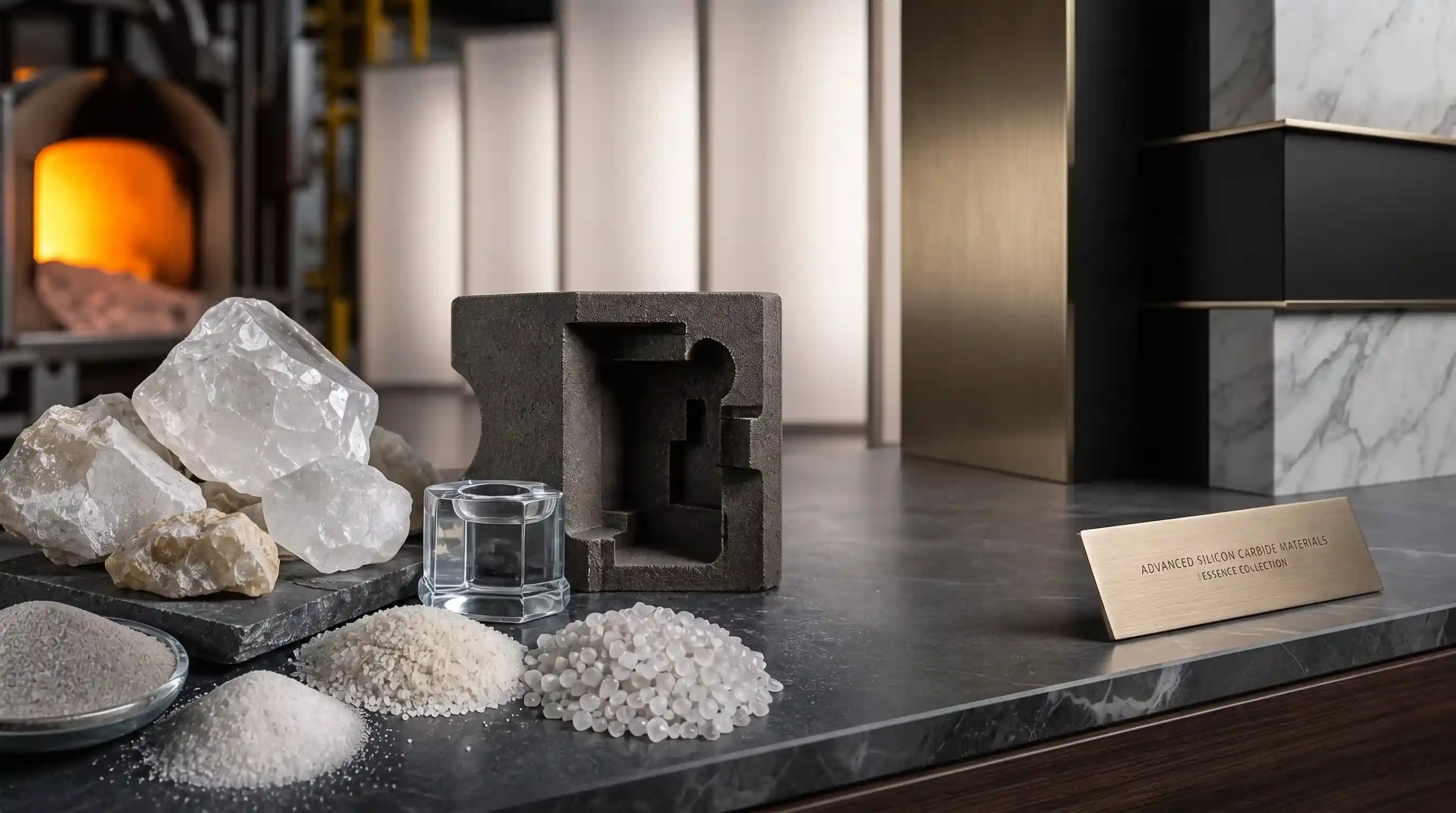
| Question | Answer |
|---|---|
| What is silica and why is it used in refractories? | Silica (SiO2) is the most abundant oxide in the Earth's crust, which is used in refractory bricks, crucibles, and molds due to its stable crystal structure, high softening temperature, and good chemical resistance. |
| What is the mesh range of the Amiran Stone Mineral Project silica? | This product is produced in the range of 10 to 450 mesh and supplied for glass, foundry, ceramic, and construction material applications. |
| What are the main applications of silica? | Glassmaking, foundry products, ceramic products, and construction materials are the four main applications of this product. |
| Why is quartz important at temperatures around 573 degrees Celsius? | At this temperature, the alpha-beta quartz transition occurs with a volume change of about 0.8 percent, which is the main factor in the thermal cracking of components. |
| What is the approximate melting temperature of silica? | Pure silica melts close to 1710 degrees Celsius, and before that, it converts to tridymite and cristobalite at around 870 and 1470 degrees. |
| Why is silica particle size important in refractory parts? | The combination of coarse, intermediate, and fine particles determines the density and porosity of the piece, and has a direct impact on creep resistance, slag penetration, and high-temperature durability. |
| What impurities reduce the quality of silica? | Iron oxide, alumina oxide, calcium, sodium, and other alkalis affect the phase behavior and softening temperature of silica. |
| What characteristics should suitable silica for clear glass have? | It must have high SiO2 and very low iron to preserve the final clarity of the glass, and its particle size distribution should be controlled for uniform melting. |
| How should silica be stored? | It should be stored in a dry environment, away from moisture and metallic and organic contaminations so that its flowability and particle size distribution do not change. |
| What environments is silica not resistant to? | Silica performs poorly against strong alkalis and fluorine-containing compounds, and must be used with caution or replaced in these processes. |
Silica product information (mesh range 10 to 450 and applications in glass, casting, ceramics, and building materials) has been extracted from the official page of the Amiran Mineral Stone project at https://ksamiran.ir/products/silica/
برچسب: Silica,The role of silica in increasing the thermal resistance of refractory materials,
نویسنده: رساوب آفرین