
درباره سایت
آخرین مطالب
- راهنمای ثبت سفارش آنلاین و استعلام قیمت کائولن
- چگونه بهترین اکسید آهن قرمز (اخرا) را برای پروژه انتخاب کنیم؟
- بررسی جامع خواص اکوستیک و وزن مخصوص باریت سفید صنعتی
- نقش کائولن در کاهش هزینههای تولید در صنایع معدنی
- نقش سیلیس در افزایش مقاومت حرارتی مواد نسوز
- چرا اکسید آهن قرمز (اخرا) قدرت پوشانندگی بالایی دارد؟
- The role of industrial barite in the papermaking and specialty coatings industries
- How to find the best kaolin supplier in the country?
- How to properly examine feldspar analysis?
- ما هي استخدامات التالك الصناعي في صناعة البلاستيك والمطاط؟
امکانات وب
An Introduction to Mineral Silica and Its Position in Industry
Silica is one of the most widely used and well-known minerals in the world, playing a fundamental role in a wide range of manufacturing industries. This mineral, composed primarily of silicon dioxide, has been able to meet diverse needs in the glassmaking, foundry, ceramic, and construction material industries due to its abundance in nature, variety in purity, and wide range of particle sizes. In fact, there are few industrial products in whose supply chain silica does not play some role.
The importance of this mineral is not limited only to end-use applications; rather, understanding the differences between its various types, selecting the appropriate size, and knowing the physical and chemical properties of each category has a direct impact on final product quality and production cost optimization. For example, high-purity glassmaking requires silica with minimal iron and alumina impurities, whereas in construction materials, these parameters are of less importance than price and mechanical strength.
Kani Sang Amiran project, as one of the active producers in the field of minerals, supplies its silica products to the market with a range of 10 to 450 mesh, intended for the main applications of glass, foundry products, ceramic products, and construction materials. On the product page of Silica you can study the further details of this product from this collection.
In this comprehensive article, we intend to fully examine the types of mineral silica, the structural and functional differences between them, the concept of mesh and its importance in product selection, as well as the role of each category in various industries. Also, to better understand the position of silica among other industrial minerals, referring to specialized reports such as Review of Kaolin Price Trends in the Mineral Market can provide a useful comparative perspective.
The purpose of writing this article is to enable engineers, industrial buyers, supply managers, as well as students of geology and materials engineering to gain a complete awareness of the differences between the types of this mineral with a precise and practical perspective, and to make a secure and economical choice for their production lines. In the following, we will examine the scientific and technical foundations of the subject in simple but precise language.
What is Silica? Chemical Composition and Crystal Structure
Silica or silicon dioxide with the chemical formula SiO2 is one of the most abundant compounds found in the Earth's crust. This compound is found in nature in crystalline and amorphous forms, and the difference in these structures is one of the main reasons for the variety of physical and chemical behaviors among different samples. In the crystalline state, silicon and oxygen atoms are arranged next to each other in an orderly and repeating network, which is called a lattice structure or crystal lattice.
Polymorphism is one of the outstanding features of this compound. This means that a chemical compound can crystallize in different crystal structures, and each of these structures exhibits its own specific physical properties. As a result, two samples of silica with completely identical chemical purity may differ from each other in terms of hardness, density, thermal behavior, and industrial application.
Along with crystalline forms, there are amorphous and microcrystalline forms in which the atomic network does not have long-range order. This feature is important for applications that require higher reactivity or more uniform melting. Also, the impurities present in the structure, including iron oxides, alumina, calcium, and magnesium, have a significant effect on the color, melting point, and final application of the mineral.
From an application perspective, producers usually categorize silica based on two main criteria: chemical purity level and particle size distribution. These two factors together determine whether a mineral load is suitable for sensitive industries like optical glassmaking or technical ceramics, or whether it can be used for construction materials with higher tolerance for error.
Understanding these foundations helps buyers evaluate the value of the product based on its compliance with their process needs rather than relying on the final price. As observed in the Review of Feldspar Prices in the Iranian Mineral Market it is seen that the price of a mineral is only part of the selection equation, and technical quality is the true determinant.
Ultimately, it should be noted that silica is one of the minerals that can be extracted from a wide range of geological sources; however, the quality of the deposit, the processing method, and the precision in separating sizes form the main difference between a standard industrial product and a general product.
Types of Mineral Silica and Their Structural Differences
Mineral silica is found in nature in various crystalline forms, the most important of which include quartz, cristobalite, and tridymite. These forms all share the same chemical composition, but the different arrangement of atoms causes differences in physical properties, thermal behavior, and type of industrial application.
Quartz: The most common and stable form of silica at ambient temperature. Due to its high hardness, resistance to abrasion, and abundance in nature, quartz is considered the main base for the production of silica sand, powders, and industrial aggregates. This form is the primary source for most glassmaking, foundry, and construction material applications, and the products that the Kani Sang Amiran project offers in the range of 10 to 450 mesh are mainly from this family.
Cristobalite: This polymorph forms at high temperatures and has a different structure than quartz. Its most important application is as a reinforcing additive in technical ceramics, chemical welding powders, and refractory molds. Due to its specific thermal expansion, cristobalite has a place in certain ceramic compositions that caot be replaced by quartz.
Tridymite: A lesser-known crystalline form that emerges under specific geological conditions and has limited industrial use, but understanding it is useful for a complete understanding of silica polymorphism.
Besides crystalline classification, commercial classification is also common. In the market, the product is usually named based on color, purity, and the presence of impurities; for example, high-purity white silica is used for glassmaking, and dark or calcareous silica is used for applications that are less sensitive to color and purity. This commercial classification enables buyers to identify the suitable product for their production line without the need for complex structural analyses.
Another difference between product types is the degree of crystallinity and particle shape. Particles with sharp edges and a glassy surface are more suitable for processes that require adhesion and bonding, while rounded particles (due to processing or natural erosion) are considered a better choice for molding and applications that require high flowability.
In the ceramic industry, the combination of quartz with other minerals such as feldspar and kaolin determines the thermal behavior and final properties of the body. Understanding these interactions is important, as seen in mineral market reports; for further reading, you can refer to Reviewing the market trend of industrial barite and the future of its exports Refer to.
Differences between types of silica in terms of purity, color, and impurities
One of the most important criteria for distinguishing between types of silica is the level of chemical purity. Pure SiO2 crystallizes as a transparent white or colorless substance, but the presence of impurities leads to different colors, changes in the melting point, and a decrease in quality for sensitive applications. Consequently, determining the percentage of SiO2 and controlling impurities is the first step in selecting this mineral for any industry.
Impurities such as Fe2O3 (iron oxide), Al2O3 (alumina), CaO (calcium oxide), and MgO have different effects on the production process. Iron is known as one of the most destructive impurities in the glass industry, because even in very low percentages, it causes a green or brown color in the final glass. For this reason, clear glass manufacturing and transparent products always require silica with a very low percentage of iron.
In contrast, building materials industries, lightweight block production, and certain types of structural ceramics have a higher tolerance for impurities, and the use of products with medium purity or lime content is more economically logical for them. This difference in impurity tolerance is the main reason for the diversity of price and products in the market.
The color of the mineral is also a quick and informal indicator for quality assessment. White color indicates relatively high purity, yellow or cream color indicates the presence of higher amounts of iron, and gray to dark color usually indicates the presence of organic materials, carbon, or other impurities. However, it should be noted that color alone caot be the final criterion, and only chemical and instrumental tests can determine the exact percentage of each impurity.
In addition to purity, physical properties such as density, hardness, porosity, and thermal expansion also play a role in distinguishing types of silica. In casting applications, thermal expansion and thermal shock resistance, and in construction applications, abrasion resistance and reactivity with cement are key parameters.
Professional manufacturers help buyers make the right choice by providing the chemical analysis of their product. The Kani Sang Amiran project also offers its products with transparency in specifications and a range of 10 to 450 mesh so that buyers can find a perfect match for their process requirements. Ultimately, choosing based on purity rather than choosing solely based on price always leads to a reduction in waste and an improvement in the quality of the final product.
The concept of mesh in silica and the importance of particle size
The word "mesh" in the mineral industry is a unit for expressing particle dimensions and, in fact, indicates the number of openings per unit area of the sieve. The higher the mesh number, the finer the particle size; for example, a 10-mesh product has coarser particles, while 450-mesh has very fine particles. This simple yet vital concept has a direct impact on the product's behavior in industrial processes.
Silica with coarse meshes (such as 10 to 40 mesh) is usually used in applications that require high volume, appropriate specific gravity, and less surface contact. These sizes are used in construction materials, special concretes, fuace linings, and some types of stoic molding casting processes. Due to their low specific surface area, coarse particles have lower chemical reactivity and show better performance against abrasion and mechanical pressure.
On the other end of the spectrum, fine meshes (such as 200 to 450 mesh) are used in the ceramics, quality glassmaking, technical powders, and pigments industries due to their high specific surface area, faster reactivity, and ability for more uniform mixing. These fine particles cause more uniform melting in glass fuaces and reduce defects in the final product.
The importance of particle size control is not limited to choosing the right mesh; particle size distribution is also equally important to the main mesh. A product labeled with only one mesh can, in practice, contain a range of dimensions. The closer and more controlled this distribution is, the more predictable the product's behavior in the process becomes.
Silica with medium mesh (such as 60 to 120 mesh) also has wide applications, including in the casting industry as part of the mold composition, in traditional ceramics, and in the production of various sanitary ware. Each industry, depending on its process needs, may also use a combination of several meshes.
Because of this diversity, the Kani Sang Amiran project offers its product in the 10 to 450 mesh range so that buyers can obtain the exact size they need without having to re-process it. Economically, this spares buyers from additional processing costs, and in terms of quality, it reduces the risk of fluctuations in the final product.
Application of silica in the glass and ceramics industry
The glass industry is the largest consumer of high-purity silica in the world. In the glass production process, this mineral acts as the main element of the glass network and determines the strength, transparency, and thermal resistance of the final product. Due to the extreme sensitivity of glassmaking to impurities, especially iron, the product required by this industry must have a high percentage of SiO2 and precise control of metallic impurities.
In the production process, a mixture of silica, soda (sodium carbonate), and limestone is melted in very high-temperature fuaces. Melting uniformity, final transparency, and bubble reduction are all dependent on the quality of particle size and the purity of the input silica. The more uniform and finer the particles, the more homogeneous the melting process occurs and the less energy is consumed.
In the ceramics industry, the role of silica is slightly different. This mineral acts as a stabilizing agent and skeleton in ceramic bodies, and in combination with feldspar as a flux and kaolin as a binder, it forms the final structure. Its performance influences firing temperature, thermal expansion, and the final strength of the ceramic.
Ceramic products such as tiles, tableware, sanitary ware, and technical ceramics each have different requirements in terms of purity, particle size, and thermal behavior. Technical and engineering ceramics require much stricter control and often use finer meshes and more limited chemical analysis.
One of the common challenges in these industries is the quality fluctuations of the purchased product. If the purity or particle size distribution changes from one shipment to another, the fuace settings and formulation composition must be adjusted, which increases costs and waste. For this reason, buying from a supplier with stable quality control has strategic importance.
Ultimately, for buyers active in the glass and ceramic industry, choosing a product based on the technical needs of the process, rather than the lowest price, is always a better economic decision in the long term. Combining technical knowledge, proper quality control, and the mesh appropriate for the process is the key to success in these industries.
Application of silica in casting and construction materials
The casting industry is one of the traditional consumers of silica. In this industry, silica sand is used as the main mold-making material due to its high thermal resistance, toughness, and moldability. Molds into which molten metal is poured must be able to withstand very high temperatures and thermal shock without deforming or reacting with the metal.
In the molding process, silica is usually combined with organic binders, clay, or chemical agents so that the mold has sufficient strength. The choice of the appropriate mesh depends on the type of process and metal: for high-precision parts, finer meshes are used for a smoother surface, while for larger parts, coarser meshes are preferred due to better porosity and gas escape.
Abrasion resistance and thermal expansion are two critical factors in selecting silica for casting. If expansion at high temperatures is not controlled, phenomena such as mold cracking or surface defects in the final part occur. For this reason, quality control and the uniformity of the input product are of particular importance.
In the construction materials industry, silica is widely used. These applications include the production of concrete, industrial mortars, precast concrete products, silica and quartz bricks, as well as artificial stones and flooring. In this industry, compressive strength, durability against weather conditions, and abrasion resistance are the main parameters for selection.
In construction materials, medium-purity or lime-content silica is also widely used, because this industry's tolerance for color and purity is much greater than that of the glass industry. This makes more economical products a suitable option for large construction projects.
Also, in artificial stones and decorative panels, fine meshes and white color give the final product a uniform appearance and visual appeal. In industrial flooring and resistant coatings, silica particles act as an agent to increase hardness and resistance to wear.
The Kani Sang Amiran project offers its product in a range of 10 to 450 mesh to cover a wide spectrum of needs in these two industries, from foundry molding to concrete and construction materials. The variety in size allows users to select a product that perfectly matches their process requirements.
Criteria for selection, purchasing, and finding the right supplier
Selecting the appropriate silica for a production line is a process that must be carried out based on technical and economic criteria simultaneously. The first step is to accurately determine the process needs: required chemical purity, appropriate mesh, acceptable particle size distribution, and periodic consumption rate. Without this primary information, comparing different supplier proposals is practically impossible.
The second step is requesting a chemical analysis and samples. Professional suppliers usually provide their product's analysis along with samples to buyers. This documentation should include the percentage of SiO2, major impurities (iron, alumina, calcium), and particle size distribution. For high-volume purchases, testing the sample in the buyer's inteal laboratory is an essential step.
The third criterion is the uniformity and stability of quality across different shipments. This factor has a direct impact on fuace settings, formulations, and final product waste. A supplier with standard processing typically has the ability to maintain product specifications over time.
The fourth criterion is supply capacity and stable shipping capability. In manufacturing projects, disruptions in the supply chain can cause line shutdowns and heavy costs. Therefore, choosing a supplier that can sustainably cover the periodic consumption volume is just as important as product quality.
The fifth criterion is technical consultation and after-sales support. A supplier capable of providing guidance on appropriate mesh, storage methods, and application tips for the product offers much more value than a simple seller. In the Kani Sang Amiran project, the product is offered in the 10 to 450 mesh range for the glass, foundry, ceramic, and construction materials industries; this variety reflects the technical capability of the organization in matching the product with the diverse needs of customers.
From an economic perspective, making a decision based solely on the unit price per ton is misleading. A low price combined with unstable purity or inappropriate sizing actually leads to increased hidden costs such as higher energy consumption, higher waste, and frequent line adjustments. Assessing the full value of the product is the correct criterion for decision-making.
It is also recommended that buyers periodically monitor industrial mineral market trends in order to plan their strategic purchases at appropriate times. With a comprehensive understanding of the types of silica, the differences in purity, and the importance of mesh, industrial buyers can make a reliable, economical, and consistent choice for their production line needs.
| Question | Answer |
|---|---|
| What is mineral silica? | Silica or silicon dioxide (SiO2) is one of the most abundant compounds in the Earth's crust, which is widely used in the glass, ceramic, foundry, and construction materials industries. |
| What are the crystalline forms of silica? | Quartz, cristobalite, and tridymite are the three main crystalline forms, which have different physical properties and applications due to their different atomic arrangements. |
| What is the difference between white and dark silica? | White silica has higher purity and less iron impurity, whereas dark or calcareous silica is used for applications that are less sensitive to color and purity. |
| What is the concept of "mesh" in silica? | Mesh is a unit for expressing particle dimensions; the higher the mesh number, the finer the particles. The Kani Sang Amiran project product is offered in the 10 to 450 mesh range. |
| Why does the glass industry require high-purity silica? | Because impurities, especially iron oxide, cause discoloration of the glass and a loss of clarity, and have a direct impact on the final product quality. |
| What role does silica play in foundry? | Due to its high thermal resistance and moldability, this mineral is considered the main material for molding in metal casting. |
| What type of silica is used in construction materials? | In this industry, medium-purity or calcareous products are usually used, because mechanical strength and price are more important than color. |
| Why is particle size distribution important? | A uniform particle size distribution leads to predictable behavior in the process, uniform melting, and a reduction in final product waste. |
| What information should we request when buying silica? | Chemical analysis (percentage of SiO2 and impurities), particle size distribution specifications, and a product sample for review in the buyer's inteal laboratory. |
| Which industries is the Kani Sang Amiran project product suitable for? | This product is introduced for the glass, casting, ceramic, and construction materials industries in the mesh range of 10 to 450 mesh. |
The technical and application specifications of the product presented in this article are set based on the information from the Kani Sang Amiran project product page (https://ksamiran.ir/products/silica/)
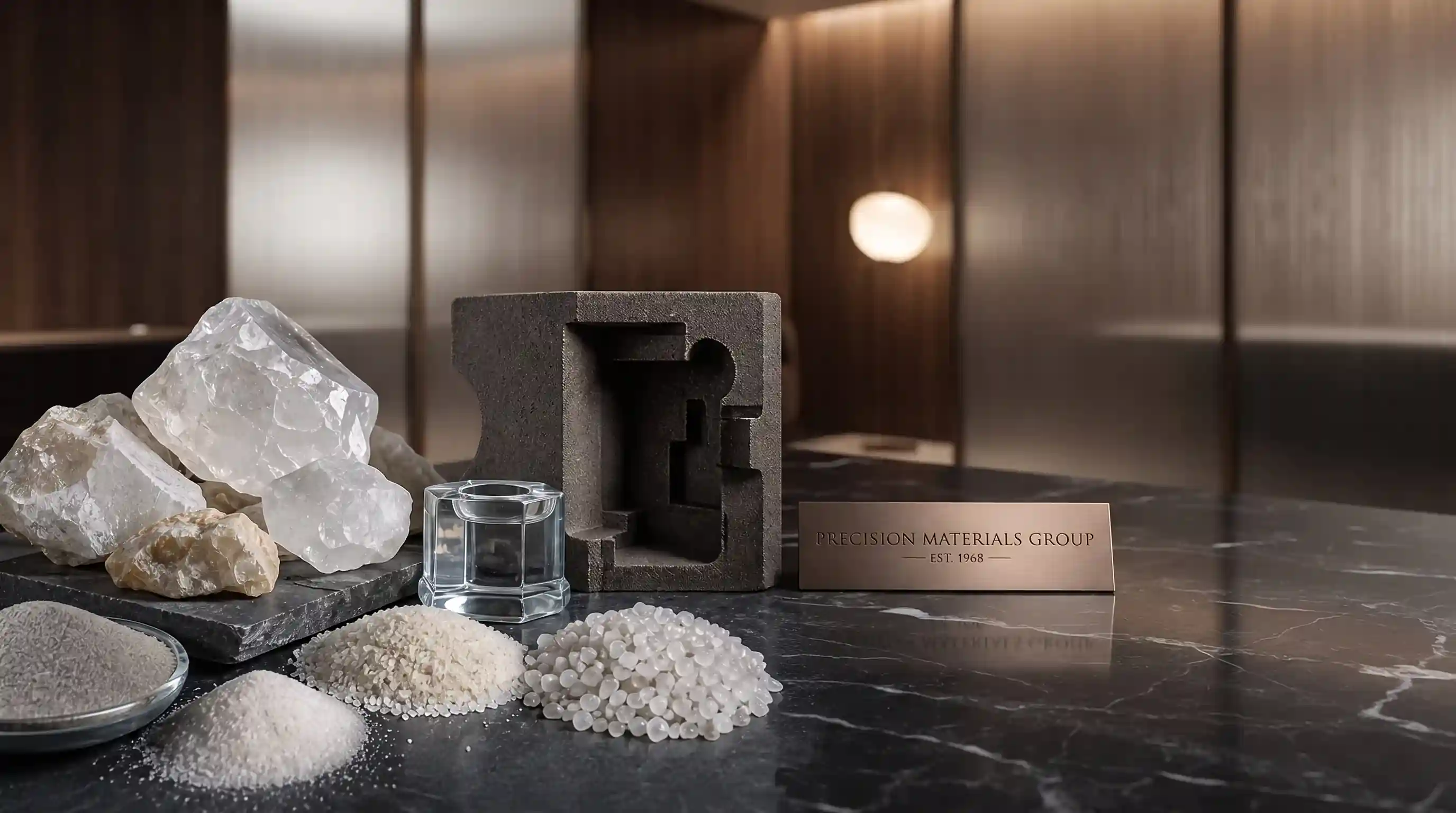
برچسب: Silica,What are the different types of mineral silica and their differences? A complete review,
نویسنده: رساوب آفرین