
درباره سایت
آخرین مطالب
- راهنمای ثبت سفارش آنلاین و استعلام قیمت کائولن
- چگونه بهترین اکسید آهن قرمز (اخرا) را برای پروژه انتخاب کنیم؟
- بررسی جامع خواص اکوستیک و وزن مخصوص باریت سفید صنعتی
- نقش کائولن در کاهش هزینههای تولید در صنایع معدنی
- نقش سیلیس در افزایش مقاومت حرارتی مواد نسوز
- چرا اکسید آهن قرمز (اخرا) قدرت پوشانندگی بالایی دارد؟
- The role of industrial barite in the papermaking and specialty coatings industries
- How to find the best kaolin supplier in the country?
- How to properly examine feldspar analysis?
- ما هي استخدامات التالك الصناعي في صناعة البلاستيك والمطاط؟
امکانات وب
An introduction to kaolin and its place in today's industries
Kaolin, which is also known as "china clay" in Persian texts, is considered one of the most important industrial minerals and the most widely used non-metallic mineral in the world. The name of this material is derived from the "Kaoling" region in China, where Chinese whitewashers extracted the soft white clay of this region centuries ago and used it to make delicate porcelain dishes. Today, kaolin holds a special place not only in the ceramic and tile industry but also in the paper, paint and coating, rubber, plastic, pharmaceutical, cosmetic, and even water purification industries.
Kaolin is mainly composed of the mineral kaolinite, a hydrated aluminum silicate with the chemical formula Al2Si2O5(OH)4, which is formed as a result of the decomposition and weathering of feldspar-bearing rocks, especially granites and acidic volcanic rocks, over long geological periods. Kaolin deposits are found in many parts of the world, including China, the United States, Brazil, England, Iran, and India, and their quality is evaluated based on the purity of kaolinite, whiteness, particle size distribution, and the amount of iron and titanium impurities.
The importance of kaolin in industry is due to a set of its unique features: bright white color, very fine particle size, suitable plasticity in the presence of water, relative chemical inertness in various environments, high thermal resistance, and the ability to produce a smooth surface after firing. These characteristics have made this mineral play a key role in the formulation of various products.
In the tile and ceramic industry, kaolin is known as one of the main components of the ceramic body. This material provides the necessary plasticity for molding and shaping the ceramic paste and ensures the final strength and whiteness of the product by participating in the formation of crystalline phases such as mullite during the firing process. In the paper industry, kaolin is also used as both a filler and a coating, contributing to improved whiteness, surface smoothness, printability, and reduced consumption of more expensive raw materials.
In the paint and coating industries, kaolin acts as an auxiliary pigment or extender pigment, playing a role in controlling resin absorption, adjusting gloss, improving coverage, and increasing the durability of the paint film. In the production of ceramic glazes, kaolin acts as a suspending and binding agent, preventing particle settling in the glaze slurry while simultaneously improving the adhesion of the glaze to the body.
The diverse applications of kaolin have made the production and supply of this material with suitable quality, high purity, and standard granulation one of the basic needs of various industries. In the rest of this article, we will comprehensively examine the chemical structure, oxide analysis, physical properties, and specialized applications of kaolin so that readers looking for a precise understanding of this material can obtain a complete and practical picture of it.
Chemical and crystalline structure of kaolin
To accurately understand the behavior of kaolin in industrial applications, familiarity with its chemical and crystalline structure is essential. Kaolin is actually the trade and industrial name for clays containing kaolinite, and kaolinite (Kaolinite) is its most important constituent mineral. Kaolinite is a hydrated aluminum silicate with the chemical formula Al2Si2O5(OH)4, in which two aluminum atoms, two silicon atoms, five oxygen atoms, and four hydroxyl groups are present.
Structurally, kaolinite is a 1:1 layered silicate. This means that each structural unit consists of a silica tetrahedral layer (SiO4) and an alumina octahedral layer (Al(OH)6) that are placed together. In the tetrahedral layer, silicon atoms are surrounded by four oxygen atoms, and in the octahedral layer, aluminum atoms are surrounded by six hydroxyl groups or oxygen atoms. The coection of these two layers occurs through shared oxygen atoms.
One of the important features of the kaolinite structure is that the 1:1 layers are stacked on top of each other along the c-axis, and hydrogen bonds are established between them. These hydrogen bonds between the hydroxyl groups of the octahedral layer and the oxygen atoms of the tetrahedral layer of the adjacent layer cause the kaolinite structure to be relatively stable and non-expandable. For this reason, unlike other clay minerals such as montmorillonite, kaolinite swells slightly in contact with water and shows mild adhesion and plasticity properties.
Among the polymorphs of kaolinite, there are three main crystalline forms including kaolinite, dickite, and nacrite, all of which have the same chemical formula but differ in the arrangement of the layers. Halloysite is another type in this group that has a tubular or rolled structure and is found in some deposits. Among these polymorphs, kaolinite is the most common and industrially important form.
The purity of kaolin depends on the amount of kaolinite and associated minerals present. Common impurity minerals in kaolin deposits include quartz, mica, feldspar, hematite, limonite, rutile, and anatase. The presence of these impurities, especially iron and titanium compounds, has a direct impact on the whiteness and final quality of kaolin and, in the processing process, efforts are made to eliminate them as much as possible.
Kaolin processing usually involves the stages of extraction, crushing, water classification, magnetic separation to remove iron-bearing particles, and in some cases chemical processing and calcination. Calcination or thermal firing of kaolin at a temperature of about 500 to 600 degrees Celsius causes the destruction of the kaolinite structure and the formation of metakaolin, which is a highly reactive and widely used material in various industries.
Knowing the crystal structure of kaolin helps engineers and formulators predict the behavior of this material in various systems. Just like other industrial minerals whose precise examination of chemical and physical properties, such as examining the physical and chemical properties of high-quality white talc, is vital for choosing the right material, understanding the structure of kaolin is also a fundamental step in the optimal use of this valuable mineral.

Chemical analysis of kaolin and its oxide composition
Chemical analysis of kaolin is usually performed by the XRF (X-ray fluorescence) method or classical chemical methods, and the result is reported as a weight percentage of oxides. In a standard analysis, the main oxides reported include SiO2 (silica), Al2O3 (alumina), Fe2O3 (iron oxide), TiO2 (titanium oxide), CaO (calcium oxide), MgO (magnesium oxide), Na2O (sodium oxide), K2O (potassium oxide), and LOI (loss on ignition).
In a pure, high-purity kaolin, the sum of SiO2 and Al2O3 usually accounts for more than 90% by weight of the total sample. The amounts of SiO2 and Al2O3 must correspond to a molar ratio close to 2:1 (similar to the formula of kaolinite Al2Si2O5(OH)4). Any deviation from this ratio indicates the presence of impurities such as quartz (increased SiO2) or feldspar (increased SiO2 along with Na2O and K2O).
LOI, or loss on ignition, is an important indicator for evaluating the quality of kaolin. In kaolinite, the LOI is usually in the range of 13 to 15 percent, which is due to the evaporation of structural water (hydroxyl water) due to heat. Values lower than this limit usually indicate the presence of non-clay impurities and associated minerals.
In terms of application, iron oxide (Fe2O3) is considered one of the most vital quality parameters in kaolin. As the main factor causing color, iron strongly affects the whiteness of kaolin. In high-quality kaolin for the ceramic, paper, and paint industries, the amount of Fe2O3 must be kept at a low level; because even small amounts of iron can shift the color of the product toward yellow or red after firing or in the presence of light, significantly reducing the visual quality of the final product.
Titanium oxide (TiO2) also plays a similar role in reducing whiteness and is usually found in kaolin deposits alongside iron. In high-quality kaolins, efforts are made to control the amount of this oxide as well. Calcium, magnesium, sodium, and potassium oxides, which are known as alkali and alkaline earth oxides, are usually considered impurities in kaolin, and their amounts should be low in high-quality kaolin because they affect the thermal and firing behavior of the product.
One of the important points in interpreting the chemical analysis of kaolin is understanding that the reported values are merely relative and should be examined alongside other indicators such as whiteness, particle size distribution, and physical properties. For example, two kaolin samples can have similar chemical analyses but show completely different behavior in application due to differences in mineralogy and structure. Just like accessing specialized technical information as explained in the guide to obtaining technical catalogs and specialized silica analysis, receiving accurate and valid kaolin analysis before purchase is an essential step to ensure the quality of the final product.
Physical properties of kaolin and the importance of mesh sizing
The physical properties of kaolin play a decisive role in selecting this material for various applications. These properties include color and whiteness, particle size distribution, particle shape, specific surface area, density, plasticity, oil absorption, moisture, and rehydration properties. We will examine the most important of these properties below.
One of the most important physical characteristics of kaolin is its color and whiteness degree. Kaolin whiteness is usually measured with a device called a brightness meter and is reported as a percentage. High-quality kaolin for the paper, paint, and white ceramic industries must have high whiteness. The color of raw kaolin may be yellow, cream, or even gray due to the presence of iron and organic compounds, which is converted to the desired white color through processing and bleaching.
Particle size and their distribution are other critical parameters in evaluating kaolin. Kaolin granulation is defined based on the mesh system, which indicates the smallest pore size in a sieve through which particles pass. Kaolin supplied for industrial use in the range of 450 to 1500 mesh is provided; this means that the particles of this product are very fine, and its smallest particles are on the order of a few microns. The higher the mesh number, the finer and more uniform the particles will be, covering more sensitive applications such as paper coating, high-quality paints, and finer glazes.
The shape of kaolin particles also affects its application. Kaolinite particles are usually flake-like or book-like, which separate from each other during crushing. This flake shape causes kaolin to exhibit good lubricity and plasticity in aqueous systems. The specific surface area of kaolin, which is measured by the BET method, is usually in the range of 10 to 25 square meters per gram and has a direct impact on the absorption of water, oil, and chemicals.
Kaolin plasticity refers to the ability to change shape and maintain the new shape after water removal, which is of vital importance in the ceramic and tile industry. Pure kaolin has moderate plasticity, but in combination with other clay minerals, it provides desirable behavior for molding. Oil absorption is another index that is important in the paint and coating industry and determines the amount of resin absorbed by kaolin.
The density of kaolin is about 2.6 g/cm3, and this value decreases in calcined kaolin (metakaolin). The moisture of the supplied kaolin must also be controlled so that it does not cause problems in subsequent processes and storage. Just like other industrial minerals where understanding their physical and mechanical properties, such as investigating the physical and mechanical properties of industrial talc powder, is essential for proper material selection, a precise understanding of the physical properties of kaolin will also ensure success in the formulation of industrial products.
Application of kaolin in the tile and ceramic industry
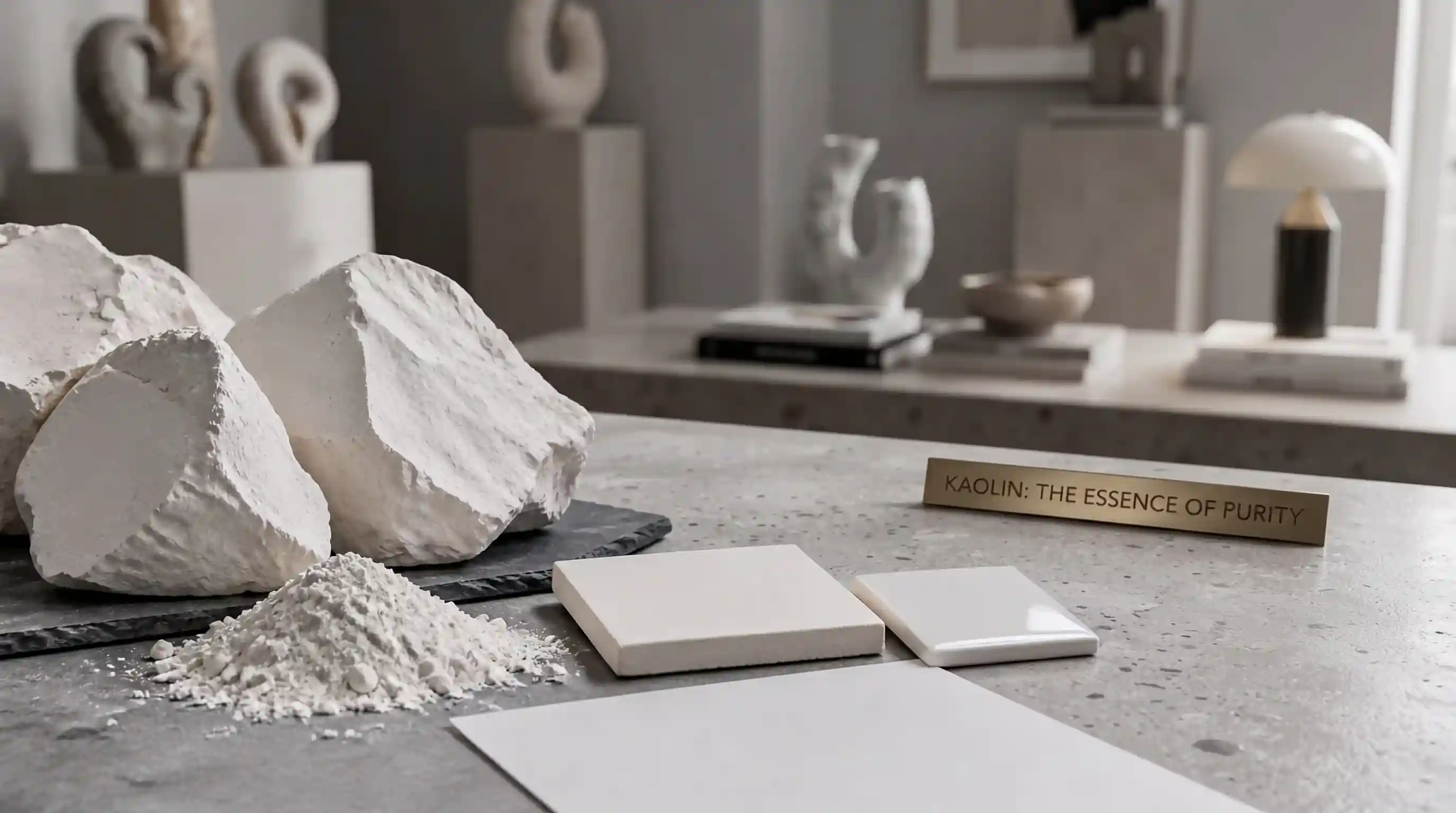
The tile and ceramic industry is one of the oldest and most important consumer markets for kaolin worldwide. In ceramic bodies, kaolin is recognized as the basic and primary mineral and makes up a major part of the ceramic paste composition. The role of this material in this industry is multifaceted and affects various stages of production, from paste preparation to final firing.
In the first stage, kaolin provides the necessary plasticity for shaping the ceramic paste. In pressing, extrusion, and molding methods, it is necessary for the ceramic paste to have the ability to deform without cracking and maintain its shape after molding. Due to its layered structure and rehydration property, kaolin provides this capability in combination with other materials. In fact, kaolin acts as a "natural glue" in ceramic paste.
During the firing stage, kaolin undergoes important changes. At a temperature of about 500 to 600 degrees Celsius, the kaolinite structure degrades and metakaolin is formed. At higher temperatures (above about 1200 degrees Celsius), metakaolin, by reacting with other components of the body, forms new phases such as mullite, which guarantees the mechanical strength, thermal resistance, and dimensional stability of the final product. This crystalline phase is essentially the backbone of the strength of ceramic products.
The whiteness of kaolin is also of extraordinary importance in the tile and ceramic industry; especially in the production of white tiles, porcelain dishes, and sanitary ware. The higher the whiteness of kaolin, the lighter and brighter the final color of the product will be, and in coated and glazed tiles, it plays the role of a light background. For this reason, the presence of iron and titanium in kaolin must be carefully controlled.
In addition, kaolin affects the thermal behavior of the ceramic body. This material acts as a regulating mineral, adjusting the firing temperature and preventing excessive swelling and deformation of the product around the melting temperature. In the production of tile press powder, kaolin with a suitable mesh size (in the range of 450 to 1500 mesh) creates a uniform distribution in the paste and improves the quality of pressing and drying.
In the production of porcelain dishes (Bone china and Porcelain), where transparency and delicacy of the product are of high importance, high-quality kaolin is used along with feldspar and quartz. In these products, kaolin must have high purity, excellent whiteness, and uniform particle distribution to ensure the transparency and shine of the porcelain. In sanitary ceramic products such as washbasins and toilet bowls, high-quality kaolin also plays the main role in the body.
Selecting the right kaolin for the tile and ceramic industry requires attention to a set of parameters: chemical analysis, whiteness, particle size distribution, plasticity, and thermal behavior. Using kaolin with verified technical specifications not only improves the quality of the final product but also plays an effective role in reducing waste, optimizing energy consumption, and increasing production efficiency.
The role of kaolin in the production of ceramic glazes
Ceramic glaze is a thin glass coating applied to the surface of tiles, ceramic dishes, and sanitary products to create a smooth, shiny, water-repellent, and hygienic surface. In glaze formulation, kaolin plays a vital and irreplaceable role and is usually used in the range of 5 to 15 percent by weight of the total glaze composition.
The first and most important role of kaolin in glaze is its function as a suspension agent. The glaze slip usually contains heavy and fine particles, including silica, feldspar, carbonates, and various oxides, which are suspended in water and ready to be applied to the surface of the product. Without the presence of kaolin, these particles quickly settle to the bottom of the tank and create a non-uniform mixture. With its layered structure and colloidal properties, kaolin keeps the particles in a suspended state and ensures the uniformity of the mixture.
The second important role of kaolin in glaze is to provide adhesion and bonding properties. When the glaze is applied to the surface of the body, kaolin causes the glaze particles to adhere to each other and to the surface of the body, and this coection is maintained during the drying and firing process. Without this property, the glaze would separate from the surface after drying or due to impact and vibration.
Kaolin also affects the viscosity and rheological behavior of the glaze. By adjusting the amount of kaolin in the formulation, one can control the flowability of the glaze, the thickness of the applied layer, and its behavior during spraying or dipping. This is vital in the production of high-quality tiles that require a uniform glaze layer.
During the firing stage, the kaolin present in the glaze is exposed to high temperatures and, by melting together with other components of the formulation, forms the glassy structure of the glaze. The presence of alumina in kaolin increases the thermal and chemical resistance of the glaze and prevents cracking and breakdown during use.
In the production of different types of glazes, the type of kaolin used varies. In transparent and glossy glazes, kaolin with high whiteness and very low iron content is used to achieve complete shine and transparency. In matte and mineral glazes, kaolin with different specifications may be used along with other minerals. In any case, the granulation of kaolin (in the range of 450 to 1500 mesh) has a direct effect on the smoothness and uniformity of the final glaze layer.
Also, in the production of engobe, which is an intermediate layer between the body and the glaze, kaolin plays the main role. The engobe smooths the surface of the body and prepares the background color to accept the final glaze. In this application as well, the whiteness, plasticity, and particle distribution of kaolin are of high importance.
Finally, the use of high-quality and standard kaolin in glaze production leads to the improvement of the final product's surface quality, reduction of production waste, and increased customer satisfaction. Choosing kaolin with appropriate granulation and purity is considered one of the fundamental solutions for glaze and ceramic manufacturers.
Application of kaolin in the paper and paint industries
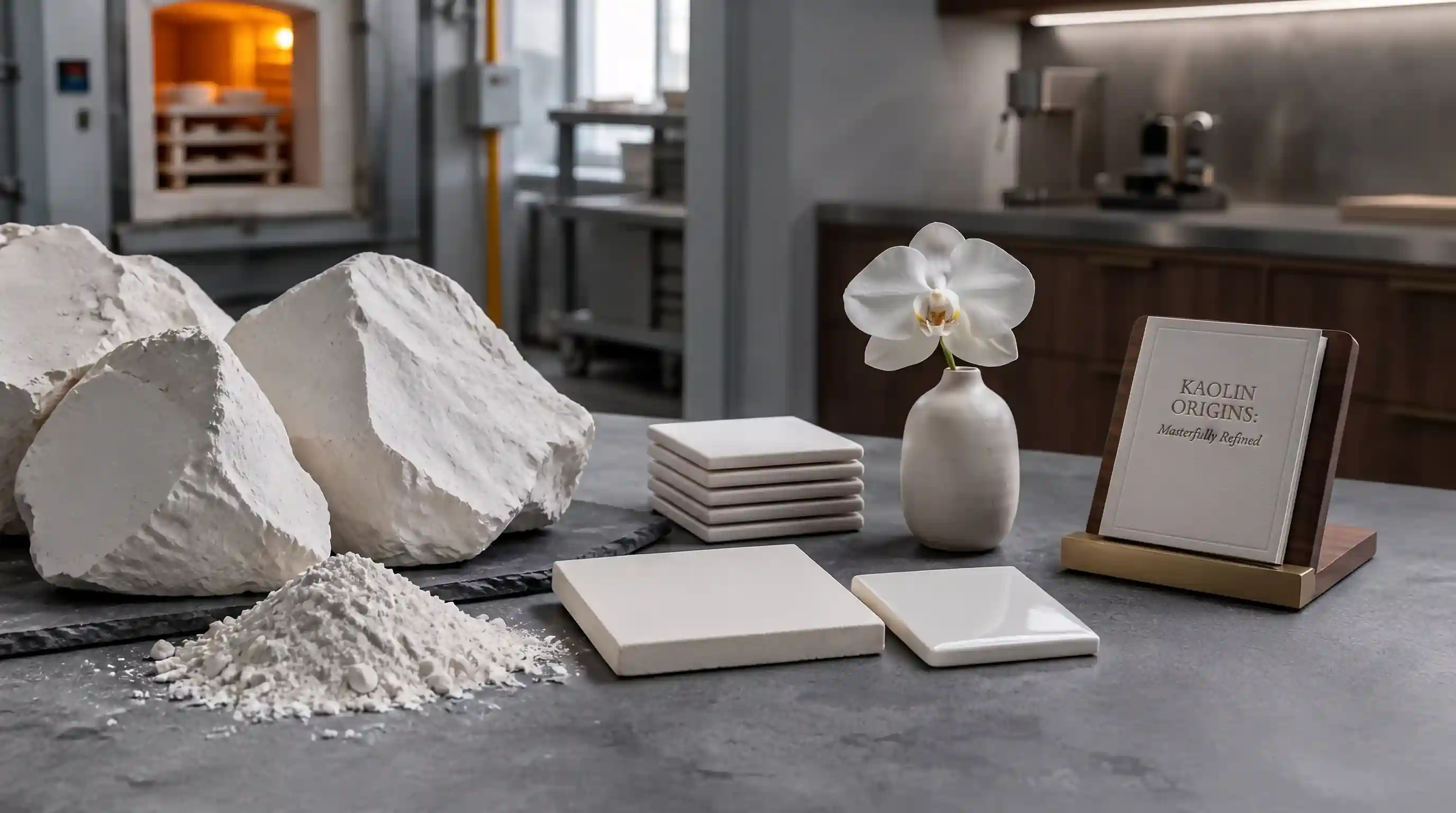
The paper industry is one of the largest consumers of kaolin in the world. In this industry, kaolin is used in two completely different but complementary roles: filler and coating. In both applications, the main goal is to improve the paper's surface quality, increase whiteness, improve printability, and reduce production costs.
As a filler, kaolin is added to the pulp composition during paper production to fill the spaces between cellulose fibers. This not only improves the smoothness and whiteness of the paper but also reduces production costs by replacing a portion of expensive fibers. Very fine kaolin particles (in the range of 450 to 1500 mesh) are ideal for this application as they can well penetrate the paper structure and create a uniform surface.
In its role as a coating agent, kaolin is applied as a thin layer to the surface of paper to create an exceptionally smooth, bright surface suitable for high-quality printing. Printable papers, magazines, and luxury catalogs typically have such a coating. In this application, kaolin must have very high whiteness, uniform particle distribution, and minimal iron and color impurities.
In the paint and coating industry, kaolin is also used as an extender or auxiliary pigment. In paint formulations, kaolin plays a multifaceted role: controlling resin absorption, adjusting gloss, improving coverage, increasing paint film strength, and reducing production costs. In matte paints, kaolin reduces gloss and creates a pleasant surface, and in semi-gloss paints, it creates a harmonious surface by controlling the usage amount.
The oil absorption of kaolin is of special importance in the paint industry. This index determines how much resin or binder kaolin absorbs, based on which the necessary amount of resin in the formulation is calculated. Calcined kaolins (metakaolin) have higher oil absorption due to their higher surface area and are used in certain special paint applications.
In the production of water-based and solvent-based paints, kaolin must have a near-neutral pH and low chemical reactivity to be fully compatible with other formulation components. Additionally, the abrasion resistance and durability of the paint film are also influenced by the quality of the kaolin used.
In the rubber and plastic industries, kaolin is also used as a functional filler, and due to its layered structure, it improves mechanical properties, increases whiteness, and reduces the final product cost. In these industries, kaolin also acts as an anti-blocking agent and process aid.
Finally, in all these applications, selecting high-quality kaolin with appropriate technical specifications and precise granulation (in the 450 to 1500 mesh range) and obtaining a valid chemical analysis before purchase are considered fundamental principles for success in industrial product formulation and guarantee the quality of the final product.
Criteria for Selecting High-Quality Kaolin and Summary
Selecting the right kaolin for each industry is a decision that has a direct impact on the quality of the final product, production costs, and customer satisfaction. In this chapter, we review the most important criteria that should be considered when buying and selecting kaolin.
The first criterion is Precise Chemical Analysis of the Product. As we examined, kaolin must have a percentage of SiO2 and Al2O3 consistent with the kaolinite structure, and the amounts of iron, titanium, and alkali oxides must be kept to a low level. Obtaining a Certificate of Analysis from the supplier is the first essential step in this path.
The second criterion is Color and Whiteness Degree. For sensitive applications such as printable paper, high-quality paint, and white ceramics, the whiteness of kaolin must be at the highest possible level. Iron and titanium content are the main factors reducing whiteness, and in the processing of high-quality kaolin, their removal or reduction is carried out using physical and chemical methods.
The third criterion is Particle Size Distribution or Granulation. Kaolin is supplied in the 450 to 1500 mesh range for various applications, and selecting the appropriate size depends on the needs of the process. For fine applications such as paper coating and glaze, higher (finer) sizes are more suitable, and for applications such as ceramic bodies, lower sizes can be used.
The fourth criterion is Functional Properties such as plasticity, oil absorption, adhesion, and thermal behavior, which have different levels of importance in various industries. Obtaining a sample and performing functional tests before bulk purchasing is a logical solution to ensure the product meets production requirements.
The fifth criterion is Consistency and Stability of Quality in Supply. A supplier that can offer a product with uniform quality and consistent analysis over time is more valuable than a supplier with quality fluctuations. At Kani Sang Amiran, an effort is made to provide customers with kaolin supplied with standard technical specifications and 450 to 1500 mesh granulation, tailored to the needs of the tile, ceramic, glaze, paper, and paint industries. To view product information and obtain an analysis, you can visit the Kaolin page.
In summary of this article, it can be said: Kaolin is a multi-functional industrial mineral whose unique chemical structure (Al2Si2O5(OH)4) and special physical properties (whiteness, plasticity, fine-grained nature, and thermal resistance) have given it a special place in the tile, ceramic, glaze, paper, and paint industries. A precise understanding of the chemical analysis, crystal structure, and physical properties of this material helps engineers and producers use this mineral optimally and produce higher-quality products.
Finally, just like any other industrial mineral, obtaining valid technical information, sampling and testing before purchase, and choosing a reliable supplier is the key to success in using kaolin. We hope this article has been able to provide a clear and practical picture of this valuable material.
| Question | Answer |
|---|---|
| What is kaolin and what minerals is it composed of? | Kaolin or China clay is a soft, white mineral substance composed primarily of the mineral kaolinite (hydrated aluminum silicate), formed as a result of the weathering of feldspar-containing rocks. |
| What is the chemical formula for kaolinite? | The chemical formula for kaolinite is Al2Si2O5(OH)4; meaning there are two aluminum atoms, two silicon atoms, five oxygen atoms, and four hydroxyl groups present in each structural unit. |
| What is the mesh range of the kaolin supplied by the Kani Sang Amiran project? | The kaolin supplied is offered in the range of 450 to 1500 mesh, which includes very fine particles suitable for sensitive applications such as paper coating, paint, and glaze. |
| What are the main applications of kaolin? | The main applications of kaolin include tiles, ceramic products, glaze, paper, and paint; it is also used in the rubber, plastic, and cosmetics industries. |
| Why is the iron oxide (Fe2O3) content in kaolin important? | Iron is the primary factor in reducing the whiteness of kaolin, and even trace amounts can cause the product color to lean toward yellow or red after firing; for this reason, it must be controlled in high-quality kaolin. |
| What does LOI indicate in kaolin analysis? | LOI (Loss on Ignition) represents the structural water or hydroxyl content of kaolinite, which is usually between 13% and 15% in pure kaolin. |
| What is the role of kaolin in a ceramic body? | Kaolin provides the plasticity necessary for forming ceramic paste and, at high temperatures, ensures the strength and whiteness of the fired product by forming a mullite phase. |
| Why is kaolin used in glaze formulations? | Kaolin acts as a suspending agent (preventing particle settling) and a binder (increasing the adhesion of the glaze to the body) in glazes, and it adjusts the viscosity and uniformity of the glaze layer. |
| What role does kaolin play in the paper industry? | Kaolin is used in dual roles as a filler (filling the space between fibers) and a coating agent (creating a smooth and bright surface for printing), improving the whiteness, smoothness, and printability of the paper. |
| How can one choose high-quality kaolin? | Based on reliable chemical analysis, whiteness degree, particle size distribution (mesh), functional properties such as plasticity, and supplier quality consistency; obtaining a sample and testing before bulk purchase is recommended. |
The information in this article is compiled based on scientific mineralogy sources and technical data from the Kani Sang Amiran project (https://ksamiran.ir)
برچسب: Kaolin,Examining the chemical analysis of kaolin and its physical properties,
نویسنده: رساوب آفرین