
درباره سایت
آخرین مطالب
- The role of industrial barite in the papermaking and specialty coatings industries
- How to find the best kaolin supplier in the country?
- How to properly examine feldspar analysis?
- ما هي استخدامات التالك الصناعي في صناعة البلاستيك والمطاط؟
- بررسی مزایای خرید عمده اکسید لیمونیت (گل ماش)
- Calcium Carbonate vs. Silica: Which mineral is more suitable?
- The effect of limonite oxide (yellow ochre) on the quality of construction materials
- ما هي أنواع السيليكا المعدنية وما الفرق بينها؟ دراسة شاملة
- كيف نفحص تحليل الفلسبار بشكل صحيح؟
- كيف تختار أفضل أكسيد حديد أحمر (مغرة) لمشروعك؟
امکانات وب
Introduction: Why is comparing calcium carbonate and silica important?
In many manufacturing industries, mineral fillers play a key role in reducing final costs and improving the properties of the final product. Among these materials, calcium carbonate and silica account for the highest volume of consumption in the polymer, paint, paper, adhesive, and engineering products industries. Although both materials are recognized as mineral fillers, fundamental differences in their chemical structure, physical properties, and process behavior make choosing the right material an important engineering decision.
Calcium carbonate, with the chemical formula CaCO3, is one of the most abundant compounds in the Earth's crust and is obtained from limestone, marble, and chalk. Due to its abundance, reasonable price, high whiteness, and ease of processing, it is used in a wide range of products from PVC/UPVC profiles and pipes to masterbatch, cables, synthetic leather, paint, paper, adhesives, and engineered stone, which is why it is recognized as the primary filler in many industries.
Silica or silicon dioxide (SiO2) is also an abundant mineral mainly obtained from quartz and silica sand. Due to its high hardness, chemical resistance, and special properties in specific applications, silica is used in the rubber, casting, glass, paint, and industrial coating industries. In recent years, precipitated silica and silicates have found a special place in rubber manufacturing and resistant parts.
The reason this comparison is important is that many manufacturers, when faced with diverse products in the market, do not know which option to choose for their specific application. Is the high hardness of silica an advantage or does it damage processing equipment? Does the lower price of calcium carbonate mean lower quality? This article attempts to provide clear answers to these questions through precise and scientific investigation.
In the following sections, chemical and physical differences, particle specifications and mesh sizing systems, industrial applications, economic considerations, and finally, a practical guide for selecting the appropriate mineral material will be presented. Additionally, the calcium carbonate product of Kani Sang Amiran, produced in the 100 to 3500 mesh range, will be introduced as a practical example.
The important point is that the choice between these two materials is not always an exclusive one; in many formulations, a combination of calcium carbonate and silica at specific ratios yields the best results. However, for correct decision-making, understanding the nature of each of these materials is essential. In polymer industries, in particular, the type of filler directly affects the strength, ductility, dimensional stability, and even the appearance of the final product, which doubles the importance of this comparison for engineers and production managers.
Chemical and Mineral Differences Between Calcium Carbonate and Silica
From a chemical perspective, the difference between these two materials is very deep. Calcium carbonate is an ionic compound with the formula CaCO3, found in the crystal structures of calcite and aragonite. In the calcite structure, calcium, carbon, and oxygen ions are arranged in an orderly lattice, which gives this material unique properties. Silica or SiO2, on the other hand, is a covalent network compound in which each silicon atom is bonded to four oxygen atoms, forming numerous crystal structures such as quartz, cristobalite, and tridymite, as well as amorphous (shapeless) forms.
One of the most important chemical differences is reactivity. Calcium carbonate reacts with acids and releases carbon dioxide gas; for this reason, it should be used with caution in applications that involve constant contact with acids. In contrast, silica has very high chemical resistance to most acids and bases, except for hydrofluoric acid (HF). This feature makes silica suitable for corrosion-resistant applications.
The thermal behavior of these two materials is also different. Calcium carbonate decomposes at temperatures of about 825 to 900 degrees Celsius, converting into calcium oxide (CaO) and CO2. This is not a problem in polymer processes where the temperature is usually below 300 degrees, but it must be considered in ceramic applications and high-temperature environments. Silica has much higher thermal stability and maintains its structure at high temperatures, although a quartz phase transition occurs at about 573 degrees Celsius, which is accompanied by volume change.
One of the key concepts in using calcium carbonate in polymer industries is "coating" or surface treatment of particles with stearic acid or other surfactants. Due to its ionic nature and lattice structure, calcium carbonate reacts with fatty acids to form an organic layer on the particle surface, which is more compatible with the polymer phase. Due to its covalent structure and the presence of silanol groups on the surface, silica requires a different chemical treatment such as silane, which involves higher cost and complexity.
In terms of geological origin, calcium carbonate is mainly extracted from limestone deposits, marble, and chalk, and its processing includes crushing, classifying, and coating if necessary. Silica is usually obtained from silica sand mines and quartz. The difference in origin and processing has a direct impact on the final price and availability of these materials in the market, which will be discussed in later chapters.

Physical Specifications: Hardness, Density, and the Importance of the Mesh Range
The physical characteristics of a mineral filler play a determining role in its performance within a formulation. The most important of these include hardness, density, particle size distribution, particle shape, oil absorption, and brightness/whiteness, each of which has specific practical consequences for the final product.
Hardness: Calcium carbonate has a hardness of about 3 on the Mohs scale, which makes it a relatively soft material. Silica (quartz), with a hardness of 7 on the Mohs scale, is much harder. This difference has significant consequences: silica causes more wear on drills, cylinders, and screws of machines in extrusion and plastic injection processes, increasing maintenance and repair costs for machinery. Due to its lower hardness, calcium carbonate increases the service life of processing machinery, which is one of the main reasons for its preference in polymer industries.
Density: The density of calcium carbonate is about 2.7 g/cm³, and the density of silica is about 2.65. Both materials have similar density as fillers, and in this regard, there is no significant difference in reducing or increasing the weight of the final product.
Particle Size and Mesh System: In the mineral market, particle size is usually expressed with the "mesh" unit, which indicates the number of openings per square inch of the sieve. The higher the mesh number, the finer the particles. Calcium carbonate is produced and supplied in a wide range from 100 mesh (coarser particles) to 3500 mesh (very fine particles). Choosing the appropriate mesh depends on the final application: medium meshes are usually preferred for PVC profiles and pipes, while finer meshes are preferred for paint, paper, and masterbatch. For a more detailed guide on this, you can read the article Guide to Selecting the Appropriate Coated Calcium Carbonate Mesh for Plastic Injection.
Particle Shape and Oil Absorption: Calcitic calcium carbonate particles usually have an elliptical or cubic shape, while quartz silica forms more irregular particles with a higher specific surface area. The oil absorption of silica is higher, which in paint and coating applications means more resin consumption to wet the particles. Due to lower oil absorption, calcium carbonate allows for higher filler loading with the same amount of resin.
Brightness and Whiteness:High-brightness calcium carbonate is an ideal material for paints and coatings, papermaking, and white masterbatches. Silica also has good brightness, but in applications requiring transparency or pure white color, calcium carbonate generally performs better. Finally, particle size distribution (PSD), which includes D50 and D97 values, is a key factor in the quality stability of the final product, and professional manufacturers usually provide a technical product data sheet based on these parameters.
Applications of Calcium Carbonate in the Polymer Industry
The largest consumer market for calcium carbonate in the world is the polymer industry. In the production of PVC/UPVC profiles and pipes, calcium carbonate acts as an active yet economical filler. Adding calcium carbonate to PVC formulations improves the compressive strength, dimensional stability, and hardness of the product while reducing the consumption of expensive PVC resin. In UPVC pipes, proper calcium carbonate loading can account for a significant portion of the product's weight without significantly compromising its mechanical and hydraulic properties.
In UPVC profiles such as windows, coated calcium carbonate (coated with stearic acid) performs superiorly due to better compatibility with the polymer phase and improved flow in extrusion. For a more detailed examination of this subject, we recommend the article Examining the Technical Advantages of Coated Calcium Carbonate in Extrusion .
Masterbatch is another significant application of calcium carbonate. In white and filler masterbatches, calcium carbonate is used as the primary filler, which is dispersed in a polymer carrier (usually polyethylene or polypropylene). The quality of the masterbatch depends heavily on the particle size distribution, moisture content, and surface coating of the calcium carbonate. Finer particles (higher mesh) provide better transparency and dispersion but are more expensive and simultaneously increase melt viscosity.
In the cable industry, calcium carbonate is used in cable insulation and sheathing compounds. As an insulating filler, it maintains favorable electrical properties while improving the mechanical strength of the insulation. In low and medium voltage cables, the combination of calcium carbonate with other additives provides a suitable balance between price and performance.
Synthetic leather is another product that uses calcium carbonate. In the top coatings and base layers of PVC synthetic leather, calcium carbonate is used as a filler, and by adjusting the usage amount, one can control the appearance, softness, and strength of the final product.
In all these applications, the choice between coated and uncoated calcium carbonate depends on the type of polymer, the processing method (extrusion or injection), and the requirements of the final product. Coated calcium carbonate excels in processes that require excellent dispersion and good melt flow. Silica is also used in some specific polymer applications such as rubber manufacturing and reinforcing rubber parts, but due to high abrasion and higher cost, it does not hold the same position as calcium carbonate in the general polymer industry. In fact, it can be said that calcium carbonate is the most common mineral filler in the global plastics industry.
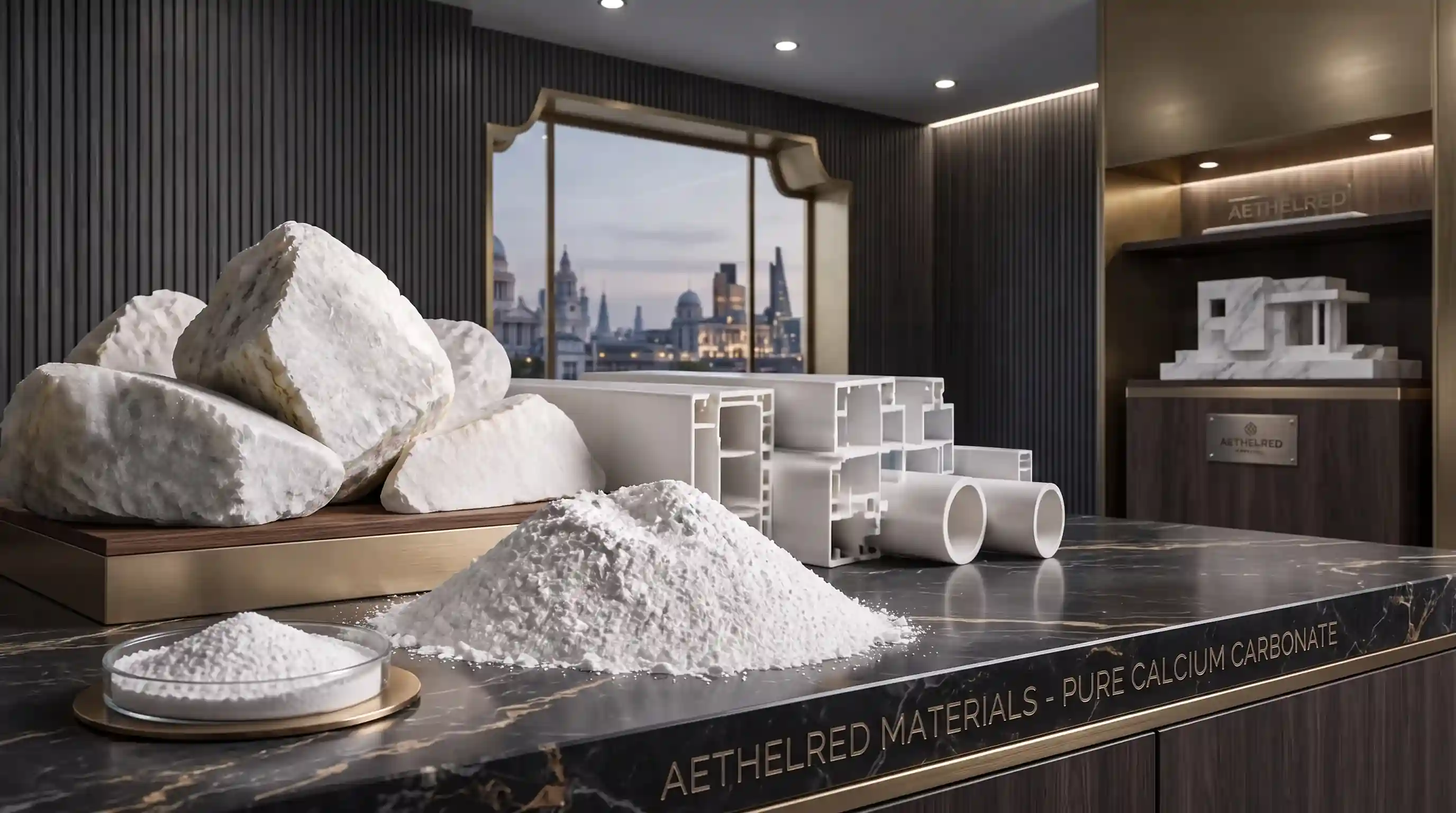
Silica Applications and Comparison with Calcium Carbonate in Paint, Paper, Adhesive, and Engineered Stone
Although calcium carbonate dominates the polymer industry, silica holds a unique position in some markets. In the paint industry, silica is used as a functional filler that improves abrasion resistance, durability, and the strength of the paint film. Industrial paints and silica-based protective coatings show higher resistance to abrasion and scratching. However, silica's high oil absorption leads to increased resin consumption and, consequently, higher finished product costs.
In paint, calcium carbonate acts as an extender pigment. With its high brightness, it can replace a portion of expensive titanium dioxide (TiO2) while maintaining the paint's opacity and appearance. For this reason, most manufacturers of construction paints, industrial paints, and powder coatings use calcium carbonate as their primary filler.
In the papermaking industry, calcium carbonate is one of the most important filling and coating materials. It improves the whiteness, brightness, and printability of paper while reducing production costs. In coated paper, high-mesh (fine particle) calcium carbonate is used along with papermaking binders to provide a smooth, level surface for printing. Silica in papermaking is primarily used in specialized applications such as diagram paper and inkjet printing paper.
In the adhesive and sealant industry, calcium carbonate is the dominant filler due to its low price, suitable oil absorption, and high loading capacity. In hot-melt adhesives, vinyl acetate adhesives, and construction sealants, calcium carbonate is used both as a filler and as a viscosity regulator. Silica is used in specialized sealants and structural adhesives due to its reinforcing and rheological (anti-sag) properties, but its consumption volume in this market is not as large as that of calcium carbonate.
Engineered stone is an interesting application for both minerals. The production of artificial stone typically uses a mixture of calcium carbonate, silica, and polyester or acrylic resin. Silica improves the strength and natural appearance of the stone due to its hardness and transparency, while calcium carbonate reduces the final price and improves processing efficiency. In quartz-engineered stones, the dominant filler is silica, but in marble-like engineered stones, calcium carbonate constitutes a major part of the composition.
In total, silica has its place in applications requiring high abrasion resistance, mechanical reinforcement, or specific rheological properties. Calcium carbonate is the superior choice in applications where finished cost, whiteness, easy dispersion, and high loading are important.
Economic Considerations: Which material is more cost-effective?
One of the most important criteria for choosing between calcium carbonate and silica is the finished product cost. Due to the abundance of limestone, simpler processing, and an extensive supply chain, calcium carbonate usually has a lower price than silica. This price difference in high loadings (sometimes up to 50% of the formulation weight) leads to significant savings in production costs, as the filler replaces a portion of the expensive resin.
But raw material price is only part of the economic equation. Processing costs must also be considered. Due to its high hardness, silica increases the wear of machinery parts (drills, cylinders, screws, and molds), which significantly raises maintenance, repair, and production line downtime costs over time. Calcium carbonate, with a hardness of 3 on the Mohs scale, practically minimizes this problem and increases the lifespan of processing equipment. This advantage is a key factor in industries with high filler loading.
Energy consumption also varies. Filler loading usually changes melt viscosity and can lead to higher loading and, consequently, reduced energy consumption per unit of product. However, very fine particles (high mesh) may require more energy for mixing and pumping due to increased viscosity. Choosing the right mesh is a trade-off between material price and process energy costs.
Coated calcium carbonate, due to its organic surface coating, better dispersion in the polymer phase, reduced moisture absorption, and prevention of particle agglomeration, offers more savings in many cases. For a more detailed examination of this subject, please read the article Examining the Economic Advantages of Using Coated Calcium Carbonate in Production .
Another factor is transportation costs and local availability. Calcium carbonate is produced in most regions of Iran and the world, and its supply chain is short and stable. High-quality silica is also available, but for specific applications, it may require further processing. A complete Total Cost of Ownership (TCO) analysis should include material price, process costs, machinery maintenance costs, transportation costs, and final product quality.
Ultimately, it should be noted that the cheapest option is not always the best. Choosing calcium carbonate with the right mesh and coating for a specific application can simultaneously improve product quality and reduce the finished price. Silica is also economically justified in applications where the value-added of the final product is high (such as engineered quartz stone or resistant industrial paints).
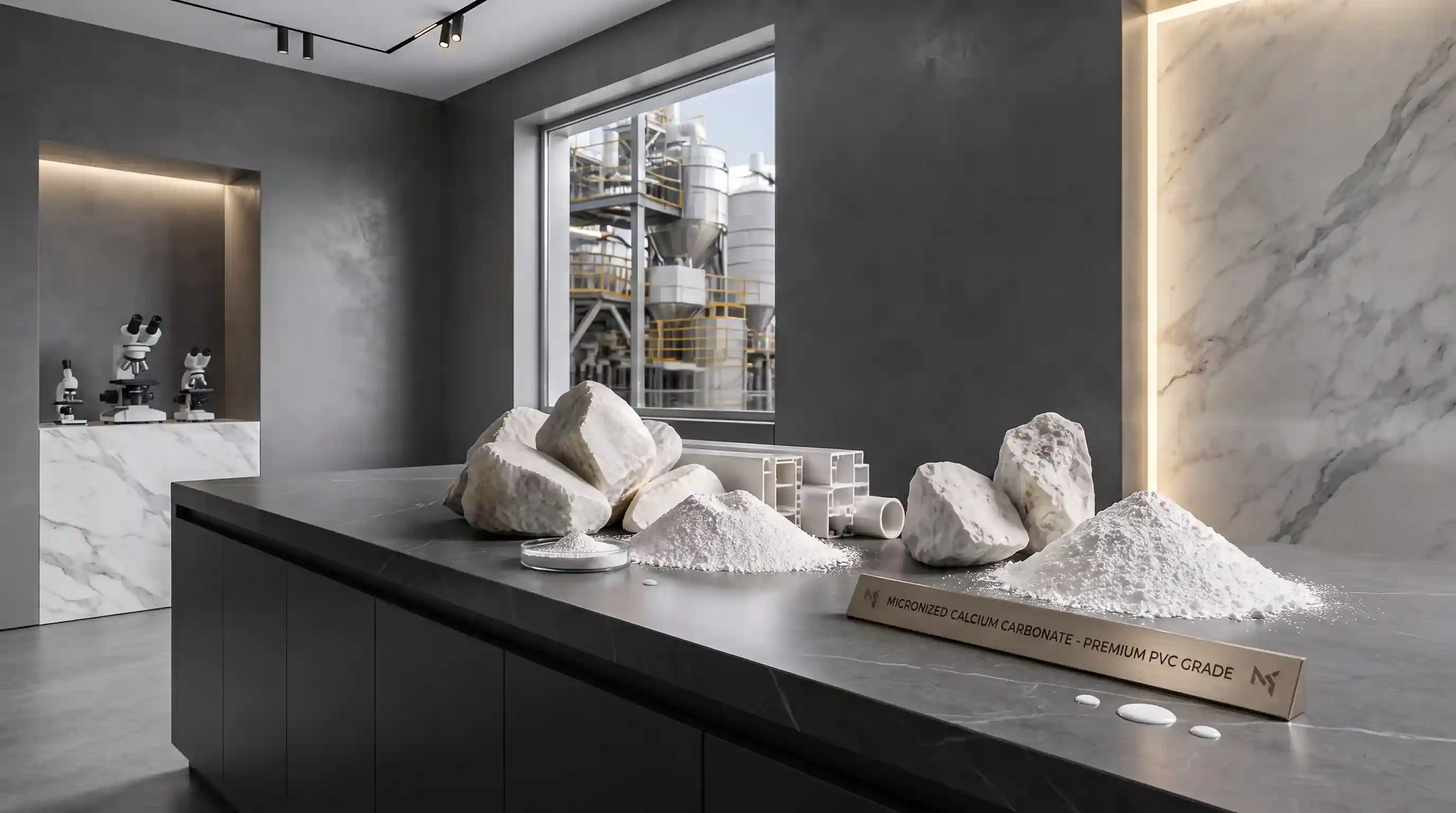
Selection Guide: Which mineral is suitable for which application?
After examining the chemical, physical, and economic differences, we can now provide a practical guide for selection. The final decision must be made based on three main factors: (1) type of application and final product requirements, (2) processing method, and (3) budget constraints. Below is a practical guide for the most common industries:
- PVC/UPVC Profiles and Pipes: Calcium carbonate is the best choice. It improves compressive strength and dimensional stability, reduces the final price, and minimizes wear on extrusion machinery. Medium meshes are recommended for pipes, and higher meshes for profiles.
- Masterbatch: Calcium carbonate is the primary option due to its whiteness and reasonable price. For high-quality masterbatches, high-mesh coated calcium carbonate provides the best performance.
- Cable: Calcium carbonate is suitable as an insulation filler; silica is used in flame-retardant compounds and special applications.
- Artificial leather: Calcium carbonate is a common option due to its ability to adjust softness and strength.
- Paint and coating: For standard architectural paints, calcium carbonate is economical. For industrial coatings with high abrasion resistance, a combination of calcium carbonate and silica or silica alone is used.
- Paper: Calcium carbonate is the primary choice for filler and coating. Silica is only used in special papers.
- Adhesive and sealant: Calcium carbonate is suitable for general and economic applications; silica is used for structural sealants and controlled rheology.
- Engineered stone: In marble-like stones, calcium carbonate is dominant; in quartz stones, silica forms the bulk of the filler. A combination of both is also common.
- Rubber and rubber parts: Precipitated silica is used for reinforcement and reducing rolling resistance of tires, while calcium carbonate is used in non-tire rubber parts.
In addition to selecting the type of material, choosing the appropriate mesh is also very important. Generally, low meshes (100 to 400) are suitable for applications requiring high loading, medium meshes (400 to 1200) for general polymer industries, and high meshes (1200 to 3500) for paint, paper, masterbatch, and delicate applications.
Also, the coated or uncoated nature of the calcium carbonate should be considered. In applications where dispersion, stability, and melt flow are important (profile extrusion, injection of delicate parts, masterbatch), coated calcium carbonate performs better. In applications where filler loading is low or it is used in an aqueous phase (like water-based paints), the uncoated type may be sufficient.
Conclusion: The superiority of calcium carbonate in most industries and product introduction
In this article, we examined the differences between calcium carbonate and silica from chemical, physical, economic, and practical aspects. The general conclusion is that calcium carbonate is a more suitable option for most industrial applications, especially in the polymer, paint, paper, adhesive, and engineered stone industries. The combination of low price, lower hardness (which reduces machinery wear), high whiteness and brightness, high loading capacity, and a very wide variety of particle sizes (from 100 to 3500 mesh) has made this material the superior mineral filler.
Silica is a better alteative only in applications that require high hardness, abrasion resistance, reinforcing properties, or extreme chemical stability. In the rubber industry, engineered quartz stone, and resistant industrial coatings, silica creates added value, but in other industries, calcium carbonate is by far the more cost-effective option.
If you are active in the polymer, paint, paper, or engineered products industry and are looking for a high-quality and reasonably priced mineral filler, calcium carbonate produced by the Kani Sang Amiran project can be an ideal option. This product is produced in the 100 to 3500 mesh range and is chosen for various applications including PVC/UPVC profiles and pipes, masterbatch, cable, artificial leather, paint, paper, adhesive, and engineered stone. The variety of the mesh range allows you to select a product that matches the exact needs of your process.
The Kani Sang Amiran project, focusing on the production of high-quality mineral materials, has made it possible to supply calcium carbonate in various technical specifications. Choosing the right material requires a precise understanding of the production process and the final product's requirements; therefore, before making a final decision, consulting with technical experts and requesting samples and a Technical Data Sheet (TDS) is recommended.
Finally, do not forget that the quality of the mineral filler directly affects the quality of your final product. Choosing a reputable supplier with strict quality control and mode production technology is a guarantee for the stability of your production process and the quality of your product. With all the mentioned advantages, calcium carbonate remains the most common and economical mineral filler in global industries, and its smart selection can create a significant competitive advantage for your business.

| Question | Answer |
|---|---|
| What is calcium carbonate and where is it used? | Calcium carbonate (CaCO3) is an abundant mineral that is widely used in the polymer industry, PVC/UPVC profiles and pipes, masterbatch, cable, artificial leather, paint, paper, adhesive, and engineered stone. |
| What is silica and how does it differ from calcium carbonate? | Silica (SiO2) is a mineral with high hardness (7 Mohs) and high chemical resistance, whereas calcium carbonate has a hardness of about 3 Mohs and is softer, cheaper, and less abrasive to processing machinery. |
| What is coated calcium carbonate? | Coated calcium carbonate is a product whose particle surface is coated with stearic acid or surface-active agents to provide better dispersion in the polymer phase, lower moisture absorption, and better melt flow. |
| What is the mesh unit and which mesh is suitable for my application? | Mesh indicates the number of openings per square inch of a sieve; the higher the mesh number, the finer the particles. Medium meshes are more suitable for PVC pipes and profiles, and high meshes (up to 3500) are more suitable for paints, paper, and masterbatches. |
| Is calcium carbonate suitable for PVC/UPVC pipes and profiles? | Yes; calcium carbonate improves the compressive strength and dimensional stability of these products while reducing PVC resin consumption; the coated type in particular performs better in extrusion. |
| Can calcium carbonate be combined with silica in a formulation? | Yes; in products such as engineered stone and some industrial paints, a combination of calcium carbonate and silica is used in specific proportions to optimize both the final cost and performance properties simultaneously. |
| Which mineral is more suitable for the paint industry? | For standard architectural paints, calcium carbonate is economical due to its low price and high brightness; for industrial coatings with high abrasion resistance, silica or a combination of it with calcium carbonate is used. |
| What is the effect of silica on processing machinery? | Due to its high hardness (7 Mohs), silica causes significant wear on drills, cylinders, screws, and molds, increasing machinery maintenance costs, whereas calcium carbonate minimizes this problem. |
| What is the mesh range of Kani Sang Amiran's calcium carbonate? | Kani Sang Amiran's calcium carbonate is produced in a mesh range of 100 to 3500, and its main applications include PVC/UPVC profiles and pipes, masterbatch, cable, artificial leather, paint, paper, adhesive, and engineered stone. |
| Which mineral is suitable for engineered stone? | In engineered marble stone, calcium carbonate is dominant and reduces the price, but in quartz stones, silica forms the bulk of the filler to improve the strength and natural appearance of the product. |
Product specifications and the 100 to 3500 mesh range are prepared based on the information on the calcium carbonate product page at Kani Sang Amiran (https://ksamiran.ir/products/calcium-carbonate/)
برچسب: Calcium Carbonate,Calcium Carbonate vs, Silica, Which mineral is more suitable?,
نویسنده: رساوب آفرین