
درباره سایت
آخرین مطالب
- آشنایی با ویژگیهای فیزیکی و شیمیایی کربنات کلسیم کوتد مرغوب
- چگونه از پودر سیلیس در صنایع پتروشیمی استفاده کنیم؟
- مقایسه کارایی باریت سفید و تالک در صنایع پلیمر و پلاستیک
- استخدام الكاولين في الصناعات الزراعية وتحسين التربة
- لماذا تعتبر استخدام التلك الأبيض مهمة في الصناعات البوليمرية؟
- Why is Calcium Carbonate quality important for industries?
- An Analysis of White Talc Pricing Trends in the Mineral Market
- لماذا مسحوق الفلسبار عالي الجودة ضروري للطلاء الزجاجي (العفن)؟
- Industrial Barite Bulk Order Guide for Large Factories
- كيف تستخدم مسحوق السيليكا في الصناعات البتروكيماوية؟
امکانات وب
Introduction to Coated Calcium Carbonate and Its Role in Mode Coating Industries
Today, in the advanced industries of manufacturing coatings, paints, and polymer compounds, choosing raw materials that can improve the final performance of the product is of special importance. Among widely used mineral additives, coated calcium carbonate is recognized as a major revolution that, through its surface coating, has been able to solve the traditional problems of mineral fillers. The Kani Sang Amiran project, by supplying these specialized products, offers mode solutions to industrialists.
In the production process of industrial and construction coatings, the uniform distribution of particles and preventing their agglomeration are main challenges. The use of coated calcium carbonate, due to the surface modification performed, significantly increases the adhesion between the polymer matrix and the mineral particle. To get more familiar with the details of this market, reading the specialized guide on comparing various types of coated calcium carbonate available in the market is recommended, which provides you with useful information.
The physical and chemical properties of this material are designed in such a way that it can be used in a diverse range of meshes. Precise knowledge of these features helps formulation designers create the best performance in their final product. In the continuation of this article, we will examine various dimensions of the application of this valuable material.
Mechanism of Action and the Importance of Surface Coating in Coated Calcium Carbonate
To better understand why coated calcium carbonate is popular, we must take a look at its structure and how its surface is modified. Regular calcium carbonate has a hydrophilic surface that is difficult to disperse in hydrophobic polymer matrices and usually causes agglomeration and mechanical weak points. By coating the particles, their surface is modified and they achieve extraordinary compatibility with polymers.
Scientific reviews show that the surface modification process with acidic materials such as stearic acid plays a key role in reducing the surface energy of particles. For more specialized information in this field, you can refer to the article reviewing the impact of stearic acid in coated calcium carbonate coating, which thoroughly addresses this mechanism.
These structural changes cause granules and compounds to have better fluidity during processing, and less pressure is exerted on extruder and injection machines. As a result, the lifespan of production equipment increases and the appearance quality of the final part is significantly improved.

Application of Coated Calcium Carbonate in the Production of Compounds and Polymer Granules
The compounding industry and production of polymer granules always require fillers that, in addition to reducing the final price, maintain or upgrade the mechanical properties of the part. Coated calcium carbonate, with its wide mesh range, is considered an ideal option for this purpose. For compounds, granules, and polymer parts, the appropriate mesh is chosen to achieve the highest efficiency.
The use of this mineral material in polymer granule production lines leads to improved dimensional stability and increased modulus of elasticity. Also, due to the reduced moisture absorption by the coated particles, the electrical and mechanical properties of the compounds do not undergo negative changes under various environmental conditions. Manufacturers can use this feature to upgrade the quality standards of their products.
Due to the diversity in the mesh range of these products, polymer engineers can choose the suitable mesh depending on the type of base polymer and the final requirements of the part. This high flexibility has made coated calcium carbonate one of the main pillars of advanced polymer formulations.
The Role of Coated Calcium Carbonate in Profile, Cable, and Flooring Industries
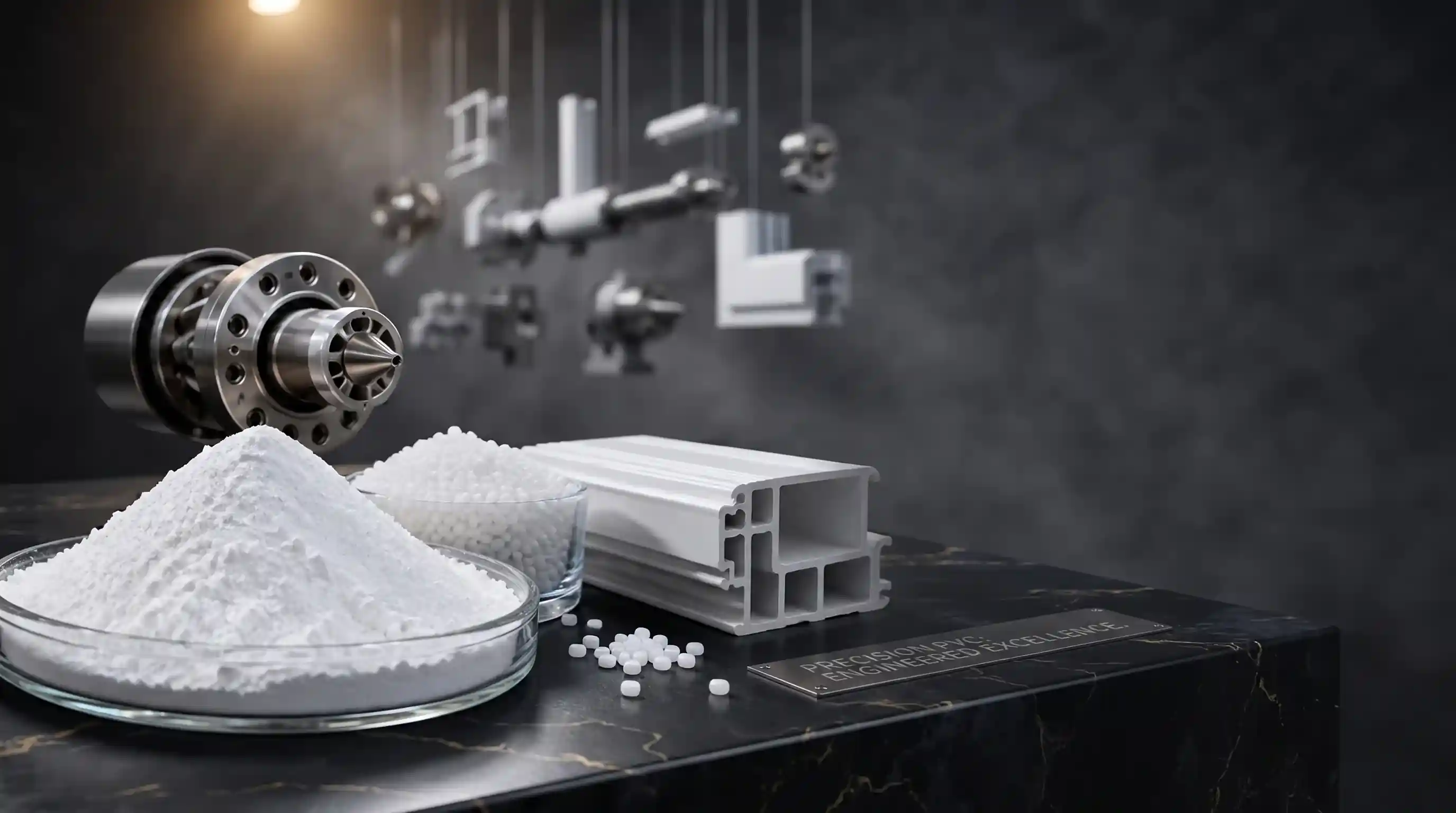
Profiles, various industrial cables, and polymer flooring are among products that require high durability, impact resistance, and desirable thermal stability. Meanwhile, coated calcium carbonate plays a key role in improving the processability of PVC compounds and other consumer polymers in these industries. The 450 to 3500 mesh range of this product makes it possible to precisely control surface properties.
In the production of cable insulation, the presence of coated particles increases electrical resistance and prevents moisture penetration, which greatly enhances safety standards. Also, in the manufacturing of door and window profiles and mode flooring, this material greatly helps reduce thermal shrinkage and improve resistance to mechanical stresses.
The use of high-quality raw materials supplied by the Kani Sang Amiran project guarantees quality consistency in this category of sensitive products. Manufacturers can offer more competitive final products to the market by relying on purity and advanced coating technology.
Technical and Economic Advantages of Use in PVC Parts
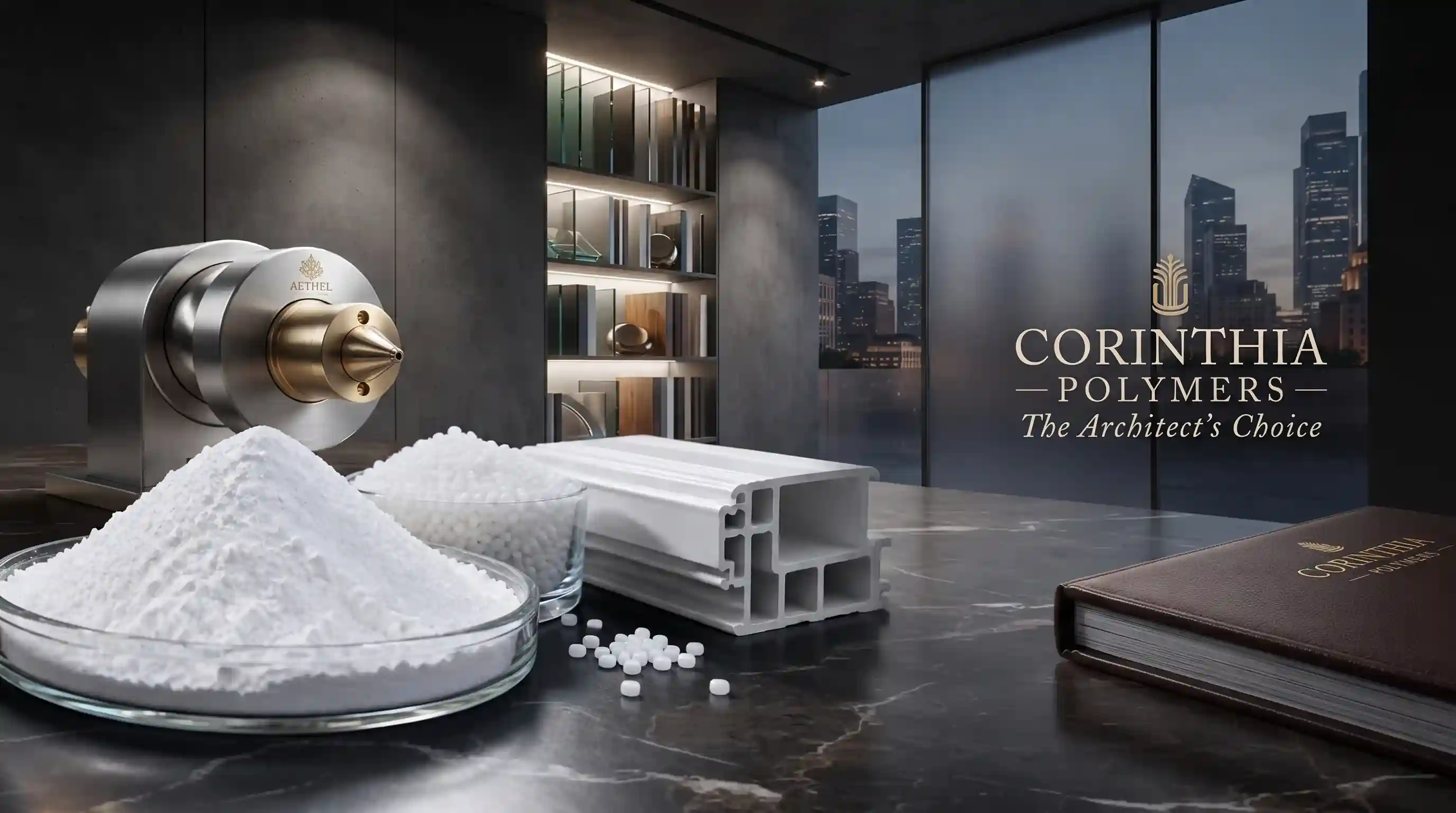
The PVC industry is one of the largest consumers of mineral fillers, and the quality of the filler directly affects the mechanical properties and appearance of the part. The use of coated calcium carbonate in the formulation of PVC parts improves melt flowability in the mold and reduces extruder torque.
In addition to process advantages, this material, due to uniform distribution and prevention of particle accumulation, minimizes structural weak points, which directly has a positive impact on increasing the impact resistance and lifespan of PVC parts. To further examine related applications in coating and paint industries, reading the comprehensive guide to using coated calcium carbonate in paint manufacturing will not be out of place.
Production engineers can use this material to increase the filler loading percentage without a drop in mechanical properties, which economically brings a significant reduction in production costs. This optimal balance between price and performance creates high added value for industrial units.
Review of the 450 to 3500 Mesh Range and Its Impact on the Final Quality of Coatings
One of the most important parameters in choosing mineral materials is particle size and their mesh range. Coated calcium carbonate, by covering a mesh range of 450 to 3500, covers a wide spectrum of industrial needs. Coarser meshes are usually used in applications requiring high fluidity and reduction of inteal stresses, while finer meshes (such as 3500) are applied in very thin coatings and specialized films.
Choosing the appropriate mesh depends on the final application type; for compounds, granules, and polymer parts, the suitable mesh is chosen to establish the best balance between gloss, coverage, and mechanical properties. Micronized coated particles, due to their surface, distribute well in the matrix even in very high meshes and prevent flaking.
The Kani Sang Amiran project, with precision in grading and the coating process, offers products with precise mesh classification so that industrialists can execute their formulations without conces about quality fluctuations.
Guide to Buying and Choosing Coated Calcium Carbonate Suited to Industrial Needs
The correct choice of coated calcium carbonate requires precise knowledge of technical parameters including coating percentage, type of acid or coating agent, particle size distribution, and mesh range. Buyers must check the conformity of the product's technical specifications with their production lines and extruder or mixing machines before placing an order.
To access complete product specifications and place a direct order, you can visit the dedicated page coated calcium carbonate and receive more comprehensive information. Technical experts of the Kani Sang Amiran project are also ready to provide specialized consultation in the field of choosing the right mesh and optimizing formulation.
Paying attention to product authenticity, shipment uniformity, and standard packaging are other items that should be considered during purchase so that the industrial production line does not experience pauses or quality drops.
Future Outlook and Iovations in the Application of Coated Calcium Carbonate
With the daily advancement of polymer production technologies and the increase of environmental and quality standards, the role of advanced additives becomes more prominent than ever. Coated calcium carbonate, as a sustainable solution, helps industries enhance the mechanical and appearance properties of products while simultaneously reducing the consumption of expensive resins.
Research in the field of improving surface coating techniques and achieving particles with a narrower distribution continues, and new iovations promise higher efficiency at various processing temperatures. The Kani Sang Amiran project, by monitoring these developments, always strives to bring the most up-to-date mineral products to the market.
Ultimately, the smart use of this mineral material not only optimizes final production costs but also paves the way for producing a new generation of advanced polymer profiles, cables, flooring, and parts.
| Question | Answer |
|---|---|
| What is coated calcium carbonate? | It is a type of calcium carbonate whose particle surface is coated with modifying agents (such as stearic acid) to have better compatibility with polymers. |
| What is the mesh range of Amiran's coated calcium carbonate? | This product is supplied in a mesh range of 450 to 3500 suited to the needs of various industries. |
| What are the main applications of coated calcium carbonate? | Compound, polymer granule, profile, cable, flooring, and PVC parts are among its main applications. |
| Why is coated calcium carbonate used in compounding? | Due to improved flowability, reduced agglomeration, and increased compatibility with the polymer matrix. |
| What is the difference between coated calcium carbonate and the regular type? | The coated type is hydrophobic and easily disperses in polymers, while the regular type is hydrophilic. |
| How to choose the right mesh for our production? | Choosing the mesh depends on the polymer type, part thickness, and final requirements; finer meshes are suitable for films and coarser meshes for compounds. |
| Does using this material reduce costs? | Yes, it allows increasing the filler loading percentage without a drop in mechanical properties. |
| What is the role of stearic acid in coating? | It reduces the surface energy of particles and improves adhesion between the particle and the polymer. |
| How can this product be purchased? | By visiting the coated calcium carbonate product page on the Kani Sang Amiran website, you can review and place an order. |
| Is this product used in the production of PVC parts? | Yes, it helps improve melt flowability and increase the impact resistance of PVC parts. |
Specialized reference for mineral and industrial materials of the Kani Sang Amiran project.
برچسب: Coated Calcium Carbonate,Advantages of Using Coated Calcium Carbonate in the Production of Various Coatings,
نویسنده: رساوب آفرین