
درباره سایت
آخرین مطالب
- راهنمای ثبت سفارش اکسید لیمونیت (گل ماش)
- Guide to Ordering Limonite Oxide (Gol Mash)
- التعرف على الخصائص الفيزيائية لكربونات كالسيوم الصناعية
- Examining the Rising Demand for High-Quality Industrial Talc
- بررسی ویژگیهای ظاهری و کیفیت پودر سفید دولومیت
- Guide to Choosing the Best Type of Red Iron Oxide (Ochre)
- دليل شراء أكسيد الحديد الأحمر (أخيرا) عالي الجودة والنقاء
- دراسة المعايير الوطنية والدولية في إنتاج التلك الأبيض
- دراسة الاتجاه التصاعدي للطلب على التالك الصناعي عالي الجودة
- بررسی استانداردهای ملی و بینالمللی در تولید تالک سفید
امکانات وب
Introduction to the Chemical and Physical Analysis of Industrial Talc
Industrial talc is one of the most widely used minerals in various industries, known for its unique physical and chemical characteristics. A detailed examination of this material's specifications helps manufacturers make the best choice for their production processes. Focused on supplying high-quality minerals, the Kani Sang Amiran project offers products that best cover the diverse needs of the polymer, rubber, paint, and other sectors. In this article, we provide a comprehensive review of the chemical and physical analysis of industrial talc to shed light on the various aspects of using this material.
Becoming familiar with the structure and composition of talc requires a careful examination of laboratory parameters. As a natural hydrated magnesium silicate, this material possesses specific structural features that directly impact the final product's performance. In the following sections, we will discuss more details regarding mesh sizing, mechanical properties, and applications to provide a better understanding of this mineral's importance in industry.
Thoroughly understanding this material can also play a crucial role in optimizing industrial formulations. For more information on how to select and apply this material, reading related resources such as the buying guide for industrial talc with the best quality and reasonable price will be very helpful. In the subsequent sections, we will examine the chemical and physical properties separately.
Chemical Composition and Mineral Structure of Industrial Talc
Chemically, talc is a hydrated magnesium silicate whose chemical formula includes magnesium oxide, silica, and bound water. Impurities in the raw ore may also include small amounts of iron, aluminum, and calcium oxides, the exact amounts of which are determined through precise analyses. Understanding this chemical composition helps engineers evaluate the thermal and chemical stability of the final product.
In industrial applications such as paints and coatings, chemical purity is of special importance. The presence of unwanted elements may affect the final color, gloss, and chemical resistance. For this reason, strict quality control during the extraction and processing stages is highly important. A detailed examination of this chemical composition in comparison with similar minerals, such as what is presented in the article introduction to the features of industrial limonite oxide (gole mash), clearly demonstrates the structural differences between these materials.
By supplying this high-quality mineral, the Kani Sang Amiran project provides the necessary standards for various industries. A proper understanding of the purity percentage and constituent elements is the key to success in optimally utilizing this material in complex polymer and rubber formulations.
Examination of Physical Properties and the Importance of the Mesh Range (450 to 1000)
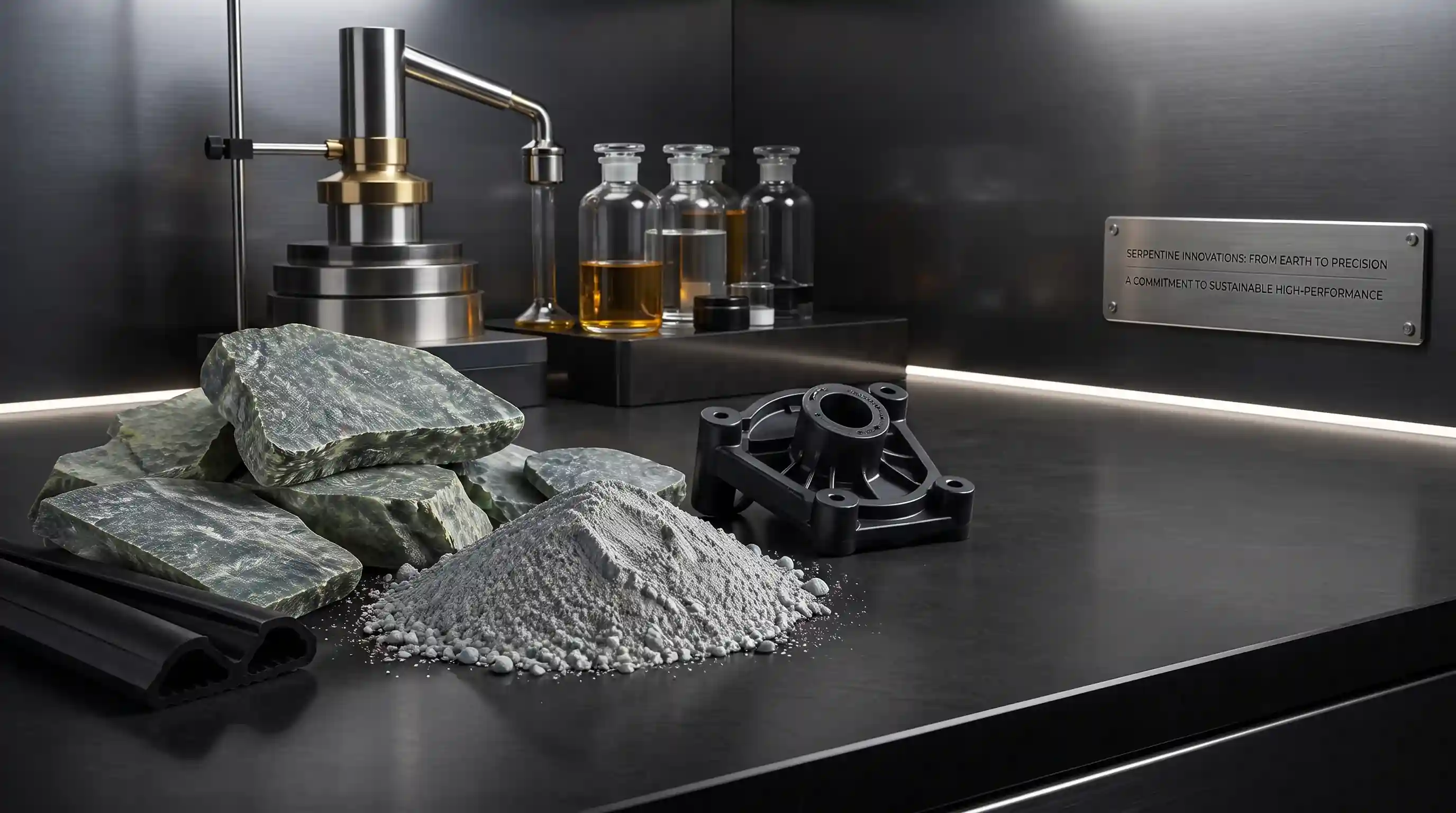
The physical specifications of industrial talc play a direct role in its behavior when mixed with other materials. One of the most important physical parameters is particle size, or mesh sizing. The mesh range provided for this product is between 450 and 1000 mesh. This particle range can effectively cover the needs of various industries, creating a suitable balance between specific surface area and dispersibility.
Particles with different meshes exhibit different behaviors within polymer and rubber matrices. Finer particles (higher mesh range) typically create a larger contact surface and can provide better mechanical and reinforcing properties. On the other hand, lower meshes are preferred in cases where viscosity or mixture fluidity is important. For a better understanding of this topic and its impact on process improvement, the article the key role of industrial talc in improving the quality of manufactured products raises valuable points.
In addition to particle size, properties such as apparent density, lamellar morphology, and low hardness are among the prominent physical characteristics of this material that impart a specific lubricity and softness to it.
Application of Industrial Talc in Polymer Industries
Polymer industries are among the largest consumers of micronized minerals. This material is used as a filler and mechanical property enhancer in the production of various polymer parts. The flaky or layered structure of talc particles ensures that, once incorporated into the polymer matrix, the tensile strength, flexural modulus, and dimensional stability of the parts are significantly increased.
Choosing the 450 to 1000 mesh range for polymers is very smart, as this range allows for uniform distribution and dispersion of particles without causing agglomeration or clumping. This helps reduce the shrinkage of injection-molded parts and improves the final appearance of the product. By supplying suitable raw materials, the Kani Sang Amiran project has facilitated polymer manufacturers' access to this valuable material.
The use of this filler can also help optimize production costs without causing a noticeable drop in the functional properties of the polymer. Precise adjustment of the consumption percentage based on physical and chemical analysis results will guarantee the final quality of polymer parts.

The Role of Industrial Talc in Rubber and Elastomer Industries
In the rubber manufacturing industry, minerals are used as active or semi-active fillers to improve mechanical properties, abrasion resistance, and facilitate the curing process. Due to its soft structure and layered characteristics, this material reduces inteal friction and helps improve the flowability of rubber compounds during the molding stage.
Using different meshes of this mineral in rubber has a direct impact on the hardness, tear resistance, and thermal stability of the product. Uniform particle distribution in the rubber matrix prevents structural weak points. Industrial suppliers such as the Kani Sang Amiran project provide rubber product manufacturers with the ability to precisely control these parameters by offering standardized products.
Precise formulation adjustment of rubber compounds using this mineral increases the durability and lifespan of final products, especially in the production of automotive tires, gaskets, and various rubber profiles.
Application of Industrial Talc in the Paint and Coatings Industry
The paint and coatings industry heavily relies on micronized minerals to improve the optical properties, adhesion, and durability of the paint film. This material is used as a white and stable filler in the formulation of water-based and oil-based paints. The lamellar morphology of the particles creates a tortuous barrier structure against the penetration of moisture and corrosive agents.
The 450 to 1000 mesh range makes it possible to precisely adjust the gloss, opacity, and covering power of the paint. Finer particles significantly help improve paint film longevity and peel resistance. By supplying this high-quality product, the Kani Sang Amiran project fulfills paint manufacturers' need for an efficient and standardized filler.
This material also helps reduce the consumption of titanium dioxide (as an expensive pigment), allowing formulation designers to produce more economical yet higher-quality products.
Other Industrial Applications and the Importance of Analysis in Product Selection
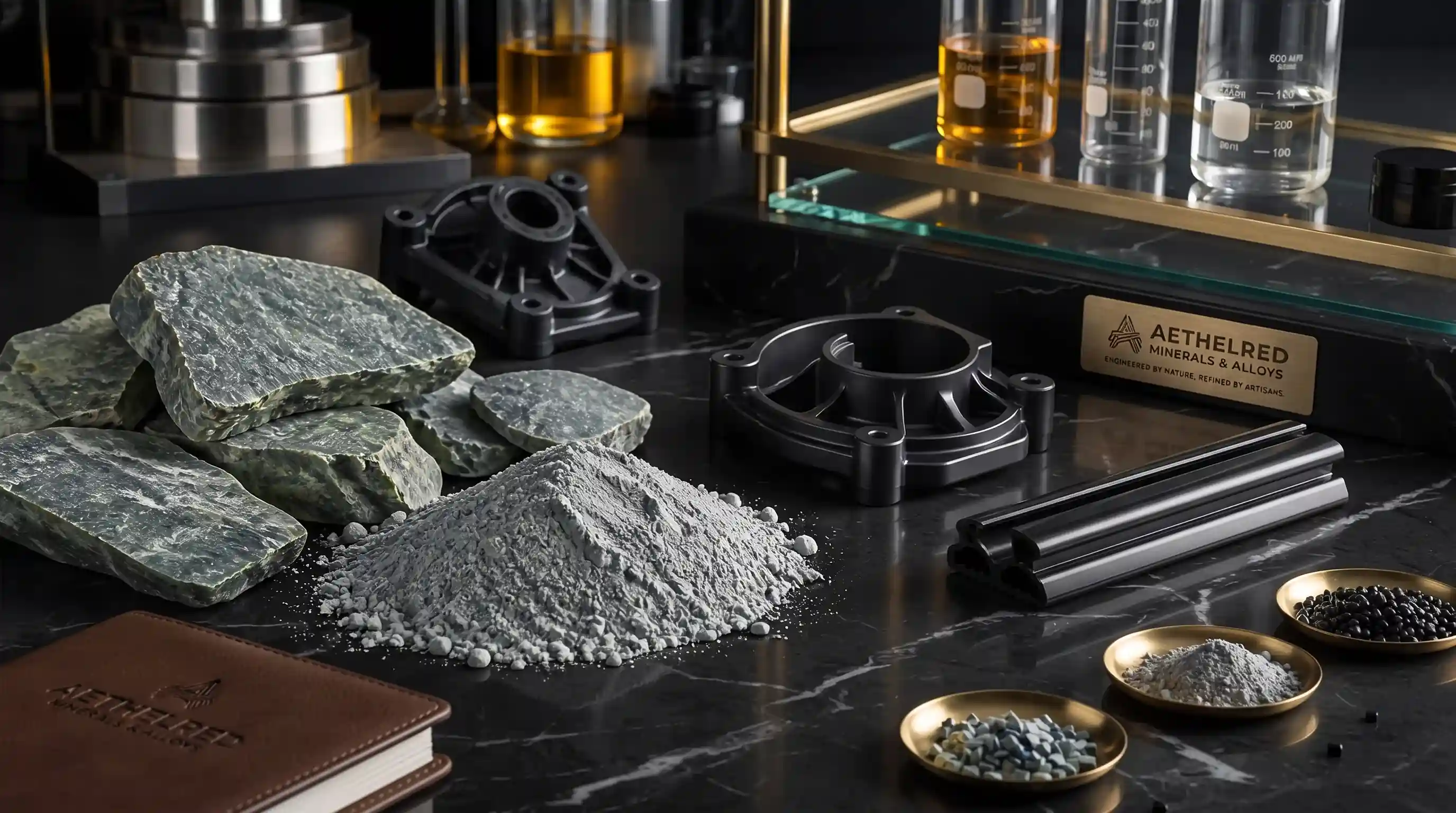
In addition to polymers, rubber, and paints, this material is used in other industries such as ceramics, paper, cosmetics and personal care, and various industrial products. Each of these industries requires specific physical and chemical specifications determined through precise analysis. For example, whiteness, moisture content, ignition loss, and impurity levels are key factors in the final selection.
Regular quality control tests ensure that raw materials entering the production line are homogenous and meet expected standards. Relying on technical knowledge and mining standards, the Kani Sang Amiran project strives to supply high-quality products to various industries. Careful review of the analysis sheet prior to purchase prevents potential problems on production lines.
The correct choice of mesh sizing and inspection of the purity percentage are the main keys to high productivity in all industrial applications of this mineral.
Conclusion and General Guide for Choosing Industrial Talc
In this article, we provided a comprehensive review of the chemical and physical analysis of this valuable mineral. It became clear that features such as the hydrated magnesium silicate composition, the 450 to 1000 mesh range, and the specific particle morphology make it an unparalleled choice in polymer, rubber, paint, and other industrial applications.
Adhering to quality standards in the processing and sizing of this material plays a vital role in improving the quality of the final product. Offering diverse products that match market demands, the Kani Sang Amiran project is recognized as a reputable mineral supplier. Dear industrialists can make the best choice to optimize their production processes by carefully examining their needs and matching them with the technical specifications of the product.
We hope this article has provided a clear perspective on the importance of chemical and physical analyses of this mineral and served as a useful guide along the path of purchasing decisions and industrial applications.

| Question | Answer |
|---|---|
| What is industrial talc? | It is a natural hydrated magnesium silicate used as a filler in polymer, rubber, paint, and industrial applications. |
| What is the mesh range of the provided product? | The mesh range of this product is between 450 and 1000 mesh. |
| What are the main applications of this mineral? | Polymer products, rubber products, paint industries, and other industrial applications. |
| What is the role of this material in polymer industries? | Increasing tensile strength, improving dimensional stability, and reducing shrinkage in polymer parts. |
| Why are chemical and physical analyses important? | To ensure purity, particle size, and compliance with industrial formulation standards. |
| Is this material used in the paint industry? | Yes, it is used as a filler, to improve coverage, and to increase moisture resistance. |
| What is the effect of mesh sizing on product properties? | Mesh sizing affects specific surface area, viscosity, and uniform particle distribution within the matrix. |
| Which company supplies this product? | The Kani Sang Amiran project is the producer and supplier of these minerals. |
| How can one choose the best product? | By studying buying guides and thoroughly reviewing technical specifications and material analysis sheets. |
| Does this material help reduce costs? | Yes, by improving filler efficiency and optimizing formulation, it helps reduce production costs. |
Kani Sang Amiran Project — Reference for Production and Supply of Industrial Minerals

برچسب: Industrial Talc,Introduction to the Chemical and Physical Analysis of Various Industrial Talc,
نویسنده: رساوب آفرین