
درباره سایت
آخرین مطالب
- تأثير نقاء الدولومیت على الجودة النهائية للمنتجات الإنشائية
- Examination of Red Iron Oxide (Ochre) Mesh Standards
- کاربرد سیلیس در تصفیه آب و صنایع وابسته به آن
- Application of Silica in Water Treatment and Related Industries
- لماذا يُعد التحليل الكيميائي للدولوميت أمرًا حويزيًا لمختلف الصناعات
- A Guide to Selecting the Best White Barite Supplier in the Country
- Comprehensive Guide to Buying White Barite Online at the Best Daily Price
- The Impact of Dolomite Purity on the Final Quality of Construction Products
- چگونه بنتونیت مناسب را برای کارخانه خود انتخاب کنیم؟
- Comprehensive Guide to Buying Feldspar for Various Industries
امکانات وب
An Introduction to Raw Kaolin and the Importance of Its Processing in Mode Industries
Kaolin mineral is one of the most valuable and widely used hydrated aluminum silicates in various industries, holding a special place due to its unique physical and chemical characteristics. Raw kaolin extracted from mines contains numerous impurities and requires precise purification and processing procedures for use in industries such as paper, paint, tiles, ceramic products, and glazes. The Kani Sang Amiran project utilizes technical knowledge to carry out the process of transforming raw kaolin into high-quality products to best supply the needs of consumer industries.
In this specialized article, we examine the various stages of processing and purifying this important mineral. During the production process, achieving precise particle sizing is of high importance. To become more familiar with the variety of industrial minerals, it is suggested to read articles such as Introduction to Dolomite Mines and Extraction in Iran, which provides a comprehensive view of mineral extraction.
A precise understanding of kaolin properties helps engineers and manufacturers achieve the best productivity from this material in their production lines. The stages of crushing, impurity separation, and micronization are the main foundations for creating a high-quality product, which we will discuss in more detail below.
Raw Kaolin Extraction from the Mine and Initial Preparation
The first step in the production cycle is extracting kaolin rock from dedicated mines. Raw kaolin is extracted in the form of lumps along with waste materials and various impurities. After extraction, the lumps are transferred to the factory for initial preparation operations. At this stage, large lumps are converted into smaller pieces using primary crushers to prepare them for subsequent crushing processes.
Initial quality control at this stage is very crucial, because the color and initial impurity levels of raw kaolin can impact the quality of the final product. After primary crushing, the materials enter the grading and size control sections. Throughout all these stages, the Kani Sang Amiran project enforces strict standards to maintain mineral purity so that a uniform and high-quality product reaches consumers.
Pre-preparation and homogenization of raw kaolin ensure that during subsequent purification stages, equipment efficiency is increased and impurities are separated with higher precision. This section forms the main infrastructure for producing high-mesh micronized powders.

Physical and Chemical Separation and Purification Processes of Kaolin
After initial preparation, raw kaolin enters the purification and refining stage. The purpose of this stage is to remove impurities such as iron oxides, titanium, and other dark-colored minerals that can reduce whiteness and final purity. Separation methods include wet and dry methods, magnetic separation, and particle size classification.
In wet methods, kaolin slurry is prepared and impurity particles are separated from pure aluminum silicate using sedimentation equipment and centrifugal separators. This stage plays a key role in improving the optical characteristics and final color of the product. After purification, the resulting cake is dried and prepared for subsequent micronization stages.
Precise purification of kaolin enables its use in industries requiring high whiteness and chemical purity. These processes guarantee that the final mineral has consistent properties across various industrial applications.
Micronization and Achieving a Mesh Range of 450 to 1500
One of the most important stages in the factory production line is grinding and micronizing the purified kaolin. The mesh range of the products manufactured by this collection is between 450 and 1500 mesh, which indicates the high precision of the crushing equipment. Higher meshes mean much finer micronized particles, which are required for more sensitive applications.
Precise control of particle size is performed using mode grading equipment to ensure the particle size distribution is completely uniform. The use of kaolin with a mesh range of 450 1500 mesh allows industries to dramatically improve the quality of their final products. For example, in coating and filler industries, the fineness of the particles improves gloss and coverage.
Relying on mode technology, the Kani Sang Amiran project collection produces powders with standard dimensional distribution. Alongside this material, exploring other widely used mineral materials such as Introduction to Coated Calcium Carbonate Applications in Plastic Industry provides useful information to industrialists regarding filler processing.

The Role of Kaolin in Tile, Ceramic Products, and Glaze Industries
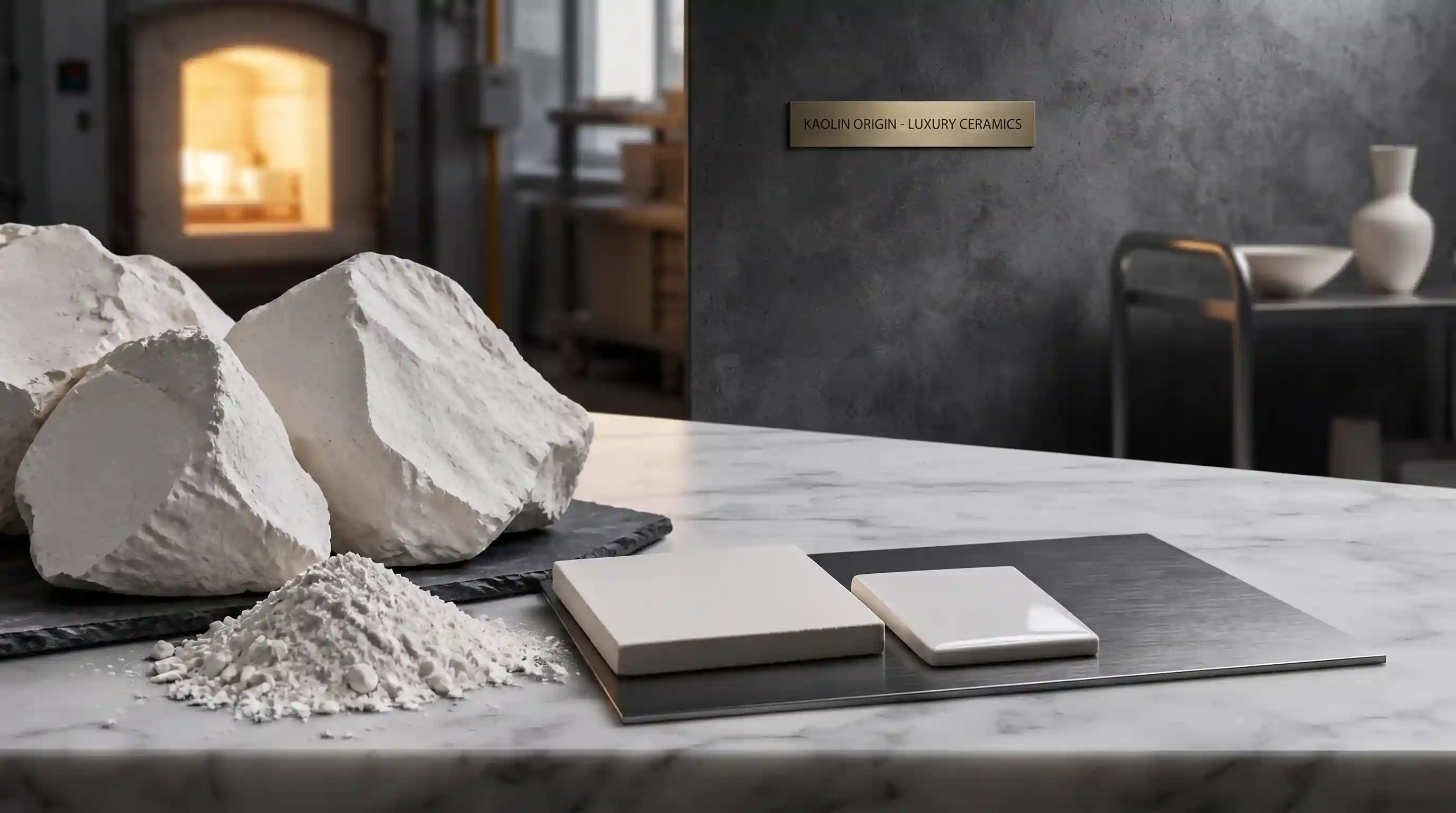
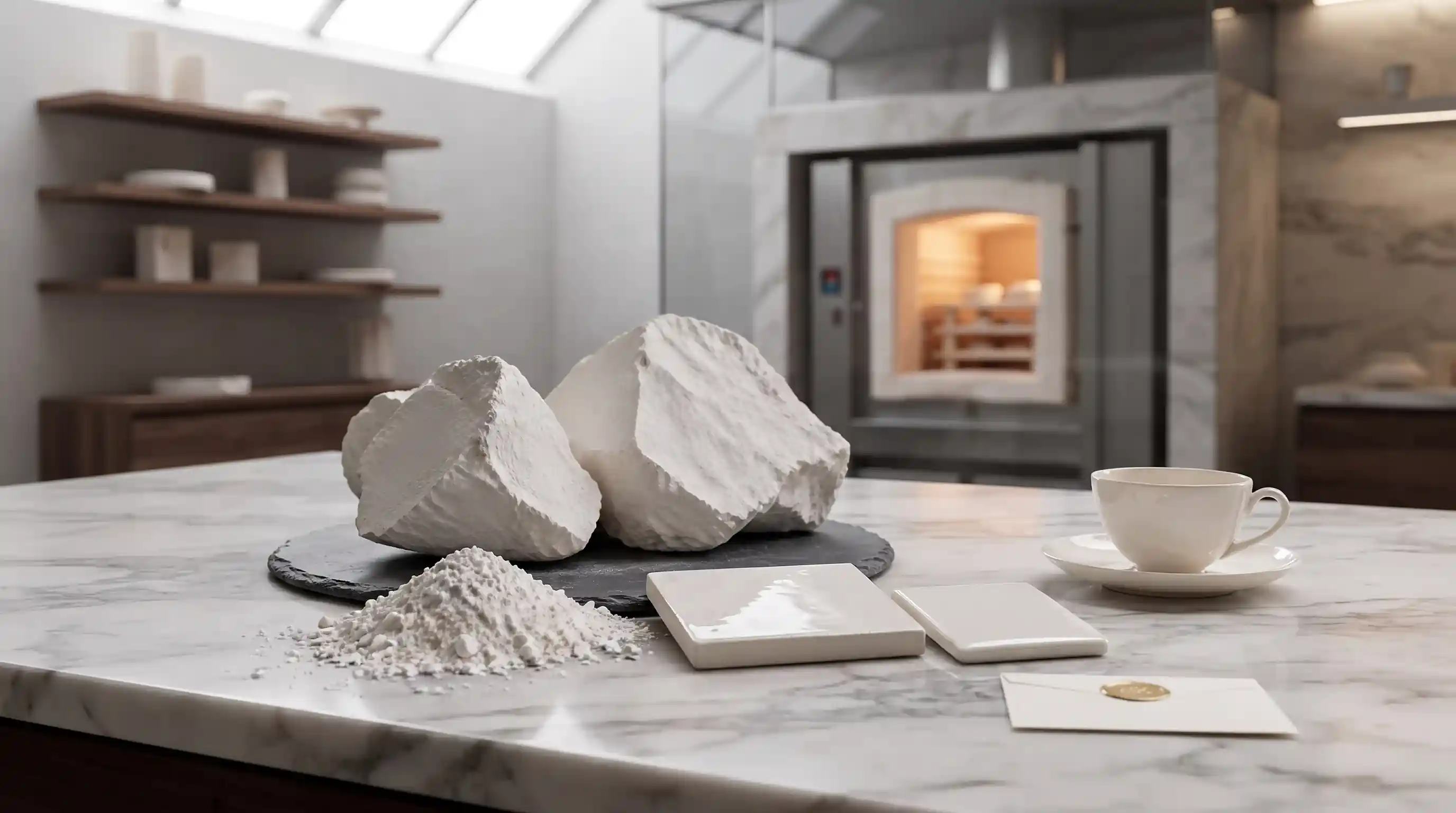
The ceramic and tile-making industry is one of the largest consumers of kaolin. This material acts as a primary component in the body of tiles and ceramic products, improving mechanical strength, thermal stability, and body firing properties. Additionally, in glaze manufacturing, it acts as a source of alumina and silica, helping to create a smooth, glossy, and resistant surface.
The presence of kaolin in the glaze formulation ensures that the ceramic coating has proper adhesion after being fired in the kiln and does not suffer from cracking or bubbling. Precise purification of this material prevents unwanted spots in the final color and glaze.
Tile and ceramic manufacturers can guarantee the quality of their products and experience a more sustainable production process by using standard products from the Kani Sang Amiran project. The appropriate grading of these powders greatly assists in the uniform dilution of the glaze slurry.
Specialized Applications of Kaolin in the Paper and Paint Manufacturing Industry
In the paper manufacturing industry, kaolin is widely used as a filler and coating pigment. Adding this material to paper pulp improves the whiteness, opacity, surface smoothness, and printability of the paper. The fine, flaky particles of kaolin fill the empty spaces between the paper fibers and create a suitable surface for high-quality printing.
In the paint manufacturing industry as well, this mineral acts as an extender pigment. The use of kaolin with an appropriate mesh in paints reduces the consumption of expensive titanium dioxide, improves coverage, increases peeling resistance, and controls paint gloss.
The variety of production meshes offered by this collection enables the precise selection of the suitable filler for paint and paper formulators. Furthermore, to better understand the industrial applications of minerals in concrete structures and pipe manufacturing, reading the article The Role of Kaolin in Pipe Manufacturing and Concrete Products is highly beneficial.

Quality Control and Laboratory Standards in the Production Line
Ensuring the quality of the final product is one of the main pillars in mineral processing factories. Continuous sampling from the production line and examination of parameters such as moisture percentage, particle size distribution (mesh), whiteness, and chemical impurity levels are conducted in equipped laboratories.
By strictly monitoring qualitative parameters throughout all stages of kaolin processing, the Kani Sang Amiran project supplies products matching the needs of the tile, ceramic, glaze, paper, and paint industries to the market. This rigorous control assures customers that the delivered packaging possesses the highest level of uniformity.
Performing microscopic tests and measuring optical resistance are other measures carried out to approve the final quality of micronized powders so that any deviation from defined standards is quickly identified and corrected.
Packaging, Storage, and Supply of the Final Kaolin Product
After going through rigorous processing, purification, and quality control stages, it is time for product packaging and storage. Due to its high sensitivity to moisture and contamination, micronized kaolin powder is packaged in standard bags or resistant jumbo bags so that it does not suffer damage during transportation.
Proper storage away from moisture preserves the physical and chemical characteristics of the product until delivery to the customer. For more information regarding technical specifications, order registration, and supply condition reviews, you can visit the dedicated Kaolin page.
By providing proper transportation infrastructures and standard packaging, the Kani Sang Amiran project is ready to supply the major needs of the country's industrial factories, making quality and continuity of supply the motto of its operations.
| Question | Answer |
|---|---|
| What is kaolin and what are its applications? | Kaolin is a hydrated aluminum silicate widely used in tile, ceramic, glaze, paper, and paint industries. |
Reference: Industrial Mineral Quality Control and Processing Standards - Kani Sang Amiran Project
برچسب: Kaolin,Introduction to the Processing and Purification Process of Raw Kaolin in the Factory,
نویسنده: رساوب آفرین