
درباره سایت
آخرین مطالب
- راهنمای ثبت سفارش آنلاین و استعلام قیمت کائولن
- چگونه بهترین اکسید آهن قرمز (اخرا) را برای پروژه انتخاب کنیم؟
- بررسی جامع خواص اکوستیک و وزن مخصوص باریت سفید صنعتی
- نقش کائولن در کاهش هزینههای تولید در صنایع معدنی
- نقش سیلیس در افزایش مقاومت حرارتی مواد نسوز
- چرا اکسید آهن قرمز (اخرا) قدرت پوشانندگی بالایی دارد؟
- The role of industrial barite in the papermaking and specialty coatings industries
- How to find the best kaolin supplier in the country?
- How to properly examine feldspar analysis?
- ما هي استخدامات التالك الصناعي في صناعة البلاستيك والمطاط؟
امکانات وب
Introduction to the Application of Industrial Talc in Rubber and Sealant Industries
Rubber and sealant manufacturing industries are constantly seeking high-quality and efficient raw materials to improve the mechanical, physical, and processing properties of their final products. In this regard, industrial talc is recognized as one of the most important and widely used mineral fillers, playing a key role in optimizing polymer and elastomer formulations. With its platy structure and unique properties, this mineral is effective in improving many key production parameters.
Kani Sang Amiran provides high-quality mineral products, supplying this material in a range of 450 to 1000 mesh, which perfectly covers the needs of various industries. For more information about this product, you can visit the Industrial Talc page. Correct use of this mineral not only reduces total production costs but also significantly enhances the final quality of rubber parts.
In the process of producing rubber and sealants, the precise selection of fillers has a direct impact on the performance of the part under various environmental and mechanical conditions. Due to its chemical inertness, good thermal resistance, and lack of reaction with other rubber compound components, industrial talc is an unparalleled option for material engineers and formulation designers. In the rest of this article, we will examine the features and applications of this material in the mentioned industries in more detail.
Understanding the Structure and Physical Properties of Industrial Talc
Talc is a hydrated magnesium silicate whose crystal structure consists of thin layers stacked on top of each other. This layered structure is the most important factor determining its mechanical and rheological properties when combined with polymers and elastomers. When industrial talc is added to rubber compounds, its platy particles align in the direction of material flow, creating excellent barrier properties against gas and moisture penetration.
The 450 to 1000 mesh range of this mineral indicates its micronized particle size, providing an appropriate particle size distribution for various applications. Finer particles create a larger contact surface with the rubber matrix, thereby improving tensile strength and elastic modulus. To better understand this, we recommend reading the article The Key Role of Industrial Talc in Improving the Quality of Manufactured Products, which provides a more detailed analysis of these mechanisms.
In addition to particle dimensions, chemical purity, whiteness, and moisture content are other quality parameters of this material that are controlled in processing plants. These characteristics allow industrial talc to act as an active or semi-active filler without interfering with the rubber curing process, contributing significantly to the dimensional stability of the part.
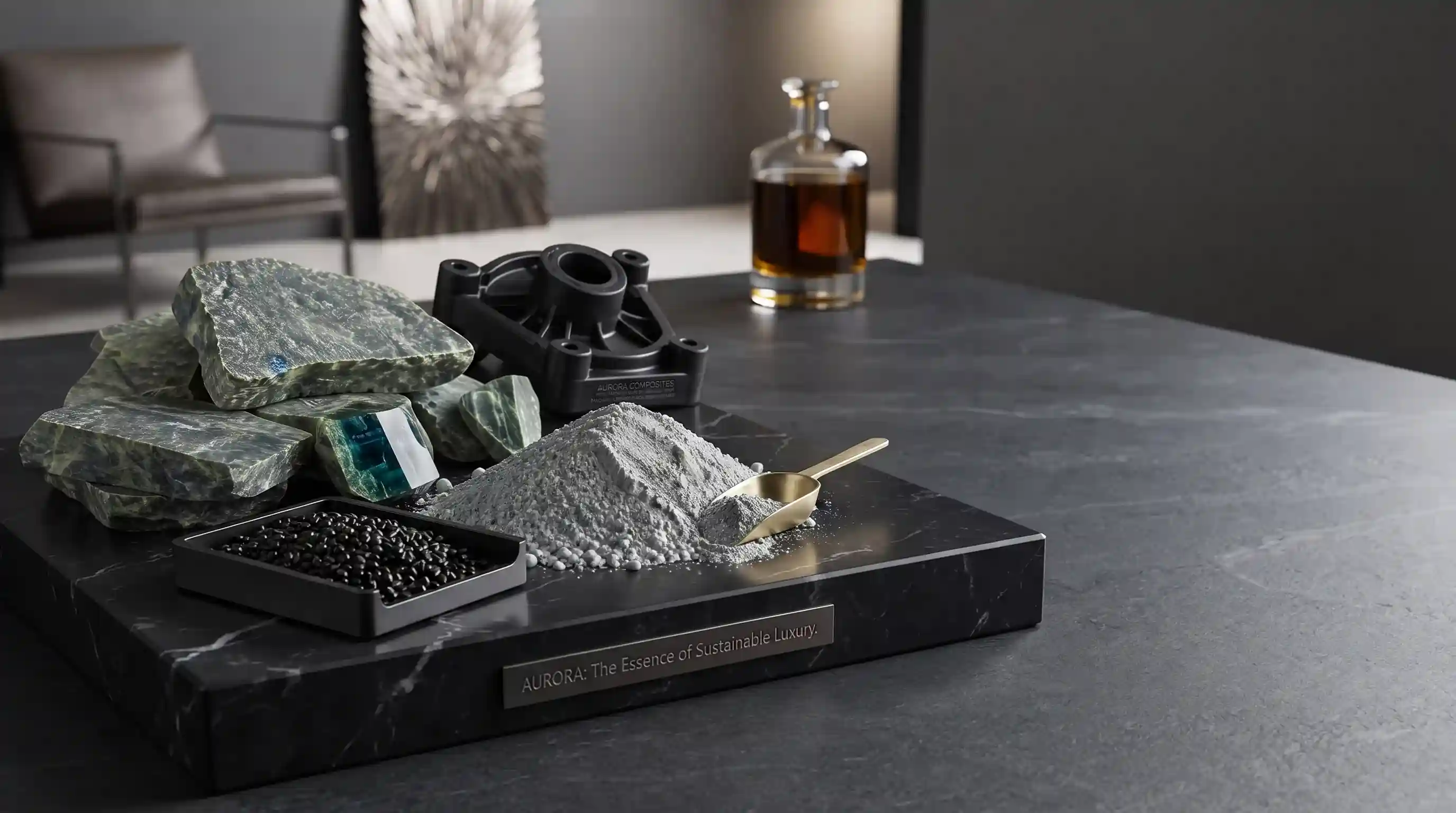
The Role of Industrial Talc in Improving the Mechanical Properties of Rubber Products
In the rubber industry, improving resistance to tearing, abrasion, and tension is of vital importance. Adding industrial talc to rubber compounds helps increase the modulus and hardness of parts due to its mild reinforcing properties, without severely compromising the overall flexibility of the elastomer. This delicate balance between hardness and elasticity makes rubber parts suitable for heavy industrial applications.
Microscopic talc flakes act as physical barriers within the rubber matrix, lengthening the path of crack propagation. This phenomenon directly leads to an increase in the lifespan of the part against constant mechanical stress. For example, in the production of various gaskets, vibration dampers, and automotive parts, the presence of this mineral filler significantly increases structural stability.
Furthermore, the use of industrial talc in rubber formulations helps reduce the hysteresis effect, which in tu decreases the inteal heat generation of the part during continuous operation. This feature becomes doubly important in products under high dynamic stress, such as belts and industrial hoses.
Application of Industrial Talc in the Manufacture of Industrial Sealants and Gaskets
Sealants and gaskets have the vital task of preventing the leakage of fluids and gases and stopping dust from entering mechanical systems. The correct performance of a sealant is highly dependent on the uniform distribution of fillers and the absence of porosity in its structure. Due to its precise granulation in the 450 to 1000 mesh range, industrial talc is well-distributed within the rubber matrix and prevents the creation of local weak points.
One of the main challenges in producing sealants is maintaining sealing performance against temperature changes and pressure. The presence of industrial talc reduces the thermal contraction coefficient of the part and ensures the dimensional stability of the sealant under different operating conditions. This material also improves the processability of the compound during the extrusion and molding stage of the sealants, ultimately leading to the production of a smooth and flawless surface.
In addition to rubber, minerals also play a role in industries related to coatings and insulators. For example, reviewing related articles such as Application of Kaolin in the Paint and Industrial Coatings Industry shows how the combined use of mineral fillers can maximize the efficiency of sealing and coating systems.
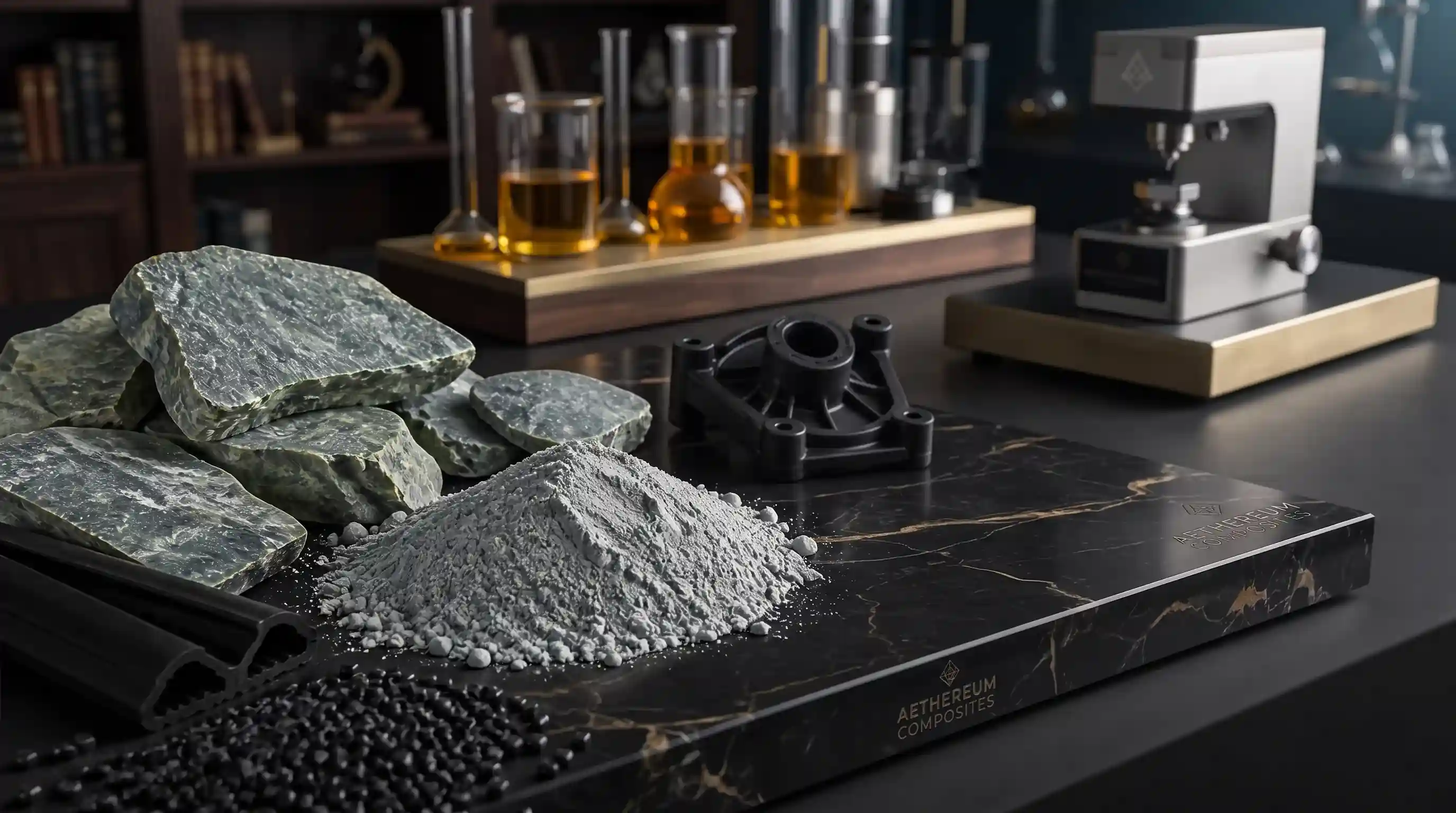
Improving Processability and Flow Behavior of Rubber Compounds with Talc
The process of producing rubber products involves complex stages such as mixing in a mixer, calendering, extrusion, and pressing/curing. The flow behavior of the rubber compound during these stages has a direct impact on the final quality and production line efficiency. As a natural inteal lubricant, industrial talc reduces friction between polymer chains and machinery surfaces due to its platy structure.
This feature facilitates the flow of the compound into complex molds and precise profile shaping of sealants. As a result, the energy consumption of extruder machines and inteal mixers is reduced, and the wear of production equipment is minimized. Choosing the appropriate mesh range (450 to 1000 mesh) plays a key role in this flow behavior, as overly coarse particles can cause surface defects.
In addition, industrial talc has a low tendency to agglomerate and disperses quickly in elastomer compounds. This homogeneous dissolution and dispersion reduce mixing time and significantly increase the overall productivity of rubber and industrial product factories.
The Role of Industrial Talc in Polymer and Paint Products
Although the application of this material is very prominent in the rubber industry, industrial talc is also widely used in polymer, paint, and other industrial products. In the polymer industry, this material acts as an improver of hardness, thermal resistance, and a reducer of molding shrinkage, and has wide applications in the production of automotive parts and household appliances.
In the paint and industrial coatings industry, the platy structure of industrial talc significantly contributes to increasing coverage, improving adhesion, and preventing paint peeling. As a high-quality extender, this material controls the final gloss and increases the durability of the paint film against atmospheric factors. Also, in topics related to insulation, materials such as Application of Industrial Barite in the Production of Sound and Thermal Insulators are used alongside talc to improve the sound and thermal properties of products.
This synergy between different minerals shows how the correct selection of fillers based on their technical specifications can optimize the final formulation of industrial products and bring high added value to manufacturers.

Economic Benefits and Production Cost Optimization with Industrial Talc
One of the main conces of production managers and purchasing engineers in the rubber and sealant industries is optimizing cost prices without sacrificing product quality. Pure polymers and elastomers have high prices, and using 100% of them is not cost-effective. Industrial talc, as an affordable mineral, allows for the replacement of a portion of expensive polymer materials without a loss in performance.
Given that this material is supplied in the 450 to 1000 mesh range, it has an optimal surface-to-volume ratio, which allows a high loading percentage to be used in the rubber compound without causing a sharp decline in mechanical properties. This directly reduces raw material costs and increases the manufacturer's profit margin.
In addition to reducing direct raw material costs, the improved processability resulting from the use of industrial talc leads to reduced production cycle times, decreased manufacturing waste, and optimized energy consumption. By consistently supplying these products, Kani Sang Amiran plays an important role in the country's rubber and polymer industry supply chain.
Conclusion and Guide to Selecting the Right Industrial Talc
In this article, we conducted a comprehensive review of the role and application of industrial talc in the rubber and sealant industry. It became clear that with its unique platy structure, 450 to 1000 mesh range, and stable physical and chemical properties, this mineral is one of the main pillars for improving quality, durability, and reducing production costs in the rubber, polymer, and paint industries.
The precise selection of the mesh and appropriate quality of this material based on the specific needs of each production line guarantees the best results. Technical experts and formulation engineers can obtain more information and place their orders by visiting the dedicated product page on the Kani Sang Amiran website. Using up-to-date technical knowledge alongside high-quality minerals is the key to success in today's competitive markets.
Ultimately, investing in raw materials that meet the necessary quality standards not only guarantees the quality of the final product but also increases the manufacturer's brand credibility in the market. Industrial talc is available as a reliable and efficient solution for the country's advanced industries.
| Question | Answer |
|---|---|
| What is industrial talc? | It is a hydrated magnesium silicate mineral used as a filler in rubber, polymer, and paint industries. |
| What is the mesh range of Amiran industrial talc? | This product is produced and supplied in the 450 to 1000 mesh range. |
| What are the main applications of industrial talc? | Polymer products, rubber products, paint, and various industrial products. |
| Why is talc used in rubber manufacturing? | To improve mechanical properties, dimensional stability, reduce gas permeability, and improve processability. |
| What is the role of talc in making sealants? | It helps improve sealing, reduces thermal contraction, and enhances surface smoothness. |
| Does industrial talc reduce costs? | Yes, as an economical filler, it replaces a portion of expensive polymers. |
| Is this material also used in the paint industry? | Yes, it is used as an extender and to improve paint coverage and adhesion. |
| What is the structure of talc? | It has a microscopic platy and layered structure. |
| How can industrial talc be purchased? | It can be procured through the Kani Sang Amiran product page. |
| Is talc resistant to heat? | Yes, it has appropriate thermal stability in industrial processes. |
Specialized reference for mineral and industrial materials, Kani Sang Amiran.

برچسب: Industrial Talc,Application of Industrial Talc in the Rubber and Sealant Industry,
نویسنده: رساوب آفرین