
درباره سایت
آخرین مطالب
- Guide to Choosing the Particle Size of Limonite Oxide (Gol Mash)
- راهنمای انتخاب دانه بندی اکسید لیمونیت (گل ماش)
- راهنمای انتخاب دانه بندی اکسید لیمونیت (گل ماش)
- راهنمای ثبت سفارش اکسید لیمونیت (گل ماش)
- Guide to Ordering Limonite Oxide (Gol Mash)
- التعرف على الخصائص الفيزيائية لكربونات كالسيوم الصناعية
- Examining the Rising Demand for High-Quality Industrial Talc
- بررسی ویژگیهای ظاهری و کیفیت پودر سفید دولومیت
- Guide to Choosing the Best Type of Red Iron Oxide (Ochre)
- دليل شراء أكسيد الحديد الأحمر (أخيرا) عالي الجودة والنقاء
امکانات وب
Introduction to the Importance of Kaolin in Mode Industries
As one of the most important hydrated aluminum silicates, the mineral kaolin holds a special position in various industries, including the production of tiles, ceramics, glazes, paper, and paint. A precise understanding of the physical and chemical properties of this material helps engineers and manufacturers achieve maximum efficiency in their industrial processes. To lea more about this valuable material, you can visit the kaolin page and review its technical specifications.
In this comprehensive article, we intend to examine the correct methods for interpreting the technical analyses of this mineral. Given the diversity of applications, a proper understanding of laboratory parameters and the Technical Data Sheet (TDS) is vital for controlling the quality of the final product. The minerals provided by the Kani Sang Amiran project are extracted and processed with high precision to meet the standards required by various industries.
One of the main pillars for the optimal use of this material is mastering the technical terms of the analysis. Items such as the percentage of metallic oxides, particle size distribution, and moisture content all play a key role in the thermal and mechanical behavior of the final product. In the following chapters, we will anatomize various aspects of these analyses in a specialized maer.
In addition, examining the technical benefits of using kaolin in ceramics can provide a deeper perspective on the structural performance of this material in ceramic bodies. The firing process, shrinkage rate, and mechanical strength are among the parameters that are directly influenced by the quality of raw materials.
In the coating and papermaking industries, whiteness, particle size, and colloidal stability are of particular importance. Therefore, the correct interpretation of the analysis sheet will ensure the selection of the most accurate grade tailored to the production line's needs. In the upcoming sections, we will discuss each of these indicators in detail.
Examining Mesh Range and the Importance of Particle Distribution in Kaolin
The mesh range is one of the first parameters that draws attention in any technical analysis sheet. For this mineral, the mesh range of 450 to 1500 mesh is introduced as the standard range, which indicates the level of fineness and the specific surface area of the particles. Finer particles with high mesh create better coverage and homogeneity in liquid systems.
Particle size distribution has a direct impact on the final properties of products such as paint and paper. When high-mesh grades are used, porosity decreases, and surface gloss and smoothness improve. This feature is particularly important in the coating industry and the production of architectural and industrial paints.
The industrial tree of this material shows that selecting an inappropriate mesh range can lead to problems such as rapid sedimentation, reduced coverage, or unwanted increases in viscosity. Therefore, quality control specialists must always carefully review the results of granulometry tests (Hydrometer or Laser Diffraction).
Also, in tile and ceramic firing processes, particle dimensions play a significant role in chemical reactivity and the rate of phase separation. Finer particles accelerate solid-phase reactions and contribute significantly to achieving desired density at lower temperatures.
The Kani Sang Amiran project, utilizing mode granulation equipment, produces various grades within the mentioned mesh range to best cover the specific needs of different industrial units and ensure consistency in the quality of shipped consignments.
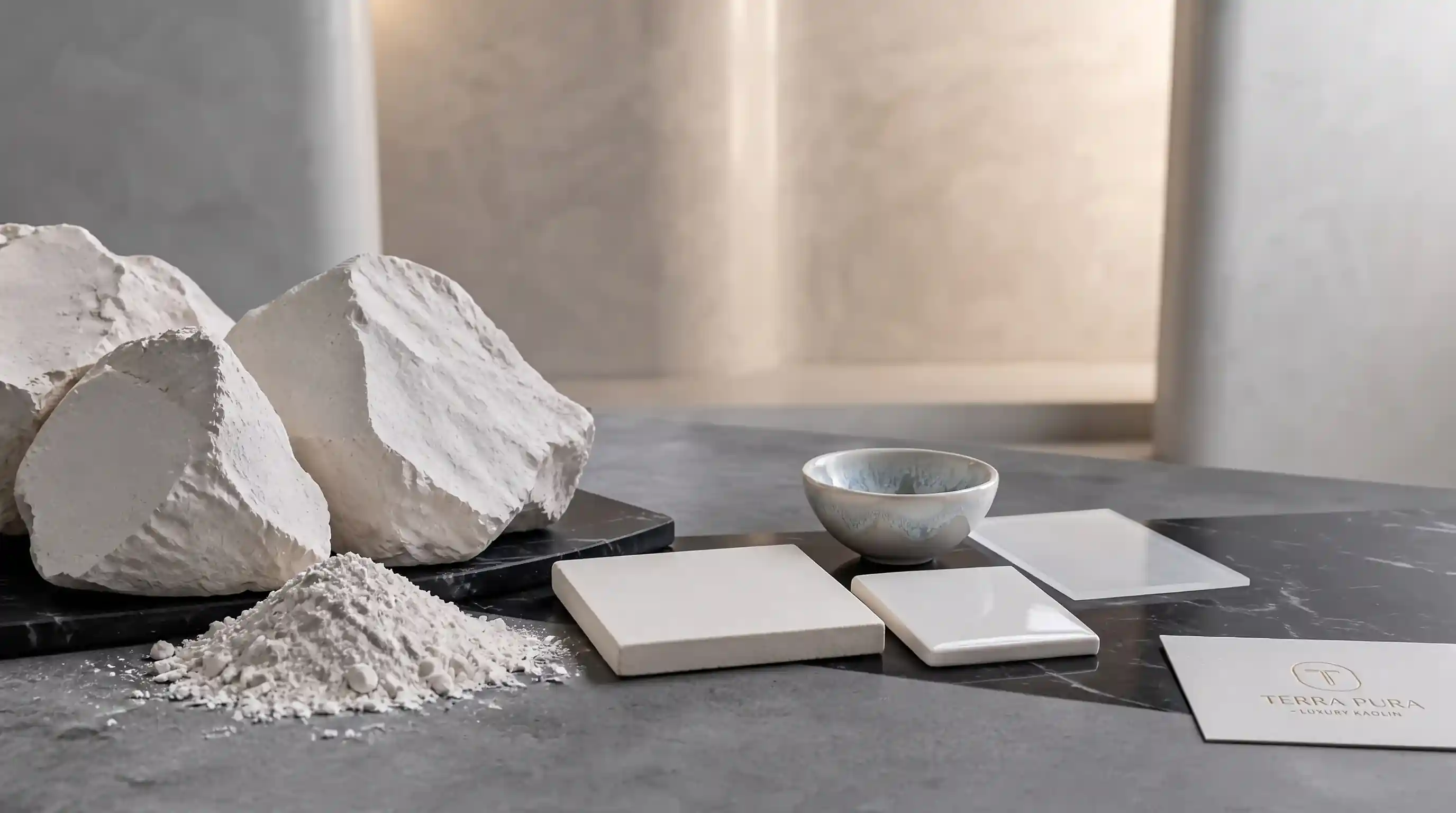
Role of Kaolin in Tile, Ceramic, and Glaze Industries
The tile and ceramic industries are considered the largest consumers of aluminum silicates. This material, by creating appropriate plasticity during the forming stage and maintaining body dimensions during drying, prevents cracking and warping. To lea more in this field, it is recommended to read the specialized article Review of technical benefits of using kaolin in ceramics to become familiar with more details.
In glaze formulations, the presence of this material acts as a source of alumina and silica and adjusts the glaze's melting point. It also maintains the viscosity of the glaze suspension at a desired level to create uniform coverage on the tile body and prevents the glaze from ruing in the firing kilns.
Interpreting the chemical analysis of this material for tile makers means carefully examining the levels of impurities such as iron oxide (Fe2O3) and titanium (TiO2). High values of these oxides can affect the final color of the body or glaze and reduce its whiteness, which is of great importance in decorative and white products.
Furthermore, the thermal behavior of this material at high temperatures includes the loss of structural water (hydroxyl) and conversion to metakaolin and mullite phases. Understanding these phase transformations, which are identified through thermal analysis (DSC/TGA), helps firing engineers optimize the kiln's thermal profile.
Mineral producers such as the Kani Sang Amiran project play a vital role in enhancing the quality of the country's ceramic industry by providing high-quality products for tile and ceramic applications, and they ensure the stability of technical parameters for their customers.
Application in Paper and Paint Industries and Quality Standards
In the papermaking industry, this material is used as a filler and as a surface coating for paper. The main goal of adding it is to improve the whiteness, opacity, smoothness, and printability of the paper. To achieve these goals, parameters such as brightness and particle size distribution are carefully examined in the analysis sheet.
In the paint industry, this material acts as an extender pigment. Using appropriate grades within a specific mesh range significantly helps improve paint stability against peeling, reduces the amount of titanium dioxide consumed, and adjusts the gloss of the paint film.
Correct interpretation of data related to viscosity and oil absorption in the analyses is vital for paint and coating formulators. Inappropriate oil absorption values can lead to excessive consumption of resin and a decline in the quality of the final paint produced.
Also, moisture content and water-soluble impurities are other key parameters in the paint and paper analysis sheet. The presence of soluble salts can cause reactions with other components of the formulation and lead to problems such as corrosion or unwanted phase changes during long-term storage.
Adhering to quality standards in the production and processing of these products guarantees their flawless performance in advanced production lines. The Kani Sang Amiran project, by continuously monitoring these indicators, supplies standard products for the paper and paint industries.

Chemical Analysis and Examination of Oxides in the Analysis
Quality control laboratories use X-ray fluorescence (XRF) spectroscopy methods to check the purity of the mineral. In the analysis sheet, the values of main oxides including silica (SiO2), alumina (Al2O3), iron oxide (Fe2O3), titanium oxide (TiO2), and alkaline oxides are reported as percentages.
The ratio of silica to alumina in the mineralogical structure indicates the purity level of the main mineral. Higher amounts of alumina usually indicate higher purity and greater thermal resistance, which is of extraordinary importance for refractory and engineering ceramic applications.
The presence of iron and titanium oxides is known as coloring agents. For applications where the whiteness of the final product is critical (such as sanitary porcelain, high-quality papers, and white paints), the amount of Fe2O3 should be reported at the lowest possible level (usually under one percent), which is observable in the technical analysis.
Loss on Ignition (LOI) at a specific temperature is also an important part of the chemical analysis, showing the amount of crystalline water and volatile materials present in the sample. This parameter plays a key role in the precise calculation of ceramic body and glaze formulations.
Comprehensive interpretation of these data requires technical knowledge and a precise understanding of the interaction of each oxide on the final properties. Technical experts at the Kani Sang Amiran project provide transparent information to industrialists by offering accurate analysis sheets so that the best decisions regarding the selection of raw materials can be made.
Key Physical Parameters: Whiteness, Moisture, and pH
In addition to chemical composition, the physical properties of kaolin determine its behavior in various industrial processes. Brightness is one of the most important parameters measured by spectrophotometers, directly affecting the aesthetic quality of products such as paper, paint, and white ceramics.
The moisture content in the mineral powder is also one of the items that must be carefully controlled in the analysis sheet. High moisture, in addition to creating problems in weighing systems and production line feed hoppers, can cause powder clumping in storage and a decrease in mixing quality.
The pH index of the aqueous suspension of this mineral provides valuable information about the acidity or basicity of the particle surface. This parameter is particularly important in the paint and polymer coating industries because a mismatch in pH can damage the stability of the paint emulsion.
Particle size distribution and its various deciles (such as D50 and D90) help engineers predict the rheological behavior of industrial slurries. Particles with an optimal D50 create a suitable balance between viscosity and coverage.
Quality control laboratories at the Kani Sang Amiran project measure all these physical parameters using inteational standard methods and present the results in the form of valid technical certificates to the market so that consumers can use them with full confidence.

The Role of Minerals and Fillers in Stability and Thermal Resistance
Examining the behavior of minerals when exposed to high heat is one of the fascinating topics in materials engineering. Although kaolin has wide applications in tiles, ceramics, and glazes, understanding the mechanisms of thermal stability of similar minerals also helps develop technical knowledge. In this regard, reading the article How does coated calcium carbonate help the thermal stability of polymers? provides interesting perspectives on improving the thermal properties of filler materials.
In refractory and thermal applications, resistance to thermal shock and maintaining structural shape at high temperatures are of vital importance. Compounds made based on aluminum silicates prevent the deformation of structures by forming thermally stable phases in kilns.
Reviewing the analysis sheet of these materials helps refractory experts monitor the level of alkaline impurities (such as sodium and potassium oxide), which can significantly reduce the melting point, and prevent a decline in refractory quality.
Also, to more accurately examine the role of this class of materials in improving the thermal resistance of industrial systems, studying the specialized article The role of kaolin in improving the thermal resistance of refractories provides very valuable information to engineers and designers of industrial kilns.
The Kani Sang Amiran project, focusing on the precise extraction and processing of high-quality minerals, supplies products to the market that possess the necessary standards for thermal and mechanical stability and help improve the efficiency of various industries.
Practical Guide to Selection and Purchase Based on the Technical Data Sheet (TDS)
The final step in the raw material supply process is to accurately match the data provided in the Technical Data Sheet (TDS) with the operational needs of the production line. Buyers and quality control managers should know that no mineral is necessarily suitable for all applications, and selection must be based entirely on the final goal.
When reviewing the analysis sheet, the final application (tile, ceramic, glaze, paper, or paint) must first be considered. For example, if the goal is paint production, whiteness and oil absorption parameters are more important, while for ceramics, plasticity and thermal behavior take priority.
The 450 to 1500 mesh range covers a wide spectrum of particle sizes. Consulting with the supplier's technical experts can significantly help in selecting the exact mesh suitable for the nozzles, spraying equipment, or production line mixers to prevent potential problems.
Checking the stability of consignments by comparing different analyses over time is a reliable way to evaluate the supplier's credibility. The Kani Sang Amiran project, by providing transparent technical documentation and specialized support, ensures the necessary peace of mind for its industrial customers.
Finally, establishing continuous communication between the research and development departments of consumer factories and the technical team of the mining unit is the key to achieving optimal formulations and reducing production costs. By correctly interpreting the analyses, one can elevate the productivity and quality of final products to the highest possible level.

| Question | Answer |
|---|---|
| What is kaolin and what are its applications? | Kaolin is a natural hydrated aluminum silicate used in the tile, ceramic, glaze, paper, and paint industries. |
| What is the mesh range of kaolin supplied by Kani Sang Amiran? | These products are processed and supplied in the 450 to 1500 mesh range. |
| How can the kaolin technical analysis sheet be interpreted? | Interpreting the analysis involves examining the percentage of chemical oxides (XRF), particle size distribution, moisture content, and brightness. |
| Is kaolin also used in the paint industry? | Yes, it is used as an extender pigment to improve coverage and paint stability. |
| What is the role of kaolin in the tile and ceramic industries? | Creating plasticity, controlling firing shrinkage, and adjusting the thermal behavior of the body and glaze are its main roles. |
| What parameters are effective in determining the price and quality of kaolin? | Purity percentage, iron oxide impurity level, whiteness, and mesh range are determining factors. |
| Why is it important to check the iron oxide level in the analysis? | High levels of iron oxide reduce the final product's whiteness, making it unsuitable for white products. |
| Does this material play a role in paper production? | Yes, it is used as a filler and surface coating to increase paper whiteness and smoothness. |
| How can the appropriate mesh grade be selected? | Choosing the mesh depends on the type of production line equipment, required viscosity, and coverage level. |
| How can we ensure the quality of supply or materials? | By reviewing the Technical Data Sheet (TDS) and purchasing from reputable suppliers like the Kani Sang Amiran project. |
Kani Sang Amiran Project — Specialized reference for the supply and processing of industrial minerals (https://ksamiran.ir/products/kaolin/)

برچسب: Kaolin,How to Properly Interpret Technical Analysis of Kaolin?,
نویسنده: رساوب آفرین