
درباره سایت
آخرین مطالب
- دور أكسيد الليمونيت (گل ماش) في صناعة السيراميك والبلاط
- The Role of Limonite Oxide (Gole Mash) in the Ceramic and Tile Industry
- Online Order and Price Inquiry Guide for Kaolin
- راهنمای ثبت سفارش آنلاین و استعلام قیمت کائولن
- How to choose the best red iron oxide (ochre) for the project?
- دور أكسيد الليمونيت (گل ماش) في إنتاج الطلاءات الواقية
- كيف تشترين أفضل ماركة أكسيد الليمونيت (جول ماش)؟
- Examining the Environmental Impacts of Limonite Oxide (Gole Mash)
- دراسة التأثيرات البيئية لأكسيد الليمونيت (گل ماش)
- How to buy the best Limonite Oxide (Gol Mash)?
امکانات وب
Introduction to the Importance of Industrial Talc Powder in Manufacturing Industries
In today's world, manufacturing industries are constantly seeking solutions to improve quality, increase efficiency, and prevent common problems in their production processes. One of the major challenges in the storage and processing of powder materials is the phenomenon of caking, which can disrupt production lines. In this context, the use of efficient mineral additives plays a vital role. The mineral industrial talc, due to its flaky structure and unique properties, is recognized as one of the best solutions for solving this problem.
Examining the fundamental properties of this material reveals why various industries rely on it. For a deeper understanding of these characteristics, reading an overview of the physical and mechanical properties of industrial talc powder provides comprehensive information to professionals. This material is used as a filler and anti-caking agent in various sectors.
The Kani Sang Amiran project, focusing on the production and supply of high-quality minerals, provides this product with standard specifications for various industries. By accurately understanding the performance mechanisms of this material, one can prevent the degradation of final product quality and significantly increase the productivity of production lines.
Getting to Know the Nature and Structural Characteristics of Industrial Talc
This mineral is a hydrated magnesium silicate that has a layered structure in terms of crystal formation. These layers are coected by weak van der Waals forces, which allow the particles to slide over each other easily. This structural feature gives the powder extraordinary softness and makes it one of the softest known minerals. When it comes to performance features, an accurate understanding of its effects on production quality becomes important.
To lea about the direct effects of this material on manufacturing processes, the article The Key Role of Industrial Talc in Improving Manufacturing Quality presents valuable points. Understanding how the flaky structure of this material reduces inteal friction helps engineers design better formulations.
Also, the standard mesh range of this product, which is between 450 and 1000 mesh, allows for uniform distribution of particles in various matrices. This precise granulation range ensures that the powder is well-placed among other material particles and prevents unwanted bonding with each other.
The Phenomenon of Caking in Materials and Its Challenges
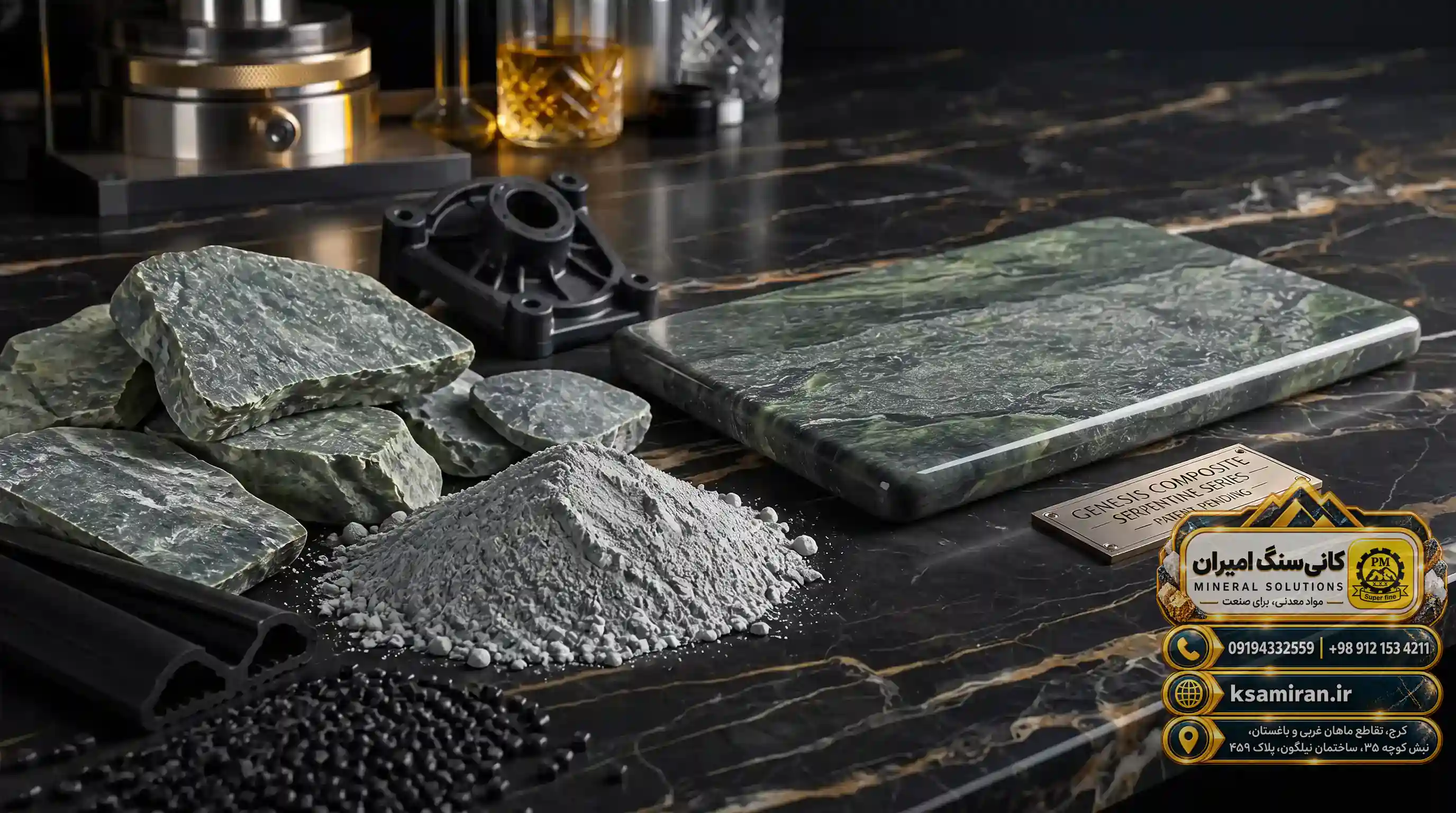
Caking of powder and granular materials is one of the common and costly problems in conversion and manufacturing industries. This phenomenon occurs when fine particles stick together due to environmental factors such as moisture, storage pressure, or temperature fluctuations, forming hard lumps. Such an event can disrupt material flowability and lead to unexpected shutdowns of material handling equipment.
In this regard, manufacturers are always looking for supplementary minerals to optimize their processes. Alongside talc, examining the market for other minerals such as a price analysis of feldspar in the Iranian mineral market shows how important the optimal supply of raw materials is in managing production costs. However, to control caking, choosing a specialized anti-caking agent is a priority.
When powder materials are exposed to adverse conditions, they tend to absorb surface moisture and create capillary bridges. This highlights the necessity of using a water-repellent and stable substance that can act as a protective barrier.
The Role of Industrial Talc as an Anti-caking Agent
The use of industrial talc powder as an efficient anti-caking agent is based on its surface and physical properties. The flaky particles of this material, by positioning themselves between the main material particles, fill the voids between them and prevent direct contact between particles. This physical mechanism prevents the formation of stable chemical or mechanical bonds between particles during storage.
Furthermore, the hydrophobic nature of this mineral ensures that ambient moisture caot easily penetrate into the bulk of the materials. Moisture is one of the main drivers of caking, and the presence of this powder, by repelling moisture, maintains the stability of the powders.
The Kani Sang Amiran project, by offering this product in the 450 to 1000 mesh range, provides exceptional surface coverage. The finer the particles and the more uniform their distribution, the greater the contact surface area created, maximizing anti-caking efficiency.
Applications in Polymer and Rubber Industries
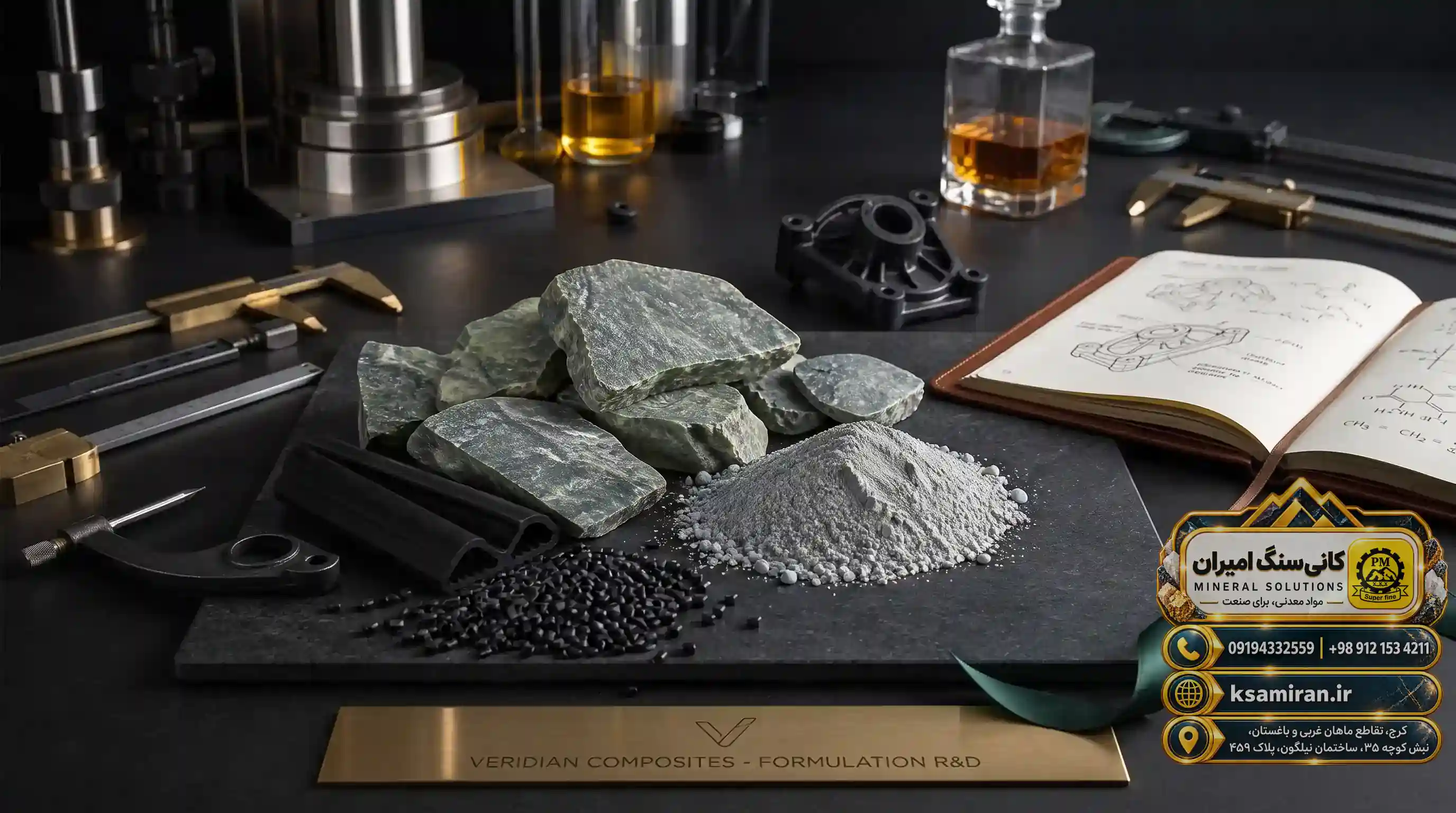
Polymer and rubber industries are among the largest consumers of micronized minerals. In the production of polymer products, adding this powder as a filler not only improves mechanical properties but also prevents masterbatches and granules from sticking together during production and storage phases.
To meet these industrial needs, selecting a high-quality product is possible through the dedicated page for Industrial Talc so that factories can procure the best raw materials. In the rubber industry, this material also prevents raw rubber layers from sticking together in storage and facilitates calendering and extrusion processes.
The 450 to 1000 mesh range of this product has been chosen so that it disperses well in rubber and polymer mixtures without creating weak points in the final structure. This homogeneous distribution plays a key role in preventing the formation of localized lumps.
Application in the Paint and Industrial Coatings Industry
In the paint and coating industry, product stability in the can and the prevention of hard settling and pigment caking are of vital importance. This mineral is used as an effective additive in paint formulations to prevent the accumulation of heavy particles and increase the storage stability of the paint.
The layered structure of this powder helps paints to be easily reconstituted with a simple stir after a period of storage, preventing the formation of hard cakes or irreversible lumps at the bottom of the container. This feature is a great advantage for end-users.
The precise selection of raw materials produced by the Kani Sang Amiran project ensures that the technical specifications of the powder are perfectly suited for use in various industrial and decorative paints and guarantees the flawless performance of the final product.
Technical and Economic Benefits of Using Industrial Talc
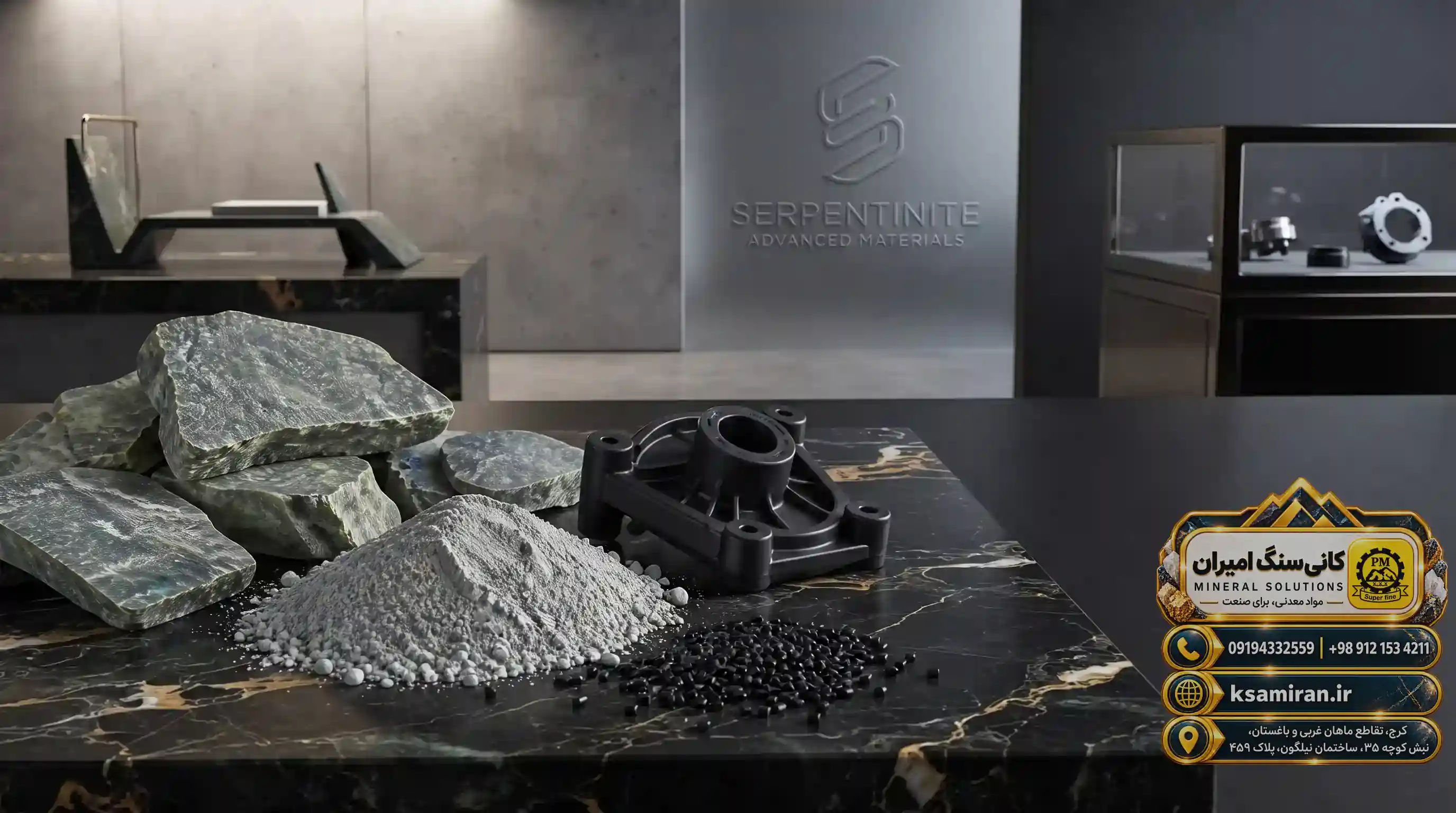
The application of this mineral goes beyond preventing caking, bringing significant economic and technical benefits to production units. From a technical perspective, reducing waste caused by caked materials, improving flowability in hoppers and silos, and increasing the uniformity of the final product are the most important achievements.
From an economic perspective, preventing production line downtime due to clogged pipes and transfer equipment drastically reduces maintenance costs. Also, increasing the useful shelf life of manufactured products allows companies to better manage their supply chain and distribution.
The production of this product according to quality standards by the Kani Sang Amiran project gives industrialists the assurance that their investment in purchasing raw materials will result in the highest productivity and efficiency.
Conclusion and Future Outlook for Anti-caking Mineral Application
Ultimately, the phenomenon of material caking can create serious challenges for polymer, rubber, paint, and other industrial sectors. Using efficient mineral additives such as industrial talc powder with a 450 to 1000 mesh range is a scientific, economic, and proven solution to combat this problem.
Given the growing need of industries to increase productivity and reduce waste, the role of high-quality minerals will be more prominent than ever. The Kani Sang Amiran project, by continuing to supply standard products, has taken a firm step towards meeting the country's industrial production needs.
The intelligent selection of raw materials and the utilization of the unique properties of this mineral will ensure superior quality, storage stability, and sustainable success in today's competitive production market.
| Question | Answer |
|---|---|
| What is industrial talc? | It is a hydrated magnesium silicate with a layered structure and high softness that is used in various industries. |
| What is the mesh range of this product? | This product is produced and supplied in the 450 to 1000 mesh range. |
| How does it prevent material caking? | By positioning itself between particles and creating a physical and hydrophobic barrier, it prevents them from sticking together. |
| What are the main applications of this material? | Polymer products, rubber products, paint, and industrial products. |
| Is this material used in the paint industry? | Yes, it is used to prevent hard settling and pigment caking. |
| What is its role in the polymer industry? | It acts as a filler and an agent to improve flowability and prevent granule adhesion. |
| Who is the producer of this product? | Kani Sang Amiran Project — Mineral Production. |
| Why is its layered structure important? | It causes particles to slide over each other easily and reduces inteal friction. |
| Is this powder moisture-resistant? | Yes, its hydrophobic nature prevents moisture penetration and the creation of capillary bridges. |
| How can this product be procured? | It can be ordered through the dedicated product page on the Kani Sang Amiran website. |
Kani Sang Amiran Project - Industrial Mineral Supply Reference.
برچسب: Industrial Talc,The Impact of Industrial Talc in Preventing Material Caking,
نویسنده: رساوب آفرین