
درباره سایت
آخرین مطالب
- تأثیر کیفیت سیلیس بر دوام و استحکام بتن صنعتی
- انتخاب بهترین دولومیت مش 10 تا 40 کاربردی در تولید شیشه
- انتخاب بهترین دولومیت مش 10 تا 40 کاربردی در تولید شیشه
- بهترین دولومیت صنعتی برای مصارف شیشه و مصالح ساختمانی
- دليل تقديم طلب شراء أكسيد الليمونيت (جول ماش)
- مزایای استفاده از اکسید لیمونیت (گل ماش)
- نقش تالک صنعتی در صنایع گچ و مصالح ساختمانی
- Benefits of Using Limonite Oxide (Gol Mash)
- دور التلك الصناعي في صناعات الجبس ومواد البناء
- The Impact of Silica Quality on the Durability and Strength of Industrial Concrete
امکانات وب
Introduction and Importance of Technical Knowledge of Calcium Carbonate
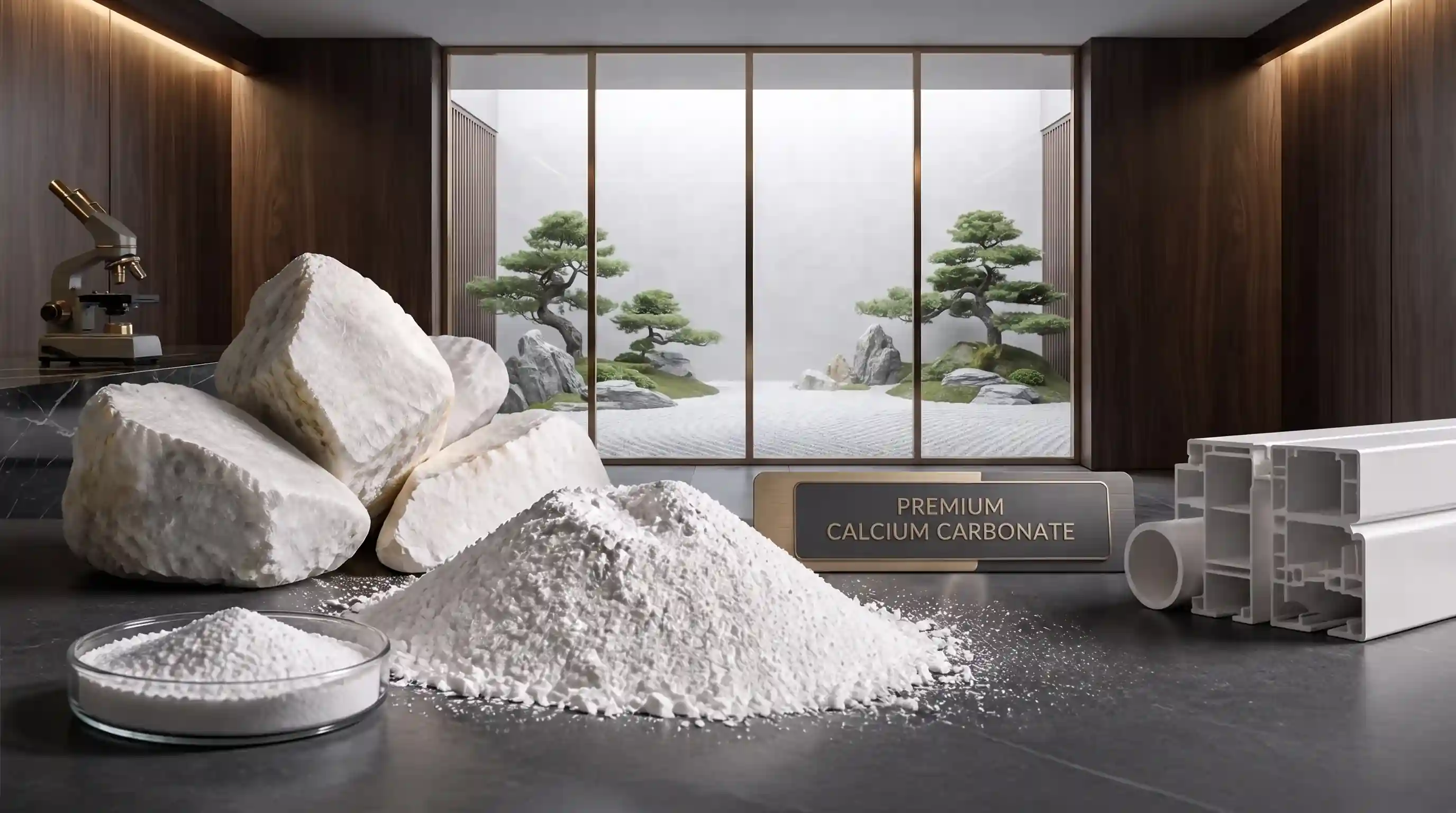
In the advanced world of mineral industries and raw material processing, a precise understanding of the physical and chemical properties of materials is of particular importance. Calcium carbonate is known as one of the most widely used and versatile minerals in various industries, playing a key role in improving the final properties of products. The Kani Sang Amiran project, focusing on the production of high-quality minerals, supplies this product with standard technical specifications for various industries.
Choosing the right mineral raw materials has a direct impact on the quality, durability, and economic efficiency of production lines. When it comes to polymer, paint, paper, and engineered product applications, specifications such as particle size, size distribution, and chemical purity become doubly important. The use of high-quality minerals can minimize process challenges and provide high added value for manufacturers.
To lea more about the characteristics of this mineral, you can visit the specialized page Calcium Carbonate and review the supplementary information. In this article, we intend to comprehensively examine the technical characteristics, granulation, mesh range, and key applications of this material in various industries to provide a precise guide for engineers and industrialists.
A detailed examination of the technical parameters of this mineral helps production units choose the most suitable grade based on their process requirements. Therefore, a precise understanding of granulation dimensions, surface behavior, and its compatibility with polymer matrices and paints is a fundamental step toward optimizing industrial processes.
The Key Role of Mesh Range and Granulation in Product Quality
One of the most important technical parameters in assessing the quality of calcium carbonate is its mesh range and particle size. This product is produced and supplied with a wide mesh range between 100 and 3500 mesh, and this high versatility enables its use in a wide range of heavy and precision industries. Coarser particles are usually used in applications that require volume filling, while very fine (micronized and nano) particles play a vital role in improving mechanical and aesthetic properties.
In industrial processes, the particle size distribution (PSD) determines the dispersion rate of the powder in various matrices. Powders with precise and uniform granulation prevent particle accumulation (clumping) and help significantly improve material flowability in extruders and injection molding machines. This feature is especially important in the production of thin plastic films and low-thickness coatings.
Furthermore, understanding the structural differences of various mineral materials can help engineers in optimal selection. For example, a comparative study in the article Examination of Structural Differences Between White Talc and Calcium Carbonate provides deeper insight into the behavior of these fillers in industrial formulations. A precise understanding of these structures ensures the stability and optimal performance of the final product.
Strict quality control in the micronization process ensures that the desired mesh range is achieved with the highest precision. This helps significantly in reducing wear on production equipment, improving gloss in paints, and increasing impact strength in engineering parts, thereby maximizing the efficiency of production lines.

Application in PVC and UPVC Profile and Pipe Industries
The PVC and UPVC pipe and profile production industry is considered one of the major consumers of calcium carbonate. In this industry, adding mineral powder as a functional filler not only optimizes the formulation's finished costs but also contributes significantly to improving the mechanical and dimensional properties of building pipes and profiles.
The use of a suitable grade with controlled granulation in the PVC polymer compound increases the modulus of elasticity, dimensional stability against heat, and the compressive strength of the profiles. Also, the homogeneous distribution of particles in the polymer matrix prevents the occurrence of structural weak points and creates a smooth and uniform surface quality in the final product.
To achieve the best results in pipe and profile extrusion processes, techniques for preparing and modifying the powder surface are of high importance. In this regard, a detailed study of the technical benefits mentioned in the article Review of Technical Benefits of Coated Calcium Carbonate in Extrusion provides professionals with valuable information regarding improving melt flow and reducing extruder torque.
Strict adherence to mixing ratios and choosing a mesh suitable for the pipe wall thickness or the complexity of the UPVC profile section will ensure the production of a product with high quality standards. This also significantly contributes to increasing the lifespan of parts in harsh environmental conditions and sunlight exposure.
Application in Masterbatch, Cable, and Artificial Leather
The polymer masterbatch production industries, the wire and cable industry, and also artificial leather production are other vital areas for calcium carbonate consumption. In the production of polyethylene and polypropylene masterbatches, the presence of mineral powder with high purity and negligible moisture provides a standard base for the production of filler and color masterbatches, which leads to improving thermal conductivity properties and reducing the shrinkage of injected parts.
In the wire and cable industry, polymer insulators and sheaths require stable electrical and mechanical properties. Using micronized fillers with appropriate dimensional distribution helps maintain insulating properties and at the same time enhances fire and heat resistance in cabling standards. Also in the artificial leather industry, this material acts as a filler for foam layers and linings, giving the product desirable texture and flexibility.
Evaluating economic and financial aspects in the use of processed raw materials is also an inseparable part of production management. A detailed examination of financial and cost benefits in the article Review of Economic Benefits of Using Coated Calcium Carbonate in Manufacturing helps industrial managers make better decisions regarding their raw material purchasing portfolio.
The optimal combination of this material in masterbatch and artificial leather formulations, in addition to reducing dependence on expensive polymers, improves final properties such as printability, sewability, and abrasion resistance, creating a competitive product in the market.

Application in Paint, Coating, and Papermaking Industries
The paint and industrial and construction coating industries have long been one of the main consumers of calcium carbonate. As a white filler pigment, this material plays an important role in controlling opacity, whiteness, and the gloss of water-based and oil-based paints. The distribution of fine particles prevents rapid pigment settling during storage and increases the shelf stability of the paint.
In the papermaking industry, this mineral is used as a filler and surface coater for paper. Adding micronized powder to paper pulp improves the whiteness, surface smoothness, opacity, and printability of the paper. Especially in acid-free papermaking processes (Alkaline Papermaking), this material is an ideal choice for stabilizing the environmental pH and increasing the long-term durability of the paper.
The optical properties of this mineral powder, such as a high refractive index, help paint formulations achieve desired coverage with lower consumption of titanium dioxide pigment. This in tu creates a suitable balance between visual quality and finished production costs.
Precise control of moisture and being free of metallic and heavy impurities in the grades used in paint and paper prevents discoloration and the appearance of dark spots in the final product, meeting the strict quality standards of these industries.
Application in Adhesive, Sealant, and Engineered Stone
In the manufacturing industries for adhesives, sealants, and engineered stone, calcium carbonate plays an irreplaceable structural role. In industrial and construction adhesives, this powder acts as a rheology modifier, viscosity controller, and shear strength improver. The presence of micronized particles prevents the adhesive from sagging on vertical surfaces and increases its usability.
In the engineered stone (Artificial Stone) and Corian industry, which are formed based on polyester or epoxy resins and mineral fillers, this material acts as the main volume-filling skeleton. The proper distribution of particles causes complete filling of the empty space between the resin, minimizes final porosity, and enhances resistance to impact and scratches in artificial stones.
The mechanical properties of engineered stones are heavily dependent on the bond between the resin and the mineral particle surface. The use of high-purity grades and precise mesh sizing by the Kani Sang Amiran project enables manufacturers to produce engineered stones with standard designs and mechanical strengths.
Adjusting viscosity behavior in silicone and polyurethane sealant and adhesive formulations is another benefit of using this mineral, which makes the injection and application process of the adhesive much simpler and more accurate for end-users.

Physical, Chemical Specifications and Quality Control
Assessing the quality of calcium carbonate requires a precise understanding of its physical and chemical specifications. High chemical purity (a high percentage of calcium carbonate and negligible amounts of iron, magnesium, and silicon oxides) is one of the main indicators that guarantees product quality. The whiteness and apparent gloss of the powder are also considered key factors in the paint, paper, and plastic industries.
Quality control tests include examining particle size distribution using laser light scattering devices, determining surface moisture levels, measuring oil absorption values, and measuring the residue remaining on standard sieves. These parameters determine how well the produced powder complies with strict industrial standards.
Mode laboratory equipment in the Kani Sang Amiran processing units has made it possible to monitor production lines in real-time so that any possible deviation in mesh sizing or chemical purity is identified and corrected immediately. This continuous monitoring guarantees the uniformity of shipments sent to various factories.
Attention to factors such as proper packaging (laminated bags or standard jumbo bags) is also of high importance to prevent moisture absorption and powder clumping during transport and storage, which completes the maintenance standards.
Conclusion and Industrial Outlook
Ultimately, calcium carbonate, as one of the most strategic mineral raw materials, has an undeniable position in mode polymer, paint, paper, adhesive, and engineering product industries. Precise selection of the mesh range from 100 to 3500 mesh, adapted to the needs of each industry, is the key to achieving the highest production efficiency and optimal quality.
The Kani Sang Amiran project, relying on technical knowledge, strict quality control standards, and the sustainable supply of this mineral, is considered a reliable companion for the country's manufacturing industries. Investing in the correct selection of raw materials, in addition to reducing operating costs, leads to the promotion of final product quality standards and customer satisfaction.
With the ever-increasing development of mineral processing technologies and the production of advanced micronized and coated grades, a bright prospect lies ahead for industrialists to improve the performance of engineering and polymer products that rely on this valuable material. Awareness of technical specifications and specialized applications is the best tool for informed decision-making in the industrial supply chain.
Distinguished industrialists and engineers can, by carefully examining their process needs and utilizing standard grades of this product, take a firm step toward optimizing formulations and developing the market for their products.

| Question | Answer |
|---|---|
| What is the mesh range of the produced calcium carbonate? | This product is produced and supplied in a mesh range of 100 to 3500 mesh. |
| What are the main applications of calcium carbonate? | PVC/UPVC profile and pipe, masterbatch, cable, artificial leather, paint, paper, adhesive, and engineered stone. |
| Why is particle size distribution important in this material? | Because it has a direct effect on flowability, dispersion in the polymer matrix, and final mechanical properties. |
| Is this product used in the paint industry? | Yes, it is used as a filler pigment, improving paint coverage and whiteness. |
| What is the role of calcium carbonate in the papermaking industry? | It increases the whiteness, surface smoothness, opacity, and printability of paper. |
| Is this material used in the production of PVC pipes and profiles? | Yes, it is used to improve dimensional stability, heat resistance, and optimize formulation costs. |
| How can supplementary product information be viewed? | It is accessible through the dedicated product page on the Kani Sang Amiran website. |
| What is the role of this material in engineered stone? | It acts as the main bulk filler and reduces porosity alongside resin. |
| Why is moisture control important in mineral powder? | It is essential to prevent clumping and maintain quality in extrusion and injection processes. |
| Which group is the supplier of this mineral? | Kani Sang Amiran Project — Mineral Production. |
Specialized reference for mineral and industrial material information, Kani Sang Amiran Project.
برچسب: Calcium Carbonate,Examination of Technical Characteristics of Calcium Carbonate Powder,
نویسنده: رساوب آفرین